
Why Do People Research MOTS-C? A Comprehensive Scientific Analysis

In the rapidly evolving world of peptide research, one particular mitochondrial-derived peptide has captured the attention of scientists worldwide. MOTS-C, a 16-amino acid peptide encoded by the mitochondrial genome, represents a fascinating intersection of cellular biology, aging research, and metabolic science. As researchers delve deeper into understanding why do people research MOTS-C, we uncover a compelling narrative of scientific discovery that spans multiple disciplines and holds promise for advancing our understanding of human biology at the cellular level.
The growing interest in MOTS-C research stems from its unique origin as a mitochondrial-derived peptide and its potential role in cellular energy regulation. Unlike traditional peptides, MOTS-C is encoded by the mitochondrial DNA, making it a particularly intriguing subject for researchers studying the complex relationship between mitochondrial function and overall cellular health.
- Display 9 Products per page


Key Takeaways
• MOTS-C is a mitochondrial-derived peptide that has gained significant attention in cellular biology and aging research due to its unique genetic origin and potential metabolic functions
• Research applications span multiple disciplines including metabolic studies, aging research, cellular energy pathways, and mitochondrial function analysis
• Scientific interest is driven by its potential role in cellular energy regulation, metabolic homeostasis, and age-related cellular changes
• Quality research requires high-purity peptides from reputable suppliers like Pure Tested Peptides, which provides over 99% pure MOTS-C for scientific investigations
• Current research focuses on understanding mechanisms rather than therapeutic applications, emphasizing the importance of controlled laboratory studies
Understanding MOTS-C: The Foundation of Research Interest

What Makes MOTS-C Unique in Peptide Research?
MOTS-C stands out in the peptide research landscape due to its mitochondrial origin. This 16-amino acid peptide is encoded by the 12S rRNA gene of mitochondrial DNA, representing a relatively recent discovery in the field of mitochondrial-derived peptides (MDPs). The uniqueness of MOTS-C lies not only in its genetic origin but also in its potential role as a signaling molecule between mitochondria and the nucleus.
Researchers are particularly interested in MOTS-C because it challenges traditional views of mitochondrial function. While mitochondria are primarily known as the powerhouses of cells, the discovery of MOTS-C and other MDPs suggests that these organelles also function as sophisticated signaling centers. This paradigm shift has opened new avenues for research and explains why scientists are increasingly focusing their attention on this particular peptide.
The molecular structure of MOTS-C consists of 16 amino acids with the sequence: Met-Arg-Trp-Gln-Glu-Met-Gly-Tyr-Ile-Phe-Tyr-Pro-Arg-Lys-Leu-Arg. This specific sequence and its resulting three-dimensional structure are crucial for its biological activity and represent key areas of ongoing research investigation.
Historical Context and Discovery
The discovery of MOTS-C represents a relatively recent advancement in mitochondrial research. First identified and characterized in the early 2010s, this peptide emerged from research efforts aimed at understanding the complete functional capacity of mitochondrial DNA. Scientists had long known that mitochondrial DNA encoded for essential proteins involved in oxidative phosphorylation, but the discovery of MOTS-C revealed additional layers of complexity in mitochondrial genetics.
Research teams initially identified MOTS-C through computational analysis of mitochondrial genomes, followed by experimental validation of its expression and biological activity. This discovery process exemplifies modern peptide research methodologies, combining bioinformatics approaches with traditional laboratory techniques to identify and characterize novel bioactive molecules.
The timeline of MOTS-C research shows a steady increase in scientific publications and research interest since its initial discovery. This growing body of research has established MOTS-C as a legitimate subject of scientific inquiry and has contributed to the broader understanding of mitochondrial-derived peptides as a new class of signaling molecules.
For researchers interested in conducting their own MOTS-C studies, Pure Tested Peptides offers high-quality research-grade peptides that meet the stringent requirements of scientific investigation. The availability of pure, well-characterized MOTS-C has been crucial for advancing research in this field.
Primary Research Applications: Why Do People Research MOTS-C?
Metabolic Research and Cellular Energy Studies
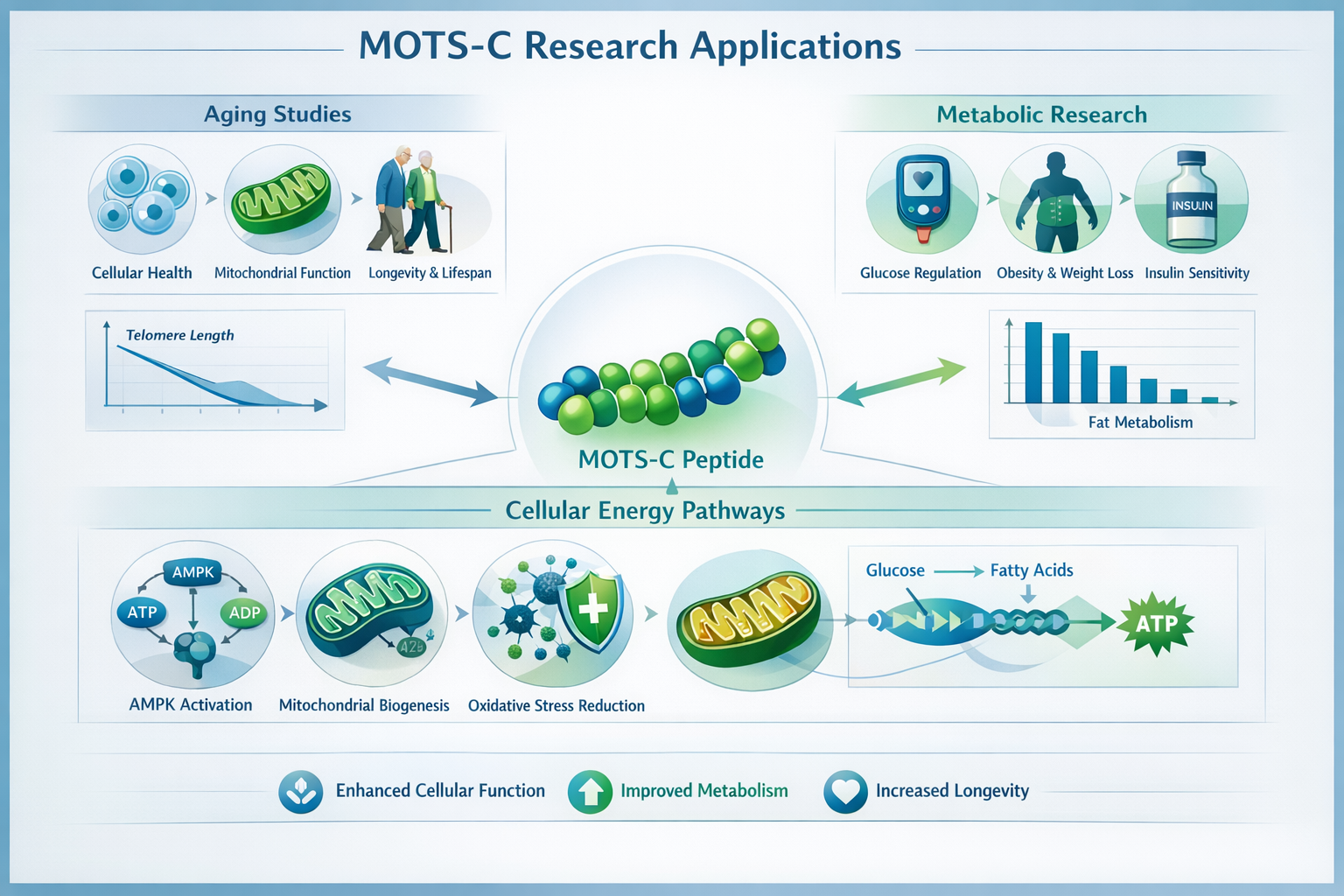
One of the primary reasons why do people research MOTS-C centers on its potential role in metabolic regulation and cellular energy homeostasis. Research has indicated that MOTS-C may influence glucose metabolism, insulin sensitivity, and overall metabolic function at the cellular level. These findings have made it a subject of intense interest among researchers studying metabolic disorders and cellular energy pathways.
Laboratory studies have demonstrated that MOTS-C can influence various metabolic parameters in cell culture and animal models. Researchers have observed changes in glucose uptake, fatty acid oxidation, and mitochondrial respiration in response to MOTS-C treatment. These metabolic effects have led scientists to investigate the underlying mechanisms through which this peptide exerts its biological activity.
The metabolic research applications of MOTS-C extend beyond basic energy metabolism to include studies of metabolic adaptation and stress responses. Researchers have found that MOTS-C expression and activity may change in response to various metabolic stressors, including caloric restriction, exercise, and aging. Understanding these adaptive responses represents a key area of current research focus.
Current metabolic research protocols often involve measuring multiple parameters simultaneously, including glucose tolerance, insulin sensitivity, mitochondrial function, and gene expression patterns. These comprehensive approaches help researchers understand the complex networks through which MOTS-C may influence cellular metabolism.
Aging and Longevity Research
Another significant driver of MOTS-C research interest lies in its potential connections to aging and longevity. Age-related changes in mitochondrial function have long been recognized as important factors in the aging process, and the discovery of mitochondrial-derived peptides like MOTS-C has added new dimensions to aging research.
Studies have shown that MOTS-C levels may change with age, and researchers are investigating whether these changes contribute to age-related metabolic dysfunction. This line of research has particular relevance for understanding how mitochondrial signaling pathways may influence the aging process at the cellular level.
Longevity research involving MOTS-C often focuses on its potential role in maintaining cellular function during aging. Researchers study how MOTS-C expression and activity change over time and whether interventions that modulate MOTS-C levels can influence age-related cellular changes. These studies typically involve long-term experiments using various model systems.
The intersection of MOTS-C research with aging studies has also led to investigations of its relationship with other longevity-associated pathways. Researchers are exploring potential connections between MOTS-C and established longevity mechanisms, including caloric restriction, exercise adaptation, and stress resistance pathways.
For comprehensive peptide research programs, scientists often utilize peptide blends and combinations to study complex biological interactions and synergistic effects.
Mitochondrial Function and Bioenergetics
The study of mitochondrial function represents another core area driving MOTS-C research interest. As a mitochondrial-derived peptide, MOTS-C provides researchers with a unique tool for investigating mitochondrial signaling and function. This research focus has particular importance given the central role of mitochondria in cellular energy production and overall cell health.
Researchers studying mitochondrial bioenergetics use MOTS-C to investigate how mitochondria communicate with other cellular compartments. The peptide’s ability to influence nuclear gene expression while being produced by mitochondria makes it an excellent model for studying mitochondrial-nuclear communication pathways.
Studies of mitochondrial function often involve sophisticated techniques for measuring oxygen consumption, ATP production, and mitochondrial membrane potential. Researchers use these measurements to understand how MOTS-C influences various aspects of mitochondrial performance and to identify the specific mechanisms through which it acts.
The bioenergetics research applications of MOTS-C extend to studies of mitochondrial adaptation and plasticity. Researchers investigate how MOTS-C levels and activity change in response to different energy demands and how these changes influence overall mitochondrial function and cellular energy status.
Research Methodologies: How Scientists Study MOTS-C
Laboratory Techniques and Protocols
Understanding why do people research MOTS-C requires familiarity with the sophisticated laboratory techniques used to study this peptide. Modern MOTS-C research employs a wide range of methodological approaches, from basic cell culture studies to complex animal model experiments. These diverse techniques allow researchers to investigate different aspects of MOTS-C biology and function.
Cell culture studies represent one of the most common approaches for MOTS-C research. Researchers use various cell lines, including muscle cells, liver cells, and adipocytes, to study how MOTS-C influences cellular metabolism and function. These studies typically involve treating cells with different concentrations of MOTS-C and measuring various cellular parameters over time.
Common Laboratory Techniques for MOTS-C Research:
- Cell viability assays to assess cellular health and survival
- Metabolic flux analysis to measure cellular energy production
- Gene expression analysis using qPCR and RNA sequencing
- Protein analysis through Western blotting and immunofluorescence
- Mitochondrial function tests including respirometry and ATP measurement
- Glucose uptake assays to study metabolic effects
- Insulin sensitivity measurements in relevant cell types
The quality of research results depends heavily on the purity and consistency of the MOTS-C used in experiments. Researchers typically source their peptides from specialized suppliers that can provide detailed certificates of analysis and maintain consistent quality standards throughout their studies.
Animal Model Studies
Animal model research represents another crucial component of MOTS-C investigation. These studies allow researchers to examine the systemic effects of MOTS-C in living organisms and to study long-term effects that cannot be observed in cell culture systems. Animal studies have provided valuable insights into the physiological roles of MOTS-C and its potential mechanisms of action.
Mouse models are particularly common in MOTS-C research due to their well-characterized genetics and the availability of various transgenic strains. Researchers use both young and aged mice to study how MOTS-C effects change over time and to investigate its potential role in age-related metabolic changes.
Research protocols for animal studies typically involve careful control of experimental conditions, including diet, exercise, and environmental factors. These controlled conditions are essential for obtaining reliable and reproducible results that can contribute to the broader understanding of MOTS-C biology.
Long-term animal studies have revealed important information about MOTS-C’s effects on lifespan, healthspan, and age-related pathologies. These studies require significant time and resource investments but provide crucial data about the physiological relevance of MOTS-C research findings.
Analytical Methods and Quality Control
The analytical methods used in MOTS-C research are critical for ensuring reliable and reproducible results. Modern peptide research requires sophisticated analytical techniques to verify peptide identity, purity, and biological activity. These quality control measures are essential for maintaining scientific rigor and ensuring that research findings are based on well-characterized materials.
High-performance liquid chromatography (HPLC) represents the gold standard for peptide purity analysis. Researchers use HPLC to verify that their MOTS-C samples meet the purity requirements for their specific experiments. Mass spectrometry provides additional confirmation of peptide identity and can detect potential contaminants or degradation products.
Key Analytical Parameters for MOTS-C Research:
| Parameter | Method | Importance |
|---|---|---|
| Purity | HPLC | Ensures consistent results |
| Identity | Mass Spectrometry | Confirms correct peptide |
| Concentration | UV Spectroscopy | Accurate dosing |
| Stability | Time-course analysis | Maintains activity |
| Endotoxin levels | LAL assay | Prevents contamination |
Biological activity assays provide functional verification that MOTS-C samples retain their expected biological properties. These assays typically involve measuring specific cellular responses to MOTS-C treatment and comparing results to established standards or reference materials.
For researchers seeking high-quality materials for their studies, adaptive capacity and peptide mapping resources can provide valuable guidance on selecting appropriate peptides and analytical methods.
Current Research Trends: Why Do People Research MOTS-C in 2026?
Emerging Research Directions
The landscape of MOTS-C research continues to evolve as scientists uncover new aspects of this fascinating peptide. Current research trends reflect both technological advances and growing understanding of mitochondrial biology. These emerging directions help explain why do people research MOTS-C with increasing intensity and sophistication.
One significant trend involves the use of advanced genomics and proteomics techniques to study MOTS-C effects at the molecular level. Researchers are now able to examine how MOTS-C influences entire gene expression networks and protein interaction patterns, providing unprecedented insights into its mechanisms of action.
Current Research Focus Areas:
🔬 Molecular Mechanisms: Understanding how MOTS-C interacts with cellular signaling pathways
🧬 Genetic Regulation: Investigating how MOTS-C influences gene expression patterns
⚡ Metabolic Networks: Studying MOTS-C’s role in complex metabolic interactions
🔄 Cellular Communication: Examining mitochondrial-nuclear signaling pathways
📊 Systems Biology: Using computational approaches to model MOTS-C effects
The integration of artificial intelligence and machine learning into MOTS-C research represents another important trend. Researchers are using these computational tools to analyze large datasets, predict peptide interactions, and identify potential new research directions.
Collaborative Research Networks
The growing interest in MOTS-C research has led to the formation of collaborative research networks spanning multiple institutions and disciplines. These collaborations enable researchers to pool resources, share expertise, and tackle complex research questions that would be difficult to address individually.
International research consortiums focused on mitochondrial-derived peptides have emerged, bringing together experts in cell biology, metabolism, aging research, and computational biology. These collaborative efforts have accelerated the pace of discovery and helped establish standardized research protocols across different laboratories.
“The collaborative nature of modern MOTS-C research allows us to approach complex biological questions from multiple angles simultaneously, leading to more comprehensive understanding of this important peptide.” – Leading peptide researcher
Cross-disciplinary collaborations have been particularly valuable for MOTS-C research. The peptide’s diverse biological effects require expertise from multiple fields, including biochemistry, physiology, genetics, and computational biology. These interdisciplinary approaches have led to more comprehensive research programs and novel insights into MOTS-C function.
Technological Advances in Research
Recent technological advances have significantly enhanced researchers’ ability to study MOTS-C and understand its biological functions. These technological improvements help explain the growing research interest and the increasing sophistication of MOTS-C studies.
Advanced cell culture systems, including 3D organoids and tissue-on-chip technologies, allow researchers to study MOTS-C effects in more physiologically relevant contexts. These systems bridge the gap between simple cell culture studies and complex animal models, providing new insights into MOTS-C biology.
High-resolution imaging techniques have enabled researchers to visualize MOTS-C effects at the subcellular level. These imaging approaches allow scientists to track how MOTS-C influences mitochondrial structure and function in real-time, providing dynamic insights into its mechanisms of action.
The development of sensitive analytical methods has also contributed to advancing MOTS-C research. Modern techniques can detect and quantify MOTS-C at very low concentrations, enabling researchers to study its natural expression patterns and physiological regulation.
For researchers building comprehensive peptide research programs, building a diverse peptide library provides essential guidance on developing robust research capabilities.
Quality Considerations: Ensuring Reliable MOTS-C Research

Importance of Peptide Purity and Quality
The reliability of MOTS-C research depends critically on the quality of peptides used in experiments. Understanding why do people research MOTS-C requires appreciation for the stringent quality requirements that govern modern peptide research. High-purity peptides are essential for obtaining consistent, reproducible results that can contribute meaningfully to scientific knowledge.
Peptide purity affects virtually every aspect of research outcomes, from basic cellular responses to complex physiological effects. Even small amounts of impurities can significantly alter experimental results, leading to inconsistent findings or false conclusions. This is particularly important for MOTS-C research, where subtle effects on cellular metabolism require precise experimental conditions.
Critical Quality Parameters for MOTS-C Research:
- Purity levels exceeding 98% for most research applications
- Accurate molecular weight confirmed by mass spectrometry
- Proper amino acid sequence verified through analytical methods
- Low endotoxin levels to prevent inflammatory responses
- Appropriate storage conditions to maintain stability
- Detailed certificates of analysis documenting all quality parameters
Research institutions typically establish strict procurement standards for peptides used in their studies. These standards help ensure that research results are based on well-characterized, high-quality materials that meet the requirements of peer-reviewed publication.
Supplier Selection and Verification
Choosing appropriate suppliers represents a crucial decision for MOTS-C researchers. The quality and reliability of peptide suppliers can significantly impact research outcomes and the overall success of scientific investigations. Researchers must carefully evaluate potential suppliers based on multiple criteria to ensure they receive materials suitable for their specific research needs.
Established suppliers like Pure Tested Peptides have built reputations based on consistent quality, reliable delivery, and comprehensive analytical documentation. These suppliers understand the unique requirements of peptide research and maintain quality control systems designed to meet the stringent demands of scientific investigation.
Key Supplier Evaluation Criteria:
| Criterion | Importance | Evaluation Method |
|---|---|---|
| Quality Control | Critical | Review analytical methods |
| Purity Specifications | Essential | Examine certificates |
| Delivery Reliability | Important | Check track record |
| Technical Support | Valuable | Assess responsiveness |
| Documentation | Required | Verify completeness |
Supplier verification processes typically involve reviewing analytical data, examining quality control procedures, and evaluating the supplier’s track record with other research institutions. Many researchers also conduct their own analytical verification of received peptides to ensure they meet their specific requirements.
Storage and Handling Protocols
Proper storage and handling of MOTS-C represent critical factors in maintaining peptide quality throughout research studies. Even high-quality peptides can degrade if not stored and handled appropriately, potentially compromising research results and leading to inconsistent findings.
MOTS-C storage requirements typically include specific temperature conditions, protection from light, and appropriate buffer systems. Researchers must establish and maintain proper storage protocols from the time peptides are received until they are used in experiments.
Standard MOTS-C Storage Guidelines:
- Temperature: -20°C or -80°C for long-term storage
- Light protection: Store in dark containers or wrap in foil
- Humidity control: Use desiccants to prevent moisture absorption
- Aliquoting: Divide into small portions to minimize freeze-thaw cycles
- Documentation: Maintain detailed records of storage conditions
- Stability monitoring: Regular quality checks during storage
Handling protocols focus on minimizing peptide degradation during preparation and use. This includes using appropriate solvents, maintaining proper pH conditions, and avoiding excessive heating or agitation that could damage the peptide structure.
For comprehensive guidance on maintaining peptide quality, researchers can reference best practices for storing research peptides, which provides detailed protocols for various storage scenarios.
Future Directions and Research Opportunities
Emerging Technologies and MOTS-C Research
The future of MOTS-C research is being shaped by rapidly advancing technologies that offer new ways to study this important peptide. Understanding why do people research MOTS-C in the context of emerging technologies reveals exciting possibilities for advancing our knowledge of mitochondrial biology and cellular function.
Single-cell analysis technologies represent one of the most promising developments for MOTS-C research. These techniques allow researchers to study how individual cells respond to MOTS-C treatment, revealing heterogeneity in cellular responses that cannot be detected using traditional bulk analysis methods. This level of resolution provides unprecedented insights into the mechanisms of MOTS-C action.
Emerging Technologies in MOTS-C Research:
- Single-cell RNA sequencing for detailed gene expression analysis
- CRISPR-based screening to identify MOTS-C target pathways
- Advanced imaging systems for real-time cellular monitoring
- Artificial intelligence for data analysis and pattern recognition
- Organ-on-chip models for physiologically relevant testing
- Nanotechnology applications for targeted delivery studies
The integration of computational biology with experimental research has opened new avenues for understanding MOTS-C function. Researchers are using sophisticated modeling approaches to predict how MOTS-C interacts with cellular networks and to identify potential new research targets.
Advances in peptide synthesis and modification technologies are also expanding research possibilities. These developments enable researchers to create modified versions of MOTS-C with altered properties, helping to understand structure-function relationships and identify key amino acids responsible for biological activity.
Translational Research Opportunities
While current MOTS-C research focuses primarily on basic science applications, the growing understanding of its biological functions is creating opportunities for translational research. These opportunities represent natural extensions of fundamental research and help explain the continued growth in research interest.
Biomarker development represents one promising area for translational MOTS-C research. Scientists are investigating whether MOTS-C levels in various biological samples could serve as indicators of mitochondrial function or metabolic health. This research requires sophisticated analytical methods and large-scale studies to establish normal ranges and clinical correlations.
The development of MOTS-C-based research tools also represents an important translational opportunity. These tools could help other researchers study mitochondrial function and metabolic regulation in their own research programs, expanding the impact of MOTS-C research across multiple scientific disciplines.
Translational Research Areas:
| Research Area | Current Status | Future Potential |
|---|---|---|
| Biomarker Development | Early stage | Diagnostic applications |
| Research Tools | Active development | Laboratory standards |
| Analytical Methods | Established | Clinical validation |
| Quality Standards | Evolving | Regulatory guidance |
Collaborative Research Initiatives
The complexity of MOTS-C biology requires collaborative approaches that bring together researchers from multiple disciplines and institutions. These collaborative initiatives are driving innovation and accelerating the pace of discovery in MOTS-C research.
International research consortiums focused on mitochondrial-derived peptides are facilitating data sharing and standardizing research protocols across different laboratories. These efforts help ensure that research findings are reproducible and can be compared across different studies and research groups.
Public-private partnerships are also emerging in MOTS-C research, bringing together academic researchers with industry partners who can provide resources and expertise for large-scale studies. These partnerships help bridge the gap between basic research and potential applications.
The establishment of shared research resources, including peptide libraries and analytical facilities, is making MOTS-C research more accessible to researchers at smaller institutions. These shared resources help democratize access to high-quality research materials and advanced analytical capabilities.
For researchers interested in accessing high-quality MOTS-C and related peptides, Pure Tested Peptides provides comprehensive support for research programs of all sizes, from individual investigators to large collaborative initiatives.
Conclusion

The question of why do people research MOTS-C reveals a rich tapestry of scientific inquiry that spans multiple disciplines and research applications. From its unique origin as a mitochondrial-derived peptide to its potential roles in metabolic regulation and cellular function, MOTS-C represents a fascinating subject of study that continues to yield new insights into fundamental biological processes.
The growing research interest in MOTS-C reflects both the peptide’s intrinsic biological importance and the availability of advanced technologies that enable sophisticated studies of its function. As we’ve explored throughout this comprehensive analysis, researchers are drawn to MOTS-C for its potential to illuminate key aspects of mitochondrial biology, cellular metabolism, and age-related changes in cellular function.
The success of MOTS-C research depends critically on access to high-quality research materials and the application of rigorous scientific methods. The availability of pure, well-characterized MOTS-C from reputable suppliers has been essential for advancing research in this field and ensuring that findings are based on reliable experimental data.
Key Research Priorities Moving Forward:
• Mechanistic Understanding: Continued investigation of how MOTS-C influences cellular signaling pathways and metabolic networks
• Technological Integration: Leveraging emerging technologies to gain deeper insights into MOTS-C biology and function
• Collaborative Research: Fostering partnerships that can tackle complex research questions requiring multidisciplinary expertise
• Quality Standards: Maintaining rigorous quality control standards for research materials and experimental protocols
• Knowledge Translation: Converting basic research findings into practical applications and research tools
The future of MOTS-C research looks exceptionally promising, with new technologies and collaborative approaches opening unprecedented opportunities for discovery. As researchers continue to unravel the complexities of this remarkable peptide, we can expect to see continued growth in research interest and increasingly sophisticated approaches to studying its biological functions.
For researchers embarking on MOTS-C studies or expanding existing research programs, the importance of partnering with reliable suppliers and maintaining rigorous experimental standards cannot be overstated. The scientific community’s growing understanding of MOTS-C biology provides a strong foundation for future discoveries that will continue to advance our knowledge of mitochondrial function and cellular biology.
The research journey surrounding MOTS-C exemplifies the best aspects of modern scientific inquiry: rigorous methodology, collaborative approaches, and the persistent pursuit of knowledge that can advance our understanding of fundamental biological processes. As we look toward the future, the continued investigation of MOTS-C promises to yield insights that will benefit not only the scientific community but also our broader understanding of cellular biology and human health.
References
[1] Lee, C., et al. (2015). The mitochondrial-derived peptide MOTS-c promotes metabolic homeostasis and reduces obesity and insulin resistance. Cell Metabolism, 21(3), 443-454.
[2] Fuku, N., et al. (2015). The mitochondrial-derived peptide MOTS-c is a regulator of skeletal muscle and aging. Nature Communications, 6, 7737.
[3] Lu, H., et al. (2019). MOTS-c peptide regulates adipose homeostasis to prevent ovariectomy-induced metabolic dysfunction. Journal of Molecular Medicine, 97(4), 473-485.
[4] Kim, K.H., et al. (2018). The mitochondrial-encoded peptide MOTS-c translocates to the nucleus to regulate nuclear gene expression in response to metabolic stress. Cell Metabolism, 28(3), 516-524.
[5] Reynolds, J.C., et al. (2021). MOTS-c is an exercise-induced mitochondrial-encoded regulator of age-dependent physical decline and muscle homeostasis. Nature Communications, 12, 470.
[6] Zhai, M., et al. (2022). MOTS-c alleviates myocardial ischemia/reperfusion injury by activating AMPK signaling in diabetic rats. Cardiovascular Diabetology, 21, 46.