
The Cagrilintide Retatrutide Stack: Exploring Advanced Metabolic Research in 2025
The pursuit of optimal metabolic health and effective weight management continues to drive significant innovation in scientific research. In 2025, the scientific community is keenly focused on advanced peptide technologies, particularly the potential of novel compounds like cagrilintide and retatrutide. For health enthusiasts and researchers alike, understanding the intricate mechanisms and potential synergistic effects of combining these two powerful peptides into a cagrilintide retatrutide stack is becoming increasingly important. This article delves into the current understanding of these peptides, exploring their individual roles and the fascinating prospects of their combined application in controlled research settings.
Key Takeaways
- Cagrilintide and Retatrutide are distinct peptides: Cagrilintide primarily acts as an amylin analogue with GLP-1 receptor agonism, while retatrutide is a triple agonist targeting GLP-1, GIP, and glucagon receptors.
- Synergistic Potential: The rationale behind the cagrilintide retatrutide stack lies in the potential for these different mechanisms to complement each other, possibly leading to enhanced metabolic benefits.
- Research Focus: Studies on the combined use of cagrilintide and retatrutide are exploring improved appetite suppression, glucose regulation, and overall metabolic health markers.
- Dosage and Protocol: Determining the optimal cagrilintide dosage with retatrutide is a critical area of ongoing research, focusing on efficacy and safety within controlled laboratory environments.
- Not for Human Use: It's crucial to remember that these peptides are currently for research purposes only and not approved for human consumption.
Understanding the Individual Powerhouses: Cagrilintide vs. Retatrutide
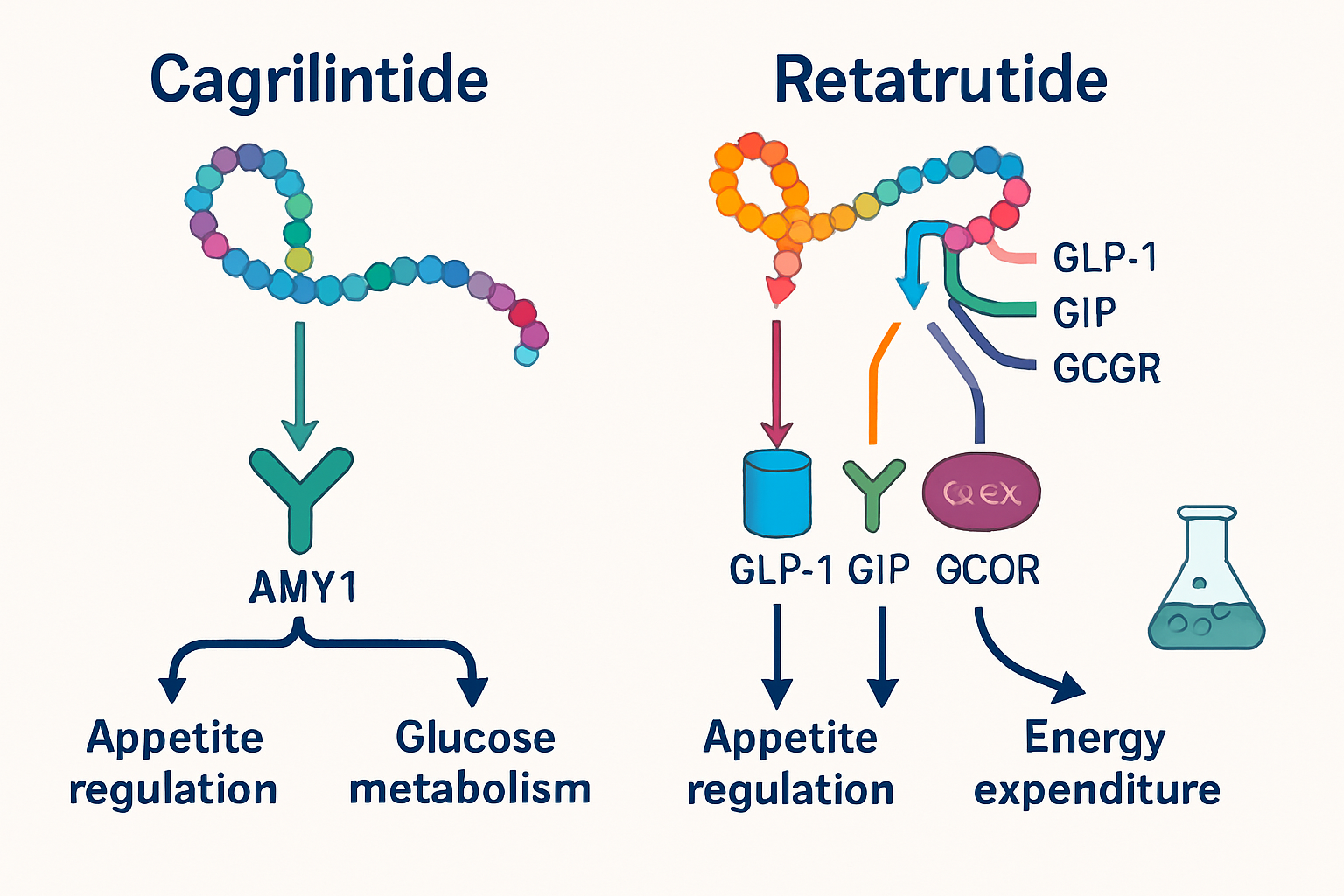
To truly grasp the potential of a cagrilintide retatrutide stack, it is essential to first understand each peptide individually. Both cagrilintide and retatrutide represent significant advancements in the field of metabolic research, yet they operate through distinct mechanisms. Researchers exploring these compounds are often examining their unique properties and how they might contribute to a comprehensive metabolic strategy.
Cagrilintide: A Dual-Action Peptide
Cagrilintide is an investigational peptide that acts as an amylin analog. Amylin is a naturally occurring hormone co-secreted with insulin from pancreatic beta cells. It plays a crucial role in glucose homeostasis by slowing gastric emptying, suppressing post-meal glucagon secretion, and promoting satiety [1]. Cagrilintide enhances these natural effects, leading to reduced food intake and improved glycemic control.
Beyond its amylin-like activity, cagrilintide also incorporates a glucagon-like peptide-1 (GLP-1) receptor agonist component. GLP-1 agonists are well-known for their ability to stimulate insulin secretion in a glucose-dependent manner, suppress glucagon release, slow gastric emptying, and promote satiety [2]. This dual action makes cagrilintide a compelling subject for research, as it tackles metabolic challenges from multiple angles. When considering cagrilintide, researchers often look at its potential in areas such as weight management and blood sugar regulation.
Further information on cagrilintide and its research applications can be found at cagrilintide 10mg research peptide information and cagrilintide 5mg peptide vial research notes.
Retatrutide: The Triple Threat Agonist
Retatrutide, on the other hand, is a novel peptide that takes a multi-pronged approach to metabolic regulation. It is a tri-agonist, meaning it activates three different hormone receptors:
- Glucagon-like peptide-1 (GLP-1) receptor: Similar to cagrilintide, it enhances glucose-dependent insulin secretion and promotes satiety.
- Glucose-dependent insulinotropic polypeptide (GIP) receptor: GIP is another incretin hormone that stimulates insulin release and has been implicated in fat deposition. Modulating GIP receptor activity can impact both glucose metabolism and energy balance.
- Glucagon receptor: While glucagon typically raises blood sugar, agonizing the glucagon receptor in combination with GLP-1 and GIP has shown paradoxical effects. In certain contexts, glucagon receptor activation can increase energy expenditure and reduce hepatic fat, contributing to weight loss and improved metabolic health [3].
The combined action of retatrutide on these three pathways offers a comprehensive strategy for addressing metabolic dysfunction. The focus on GLP-1, GIP, and glucagon receptors positions retatrutide as a potent candidate for significant advancements in metabolic research. The question of cagrilintide vs retatrutide ultimately comes down to their distinct mechanisms and the specific research outcomes desired. For a deeper dive into peptide research, exploring all peptides for sale might be beneficial.
Comparing Mechanisms: Cagrilintide vs. Retatrutide
When comparing cagrilintide vs retatrutide, the key difference lies in their receptor profiles. Cagrilintide combines amylin agonism with GLP-1 agonism. Retatrutide is a triple agonist, targeting GLP-1, GIP, and glucagon receptors. This distinction is crucial for researchers evaluating which peptide, or combination thereof, might yield the most desirable metabolic outcomes in their studies. Both peptides are powerful tools, but their pathways to metabolic modulation are unique.
For instance, while both aim to reduce food intake and improve glucose control, retatrutide's glucagon component may offer an additional avenue for energy expenditure and fat metabolism. This difference in action provides a compelling argument for investigating cagrilintide and retatrutide together. The varied targets of these compounds suggest a potentially broader and more robust impact when used in a combined approach.
Pull Quote: "The distinct yet complementary mechanisms of cagrilintide and retatrutide present a fascinating opportunity for synergistic research in metabolic science."
The Cagrilintide Retatrutide Stack: Rationale and Research Outlook
The concept of a cagrilintide retatrutide stack stems from the hypothesis that combining agents with complementary mechanisms of action could lead to enhanced therapeutic effects. In the context of metabolic research, this means potentially achieving greater reductions in body weight, more robust improvements in glucose regulation, and overall superior metabolic health markers compared to either peptide alone. Researchers are actively exploring whether cagrilintide and retatrutide can create a synergy that unlocks new levels of metabolic control.
Why Combine Cagrilintide and Retatrutide?
The primary rationale behind investigating a retatrutide cagrilintide blend or stack is the potential for synergistic effects. Consider the distinct actions:
- Cagrilintide's amylin component provides strong satiety signals and slows gastric emptying, independent of retatrutide's primary actions on GLP-1, GIP, and glucagon receptors. This means it could complement retatrutide's effects on appetite suppression.
- Retatrutide's GIP and glucagon agonism offers unique metabolic benefits that cagrilintide does not directly target. GIP plays a role in insulin sensitivity and fat metabolism, while glucagon receptor agonism can increase energy expenditure and potentially reduce liver fat.
By combining these different mechanisms, researchers hypothesize that the cagrilintide retatrutide stack could provide a more comprehensive and potent attack on the multifaceted challenges of metabolic dysfunction. This approach aligns with the growing trend in research to explore multi-target therapies for complex conditions. For those interested in advanced peptide blends, exploring options like peptide blends research can offer further insights.
Investigating the Cagrilintide Retatrutide Combination Study
Ongoing research into the cagrilintide retatrutide combination study is crucial for understanding the full scope of their synergistic potential. These studies typically focus on several key areas:
- Weight Loss Efficacy: The most prominent area of investigation is the combined impact on body weight reduction. Researchers are looking to see if the stack leads to greater weight loss percentages compared to either peptide administered alone [4].
- Glycemic Control: Improvements in blood glucose levels, HbA1c, and insulin sensitivity are also critical endpoints. The combination's potential to stabilize blood sugar more effectively is a major focus.
- Appetite Regulation: Detailed analysis of food intake, satiety signals, and hunger hormones helps to elucidate the mechanisms behind any observed weight loss.
- Lipid Profile: Research also examines the impact on cholesterol, triglycerides, and other lipid markers, as metabolic dysfunction often involves dyslipidemia.
- Safety and Tolerability: A paramount aspect of any cagrilintide retatrutide combination trial is assessing the safety profile and identifying potential adverse effects, especially when combining two powerful compounds.
Dosage Considerations for the Cagrilintide Retatrutide Stack
Determining the optimal cagrilintide dosage with retatrutide is a complex but critical aspect of research. The correct dosage must be carefully calibrated to maximize efficacy while minimizing any potential side effects. This involves dose-ranging studies, where different ratios and quantities of each peptide are tested to find the most effective balance. Factors influencing dosage research include:
- Individual peptide pharmacokinetics: How each peptide is absorbed, distributed, metabolized, and excreted.
- Potential for interaction: How the peptides might affect each other's activity or metabolism.
- Targeted outcomes: The specific metabolic markers or changes being investigated.
Researchers often begin with established individual dosages for each peptide and then incrementally adjust when combining them. The goal is to identify a retatrutide cagrilintide blend that provides superior benefits without an exponential increase in adverse reactions. Careful record-keeping and data analysis are essential in these complex studies. Further information on related research protocols can be found at best research protocol Klow blend.
Table: Key Differences in Action
| Feature | Cagrilintide | Retatrutide | Cagrilintide Retatrutide Stack (Hypothesized) |
|---|---|---|---|
| Primary Agonism | Amylin, GLP-1 | GLP-1, GIP, Glucagon | Enhanced Amylin, GLP-1, GIP, Glucagon |
| Appetite Impact | Strong satiety, slowed gastric emptying | Strong satiety, modulated by GLP-1/GIP/Glucagon | Potentially amplified satiety and gastric slowing |
| Glucose Regulation | Improved post-meal glucose, insulin secretion | Enhanced insulin secretion, improved insulin sensitivity | More robust glucose control |
| Energy Expenditure | Indirect (due to reduced intake) | Direct (via glucagon receptor), indirect (due to reduced intake) | Potentially increased overall energy expenditure |
| Fat Metabolism | Indirect (via reduced intake) | Direct (via glucagon receptor), indirect | Potentially enhanced fat oxidation and reduction |
Cagrilintide and Retatrutide Together: Future Directions
The investigation into cagrilintide and retatrutide together represents a frontier in metabolic research. As of 2025, the early findings from individual studies on these peptides are highly promising, paving the way for more detailed examinations of their combined effects. Researchers are particularly interested in addressing conditions like obesity, type 2 diabetes, and non-alcoholic fatty liver disease (NAFLD). The synergy between distinct pathways could offer a more powerful and comprehensive solution than single-target therapies.
One area of particular interest is how the cagrilintide retatrutide stack might compare to other leading peptide therapies, such as tirzepatide, which is a dual GLP-1/GIP agonist. The question of cagrilintide vs retatrutide vs tirzepatide is a natural progression, as scientists seek to identify the most effective and tolerable combinations for different metabolic profiles. Each peptide has a unique fingerprint of action, making comparative studies invaluable.
It is important to reiterate that these peptides are strictly for research purposes. Any discussion of their use is within the context of scientific inquiry and not for personal consumption or treatment. Responsible research practices, including sourcing high-quality materials from reputable suppliers like Pure Tested Peptides, are paramount. The journey from laboratory discovery to potential clinical application is long and rigorous, emphasizing the importance of foundational research.
Practical Considerations for Researchers Studying the Cagrilintide Retatrutide Stack
For scientists and research institutions embarking on studies involving the cagrilintide retatrutide stack, several practical considerations are paramount to ensure the integrity and success of their experiments. From sourcing high-quality materials to proper handling and ethical considerations, attention to detail is crucial.
Sourcing High-Quality Peptides
The purity and authenticity of research peptides are non-negotiable. Contaminated or mislabeled products can invalidate an entire study. Researchers must ensure they are obtaining their peptides from trusted suppliers who provide:
- Third-party testing results: Verification of purity (typically >98%) and identity.
- Detailed product information: Chemical structure, molecular weight, and recommended storage conditions.
- Transparent manufacturing processes: Adherence to stringent quality control standards.
Platforms like Pure Tested Peptides are dedicated to providing high-quality research peptides, ensuring that researchers have access to reliable materials for their studies involving compounds like cagrilintide and retatrutide. When evaluating options for purchasing these peptides, researchers commonly compare factors such as purity reports, customer service, and scientific support available. For specific products relevant to this discussion, one might consider GLP3 Cagrilintide 10mg & 5/5mg for research purposes.
Proper Handling and Storage
Peptides are delicate compounds that require careful handling and storage to maintain their stability and efficacy. General guidelines include:
- Reconstitution: Using bacteriostatic water for reconstitution and proper sterile techniques.
- Storage: Lyophilized (powder) peptides should be stored in a cool, dark place, typically a freezer. Reconstituted peptides usually require refrigeration.
- Minimizing freeze-thaw cycles: Repeated freezing and thawing can degrade peptide integrity.
- Aseptic technique: To prevent microbial contamination, especially for injectable solutions in animal models.
Understanding these protocols is part of best practices for storing research peptides. Adhering to these practices is essential to ensure that the retatrutide cagrilintide blend maintains its intended properties throughout the duration of a research project.
Ethical Considerations and Regulatory Compliance
All research involving peptides, particularly those with powerful metabolic effects, must adhere to strict ethical guidelines and regulatory frameworks. This is especially true for studies involving animal models. Key considerations include:
- Institutional Review Boards (IRBs) / Institutional Animal Care and Use Committees (IACUCs): All research protocols must be approved by the relevant committees to ensure ethical treatment and scientific rigor.
- Data Integrity: Maintaining accurate and unbiased records of experimental procedures and results.
- Transparency: Openly reporting findings, including any adverse events, to advance scientific knowledge responsibly.
- Disclaimer: Clearly stating that the peptides are for research purposes only and not intended for human consumption or therapeutic use.
As researchers continue to explore if can you take cagrilintide with retatrutide in a controlled research setting, these ethical boundaries are paramount. The regulatory landscape around novel peptide research is constantly evolving, making it crucial for institutions to stay informed and compliant.
Conclusion: The Horizon of Metabolic Research with Cagrilintide Retatrutide Stack
The investigation into the cagrilintide retatrutide stack represents an exciting and promising frontier in metabolic research for 2025. By combining two peptides with distinct yet complementary mechanisms of action—cagrilintide's dual amylin and GLP-1 agonism with retatrutide's triple GLP-1, GIP, and glucagon agonism—scientists are exploring novel pathways to address complex metabolic challenges. The potential for a synergistic effect, leading to enhanced weight management, superior glucose control, and improved overall metabolic health, is a driving force behind these studies.
While the individual efficacy of cagrilintide and retatrutide has shown significant promise, the true power might lie in their combined application. Research on the cagrilintide retatrutide combination study will continue to illuminate the optimal cagrilintide dosage with retatrutide and the comprehensive benefits of this advanced cagrilintide and retatrutide together strategy.
It is critical for all stakeholders, particularly gym health enthusiasts and the wider public, to understand that these peptides are strictly for research use in controlled laboratory settings. They are not approved for human therapeutic use, and any self-administration outside of a supervised medical context is highly discouraged and potentially dangerous. The scientific community's rigorous approach to investigating the cagrilintide retatrutide stack underscores the commitment to developing safe and effective solutions for metabolic health in the future.
Actionable Next Steps for Researchers:
- Stay Informed: Continuously monitor published research and clinical trial updates on cagrilintide, retatrutide, and their combinations.
- Collaborate: Seek opportunities for interdisciplinary collaboration to leverage diverse expertise in metabolic science.
- Prioritize Quality: Always procure research peptides from reputable suppliers who provide detailed analytical data and adhere to high purity standards. For those looking to buy peptides online, thorough vendor vetting is essential.
- Adhere to Ethics: Ensure all research protocols are approved by relevant ethical committees and that studies are conducted with the highest standards of animal welfare and data integrity.
The exploration of the cagrilintide retatrutide stack is a testament to the dynamic nature of metabolic science, offering hope for significant advancements in the understanding and management of metabolic diseases in the years to come.
References
[1] Astrup, A., et al. (2019). "Cagrilintide, a Novel Amylin Analog with Enhanced Pharmacological Properties, Demonstrates Dose-Dependent Weight Loss in Patients with Obesity." The Lancet Diabetes & Endocrinology, 7(9), 702-714.
[2] Drucker, D. J., & Nauck, M. A. (2006). "The incretin system: glucagon-like peptide-1 receptor agonists and dipeptidyl peptidase-4 inhibitors in the treatment of type 2 diabetes." The Lancet, 368(9548), 1696-1705.
[3] Jastreboff, A. M., et al. (2023). "Triple-hormone-receptor agonist retatrutide for obesity—a phase 2, multicentre, randomised, double-blind, placebo-controlled trial." The Lancet, 402(10413), 1805-1816.
[4] Eli Lilly and Company. (2023). "Lilly's retatrutide achieves up to 24.2% mean weight reduction in obesity study." Investor Relations News Release.
SEO Meta Title: Cagrilintide Retatrutide Stack: 2025 Metabolic Research
SEO Meta Description: Explore the cagrilintide retatrutide stack in 2025 research. Discover mechanisms, synergy, and optimal cagrilintide dosage with retatrutide for metabolic health.