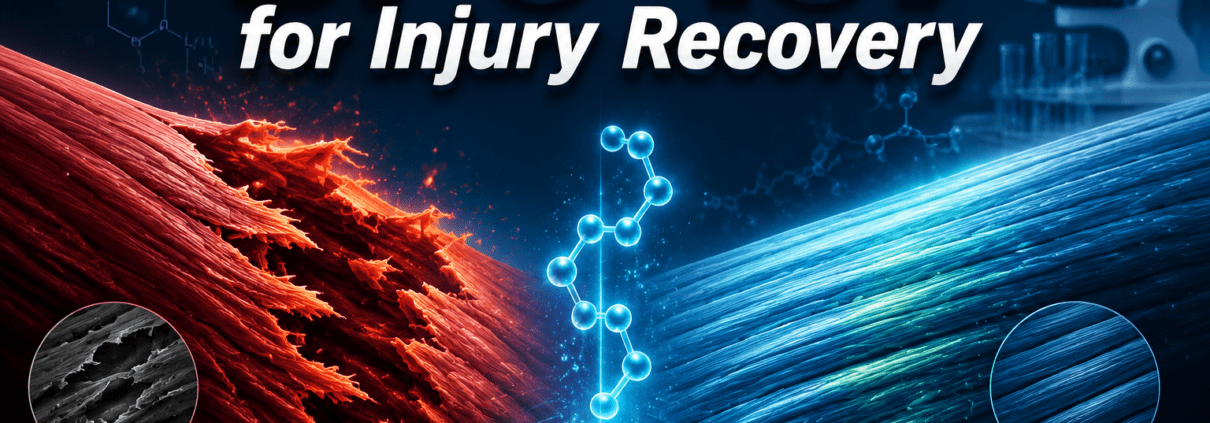
Musculoskeletal injuries account for more than 1.7 billion cases of chronic pain worldwide, yet conventional recovery options often fall short for athletes and active individuals seeking faster, more complete healing. That gap has driven growing research interest in BPC-157 for injury recovery — a synthetic peptide derived from a protein found in gastric juice that has shown striking tissue-repair activity in preclinical models.
Key Takeaways
- BPC-157 is a 15-amino-acid peptide studied for its potential role in accelerating tendon, ligament, muscle, and bone repair.
- Preclinical research suggests it may promote angiogenesis (new blood vessel growth) and collagen synthesis — two critical steps in tissue healing.
- It is currently available for research purposes only and is not approved for human therapeutic use.
- BPC-157 is often studied alongside other recovery-focused peptides such as TB-500 for complementary mechanisms.
- Sourcing purity-verified peptides is essential for any legitimate research application.
How BPC-157 Works in Tissue Repair
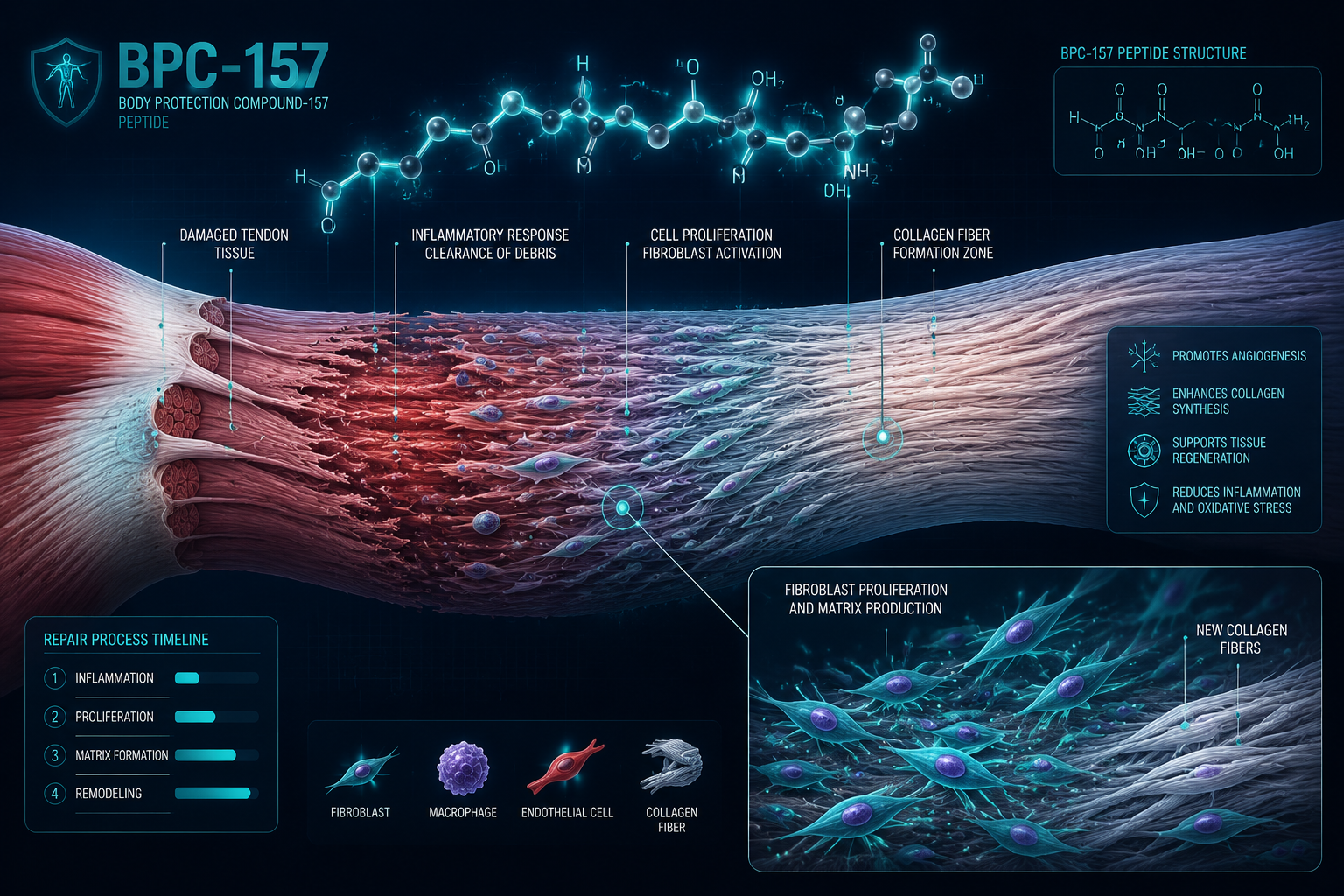
BPC stands for Body Protection Compound. The peptide sequence — 15 amino acids long — is stable in gastric acid, which makes it unusual among peptides. In research settings, it has been observed to interact with several biological pathways tied directly to tissue regeneration.
Key mechanisms observed in preclinical studies include:
| Mechanism | Observed Effect |
|---|---|
| Angiogenesis promotion | Increased formation of new blood vessels to injured sites |
| Collagen synthesis | Upregulation of collagen production in tendons and ligaments |
| Growth factor modulation | Interaction with VEGF and EGF receptor pathways |
| Nitric oxide pathway | Regulation of vascular tone and inflammation response |
| Fibroblast activity | Enhanced migration and proliferation of repair cells |
"The peptide's ability to simultaneously target vascular growth and cellular repair pathways makes it a compelling subject for recovery biology research."
These overlapping mechanisms are why BPC-157 for injury recovery has attracted attention from researchers studying sports medicine, orthopedics, and wound healing. For a broader look at how peptides interact with recovery biology, the recovery and tissue biology overview provides useful foundational context.
BPC-157 for Injury Recovery: Specific Tissue Applications
Tendon and Ligament Injuries
Tendons are notoriously slow to heal due to limited blood supply. Preclinical models using BPC-157 have demonstrated accelerated tendon-to-bone healing and improved tensile strength in ruptured Achilles tendons. Fibroblast proliferation — the cellular engine of tendon repair — appears to be directly stimulated.
Muscle Tears
In muscle crush-injury models, BPC-157 administration has been associated with faster functional recovery and reduced inflammatory markers. This has made it a subject of interest in the context of top healing peptides for recovery.
Bone Healing
Segmental bone defect models have shown improved callus formation and mineralization when BPC-157 was introduced, suggesting potential utility in fracture recovery research.
Gut and Systemic Inflammation
Beyond musculoskeletal tissue, BPC-157 has been studied for its effects on gut lining integrity — relevant because systemic inflammation from gut permeability can significantly slow overall recovery.
BPC-157 vs. TB-500: Understanding the Difference
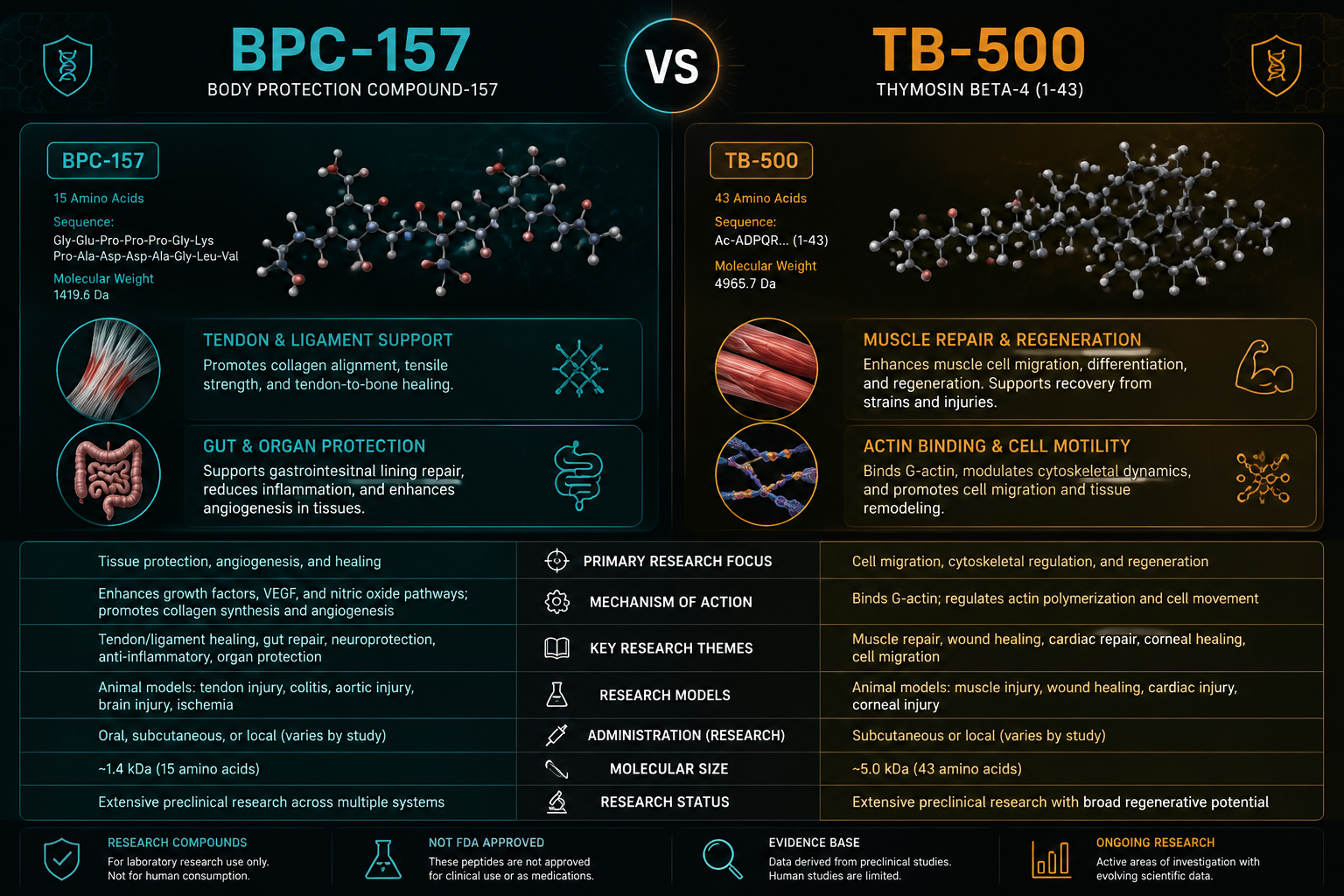
Researchers frequently compare BPC-157 with TB-500 (Thymosin Beta-4), another peptide studied for tissue repair. Both target healing, but through distinct pathways.
- BPC-157 primarily targets local tissue repair, collagen production, and angiogenesis.
- TB-500 focuses on actin regulation, systemic anti-inflammatory effects, and cell migration.
Many researchers study them in combination for potentially complementary effects. The BPC-157 and TB-500 research overview explores this pairing in detail, while TB-500 muscle recovery research themes covers the TB-500 side specifically.
For those exploring oral delivery formats, oral BPC-157 research notes outline what current data suggests about bioavailability differences between delivery methods.
Sourcing and Research Considerations
Because BPC-157 is a research compound in 2026, purity and traceability are non-negotiable for valid experimental outcomes. Researchers should prioritize suppliers that provide third-party testing documentation. The peptide purity testing guide outlines what to look for when evaluating a peptide source. Those ready to explore available formats can review BPC-157 product options directly.
Conclusion
BPC-157 for injury recovery remains one of the most actively researched peptides in the preclinical space as of 2026. Its multi-pathway approach to tissue repair — spanning angiogenesis, collagen synthesis, and fibroblast activity — sets it apart from single-mechanism compounds. Researchers and institutions exploring this peptide should prioritize purity-verified sourcing, pair it with complementary compounds where study design supports it, and stay current with evolving preclinical literature. For those building a broader understanding of peptide-based recovery research, reviewing the full landscape of simple peptides and their research themes is a practical next step.
Tags: BPC-157, injury recovery, peptide research, tissue repair, tendon healing, muscle recovery, BPC-157 TB-500, healing peptides, collagen synthesis, angiogenesis, research peptides, recovery biology