

Zero human clinical trials. That is the current status of both compounds in the BPC-157/TB-500 peptide combination — yet researcher interest in this stack has surged dramatically across sports science and regenerative biology communities. Before diving deeper, understanding what the evidence actually shows — and what it does not — is essential.
Key Takeaways 📌
- The BPC-157/TB-500 peptide combination is studied for synergistic tissue repair potential in animal models
- No human clinical trials exist for either compound as of 2026
- Both peptides are WADA-banned and not FDA-approved for human therapeutic use
- Animal research shows accelerated healing in tendon, ligament, and muscle models
- Long-term safety profiles in humans remain completely undocumented
What Is the BPC-157/TB-500 Peptide Stack?
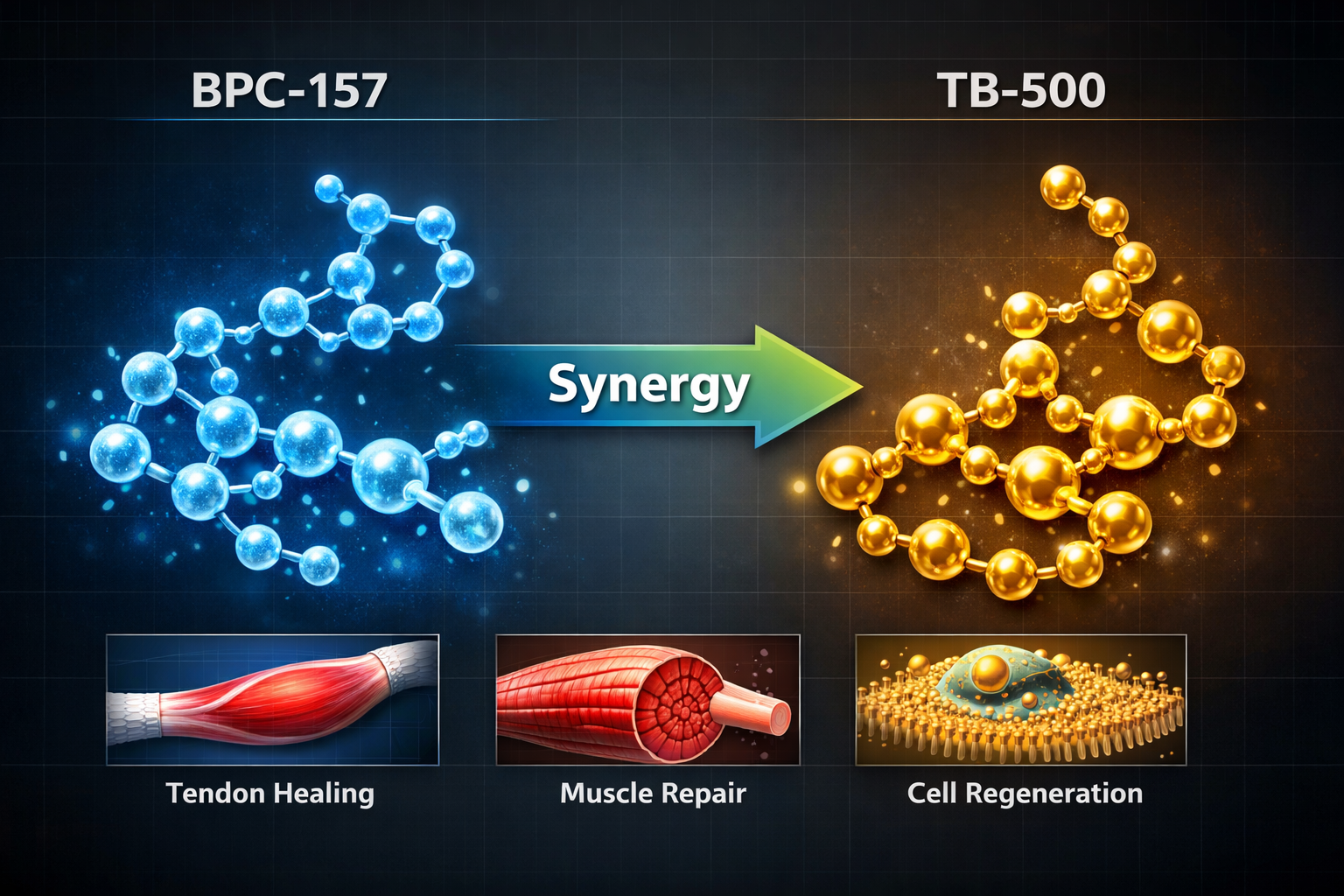
The BPC-157/TB-500 peptide combination pairs two distinct synthetic compounds researchers propose may work synergistically. BPC-157 (Body Protection Compound-157) is a 15-amino-acid sequence derived from a gastric protein. TB-500 is a synthetic fragment of thymosin beta-4 (TB-4), a naturally occurring peptide involved in cytoskeletal remodeling.
💡 "Proposed synergy suggests BPC-157 supports internal cellular repair while TB-500 targets mobility and circulation — though this remains unconfirmed in human studies."
Researchers exploring the BPC-157/TB-500 peptide stack should note that TB-500 is not identical to native TB-4, making direct extrapolation of any TB-4 data potentially invalid.
[product_slider]
Research Findings: What Animal Studies Show
| Area Studied | Evidence Level | Human Data? |
|---|---|---|
| Tendon & ligament repair | Rodent models only | ❌ None |
| Muscle healing | Rodent models only | ❌ None |
| Angiogenesis promotion | Preclinical | ❌ None |
| Long-term safety | Not studied | ❌ None |
Animal model research demonstrates accelerated healing across tendon, ligament, and muscle tissues. However, these findings have not translated to published human trials. A Phase 2 clinical trial on native TB-4 was completed in 2009 — yet results remain unpublished over 15 years later, which researchers widely consider a significant red flag.
For those researching broader peptide mechanisms, the BPC-157 core peptide documentation guide provides structured reference material.
Regulatory Status and Safety Concerns
The regulatory picture for the BPC-157/TB-500 peptide combination is clear:
- 🚫 Not FDA-approved for human therapeutic use
- 🚫 WADA-prohibited — both compounds are banned in competitive sport
- 🚫 Not TGA-approved in Australia for general therapeutic use
- ⚠️ Theoretical cancer risk: Both peptides promote angiogenesis and cell proliferation — processes also involved in tumor growth
Optimal dosing, administration routes, and treatment duration remain undefined in any validated clinical framework. Researchers sourcing compounds should prioritize lab-tested peptides with verified documentation.
Those interested in complementary research areas may also explore innovative peptide delivery systems for broader context on administration science.
Conclusion: Actionable Next Steps for Researchers
The BPC-157/TB-500 peptide stack represents a genuinely compelling area of preclinical science — but the gap between animal data and human evidence remains wide in 2026.
Actionable steps:
- ✅ Review all available preclinical literature before forming research protocols
- ✅ Source only verified, pure tested peptides with certificates of analysis
- ✅ Consult peptide supplier comparison resources before procurement
- ✅ Monitor regulatory updates — this landscape shifts frequently
- ✅ Never conflate animal model findings with established human outcomes
Responsible research means following the evidence — not the hype.
Tags: BPC-157 TB-500 peptide, peptide stack research, TB-500 synthetic fragment, BPC-157 animal studies, WADA banned peptides, peptide regeneration research, tissue repair peptides, research peptides 2026, peptide safety concerns, BPC-157 regulatory status, thymosin beta-4 fragment, lab tested peptides