Buy Peptides: The Complete 2026 Guide to Research Peptide Sourcing
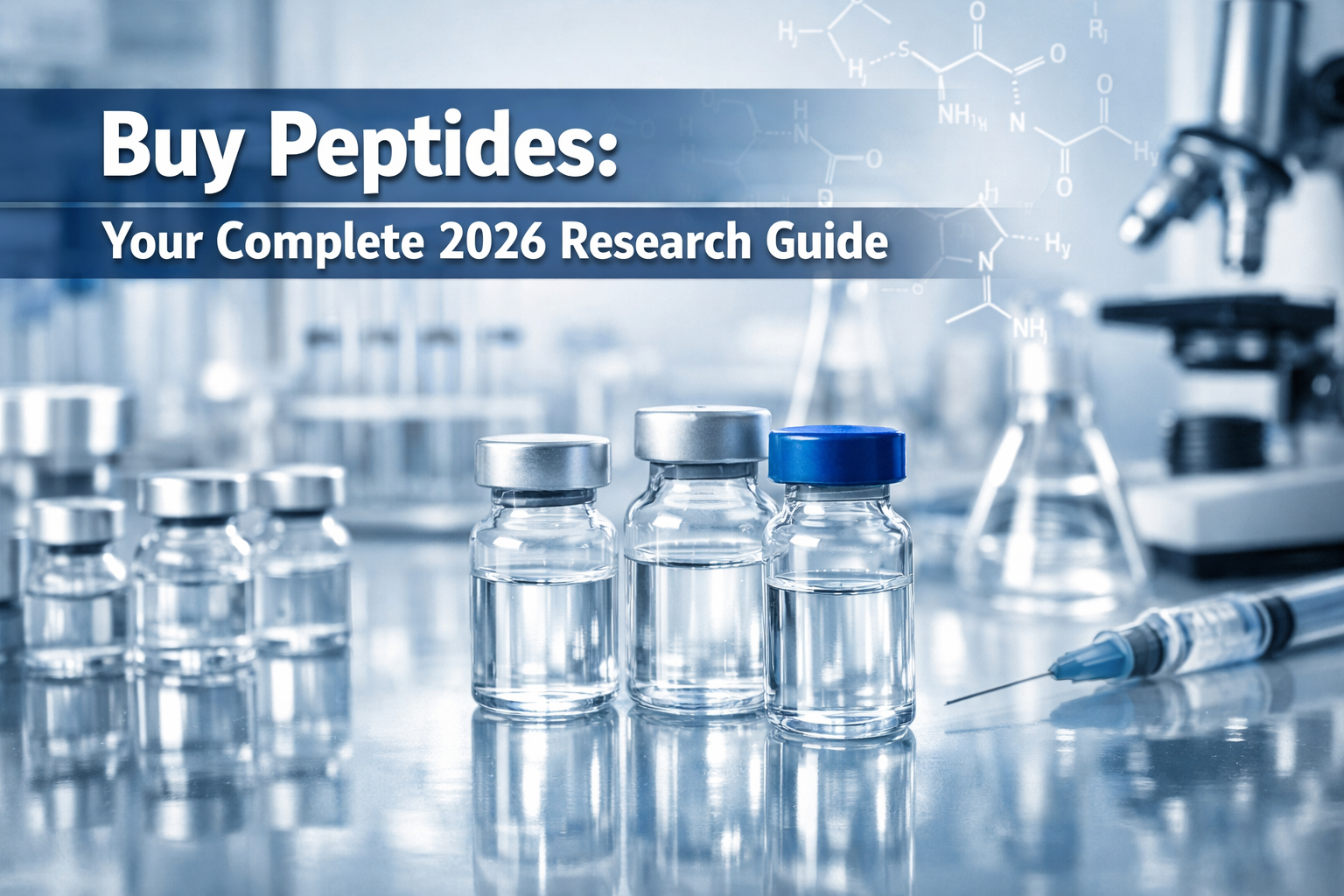
The research peptide market has experienced unprecedented growth, with scientists, health professionals, and wellness researchers seeking reliable sources for high-quality compounds. When you decide to buy peptides, the choices can feel overwhelming—from understanding purity standards to identifying trustworthy suppliers in an increasingly crowded marketplace. This comprehensive guide cuts through the confusion, providing evidence-based insights to help peptide shoppers, fitness enthusiasts, coaches, and medispa owners make informed purchasing decisions in 2026.
Key Takeaways
- Quality verification is paramount: Third-party testing and certificates of analysis (COA) are essential when you buy peptides to ensure purity levels exceed 98%
- Supplier reputation matters: The best peptide retail US sources maintain transparent testing protocols, proper storage conditions, and comprehensive customer support
- Research applications vary widely: Different peptides serve distinct purposes, from metabolic research to recovery studies and longevity investigations
- Proper storage extends viability: Understanding reconstitution, refrigeration, and handling protocols maximizes peptide effectiveness and shelf life
- Regulatory compliance protects buyers: Reputable peptide suppliers US operate within legal frameworks, clearly labeling products for research purposes only
Understanding Peptides and Their Research Applications
Peptides are short chains of amino acids that serve as building blocks for proteins within biological systems. These compounds have gained significant attention in scientific research due to their potential applications across multiple domains, including metabolic studies, tissue repair investigations, and cellular function research.
What Makes Peptides Valuable for Research? 🔬
Research peptides offer scientists and wellness professionals unique opportunities to explore biological processes at the molecular level. Unlike larger protein molecules, peptides can be synthesized with precise amino acid sequences, allowing for targeted investigation of specific cellular pathways and mechanisms.
The scientific community has identified hundreds of peptide sequences with distinct properties. When researchers buy peptides, they gain access to compounds that can help investigate:
- Metabolic pathways and energy regulation mechanisms
- Cellular repair and regeneration processes
- Hormonal signaling and receptor interactions
- Immune system modulation and response
- Aging processes and longevity factors
Categories of Research Peptides
Research peptides can be organized into several functional categories based on their primary areas of investigation:
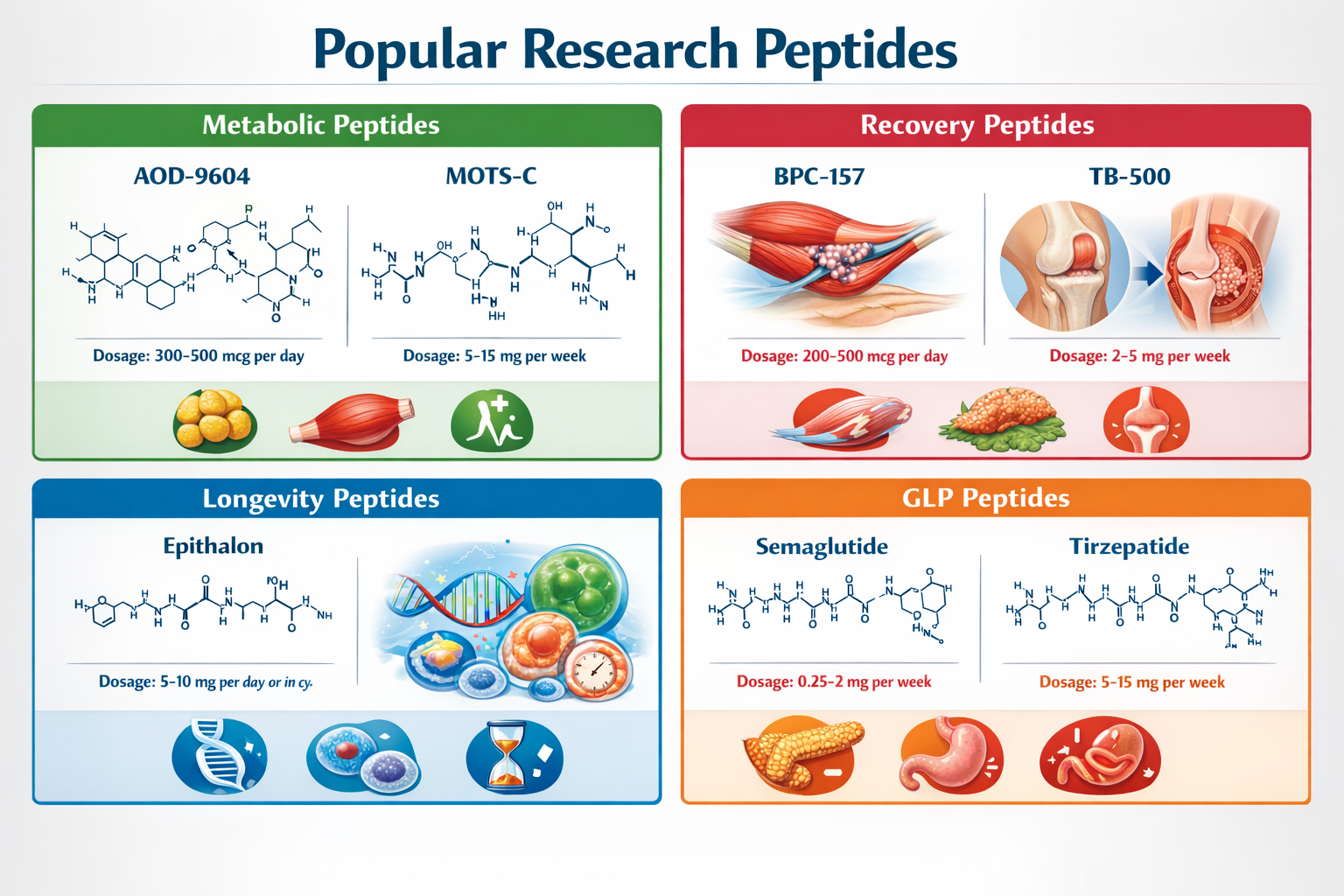
| Category | Examples | Primary Research Focus |
|---|---|---|
| Metabolic Peptides | AOD-9604, MOTS-C, 5-Amino-1MQ | Energy utilization, fat metabolism |
| Recovery Peptides | BPC-157, TB-500 | Tissue repair, healing mechanisms |
| Longevity Peptides | Epithalon | Cellular aging, telomere research |
| GLP Peptides | GLP-1, Semaglutide analogs | Glucose regulation, appetite signaling |
| Growth Peptides | Ipamorelin, Sermorelin | Growth hormone pathways |
Understanding these categories helps researchers identify which compounds align with their specific investigation goals when they buy peptides for laboratory use.
Where to Buy Peptides: Evaluating Supplier Quality Standards
The decision of where to buy peptides represents one of the most critical factors determining research success. Supplier quality directly impacts peptide purity, stability, and ultimately, the reliability of research outcomes. In 2026, the peptide marketplace includes numerous vendors, but not all maintain the rigorous standards required for serious scientific work.
Essential Quality Markers for Peptide Suppliers 📊
When evaluating peptide supplier US options, several non-negotiable quality indicators separate professional-grade sources from questionable vendors:
Third-Party Testing and Certification
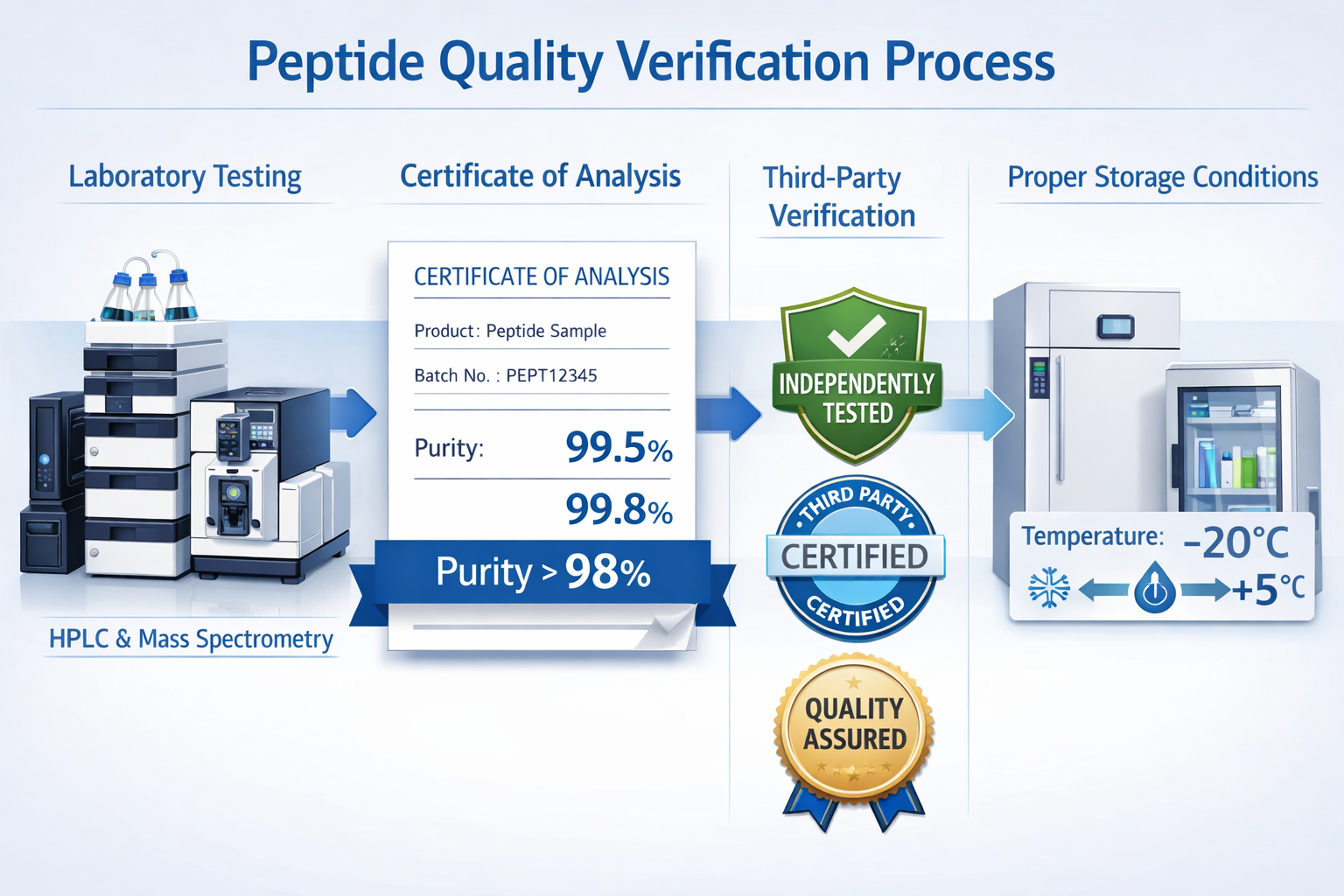
Reputable suppliers provide certificates of analysis (COA) from independent laboratories for every batch. These documents should confirm:
- Purity levels (typically ≥98% for research-grade peptides)
- Molecular weight verification
- Absence of contamination
- Proper peptide sequence confirmation
Proper Storage and Handling Protocols
Quality peptide suppliers maintain temperature-controlled environments throughout the supply chain. Lyophilized (freeze-dried) peptides require specific storage conditions to preserve molecular integrity. When you buy peptides from trusted sources, you should receive products that have been:
- Stored at appropriate temperatures (typically -20°C for long-term storage)
- Protected from light exposure
- Sealed in sterile, airtight containers
- Shipped with cold packs or appropriate temperature control
Transparent Business Practices
The best peptide retail US suppliers operate with complete transparency regarding:
- Manufacturing processes and peptide synthesis methods
- Testing protocols and quality assurance procedures
- Proper labeling indicating "for research purposes only"
- Clear communication about peptide specifications
- Responsive customer support for technical questions
Red Flags When Choosing Where to Buy Peptides ⚠️
Certain warning signs indicate suppliers that may not meet professional research standards:
- Absence of third-party testing documentation
- Unusually low prices compared to market standards
- Health claims or therapeutic promises (peptides should be sold for research only)
- Lack of proper business registration or contact information
- Poor packaging or inadequate temperature control during shipping
- Refusal to provide batch-specific COAs
"The quality of research peptides directly correlates with supplier standards. Investing in verified, tested compounds from reputable sources saves time, money, and ensures research integrity." – Industry Quality Standards, 2026
Popular Research Peptides: Applications and Considerations
Understanding specific peptide compounds helps researchers make informed decisions when they buy peptides for particular investigation areas. Each peptide offers unique properties and research applications worth examining.
Metabolic Research Peptides
AOD-9604 Peptide
AOD-9604 represents a modified fragment of human growth hormone that has attracted significant research interest for metabolic studies. When researchers where to buy peptides for fat metabolism investigation, AOD-9604 frequently appears on their list due to its specific targeting of adipose tissue.
Research considerations for AOD-9604:
- Typical research dosages range from 250-500 mcg
- Requires proper reconstitution with bacteriostatic water
- Storage at 2-8°C after reconstitution
- Research shelf life of approximately 30 days when refrigerated
MOTS-C Peptide
MOTS-C peptide is a mitochondrial-derived peptide that has generated substantial interest in metabolic and longevity research. Scientists investigating cellular energy production often buy MOTS-C peptide for studies examining mitochondrial function and metabolic regulation.
Key research parameters:
- Mitochondrial-encoded peptide sequence
- Investigated for effects on glucose metabolism
- Studied in context of exercise response and metabolic flexibility
- Often combined with other metabolic peptides in research protocols
5-Amino-1MQ
The compound 5-Amino-1MQ has emerged as a research peptide of interest for metabolic pathway investigation. When researchers where to buy peptides targeting NNMT (nicotinamide N-methyltransferase) enzyme activity, 5-Amino-1MQ represents a primary option.
Research applications include:
- NNMT enzyme inhibition studies
- NAD+ metabolism investigation
- Cellular energy pathway research
- Available in both injectable and capsule formulations for different research protocols
GLP Peptides and Metabolic Signaling
GLP-1 and Related Compounds
Glucagon-like peptide-1 (GLP-1) analogs have become among the most researched peptides in metabolic science. When investigators where to buy GLP-1 compounds, they're typically examining glucose homeostasis, insulin secretion, and appetite regulation mechanisms.
Research considerations:
- Multiple GLP-1 analogs available with varying half-lives
- Requires careful attention to reconstitution protocols
- Often studied in combination with other metabolic peptides
- Temperature-sensitive requiring strict cold chain maintenance
Cagrilintide and Combination Blends
Cagrilintide represents a long-acting amylin analog investigated for metabolic research. Researchers often buy Reta-Cagrilintide blend to examine synergistic effects of combined peptide pathways.
Recovery and Tissue Repair Peptides
BPC-157
Body Protection Compound-157 has generated substantial research interest for tissue repair and healing mechanism studies. Scientists investigating gastrointestinal healing, tendon repair, and vascular function often buy BPC nasal spray or injectable formulations for their research protocols.
Research parameters:
- Stable gastric pentadecapeptide
- Investigated across multiple tissue types
- Available in various formulations including nasal spray
- Requires specific storage conditions to maintain stability
TB-500 (Thymosin Beta-4)
TB-500 represents a synthetic version of thymosin beta-4, investigated for tissue repair and regeneration mechanisms. Research applications span wound healing, inflammation modulation, and cellular migration studies.
Wolverine Blend
The Wolverine blend peptide combines multiple recovery-focused peptides for comprehensive tissue repair research. Researchers buy Wolverine blend peptide when investigating synergistic effects of combined recovery compounds.
Longevity and Cellular Function Peptides
Epithalon
When researchers where to buy Epithalon, they're typically investigating telomere biology and cellular aging mechanisms. This tetrapeptide has been studied extensively in longevity research contexts.
Research focus areas:
- Telomerase activation studies
- Circadian rhythm regulation
- Pineal gland function investigation
- Cellular senescence mechanisms
Sermorelin and Growth Hormone Secretagogues
Sermorelin functions as a growth hormone-releasing hormone (GHRH) analog. Scientists where to buy Sermorelin for research examining pituitary function and growth hormone secretion patterns.
Ipamorelin and Tesamorelin
These growth hormone secretagogues work through different mechanisms than GHRH analogs. Researchers where to buy Ipamorelin/Tesamorelin when investigating ghrelin receptor pathways and selective growth hormone release.
Cognitive and Neuropeptide Research
Selank
Selank nasal spray represents a synthetic derivative of tuftsin investigated for anxiolytic and cognitive function research. Scientists buy Selank spray for studies examining GABA receptor modulation and neurotransmitter systems.
Specialized Peptide Blends
Lipo-C Peptide
Researchers buy Lipo-C peptide when investigating lipotropic compounds and their effects on fat metabolism. These blends typically combine multiple compounds targeting different aspects of metabolic function.
Best Practices When You Buy Peptides: Storage, Handling, and Reconstitution
Proper handling protocols ensure peptide integrity from purchase through research application. Understanding these procedures maximizes research reliability and compound effectiveness.
Pre-Purchase Considerations 📋
Before you buy peptides, establish proper storage infrastructure:
Required Equipment:
- Refrigerator maintaining 2-8°C (36-46°F)
- Freezer capable of -20°C (-4°F) for long-term storage
- Bacteriostatic water for reconstitution
- Sterile syringes and needles
- Alcohol swabs for sterilization
- Proper waste disposal containers
Documentation Systems:
- Batch number tracking
- Reconstitution date recording
- Storage condition monitoring
- Usage logs for research protocols
Receiving and Initial Storage
Upon receiving peptides from a peptide supplier US source:
- Immediate inspection: Verify packaging integrity and temperature indicators
- Documentation review: Confirm COA matches product specifications
- Visual assessment: Check for proper lyophilization (should appear as white or off-white powder)
- Immediate storage: Place unopened vials in freezer (-20°C) for long-term storage or refrigerator (2-8°C) for near-term use
Reconstitution Protocols
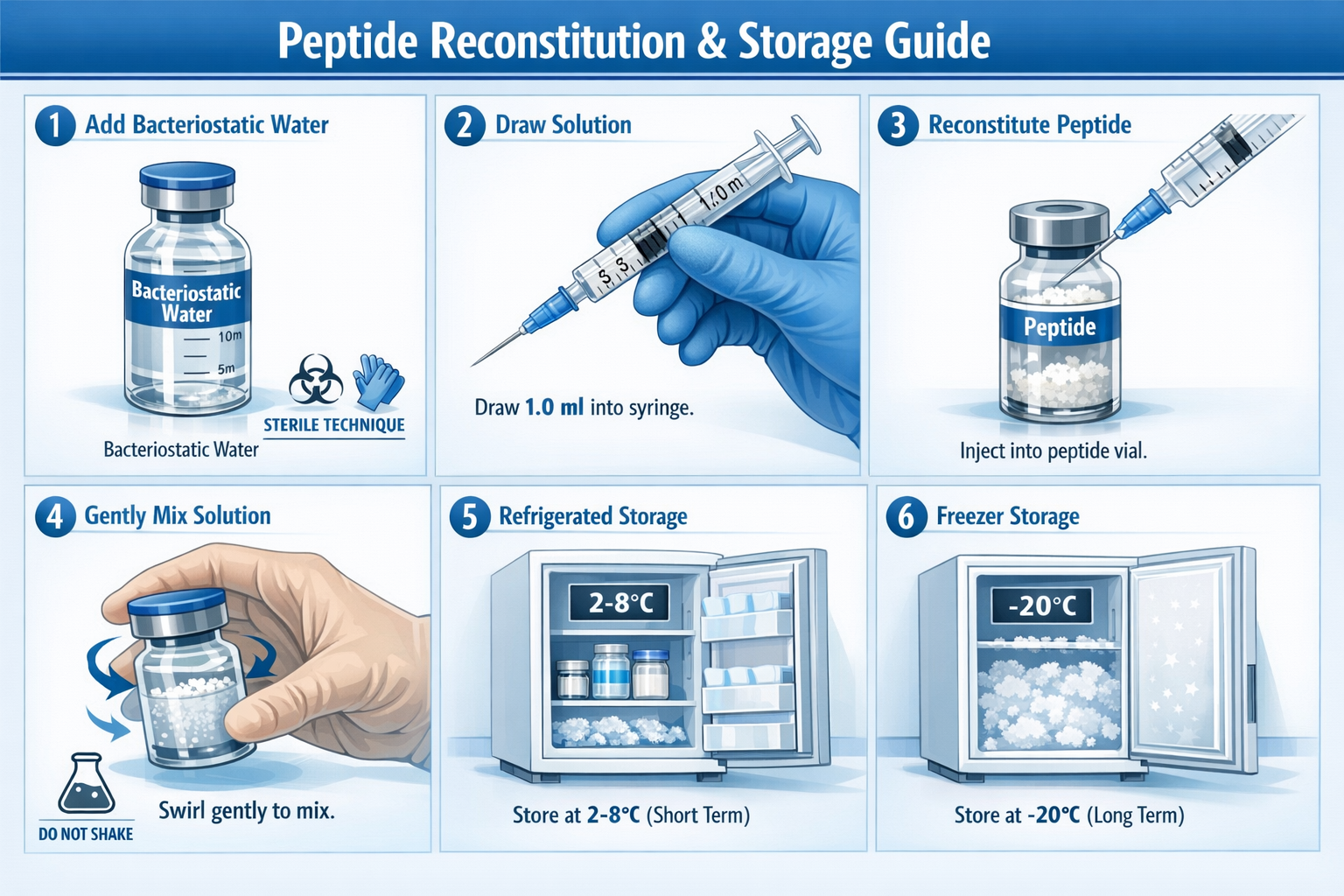
Proper reconstitution represents a critical step when preparing peptides for research use:
Step-by-Step Reconstitution Process:
- Preparation: Remove peptide vial from storage and allow to reach room temperature (approximately 15-20 minutes)
- Sterilization: Clean vial top with alcohol swab
- Water preparation: Draw appropriate volume of bacteriostatic water into sterile syringe
- Gentle introduction: Insert needle at angle, allowing water to run down vial wall (never spray directly onto powder)
- Mixing: Gently swirl vial in circular motion (never shake vigorously)
- Dissolution: Allow 2-5 minutes for complete dissolution
- Inspection: Verify solution is clear with no visible particles
- Labeling: Mark vial with reconstitution date
Reconstitution Volume Calculations:
Understanding concentration calculations ensures accurate research dosing:
- Example: 5mg peptide + 2mL bacteriostatic water = 2.5mg/mL concentration
- Always calculate based on actual peptide weight and desired concentration
- Use reconstitution calculators for complex calculations
- Maintain detailed records of all reconstitution procedures
Post-Reconstitution Storage
Once reconstituted, peptides have significantly shorter shelf lives:
| Storage Condition | Typical Shelf Life | Best For |
|---|---|---|
| Room Temperature | 24-48 hours | Immediate use only |
| Refrigerator (2-8°C) | 14-30 days | Short-term research |
| Freezer (-20°C) | Not recommended | Reconstituted peptides |
Critical Storage Rules:
- Never refreeze reconstituted peptides
- Protect from light exposure (use amber vials or wrap in foil)
- Minimize temperature fluctuations
- Avoid contamination by using sterile technique
- Discard after expiration dates
Handling Best Practices
Proper handling techniques preserve peptide integrity throughout research use:
Sterile Technique:
- Always use sterile syringes and needles
- Clean vial tops before each access
- Avoid touching needle tips
- Work in clean, controlled environment
- Minimize vial opening time
Temperature Management:
- Remove from refrigeration only when needed
- Return immediately after use
- Avoid leaving at room temperature
- Monitor storage unit temperatures regularly
Contamination Prevention:
- Never reuse syringes or needles
- Use bacteriostatic water (contains preservatives)
- Avoid introducing foreign substances
- Maintain separate storage for different peptides
Navigating the Regulatory Landscape: Legal Considerations for Peptide Research
Understanding the regulatory framework surrounding peptides ensures compliance and protects both researchers and suppliers. The legal status of research peptides has evolved significantly, requiring careful attention to current regulations in 2026.
Research Use Designation
All reputable sources that sell peptides clearly label products "for research purposes only." This designation carries specific legal implications:
What "Research Use Only" Means:
- Products are not approved for human consumption
- Intended for laboratory and scientific investigation
- Not evaluated by FDA for therapeutic use
- Requires proper research credentials and protocols
- Should not be marketed with health claims
When you buy peptides from legitimate peptide supplier US sources, products should include clear labeling indicating research-only status. This protects both the supplier and purchaser from regulatory violations.
Supplier Compliance Standards
The best peptide retail US vendors maintain strict compliance with federal regulations:
Required Compliance Elements:
- Proper business licensing and registration
- Adherence to Good Manufacturing Practices (GMP)
- Accurate product labeling without therapeutic claims
- Age verification for purchasers
- Clear terms of service outlining permitted uses
- Refusal to provide medical advice or dosing recommendations
State-Level Variations
Peptide regulations can vary by state jurisdiction. Researchers should verify local requirements before they buy peptides:
- Some states impose additional restrictions on certain compounds
- Business licensing requirements may differ
- Import/export regulations vary by location
- Professional credentials may be required for purchase
International Considerations
For researchers outside the United States seeking to where to buy peptides from US suppliers:
Import Regulations:
- Customs requirements vary by destination country
- Some peptides face import restrictions
- Proper documentation may be required
- Shipping times and methods affected by international regulations
Export Compliance:
- Reputable US suppliers verify export legality
- Some compounds cannot be shipped internationally
- Proper customs declarations required
- Responsibility often falls on purchaser to verify local laws
Protecting Your Research Investment
Legal compliance protects research integrity and investment:
✅ Do:
- Purchase from established, compliant suppliers
- Maintain proper documentation of research purposes
- Follow all labeling and usage guidelines
- Verify supplier credentials and licensing
- Keep detailed research records
❌ Don't:
- Misrepresent intended use
- Purchase from suppliers making therapeutic claims
- Share research peptides with non-researchers
- Use peptides outside designated research contexts
- Ignore supplier terms of service
Cost Considerations: Getting Value When You Buy Peptides
Understanding pricing structures helps researchers maximize their budgets while maintaining quality standards. The cost to buy peptides varies significantly based on multiple factors.
Factors Affecting Peptide Pricing
Purity Levels:
Research-grade peptides (≥98% purity) command premium prices compared to lower-purity alternatives. The additional cost reflects:
- More sophisticated synthesis processes
- Multiple purification steps
- Extensive testing and verification
- Lower contamination risk
Synthesis Complexity:
Longer peptide chains with complex amino acid sequences cost more to produce:
- Simple peptides (2-5 amino acids): Lower cost
- Medium peptides (6-15 amino acids): Moderate cost
- Complex peptides (15+ amino acids): Higher cost
Quantity and Concentration:
Bulk purchasing often reduces per-milligram costs:
- Individual vials: Standard pricing
- Multi-vial packages: 10-20% discount typical
- Bulk research orders: Negotiable pricing available
Testing and Certification:
Third-party testing adds cost but ensures quality:
- Basic purity testing: Included in standard pricing
- Comprehensive COA: May increase cost 5-10%
- Batch-specific testing: Premium pricing
- Custom testing: Additional fees apply
Price Comparison Strategies
When evaluating where to buy peptides, compare costs systematically:
Calculate Cost Per Milligram:
Don't be misled by vial pricing alone. Calculate actual cost per milligram:
- Example: $45 for 5mg vial = $9/mg
- Example: $80 for 10mg vial = $8/mg (better value)
Consider Total Research Costs:
Factor in all expenses when you buy peptides:
- Base peptide cost
- Shipping fees
- Bacteriostatic water
- Syringes and supplies
- Storage requirements
- Potential waste from improper handling
Value Indicators Beyond Price
The best peptide retail US sources offer value beyond lowest prices:
Quality Assurance:
- Consistent purity across batches
- Reliable potency and effectiveness
- Proper storage throughout supply chain
- Reduced research failures from poor-quality compounds
Customer Support:
- Technical assistance with reconstitution
- Research protocol guidance
- Responsive communication
- Problem resolution
Reliability:
- Consistent product availability
- Predictable shipping times
- Accurate product descriptions
- Trustworthy business practices
Budget Optimization Strategies
Maximize research budgets without compromising quality:
Strategic Purchasing:
- Buy peptides in appropriate quantities for research timeline
- Avoid over-purchasing compounds with short shelf lives
- Consider multi-peptide packages for comprehensive research
- Watch for seasonal promotions from established suppliers
Waste Reduction:
- Master proper reconstitution techniques
- Maintain optimal storage conditions
- Use appropriate vial sizes for research needs
- Implement precise dosing protocols
Long-Term Supplier Relationships:
Many peptide supplier US sources offer benefits for repeat customers:
- Loyalty discounts
- Priority access to new compounds
- Flexible payment terms
- Custom research packages
Evaluating Peptide Suppliers: A Comprehensive Checklist
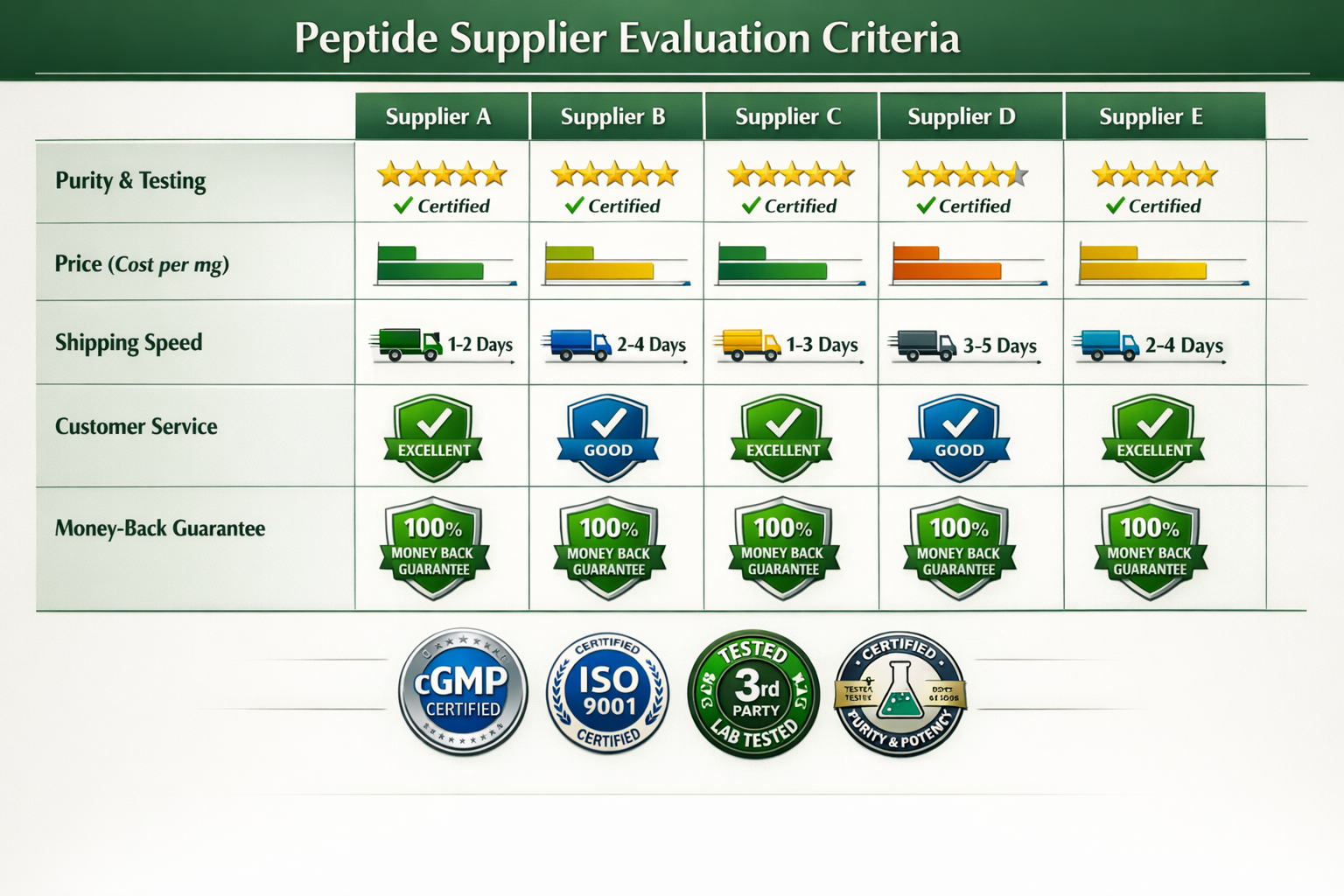
Creating a systematic evaluation process ensures you buy peptides from sources that meet professional research standards. Use this comprehensive checklist when assessing potential suppliers.
Quality and Testing Standards ✓
Third-Party Testing:
- Provides batch-specific COAs
- Uses independent testing laboratories
- Tests for purity ≥98%
- Verifies molecular weight
- Screens for contamination
- Confirms proper peptide sequence
Manufacturing Standards:
- Follows GMP protocols
- Uses pharmaceutical-grade synthesis
- Maintains clean room facilities
- Implements quality control procedures
- Documents manufacturing processes
Business Credentials and Transparency
Company Information:
- Provides complete business registration details
- Lists physical business address
- Offers multiple contact methods
- Maintains professional website
- Shows established business history
- Displays proper licensing
Transparency:
- Clear product descriptions
- Detailed specification sheets
- Honest about limitations
- Transparent pricing structure
- Published terms of service
- Privacy policy available
Product Quality and Handling
Storage and Shipping:
- Temperature-controlled storage facilities
- Cold chain shipping options
- Appropriate packaging materials
- Temperature indicators included
- Fast shipping options available
- Tracking information provided
Product Presentation:
- Proper sterile packaging
- Clear labeling with batch numbers
- Expiration dates listed
- Research-only designation
- Tamper-evident seals
- Professional appearance
Customer Service and Support
Communication:
- Responsive to inquiries
- Knowledgeable staff
- Technical support available
- Multiple communication channels
- Reasonable response times
- Professional interactions
Policies:
- Clear return/refund policy
- Shipping insurance options
- Privacy protection measures
- Secure payment processing
- Order tracking systems
- Problem resolution procedures
Reputation and Reviews
Market Presence:
- Positive customer reviews
- Industry recognition
- Professional affiliations
- Established track record
- Minimal complaints
- Transparent feedback handling
Red Flag Absence:
- No therapeutic claims
- No unrealistic promises
- No pressure tactics
- No suspiciously low prices
- No missing documentation
- No evasive responses
Product Selection and Availability
Inventory:
- Wide peptide selection
- Consistent availability
- Multiple concentration options
- Various package sizes
- New compound offerings
- Specialty blends available
Information Resources:
- Detailed product information
- Research reference materials
- Reconstitution guidelines
- Storage recommendations
- Dosage calculators
- Educational content
Emerging Trends in Peptide Research and Availability (2026)
The peptide research landscape continues evolving rapidly. Understanding current trends helps researchers make informed decisions when they buy peptides for cutting-edge investigations.
Novel Peptide Compounds
Mitochondrial Peptides:
Growing research interest in mitochondrial-derived peptides like MOTS-C has expanded availability. Researchers increasingly buy MOTS-C peptide for studies examining:
- Cellular energy production
- Metabolic flexibility
- Exercise response mechanisms
- Age-related metabolic changes
Combination Blends:
Synergistic peptide combinations represent a growing category. When researchers buy Wolverine stack peptide or similar blends, they're investigating:
- Multi-pathway approaches
- Synergistic effects
- Comprehensive research protocols
- Simplified administration
Specialized Formulations:
Alternative delivery methods expand research possibilities:
- Nasal spray formulations for absorption studies
- Oral peptide capsules for bioavailability research
- Topical preparations for transdermal investigation
- Sustained-release formulations
Quality Improvements
Enhanced Testing Standards:
The best peptide retail US suppliers in 2026 implement more rigorous testing:
- Advanced mass spectrometry verification
- Endotoxin screening
- Heavy metal testing
- Sterility confirmation
- Stability testing
Improved Synthesis Techniques:
Modern synthesis methods produce higher-quality peptides:
- Greater purity levels (>99% becoming standard)
- Better sequence accuracy
- Reduced impurities
- Enhanced stability
- Longer shelf lives
Market Accessibility
Expanded Availability:
More researchers can access quality peptides through:
- Increased supplier competition
- Broader product selections
- Improved distribution networks
- Better educational resources
- Simplified ordering processes
Pricing Trends:
Market maturation has affected costs:
- More competitive pricing for common peptides
- Premium pricing for novel compounds
- Volume discounts more widely available
- Transparent pricing structures
- Value-added services included
Regulatory Evolution
Increased Scrutiny:
Regulatory oversight continues developing:
- Stricter supplier compliance requirements
- Enhanced quality standards
- Clearer research-use designations
- Better consumer protections
- Improved industry standards
International Harmonization:
Global peptide regulations show increasing alignment:
- Standardized testing protocols
- Consistent quality benchmarks
- Improved cross-border availability
- Clearer legal frameworks
Conclusion: Making Informed Decisions When You Buy Peptides
The decision to buy peptides for research purposes requires careful consideration of multiple factors, from supplier quality standards to proper handling protocols. As the peptide research market continues expanding in 2026, maintaining focus on quality, compliance, and proper procedures ensures successful research outcomes.
Key Decision Factors Summary
Prioritize Quality Over Price:
The best peptide retail US sources may not offer the lowest prices, but they provide:
- Verified purity through third-party testing
- Consistent product quality
- Proper storage and handling
- Reliable customer support
- Transparent business practices
Understand Your Research Needs:
Different investigations require different peptides. Whether you where to buy GLP-1 compounds for metabolic research, where to buy Epithalon for longevity studies, or buy Selank spray for cognitive research, matching peptides to research objectives maximizes success.
Implement Proper Protocols:
Research quality depends on proper handling:
- Correct reconstitution procedures
- Appropriate storage conditions
- Sterile technique maintenance
- Accurate dosing calculations
- Detailed record-keeping
Actionable Next Steps
For First-Time Peptide Purchasers:
- Research thoroughly: Understand the specific peptides relevant to your research goals
- Verify credentials: Ensure you have appropriate research authorization and facilities
- Prepare infrastructure: Set up proper storage and handling equipment
- Start small: Begin with single vials to test supplier quality and your protocols
- Document everything: Maintain detailed records from purchase through research application
For Experienced Researchers:
- Evaluate current suppliers: Regularly assess whether your peptide supplier US sources maintain quality standards
- Explore new compounds: Stay current with emerging peptides and research applications
- Optimize protocols: Continuously refine handling and storage procedures
- Build relationships: Develop connections with reliable suppliers for long-term research support
- Share knowledge: Contribute to the research community through proper documentation and ethical practices
Finding Reliable Sources
When you're ready to buy peptides for research purposes, prioritize suppliers demonstrating:
- Comprehensive testing: Every batch verified by independent laboratories
- Transparent operations: Clear business practices and open communication
- Quality focus: Commitment to purity and proper handling
- Educational support: Resources to help researchers succeed
- Regulatory compliance: Adherence to all applicable laws and standards
The Future of Peptide Research
The peptide research field continues advancing rapidly. Staying informed about new compounds, improved synthesis methods, and evolving best practices positions researchers for success. Whether investigating metabolic pathways with compounds like 5-Amino-1MQ, exploring recovery mechanisms, or examining longevity factors, access to high-quality research peptides remains fundamental to scientific progress.
Final Recommendations:
✅ Always verify supplier credentials and testing documentation
✅ Invest in proper storage and handling equipment
✅ Maintain detailed research records and protocols
✅ Stay current with regulatory requirements
✅ Prioritize quality and purity over cost savings
✅ Build relationships with reputable suppliers
✅ Contribute to ethical research practices
The decision of where to buy peptides ultimately determines research quality and reliability. By applying the principles outlined in this guide—emphasizing quality verification, proper handling, regulatory compliance, and supplier evaluation—researchers position themselves for successful outcomes in their peptide investigations throughout 2026 and beyond.
SEO Meta Information
Meta Title: Buy Peptides 2026: Complete Research Sourcing Guide
Meta Description: Comprehensive guide to buy peptides from verified US suppliers. Learn quality standards, proper handling, and where to buy research peptides safely in 2026.