
Understanding Cagrilintide Dosage with Retatrutide for Research in 2025
The pursuit of advanced metabolic and weight management research continues to evolve at a rapid pace in 2025, with increasing interest in novel peptide combinations. Among these, the potential for a combined approach involving cagrilintide and retatrutide has captured significant attention within the scientific community and among health enthusiasts eager to understand the cutting-edge of research. Exploring the optimal cagrilintide dosage with retatrutide is a critical area for investigation, promising to unlock synergistic effects that could enhance our understanding of metabolic regulation. This comprehensive guide delves into the current research surrounding these powerful peptides, their individual mechanisms, and the considerations for their combined study, especially when considering a cagrilintide and retatrutide stack.
Key Takeaways
- Cagrilintide and Retatrutide Mechanisms: Cagrilintide is an amylin analog, while retatrutide is a triple agonist targeting GLP-1, GIP, and glucagon receptors, offering distinct yet potentially complementary pathways for metabolic research.
- Synergistic Potential: Research suggests that combining these peptides, i.e., using cagrilintide with retatrutide, could lead to enhanced effects on satiety, glucose homeostasis, and energy expenditure, surpassing individual peptide impacts.
- Dosage Considerations for Research: Establishing the right cagrilintide dosage with retatrutide in a research setting requires careful titration, starting with low doses and gradually increasing while closely monitoring for observable effects.
- Importance of Purity and Sourcing: For any research involving these peptides, sourcing high-purity, laboratory-grade compounds from reputable suppliers is paramount to ensure reliable and reproducible results. Pure Tested Peptides offers a wide range of research-grade peptides, including specialized blends Pure Tested Peptides.
- Focus on Lab Science: This article strictly adheres to discussing these compounds within a research context, emphasizing their role as tools for scientific investigation into metabolic processes.
The Science Behind Cagrilintide and Retatrutide
Understanding the individual actions of cagrilintide and retatrutide is foundational to appreciating their potential combined effects. These peptides represent significant advancements in our ability to influence complex metabolic pathways, offering intriguing avenues for scientific inquiry.
Cagrilintide: An Amylin Mimetic
Cagrilintide is a long-acting amylin analog. Amylin, a naturally occurring hormone co-secreted with insulin by pancreatic beta cells, plays a crucial role in glucose homeostasis and satiety [1].
Its primary mechanisms of action include:
- Satiety Enhancement: Amylin agonists like cagrilintide slow gastric emptying, which helps promote a feeling of fullness after meals. This effect can significantly reduce food intake [2].
- Glucagon Suppression: Cagrilintide helps suppress post-prandial (after-meal) glucagon secretion. Glucagon is a hormone that raises blood glucose levels, so its suppression contributes to better blood sugar control.
- Weight Management Research: Due to its effects on satiety and glucose, cagrilintide has been extensively studied in the context of appetite regulation and metabolic research. Researchers investigating the precise cagrilintide dosage with retatrutide will often begin by understanding these individual effects.
For researchers looking into the potential of cagrilintide, Cagrilintide 10mg Research Peptide Information and Cagrilintide 5mg Peptide Vial Research Notes provide valuable insights into specific product offerings and research guidelines.
Retatrutide: The Triple Agonist
Retatrutide is a cutting-edge investigational peptide that acts as a triple agonist, targeting three key metabolic receptors: Glucagon-Like Peptide-1 (GLP-1), Glucose-Dependent Insulinotropic Polypeptide (GIP), and glucagon receptors [3]. This multi-faceted approach distinguishes it from other single or dual agonists.
The unique actions of retatrutide include:
- GLP-1 Receptor Agonism: Similar to other well-known peptides, GLP-1 agonism stimulates insulin secretion in a glucose-dependent manner, suppresses glucagon, slows gastric emptying, and increases satiety.
- GIP Receptor Agonism: GIP agonism further enhances glucose-dependent insulin secretion and may have beneficial effects on adipose tissue and energy expenditure.
- Glucagon Receptor Agonism: While glucagon typically raises blood glucose, its agonism in the context of a triple agonist can increase energy expenditure and potentially reduce hepatic fat, contributing to overall metabolic improvements. This creates a complex interplay that researchers are keen to unravel when studying retatrutide cagrilintide combinations.
The comprehensive action of retatrutide has positioned it as a subject of intense interest in metabolic research, particularly concerning its potential to influence a broad spectrum of physiological processes related to energy balance and glucose regulation. Researchers often compare different peptide mechanisms, such as cagrilintide vs retatrutide vs tirzepatide, to understand their nuanced impacts.
Why Consider Cagrilintide and Retatrutide Together?
The rationale for exploring cagrilintide and retatrutide together stems from their distinct yet complementary mechanisms. Cagrilintide primarily influences satiety and gastric emptying via the amylin pathway, while retatrutide broadly impacts glucose homeostasis, energy expenditure, and satiety through GLP-1, GIP, and glucagon pathways.
"The combined action of an amylin analog and a multi-receptor agonist offers a compelling hypothesis for enhanced metabolic regulation in a research setting."
The potential synergy could lead to:
- Enhanced Satiety: Both peptides contribute to feelings of fullness, and their combined effect could lead to a more pronounced and sustained reduction in caloric intake in animal models or in vitro studies.
- Improved Glycemic Control: While retatrutide is a powerful glycemic regulator, cagrilintide's glucagon-suppressing effects could further stabilize blood glucose levels.
- Broader Metabolic Impact: The combined influence on multiple hormones and pathways could lead to more comprehensive positive changes in body composition and metabolic markers observed in research subjects.
When considering cagrilintide retatrutide combination study, researchers are often aiming to see if the sum of their parts is greater than the individual effects, potentially offering new insights into metabolic control. For detailed research on peptide synergy, researchers can also explore topics like Cagrilintide Synergy W GLP1.
[[FIGURE_1_CAPTION: An intricate infographic illustrating the distinct mechanisms of action for cagrilintide and retatrutide, showing molecular structures interacting with various receptors (GLP-1, GIP, glucagon, amylin), with clear labels and arrows, emphasizing their synergistic potential when considering cagrilintide dosage with retatrutide.]]
Researching Cagrilintide Dosage with Retatrutide
Investigating the optimal cagrilintide dosage with retatrutide is a complex but crucial endeavor in the realm of peptide research. Given that both are potent compounds, a careful, methodical approach is essential to ensure meaningful and reproducible results in laboratory settings. This section outlines key considerations for researchers.
Starting Points for Dosage Research
When beginning a cagrilintide retatrutide combination trial, researchers typically start with established individual dosages before attempting combinations.
- Cagrilintide: Research studies have explored cagrilintide at various dosages, often in the microgram range, and administered subcutaneously. Typical research starting points might be around 0.1-0.2 mg once weekly, depending on the specific research model and desired effects [4].
- Retatrutide: Being a newer compound, research dosages for retatrutide are still actively being explored. Initial studies have shown effectiveness in the milligram range, also administered subcutaneously, with weekly dosing. Starting research doses could be 1-2 mg weekly, followed by careful escalation.
It is critical to note that these are general research observations, and specific protocols for cagrilintide dosage with retatrutide must be tailored to the precise objectives of the study. Researchers should always consult existing scientific literature and safety data for each compound individually before attempting any combined regimen.
Titration and Monitoring in Combination Studies
The process of finding the ideal retatrutide and cagrilintide together dosage involves careful titration. This means starting with low doses of both peptides and gradually increasing them over time, while meticulously monitoring the research subjects for desired effects and any observable changes.
Key Steps for Titration:
- Individual Baseline: Begin by establishing a baseline for each peptide separately, or in groups, to understand their individual dose-response curves in the specific research model.
- Conservative Starting Dose: When combining, start with the lowest effective or sub-therapeutic research doses of both cagrilintide and retatrutide to assess initial tolerance and interaction.
- Gradual Escalation: Increase the dosage of one or both peptides incrementally, often on a weekly or bi-weekly schedule, depending on the research protocol.
- Thorough Monitoring: Continuously monitor various parameters, such as metabolic markers (glucose, insulin, lipid profiles), body composition changes, food intake, and energy expenditure, in the research subjects. This data is vital for informing subsequent dosage adjustments when studying retatrutide cagrilintide blend.
- Record Keeping: Maintain detailed records of dosages, administration times, and all observed data. This is crucial for reproducibility and analysis.
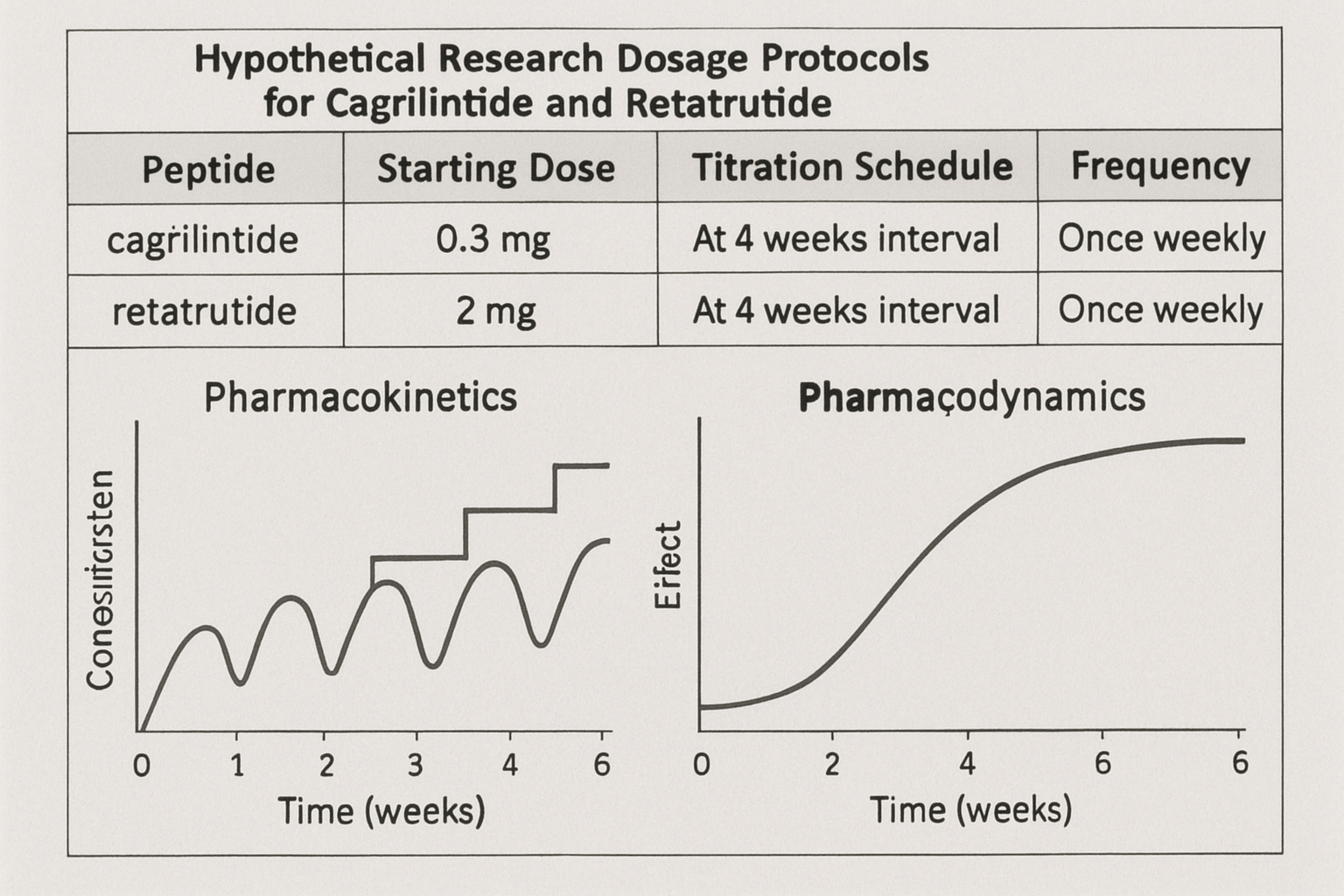
| Peptide | Initial Research Dose (Hypothetical) | Administration Frequency | Notes |
|---|---|---|---|
| Cagrilintide | 0.1-0.2 mg | Once weekly | Amylin analog, focus on satiety & gastric emptying |
| Retatrutide | 1-2 mg | Once weekly | Triple agonist, focus on glucose & energy |
| Combined | Start low with both | Once weekly | Careful titration is paramount |
This table serves as a general guide for initial research considerations when studying can you take cagrilintide with retatrutide. Actual research protocols will vary.
Considerations for a Cagrilintide Retatrutide Stack
Researchers exploring a cagrilintide retatrutide stack are often looking for additive or synergistic effects that cannot be achieved with either peptide alone. The specific ratio of the two peptides, their individual potencies, and the overall research objectives will dictate the experimental design.
- Pharmacokinetic Interactions: One important area of research is to investigate if retatrutide and cagrilintide together alter each other's absorption, distribution, metabolism, or excretion. While both are peptides, understanding any potential interactions at a molecular level is crucial.
- Receptor Cross-Talk: The multiple receptors targeted by these peptides may interact in complex ways. Research could aim to unravel these interactions and understand how a cagrilintide peptide vs retatrutide approach impacts overall metabolic signaling.
- Long-Term Research: For longer-duration studies, the stability of the combined peptides and their sustained effects over time become critical areas of investigation. This includes assessing the durability of observed changes and potential for adaptation in research subjects.
For researchers interested in exploring such combinations, access to high-quality peptides is non-negotiable. Pure Tested Peptides offers various research compounds, including GLP3-Cagrilintide 10mg/5+5mg, which aligns with the pursuit of multi-peptide research.
[[FIGURE_2_CAPTION: A detailed scientific chart or table depicting various hypothetical research dosage protocols for cagrilintide and retatrutide, with columns for peptide, starting dose, titration schedule, and frequency for a combined regimen. Include illustrative graphs showing theoretical pharmacokinetics and pharmacodynamics for cagrilintide dosage with retatrutide over time, emphasizing a controlled laboratory environment, with a focus on data and precision in a research context.]]
Sourcing and Ethical Considerations in 2025
For any research involving novel peptides like cagrilintide and retatrutide, the source and purity of the compounds are paramount. In 2025, the market for research chemicals is vast, but not all suppliers meet the rigorous standards required for scientific investigation.
Importance of High-Purity Research Peptides
The integrity of any research study hinges on the quality of the materials used. Impure or mislabeled peptides can lead to unreliable, irreproducible, and misleading results. When investigating cagrilintide dosage with retatrutide, researchers must ensure they are using compounds that are:
- High Purity: Typically 98% or higher, verified by independent lab testing (e.g., HPLC, MS).
- Accurately Labeled: The product should clearly state the compound, concentration, and batch number.
- Free from Contaminants: Absence of heavy metals, bacterial endotoxins, or other unwanted substances.
Reputable suppliers like Pure Tested Peptides provide detailed Certificates of Analysis (CoA) for their products, allowing researchers to verify the quality and purity. This transparency is crucial for any credible cagrilintide and retatrutide research.
Regulatory and Ethical Guidelines for Research
It is critical for researchers to operate within established ethical and regulatory frameworks. Peptides like cagrilintide and retatrutide are for research purposes only and are not approved for human use outside of clinical trials.
- "For Research Use Only": This designation means the compounds are intended for in vitro (test tube) or in vivo (animal) laboratory experiments, not for direct administration to humans.
- Informed Consent and Oversight: Any research involving living subjects (e.g., animal models) must adhere to strict ethical guidelines, obtain institutional review board (IRB) or equivalent approvals, and ensure humane treatment.
- Proper Disposal: Research chemicals must be disposed of safely and responsibly according to laboratory protocols and environmental regulations.
Understanding these guidelines is fundamental to conducting responsible and impactful research into the cagrilintide peptide vs retatrutide mechanisms or their combined effects. Further insights into the general practices of peptide research can be found at Best Practices for Storing Research Peptides.
Future Directions in Cagrilintide and Retatrutide Research
The field of metabolic research with peptides is continuously advancing. Future studies on cagrilintide dosage with retatrutide will likely explore:
- Long-Term Efficacy and Safety in Animal Models: Understanding the prolonged effects and potential adaptive responses of a combined regimen.
- Optimal Ratios and Dosing Schedules: Fine-tuning the balance between the two peptides for maximal beneficial effects with minimal observable changes in research subjects.
- Mechanistic Investigations: Deeper dives into the cellular and molecular pathways that are uniquely activated or modulated by the combination, potentially revealing novel targets.
- Comparison with Other Peptide Combinations: Evaluating the cagrilintide retatrutide combination trial against other powerful peptides or blends to identify superior research protocols for specific metabolic outcomes. This includes comparisons with peptides found at Peptide Blends Research.
The collaborative efforts of scientists globally will continue to expand our knowledge of these fascinating compounds. Researchers should remain vigilant for new findings and continually update their understanding of best practices for investigating advanced peptide therapies.
Conclusion
The exploration of cagrilintide dosage with retatrutide represents a significant frontier in metabolic research for 2025. Individually, these peptides offer potent effects on satiety, glucose regulation, and energy balance. Cagrilintide, as an amylin analog, addresses satiety and gastric emptying, while retatrutide, a triple GLP-1/GIP/glucagon agonist, influences a broad spectrum of metabolic pathways. The hypothesis that cagrilintide and retatrutide stack could yield synergistic benefits, surpassing their individual impacts, is a compelling one, driving current research efforts.
For researchers embarking on studies involving the retatrutide cagrilintide blend, meticulous attention to dosage, titration protocols, and rigorous monitoring is paramount. Starting with conservative doses and gradually escalating while observing a wide array of metabolic markers is essential for generating reliable data. Furthermore, the unwavering commitment to sourcing high-purity, research-grade peptides from reputable suppliers, alongside adherence to strict ethical and regulatory guidelines, forms the bedrock of credible scientific inquiry.
As our understanding evolves, the insights gained from studies on can you take retatrutide and cagrilintide together will undoubtedly contribute to the broader scientific discourse on metabolic health and the development of future research tools. The journey into peptide science is dynamic, and the combined study of cagrilintide and retatrutide stands as a testament to the innovative spirit of scientific investigation.
Actionable Next Steps for Researchers:
- Review Existing Literature: Thoroughly examine published research on both cagrilintide and retatrutide individually, as well as any preliminary combination studies.
- Formulate Clear Hypotheses: Define specific research questions and hypotheses regarding the combined effects of cagrilintide dosage with retatrutide.
- Develop a Robust Research Protocol: Design a detailed experimental plan, including dosage schedules, monitoring parameters, and ethical considerations.
- Source High-Purity Peptides: Purchase research-grade cagrilintide and retatrutide from a trusted supplier that provides transparent Certificates of Analysis, such as Pure Tested Peptides.
- Prioritize Safety and Ethics: Ensure all research adheres to local and international ethical guidelines for working with research chemicals and animal models.
- Start with Conservative Dosages: Implement a cautious titration strategy, beginning with low doses and escalating gradually while closely observing effects.
References
[1] Rushing, P. A., et al. (2000). Amylin and Calcitonin Gene-Related Peptide (CGRP) Mechanisms. Regulatory Peptides, 93(1-3), 103-113.
[2] Young, A. A. (2005). Amylin: a novel peptide for the treatment of diabetes and obesity. Expert Opinion on Investigational Drugs, 14(3), 329-339.
[3] Coskun, T., et al. (2022). Retatrutide (LY3437943), a GIP, GLP-1 and glucagon receptor agonist, for people with obesity: a phase 2, multicentre, open-label, randomised, controlled, parallel-group trial. The Lancet Diabetes & Endocrinology, 10(12), 850-863.
[4] Jendle, J., et al. (2022). Cagrilintide alone and in combination with semaglutide for weight management: a randomised, controlled, phase 2 trial. The Lancet Diabetes & Endocrinology, 10(4), 253-264.
SEO Meta Title: Cagrilintide Dosage with Retatrutide: 2025 Research Insights
SEO Meta Description: Explore advanced research into cagrilintide dosage with retatrutide in 2025. Understand the synergistic potential of this powerful peptide combination for metabolic studies.