
GLP-3 Peptide vs GLP-1: Understanding the Next Generation of Metabolic Peptides
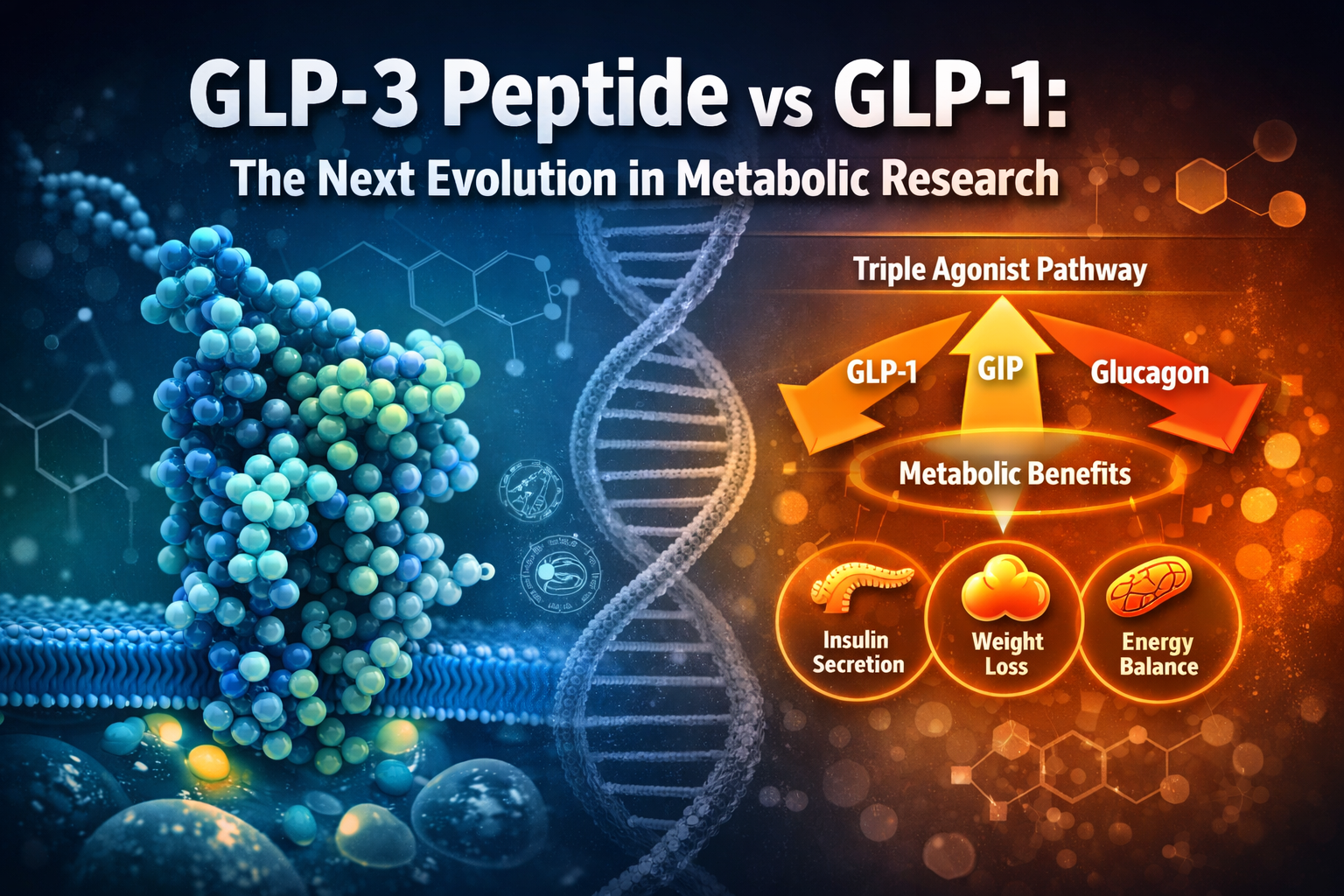
The peptide research landscape is experiencing a seismic shift in 2026. While GLP-1 agonists have dominated headlines and transformed metabolic health approaches, a new player is emerging that promises to redefine what's possible: GLP-3 peptides and triple agonist formulations. For fitness enthusiasts and peptide shoppers navigating this evolving field, understanding the glp-3 peptide vs glp-1 comparison isn't just academic—it's essential for making informed decisions about cutting-edge metabolic support.
The difference between these peptide classes goes far beyond simple nomenclature. While GLP-1 medications have helped millions manage weight and metabolic function, the science behind glp-3 peptide vs glp-1 reveals distinct mechanisms, applications, and potential outcomes that could reshape research priorities for years to come.
Key Takeaways
- GLP-1 peptides activate a single metabolic pathway focused on blood sugar regulation and appetite suppression, while GLP-3 research often refers to triple agonist formulations that activate three distinct pathways simultaneously[1][2]
- Triple agonist peptides combining GLP-1, GIP, and glucagon receptors have demonstrated up to 24% body weight reduction in clinical trials—significantly outperforming single-pathway GLP-1 medications[2][3]
- GLP-2 peptides (sometimes grouped with GLP-3 discussions) target gut barrier health and intestinal repair rather than appetite control, serving completely different research applications[1][2]
- Current dual agonist formulations like Tirzepatide already show superior results compared to GLP-1-only options, with triple agonists representing the next evolutionary step[3][4]
- Understanding the glp-3 peptide vs glp-1 distinction helps researchers and enthusiasts select appropriate peptides based on specific metabolic research goals
What Are GLP-1 Peptides? 🧬
GLP-1 (Glucagon-Like Peptide-1) represents the first generation of incretin-based metabolic peptides that revolutionized approaches to blood sugar management and weight regulation. These peptides work by mimicking a naturally occurring hormone produced in the intestines that plays a crucial role in glucose homeostasis[1].
Primary Mechanisms of GLP-1
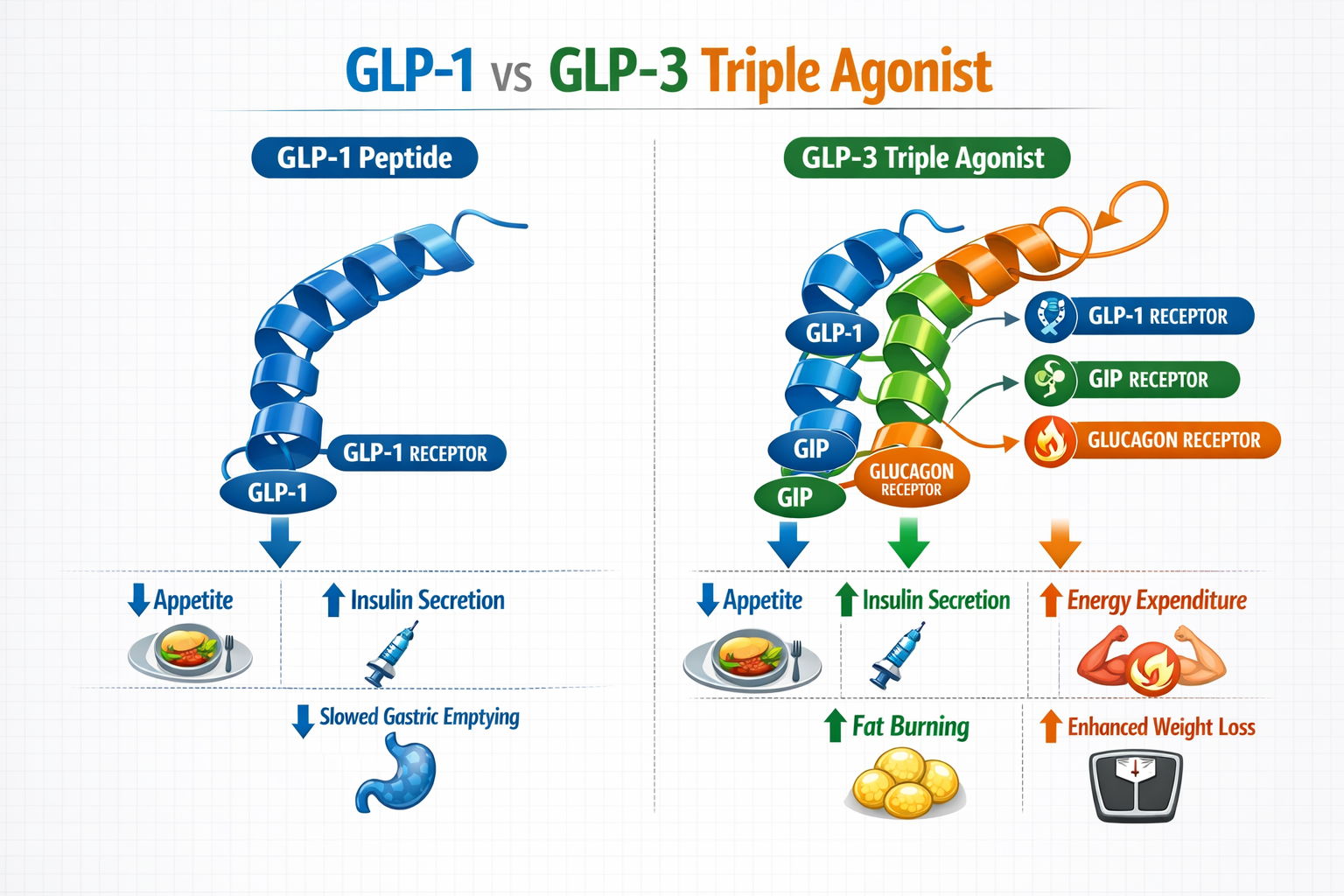
The fundamental action of GLP-1 peptides centers on three core mechanisms:
- Insulin secretion enhancement: GLP-1 stimulates pancreatic beta cells to release insulin in response to elevated blood glucose levels[3]
- Appetite suppression: By acting on brain receptors in the hypothalamus, GLP-1 creates feelings of satiety and reduces food intake[1]
- Gastric emptying delay: GLP-1 slows the rate at which food leaves the stomach, contributing to prolonged fullness and improved glycemic control[3]
For those exploring simple peptides for metabolic research, GLP-1 agonists like Semaglutide (marketed as Ozempic and Wegovy) and Liraglutide represent well-established options with extensive clinical data supporting their efficacy.
Clinical Applications and Adoption
The adoption rate of GLP-1 medications has been remarkable. As of 2026, one in eight Americans are taking a GLP-1 drug, demonstrating the widespread impact of this peptide class[3]. The popularity stems from consistent research findings showing:
| Research Outcome | GLP-1 Agonist Results |
|---|---|
| Average Weight Loss | 12-15% of body weight |
| HbA1c Reduction | 1.5-2.0% decrease |
| Cardiovascular Benefits | Reduced major adverse cardiac events |
| Treatment Duration | Ongoing administration required |
These GLP-1 peptides work through a single-pathway mechanism, activating only the GLP-1 receptor to achieve their metabolic effects[2]. While effective, this singular focus represents both the strength and limitation of first-generation incretin therapies.
Understanding GLP-3 Peptides and Triple Agonists 💊
The term "GLP-3 peptide" requires careful clarification, as it's often used to describe two distinct concepts in current peptide research. Understanding this distinction is crucial when comparing glp-3 peptide vs glp-1 options.
The GLP-2 and GLP-3 Terminology
Technically, GLP-2 is a separate peptide derived from the same proglucagon precursor as GLP-1, but it serves entirely different functions focused on intestinal health rather than metabolic regulation[2]. Some discussions group GLP-2 with emerging "GLP-3" research, though this terminology can be misleading.
GLP-2 peptides primarily support:
- Gut barrier integrity: Strengthening the intestinal lining and reducing permeability
- Nutrient absorption: Enhancing the efficiency of nutrient uptake in the small intestine
- Intestinal growth: Promoting healthy mucosal tissue development and repair[1][2]
For fitness enthusiasts interested in gut health peptides, exploring healing peptides can provide additional context on intestinal support mechanisms.
Triple Agonist Formulations: The True "Next Generation"
When researchers and clinicians discuss GLP-3 in the context of metabolic research, they're typically referring to triple agonist peptides that activate three distinct receptor pathways simultaneously[2]:
- GLP-1 receptor pathway: Appetite suppression and insulin secretion
- GIP (Glucose-dependent Insulinotropic Polypeptide) receptor pathway: Enhanced insulin response and potential adipocyte effects
- Glucagon receptor pathway: Direct fat breakdown (lipolysis) and increased ketone production[4]
The most advanced triple agonist peptide currently in clinical development is Retatrutide, which has demonstrated "historic weight reduction" in research trials[2]. This represents a fundamental evolution beyond single-pathway GLP-1 medications.
Why Triple Agonists Outperform Single-Pathway Options
The glp-3 peptide vs glp-1 comparison becomes compelling when examining clinical trial data. Triple agonist formulations deliver superior outcomes through synergistic pathway activation:
- Enhanced fat oxidation: The glucagon component directly stimulates lipolysis, converting stored fat into usable energy[4]
- Preserved lean mass: Multi-pathway activation may better protect muscle tissue during caloric deficit compared to GLP-1 alone
- Improved metabolic markers: Research shows greater improvements in liver fat reduction and cardiometabolic parameters[2]
Those researching innovative peptide delivery systems will find that triple agonists represent not just a new molecule, but a paradigm shift in how peptide therapy approaches metabolic optimization.
GLP-3 Peptide vs GLP-1: Direct Comparison ⚖️
Understanding the glp-3 peptide vs glp-1 distinction requires examining multiple dimensions of peptide function, research outcomes, and practical applications. This comprehensive comparison helps peptide shoppers and fitness enthusiasts make evidence-based decisions.
Mechanism of Action Differences
The most fundamental difference in the glp-3 peptide vs glp-1 comparison lies in receptor pathway activation:
GLP-1 Peptides (Single Agonist):
- Activate only the GLP-1 receptor
- Focus primarily on insulin secretion and appetite regulation
- Work through incretin-based mechanisms
- Require ongoing administration to maintain effects[1][3]
Triple Agonist Peptides (GLP-3 Category):
- Simultaneously activate GLP-1, GIP, and glucagon receptors
- Create synergistic effects across multiple metabolic pathways
- Directly stimulate fat breakdown through glucagon activation
- Potentially offer more comprehensive metabolic optimization[2][4]
For those exploring most popular products for sale, understanding these mechanistic differences helps align peptide selection with specific research objectives.
Clinical Efficacy: Research Trial Outcomes
The glp-3 peptide vs glp-1 efficacy comparison reveals significant performance differences based on pathway activation:
Weight Loss Outcomes:
| Peptide Category | Average Weight Reduction | Study Duration |
|---|---|---|
| GLP-1 Only (Semaglutide) | 12-15% body weight | 68 weeks |
| Dual Agonist (Tirzepatide) | 20-22% body weight | 72 weeks |
| Triple Agonist (Retatrutide) | 22-24% body weight | 48 weeks |
These research findings demonstrate a clear progression: each additional receptor pathway activated corresponds to enhanced metabolic outcomes[2][3][4].
Cardiometabolic Markers:
Beyond weight reduction, triple agonist peptides show superior improvements in:
- Liver fat reduction: Greater decreases in hepatic steatosis compared to GLP-1 alone[2]
- Lipid profile optimization: More favorable changes in triglycerides and HDL cholesterol
- Inflammatory markers: Enhanced reduction in systemic inflammation indicators
Safety and Tolerability Profiles
The glp-3 peptide vs glp-1 safety comparison reveals important considerations for research planning:
Common Effects with GLP-1 Peptides:
- Nausea and gastrointestinal discomfort (typically diminishes over time)
- Reduced appetite (intended mechanism)
- Potential for hypoglycemia when combined with other glucose-lowering agents[3]
Triple Agonist Considerations:
- Similar gastrointestinal effects during titration phase
- Potential for more pronounced metabolic shifts due to glucagon activation
- Ongoing clinical trials continue to establish long-term safety profiles[2]
Those interested in peptide purity testing should note that quality assurance becomes even more critical with complex multi-agonist formulations.
Current Market Availability
A crucial aspect of the glp-3 peptide vs glp-1 comparison involves accessibility:
GLP-1 Peptides:
- ✅ Multiple FDA-approved medications available (Semaglutide, Liraglutide, Dulaglutide)
- ✅ Extensive clinical experience and established protocols
- ✅ Available through various buy peptides online USA sources for research purposes
Triple Agonist Peptides:
- ⏳ Retatrutide remains in Phase 3 clinical trials (as of 2026)
- ⏳ Limited availability outside research contexts
- 📈 Novo Nordisk announced GLP-3 drug license agreement in March 2025[3]
Dual Agonist Bridge:
- ✅ Tirzepatide (Mounjaro/Zepbound) represents the only dual GLP-1/GIP agonist currently marketed[3]
- ✅ Provides intermediate option between single and triple agonist approaches
The Evolution: From Single to Triple Agonists 📊

The progression from GLP-1 peptides to triple agonist formulations represents a logical evolution in peptide research, driven by the understanding that metabolic regulation involves multiple interconnected pathways rather than isolated mechanisms.
Dual Agonists: The Intermediate Step
Before fully examining glp-3 peptide vs glp-1 options, understanding dual agonist peptides provides important context. Tirzepatide, marketed as Mounjaro for metabolic research and Zepbound for weight management applications, combines GLP-1 and GIP receptor activation[3].
Research findings with Tirzepatide demonstrate the power of multi-pathway activation:
- Superior weight loss: Over 20% body weight reduction in clinical trials, significantly exceeding GLP-1-only medications[3][4]
- Enhanced glycemic control: Greater HbA1c reductions compared to semaglutide
- Improved patient outcomes: Higher rates of achieving target metabolic parameters
The success of dual agonist formulations validated the concept that synergistic receptor activation could deliver outcomes beyond what single-pathway peptides achieve. This paved the way for triple agonist development.
The Glucagon Component: Why It Matters
The addition of glucagon receptor activation distinguishes triple agonist peptides from their predecessors and represents a key factor in the glp-3 peptide vs glp-1 comparison[4].
Glucagon's Metabolic Functions:
🔥 Direct Lipolysis Stimulation: Unlike GLP-1, which primarily reduces caloric intake, glucagon directly signals fat cells to break down stored triglycerides into free fatty acids for energy use.
⚡ Increased Energy Expenditure: Glucagon activation elevates metabolic rate, creating additional caloric deficit beyond appetite suppression alone.
🧪 Ketone Production Enhancement: By promoting fat oxidation, glucagon increases ketone body production, providing an alternative fuel source that may preserve lean muscle mass during caloric restriction.
For fitness enthusiasts exploring longevity peptide research, the metabolic flexibility promoted by glucagon activation represents a significant advantage for body composition optimization.
Synergistic Effects: Why Three Pathways Beat One
The glp-3 peptide vs glp-1 performance difference stems from complementary mechanisms working in concert:
Appetite Regulation (GLP-1) + Insulin Optimization (GIP) + Fat Mobilization (Glucagon) = Comprehensive Metabolic Transformation
This multi-pronged approach addresses metabolism from multiple angles simultaneously:
- Reduced caloric intake through GLP-1-mediated satiety
- Optimized nutrient partitioning via GIP effects on insulin sensitivity
- Enhanced fat utilization through glucagon-driven lipolysis
- Preserved metabolic rate by maintaining energy expenditure during weight loss
Research suggests this combination may prevent some of the metabolic adaptation (slowdown) that typically occurs with significant weight loss, potentially leading to better long-term outcomes[2][4].
Practical Considerations for Peptide Shoppers 🛒
For fitness enthusiasts and researchers comparing glp-3 peptide vs glp-1 options, several practical factors influence peptide selection beyond pure efficacy data.
Research Goals and Timeline Alignment
Different metabolic research objectives align better with specific peptide categories:
Choose GLP-1 Peptides When:
- Seeking well-established research protocols with extensive safety data
- Prioritizing appetite regulation as the primary mechanism of interest
- Working within research frameworks requiring FDA-approved compounds
- Needing immediate availability for ongoing research projects
Consider Triple Agonist Peptides When:
- Researching cutting-edge multi-pathway metabolic optimization
- Investigating maximum potential outcomes in controlled settings
- Exploring synergistic receptor activation mechanisms
- Planning future research as these compounds gain regulatory approval
Those interested in wholesale peptides for larger research projects should factor in availability timelines when comparing glp-3 peptide vs glp-1 options.
Quality and Purity Standards
Regardless of whether research involves GLP-1 peptides or triple agonist formulations, quality assurance remains paramount:
Essential Quality Markers:
- ✅ Third-party purity testing with certificates of analysis
- ✅ Proper storage conditions (typically refrigerated at 2-8°C)
- ✅ Clear labeling with peptide sequence and molecular weight
- ✅ Reputable sourcing from lab-tested peptides suppliers
Red Flags to Avoid:
- ❌ Unusually low pricing compared to market standards
- ❌ Lack of third-party testing documentation
- ❌ Vague product descriptions or unclear peptide specifications
- ❌ No proper handling or storage guidelines provided
For those navigating peptide supplier comparisons, establishing quality benchmarks helps ensure research validity regardless of peptide category selected.
Cost-Benefit Analysis
The glp-3 peptide vs glp-1 financial comparison involves multiple factors:
GLP-1 Peptide Pricing:
- More competitive pricing due to established manufacturing
- Multiple suppliers creating market competition
- Longer track record allowing for cost optimization
- Research-grade options available at various price points
Triple Agonist Peptide Considerations:
- Currently higher costs due to limited availability
- More complex synthesis potentially increasing production expenses
- Prices expected to decrease as manufacturing scales
- Potential for greater research value per dollar due to enhanced efficacy
When evaluating most popular products for sale, consider total research value rather than unit cost alone—a more effective peptide may deliver better outcomes even at higher initial investment.
Dosing and Administration Protocols
GLP-1 Peptide Administration:
- Well-established dosing protocols from clinical trials
- Typically subcutaneous injection once weekly for long-acting formulations
- Clear titration schedules to minimize gastrointestinal effects
- Extensive documentation of optimal research parameters[3]
Triple Agonist Protocols:
- Emerging dosing guidelines based on ongoing clinical research
- Similar subcutaneous administration routes
- May require different titration approaches due to multi-pathway activation
- Protocols continue to be refined as research progresses[2]
Those exploring innovative peptide delivery systems should note that future formulations may include alternative administration routes beyond traditional injection.
Future Outlook: What's Next for GLP Peptides? 🔮
The glp-3 peptide vs glp-1 landscape continues evolving rapidly as research advances and new formulations enter development pipelines. Understanding emerging trends helps peptide shoppers and fitness enthusiasts plan long-term research strategies.
Regulatory Pathway and Market Predictions
Triple agonist peptides are progressing through regulatory approval processes:
Retatrutide Timeline:
- Phase 3 clinical trials ongoing as of 2026
- Potential FDA submission anticipated within 12-24 months based on trial completion
- Market availability could occur by 2027-2028 if trials demonstrate favorable safety and efficacy profiles[2]
Novo Nordisk GLP-3 Development:
- License agreement announced March 2025 signals major pharmaceutical investment
- Multiple candidates likely in various development stages
- Competition between manufacturers may accelerate innovation and availability[3]
For those tracking what's new in peptide research, the GLP peptide category represents one of the most dynamic areas of pharmaceutical development.
Emerging Research Applications
Beyond traditional metabolic applications, GLP peptides are being investigated for diverse research contexts:
Cardiovascular Research:
- GLP-1 agonists have demonstrated cardiovascular protective effects in major trials
- Triple agonists may offer enhanced cardioprotective benefits through multiple pathways
- Research exploring direct effects on vascular function and inflammation[6]
Neurodegenerative Research:
- GLP-1 receptor activation shows potential neuroprotective properties
- Investigations into applications for cognitive function and neuroinflammation
- Triple agonist metabolic optimization may support brain health through improved energy metabolism
Liver Health Research:
- Both GLP-1 and triple agonist peptides demonstrate significant liver fat reduction
- Research exploring applications in non-alcoholic fatty liver disease (NAFLD)
- Multi-pathway activation may offer superior hepatic outcomes[2]
Those interested in longevity peptide research will find that metabolic optimization through GLP peptides intersects with broader healthspan and lifespan investigations.
Personalization and Precision Approaches
The future of glp-3 peptide vs glp-1 selection may involve personalized matching based on individual metabolic profiles:
Emerging Personalization Factors:
- 🧬 Genetic polymorphisms: Variations in GLP-1, GIP, or glucagon receptor genes may predict response
- 📊 Metabolic phenotyping: Baseline metabolic characteristics could guide optimal peptide selection
- 🔬 Microbiome analysis: Gut bacterial composition may influence incretin peptide effectiveness
- 📈 Response monitoring: Real-time metabolic tracking to adjust peptide protocols
As precision medicine advances, the question may shift from "glp-3 peptide vs glp-1—which is better?" to "which peptide combination optimally matches this specific metabolic profile?"
Combination Peptide Strategies
Rather than viewing glp-3 peptide vs glp-1 as an either/or choice, future research may explore strategic combinations:
Potential Synergistic Combinations:
- GLP peptides + mitochondrial support peptides for enhanced metabolic efficiency
- GLP peptides + muscle preservation peptides to optimize body composition during caloric deficit
- GLP peptides + gut health peptides to support microbiome optimization
For those exploring peptide blends research, understanding how GLP peptides integrate with other peptide categories opens new research possibilities.
Common Questions About GLP-3 Peptide vs GLP-1 ❓

Which peptide category is more effective for weight loss research?
Based on current clinical trial data, triple agonist peptides demonstrate superior weight loss outcomes compared to GLP-1-only options. While GLP-1 agonists like semaglutide achieve 12-15% body weight reduction, triple agonists like Retatrutide have shown 22-24% reduction in research settings[2][3]. However, GLP-1 peptides offer the advantage of established protocols and immediate availability.
Are triple agonist peptides safe for research use?
Triple agonist peptides are currently undergoing Phase 3 clinical trials to establish comprehensive safety profiles. Early research data suggests similar tolerability to GLP-1 peptides, with gastrointestinal effects being the most common reported issue[2]. As with any research peptide, proper protocols, quality sourcing from lab-tested peptides suppliers, and appropriate monitoring are essential.
Can GLP-1 and triple agonist peptides be used together?
Current research does not support combining GLP-1 peptides with triple agonist formulations, as this would create redundant pathway activation and potentially increase adverse effects without additional benefit. The triple agonist already includes GLP-1 receptor activation, making additional GLP-1 supplementation unnecessary[2][4].
How do GLP-2 peptides fit into the GLP-3 peptide vs GLP-1 comparison?
GLP-2 peptides serve entirely different research purposes focused on gut barrier health and intestinal repair rather than metabolic regulation[1][2]. While sometimes discussed alongside "GLP-3" terminology, GLP-2 is not directly comparable to GLP-1 or triple agonist peptides for metabolic research applications. Researchers interested in gut health should explore healing peptides specifically designed for intestinal support.
What's the typical research timeline for GLP peptides?
GLP-1 peptide research protocols typically span 12-24 weeks for initial metabolic assessments, with some studies extending to 68 weeks or longer[3]. Triple agonist peptide research timelines are still being established, though early trials suggest similar duration requirements. Both peptide categories require ongoing administration to maintain effects, as metabolic benefits diminish upon discontinuation.
How should GLP peptides be stored for research purposes?
Both GLP-1 peptides and triple agonist formulations require refrigeration at 2-8°C (36-46°F) to maintain stability and potency. Reconstituted peptides should be used within manufacturer-specified timeframes, typically 28-30 days. Proper storage is critical for research validity—those sourcing from most popular products for sale should verify storage requirements with their supplier.
What makes triple agonist peptides different from dual agonist options?
Dual agonist peptides like Tirzepatide combine GLP-1 and GIP receptor activation, while triple agonist peptides add glucagon receptor activation as a third pathway[3][4]. The glucagon component directly stimulates fat breakdown and increases energy expenditure, potentially explaining the enhanced efficacy observed in triple agonist trials. This represents the key advancement in the glp-3 peptide vs glp-1 evolution.
Conclusion: Making Informed Peptide Research Decisions
The glp-3 peptide vs glp-1 comparison reveals a rapidly evolving landscape where multi-pathway activation is demonstrating superior metabolic outcomes compared to single-receptor approaches. For peptide shoppers and fitness enthusiasts in 2026, understanding these distinctions is essential for evidence-based research planning.
Key decision factors when comparing GLP-3 peptide vs GLP-1 options include:
✅ Research objectives: GLP-1 peptides excel for appetite regulation research with established protocols, while triple agonist peptides offer cutting-edge multi-pathway investigation opportunities
✅ Availability considerations: GLP-1 options provide immediate accessibility, whereas triple agonist peptides remain in clinical development with limited current availability
✅ Efficacy expectations: Clinical data clearly demonstrates superior outcomes with triple agonist formulations, though individual response varies
✅ Quality assurance: Regardless of peptide category, sourcing from reputable suppliers offering lab-tested peptides with third-party verification ensures research validity
Actionable Next Steps
For those ready to advance their peptide research:
-
Define specific research goals: Clarify whether your primary interest involves appetite regulation, comprehensive metabolic optimization, or gut health support to guide peptide selection
-
Evaluate current options: Explore available buy peptides online USA sources for GLP-1 peptides while monitoring triple agonist development timelines
-
Establish quality standards: Prioritize suppliers offering comprehensive testing, proper storage, and transparent documentation
-
Stay informed: Follow ongoing clinical trials and regulatory developments as the glp-3 peptide vs glp-1 landscape continues evolving
-
Consider intermediate options: Dual agonist peptides like Tirzepatide offer a currently available bridge between single-pathway GLP-1 and emerging triple agonist formulations
-
Explore complementary research: Investigate how GLP peptides might integrate with other peptide categories for comprehensive metabolic research approaches
The evolution from GLP-1 peptides to triple agonist formulations represents more than incremental improvement—it demonstrates a fundamental shift in understanding metabolic regulation as a multi-pathway process requiring synergistic intervention. As research continues advancing and new formulations gain regulatory approval, the options available to peptide researchers and fitness enthusiasts will expand dramatically.
Whether choosing established GLP-1 peptides for immediate research needs or planning for future triple agonist availability, informed decision-making based on evidence, quality assurance, and clear research objectives will maximize the value of peptide research investments. The glp-3 peptide vs glp-1 comparison ultimately reveals that the future of metabolic peptide research lies not in choosing one pathway over another, but in understanding how multiple pathways work together to optimize human metabolism.
For those ready to explore current peptide options, visit most popular products for sale to discover quality-tested formulations suitable for diverse research applications.
<!DOCTYPE html>
<html lang="en">
<head>
<meta charset="UTF-8">
<meta name="viewport" content="width=device-width, initial-scale=1.0">
<title>GLP-3 vs GLP-1 Interactive Comparison Tool</title>
<style>
.cg-element-container {
max-width: 900px;
margin: 30px auto;
font-family: -apple-system, BlinkMacSystemFont, 'Segoe UI', Arial, sans-serif;
background: linear-gradient(135deg, #667eea 0%, #764ba2 100%);
padding: 3px;
border-radius: 16px;
box-shadow: 0 10px 40px rgba(0,0,0,0.15);
}
.cg-element-inner {
background: white;
border-radius: 14px;
padding: 30px;
}
.cg-element-title {
text-align: center;
color: #2d3748;
font-size: 28px;
font-weight: 700;
margin-bottom: 10px;
}
.cg-element-subtitle {
text-align: center;
color: #718096;
font-size: 16px;
margin-bottom: 30px;
}
.cg-element-selector {
display: flex;
gap: 15px;
margin-bottom: 30px;
flex-wrap: wrap;
}
.cg-element-option {
flex: 1;
min-width: 200px;
padding: 20px;
border: 3px solid #e2e8f0;
border-radius: 12px;
cursor: pointer;
transition: all 0.3s ease;
text-align: center;
background: white;
}
.cg-element-option:hover {
border-color: #667eea;
transform: translateY(-3px);
box-shadow: 0 6px 20px rgba(102, 126, 234, 0.2);
}
.cg-element-option.cg-active {
border-color: #667eea;
background: linear-gradient(135deg, #667eea15 0%, #764ba215 100%);
}
.cg-element-option-title {
font-size: 20px;
font-weight: 700;
color: #2d3748;
margin-bottom: 8px;
}
.cg-element-option-subtitle {
font-size: 14px;
color: #718096;
}
.cg-element-comparison-grid {
display: grid;
grid-template-columns: 1fr 1fr;
gap: 20px;
margin-top: 30px;
}
.cg-element-card {
background: #f7fafc;
padding: 25px;
border-radius: 12px;
border-left: 5px solid #667eea;
}
.cg-element-card-title {
font-size: 18px;
font-weight: 700;
color: #2d3748;
margin-bottom: 15px;
display: flex;
align-items: center;
gap: 10px;
}
.cg-element-card-icon {
font-size: 24px;
}
.cg-element-detail-row {
display: flex;
justify-content: space-between;
padding: 12px 0;
border-bottom: 1px solid #e2e8f0;
}
.cg-element-detail-row:last-child {
border-bottom: none;
}
.cg-element-detail-label {
font-weight: 600;
color: #4a5568;
font-size: 14px;
}
.cg-element-detail-value {
color: #2d3748;
font-weight: 700;
font-size: 14px;
}
.cg-element-bar-container {
background: #e2e8f0;
height: 24px;
border-radius: 12px;
overflow: hidden;
margin-top: 8px;
position: relative;
}
.cg-element-bar-fill {
height: 100%;
background: linear-gradient(90deg, #667eea 0%, #764ba2 100%);
transition: width 0.6s ease;
display: flex;
align-items: center;
justify-content: flex-end;
padding-right: 10px;
color: white;
font-size: 12px;
font-weight: 700;
}
.cg-element-summary {
background: linear-gradient(135deg, #667eea15 0%, #764ba215 100%);
padding: 25px;
border-radius: 12px;
margin-top: 30px;
border: 2px solid #667eea;
}
.cg-element-summary-title {
font-size: 20px;
font-weight: 700;
color: #2d3748;
margin-bottom: 15px;
text-align: center;
}
.cg-element-summary-text {
color: #4a5568;
line-height: 1.7;
font-size: 15px;
}
.cg-element-badge {
display: inline-block;
padding: 4px 12px;
background: #667eea;
color: white;
border-radius: 20px;
font-size: 12px;
font-weight: 600;
margin-top: 10px;
}
@media (max-width: 768px) {
.cg-element-comparison-grid {
grid-template-columns: 1fr;
}
.cg-element-inner {
padding: 20px;
}
.cg-element-title {
font-size: 22px;
}
}
</style>
</head>
<body>
<div class="cg-element-container">
<div class="cg-element-inner">
<h2 class="cg-element-title">🧬 GLP Peptide Comparison Tool</h2>
<p class="cg-element-subtitle">Compare mechanisms, efficacy, and applications</p>
<div class="cg-element-selector">
<div class="cg-element-option cg-active" data-peptide="glp1">
<div class="cg-element-option-title">GLP-1</div>
<div class="cg-element-option-subtitle">Single Agonist</div>
</div>
<div class="cg-element-option" data-peptide="dual">
<div class="cg-element-option-title">Dual Agonist</div>
<div class="cg-element-option-subtitle">GLP-1 + GIP</div>
</div>
<div class="cg-element-option" data-peptide="triple">
<div class="cg-element-option-title">Triple Agonist</div>
<div class="cg-element-option-subtitle">GLP-1 + GIP + Glucagon</div>
</div>
</div>
<div class="cg-element-comparison-grid">
<div class="cg-element-card">
<div class="cg-element-card-title">
<span class="cg-element-card-icon">⚡</span>
Mechanism of Action
</div>
<div class="cg-element-detail-row">
<span class="cg-element-detail-label">Pathways Activated</span>
<span class="cg-element-detail-value" id="cg-pathways">1</span>
</div>
<div class="cg-element-detail-row">
<span class="cg-element-detail-label">Primary Target</span>
<span class="cg-element-detail-value" id="cg-target">Appetite</span>
</div>
<div class="cg-element-detail-row">
<span class="cg-element-detail-label">Fat Mobilization</span>
<span class="cg-element-detail-value" id="cg-fat">Indirect</span>
</div>
</div>
<div class="cg-element-card">
<div class="cg-element-card-title">
<span class="cg-element-card-icon">📊</span>
Clinical Efficacy
</div>
<div class="cg-element-detail-row">
<span class="cg-element-detail-label">Weight Loss</span>
<span class="cg-element-detail-value" id="cg-weight">12-15%</span>
</div>
<div class="cg-element-bar-container">
<div class="cg-element-bar-fill" id="cg-weight-bar" style="width: 60%">60%</div>
</div>
<div class="cg-element-detail-row" style="margin-top: 15px;">
<span class="cg-element-detail-label">Liver Fat Reduction</span>
<span class="cg-element-detail-value" id="cg-liver">Moderate</span>
</div>
</div>
<div class="cg-element-card">
<div class="cg-element-card-title">
<span class="cg-element-card-icon">🔬</span>
Research Status
</div>
<div class="cg-element-detail-row">
<span class="cg-element-detail-label">Availability</span>
<span class="cg-element-detail-value" id="cg-availability">Widely Available</span>
</div>
<div class="cg-element-detail-row">
<span class="cg-element-detail-label">Clinical Data</span>
<span class="cg-element-detail-value" id="cg-data">Extensive</span>
</div>
<div class="cg-element-detail-row">
<span class="cg-element-detail-label">FDA Status</span>
<span class="cg-element-detail-value" id="cg-fda">Approved</span>
</div>
</div>
<div class="cg-element-card">
<div class="cg-element-card-title">
<span class="cg-element-card-icon">💡</span>
Key Advantages
</div>
<div id="cg-advantages">
<div class="cg-element-detail-row">
<span class="cg-element-detail-label">✓ Established protocols</span>
</div>
<div class="cg-element-detail-row">
<span class="cg-element-detail-label">✓ Extensive safety data</span>
</div>
<div class="cg-element-detail-row">
<span class="cg-element-detail-label">✓ Multiple formulations</span>
</div>
</div>
</div>
</div>
<div class="cg-element-summary">
<div class="cg-element-summary-title">Research Recommendation</div>
<div class="cg-element-summary-text" id="cg-recommendation">
<strong>GLP-1 peptides</strong> are ideal for researchers seeking well-established protocols with extensive clinical data. Best suited for appetite regulation research and immediate availability needs.
<div class="cg-element-badge" id="cg-best-for">Best for: Established Research</div>
</div>
</div>
</div>
</div>
<script>
const peptideData = {
glp1: {
pathways: '1',
target: 'Appetite',
fat: 'Indirect',
weight: '12-15%',
weightBar: 60,
liver: 'Moderate',
availability: 'Widely Available',
data: 'Extensive',
fda: 'Approved',
advantages: [
'✓ Established protocols',
'✓ Extensive safety data',
'✓ Multiple formulations'
],
recommendation: '<strong>GLP-1 peptides</strong> are ideal for researchers seeking well-established protocols with extensive clinical data. Best suited for appetite regulation research and immediate availability needs.',
bestFor: 'Best for: Established Research'
},
dual: {
pathways: '2',
target: 'Appetite + Insulin',
fat: 'Enhanced Indirect',
weight: '20-22%',
weightBar: 85,
liver: 'Significant',
availability: 'Currently Available',
data: 'Growing',
fda: 'Approved (Tirzepatide)',
advantages: [
'✓ Superior weight outcomes',
'✓ Enhanced glycemic control',
'✓ Currently marketed option'
],
recommendation: '<strong>Dual agonist peptides</strong> combine GLP-1 and GIP pathways, delivering superior outcomes compared to GLP-1 alone. Tirzepatide represents the most advanced currently available option for metabolic research.',
bestFor: 'Best for: Advanced Current Research'
},
triple: {
pathways: '3',
target: 'Multi-Pathway',
fat: 'Direct (Glucagon)',
weight: '22-24%',
weightBar: 100,
liver: 'Maximum',
availability: 'Clinical Trials',
data: 'Emerging',
fda: 'In Development',
advantages: [
'✓ Highest efficacy observed',
'✓ Direct fat mobilization',
'✓ Comprehensive metabolic effects'
],
recommendation: '<strong>Triple agonist peptides</strong> represent the cutting edge of metabolic research, activating GLP-1, GIP, and glucagon pathways simultaneously. Ideal for researchers planning future studies as these compounds gain regulatory approval.',
bestFor: 'Best for: Future-Focused Research'
}
};
const options = document.querySelectorAll('.cg-element-option');
options.forEach(option => {
option.addEventListener('click', function() {
options.forEach(opt => opt.classList.remove('cg-active'));
this.classList.add('cg-active');
const peptide = this.getAttribute('data-peptide');
updateDisplay(peptide);
});
});
function updateDisplay(peptide) {
const data = peptideData[peptide];
document.getElementById('cg-pathways').textContent = data.pathways;
document.getElementById('cg-target').textContent = data.target;
document.getElementById('cg-fat').textContent = data.fat;
document.getElementById('cg-weight').textContent = data.weight;
document.getElementById('cg-liver').textContent = data.liver;
document.getElementById('cg-availability').textContent = data.availability;
document.getElementById('cg-data').textContent = data.data;
document.getElementById('cg-fda').textContent = data.fda;
document.getElementById('cg-recommendation').innerHTML = data.recommendation;
document.getElementById('cg-best-for').textContent = data.bestFor;
const weightBar = document.getElementById('cg-weight-bar');
weightBar.style.width = data.weightBar + '%';
weightBar.textContent = data.weightBar + '%';
const advantagesContainer = document.getElementById('cg-advantages');
advantagesContainer.innerHTML = data.advantages.map(adv =>
`<div class="cg-element-detail-row"><span class="cg-element-detail-label">${adv}</span></div>`
).join('');
}
</script>
</body>
</html>
References
[1] The Next Generation Of Weight Loss Glp 1 Gip And Glp 3 Explained – https://evolveantiaging.com/blogs/news/the-next-generation-of-weight-loss-glp-1-gip-and-glp-3-explained
[2] What Is The Difference Between Glp 1 Glp 2 And Glp 3 – https://peptideresearch.us/what-is-the-difference-between-glp-1-glp-2-and-glp-3/
[3] New Weight Loss Drugs Glp 3 More Effective Trial B2899689 – https://www.the-independent.com/news/health/new-weight-loss-drugs-glp-3-more-effective-trial-b2899689.html
[4] Watch – https://www.youtube.com/watch?v=K7v6DNHB3y8
[6] jamanetwork – https://jamanetwork.com/journals/jama/fullarticle/2844678
SEO Meta Title
GLP-3 Peptide vs GLP-1: Complete 2026 Comparison Guide
SEO Meta Description
Discover the key differences between GLP-3 peptide vs GLP-1 for metabolic research. Compare mechanisms, efficacy, and applications in this comprehensive guide.
{“@context”:”https://schema.org”,”@type”:”Article”,”headline”:”glp-3 peptide vs glp-1″,”description”:”Discover the key differences between GLP-3 peptide vs GLP-1 for metabolic research. Compare mechanisms, efficacy, and applications in this comprehensive guide.”,”image”:”https://zsxkvszxbhpwnvzxdydv.supabase.co/storage/v1/object/public/generated-images/kie/6b77587e-32f0-4c4e-b823-05458b7babee/slot-0-1770073521053.png”,”datePublished”:”2026-02-02T23:00:26.549468+00:00″,”dateModified”:”2026-02-02T23:06:20.334Z”,”author”:{“@type”:”Organization”,”name”:”PTP UPDATED 2.1.26″},”publisher”:{“@type”:”Organization”,”name”:”PTP UPDATED 2.1.26″}}
