Description
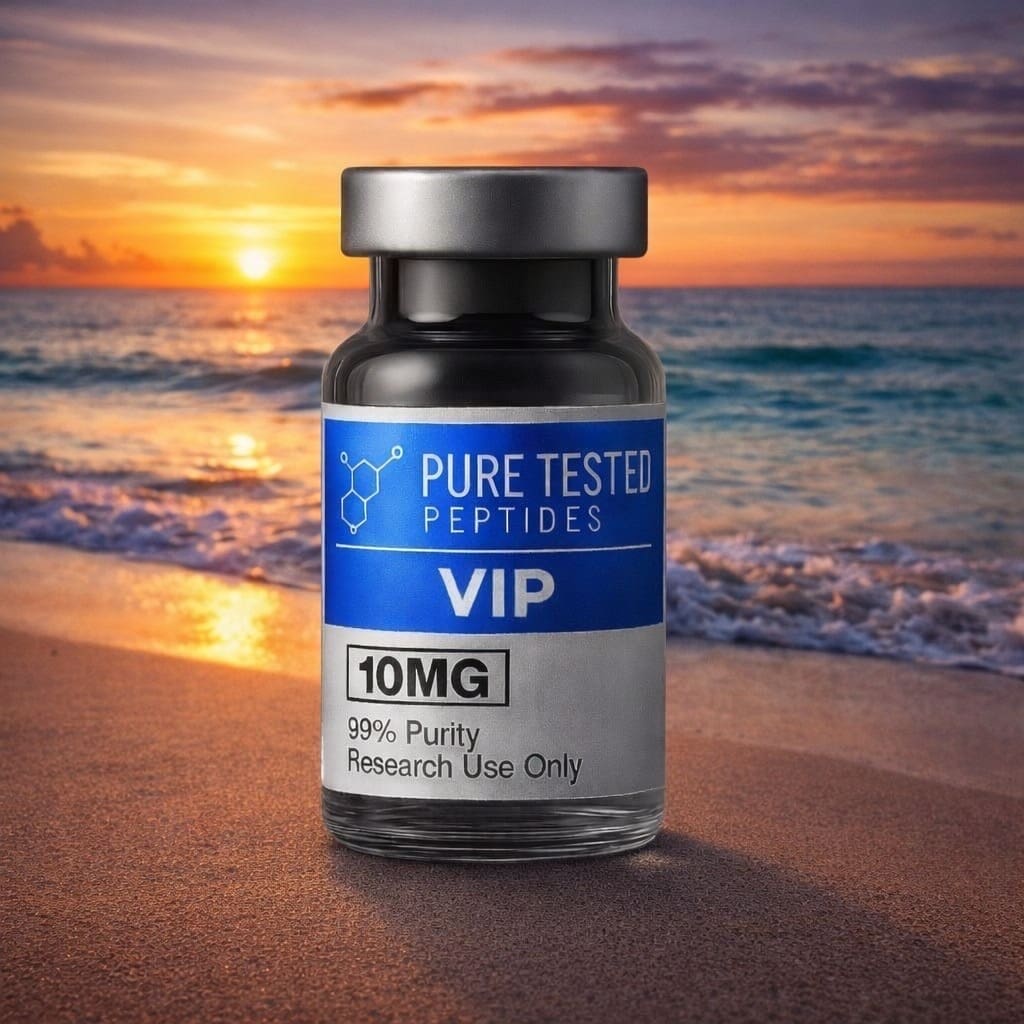
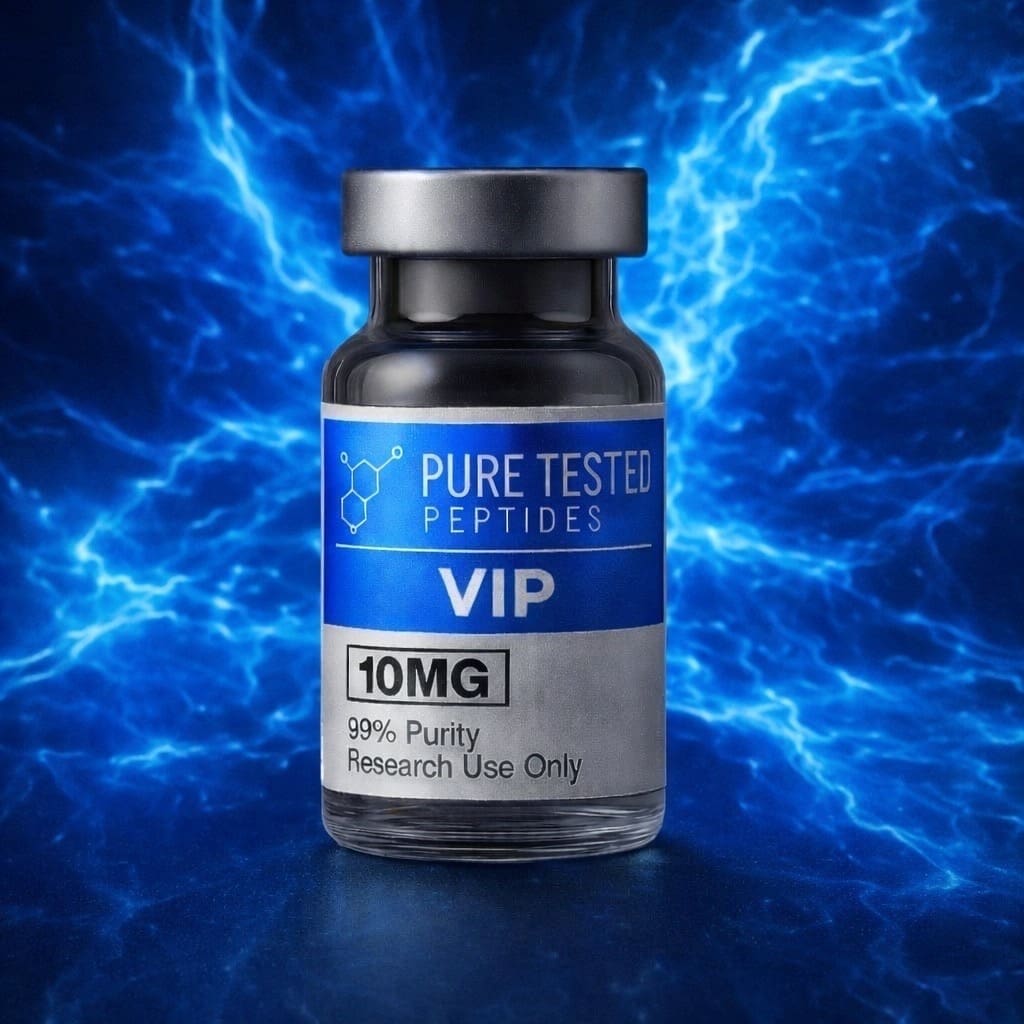
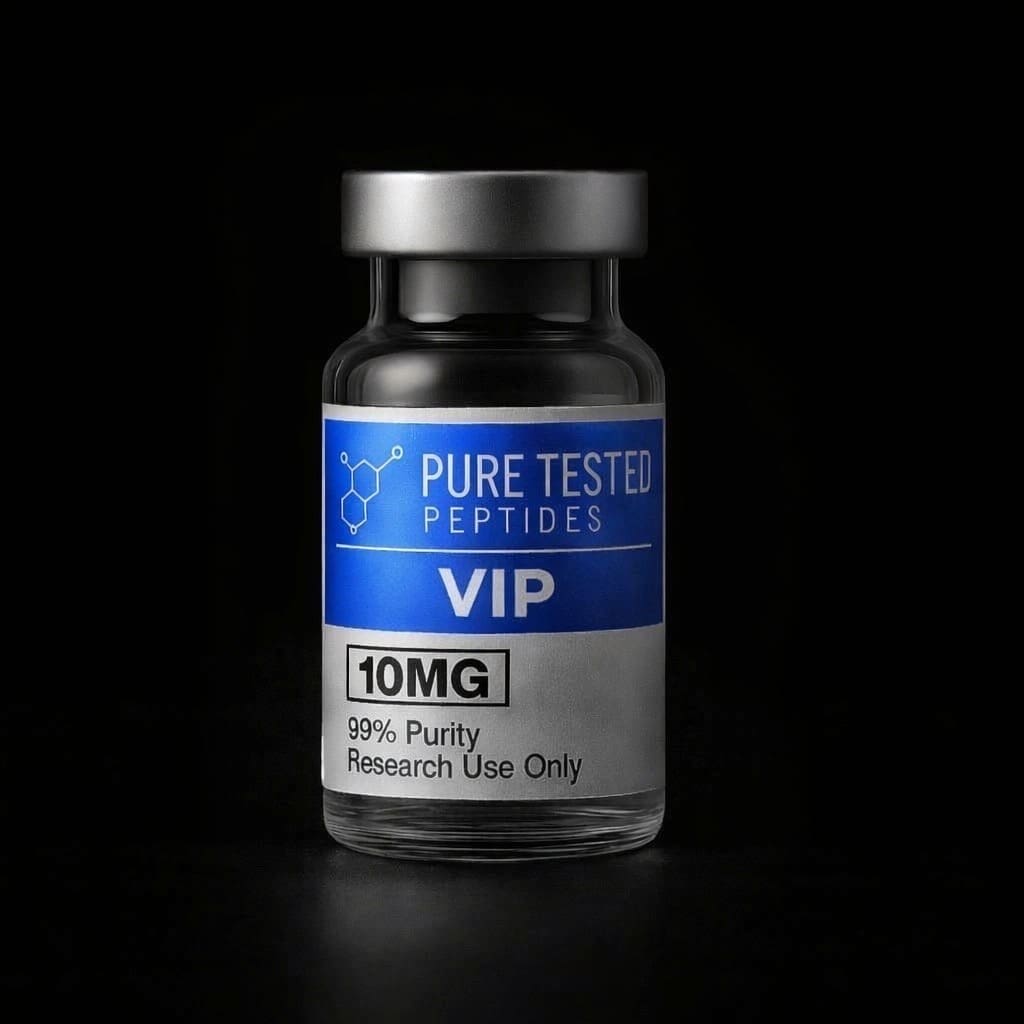
VIP (Vasoactive Intestinal Peptide) – 28 Amino Acid Neuropeptide – where to buy VIP peptide
VIP (Vasoactive Intestinal Peptide) is a 28–amino acid neuropeptide extensively studied for its role
in neuroendocrine signaling and peptide-mediated cellular communication. It functions as a potent endogenous ligand
for the VPAC1 and VPAC2 receptors, activating intracellular
cAMP-dependent signaling pathways.
In preclinical research models, VIP has been shown to regulate smooth muscle relaxation, vasodilation, and immune
signaling processes. Due to its broad receptor activity, VIP is commonly utilized in laboratory investigations
involving inflammatory regulation, vascular homeostasis, and neuropeptide signaling mechanisms.
VIP is supplied for laboratory and analytical research purposes where precise peptide characterization and receptor
interaction studies are required.
Product Details
- Peptide Sequence Length: 28 Amino Acids
- Peptide Class: Neuropeptide
- Receptor Targets: VPAC1, VPAC2
- Research Applications: Neuroendocrine signaling, vascular research, immune modulation studies
VIP Peptide: Comprehensive Research Overview and Laboratory Information
VIP peptide, commonly referenced in scientific literature as vasoactive intestinal peptide, is a well-documented peptide that has been the subject of extensive laboratory research for decades. Within controlled research environments, VIP peptide is studied for its molecular structure, stability characteristics, receptor interactions, and behavior under various experimental conditions. This page provides a detailed, research-focused overview of VIP peptide, its biochemical attributes, laboratory handling considerations, and why it remains a point of interest in peptide research.
All information presented here is strictly educational and intended for laboratory professionals, institutions, and researchers. VIP peptide products are sold for research purposes only and are not intended for human or veterinary use.
What Is VIP Peptide?
VIP peptide is a naturally occurring neuropeptide composed of a specific sequence of amino acids that has been identified and characterized through biochemical research. In laboratory settings, VIP peptide is often used as a reference compound or experimental reagent due to its well-established structure and known interaction pathways in controlled studies.
Researchers value VIP peptide because its molecular configuration and receptor affinity have been extensively mapped, allowing it to be utilized in comparative studies, receptor-binding experiments, and peptide stability research. Its relatively small molecular size makes it suitable for detailed analysis using modern laboratory instrumentation.
VIP peptide used in research settings is typically synthesized using solid-phase peptide synthesis (SPPS) techniques and then purified to high levels using methods such as high-performance liquid chromatography (HPLC). Purity verification is commonly conducted through mass spectrometry to confirm molecular weight and sequence integrity.
Molecular Structure and Characteristics
The molecular structure of VIP peptide is one of the primary reasons it continues to appear in peptide research. Its amino acid sequence allows researchers to study peptide-receptor interactions, folding behavior, and degradation pathways under controlled conditions. The peptide’s structure provides insight into how linear peptides behave when exposed to different solvents, temperatures, and storage environments.
In laboratory settings, VIP peptide is often examined for:
- Sequence stability over time
- Degradation rates under various storage conditions
- Solubility characteristics in common laboratory solvents
- Interaction behavior with specific receptor models
These characteristics make VIP peptide a useful tool for researchers developing new peptide formulations, testing analytical methods, or validating laboratory protocols.
VIP Peptide in Research Applications
Within research environments, VIP peptide is used as a model compound in a variety of experimental designs. Its predictable behavior and well-documented properties allow scientists to use it as a benchmark when comparing other peptides or testing new analytical techniques.
Some common research-focused applications include:
- Receptor binding assays in controlled laboratory models
- Peptide stability and degradation studies
- Analytical method validation
- Comparative peptide synthesis research
- Educational and academic laboratory demonstrations
It is important to note that these applications are strictly confined to in vitro or laboratory-based research environments. VIP peptide is not approved for diagnostic, therapeutic, or consumable use.
Laboratory Handling and Storage Considerations
Proper handling and storage of VIP peptide are critical to maintaining its integrity during research use. Like many peptides, VIP peptide is sensitive to environmental factors such as heat, moisture, and repeated freeze-thaw cycles.
Typical laboratory handling practices may include:
- Storing the peptide in a temperature-controlled environment
- Protecting the material from light exposure when applicable
- Using sterile tools and containers during handling
- Avoiding unnecessary exposure to air or humidity
Researchers often reconstitute peptides using laboratory-grade solvents and aliquot the material to minimize degradation over time. All handling protocols should align with institutional safety guidelines and laboratory best practices.
Purity, Testing, and Quality Standards
High-purity peptides are essential for reliable research outcomes. VIP peptide intended for research use is commonly manufactured to stringent purity standards, often exceeding 99% purity. This level of purity helps ensure reproducibility and consistency across experiments.
Quality assurance processes may include:
- High-performance liquid chromatography (HPLC) analysis
- Mass spectrometry verification
- Batch-specific documentation
- Independent laboratory testing
Researchers rely on these quality control measures to confirm that the peptide they are working with matches the expected molecular profile and performs consistently in laboratory settings.
Why VIP Peptide Remains Relevant in Research
Despite the continual development of new peptides, VIP peptide remains a relevant compound in research due to its long-standing presence in scientific literature. Its established profile allows researchers to compare new peptides against a known reference, helping to validate experimental results. VIP 1oMG peptide for sale from PTP is the best quality anywhere.
Additionally, VIP peptide’s structural simplicity relative to larger biomolecules makes it ideal for teaching environments, method development, and early-stage research projects. Its widespread documentation reduces uncertainty and allows researchers to focus on experimental design rather than compound characterization.
Research-Only Designation and Compliance
VIP peptide products are clearly designated for research purposes only. They are not intended for human consumption, veterinary use, or diagnostic procedures. Laboratories purchasing VIP peptide are responsible for ensuring that its use complies with all local, state, and federal regulations.
This designation protects both suppliers and researchers by maintaining clear boundaries around the appropriate use of research chemicals. Institutions typically require documentation and acknowledgment of this status before procurement.
Conclusion
VIP peptide continues to be an important tool in peptide research due to its well-characterized structure, reliable behavior, and extensive documentation. When used responsibly in laboratory environments, it provides researchers with valuable insights into peptide chemistry, stability, and interaction models.
By adhering to proper handling protocols, maintaining strict research-only usage, and sourcing peptides from reputable suppliers with verified purity standards, laboratories can confidently incorporate VIP peptide into their research workflows.
This information is provided for educational and research reference only. VIP peptide is sold strictly for research purposes and is not intended for human or animal use.


Reviews
There are no reviews yet.