
5-Amino-1MQ and SLUPP332 in Metabolic Research: How NNMT Targeting Is Framed in Experimental Design
Nicotinamide N-methyltransferase (NNMT) overexpression in adipose tissue correlates with increased fat accumulation, insulin resistance, and suppressed energy expenditure — yet the enzyme received relatively little research attention until small-molecule inhibitors made precise targeting feasible. The study of 5-Amino-1MQ and SLUPP332 in metabolic research: how NNMT targeting is framed in experimental design has since become a focused area for researchers building body-composition models around enzymatic control of the NAD+ pool and mitochondrial activity.
Key Takeaways
- NNMT acts as a "methylation sink," consuming S-adenosyl methionine and depleting the NAD+ precursor pool in adipose tissue.
- 5-Amino-1MQ inhibits NNMT directly, raising intracellular NAD+ and shifting adipocyte metabolism toward energy expenditure.
- SLUPP332 targets ERR-alpha, a downstream node of mitochondrial biogenesis, making it a mechanistically distinct but complementary research tool.
- Most 5-Amino-1MQ evidence comes from animal models; human clinical data remain limited as of 2026.
- Experimental designs pairing these compounds typically use multi-arm layouts to isolate pathway-specific effects.
Understanding NNMT's Role in Metabolic Dysfunction
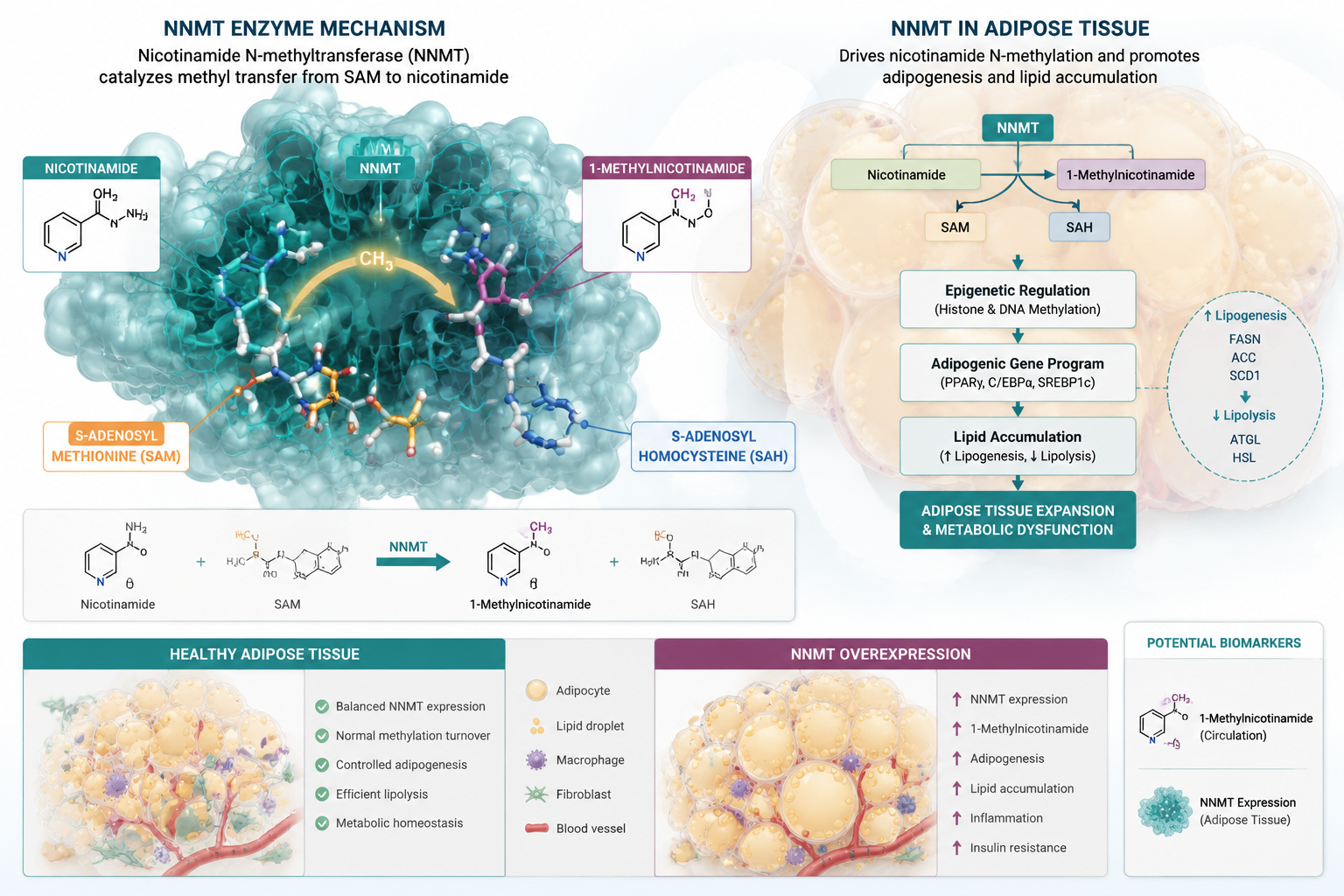
NNMT catalyzes the transfer of a methyl group from S-adenosyl methionine (SAM) to nicotinamide, producing 1-methylnicotinamide. This reaction has two major downstream consequences. First, it consumes SAM, reducing the cell's overall methylation potential — a process that, when chronic, leads to histone hypomethylation and altered gene expression. Second, it diverts nicotinamide away from NAD+ synthesis, shrinking the intracellular NAD+ pool that mitochondria depend on for oxidative phosphorylation.
In adipose tissue, NNMT overexpression is strongly associated with:
| Effect | Mechanism |
|---|---|
| Increased fat storage | Reduced NAD+ limits fatty acid oxidation |
| Insulin resistance | Impaired mitochondrial signaling |
| Epigenetic remodeling | SAM depletion causes histone hypomethylation |
| Suppressed thermogenesis | Lower energy expenditure in adipocytes |
"NNMT functions less like a simple metabolic enzyme and more like a regulatory switch that integrates energy status, epigenetic state, and immune signaling simultaneously."
This multifaceted role is why NNMT has attracted attention in both metabolic disorder research and oncology. In cancer biology, the same methylation-sink mechanism supports tumor cell survival by remodeling chromatin. For researchers focused on metabolic modulation research lines, the adipose-tissue angle is the primary focus.
How 5-Amino-1MQ and SLUPP332 in Metabolic Research Frame NNMT Targeting in Experimental Design
5-Amino-1MQ: The Direct NNMT Inhibitor
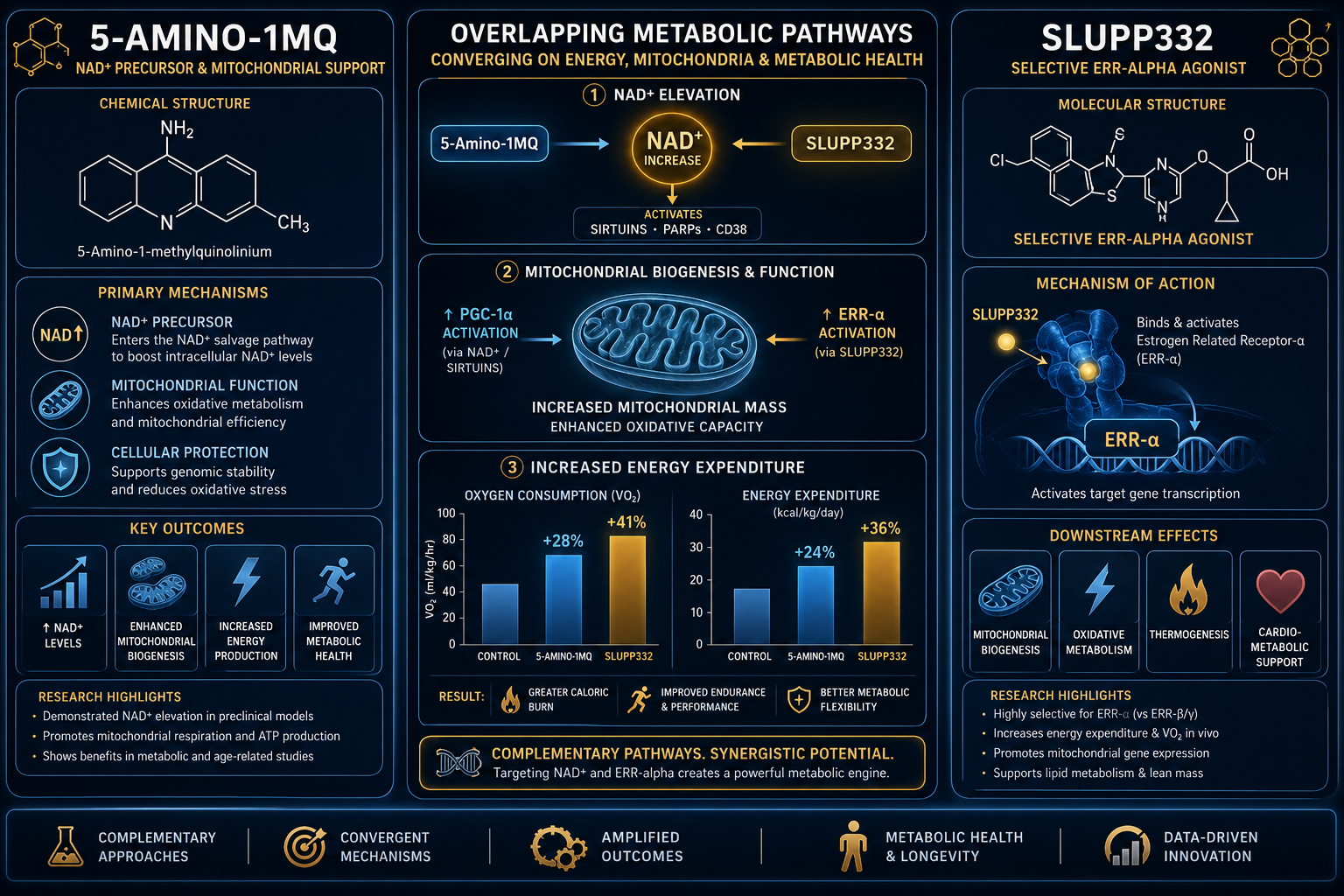
5-Amino-1MQ is a small-molecule competitive inhibitor of NNMT. By blocking the enzyme's active site, it prevents nicotinamide from being methylated, which preserves the substrate pool available for NAD+ synthesis. The result, observed consistently in rodent models, is a measurable rise in adipose NAD+ levels, increased mitochondrial activity, and a shift in energy balance away from lipid storage.
Researchers sourcing 5-Amino-1MQ for preclinical studies typically frame their endpoints around:
- NAD+ quantification in adipose and liver tissue
- Oxygen consumption rate (OCR) in isolated mitochondria
- Body composition metrics via DEXA or MRI in diet-induced obesity models
- Insulin sensitivity markers including HOMA-IR and glucose tolerance curves
Newer NNMT inhibitors such as II559 (Ki = 1.2 nM) and II802 (Ki = 1.6 nM) have demonstrated over 5,000-fold selectivity for NNMT over related methyltransferases, with cellular IC50 values near 150 nM. These figures provide a useful selectivity benchmark when designing controls for 5-Amino-1MQ studies.
Critical caveat: Despite strong animal-model data, human clinical trials for 5-Amino-1MQ remain in early stages. Researchers should treat all mechanistic claims as preclinical until robust human data emerge.
SLUPP332: A Complementary Mitochondrial Target
SLUPP332 (also written SLU-PP-332) works through a different mechanism. It is an agonist of estrogen-related receptor alpha (ERR-alpha), a nuclear receptor that drives mitochondrial biogenesis and oxidative metabolism gene expression. Rather than targeting NNMT directly, SLUPP332 in oral and subcutaneous evidence models activates downstream transcriptional programs that overlap with the metabolic benefits sought through NNMT inhibition.
This mechanistic distinction is precisely why researchers pair the two compounds in multi-arm designs — to determine whether upstream enzyme inhibition (5-Amino-1MQ) and downstream receptor activation (SLUPP332) produce additive, synergistic, or redundant effects on mitochondrial output and fat oxidation.
Experimental Design Considerations
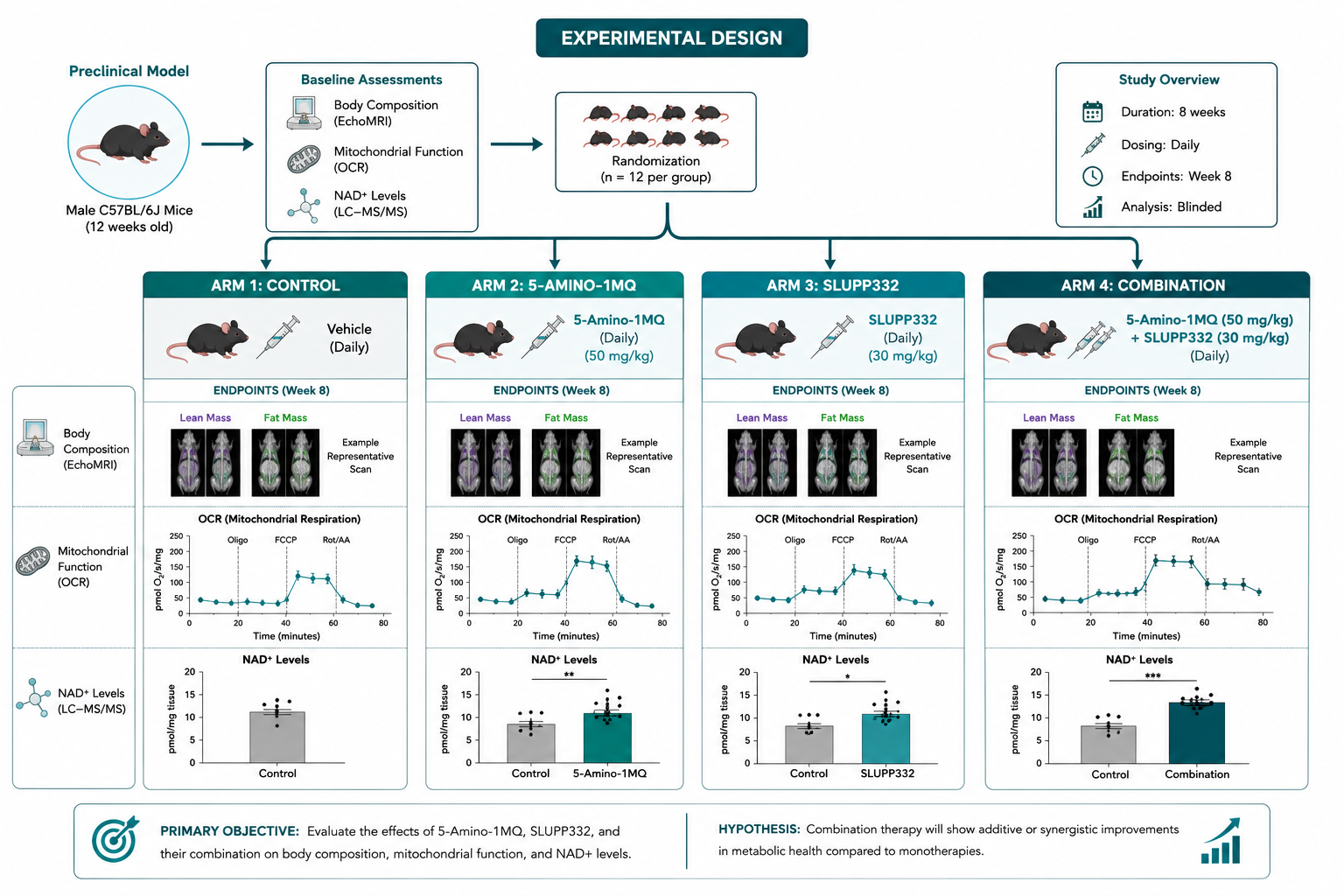
Rigorous study layouts for 5-Amino-1MQ and SLUPP332 in metabolic research typically include:
- Control arm — vehicle only
- 5-Amino-1MQ arm — NNMT inhibition, NAD+ restoration
- SLUPP332 arm — ERR-alpha activation, biogenesis upregulation
- Combination arm — both compounds to test interaction effects
Researchers also integrate MOTS-c metabolic flexibility models as parallel comparators, given MOTS-c's role in AMPK activation and mitochondrial stress response. Similarly, IPA muscle and fat research themes offer adjacent endpoints for lean mass preservation alongside fat-loss outcomes.
For broader longevity-oriented panels, some investigators incorporate NAD+ precursor co-treatments, referencing NAD+ scientific evidence frameworks to contextualize NNMT inhibition within the wider NAD+ biology literature.
Framing Limitations and Research Integrity
Honest experimental framing requires acknowledging several constraints:
- Species translation gaps: Rodent adipose biology does not always map cleanly to human adipose, particularly regarding NNMT expression levels and tissue distribution.
- In vivo bioavailability: Many NNMT inhibitors show strong in vitro potency but limited in vivo activity, a challenge that applies to 5-Amino-1MQ as well.
- SLUPP332 data scarcity: Publicly available mechanistic data on SLUPP332 remain limited, making independent replication difficult.
- Confounding variables: Diet-induced obesity models introduce metabolic heterogeneity that can obscure compound-specific signals.
Researchers building longevity peptide research protocols that include NNMT-targeting agents should pre-register endpoints and use blinded outcome assessment to minimize bias.
Conclusion
The study of 5-Amino-1MQ and SLUPP332 in metabolic research: how NNMT targeting is framed in experimental design rewards researchers who prioritize mechanistic clarity over outcome assumptions. The core logic is straightforward: NNMT overexpression depletes NAD+ and impairs mitochondrial function; inhibiting it restores metabolic flexibility. SLUPP332 adds a complementary activation signal at the transcriptional level, making multi-arm designs the most informative approach.
Actionable next steps for researchers:
- Define NAD+ quantification and OCR as primary endpoints before dosing begins.
- Include a selectivity control arm using a structurally related but inactive analog.
- Cross-reference findings against mitochondrial longevity research frameworks to situate results within the broader field.
- Treat human translation with caution until Phase I/II data are available.
- Source compounds with verified purity documentation to ensure assay reproducibility.
Rigorous design, not compound enthusiasm, is what advances NNMT research from promising mechanism to actionable biology.