Glow Blend and Klow Blend Peptides: Example Stacks for Skin, Hair, and ‘Aging Support’ Research Only
Fewer than 5% of multi-peptide research blends currently on the market combine collagen-stimulating, angiogenic, and anti-inflammatory compounds into a single lyophilized formulation — yet that is precisely what Glow Blend and Klow Blend peptides represent. Understanding how each component maps to specific cellular pathways is essential for researchers designing protocols around skin remodeling, hair follicle biology, and aging-related cellular decline.
This article breaks down the ingredient profiles of both blends, explains the mechanistic rationale behind each stack, and outlines hypothetical research applications. All content is strictly for informational and educational purposes. Neither blend is approved for human therapeutic use.
Key Takeaways
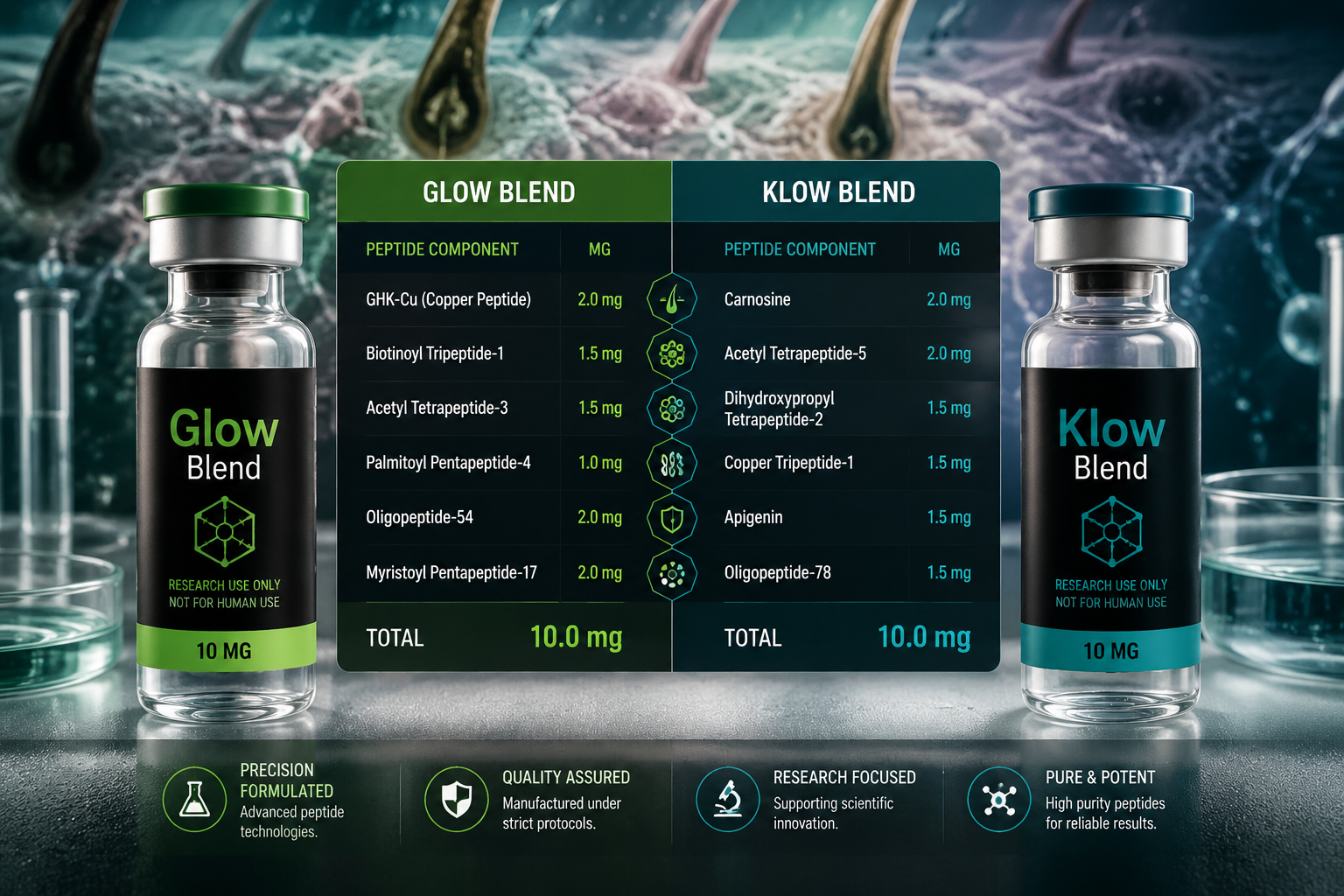
- Glow Blend contains GHK-Cu, BPC-157, and TB-500, targeting collagen synthesis, tissue repair, and angiogenesis.
- Klow Blend adds KPV to the same three-peptide base, extending coverage to inflammatory and immunomodulatory pathways.
- Both blends are research-grade only and have no published clinical trials as combined formulations.
- Choosing between the two depends on whether inflammation is a primary variable in the research model.
- Proper storage and purity verification are critical for maintaining peptide integrity in any lab setting.
Ingredient Profiles: What Each Peptide Does at the Cellular Level
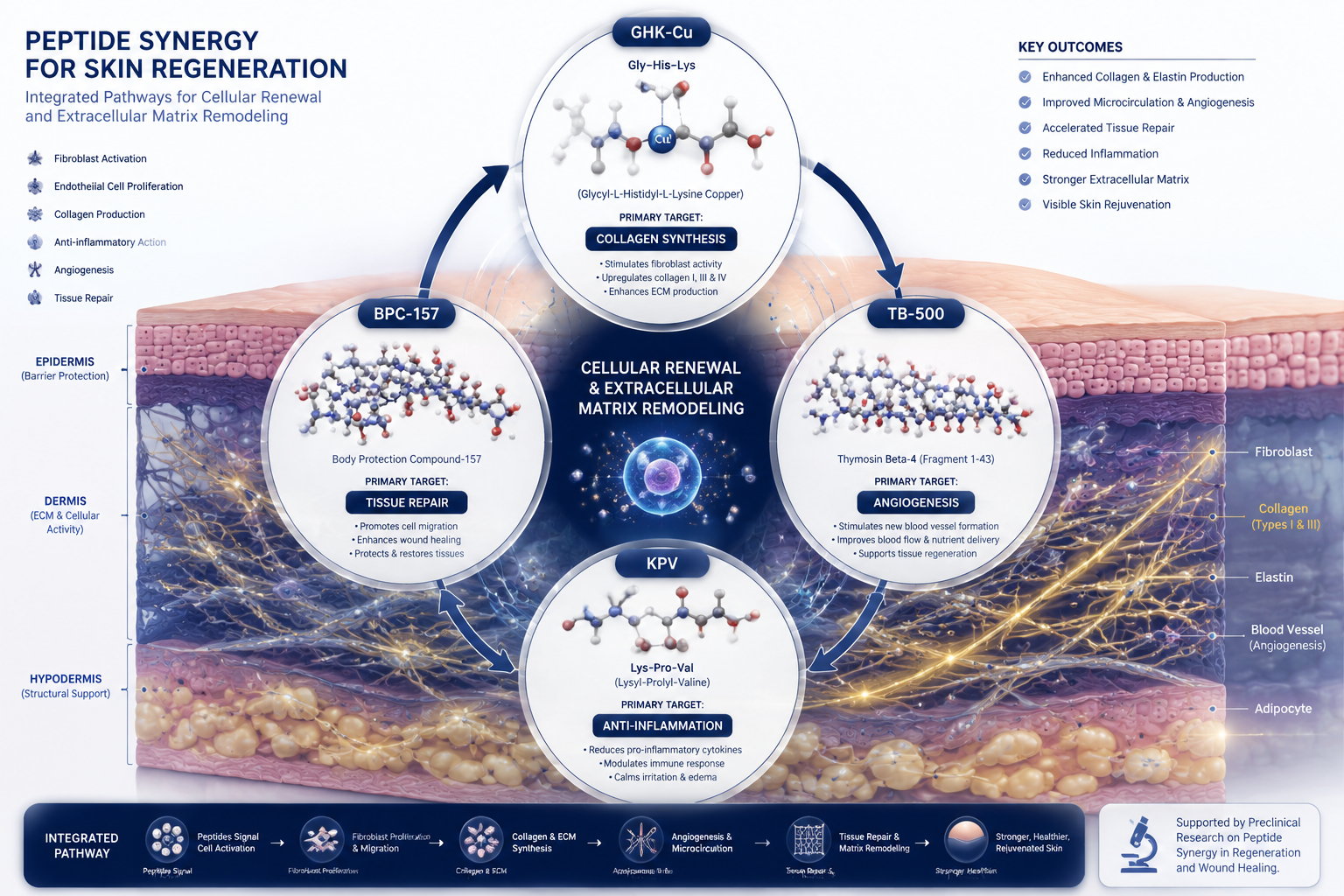
Understanding Glow Blend and Klow Blend peptides as example stacks for skin, hair, and aging support research begins with mapping each ingredient to a specific biological mechanism.
GHK-Cu: Collagen, Elastin, and Cellular Renewal
GHK-Cu (Glycyl-L-Histidyl-L-Lysine Copper) is the anchor compound in both blends. At the cellular level, it stimulates fibroblast activity, upregulates collagen and elastin synthesis, and promotes angiogenesis — the formation of new blood vessels that supply nutrients to skin tissue. It also carries potent antioxidant activity, helping neutralize reactive oxygen species that accelerate cellular aging. In hair follicle research models, GHK-Cu has been studied for its ability to support follicle cycling and reduce miniaturization signals. Researchers interested in topical applications can explore topical GHK-Cu formulations as a reference point for delivery considerations.
BPC-157: Connective Tissue and Healing Cascade Activation
BPC-157 (Body Protection Compound 157) accelerates the repair of muscle, ligament, and tendon tissue while reducing local inflammation. In skin research models, its relevance lies in connective tissue strengthening and its ability to enhance growth factor signaling. It works synergistically with TB-500 by activating overlapping but distinct repair pathways. For a deeper look at its regenerative applications, the BPC-157 and TB-500 regeneration research page provides useful context.
TB-500: Cell Migration and Vascular Support
TB-500 (Thymosin Beta-4) promotes actin polymerization, which drives cell migration — a critical step in wound closure and tissue remodeling. It enhances blood flow to damaged areas and complements BPC-157 by improving the scaffolding environment in which new cells proliferate. Together, these two peptides create a repair-focused foundation for both blends.
KPV: The Anti-Inflammatory Addition in Klow Blend
KPV (Lys-Pro-Val) is a tripeptide fragment derived from alpha-melanocyte-stimulating hormone. It binds to melanocortin receptors and downregulates pro-inflammatory cytokines, making it particularly relevant in research models involving dermatitis, rosacea, psoriasis, or chronic wound inflammation. Its inclusion in Klow Blend shifts the entire stack's focus from pure remodeling toward remodeling plus immune modulation.
| Component | Glow Blend | Klow Blend | Primary Pathway |
|---|---|---|---|
| GHK-Cu (50 mg) | Yes | Yes | Collagen, antioxidant |
| BPC-157 (10 mg) | Yes | Yes | Tissue repair |
| TB-500 (10 mg) | Yes | Yes | Cell migration, angiogenesis |
| KPV (10 mg) | No | Yes | Anti-inflammatory |
Hypothetical Research Stacks: Skin, Hair, and Aging Support Applications
When designing protocols using Glow Blend and Klow Blend peptides as example stacks for skin, hair, and aging support research, the choice between the two blends depends on the dominant variable in the research model.
Skin Remodeling and Anti-Aging Research
For models focused on fine line reduction, scar remodeling, or post-procedural recovery (e.g., after microneedling or laser treatment), Glow Blend's three-peptide profile is sufficient. GHK-Cu drives the collagen response, while BPC-157 and TB-500 accelerate the repair cascade. Researchers exploring broader longevity peptide research themes may find value in pairing either blend with mitochondrial-support compounds for a more comprehensive aging model.
Hair Follicle Biology
In hair research models, GHK-Cu's role in follicle cycling makes it the primary active compound. BPC-157 adds connective tissue support around the dermal papilla, while TB-500 improves local vascularization. Both blends are relevant here, though Klow Blend may be preferred in models where scalp inflammation is a confounding variable.
Inflammatory Skin Conditions and Chronic Wound Models
Klow Blend is the more appropriate choice when inflammation is a primary research variable. KPV's cytokine-suppressing activity makes it well-suited for eczema, psoriasis, or chronic wound models where persistent inflammatory infiltration prevents normal tissue repair. Researchers working on peptide serums and evidence-based skin applications will find the KPV mechanism particularly relevant.
Research note: As of 2026, no published clinical trials exist for either blend as a combined formulation. All mechanistic claims are extrapolated from individual-component literature.
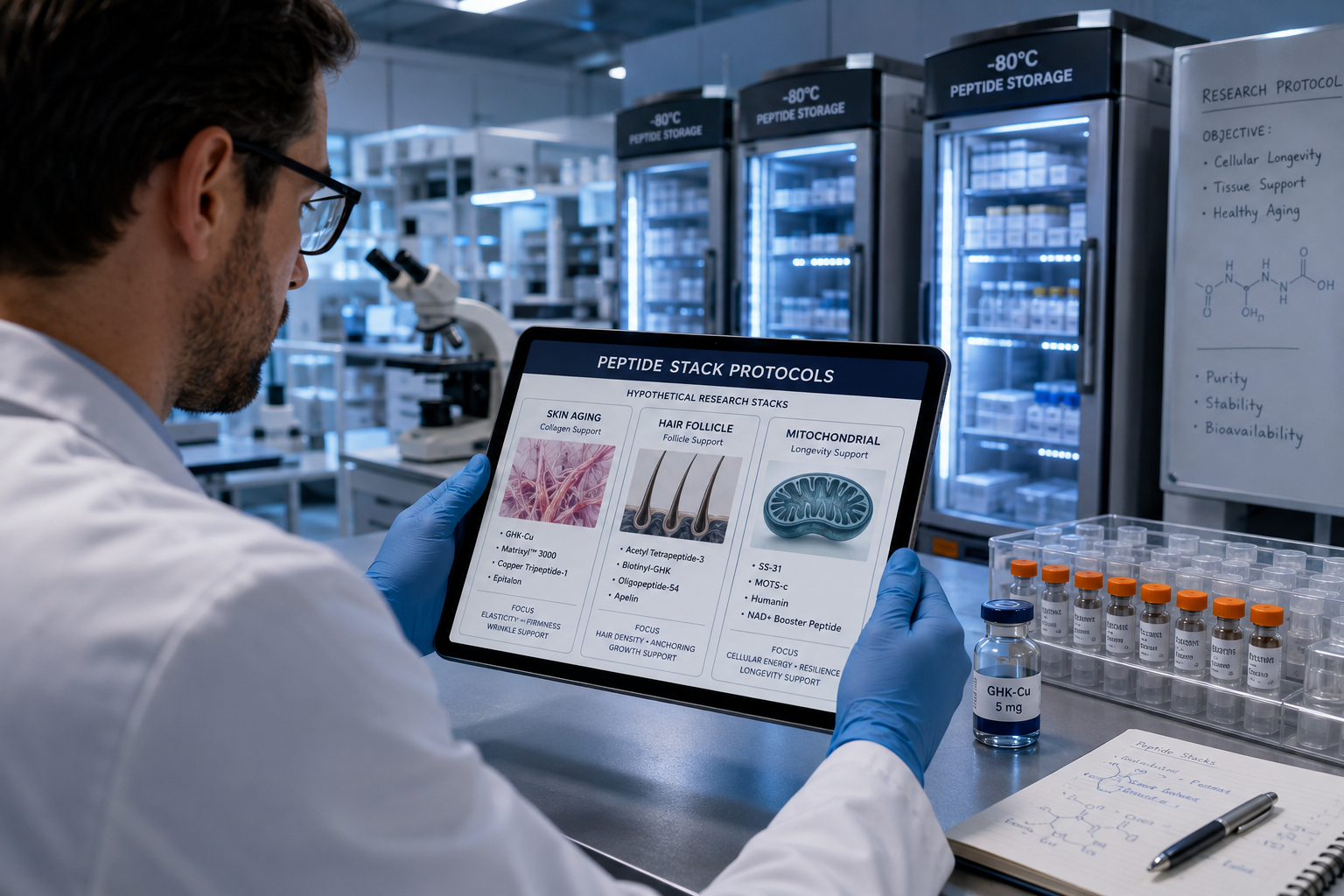
Sourcing, Storage, and Research Integrity
Peptide purity is non-negotiable in any research setting. Both blends should be sourced from suppliers who provide independent third-party testing. Reviewing how peptide purity testing works is a practical first step before acquiring any multi-peptide formulation.
Storage guidelines for lyophilized blends:
- Unmixed (freeze-dried): stable up to 1 year at 2-8 degrees C; over 5 years at -20 degrees C
- Post-reconstitution: refrigerate and use within 30 days
- Avoid repeated freeze-thaw cycles to preserve peptide integrity
Researchers building broader aging-focused protocols may also want to explore mitochondrial longevity research themes and MOTS-c and Epithalon research as complementary areas, since cellular energy metabolism is a parallel pathway to the extracellular matrix remodeling that Glow and Klow blends target.
Conclusion
Glow Blend and Klow Blend peptides represent a structured approach to multi-target research stacking for skin, hair, and aging support models. Glow Blend's three-peptide profile covers collagen synthesis, angiogenesis, and tissue repair. Klow Blend extends that coverage with KPV's anti-inflammatory action, making it the stronger candidate for inflammation-dominant research models.
Actionable next steps for researchers:
- Define the primary biological variable in the model before selecting a blend.
- Verify supplier purity documentation and certificate of analysis before procurement.
- Review individual-component literature for each peptide before designing dosing protocols.
- Consider complementary stacks targeting mitochondrial or hormonal pathways for broader aging research coverage.
Both blends are research-grade compounds intended solely for laboratory use. They are not approved medications and are not intended for human consumption or self-administration.