

BPC-157 and TB-500 Stack: Synergistic Mechanisms for Enhanced Tissue Repair Research
}
Two peptides operating through entirely different biological pathways — yet when combined, preclinical data suggests their effects on tissue repair may be greater than the sum of their parts. The BPC-157 and TB-500 stack: synergistic mechanisms for enhanced tissue repair research has become one of the most studied peptide combinations in regenerative biology, drawing attention from researchers examining musculoskeletal recovery, angiogenesis, and cellular remodeling.
Key Takeaways
- BPC-157 drives localized tissue repair through angiogenesis and nitric oxide signaling, while TB-500 promotes systemic cell migration via actin regulation.
- Preclinical models show the combined stack improves tensile strength, collagen composition, and recovery speed in tendon and ligament injuries.
- No peer-reviewed human clinical trials currently validate the combination's safety or efficacy.
- Both peptides are classified as FDA Interim Category 2 substances and are prohibited by WADA under the S0 category.
- Researchers should source only verified, lab-tested compounds and operate within applicable regulatory frameworks.
How BPC-157 and TB-500 Work Together
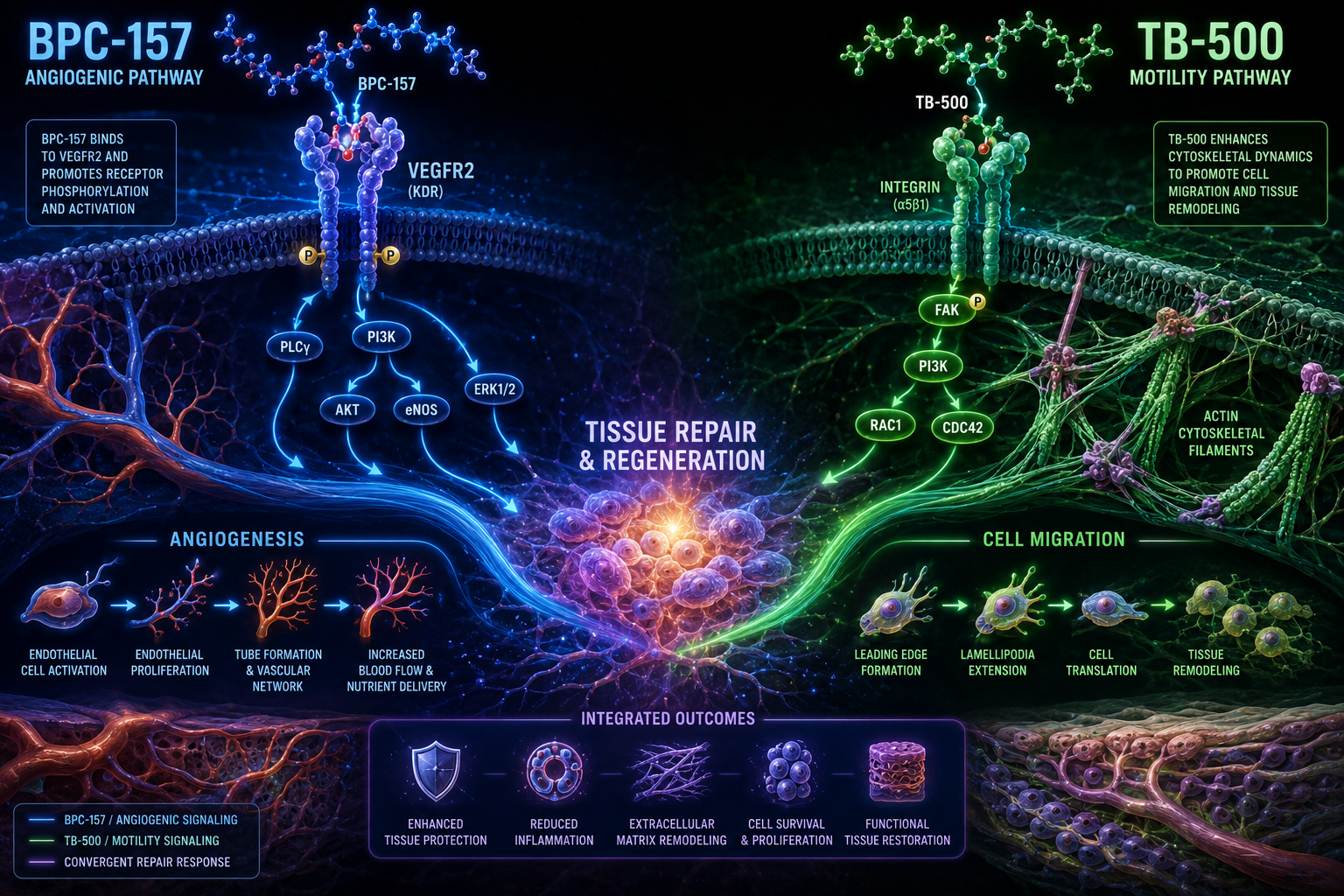
Understanding the BPC-157 and TB-500 stack: synergistic mechanisms for enhanced tissue repair research begins with each peptide's distinct mechanism.
BPC-157 (Body Protection Compound-157) is a 15-amino-acid peptide derived from a gastric protein. Its primary actions include:
- Activating VEGFR2 to stimulate new blood vessel formation (angiogenesis)
- Upregulating the nitric oxide system to improve blood flow to damaged tissue
- Modulating growth factor signaling to accelerate fibroblast activity
TB-500 (Thymosin Beta-4 fragment) works through a completely separate route. It binds to actin, a key protein in the cytoskeleton, promoting cell migration, differentiation, and tissue remodeling. Its systemic reach makes it particularly effective for whole-body recovery processes.
"BPC-157 builds the vascular infrastructure; TB-500 mobilizes the cellular workforce."
Together, these mechanisms are complementary rather than redundant. BPC-157 creates the blood supply needed to deliver nutrients and immune cells, while TB-500 drives the migration and organization of repair cells into the damaged area. Researchers studying recovery and tissue biology have noted that this dual-pathway approach addresses two critical bottlenecks in natural healing simultaneously.
For a deeper foundation on BPC-157 alone, the BPC-157 core peptides documentation and first research guide provides essential background before exploring stacked protocols.
Preclinical Evidence Supporting the Combined Stack
Animal studies provide the most detailed evidence for the BPC-157 and TB-500 stack: synergistic mechanisms for enhanced tissue repair research. Preclinical models involving Achilles tendon injuries, ligament damage, and cardiac ischemia-reperfusion have demonstrated measurable improvements across several markers:
| Outcome Marker | Observed Effect in Preclinical Models |
|---|---|
| Tensile strength | Increased in repaired tendons |
| Collagen composition | Improved fiber organization |
| Recovery timeline | Reduced compared to single-peptide groups |
| Cardiac tissue repair | Reduced ischemia-reperfusion damage |
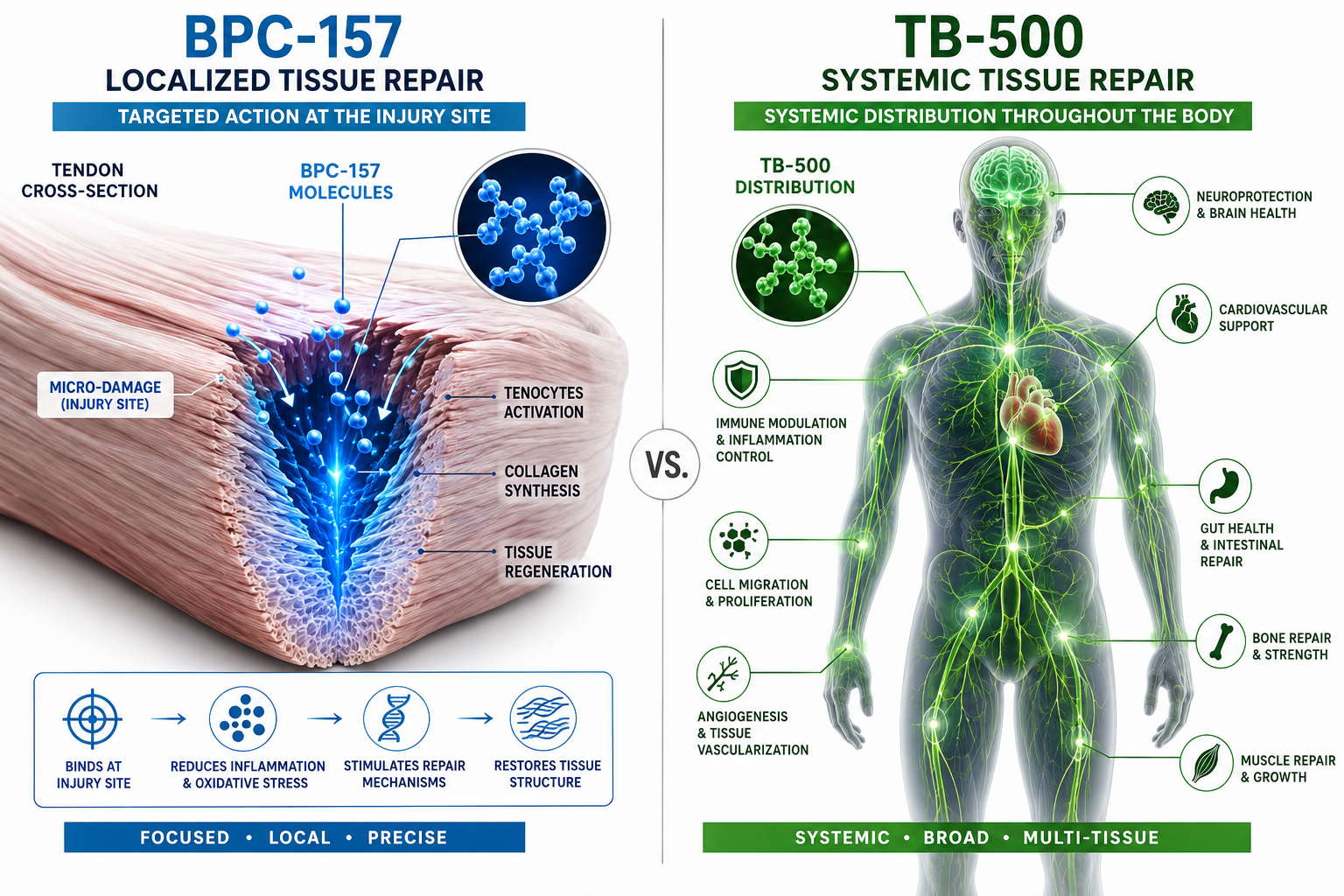
BPC-157 showed particular strength in localized tissue applications — tendons, joints, and gut lining — while TB-500 demonstrated advantages in systemic flexibility and broader tissue remodeling. Their combination appears to address both the local and systemic dimensions of complex injuries.
Researchers interested in cytoskeletal remodeling should also review TB-500 cytoskeletal remodeling research themes for mechanistic detail, and those sourcing TB-500 for controlled experiments can reference TB-500 buy: controlled experimental models and QC workflow.
It is worth noting that all current evidence is preclinical. No peer-reviewed human clinical trials have tested this combination, and existing claims rely on extrapolations from individual peptide studies.
Research Protocols, Regulatory Status, and Risk Considerations
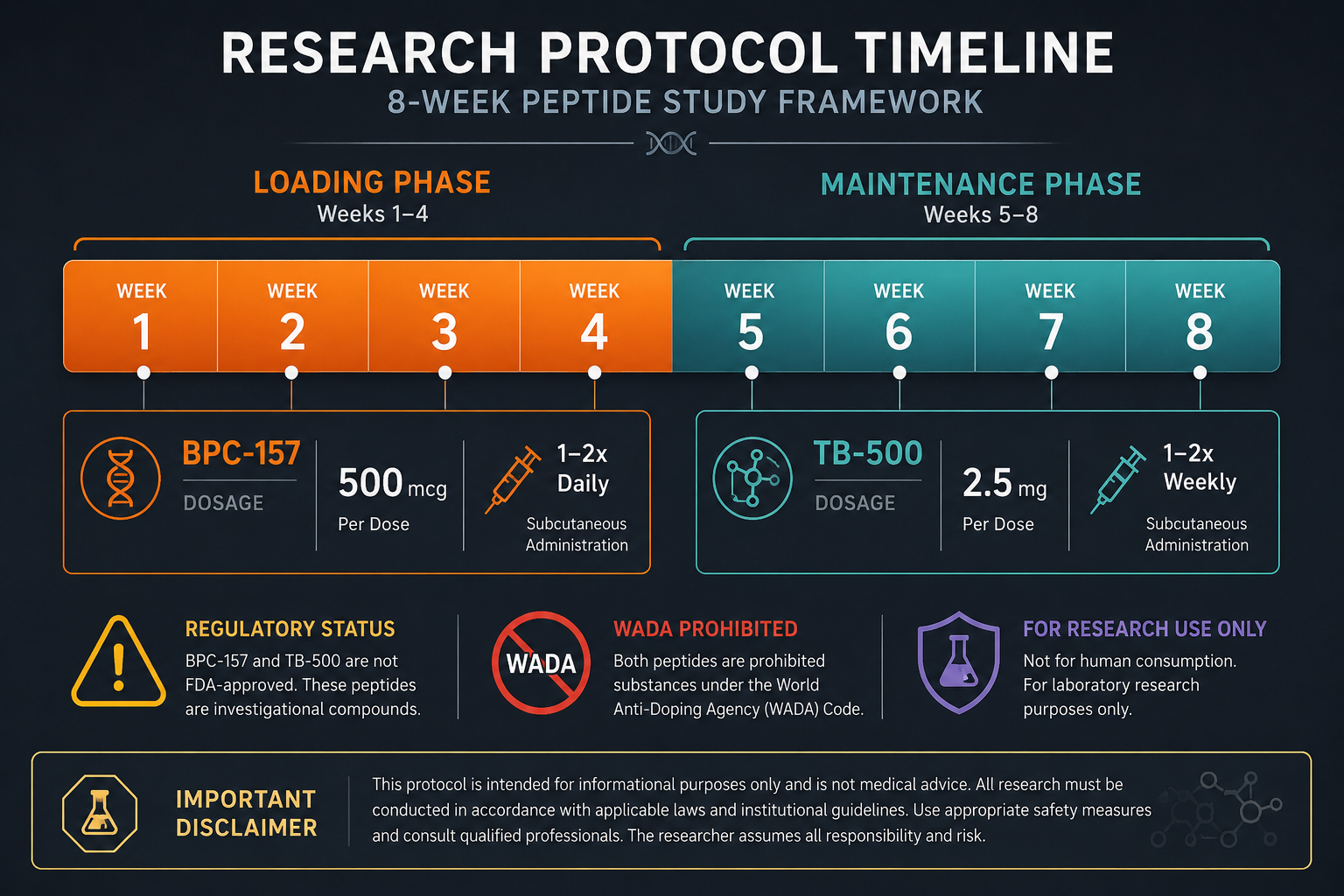
A commonly referenced preclinical research protocol involves an 8-week cycle:
- BPC-157: 500 mcg administered twice daily, near the target tissue site
- TB-500 Loading Phase (Weeks 1-4): 2.5 mg twice weekly
- TB-500 Maintenance Phase (Weeks 5-8): 1.5 mg once weekly
Regulatory context is critical. As of 2026, both BPC-157 and TB-500 are classified as FDA Interim Category 2 substances — meaning they are not approved for human therapeutic use. The World Anti-Doping Agency (WADA) also prohibits both compounds under its S0 category for non-approved substances, making them ineligible for use in competitive sport.
Medical professionals caution that while preclinical data is promising, the absence of robust human trials means safety and efficacy remain unverified. Theoretical concerns include the potential for angiogenesis-promoting peptides to interact with undetected tumor microenvironments, though direct evidence for this risk remains limited.
Researchers exploring complementary peptide mechanisms may also find value in reviewing GHK-Cu longevity research themes and SS-31 mitochondrial research themes, both of which intersect with tissue repair and cellular protection pathways.
For sourcing integrity, only compounds with verified purity documentation should be used. The lab-tested peptides catalog offers a reference point for quality-controlled research compounds.
Conclusion
The BPC-157 and TB-500 stack: synergistic mechanisms for enhanced tissue repair research represents a compelling area of peptide science, with complementary mechanisms that address both vascular and cellular dimensions of tissue repair. Preclinical evidence supports the hypothesis that their combined action outperforms either peptide alone in specific injury models.
Actionable next steps for researchers:
- Review the existing preclinical literature on each peptide individually before designing combination protocols.
- Consult regulatory guidelines in your jurisdiction — both peptides carry significant legal and compliance considerations.
- Source only from suppliers providing third-party purity certificates and documented QC workflows.
- Design controlled experimental models with appropriate endpoints to generate reproducible data.
- Monitor ongoing clinical research, as human trials may emerge within the next several years.
The science is promising. Rigorous methodology and regulatory awareness are what will move this research forward responsibly.