PT-141 Peptide: Melanocortin Receptor Agonist Research and its Mechanism of Action
Only one FDA-approved peptide targets sexual desire directly at the level of the brain rather than the body's vascular system — and that peptide is bremelanotide, better known as PT-141. This distinction makes PT-141 peptide: melanocortin receptor agonist research and its mechanism of action one of the most scientifically compelling areas in modern peptide pharmacology. Unlike conventional approaches that work downstream of arousal, PT-141 engages the central nervous system at the motivational level, opening research pathways that extend well beyond its approved indication.
Key Takeaways
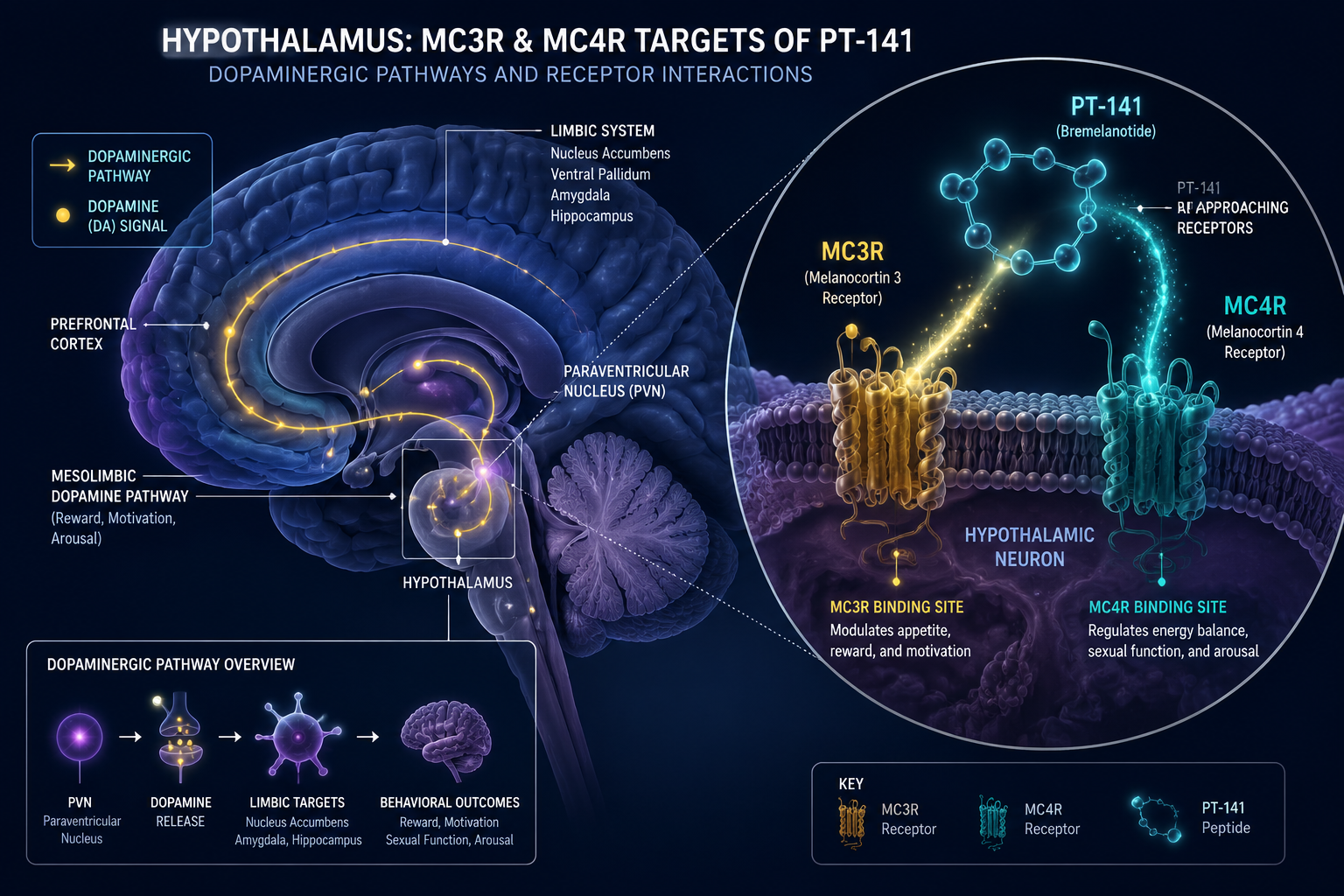
- PT-141 is a synthetic cyclic heptapeptide that activates MC3R and MC4R receptors in the hypothalamus and limbic brain regions.
- Its central mechanism distinguishes it from PDE5 inhibitors, which act peripherally on vascular tissue.
- PT-141 received FDA approval in 2019 as Vyleesi for hypoactive sexual desire disorder (HSDD) in premenopausal women.
- Purity standards matter significantly: batches below 97% purity show up to 24% variance in receptor binding affinity.
- Active research in 2026 continues to map MC4R receptor density in previously uncharted hypothalamic regions.
How PT-141 Engages the Melanocortin System
PT-141 is a cyclic heptapeptide derived from Melanotan II. Its cyclic lactam structure resists enzymatic breakdown, giving it an elimination half-life of approximately 2.7 hours. Importantly, its biological effects persist well beyond plasma clearance, a feature that distinguishes it from linear peptides with similar receptor targets.
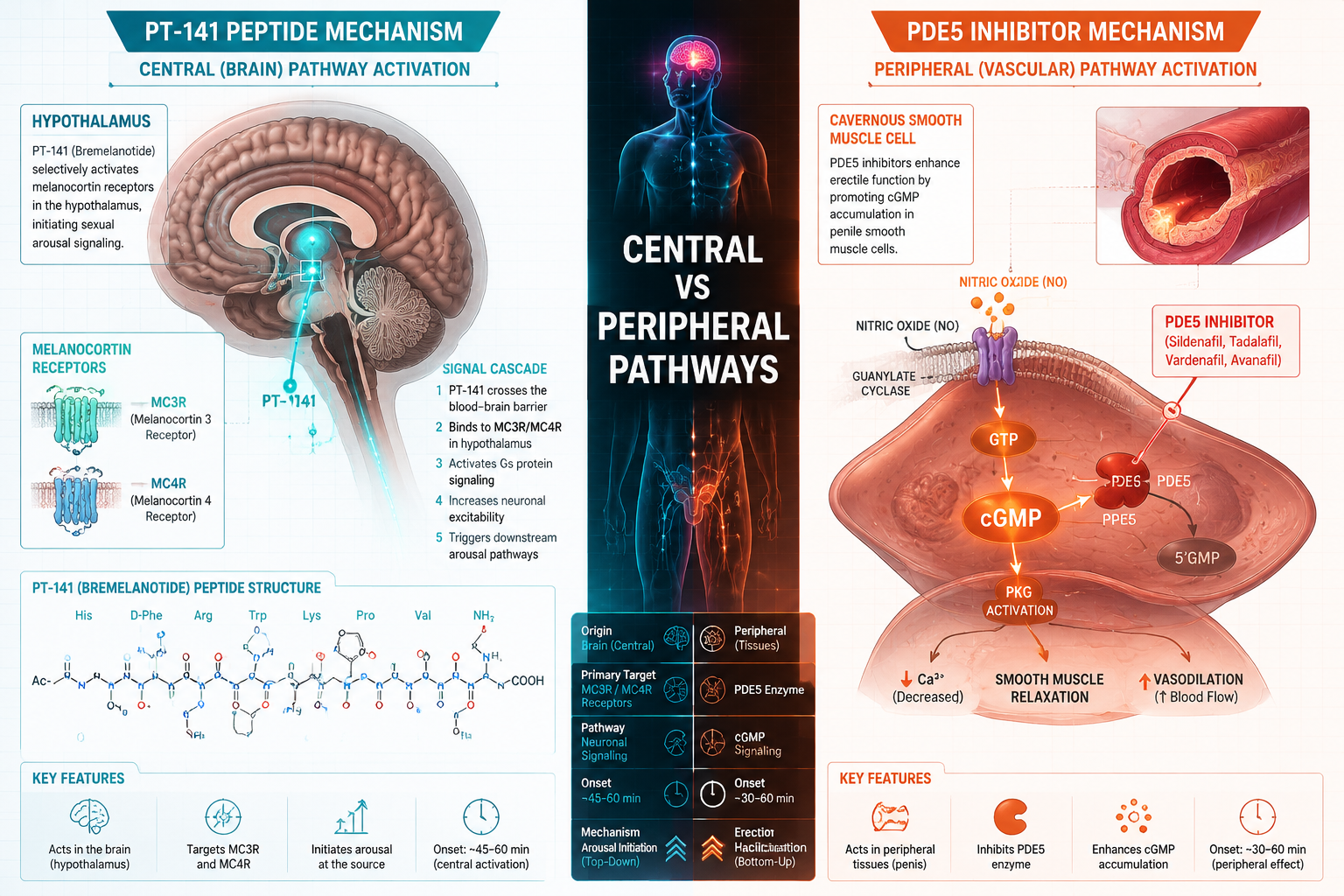
The compound functions as a non-selective agonist at melanocortin receptors, with primary activity at MC3R and MC4R. It bypasses MC1R (which governs pigmentation) and MC2R (which regulates cortisol) almost entirely. This selectivity is central to understanding PT-141 peptide: melanocortin receptor agonist research and its mechanism of action, because it means the compound's effects are routed through neural circuits rather than hormonal or pigmentation pathways.
A multi-institution study published in Nature Communications in early 2026 mapped MC4R receptor density across the paraventricular nucleus (PVN) and the lateral hypothalamic area (LHA) — regions previously under-characterized in melanocortin research. These findings provide a more precise anatomical map of where PT-141 exerts its influence, which has significant implications for targeted research design.
Researchers exploring other neuropeptide systems, such as those studying PT-141 neural and metabolic research themes, will find these receptor mapping results directly applicable to experimental design.
Central vs. Peripheral: A Mechanistic Distinction That Matters
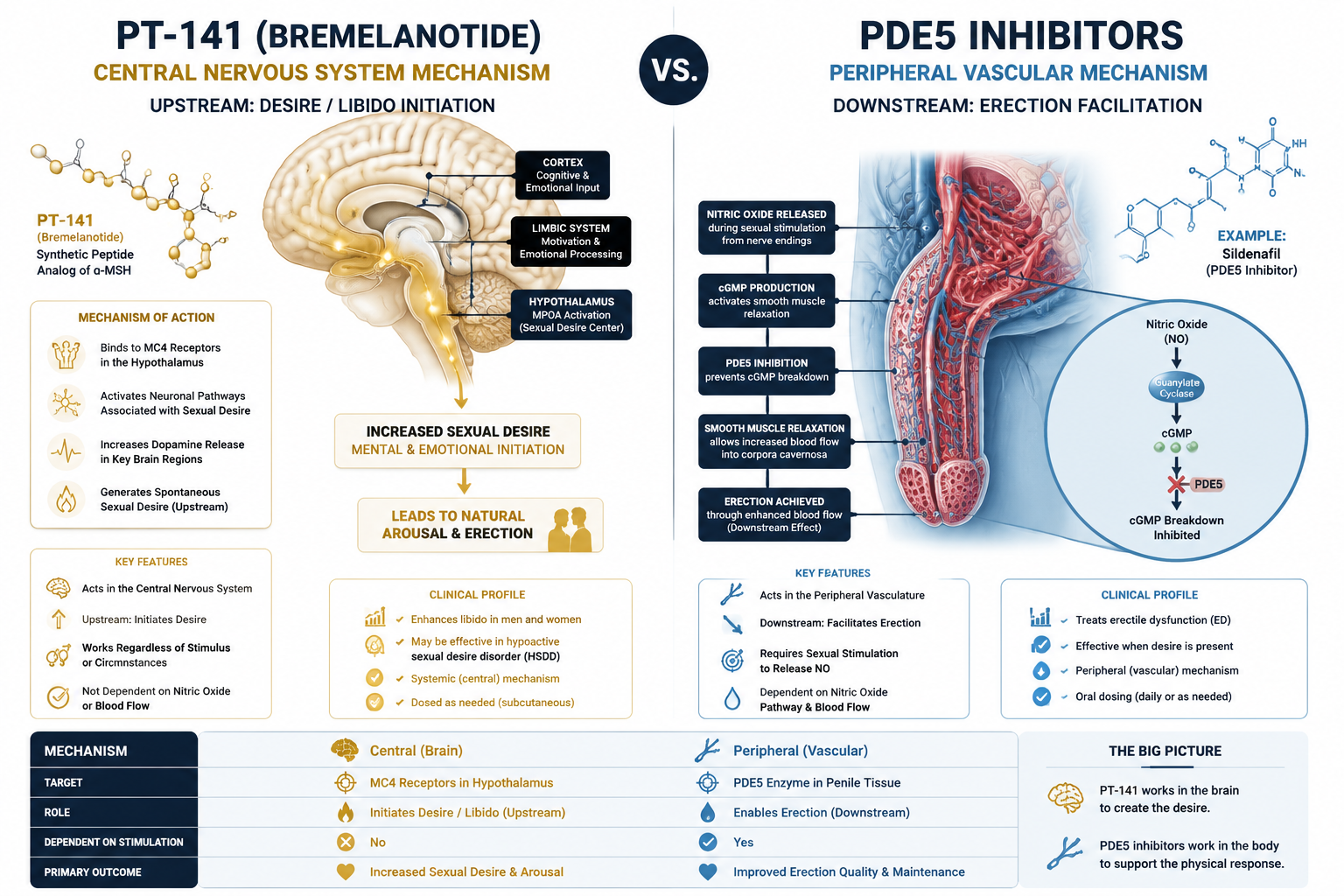
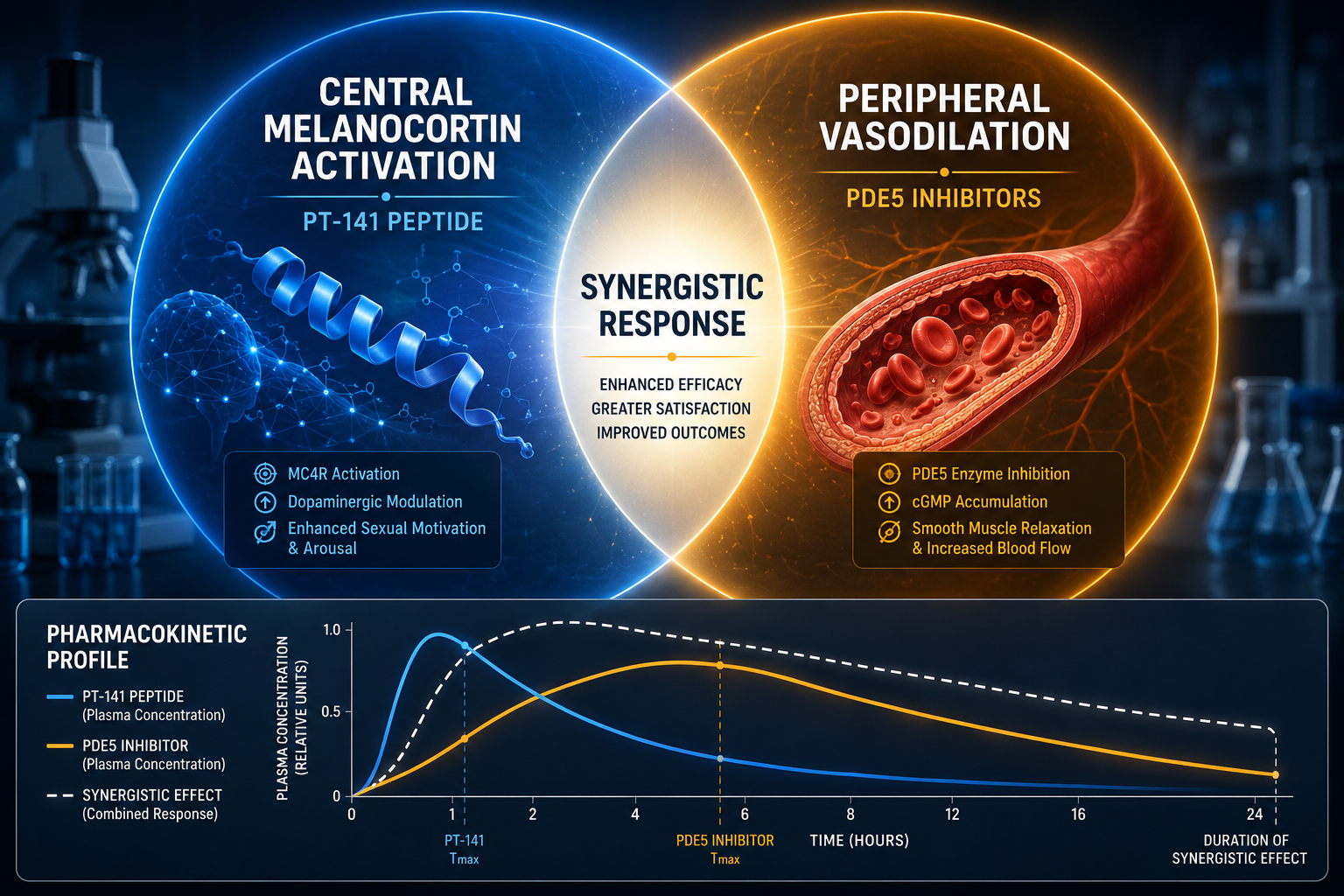
Understanding PT-141 peptide: melanocortin receptor agonist research and its mechanism of action requires a clear comparison with existing pharmacological tools.
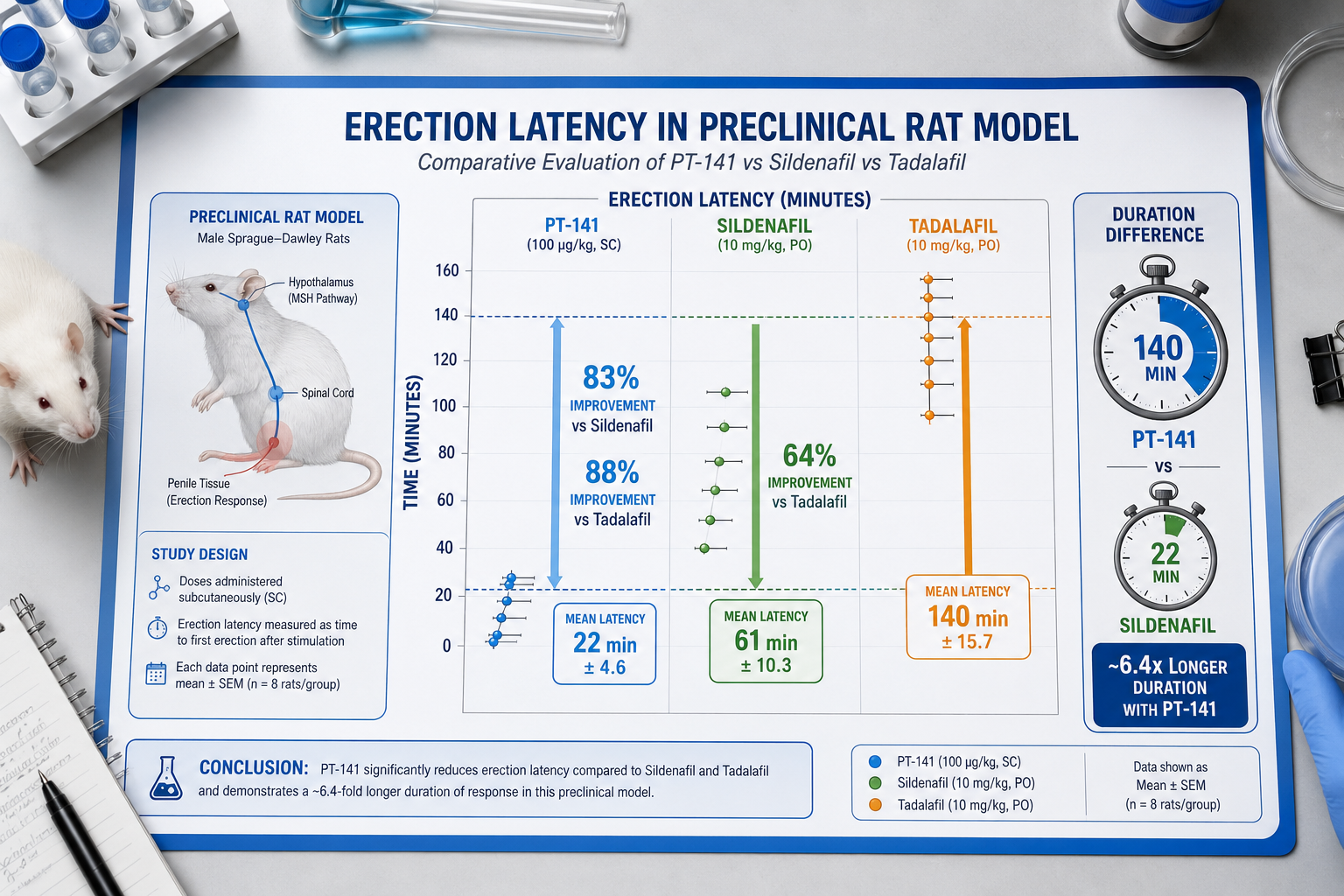
PDE5 inhibitors such as sildenafil act peripherally. They enhance the vascular nitric oxide response once sexual stimulation has already occurred. They do not influence desire or motivation — they only amplify the downstream vascular response.
PT-141 operates upstream of arousal, working at the level of desire and motivation by modulating dopaminergic pathways within the hypothalamus and limbic system. This makes it effective in cases where vascular drugs fail or are contraindicated.
| Feature | PT-141 (Bremelanotide) | PDE5 Inhibitors |
|---|---|---|
| Site of action | Central nervous system | Peripheral vasculature |
| Target receptors | MC3R, MC4R | Phosphodiesterase-5 enzyme |
| Requires stimulation | No | Yes |
| Primary effect | Desire and motivation | Vascular response |
| FDA approval | Yes (HSDD in women) | Yes (erectile dysfunction) |
For researchers interested in how other peptides interact with neuroendocrine systems, the article on neuroendocrine and innate immunity offers useful comparative context.
Clinical Research, Purity Standards, and Emerging Applications
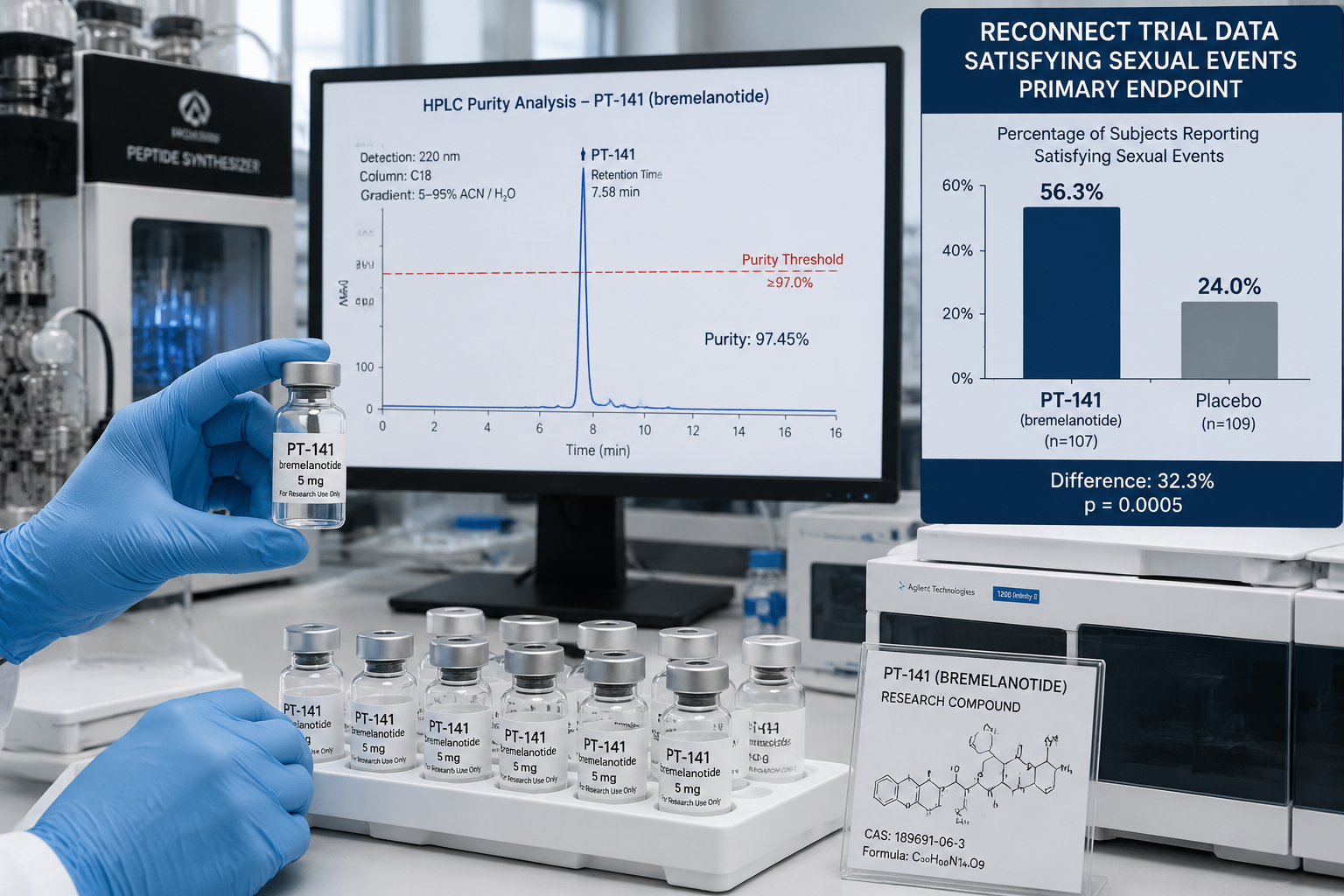
The FDA approved PT-141 in 2019 under the brand name Vyleesi, based on the RECONNECT trials — two Phase 3 randomized controlled trials enrolling over 1,200 premenopausal women with HSDD. Women receiving 1.75 mg subcutaneous PT-141 reported a mean increase of 0.7 satisfying sexual events per month compared to 0.3 in the placebo group. Common side effects included nausea, flushing, and headache, with approximately 40% of participants discontinuing due to adverse effects or lack of efficacy.
Off-label research in men has also produced notable data. A 2024 observational study of 318 men using compounded bremelanotide found that 52% at 1.75 mg reported a strong response, defined as noticeable increases in spontaneous desire and sustained erectile quality. Another 23% reported mild benefit.
Purity is a critical research variable. Research published in the Journal of Peptide Science in early 2026 demonstrated that PT-141 batches below 97% purity showed 18-24% variance in receptor binding affinity compared to pharmaceutical-grade bremelanotide. This finding has driven stricter synthesis and batch testing protocols across the research supply chain. Researchers sourcing peptides should review quality testing protocols before selecting a supplier.
Those comparing PT-141 to other peptides with central or metabolic activity may also find value in reviewing research on MOTS-c, the mitochondrial peptide, or exploring nasal spray peptide delivery formats as alternative administration routes under investigation.
For researchers seeking PT-141 specifically, the PT-141 for sale research page and the PT-141 central arousal research themes page provide additional sourcing and study context.
Conclusion
PT-141 peptide: melanocortin receptor agonist research and its mechanism of action represents a genuinely distinct class of pharmacological investigation. By targeting MC3R and MC4R centrally rather than acting on peripheral vasculature, PT-141 addresses desire and motivation at their neurological source. The 2026 receptor mapping data from the PVN and LHA adds anatomical precision to existing mechanistic models, while updated purity standards reinforce the importance of sourcing high-quality, rigorously tested material.
Actionable next steps for researchers:
- Prioritize peptide batches verified at 97% purity or above to ensure consistent receptor binding data.
- Review the latest MC4R receptor density mapping literature when designing hypothalamic stimulation protocols.
- Compare PT-141's central mechanism against PDE5 inhibitor data in mixed-population study designs.
- Monitor regulatory developments, as PT-141's FDA-approved status provides a relatively stable compliance baseline heading into any future reclassification reviews.