

GLP-2 and GLP-2-T Peptides: Unpacking Their Roles in Gut Microbiome Modulation and Barrier Function Research
Roughly 70% of the human immune system resides in the gut — yet the peptide signals that regulate its structural defenses remain underappreciated in mainstream research discourse. Among those signals, GLP-2 and GLP-2-T peptides stand out for their measurable influence on intestinal architecture, microbial balance, and epithelial integrity. For researchers focused on gut biology, unpacking their roles in gut microbiome modulation and barrier function research is increasingly essential.
Key Takeaways
- GLP-2 is a 33-amino acid peptide secreted by intestinal L-cells that drives intestinal growth, barrier tightening, and nutrient absorption.
- GLP-2-T is a truncated analog with modified pharmacokinetics, offering researchers a tool for studying receptor-specific and duration-dependent effects.
- Both peptides upregulate tight junction proteins, including claudin-3 and claudin-7, reducing paracellular permeability.
- GLP-2 modulates gut microbiota composition and immune crosstalk, influencing the broader mucosal environment.
- Research models ranging from aged rats to Caco-2 cell cultures confirm consistent barrier-protective effects across experimental conditions.
What Are GLP-2 and GLP-2-T Peptides
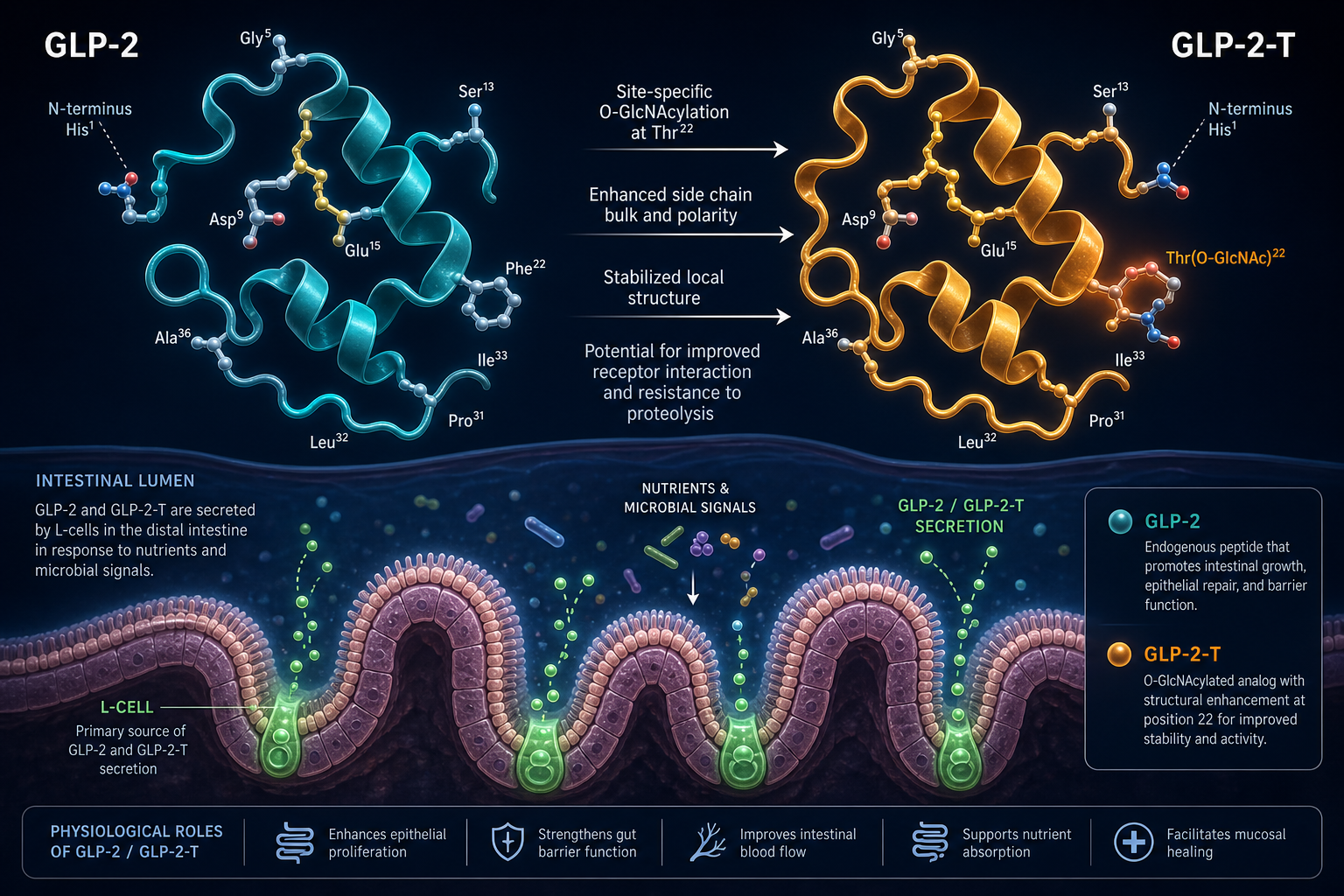
Glucagon-like peptide-2 (GLP-2) is a 33-amino acid hormone produced and secreted by enteroendocrine L-cells in the distal small intestine and colon. Its release is triggered by nutrient intake, particularly fats and fermentable carbohydrates. GLP-2 acts primarily through the GLP-2 receptor (GLP-2R), which is expressed on enteric neurons, subepithelial myofibroblasts, and enteroendocrine cells.
GLP-2-T refers to truncated or analog variants of GLP-2 engineered to resist dipeptidyl peptidase-4 (DPP-4) cleavage — the enzyme responsible for rapidly degrading native GLP-2. This structural modification extends biological half-life and allows researchers to examine dose-response dynamics with greater precision.
| Feature | GLP-2 (Native) | GLP-2-T (Truncated Analog) |
|---|---|---|
| Half-life | ~7 minutes | Extended (DPP-4 resistant) |
| Receptor target | GLP-2R | GLP-2R (modified affinity) |
| Primary research use | Barrier and growth studies | Pharmacokinetic modeling |
| Secretion source | Intestinal L-cells | Synthetic/research grade |
Both forms are central to GLP-2 and GLP-2-T peptides research exploring gut microbiome modulation and barrier function. Researchers studying related metabolic peptide pathways may also find value in reviewing metabolic modulation research lines for broader context.
Barrier Function Research: How GLP-2 and GLP-2-T Peptides Strengthen the Intestinal Wall
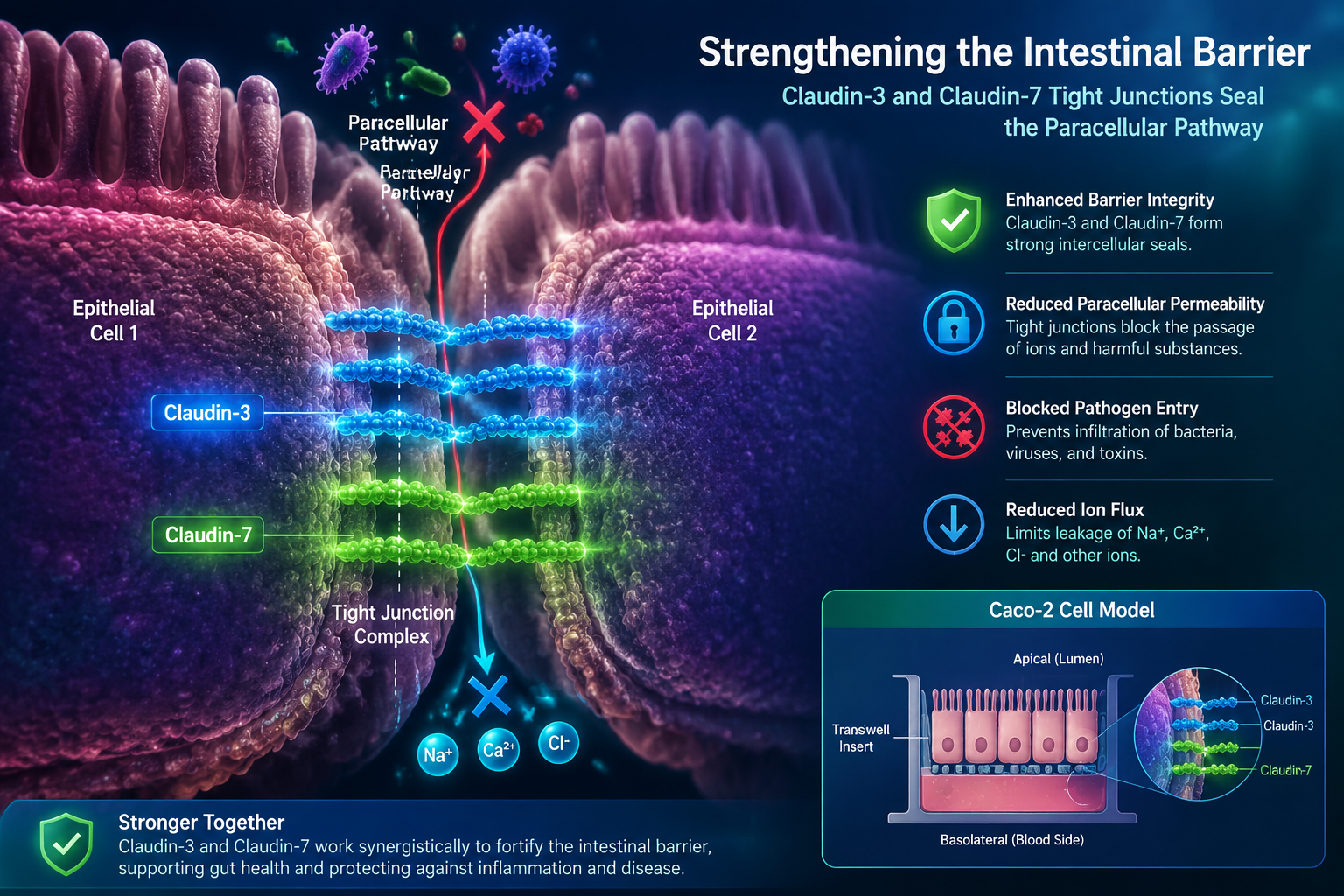
The intestinal barrier is a single-cell-thick epithelial layer that separates luminal contents from systemic circulation. When this barrier is compromised, bacterial endotoxins and antigens can translocate — a process linked to systemic inflammation and metabolic dysfunction.
Research in Regulatory Peptides demonstrated that GLP-2 treatment in mice significantly reduced intestinal conductance and paracellular flux of markers including Na+, Cr-EDTA, and HRP. These findings indicate a measurable tightening of the epithelial barrier at the molecular level.
A key mechanism involves tight junction proteins. Studies published in Endocrinology confirmed that GLP-2 upregulates claudin-3 and claudin-7 — two proteins that form the structural backbone of paracellular seals between epithelial cells. Without adequate claudin expression, gaps in the barrier allow unwanted molecular traffic.
"GLP-2 does not simply stimulate growth — it actively reorganizes the molecular architecture of the intestinal wall."
Caco-2 cell model research further showed that GLP-2 attenuates TNF-alpha-induced barrier disruption, suggesting a protective role during inflammatory challenge. In aged rat models, GLP-2 treatment restored mucosal barrier metrics that had declined with age, pointing toward potential applications in age-related gut dysfunction research.
GLP-2-T analogs replicate these barrier effects while allowing researchers to control exposure duration more precisely — a critical variable in mechanistic studies. For parallel research on peptides with tissue-protective properties, the BPC-157 research themes overview provides useful comparative context.
GLP-2 and GLP-2-T Peptides: Unpacking Their Roles in Gut Microbiome Modulation
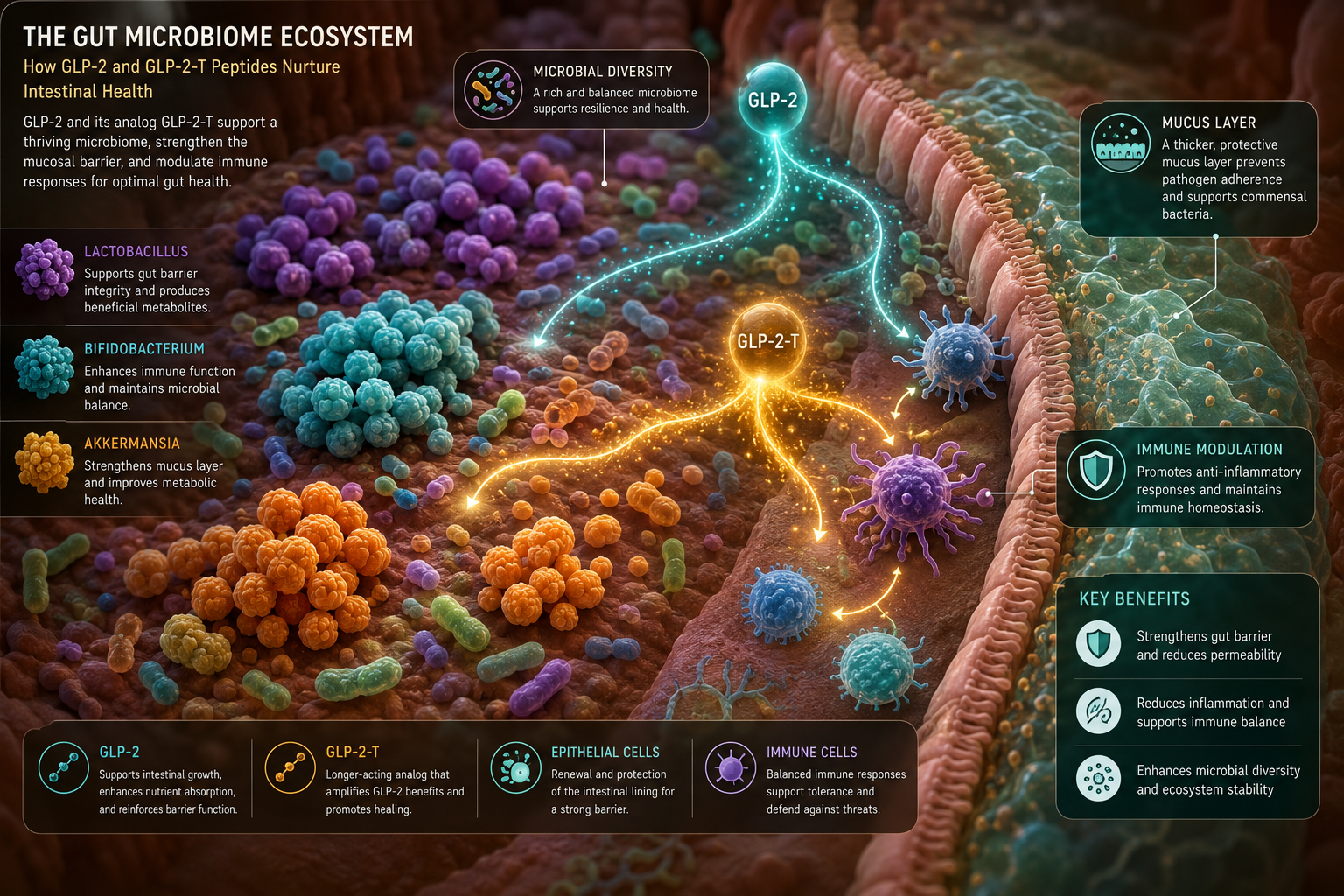
Beyond structural barrier effects, GLP-2 participates in a bidirectional dialogue with the gut microbiome. A review published in Microorganisms highlighted GLP-2's role in maintaining intestinal barrier integrity while simultaneously modulating microbial community composition and immune system interactions.
Key microbiome-related effects observed in research models include:
- Increased abundance of beneficial bacterial genera associated with mucus layer integrity
- Reduced translocation of gram-negative bacterial components (lipopolysaccharides)
- Modulation of mucosal immune cell populations, including intraepithelial lymphocytes
- Enhanced secretory IgA production in some experimental contexts
The GLP-2 receptor's indirect signaling pathway — operating through enteric neurons and subepithelial cells rather than directly on enterocytes — means that its microbiome effects are likely mediated through multiple downstream intermediaries. This complexity makes GLP-2 a particularly rich subject for systems-level gut research.
GLP-2-T variants allow researchers to isolate receptor-dependent effects from those driven by metabolic byproducts of native peptide degradation. Researchers interested in related GLP-family receptor dynamics may find the GLP-1-T dual receptor agonism breakdown and the GLP-3 triple agonist overview useful for comparative receptor pharmacology.
For researchers building multi-peptide experimental frameworks, the recovery and tissue biology overview and LL-37 innate research themes offer complementary perspectives on mucosal immunity and epithelial defense.
Conclusion
GLP-2 and GLP-2-T peptides represent a well-supported and mechanistically rich area of gut biology research. The evidence base — spanning animal models, cell culture systems, and mechanistic reviews — consistently points to meaningful roles in epithelial barrier tightening, tight junction protein regulation, nutrient absorption enhancement, and microbiome-immune crosstalk.
Actionable next steps for researchers:
- Review published dose-response data for GLP-2 and GLP-2-T in relevant model systems before designing experimental protocols.
- Consider DPP-4 resistance profiles when selecting between native GLP-2 and truncated analogs for time-course studies.
- Pair barrier function assays (TEER measurements, paracellular flux) with microbiome profiling to capture the full scope of peptide effects.
- Explore the full peptide research catalog to identify complementary research-grade compounds for multi-target gut studies.
As gut-brain and gut-immune axis research continues to expand in 2026, GLP-2 and GLP-2-T peptides remain foundational tools for researchers seeking to understand how the intestinal environment is regulated at both the structural and microbial level.