Enclomiphene Alternatives: Comparing serms for Selective Estrogen Receptor Modulation Research
Only one FDA-approved serm currently holds a dedicated indication for male hypogonadism management, and enclomiphene is not it. Despite accumulating nearly 190 indexed research citations by 2026, enclomiphene remains available only through compounding pharmacies. That regulatory gap has pushed researchers toward a broader comparison of enclomiphene alternatives: comparing serms for selective estrogen receptor modulation research to identify which compounds offer the most utility across different experimental contexts.
Key Takeaways
- Enclomiphene is the active trans-isomer of clomiphene and works by blocking estrogen's negative feedback on the hypothalamic-pituitary-gonadal (HPG) axis.
- Several established serms, including clomiphene, tamoxifen, and raloxifene, serve as functional research comparators with distinct tissue-selectivity profiles.
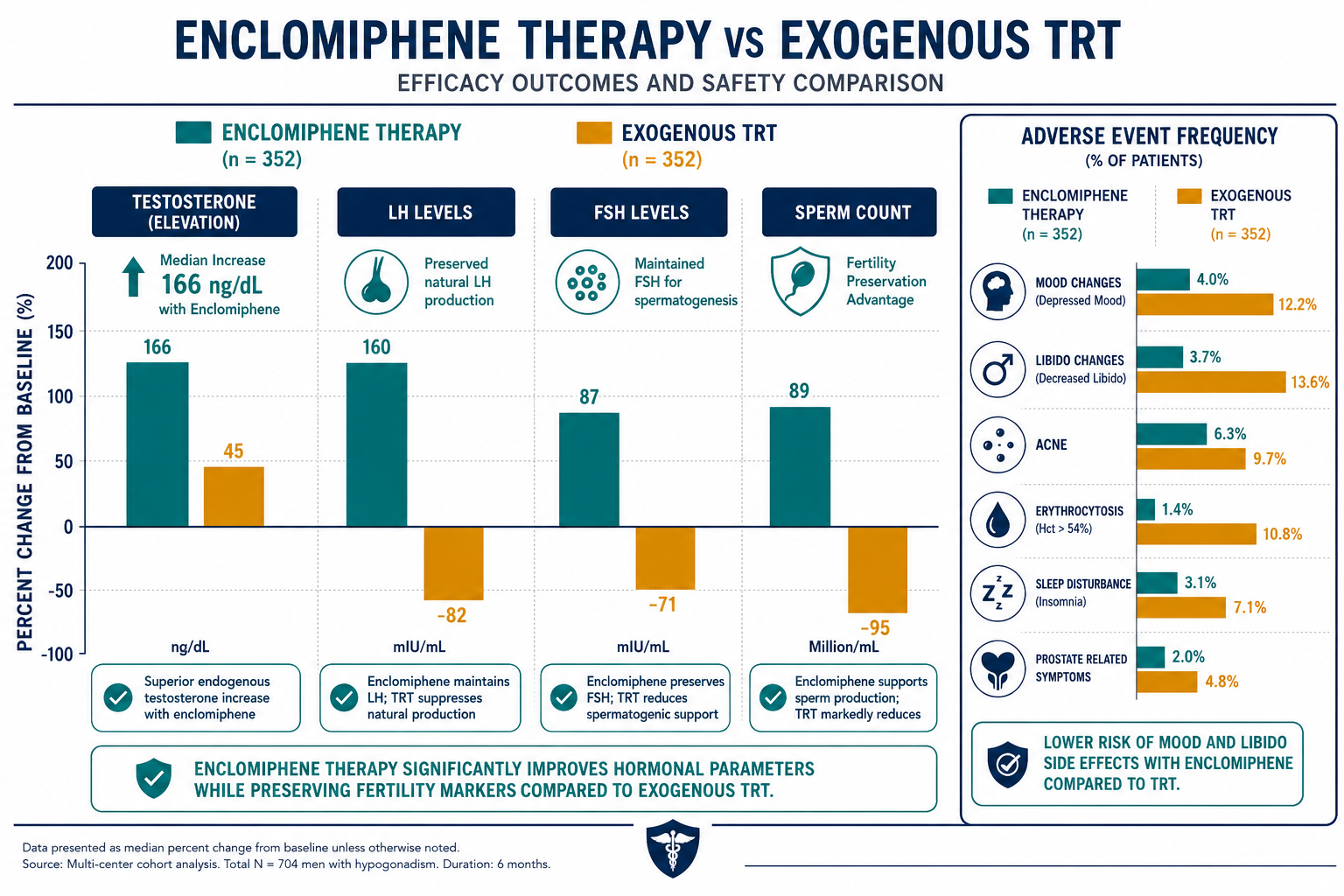
- Enclomiphene preserves fertility markers (FSH and LH) better than exogenous testosterone therapies.
- Cost and regulatory status vary significantly across serms, affecting research accessibility.
- No serm is universally superior; compound selection depends on the specific receptor signaling pathway under investigation.
How serms Work: The Receptor Modulation Framework
Selective estrogen receptor modulators bind to estrogen receptors but produce different effects depending on the target tissue. This tissue-selective action is what makes them valuable both clinically and in preclinical research settings.
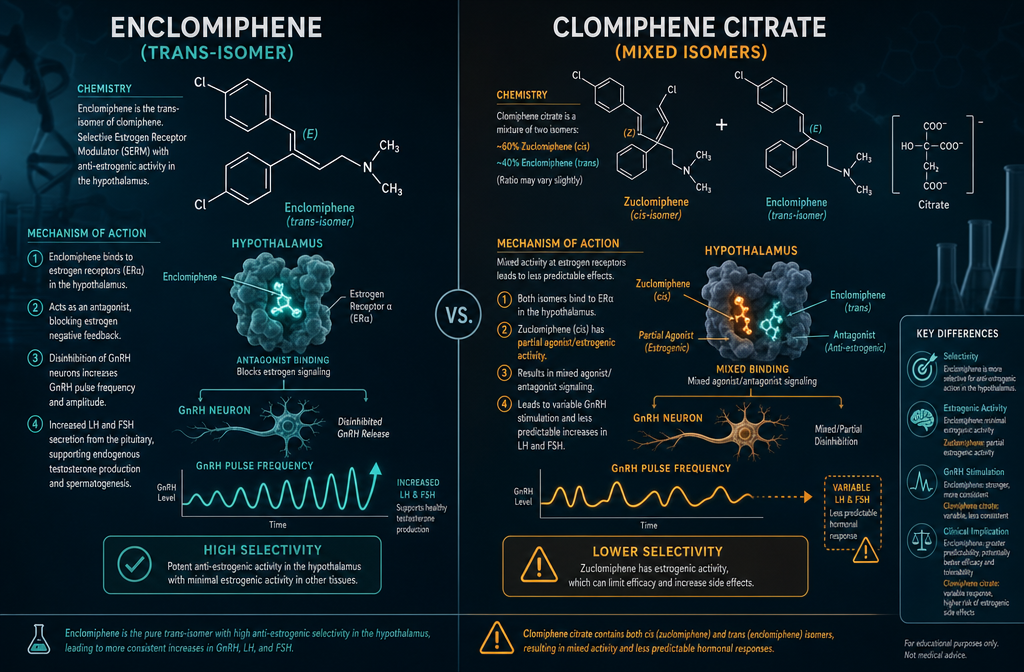
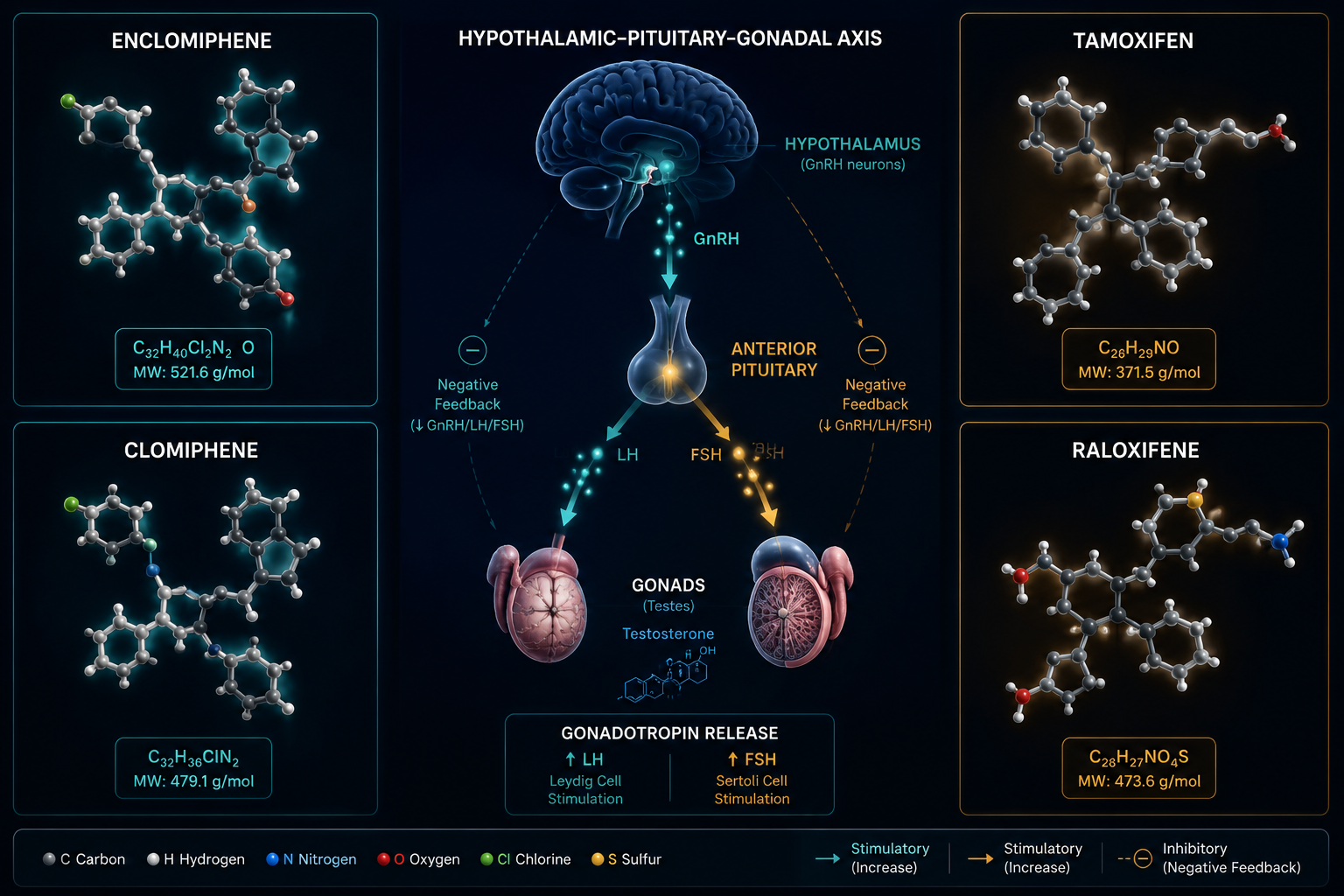
Enclomiphene, the trans-isomer of clomiphene citrate, acts as an estrogen receptor antagonist in the pituitary gland. By blocking estrogen's inhibitory signal on the HPG axis, it stimulates the release of luteinizing hormone (LH) and follicle-stimulating hormone (FSH), which in turn drives endogenous testosterone production. This mechanism is distinct from exogenous testosterone replacement, which suppresses the HPG axis entirely.
Researchers studying gonadotropin pulsatility and endogenous androgen production will find this mechanism particularly relevant. For those exploring related neuroendocrine pathways, the gonadorelin GnRH pulsatility research overview provides useful mechanistic context.
"The tissue-selective nature of serms means that receptor binding alone does not predict biological outcome, downstream co-activator expression and tissue context determine the functional result."
Enclomiphene Alternatives: Comparing serms for Selective Estrogen Receptor Modulation Research
When evaluating enclomiphene alternatives for selective estrogen receptor modulation research, four compounds dominate the comparative literature:
| serm | Primary Mechanism | Fertility Preservation | Approx. Monthly Cost |
|---|---|---|---|
| Enclomiphene | Pituitary ER antagonist | Yes | $50,$150 |
| Clomiphene Citrate | Mixed agonist/antagonist (racemic) | Partial | $10,$30 |
| Tamoxifen | ER antagonist (breast), agonist (bone/uterus) | Moderate | $15,$40 |
| Raloxifene | ER antagonist (breast/uterus), agonist (bone) | Limited data | $20,$60 |
Clomiphene citrate is the most studied comparator. As a racemic mixture of enclomiphene and zuclomiphene, it produces broader estrogenic activity due to the zuclomiphene isomer. This makes it less precise for research targeting pure HPG axis modulation, but its lower cost and wider availability make it a practical starting point.
Tamoxifen has a well-characterized receptor binding profile and is frequently used in breast cancer research models. Its partial agonist activity in certain tissues introduces variables that researchers must account for when designing estrogen signaling studies.
Raloxifene offers strong bone tissue selectivity and minimal uterine stimulation, making it valuable for studies focused on bone metabolism and cardiovascular estrogen signaling. A 2019 research review highlighted the growing importance of tissue-selective estrogen complexes in reducing off-target receptor activity, a principle that raloxifene exemplifies well.

Research Utility, Safety Profiles, and Compound Selection
A 2023 systematic review and meta-analysis confirmed that serms as a class effectively raise testosterone levels in men with androgen deficiency while preserving fertility, a critical advantage over exogenous testosterone replacement. This finding reinforces the value of HPG-axis-preserving compounds in male reproductive research.
Common side effects across serms include:
- Mood changes and irritability
- Headaches
- Gastrointestinal upset
- Rare visual disturbances (most associated with clomiphene)
Enclomiphene's cleaner isomer profile reduces some of these effects compared to racemic clomiphene, which is one reason researchers studying male hypogonadism models favor it despite its higher cost.
For researchers working with complementary peptide-based compounds that influence the neuroendocrine axis, the recovery and tissue biology overview and MOTS-c metabolic flexibility research offer relevant context on how downstream hormonal signaling intersects with metabolic pathways. Similarly, those studying longevity-related hormone optimization may find the longevity peptide research overview a useful companion resource.
A 2017 urology review emphasized that rigorous, controlled trials remain essential for establishing the full clinical and research utility of serms in male infertility models. That call for methodological rigor applies equally to preclinical research design in 2026.
For researchers sourcing quality-tested compounds, reviewing peptide purity testing standards and quality testing protocols ensures that experimental variables are minimized from the outset.

Conclusion
When evaluating enclomiphene alternatives: comparing serms for selective estrogen receptor modulation research, no single compound dominates every experimental context. Enclomiphene offers the most targeted HPG axis modulation with the fewest estrogenic confounders, but its cost and compounding-only availability create practical barriers. Clomiphene citrate remains the accessible, widely-studied benchmark. Tamoxifen and raloxifene add tissue-specific selectivity profiles that serve distinct research designs.
Actionable next steps for researchers:
- Define the target tissue and receptor subtype before selecting a serm, tissue context determines functional outcome.
- Use clomiphene as a cost-effective baseline comparator, then advance to enclomiphene for isomer-specific mechanistic studies.
- Cross-reference HPG axis findings with neuroendocrine peptide research to build a more complete hormonal signaling picture.
- Prioritize sourcing compounds with verified purity documentation to maintain experimental integrity.
- Monitor the regulatory landscape, enclomiphene's FDA status may evolve, which would significantly affect research accessibility and standardization.