

GHK-Cu Peptide in Tissue Remodeling Research: Collagen Signaling, Copper Biology, and Experimental Readouts
Plasma concentrations of GHK-Cu drop by roughly 60% between the ages of 20 and 60 — a decline that coincides with measurable reductions in tissue repair capacity, collagen density, and extracellular matrix integrity. That single data point has driven decades of research into what this tripeptide-copper complex actually does at the molecular level. Understanding GHK-Cu peptide in tissue remodeling research — including its collagen signaling mechanisms, copper biology, and experimental readouts — requires moving past surface-level claims and into the underlying biochemistry.
Key Takeaways
- GHK-Cu is a naturally occurring tripeptide that binds copper(II) ions and modulates expression of more than 4,000 human genes.
- It stimulates Type I, III, and IV collagen synthesis through TGF-beta1 upregulation and activates copper-dependent enzymes critical for matrix stability.
- Plasma levels decline significantly with age, making it a relevant target in longevity and tissue repair research.
- Experimental readouts include hydroxyproline assays, gene expression panels, and tensile strength measurements.
- Controlled injectable human trial data remain limited, representing a key gap for researchers in 2026.
The Copper Biology Behind GHK-Cu
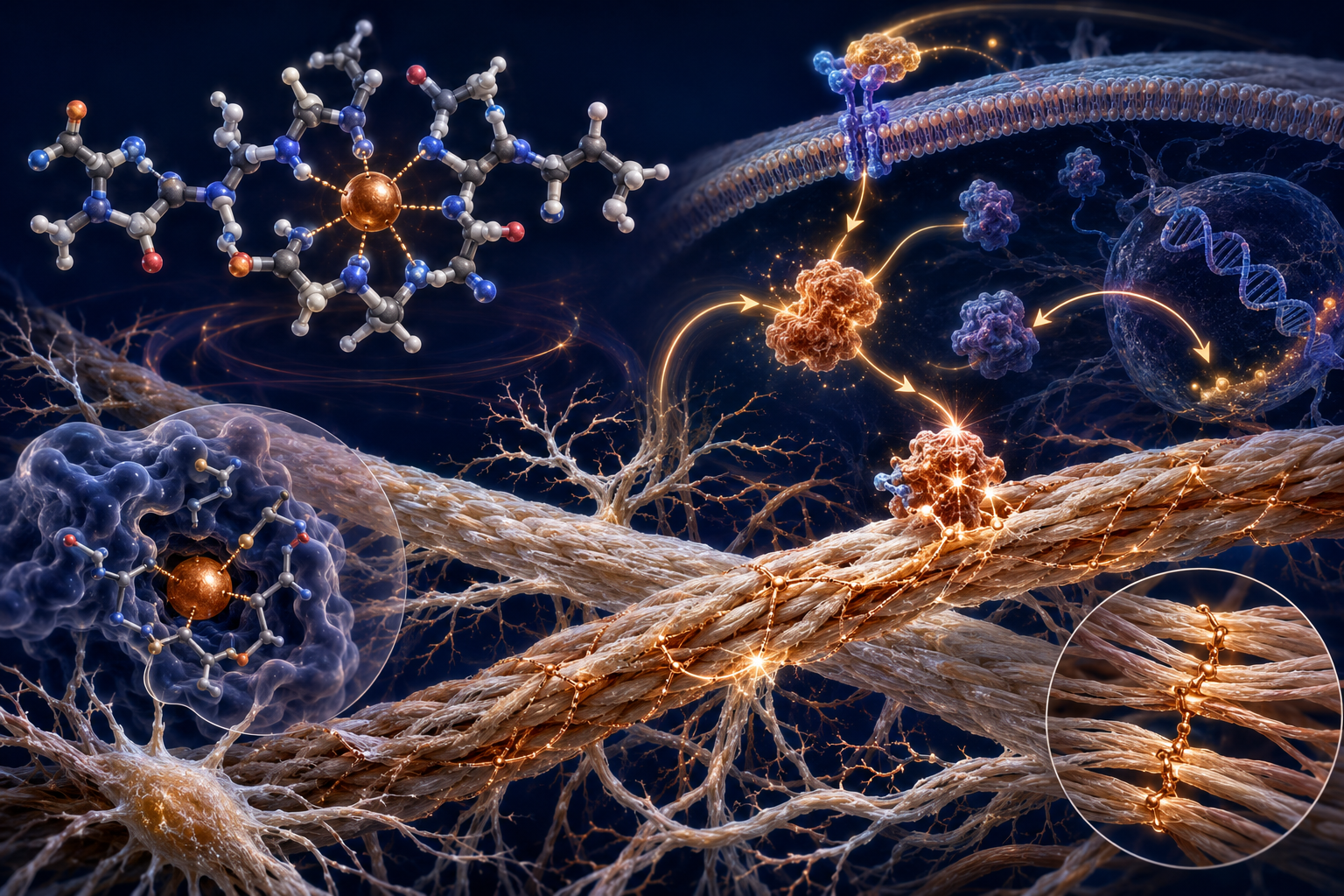
The "Cu" in GHK-Cu is not incidental. Copper(II) binding is central to the peptide's function. The tripeptide glycyl-L-histidyl-L-lysine chelates copper with high affinity, creating a stable complex that acts as a targeted delivery vehicle for this essential trace metal.
Once delivered, copper activates two enzymes that directly shape the extracellular matrix:
- Lysyl oxidase — catalyzes the cross-linking of collagen and elastin fibers, giving connective tissue its mechanical strength
- Superoxide dismutase (SOD) — neutralizes reactive oxygen species, protecting newly synthesized matrix components from oxidative degradation
Without adequate copper bioavailability, both processes stall. GHK-Cu's chelation chemistry makes copper accessible at the tissue level in a controlled, enzymatically useful form. This distinguishes it from free copper supplementation, which carries toxicity risks at elevated concentrations.
Researchers studying recovery and tissue biology will recognize this copper-enzyme axis as a foundational mechanism in matrix remodeling cascades.
Collagen Signaling Pathways in GHK-Cu Peptide Research
The peptide's influence on collagen is not limited to copper delivery. GHK-Cu upregulates transforming growth factor-beta 1 (TGF-beta1), a master regulator of connective tissue synthesis. This pathway drives increased production of:
| Collagen Type | Primary Location | Research Relevance |
|---|---|---|
| Type I | Skin, bone, tendon | Wound tensile strength |
| Type III | Skin, vasculature | Early wound repair scaffold |
| Type IV | Basement membranes | Barrier integrity |
Beyond collagen, GHK-Cu also promotes elastin synthesis and glycosaminoglycan deposition — both markers of functional matrix remodeling rather than simple scar formation.
A critical distinction for researchers: GHK-Cu simultaneously suppresses pro-fibrotic TGF-beta signaling in excess, helping to balance matrix deposition against pathological fibrosis. It also reduces inflammatory cytokines including TNF-alpha and IL-6, creating a microenvironment more conducive to organized tissue repair.
This dual role — stimulating matrix production while dampening excessive inflammation — makes it a compelling subject for studies that pair it with other repair-oriented compounds. Researchers exploring topical GHK-Cu formulations can observe these collagen signaling effects through standardized dermal assays.
Experimental Readouts for GHK-Cu Peptide in Tissue Remodeling Research
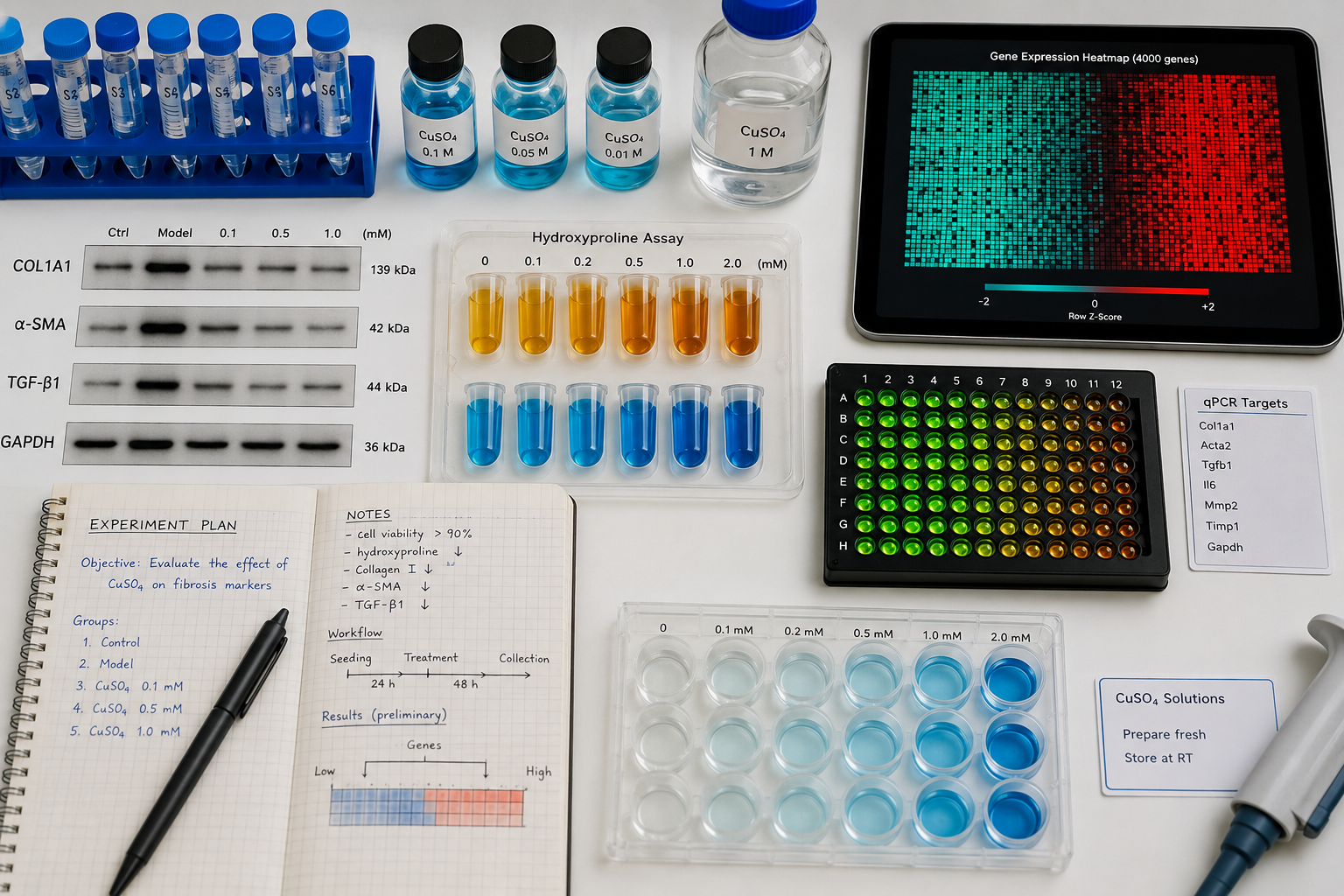
Translating GHK-Cu's molecular biology into reproducible data requires selecting the right assay formats. The following readouts are most commonly used in preclinical tissue remodeling studies:
Biochemical assays:
- Hydroxyproline content measurement (quantifies total collagen deposition)
- ELISA panels for TGF-beta1, TNF-alpha, and IL-6 levels
- SOD activity assays to confirm copper-enzyme activation
Molecular readouts:
- RT-PCR and RNA sequencing for gene expression profiling (GHK-Cu has documented effects across more than 4,000 genes)
- Western blotting for lysyl oxidase and collagen isoform protein levels
Functional tissue measurements:
- Wound tensile strength testing in excisional wound models
- Histological scoring of collagen fiber organization and density
"The breadth of GHK-Cu's gene expression footprint means that single-marker readouts are likely to underrepresent its actual biological activity in tissue remodeling experiments."
Researchers should also note that cosmetic studies using topical formulations have shown improvements in skin thickness and elasticity, but many lack placebo controls. Injectable human trial data remain absent as of 2026, which represents a significant validation gap. This context matters when designing protocols and interpreting results.
For comparison with other peptides that operate through overlapping repair pathways, the GHK-Cu product page and resources on peptide blend formulations for skin biology provide useful reference points. Researchers interested in broader matrix and longevity signaling may also find value in reviewing epithalon peptide research and NAD+ energetics and longevity themes, which intersect with cellular repair mechanisms.
Age-Related Decline and Research Implications
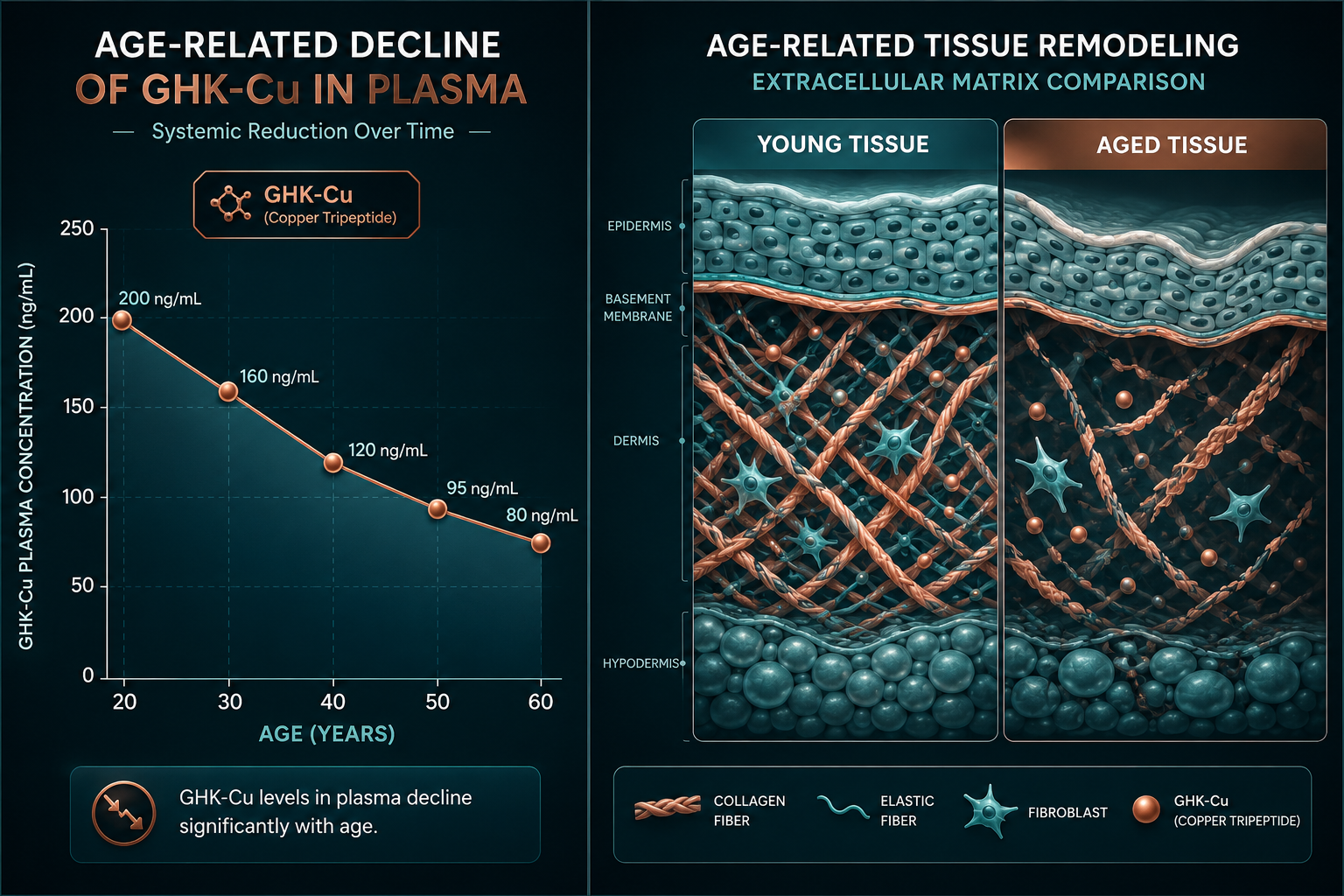
The drop from approximately 200 ng/mL at age 20 to roughly 80 ng/mL by age 60 is not merely a biomarker curiosity. It correlates with reduced fibroblast activity, slower wound closure, and declining collagen turnover — all measurable endpoints in aging tissue models.
This decline positions GHK-Cu as a relevant variable in longevity-focused research alongside compounds that address mitochondrial function and metabolic efficiency. Its gene expression reach — spanning pathways related to inflammation, oxidative stress, and matrix remodeling — makes it one of the more biologically complex peptides currently under investigation.
Conclusion
GHK-Cu peptide in tissue remodeling research sits at the intersection of copper biology, collagen signaling, and broad gene expression modulation. For researchers in 2026, the most productive path forward involves multi-readout experimental designs that capture both molecular and functional endpoints. Key next steps include:
- Pair hydroxyproline assays with gene expression panels to capture both structural and transcriptional effects.
- Include appropriate controls for copper-only conditions to isolate peptide-specific contributions.
- Prioritize placebo-controlled designs in any topical or systemic application studies.
- Track cytokine panels alongside collagen markers to document the anti-inflammatory component of remodeling.
The gap between preclinical promise and controlled human data remains the field's central challenge — and its most important research opportunity.