

The Role of 5-Amino-1MQ Peptide in Mitochondrial Function and Metabolic Pathways Research
Mitochondrial dysfunction is now linked to more than 50 chronic diseases, yet the molecular tools available to study its root causes remain limited. That gap is precisely why the role of 5-Amino-1MQ peptide in mitochondrial function and metabolic pathways research has attracted growing scientific attention. This small-molecule compound targets a specific enzyme pathway that sits at the intersection of cellular energy production and metabolic regulation, making it a compelling subject for researchers studying obesity, insulin resistance, and age-related metabolic decline.
Key Takeaways
- 5-Amino-1MQ is a selective inhibitor of the enzyme nicotinamide N-methyltransferase (NNMT), which regulates NAD+ availability and metabolic rate.
- By inhibiting NNMT, the compound may increase intracellular NAD+ levels, supporting mitochondrial energy production.
- Preclinical research suggests 5-Amino-1MQ may reduce fat cell size and improve markers of metabolic health.
- The compound remains in the research phase as of 2026, with no approved human clinical applications.
- Its mechanism overlaps with other metabolically active peptides, making it relevant to broader longevity and energy research.
How 5-Amino-1MQ Targets NNMT and Influences Mitochondrial Activity
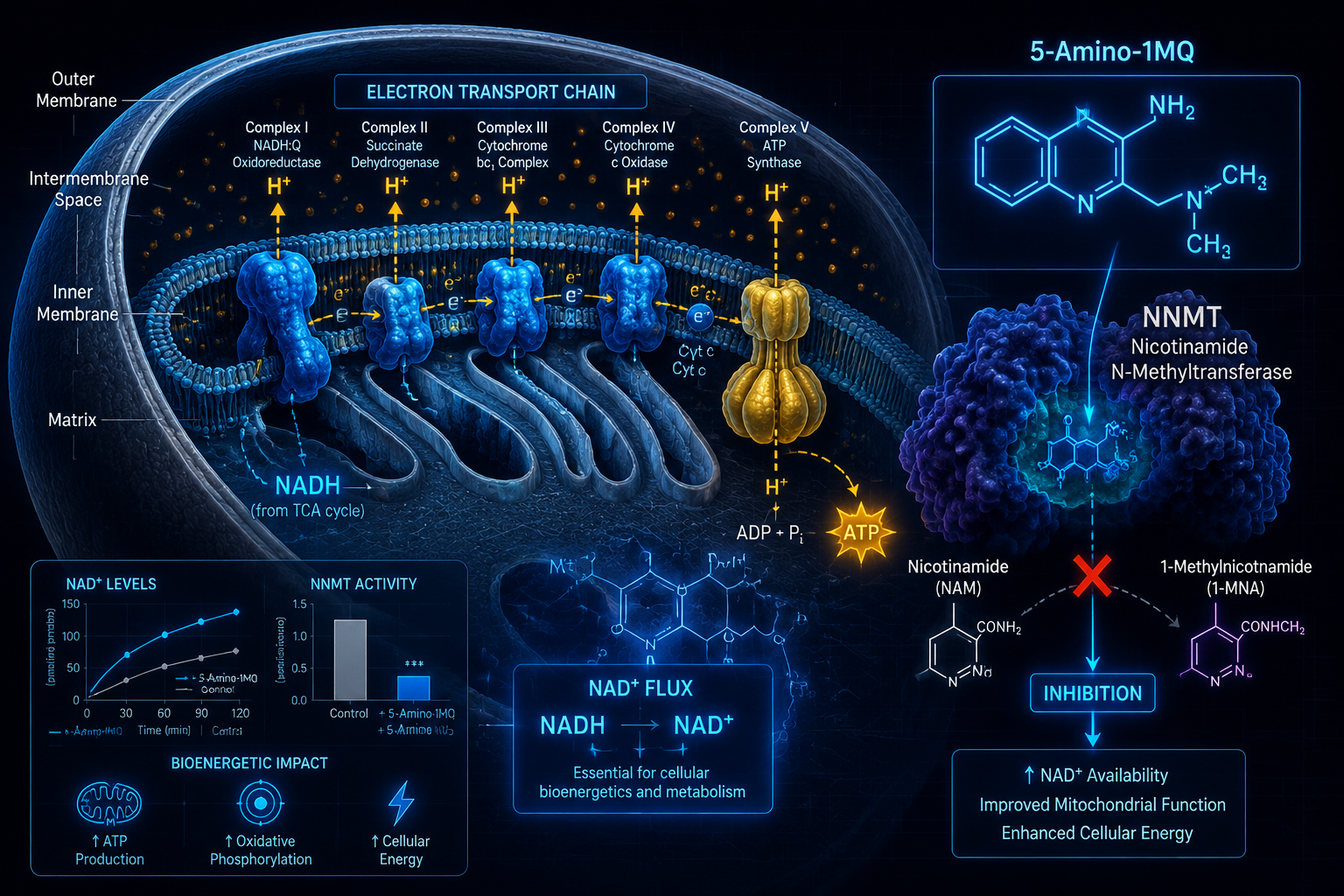
At the core of the role of 5-Amino-1MQ peptide in mitochondrial function and metabolic pathways research is its action on nicotinamide N-methyltransferase (NNMT). This enzyme methylates nicotinamide, a precursor to NAD+, effectively removing it from the pool available for cellular energy metabolism.
When NNMT is overexpressed — a common finding in adipose tissue and certain metabolic disease states — NAD+ availability drops. Lower NAD+ levels impair the function of sirtuins and PARP enzymes, both of which are essential regulators of mitochondrial biogenesis and DNA repair.
5-Amino-1MQ acts as a selective, cell-permeable NNMT inhibitor. By blocking this enzyme, the compound helps preserve nicotinamide availability, which in turn supports NAD+ synthesis and the downstream processes that depend on it.
Key mitochondrial effects observed in preclinical models include:
| Effect | Mechanism |
|---|---|
| Increased NAD+ flux | NNMT inhibition preserves nicotinamide substrate |
| Enhanced oxidative phosphorylation | Greater electron transport chain activity |
| Improved mitochondrial membrane potential | Stabilized inner membrane function |
| Reduced reactive oxygen species (ROS) | Better redox balance in metabolically stressed cells |
This mechanistic profile places 5-Amino-1MQ alongside other research compounds studied for mitochondrial support, such as those explored in SS-31 peptide research considerations, which also focuses on inner mitochondrial membrane stabilization.
Metabolic Pathway Implications: Fat Metabolism and Energy Expenditure
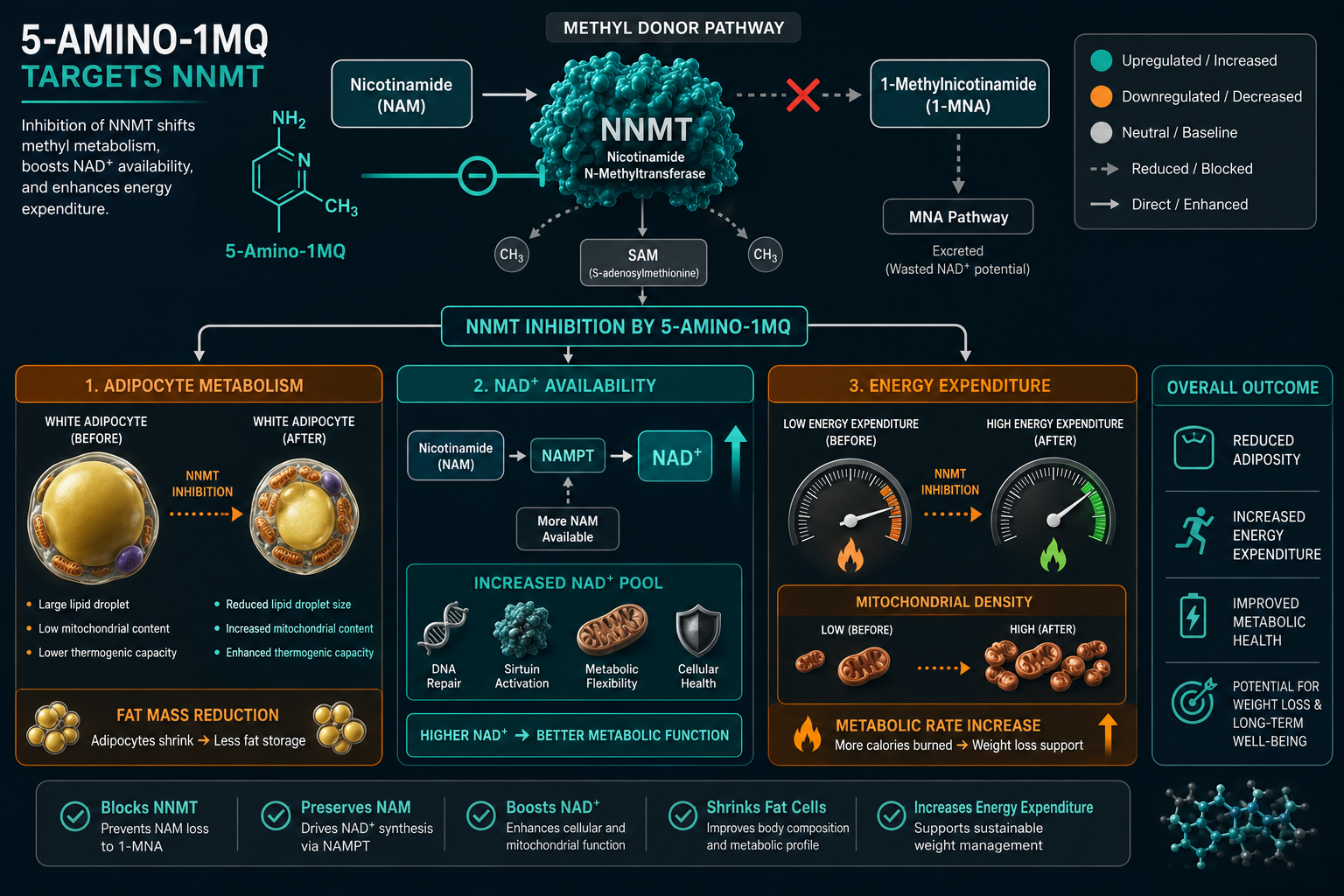
Beyond its direct mitochondrial effects, the role of 5-Amino-1MQ peptide in mitochondrial function and metabolic pathways research extends into adipose tissue biology and systemic energy regulation.
Preclinical studies in diet-induced obesity models have shown that NNMT inhibition with 5-Amino-1MQ is associated with:
- Reduced adipocyte hypertrophy — fat cells become smaller without significant changes in cell number
- Lower body weight gain — even under high-fat dietary conditions
- Improved insulin sensitivity markers — suggesting downstream effects on glucose metabolism
- Elevated resting energy expenditure — consistent with enhanced mitochondrial activity
These findings are particularly relevant when viewed alongside research on other metabolically active peptides. For instance, MOTS-c and metabolic flexibility research explores a mitochondria-derived peptide with overlapping interests in energy substrate switching and insulin signaling. Similarly, longevity peptide research contextualizes how compounds that influence NAD+ metabolism may intersect with aging biology.
"NNMT inhibition represents a novel strategy for targeting the metabolic inefficiencies that accumulate in adipose tissue during chronic energy surplus."
The compound's ability to influence both mitochondrial function and fat cell metabolism makes it a dual-pathway research tool — rare among small molecules at this stage of investigation.
Researchers interested in related lipid mobilization mechanisms may also find value in reviewing TESA lipid mobilization research for comparative pathway context.
Current Research Status and Broader Context in 2026

As of 2026, 5-Amino-1MQ remains firmly in the preclinical research phase. No human clinical trials have been completed or approved. All data supporting its metabolic and mitochondrial effects come from in vitro cell studies and rodent models.
This distinction matters. Researchers and institutions working with this compound do so strictly within controlled laboratory settings. The compound is not approved for therapeutic use in any jurisdiction.
That said, the scientific rationale is well-grounded. The NNMT-NAD+ axis is a validated target in metabolic disease research, and the specificity of 5-Amino-1MQ for this pathway gives it a cleaner mechanistic profile than broader NAD+ precursor supplementation strategies.
For those building a broader picture of metabolic and mitochondrial research compounds, the following resources provide useful comparative context:
- Humanin cellular protection research — another mitochondria-derived peptide with cytoprotective properties
- Epithalon vs. NAD+ evidence — a direct comparison of NAD+-adjacent research strategies
- NAD+ scientific evidence overview — foundational context for understanding the NAD+ research landscape
Understanding peptide purity and compound integrity is also essential in this field. Reviewing peptide purity testing protocols helps researchers evaluate the quality standards relevant to any preclinical compound.
Conclusion
The role of 5-Amino-1MQ peptide in mitochondrial function and metabolic pathways research is defined by a precise and scientifically grounded mechanism: selective NNMT inhibition that preserves NAD+ availability, supports mitochondrial energy output, and reduces metabolic dysfunction in preclinical models.
Actionable next steps for researchers and institutions:
- Review the current preclinical literature on NNMT inhibition and NAD+ flux before designing study protocols.
- Compare 5-Amino-1MQ's mechanism against related mitochondrial research compounds such as SS-31, MOTS-c, and Humanin to identify complementary or overlapping pathways.
- Ensure all research-grade compounds are sourced with verified purity documentation.
- Monitor for emerging clinical trial registrations, as the preclinical data profile may support future Phase I investigation.
This compound represents a focused, mechanistically coherent tool for advancing the understanding of mitochondrial health and metabolic disease — two of the most pressing research priorities in 2026.