SLUPP332 With 5-Amino-1MQ: Designing Mitochondrial and NNMT-Targeted Peptide Stacks for Obesity Research
Global obesity rates have more than doubled since 1990, yet the molecular tools available to researchers studying fat metabolism remain limited. Two compounds — SLUPP332 and 5-Amino-1MQ — are drawing serious attention in preclinical science because they target distinct but overlapping pathways inside fat cells. Exploring SLUPP332 with 5-Amino-1MQ: designing mitochondrial and NNMT-targeted peptide stacks for obesity research represents one of the more mechanistically coherent strategies emerging from metabolic biology labs in 2026.
Key Takeaways
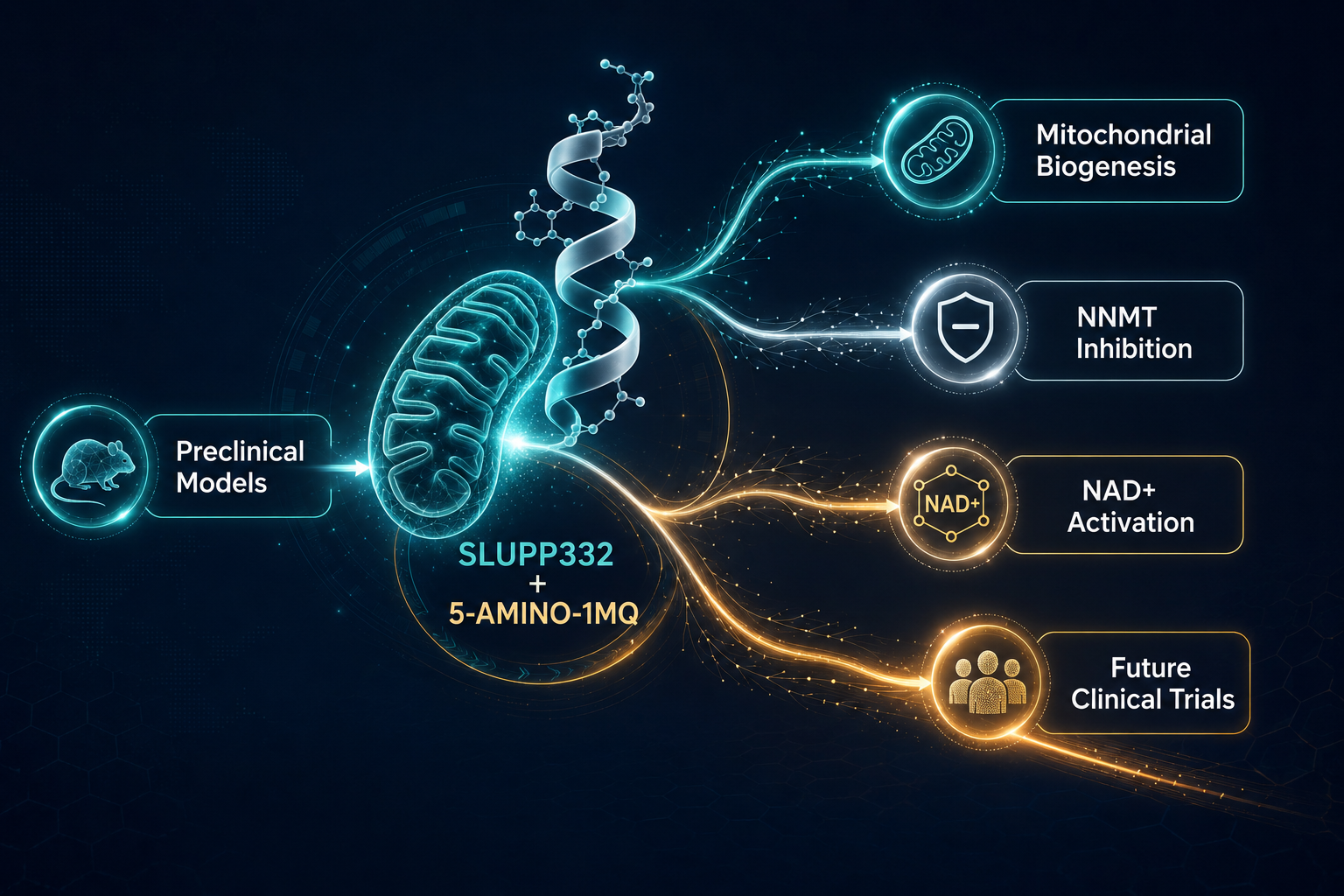
- SLUPP332 activates estrogen-related receptors (ERRalpha/gamma), stimulating mitochondrial biogenesis and fat oxidation in adipocytes
- 5-Amino-1MQ inhibits the NNMT enzyme, raising intracellular NAD+ levels and activating sirtuin-driven metabolic programs
- Combined, these two compounds may produce complementary effects on mitochondrial function and energy expenditure
- All current evidence is derived from cell culture and rodent models — no human clinical trials exist as of 2026
- Researchers designing stacks with these compounds must account for unknown long-term NNMT inhibition consequences
How SLUPP332 and 5-Amino-1MQ Each Target Metabolism
To understand the rationale behind combining these compounds, it helps to examine what each one does independently.
SLUPP332: Activating the Mitochondrial Gene Network
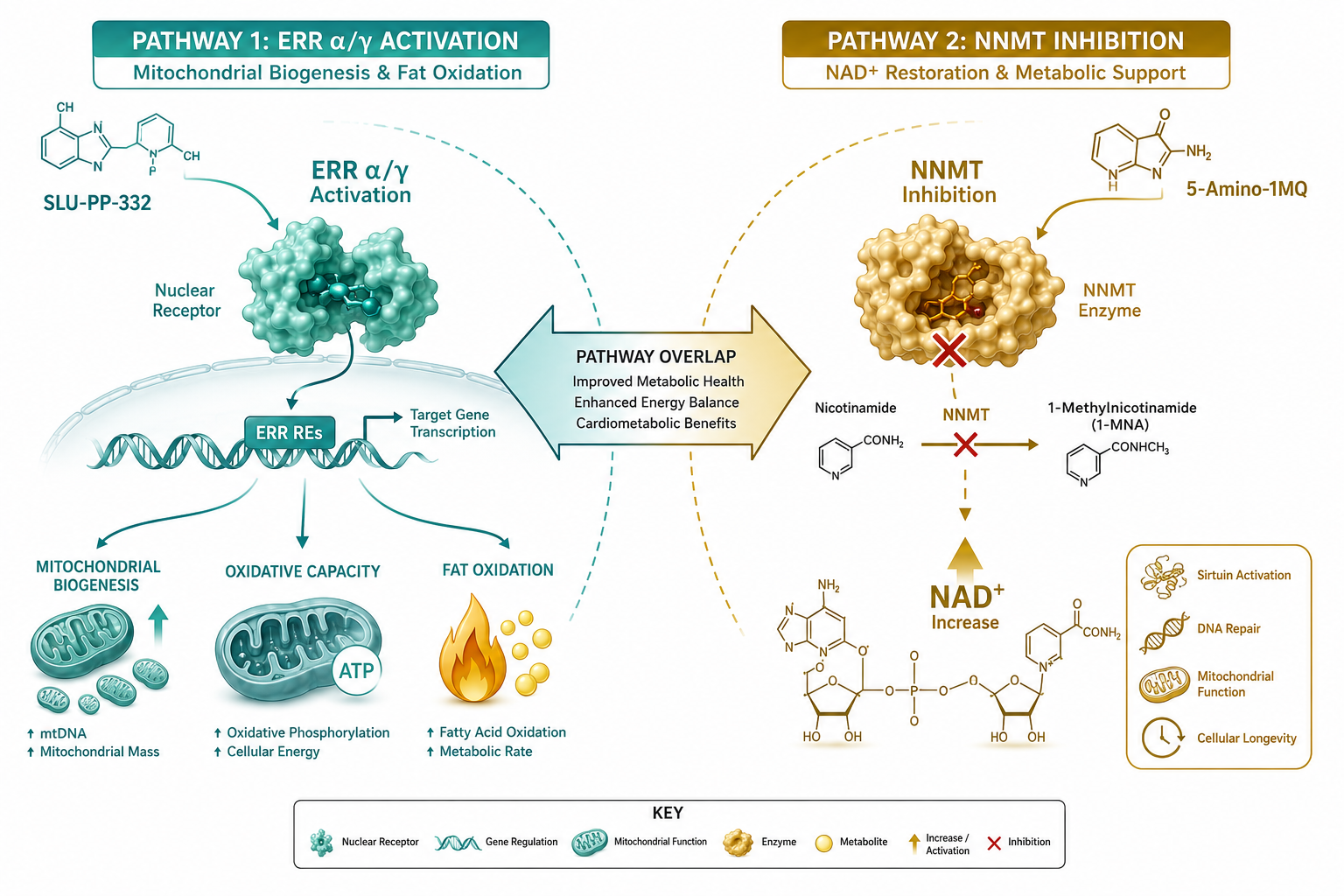
SLUPP332 is a synthetic small-molecule agonist of estrogen-related receptors, specifically ERRalpha and ERRgamma. These nuclear receptors function as master regulators of mitochondrial biogenesis — the process by which cells generate new mitochondria. When ERRalpha/gamma are activated, downstream gene expression shifts toward increased fatty acid oxidation, oxidative phosphorylation, and overall energy expenditure.
In rodent models, SLUPP332 has been shown to mimic aspects of exercise-induced metabolic adaptation, making it a subject of interest for researchers studying SLU-PP-332 metabolic modulation in obesity and insulin resistance contexts. For a deeper look at its preclinical profile, the SLU-PP-332 research overview provides additional mechanistic context.
5-Amino-1MQ: Blocking NNMT to Raise NAD+
5-Amino-1MQ takes a different entry point. It inhibits nicotinamide N-methyltransferase (NNMT), an enzyme that consumes S-adenosyl methionine and diverts nicotinamide away from the NAD+ synthesis pathway. By blocking NNMT, 5-Amino-1MQ allows intracellular NAD+ concentrations to rise. Elevated NAD+ then activates sirtuin enzymes — particularly SIRT1 and SIRT3 — which regulate mitochondrial function, fat oxidation, and insulin sensitivity.
In preclinical studies, 5-Amino-1MQ administration produced significant reductions in body weight, white adipose tissue mass, and adipocyte cell size without altering food intake — a notable finding suggesting the effect is metabolic rather than appetite-driven. Oral dosing in animal models has ranged from 50 to 100 mg daily, though these figures are strictly for research reference and have no established human equivalent. Researchers interested in the broader NAD+ pathway can explore the NAD+ research overview for related context. The dedicated 5-Amino-1MQ compound page also outlines its research profile in detail.
Designing the Stack: Synergistic Logic Behind SLUPP332 With 5-Amino-1MQ

The rationale for pairing these two compounds in SLUPP332 with 5-Amino-1MQ: designing mitochondrial and NNMT-targeted peptide stacks for obesity research lies in their complementary mechanisms.
| Compound | Primary Target | Downstream Effect |
|---|---|---|
| SLUPP332 | ERRalpha/gamma receptors | Mitochondrial biogenesis, fat oxidation |
| 5-Amino-1MQ | NNMT enzyme inhibition | Elevated NAD+, sirtuin activation |
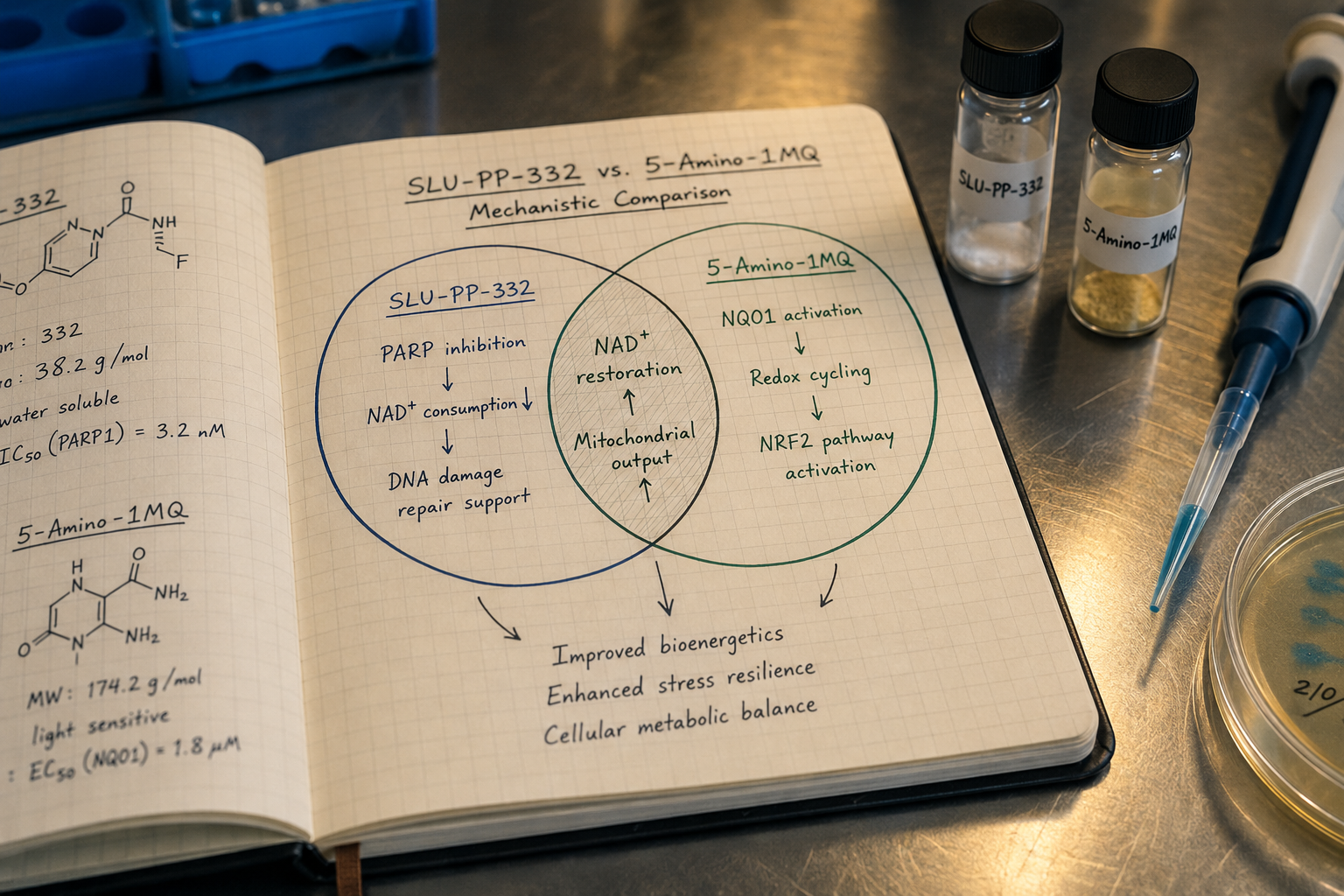
SLUPP332 drives the structural expansion of the mitochondrial network. 5-Amino-1MQ raises the NAD+ fuel that sirtuins need to function. Together, they may address mitochondrial quantity and metabolic efficiency simultaneously — two variables that are both impaired in obese adipose tissue.
This dual-pathway logic mirrors approaches seen in other mitochondrial research stacks. For instance, MOTS-c mitochondrial research themes explore a peptide encoded in mitochondrial DNA that also influences AMPK signaling and glucose uptake, showing that multi-target approaches to metabolic dysfunction are gaining traction across the field. Similarly, mitochondrial longevity research highlights how overlapping mitochondrial interventions are being studied in aging and metabolic disease models.
A critical note for researchers: NNMT participates in methylation reactions across multiple cell types beyond adipocytes. Chronic inhibition carries unknown systemic consequences, and this uncertainty demands rigorous safety evaluation before any translational application is considered.
Current Evidence, Limitations, and Research Outlook
As of 2026, every data point supporting the SLUPP332 and 5-Amino-1MQ combination originates from cell culture experiments or rodent obesity models. No published human clinical trials exist for either compound individually, let alone in combination. Researchers and analysts working in this area consistently emphasize that preclinical promise does not guarantee clinical translation.
The absence of human data means:
- Optimal dosing ratios for the stack are entirely unknown
- Long-term safety of NNMT inhibition has not been characterized in humans
- ERR agonism via SLUPP332 may have off-target hormonal effects not yet identified
- Bioavailability and pharmacokinetics in human subjects remain unstudied
Those designing research protocols around SLUPP332 with 5-Amino-1MQ: designing mitochondrial and NNMT-targeted peptide stacks for obesity research should treat these compounds strictly as investigational tools. Researchers exploring adjacent metabolic peptides may also find value in reviewing what is new in peptide research for the broader landscape of compounds under investigation in 2026.
If ongoing rodent studies produce consistent, reproducible results, the scientific community may have grounds to design Phase I safety trials within the next several years — though this timeline remains speculative.
Conclusion
The combination of SLUPP332 and 5-Amino-1MQ represents a mechanistically grounded approach to studying mitochondrial dysfunction and fat storage in obesity models. SLUPP332 drives mitochondrial biogenesis through ERR receptor activation; 5-Amino-1MQ raises NAD+ availability by blocking NNMT, enabling sirtuin-mediated metabolic reprogramming. Together, they address two distinct but interconnected failure points in obese adipose tissue.
Actionable next steps for researchers:
- Review published rodent model data for each compound independently before designing combination protocols
- Establish baseline mitochondrial function markers in study subjects to measure stack effects accurately
- Monitor systemic methylation markers when using 5-Amino-1MQ to detect off-target NNMT inhibition effects
- Follow emerging preclinical literature closely, as this field is moving quickly in 2026
- Ensure all compounds used meet verified purity standards before inclusion in any research protocol
The field is early-stage but scientifically coherent. Rigorous preclinical work now will determine whether this dual-pathway stack earns a path toward human investigation.