Slupp332 With 5-Amino-1MQ: How Researchers Think About Pairing NNMT Modulation With Metabolic Peptides
NAD+ depletion and impaired mitochondrial biogenesis rarely occur in isolation — which is exactly why researchers studying metabolic dysfunction have begun examining compound pairings rather than single-agent approaches. The question of Slupp332 with 5-Amino-1MQ: how researchers think about pairing NNMT modulation with metabolic peptides sits at the intersection of two distinct but overlapping biological mechanisms, and understanding the logic behind that pairing requires unpacking each compound's role before examining where they converge.
Both SLU-PP-332 and 5-Amino-1MQ are designated for research use only and are not approved for human therapeutic use. All data discussed here comes from preclinical studies.
Key Takeaways
- SLU-PP-332 activates estrogen-related receptors (ERRalpha/gamma) to drive mitochondrial biogenesis and fat oxidation.
- 5-Amino-1MQ inhibits the NNMT enzyme, preserving NAD+ precursors and raising intracellular NAD+ levels.
- The two compounds target different but overlapping metabolic pathways, which is the core rationale for studying them together.
- Preclinical data shows promise for fat reduction and energy metabolism enhancement, but no human clinical trials exist as of 2026.
- Stacking research compounds increases protocol complexity and requires careful experimental design.
Distinct Mechanisms: Why Each Compound Earns Its Place
Before exploring the stack logic, it helps to understand what each compound does independently.
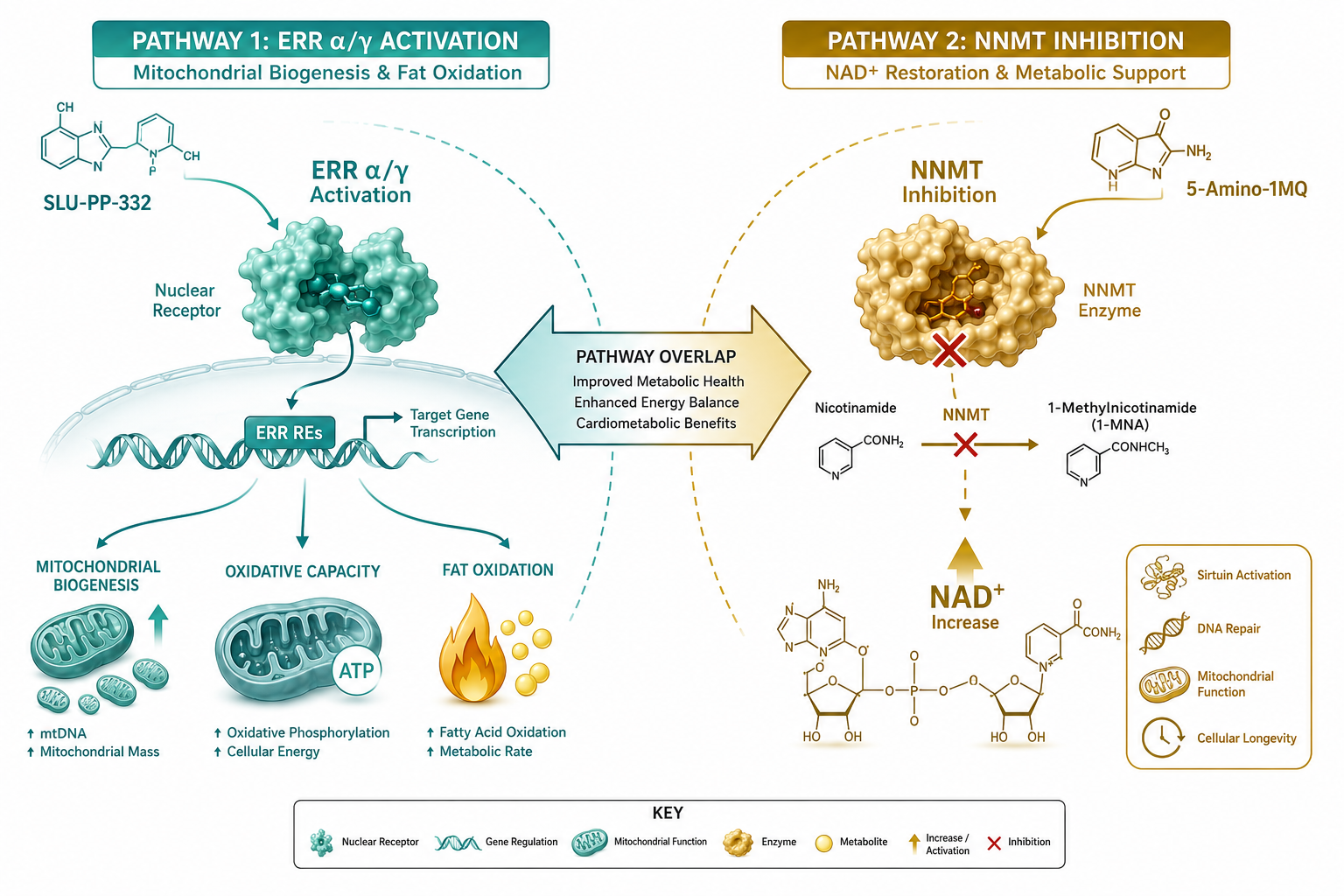
SLU-PP-332 acts as an agonist for ERRalpha and ERRgamma — nuclear receptors that regulate genes involved in mitochondrial biogenesis and fatty acid oxidation. When these receptors are activated, cells respond by producing more mitochondria and increasing their capacity to burn fat for fuel. Researchers studying SLU-PP-332 and metabolic research describe it as a tool for probing how nuclear receptor signaling shapes whole-body energy expenditure.
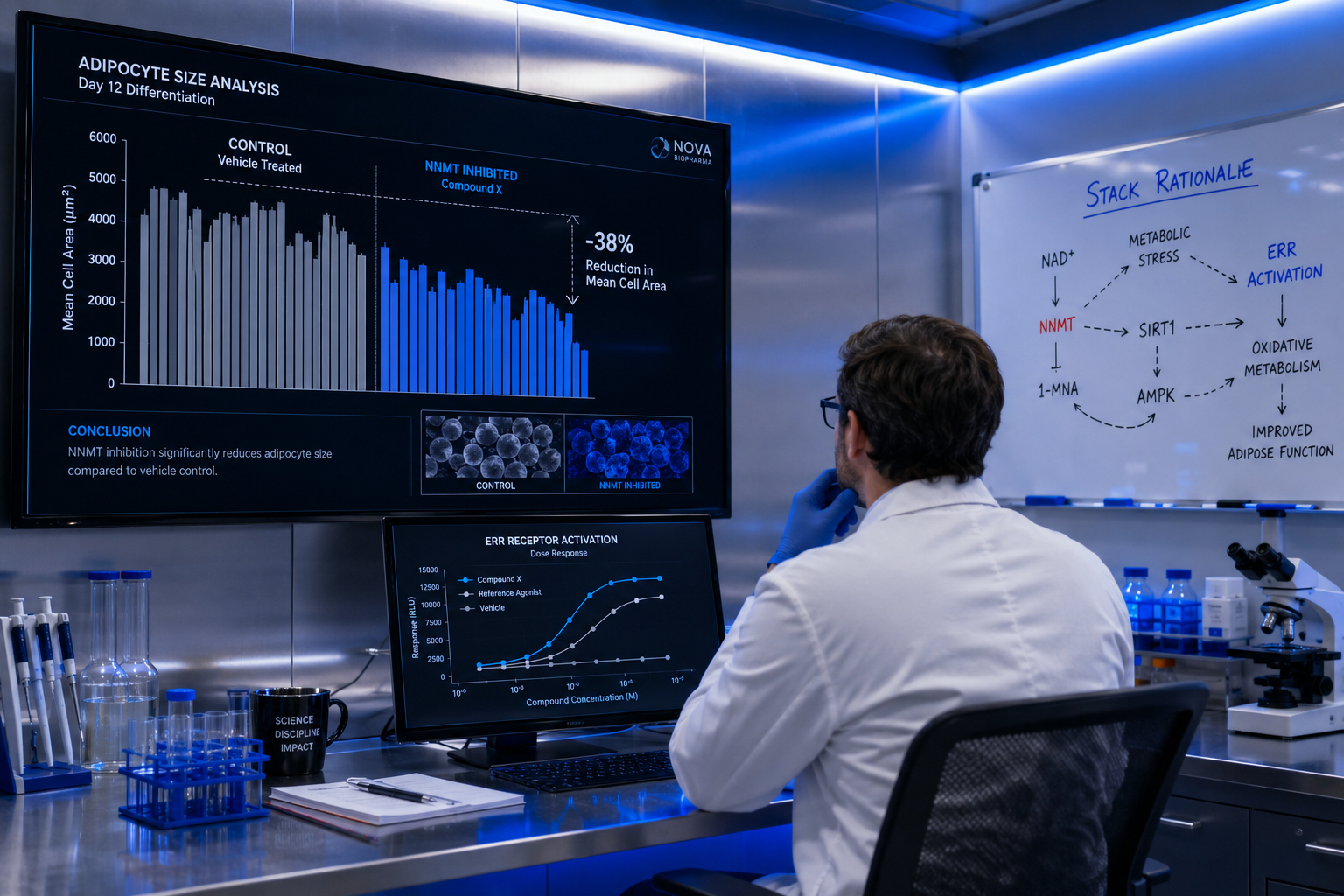
5-Amino-1MQ, by contrast, works upstream in the NAD+ biosynthesis pathway. It inhibits nicotinamide N-methyltransferase (NNMT), an enzyme that methylates nicotinamide and effectively removes it from the NAD+ recycling pool. By blocking NNMT, 5-Amino-1MQ conserves NAD+ precursors, raising intracellular NAD+ in tissues where NNMT activity is highest — particularly adipose tissue. Preclinical animal studies have shown that this inhibition reduces adipocyte size, suggesting a role in fat cell regulation independent of caloric restriction.
| Compound | Primary Target | Key Effect |
|---|---|---|
| SLU-PP-332 | ERRalpha/gamma receptors | Mitochondrial biogenesis, fat oxidation |
| 5-Amino-1MQ | NNMT enzyme | NAD+ preservation, adipocyte reduction |
The Stack Rationale Behind Slupp332 With 5-Amino-1MQ and NNMT Modulation
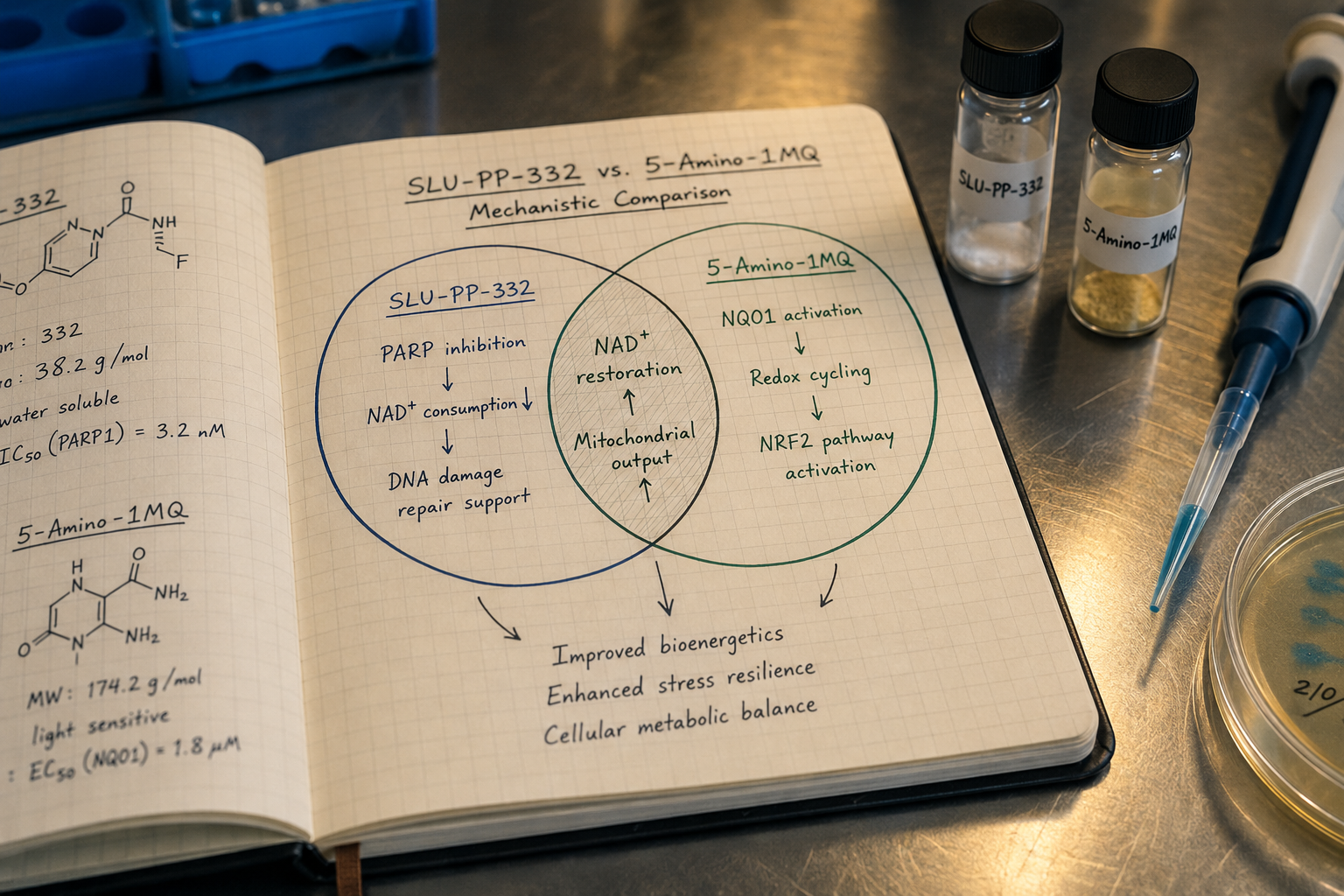
The core logic of pairing these two compounds rests on a straightforward observation: mitochondrial function requires both structural capacity and metabolic fuel. SLU-PP-332 addresses the structural side by stimulating the production of new mitochondria. 5-Amino-1MQ addresses the fuel side by ensuring NAD+ — a critical cofactor in mitochondrial energy production — is available in sufficient quantities.
Researchers describe this as a complementary pathway approach. Rather than pushing a single lever harder, the pairing attempts to remove two separate bottlenecks simultaneously:
- SLU-PP-332 increases the number and activity of mitochondria via ERR signaling.
- 5-Amino-1MQ ensures those mitochondria have the NAD+ substrate needed to operate efficiently.
This is similar in concept to how researchers studying MOTS-c and metabolic flexibility examine mitochondrially-derived peptides alongside other metabolic modulators — the goal is always to understand how multiple signals interact rather than studying each in a vacuum.
The hypothesized result is amplified metabolic output — greater fat oxidation and energy efficiency than either compound could produce alone. However, this synergy hypothesis has not yet been validated in human clinical trials as of 2026.
"Stacking compounds increases complexity and the potential for unknown interactions; careful protocol design is essential." — Consistent position across preclinical research literature.
Researchers also note parallels with other dual-mechanism approaches. For example, work on mitochondrial longevity and compounds like SS-31 and mitochondrial dynamics demonstrates that targeting mitochondrial health from multiple angles is a recurring theme in metabolic research.
Safety Considerations and Research Boundaries
Understanding the rationale for pairing NNMT modulation with metabolic peptides also means acknowledging what is not yet known.
Key research boundaries as of 2026:
- No human clinical trials have evaluated this combination's safety or efficacy.
- All evidence comes from animal models and in vitro studies.
- Both compounds remain unapproved research chemicals with no FDA-cleared therapeutic indication.
- Combining compounds introduces the possibility of additive or unexpected interactions that single-compound studies cannot predict.
Researchers approaching this pairing are advised to treat it with the same rigor applied to any novel combination protocol — establishing baseline measurements, controlling variables, and avoiding assumptions that preclinical results will translate directly to other biological systems.
This principle applies broadly across the peptide research space. Whether examining IPA muscle and fat research themes or CJC-1295 plus IPA combinations, responsible research design demands that mechanism overlap be understood before conclusions about efficacy are drawn.
Conclusion
The discussion around Slupp332 with 5-Amino-1MQ: how researchers think about pairing NNMT modulation with metabolic peptides is ultimately a discussion about mechanism logic. SLU-PP-332 builds mitochondrial capacity through ERR receptor activation; 5-Amino-1MQ fuels that capacity by preserving NAD+ availability through NNMT inhibition. The two pathways are distinct enough to avoid redundancy and overlapping enough to suggest genuine complementarity.
Actionable next steps for researchers:
- Review the preclinical literature on ERRalpha/gamma agonism and NNMT inhibition independently before designing combination protocols.
- Establish clear outcome metrics — adipocyte size, NAD+ levels, mitochondrial density — to measure each pathway's contribution separately.
- Consult current regulatory guidance; both compounds are research-use-only and require appropriate institutional oversight.
- Explore related metabolic research themes, including MOTS-c peptides and SLU-PP-332 research, to build a fuller picture of the metabolic signaling landscape.
The science is early, but the mechanistic rationale is sound — and that is precisely where rigorous research begins.