

GLP-3 Retatrutide vs. Polypeptide Peptides: A Comparative Research Guide to Metabolic Signaling Pathways
Metabolic peptide research has shifted dramatically — where single-receptor agents once dominated laboratory inquiry, a new class of multi-target molecules is redefining what researchers expect from incretin-based signaling. This guide to GLP-3 Retatrutide vs. Polypeptide Peptides: A Comparative Research Guide to Metabolic Signaling Pathways examines how retatrutide's triple-receptor mechanism compares to conventional polypeptide agents, giving researchers a clear framework for understanding the underlying biology.
Key Takeaways
- Retatrutide simultaneously activates three metabolic receptors: GLP-1R, GIPR, and the glucagon receptor (GcgR).
- Conventional polypeptide peptides typically act on one or two receptor targets, producing narrower metabolic effects.
- Triple agonism reshapes energy balance through complementary, overlapping signaling pathways.
- Understanding receptor-level distinctions helps researchers design more targeted metabolic studies.
- The term "GLP-3" is an informal research label — retatrutide's formal classification reflects its triple-agonist pharmacology.
Understanding the GLP-3 Label and Retatrutide's Classification
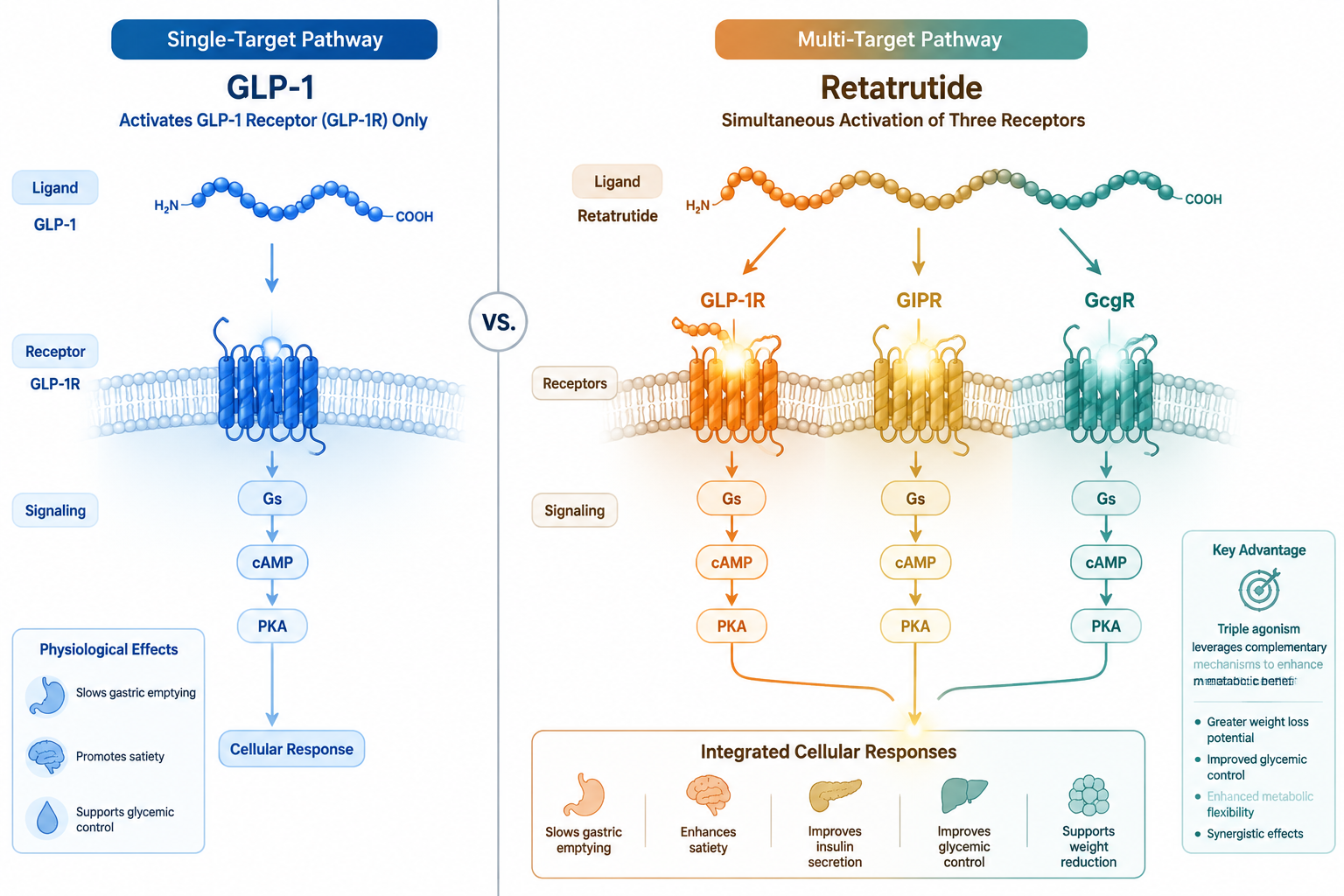
The label "GLP-3" circulates in research communities as shorthand for retatrutide, but it requires clarification. Retatrutide is not a third member of the glucagon-like peptide family in the classical sense. It is a synthetic triple agonist engineered to activate three distinct G-protein-coupled receptors simultaneously.
Conventional polypeptide peptides — including native GLP-1, GIP, and glucagon analogs — are typically single-receptor or, at most, dual-receptor agents. Their signaling is more contained. Retatrutide's design deliberately crosses those boundaries, which is why researchers studying GLP-3 Retatrutide incretin research themes often need a broader mechanistic framework than standard incretin models provide.
For context on how incretin generations have evolved, the overview of GLP-1 generations and their differences provides useful background on the progression from first-generation GLP-1 analogs to today's multi-agonist compounds.
Receptor-Level Mechanisms: How Retatrutide Differs from Conventional Polypeptide Peptides
This section of the GLP-3 Retatrutide vs. Polypeptide Peptides: A Comparative Research Guide to Metabolic Signaling Pathways focuses on what happens at the receptor level — the core distinction between retatrutide and standard polypeptide agents.
GLP-1 Receptor Activation
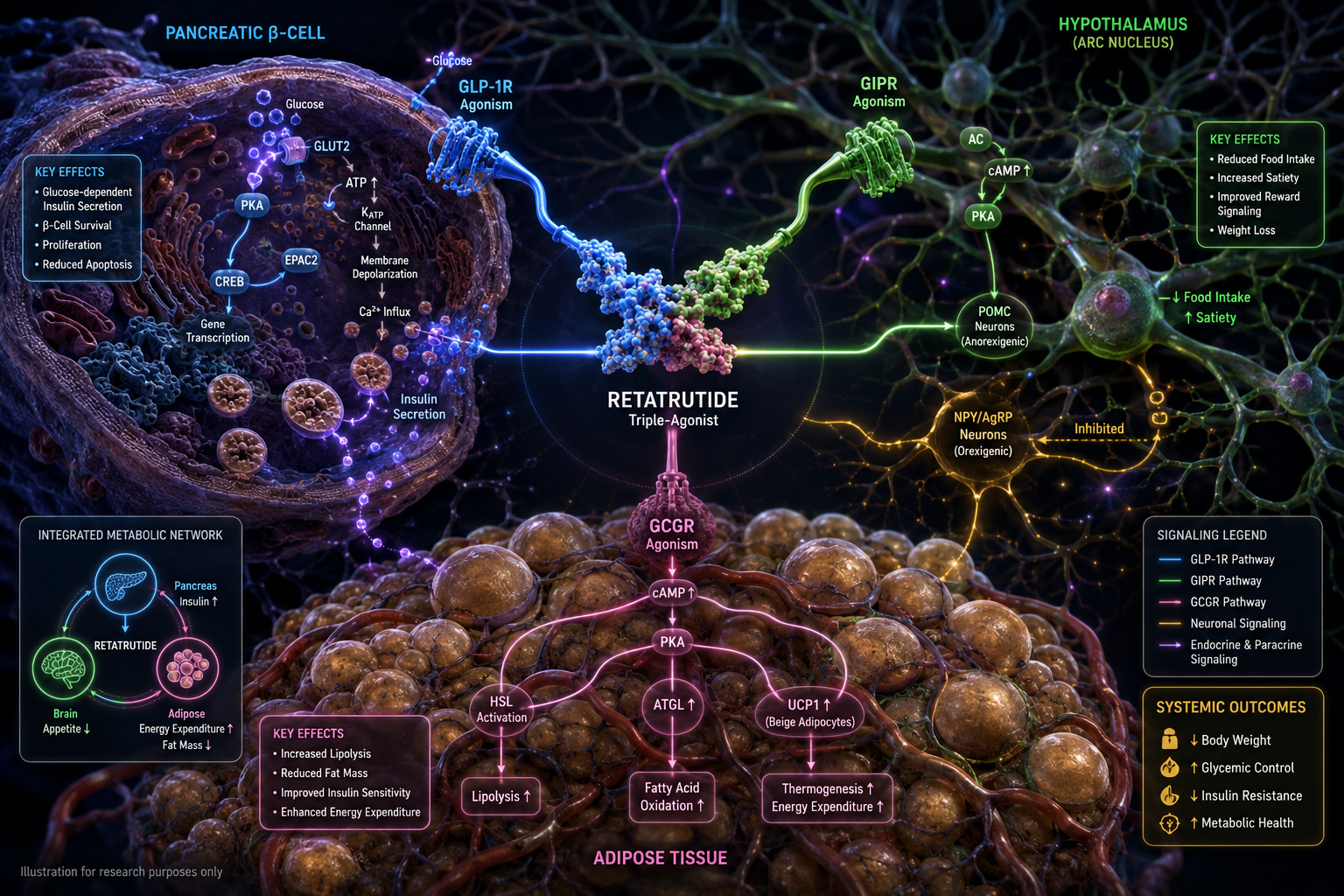
GLP-1R activation is shared by both retatrutide and conventional GLP-1 analogs. This pathway drives glucose-dependent insulin secretion, slows gastric emptying, and reduces appetite through both central nervous system and vagal nerve signaling. Single-agonist GLP-1 peptides operate primarily through this mechanism alone.
GIP Receptor Activation
GIPR activation adds a second layer. GIP further potentiates insulin release and modulates adipose tissue metabolism. Emerging research also suggests GIPR signaling may influence reward-related feeding behavior. Most traditional polypeptide peptides do not engage this receptor.
Glucagon Receptor Activation
GcgR activation is where retatrutide most clearly separates itself. Glucagon receptor signaling increases hepatic glucose output and, critically for metabolic research, raises resting energy expenditure. This thermogenic component is largely absent from conventional incretin peptides.
| Receptor | Retatrutide | GLP-1 Analogs | GIP Analogs |
|---|---|---|---|
| GLP-1R | Yes | Yes | No |
| GIPR | Yes | No | Yes |
| GcgR | Yes | No | No |
| Thermogenic effect | Yes | Minimal | Minimal |
Researchers exploring complementary metabolic peptides such as MOTS-C, the mitochondrial peptide, will recognize that energy expenditure modulation is a recurring theme across multiple research-stage compounds — though the mechanisms differ significantly.
Metabolic Signaling Pathways: Triple Agonism vs. Conventional Peptide Approaches
The practical research value of the GLP-3 Retatrutide vs. Polypeptide Peptides: A Comparative Research Guide to Metabolic Signaling Pathways comparison lies in understanding how these mechanisms interact at the systems level.

Triple agonism creates overlapping, reinforcing signals across three metabolic axes:
- Insulin axis — amplified through both GLP-1R and GIPR co-activation
- Appetite axis — suppressed via central GLP-1R pathways and potentially GIPR reward modulation
- Energy expenditure axis — elevated through GcgR-driven thermogenesis
Conventional polypeptide peptides typically address one or two of these axes. Researchers studying body composition agents like Tesamorelin and its metabolic effects or AOD-9604 research methodology will note that each compound targets a narrower physiological window.
"Multi-receptor engagement is not simply additive — the convergence of three distinct signaling pathways creates metabolic effects that single-agonist models cannot fully replicate."
For researchers building broader metabolic panels, understanding cagrilintide's synergy with GLP-1 pathways also illustrates how combination approaches are increasingly central to advanced metabolic research design.
Those sourcing research-grade material can review GLP-3 Retatrutide product details for specification and traceability information.
Conclusion
The distinction between retatrutide and conventional polypeptide peptides is not merely a matter of degree — it reflects a fundamentally different approach to metabolic receptor engagement. Where single or dual-agonist peptides offer focused, well-characterized signaling, retatrutide's triple-agonist profile introduces a more complex, multi-axis mechanism that researchers must account for in study design.
Actionable next steps for researchers:
- Map which receptor pathways are relevant to your specific metabolic research question before selecting a peptide agent.
- Review the GLP-1 generations overview to contextualize retatrutide within the broader incretin research landscape.
- Cross-reference thermogenic and energy expenditure data when comparing triple-agonist results against single-receptor peptide benchmarks.
- Consult available innovative peptide delivery systems research to ensure study protocols reflect current best practices.
Understanding these mechanistic foundations is the starting point for rigorous, reproducible metabolic peptide research in 2026.