

Retatrutide as so‑called “GLP‑3” triple agonist vs. GLP‑1 drugs (latest Phase 3 obesity and MASLD data)
Phase 3 trial data released in mid-2026 shows that a single injectable peptide can strip away nearly 30% of total body weight, a figure that once belonged exclusively to bariatric surgery. That peptide is retatrutide, and the numbers are forcing a hard reset on how researchers and clinicians think about obesity pharmacology.
Key Takeaways
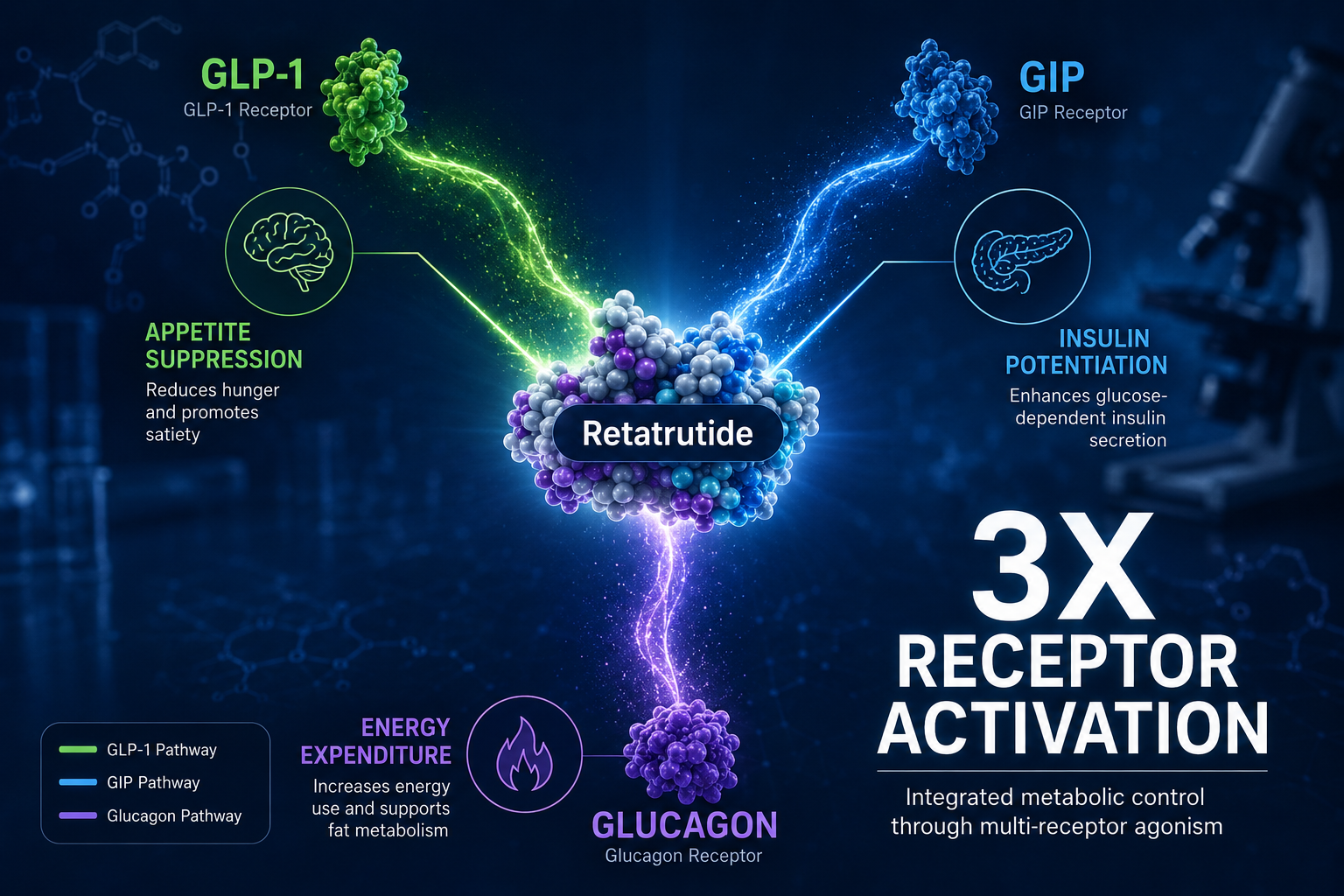
- Retatrutide simultaneously activates GLP-1, GIP, and glucagon receptors, earning the informal label "GLP-3" in research circles.
- TRIUMPH-1 Phase 3 data shows 28.3% average weight loss at 80 weeks with the 12 mg dose, nearly double the results seen with semaglutide.
- Participants with a BMI of 35 or higher who continued for 104 weeks lost an average of 30.3% of body weight.
- Phase 2 MASLD data shows over 85% of participants achieved complete liver steatosis resolution after 48 weeks.
- An FDA New Drug Application is expected by late 2026 or early 2027.
What Makes Retatrutide a "GLP-3" Triple Agonist
The "GLP-3" label is informal, no third GLP receptor exists, but it captures the core idea neatly. Where standard GLP-1 receptor agonists like semaglutide or liraglutide target a single receptor pathway, retatrutide activates three simultaneously: the glucagon-like peptide-1 (GLP-1) receptor, the glucose-dependent insulinotropic polypeptide (GIP) receptor, and the glucagon receptor.
Each receptor contributes a distinct metabolic effect:
| Receptor | Primary Effect |
|---|---|
| GLP-1 | Appetite suppression, slowed gastric emptying |
| GIP | Enhanced insulin secretion, fat metabolism support |
| Glucagon | Increased energy expenditure, enhanced fat oxidation |
The glucagon receptor component is what separates retatrutide most sharply from dual agonists like tirzepatide. Glucagon receptor activation ramps up thermogenesis and fat burning in ways that GLP-1 alone cannot achieve. For a deeper look at how incretin receptor families interact, the GLP-3 and incretin research themes overview provides useful context, as does this GLP-1 generations overview covering how the drug class has evolved.
Understanding the GIP receptor and its importance is also valuable for grasping why dual and triple agonism consistently outperforms single-receptor approaches.
TRIUMPH-1 Phase 3 Obesity Data: Retatrutide vs. GLP-1 Drugs
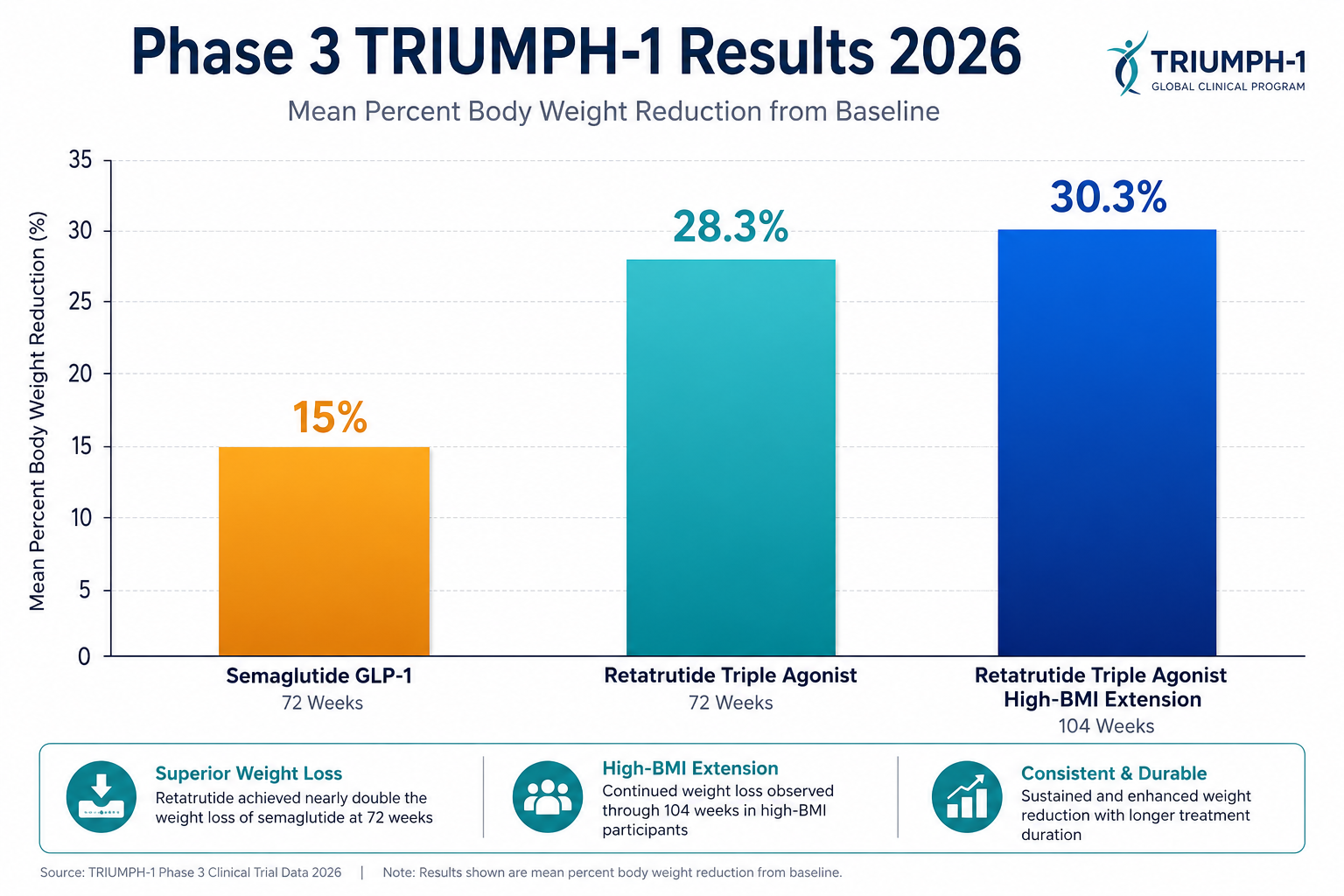
The TRIUMPH-1 trial is the headline result of 2026 for obesity pharmacology. Eli Lilly reported that participants receiving the 12 mg dose of retatrutide lost an average of 28.3% of body weight (roughly 70.3 lbs) over 80 weeks. The distribution of results was equally striking:
- 45.3% of participants achieved 30% or more weight loss
- 65.3% reduced their BMI below 30, moving out of the obesity range entirely
In a pre-specified extension for participants with a baseline BMI of 35 or higher who continued treatment for 104 weeks, average weight loss reached 30.3%, equivalent to approximately 85 lbs.
"Retatrutide's 28-30% weight loss figures place it in the same territory as bariatric surgery outcomes, something no oral or injectable drug has previously achieved."
For comparison, semaglutide, currently the most prescribed GLP-1 agonist, produces roughly 15% weight loss in similar populations. Retatrutide's triple agonism roughly doubles that benchmark.
Cardiometabolic improvements were broad and clinically meaningful, including reductions in:
- Waist circumference
- Non-HDL cholesterol and triglycerides
- Systolic blood pressure
- High-sensitivity C-reactive protein (hsCRP)
Researchers studying metabolic peptides alongside incretin agents may also find AOD-9604 metabolic research relevant as a complementary area of fat metabolism investigation.
MASLD Resolution and Liver Health Data
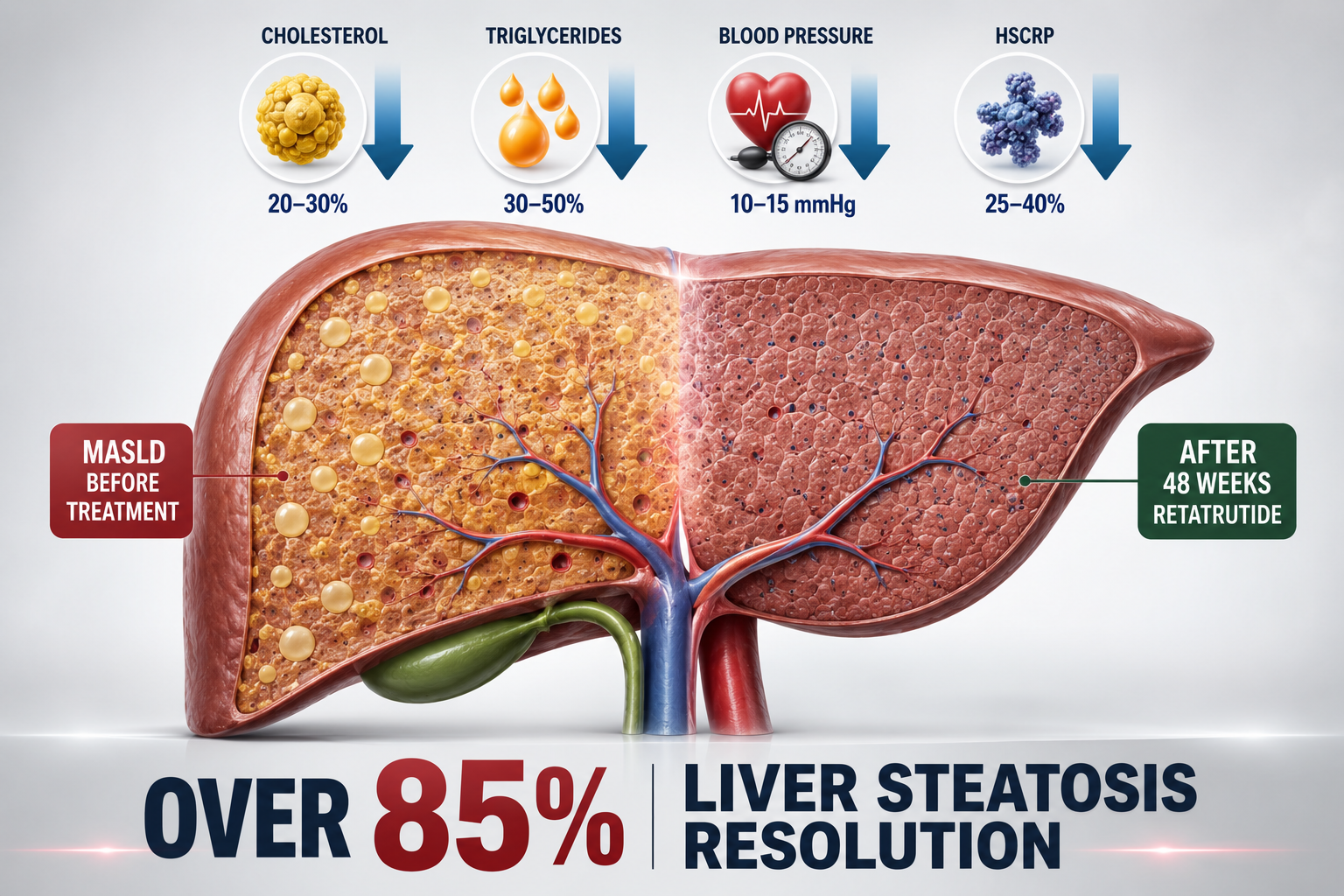
Metabolic dysfunction-associated steatotic liver disease (MASLD) is closely tied to obesity, and retatrutide's Phase 2 data presented at the American Association for the Study of Liver Diseases (AASLD) delivered a landmark finding: over 85% of participants with MASLD and obesity achieved complete resolution of liver steatosis after 48 weeks of treatment.
This is a dramatic outcome. Current standard-of-care options for MASLD are limited, and no drug has previously shown steatosis resolution rates at this scale in a controlled study. The improvements came alongside broader metabolic health gains, reinforcing that retatrutide's mechanism targets the root metabolic dysfunction driving liver fat accumulation, not just body weight.
For researchers interested in mitochondrial and cellular health aspects of metabolic disease, MOTS-c and metabolic stress research offers a complementary perspective on how peptide-based interventions interact with energy metabolism pathways.
Safety Profile and Regulatory Outlook
The adverse event profile of retatrutide is consistent with the broader incretin drug class. The most commonly reported side effects are gastrointestinal: nausea, diarrhea, constipation, and vomiting. One notable finding specific to retatrutide is that 20.9% of participants at the 12 mg dose reported dysesthesia, tingling or burning sensations, though the majority of cases were mild and did not lead to discontinuation.
Eli Lilly plans to submit a New Drug Application (NDA) to the FDA by late 2026 or early 2027, pending completion of additional Phase 3 trials. Those ongoing studies are evaluating retatrutide across broader populations, including people with type 2 diabetes and other metabolic conditions.
Researchers tracking the broader peptide research landscape may also find tesa's role in visceral fat reduction relevant as a separate but related area of metabolic peptide science.
Conclusion
Retatrutide as so-called "GLP-3" triple agonist vs. GLP-1 drugs represents one of the most significant inflection points in obesity pharmacology in decades. The latest Phase 3 obesity and MASLD data confirm that simultaneous activation of GLP-1, GIP, and glucagon receptors produces weight loss and liver fat reduction outcomes that single-receptor drugs cannot match.
Actionable next steps for researchers and clinicians:
- Review the full TRIUMPH-1 dataset when published in peer-reviewed form to assess subgroup performance.
- Monitor AASLD and upcoming hepatology conference presentations for Phase 3 MASLD data.
- Track the FDA NDA submission timeline, expected by late 2026 or early 2027.
- Consider how triple agonism compares to emerging peptide combinations in your own research protocols.
- Explore the GLP-1 product research tag for research-grade incretin-related peptide options.
The era of surgery-level weight loss from a once-weekly injection is no longer theoretical. It is arriving.