GLP-2-T vs GLP2 Tirz Peptide: What the Naming Means and Why Researchers Confuse Them
Fewer than five letters separate two peptide labels that researchers routinely mix up, yet the underlying biology, receptor targets, and research applications are meaningfully different. The confusion around GLP-2-T vs GLP2 Tirz Peptide: What the Naming Means and Why Researchers Confuse Them is not a minor clerical issue. It shapes how studies are designed, how compounds are sourced, and how results are interpreted across metabolic and intestinal research models.
Key Takeaways
- GLP-2-T refers to a GLP-2 analog modified for extended half-life, primarily studied for intestinal and mucosal biology.
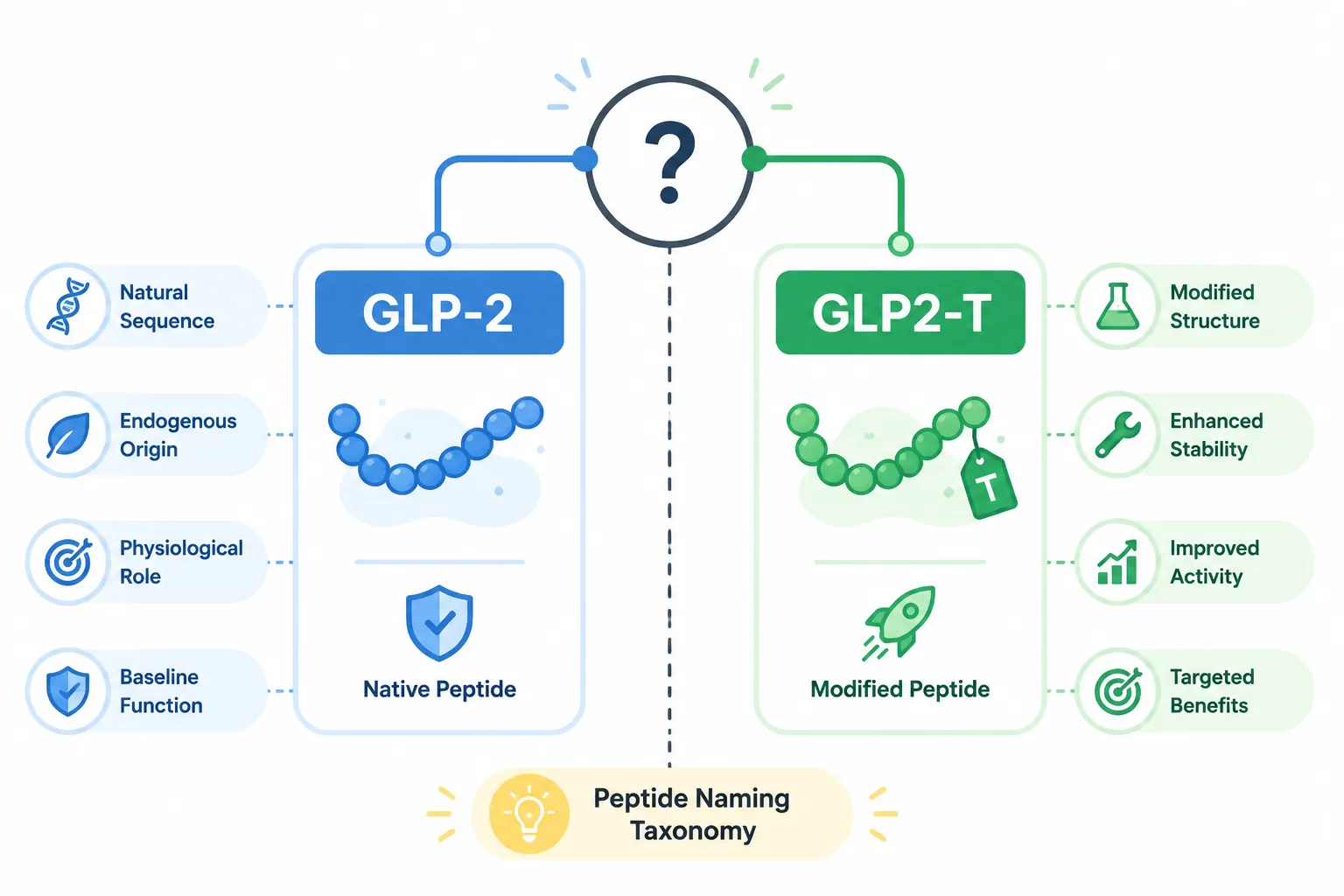
- GLP2 Tirz is a vendor shorthand blending GLP-2 receptor activity with tirzepatide-inspired dual-agonist framing, a label that does not correspond to a single standardized compound.
- The two terms come from different naming traditions: one is pharmacological, the other is commercial catalog shorthand.
- Mixing them up in study design can lead to sourcing the wrong compound, misreading receptor targets, or citing irrelevant literature.
- Researchers benefit from verifying both the molecular sequence and the receptor profile before ordering or citing any GLP-2-related peptide.
What GLP-2-T Actually Refers To
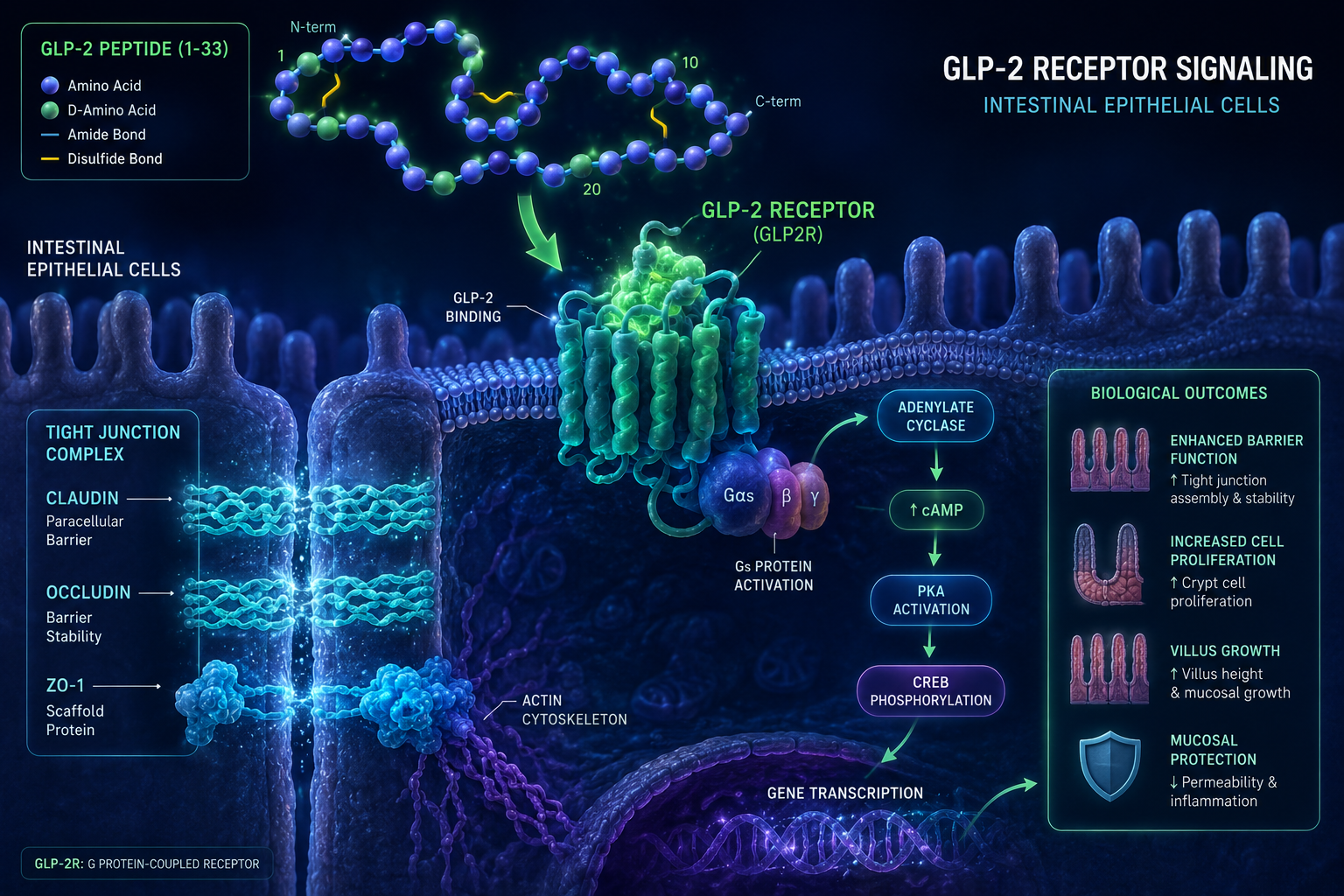
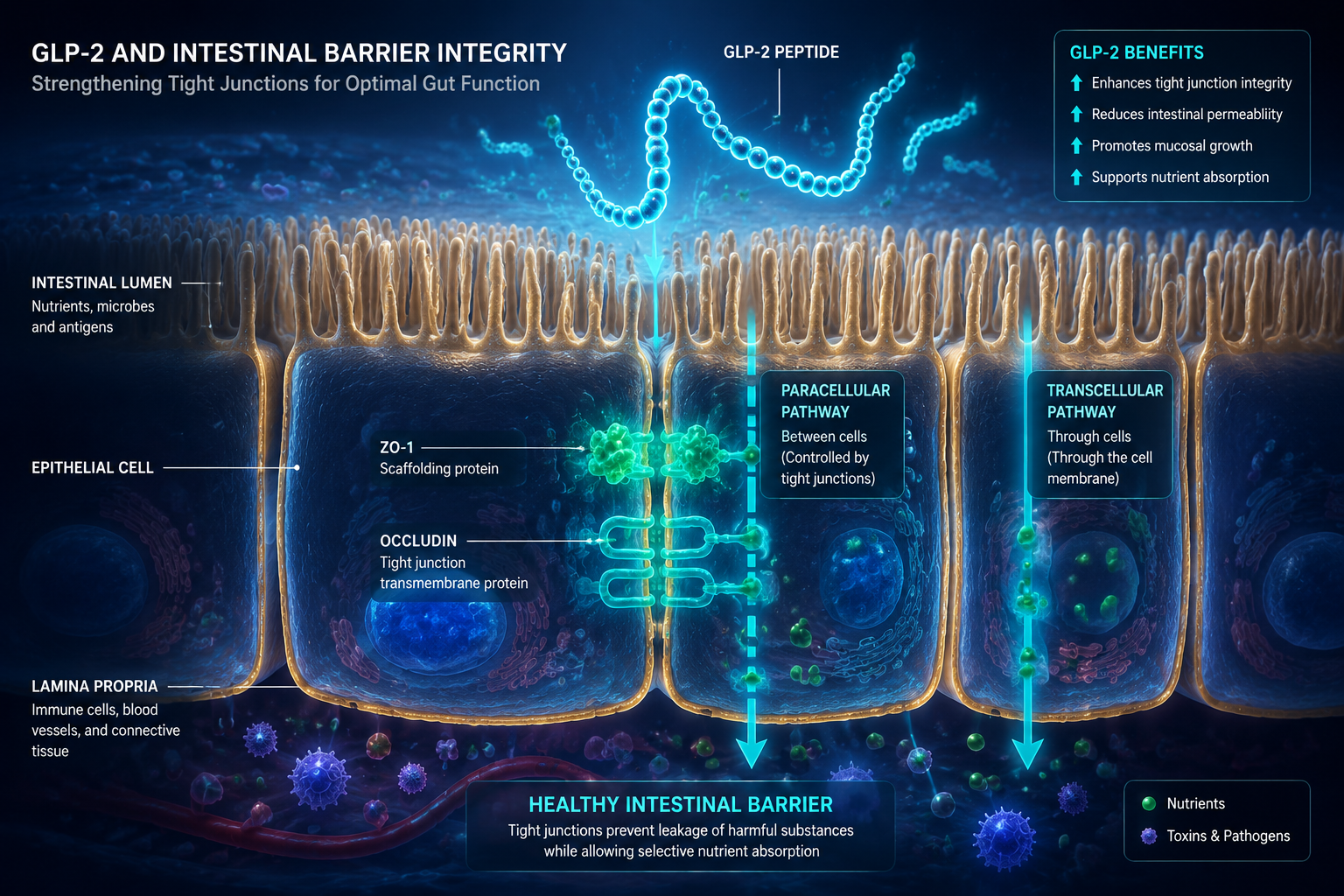
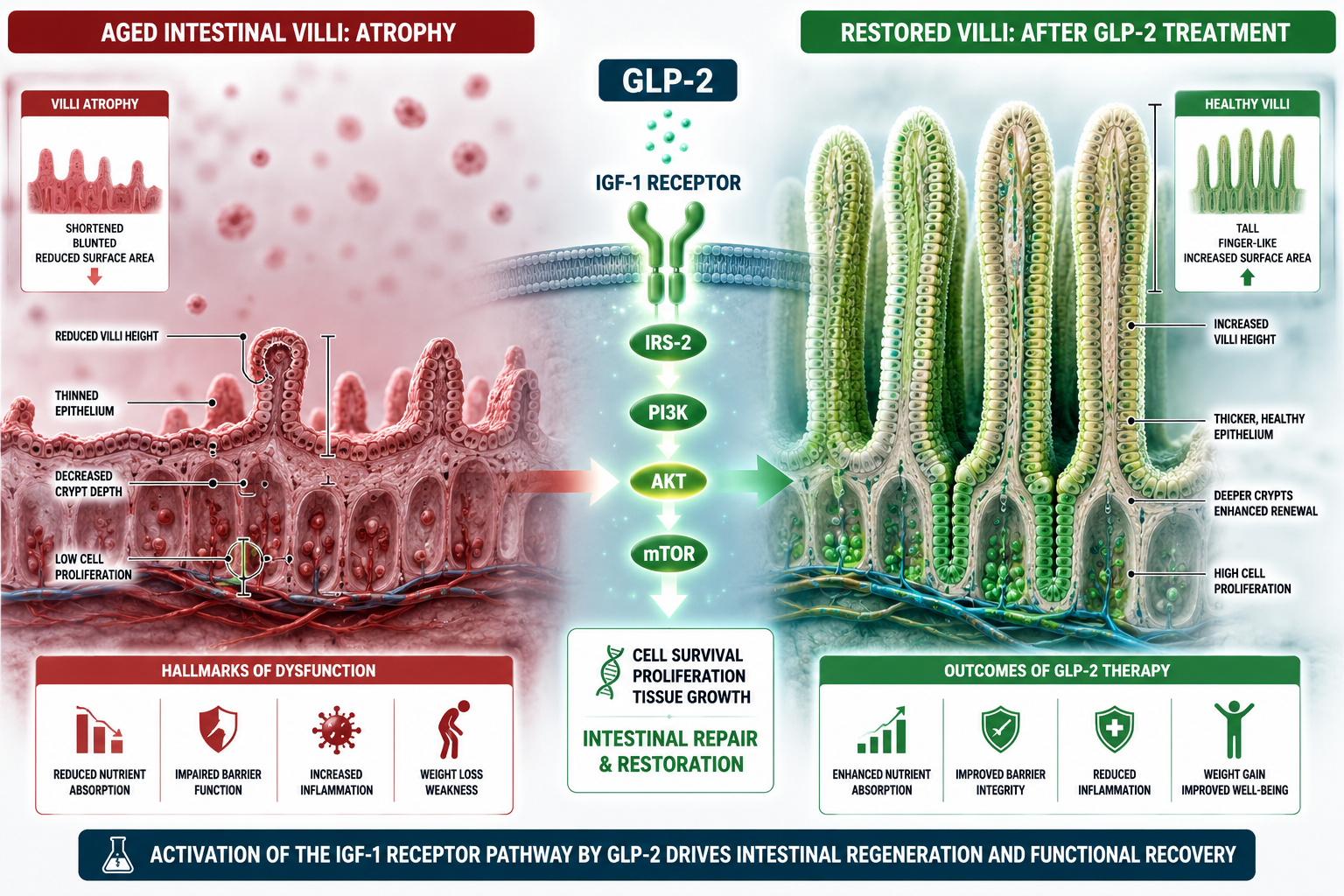
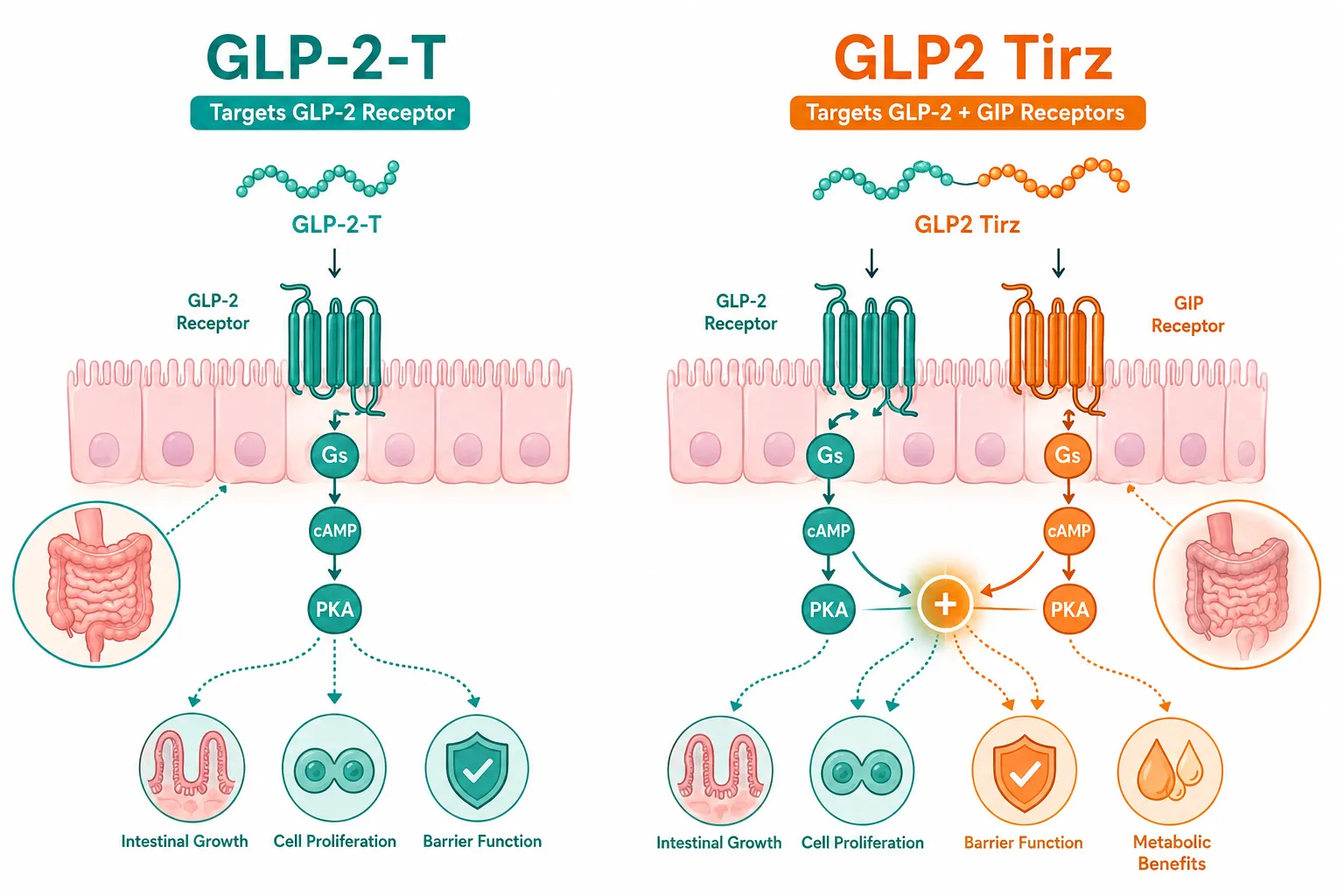
GLP-2 (glucagon-like peptide-2) is a 33-amino acid peptide secreted by intestinal L-cells. Its primary receptor, GLP2R, is expressed heavily in the gut, where it promotes mucosal growth, reduces permeability, and supports nutrient absorption. GLP-2-T is a shorthand for a teduglutide-related or GLP-2 analog that has been structurally modified, most commonly by substituting alanine at position 2, to resist dipeptidyl peptidase-4 (DPP-4) degradation and extend circulating half-life.
This modification is pharmacologically significant. Native GLP-2 has a plasma half-life of roughly 7 minutes. The modified form used in research contexts can extend that window substantially, making it more practical for in vivo study designs.
Key characteristics of GLP-2-T in research:
- Primary receptor target: GLP2R (GLP-2 receptor)
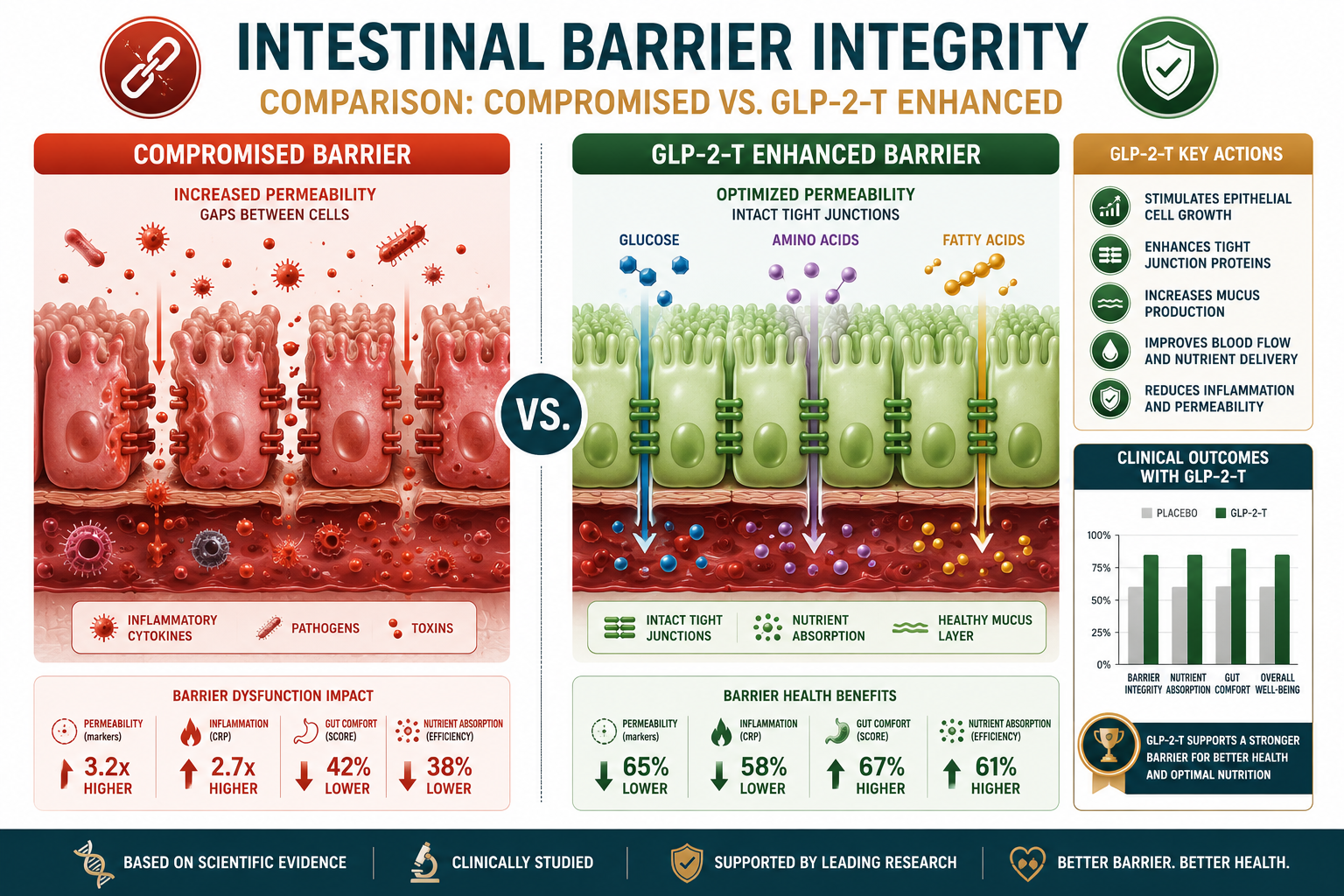
- Main research areas: Short bowel syndrome models, intestinal barrier function, mucosal regeneration
- Structural basis: DPP-4-resistant analog, not a multi-receptor agonist
- Naming origin: Pharmacological literature and clinical analog development
For a broader look at how GLP-2-T fits into cardiometabolic peptide research alongside other multi-target compounds, see this comparison of polypeptide peptides in cardiometabolic models.
What "GLP2 Tirz" Means, and Why the Label Is Ambiguous
"GLP2 Tirz" does not appear in peer-reviewed pharmacological literature as a standardized compound name. It is a catalog or vendor shorthand that combines two concepts:
- GLP-2 receptor activity
- A tirzepatide-style dual-agonist framing (the "Tirz" suffix)
Tirzepatide itself is a GIP/GLP-1 dual agonist. When vendors append "Tirz" to a GLP-2 label, they are typically signaling that the compound has been formulated or marketed to suggest dual-receptor engagement, but the specific receptor pairing varies by source. Some products labeled "GLP2 Tirz" may combine GLP-2R and GLP-1R activity; others may reference GLP-2R and GIPR activity. Without a certificate of analysis and a confirmed amino acid sequence, the label alone tells a researcher very little.
Pull quote: "A peptide label is not a molecular identity. Researchers who treat vendor shorthand as a scientific classification risk designing studies around assumptions rather than data."
This naming ambiguity is explored in depth in the dedicated article on GLP2-T Peptide and GLP2 Tirz Peptide naming confusion and product labels.
GLP-2-T vs GLP2 Tirz Peptide: Where the Confusion Originates
Understanding why researchers confuse these terms requires looking at three overlapping sources of ambiguity.

1. Shared Abbreviation Roots
Both labels start with "GLP-2" or "GLP2," and both use a suffix to signal modification. The "T" in GLP-2-T is read by some researchers as "tirzepatide-related" rather than as a structural modifier tag. This single misread redirects the entire receptor interpretation.
2. Vendor Catalog Conventions vs. Scientific Nomenclature
Peptide vendors often create shorthand names for catalog management. These names are not peer-reviewed and do not follow IUPAC or INN naming conventions. A compound sold as "GLP2 Tirz" at one supplier may have a completely different sequence than the same label at another. Researchers accustomed to pharmaceutical-grade naming conventions may not account for this variability.
3. The Rise of Multi-Agonist Research
The success of tirzepatide and the growing interest in triple agonists like retatrutide (see triple agonist therapies beyond GLP-3) has created a market expectation that any peptide with a "Tirz" suffix must be a dual or triple agonist. This assumption bleeds into how GLP-2-related compounds are read and ordered.
| Feature | GLP-2-T | GLP2 Tirz |
|---|---|---|
| Naming origin | Pharmacological literature | Vendor catalog shorthand |
| Primary receptor | GLP2R | Varies by source |
| Multi-agonist? | No (single receptor) | Claimed, not standardized |
| DPP-4 resistance | Yes (structural modification) | Depends on sequence |
| Literature citations | Available | Limited to none |
Practical Steps to Avoid Mixing Them Up in Lab Planning
Researchers working with GLP-2-related peptides in 2026 should treat naming as a starting point, not a final answer. The following steps reduce the risk of compound misidentification.
Step 1: Request a certificate of analysis (CoA) with amino acid sequence confirmation before ordering.
Step 2: Cross-reference the vendor name against known pharmacological analogs. GLP-2-T should map to a teduglutide-class structure. If it does not, the compound may be mislabeled.
Step 3: Check receptor binding data. A genuine GLP-2-T compound should show selective GLP2R binding. A compound claiming dual agonism should provide binding affinity data for both receptors.
Step 4: Avoid citing vendor product pages as scientific sources. Literature on GLP-2 analogs exists and should be the primary reference for mechanism claims.
For researchers building broader metabolic study panels, the top 5 research peptides for metabolic health resource provides useful context on how GLP-2-related compounds fit alongside other metabolic peptides.
Researchers who are also working with GLP-1 receptor agonist compounds may find it useful to review the GLP1-T research breakdown on dual receptor agonism for comparison, since the GLP-1 naming conventions follow a similar pattern of suffix-based shorthand.
Additionally, for those exploring the broader peptide nomenclature landscape, the peptides 101 guide covering GLP-3, MOTS-c, and related compounds offers foundational context that applies directly to GLP-2-related naming decisions.

Conclusion
The GLP-2-T vs GLP2 Tirz Peptide naming issue is a clear example of how informal catalog conventions can create real friction in research planning. GLP-2-T has a defined pharmacological identity rooted in DPP-4-resistant GLP-2 analog chemistry. GLP2 Tirz is a vendor-derived label with no standardized molecular definition. Treating them as interchangeable risks sourcing the wrong compound, misaligning receptor targets, and drawing conclusions from mismatched literature.
Actionable next steps for researchers:
- Always verify compound identity through sequence data and receptor binding profiles, not label names alone.
- When reviewing published studies, confirm that the GLP-2 analog described matches the structural characteristics of the compound being studied.
- When ordering from any supplier, request documentation that confirms DPP-4 resistance status and receptor selectivity.
- Flag any study design that cites "GLP2 Tirz" without a corresponding CoA or sequence reference as potentially unreliable.
Naming clarity is not a bureaucratic concern, it is a prerequisite for reproducible science.