Call or Text 727-513-9780
  • Shopping Cart Shopping Cart
    0Shopping Cart
Pure Tested Peptides | America's most trusted Peptides for sale online
  • Peptides for sale
    • Oral Peptides for sale
      • Peptide Capsules for sale
      • BPC 157 Capsules 1000mcg
      • SLU-PP-332 Capsules | 1000 mcg
      • 5-Amino-1MQ 50mg Capsules
      • Tesofensine 500mcg
    • All Peptides for sale
    • Peptide Sprays
      • BPC 157 Nasal Spray Kit
      • BPC-157 TB500 Nasal Spray Kit
      • Semax Nasal Spray 10mg
      • Selank – Nasal Spray Kit – 10mg
      • Epithalon 50MG Nasal Spray Kit
      • Ipamorelin 10mg Nasal Spray
      • Klow Nasal Spray (BPC-157 + TB-500 + GHK-Cu + KPV) | 80mg
      • Hulk Nasal Spray Tesa / Ipa Blend 6/3 MG
      • Klow Nasal Spray
      • NAD + 500 mg Nasal Spray
      • PT-141 Nasal Spray Kit
    • GHRH Peptides
      • Ipa Peptides
      • CJC-1295 Peptides
        • CJC-1295 with DAC 5 mg
        • CJC-1295 without DAC 5 mg
        • CJC-1295 Ipa 10mg
      • Tesa Peptides
        • Tesa Peptide
        • Tesa 20 mg
    • GHK-Cu Peptides
      • All GHK-Cu Peptides
      • GHK-Cu 100mg
      • KLOW Peptide Blend – Buy KLOW blend online
    • BPC Peptides
      • All BPC Peptides
      • BPC-157
      • BPC-157 TB-500
      • BPC 157 capsules 1000mcg
    • SLU-PP-332 Peptides
      • All SLU-PP-332 Peptides
      • SLU-PP-332 5mg
    • GLP3 Peptides
      • GLP3-R
      • GLP3-R CAG 10mg
      • GLP3-R 20mg
    • PT-141 Peptides
      • PT-141 Peptides for sale
      • PT-141 10mg
      • PT-141 Nasal Spray
    • CAG Peptides
      • Lipo-C Peptide Blend
      • CAG 5mg
      • CAG 10mg
    • MOTS-C Peptides
      • MOTS-C Peptides for sale
      • MOTS-c peptide
      • MOTS-c 10mg *6 pack*
    • 5 Amino 1MQ Peptides
      • 5 Amino 1MQ Peptides for sale
      • 5-Amino-1MQ 50mg Capsules
      • 5-Amino-1MQ 5mg
    • Epithalon Peptides
      • Epithalon Peptides for sale
      • Epithalon 10mg
      • Epithalon 50mg
  • Shop
    • GLPs
      • 5-Amino-1MQ 50mg Capsules
      • 5-Amino-1MQ 5mg
      • GLP3-Reta
      • L-Carnitine 500mg/ml
      • Tesofensine 500mcg
      • SLU-PP-332 5mg
      • MOTS-c 10mg *6 pack*
    • Epithalon & BPC Peptides
      • Epithalon 10mg
      • Epithalon 50mg
      • BPC-157
      • BPC 157 capsules 1000mcg
      • BPC-157 TB-500
      • BPC-157 TB500 Nasal Spray Kit
      • BPC 157 Nasal Spray Kit
    • BPC TB-500 & NAD+ Peptides
      • NAD+ 500 mg
      • KLOW Peptide Blend – Buy KLOW blend online
      • GLOW Peptide Blend
      • TB 500 5mg
      • BPC 157 capsules 1000mcg – Supplement
      • BPC 157 Nasal Spray Kit
      • BPC-157
      • BPC-157 TB500 Nasal Spray Kit
      • BPC-157 TB-500
      • BPC 157 capsules 1000mcg
    • LL-37 Peptide
      • LL-37 10 mg
    • MOTS-C & Selank
      • MOTS-c peptide
      • Selank 10mg
    • GHK Peptides
      • GHK-Cu 100mg
      • GLOW Peptide Blend
      • KLOW Peptide Blend – Buy KLOW blend online
  • COAs
  • Wholesale
    • Wholesale Peptides for sale
  • PTP FAQ
  • Affiliates
    • Affiliate Program
    • Affiliate Signup
  • Contact
    • Contact Customer Service
    • Text Customer Support
  • About US
  • Shop all peptides
  • Login / Register Login / Register Page Link Login / Register Page Link
  • Click to open the search input field Click to open the search input field Search
  • Menu Menu

Tag Archive for: glp-3 triple agonist

GLP-3 Retatrutide Mechanism of Action Explained: Triple Agonism, Appetite Signaling, and Energy Expenditure

GLP-3 Retatrutide Mechanism of Action Explained: Triple Agonism, Appetite Signaling, and Energy Expenditure

July 9, 2026/0 Comments/in Uncategorized/by

Forty-five percent of participants in a landmark 2026 obesity trial lost more than 30% of their body weight from a single weekly injection, a result previously reserved for bariatric surgery. That compound is retatrutide, and its extraordinary performance comes down to a precise molecular strategy: simultaneous activation of three metabolic receptors. Understanding the GLP-3 Retatrutide mechanism of action explained through triple agonism, appetite signaling, and energy expenditure is essential for researchers, clinicians, and anyone tracking the frontier of metabolic science.

Key Takeaways

  • Retatrutide activates GLP-1, GIP, and glucagon receptors simultaneously, producing effects no single or dual agonist can replicate.
  • Glucagon receptor activation is the distinguishing feature that drives enhanced energy expenditure and fat oxidation beyond appetite suppression alone.
  • In the TRIUMPH-1 trial, participants on 12 mg lost an average of 70.3 lbs (28.3% of body weight) over 80 weeks.
  • The peptide's fatty acid side chain enables albumin binding, supporting a convenient once-weekly dosing schedule.
  • Beyond weight loss, retatrutide shows clinically meaningful improvements in type 2 diabetes, sleep apnea, and osteoarthritis pain.

The Structural Foundation Behind Triple Agonism

The Structural Foundation Behind Triple Agonism

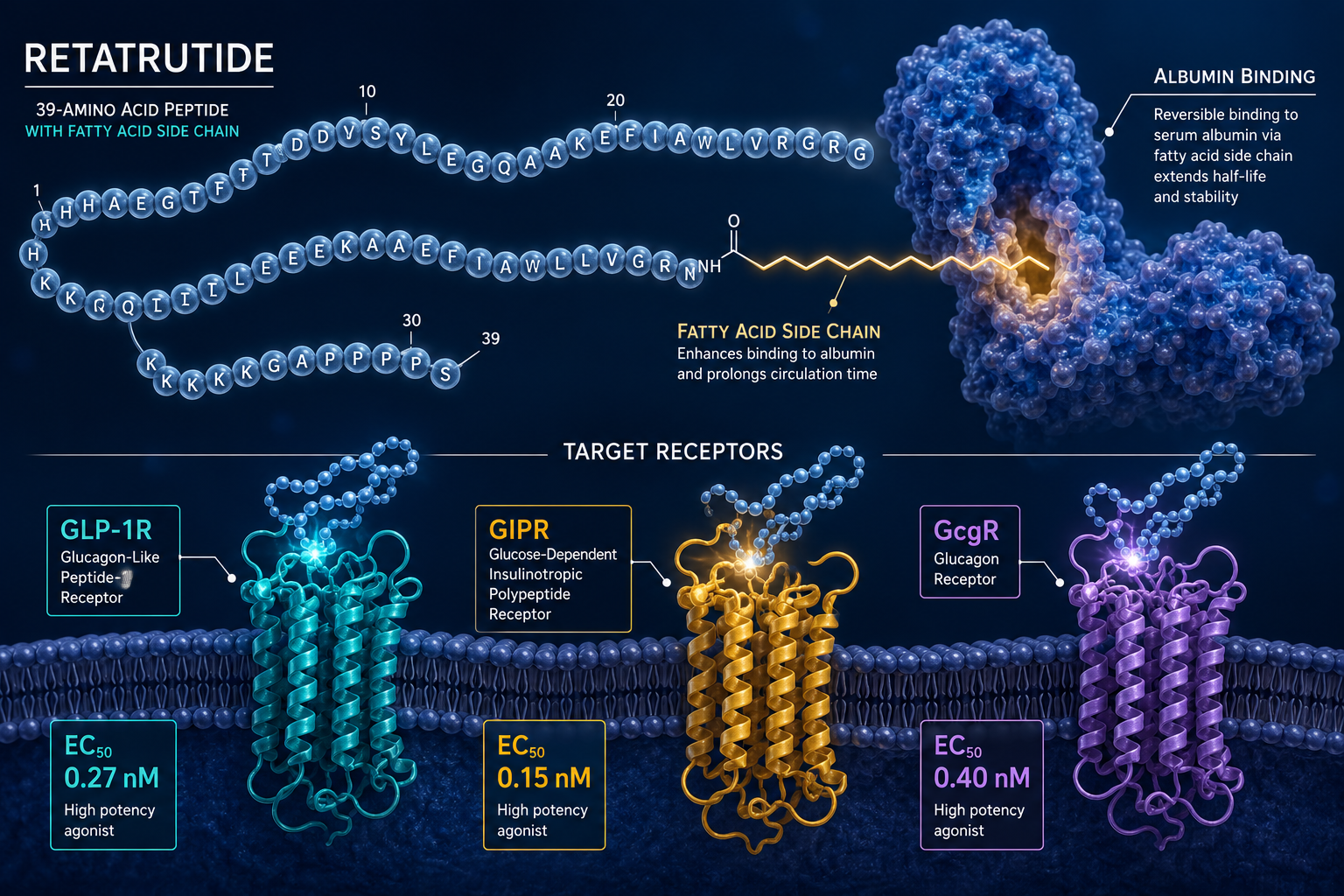
Retatrutide is a 39-amino acid peptide engineered with a fatty acid side chain. That side chain binds to albumin in the bloodstream, extending the compound's half-life to approximately six days. The practical result is once-weekly dosing, a significant advantage for sustained research protocols and patient adherence.

What sets retatrutide apart structurally is its receptor potency profile:

Receptor EC50 (nM) Primary Effect
GIP Receptor (GIPR) 0.0643 Insulin secretion, fat metabolism
GLP-1 Receptor (GLP-1R) 0.775 Appetite suppression, glucose control
Glucagon Receptor (GcgR) 5.79 Energy expenditure, fat oxidation

The compound shows the highest potency at the GIP receptor, followed by GLP-1, then glucagon. This gradient is intentional. GIP and GLP-1 agonism work synergistically on insulin release and satiety, while glucagon agonism, typically avoided in metabolic drugs due to hyperglycemia risk, is carefully balanced to drive thermogenesis without destabilizing blood glucose.

Researchers exploring related metabolic peptide pathways can find additional context in the metabolic modulation research lines overview, which covers complementary compounds under active investigation.


How Appetite Signaling and Energy Expenditure Work Together

How Appetite Signaling and Energy Expenditure Work Together

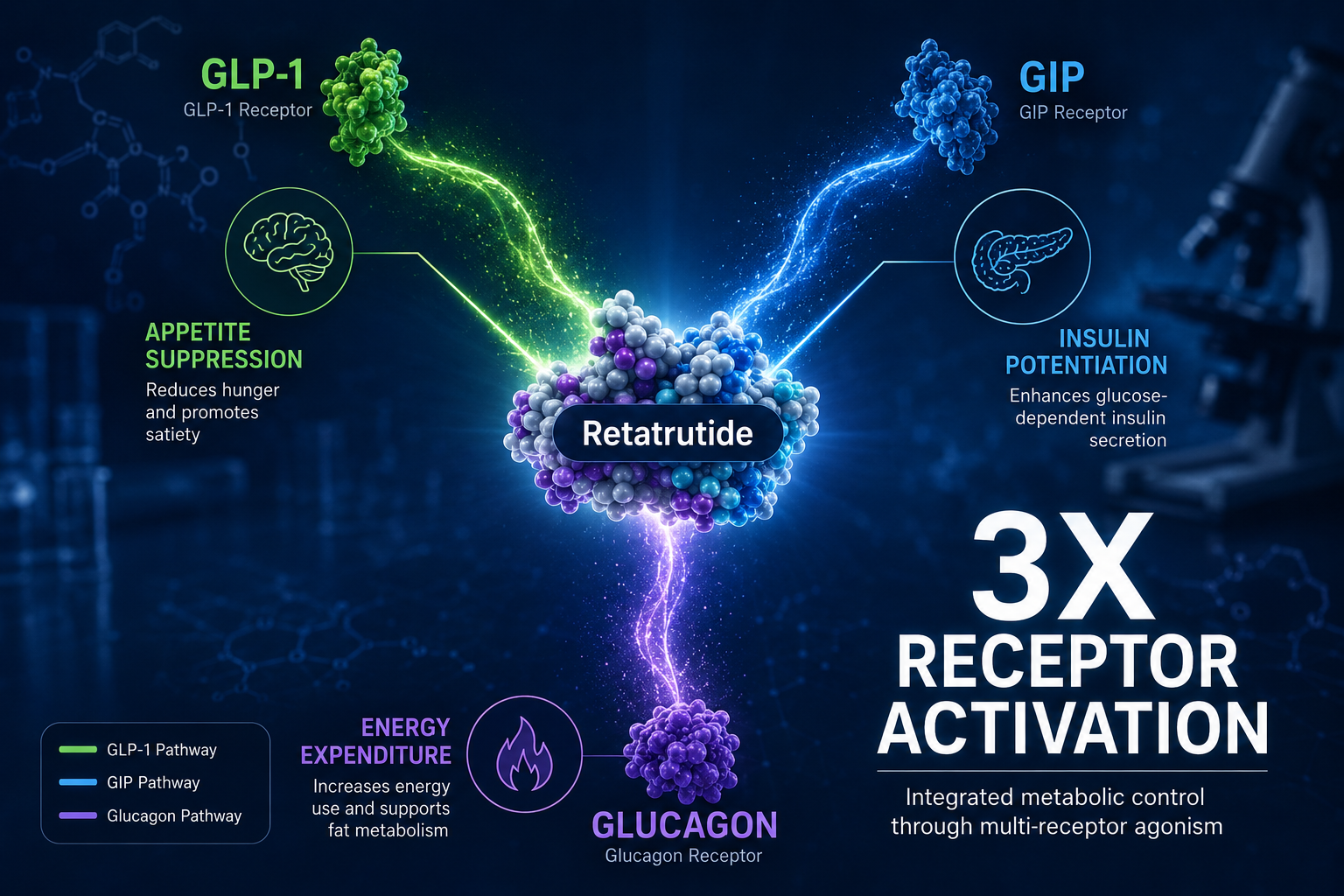
The GLP-3 Retatrutide mechanism of action explained through appetite signaling begins in the hypothalamus. GLP-1 receptor activation slows gastric emptying and signals satiety centers in the brain, reducing caloric intake. GIP receptor activation amplifies insulin secretion in a glucose-dependent manner, lowering postprandial glucose spikes while also modulating fat storage in adipose tissue.

The glucagon component is where retatrutide diverges from its predecessors.

"The addition of glucagon receptor activation may play a key role in enhancing weight loss beyond what GLP-1 and GIP agonism achieve alone."

Glucagon receptor activation increases hepatic glucose output under fasting conditions, but more critically for obesity research, it stimulates thermogenesis in brown adipose tissue and promotes fatty acid oxidation. This creates a dual-pathway effect: the body consumes fewer calories through appetite suppression while simultaneously burning more through elevated energy expenditure.

This mechanism contrasts with earlier GLP-1 generation drugs. For a deeper look at how incretin-based therapies have evolved, the generations of GLP-1 differences resource provides useful comparative context.

Researchers studying overlapping metabolic pathways may also find value in reviewing 5-Amino-1MQ, a NNMT inhibitor that targets fat cell metabolism through a distinct but complementary mechanism.


Clinical Evidence: What the Data Shows in 2026

Clinical Evidence: What the Data Shows in 2026

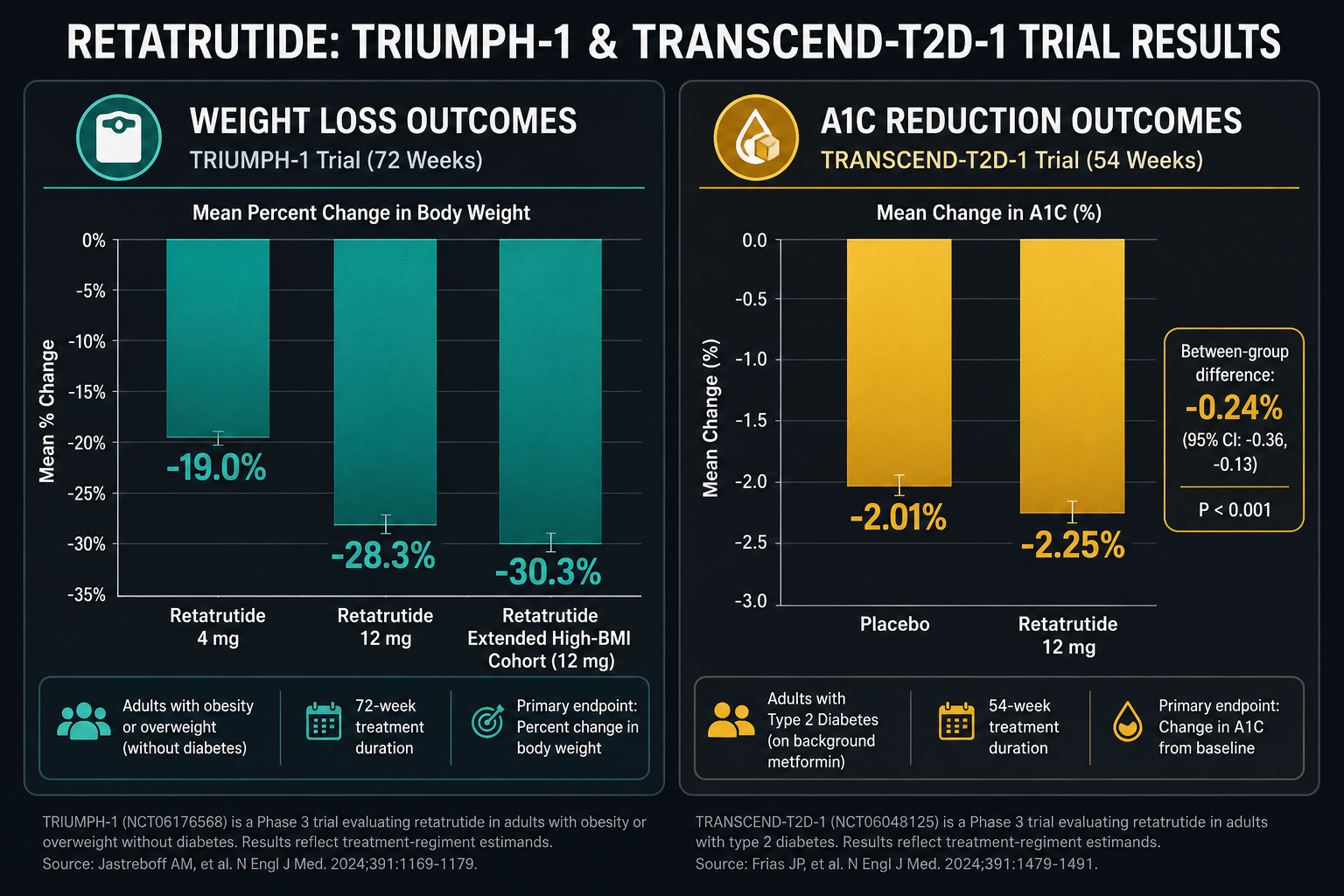
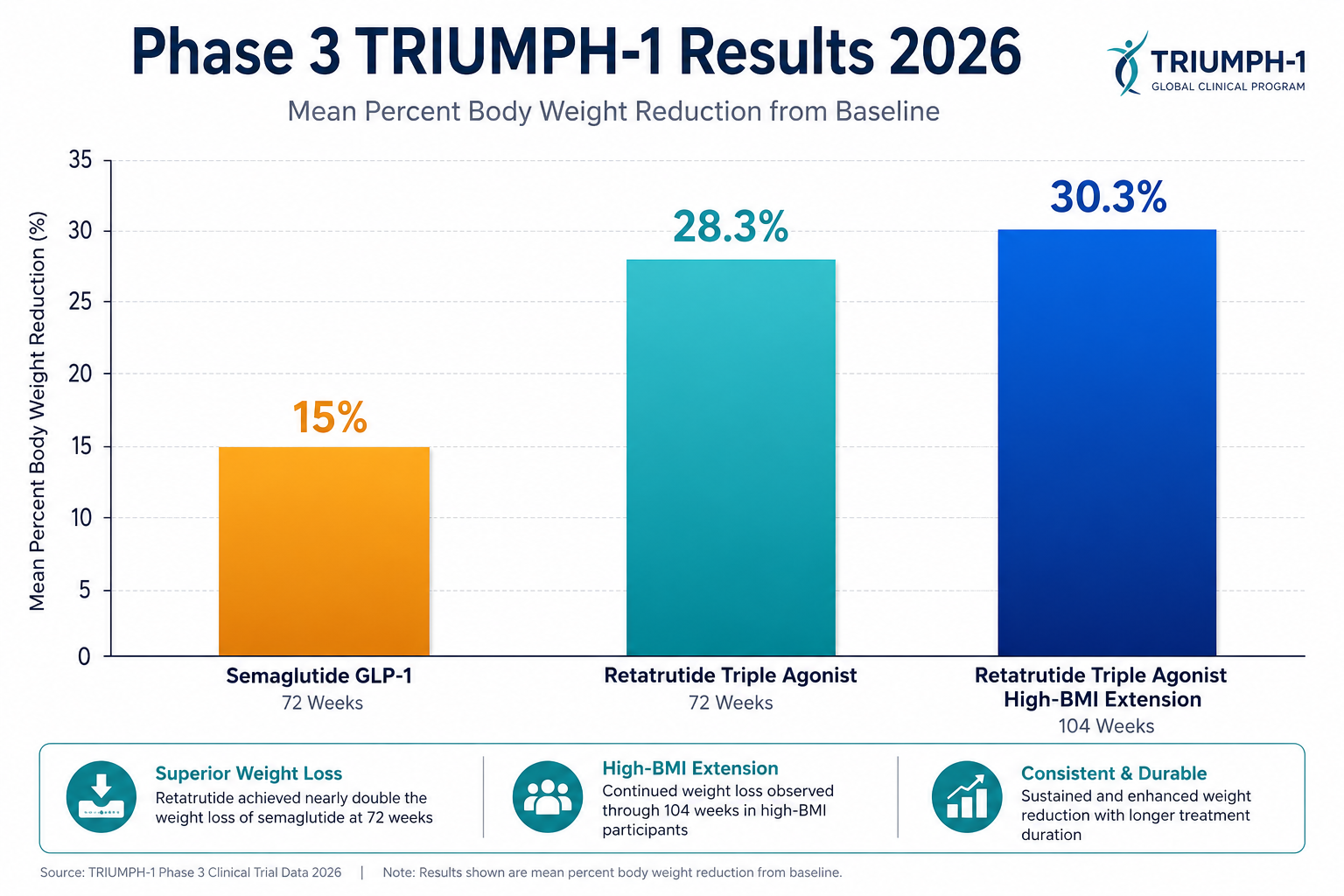
The TRIUMPH-1 Phase 3 trial delivered the most compelling data yet. Participants receiving 12 mg of retatrutide lost an average of 70.3 lbs (28.3% of body weight) over 80 weeks. Among those with a baseline BMI of 35 or higher who continued into a study extension, average weight loss reached 85.0 lbs (30.3%) at 104 weeks.

Even the lower 4 mg dose produced meaningful results: an average of 47.2 lbs (19.0%) lost over 80 weeks, with a favorable discontinuation profile compared to placebo.

The TRANSCEND-T2D-1 trial, reported in March 2026, showed retatrutide achieving A1C reductions of up to 2.0% and weight loss of up to 36.6 lbs (16.8%) at 40 weeks in adults with type 2 diabetes. Up to 46% of participants reached normal A1C levels.

Beyond metabolic markers, retatrutide reduced knee osteoarthritis pain by up to 73.1% and decreased obstructive sleep apnea severity by up to 60.6 events per hour, outcomes that reflect the systemic reach of triple receptor agonism.

Common side effects include nausea, vomiting, and dysesthesia. Some participants discontinued due to rapid weight loss, underscoring the importance of careful monitoring.

Eli Lilly is conducting additional late-stage trials with potential FDA approval sought by end of 2026.

For researchers working with GLP-based compounds, the GLP-3 for sale: triple agonist research planning and catalog navigation page offers practical sourcing and protocol guidance. Those seeking specific product details can also review the GLP-3 Retatrutide research catalog entry directly.

Researchers interested in how growth hormone-related peptides interact with metabolic outcomes may also find the Tesamorelin body composition research themes page a useful adjacent resource.


Conclusion

Retatrutide's triple agonism, targeting GLP-1, GIP, and glucagon receptors with precision-tuned potency, represents a genuine leap in metabolic research. The mechanism is not simply additive; the glucagon component introduces an energy expenditure dimension that earlier incretin therapies could not access. Combined with appetite suppression and improved insulin dynamics, this produces weight loss outcomes that rival surgical intervention.

Actionable next steps for researchers:

  • Review the receptor potency profile carefully when designing dosing protocols; GIP receptor sensitivity is highest and may drive early responses.
  • Monitor for nausea and dysesthesia, particularly during dose escalation phases.
  • Consider how triple agonism data intersects with other metabolic modulators in your research stack.
  • Consult the Retatrutide GLP-3 research overview for updated sourcing, purity standards, and protocol references before initiating any study.

The science behind retatrutide is still unfolding, but the 2026 clinical data makes one thing clear: three receptors, activated together, can accomplish what none could achieve alone.

https://www.puretestedpeptides.com/wp-content/uploads/2026/07/GLP-3-Retatrutide-Mechanism-of-Action-Explained-Triple-Agonism-Appetite-Signaling-and-Energy-Expenditure.png 1024 1536 https://www.puretestedpeptides.com/wp-content/uploads/2026/01/buy-peptides-online.jpg 2026-07-09 13:04:382026-07-09 13:04:38GLP-3 Retatrutide Mechanism of Action Explained: Triple Agonism, Appetite Signaling, and Energy Expenditure
The Best Research Peptides for Metabolic Health: A Comparative Guide to 5-Amino-1MQ, MOTS-c, and GLP-3 Retatrutide

The Best Research Peptides for Metabolic Health: A Comparative Guide to 5-Amino-1MQ, MOTS-c, and GLP-3 Retatrutide

July 6, 2026/0 Comments/in Uncategorized/by

}

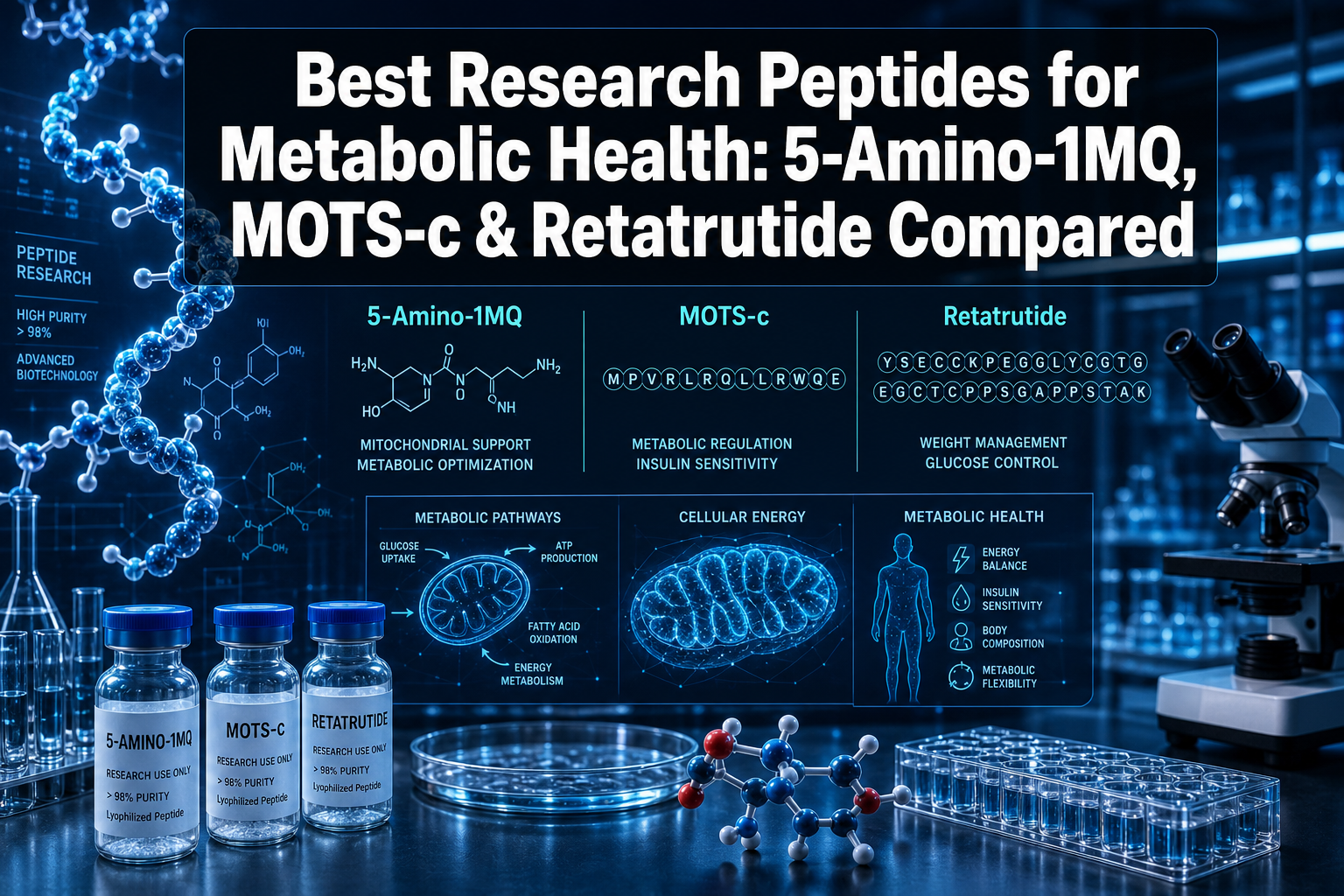
Professional () hero image with : 'Best Research Peptides for Metabolic Health: 5-Amino-1MQ, MOTS-c & Retatrutide Compared'

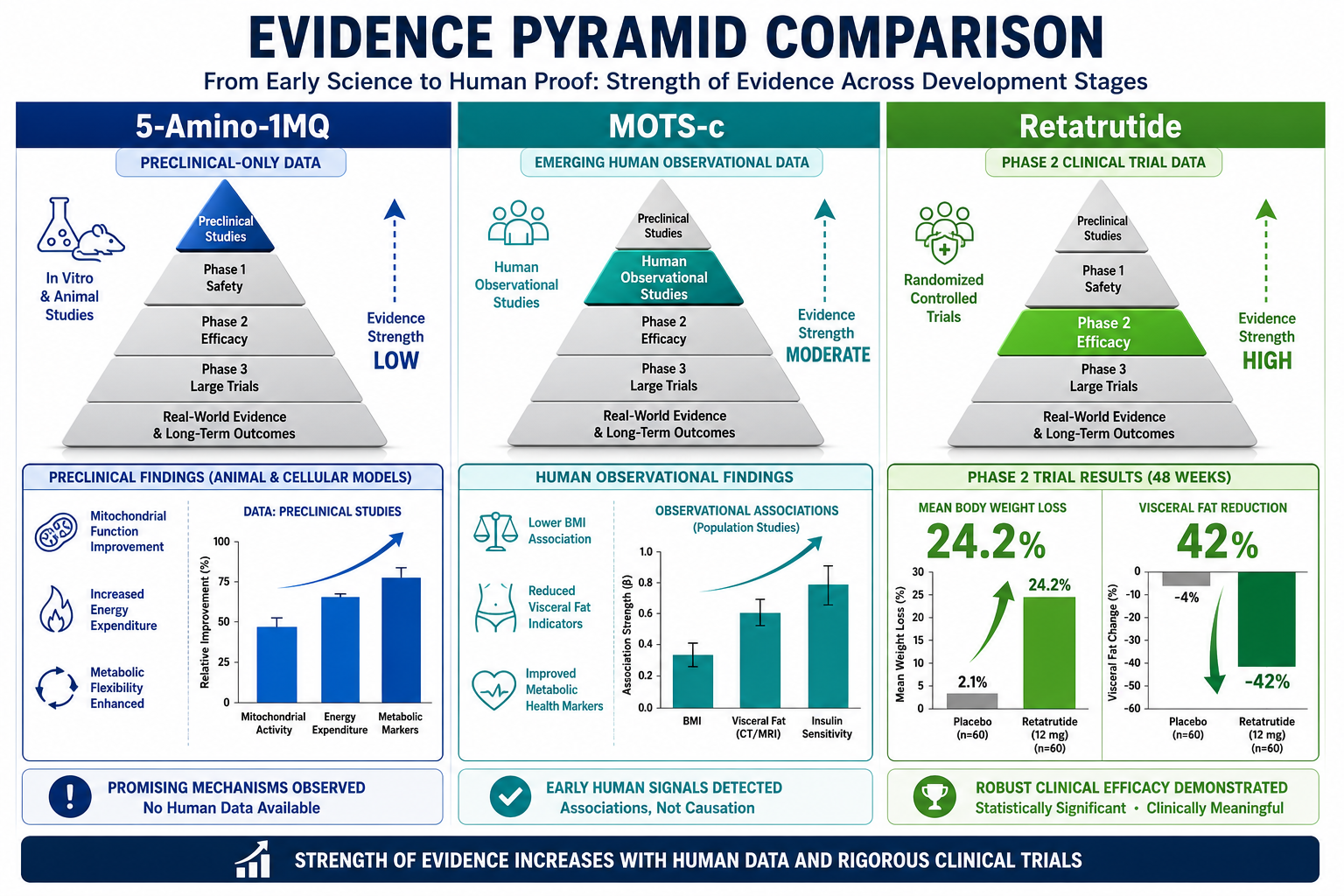
Participants receiving the highest dose of Retatrutide in a Phase 2 clinical trial lost an average of 24.2% of their body weight over 48 weeks, a result that has reshaped how researchers think about metabolic intervention. Yet Retatrutide is only one of several compounds drawing serious attention in 2026. This comparative guide to the best research peptides for metabolic health covers 5-Amino-1MQ, MOTS-c, and GLP-3 Retatrutide, helping researchers understand where each compound stands, what mechanisms drive it, and how to select the most appropriate tool for a given study design.

Key Takeaways

  • Retatrutide is a triple receptor agonist (GIP, GLP-1, glucagon) with robust Phase 2 human clinical data supporting significant weight and visceral fat reduction.
  • MOTS-c is a mitochondrial-derived peptide that activates AMPK; human evidence is emerging but limited to observational data.
  • 5-Amino-1MQ inhibits NNMT and may raise NAD+ levels, but all current evidence is preclinical, no human trials exist.
  • Evidence strength varies dramatically across the three compounds, which should directly inform research protocol design.
  • Combination approaches are being explored but lack human safety and efficacy data.

Key Takeaways

Understanding the Mechanisms: A Comparative Guide to 5-Amino-1MQ, MOTS-c, and GLP-3 Retatrutide

Each compound operates through a distinct biological pathway, which is why comparing them side by side is so valuable for research planning.

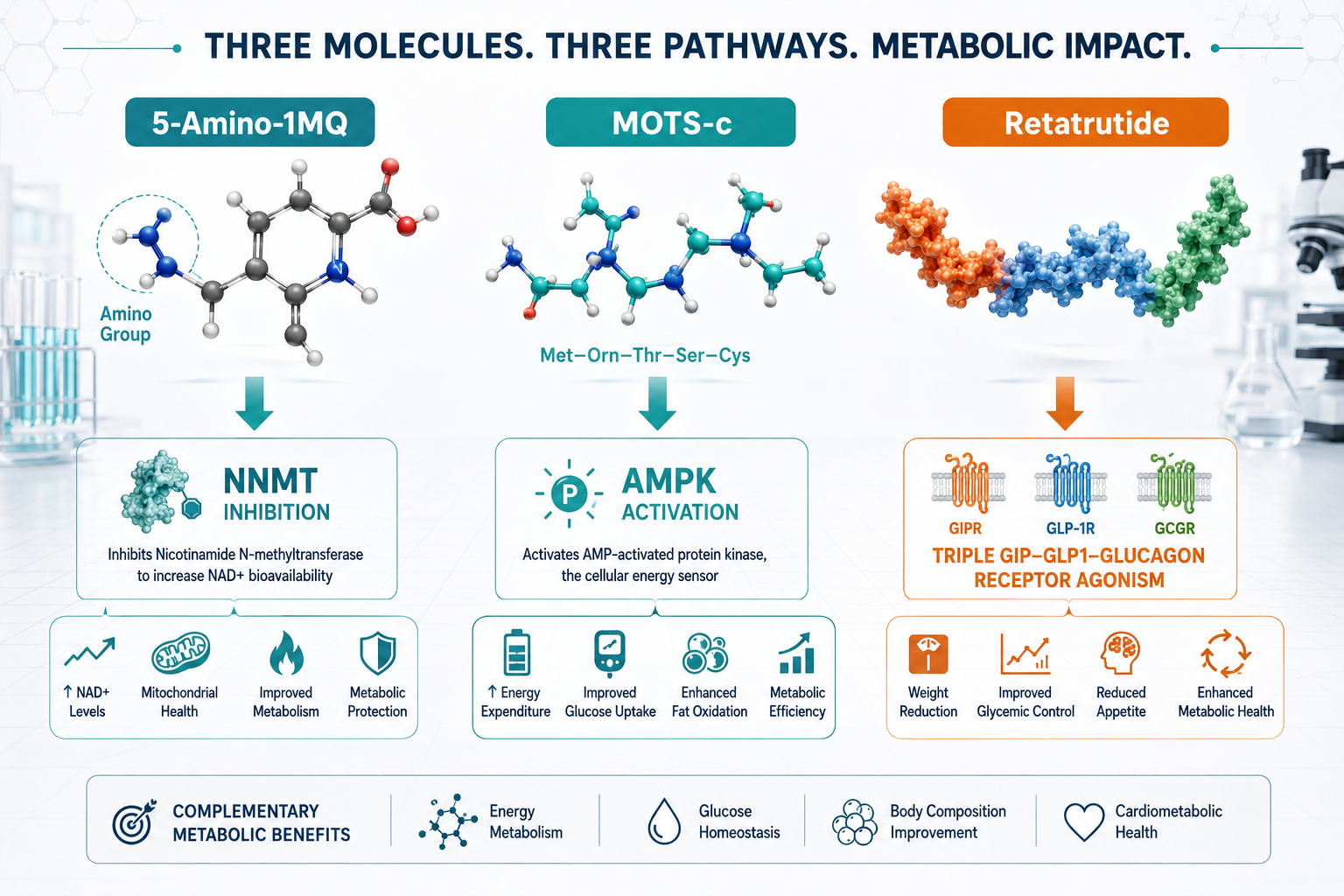
Retatrutide (GLP-3) is a triple agonist targeting GIP, GLP-1, and glucagon receptors simultaneously. This triple activation drives enhanced insulin secretion, increased energy expenditure, and lipolysis. Preclinical evidence also suggests Retatrutide may prevent metabolic adaptation during weight loss by promoting thermogenesis through mitochondrial uncoupling, though direct human confirmation of this mechanism is still pending. For researchers interested in the broader GLP-1 receptor agonist landscape, the GLP-1 peptide research and sourcing overview provides useful context.

MOTS-c is a mitochondrial-derived peptide encoded in mitochondrial DNA. It activates AMPK in muscle tissue, promoting metabolic homeostasis and reducing insulin resistance in preclinical models. Researchers studying its synergistic potential with other compounds may find the MOTS-c and SLU-PP-332 combination research and the LL-37 and MOTS-c synergy overview particularly relevant.

5-Amino-1MQ inhibits nicotinamide N-methyltransferase (NNMT), an enzyme involved in fat storage regulation. By blocking NNMT, the compound may increase NAD+ levels and activate SIRT1 in adipose tissue. Its oral route of administration is a practical advantage. However, all evidence remains preclinical. Its effects are subtle, and it should not be treated as a substitute for validated metabolic therapies.


Comparing Evidence Levels Across the Three Compounds

The most important variable separating these compounds is not mechanism, it is the quality and depth of supporting evidence.

Compound Evidence Stage Key Metabolic Target Human Data?
Retatrutide Phase 2/3 Clinical Trials GIP, GLP-1, Glucagon Receptors Yes, robust
MOTS-c Preclinical + Observational AMPK / Mitochondria Limited
5-Amino-1MQ Preclinical Only NNMT / NAD+ / SIRT1 None

Retatrutide's Phase 2 data also showed a 42% reduction in visceral fat and approximately a 50% decrease in liver fat at the 12 mg weekly dose over 48 weeks, figures that place it well ahead of the other two compounds in terms of demonstrated metabolic impact. Retatrutide is currently in Phase 3 trials and is projected for FDA approval no earlier than late 2027.

Key distinction: Researchers designing human-applicable protocols should weight Retatrutide's evidence base far above the preclinical profiles of MOTS-c and 5-Amino-1MQ.

For a deeper look at Retatrutide's triple agonist profile, the GLP-3 triple agonist research and catalog guide and the GLP-3 newest triple agonist overview are strong starting points.


Comparing Evidence Levels Across the Three Compounds

Selecting the Right Compound: Practical Guidance for Metabolic Research

Choosing among the best research peptides for metabolic health requires aligning compound selection with research objectives, available evidence, and safety considerations.

For studies targeting measurable fat loss and insulin sensitivity with human-applicable endpoints, Retatrutide is the strongest candidate. Common side effects mirror those of GLP-1 receptor agonists, primarily gastrointestinal, and protocols should include monitoring of protein intake, resistance training variables, and heart rate.

For mitochondrial and cellular energy research, MOTS-c offers a compelling mechanistic angle. Researchers interested in its standalone profile can review the dedicated MOTS-c mitochondrial research themes resource.

For exploratory NAD+ pathway and adipose tissue studies, 5-Amino-1MQ remains experimental. Its oral bioavailability makes it logistically convenient, but researchers must design protocols with full acknowledgment of its preclinical-only status.

Some researchers are exploring combinations, for example, pairing Retatrutide's appetite suppression and fat loss effects with MOTS-c's potential to enhance cellular glucose handling. No human studies have evaluated this stack, and safety data is absent. Any combination protocol should be treated as highly exploratory.

For researchers building broader longevity and metabolic panels, the longevity peptide research overview and the NAD+ energetics and longevity research themes provide useful complementary context.


Selecting the Right Compound: Practical Guidance for Metabolic Research

Conclusion

The best research peptides for metabolic health, 5-Amino-1MQ, MOTS-c, and GLP-3 Retatrutide, each occupy a different position on the evidence spectrum. Retatrutide leads with Phase 2 clinical data showing dramatic reductions in body weight, visceral fat, and liver fat. MOTS-c presents a biologically compelling mitochondrial mechanism with early human signals. 5-Amino-1MQ offers an accessible oral option for NAD+ pathway research, but remains entirely preclinical.

Actionable next steps for researchers in 2026:

  • Match compound selection to evidence tier, do not apply preclinical compounds to human-outcome research designs without appropriate controls.
  • Review Retatrutide's GIP receptor contribution through the GIP receptor importance overview before finalizing triple agonist protocols.
  • Treat any combination stacking as exploratory and document safety monitoring rigorously.
  • Consult quality and purity documentation before sourcing any compound for research use.

Understanding where each compound stands today is the foundation of responsible, productive metabolic research.

https://www.puretestedpeptides.com/wp-content/uploads/2026/07/The-Best-Research-Peptides-for-Metabolic-Health-A-Comparative-Guide-to-5-Amino-1MQ-MOTS-c-and-GLP-3-Retatrutide.png 1024 1536 https://www.puretestedpeptides.com/wp-content/uploads/2026/01/buy-peptides-online.jpg 2026-07-06 13:05:292026-07-06 13:05:29The Best Research Peptides for Metabolic Health: A Comparative Guide to 5-Amino-1MQ, MOTS-c, and GLP-3 Retatrutide
Retatrutide as so‑called “GLP‑3” triple agonist vs. GLP‑1 drugs (latest Phase 3 obesity and MASLD data)

Retatrutide as so‑called “GLP‑3” triple agonist vs. GLP‑1 drugs (latest Phase 3 obesity and MASLD data)

July 3, 2026/0 Comments/in Uncategorized/by

Phase 3 trial data released in mid-2026 shows that a single injectable peptide can strip away nearly 30% of total body weight, a figure that once belonged exclusively to bariatric surgery. That peptide is retatrutide, and the numbers are forcing a hard reset on how researchers and clinicians think about obesity pharmacology.

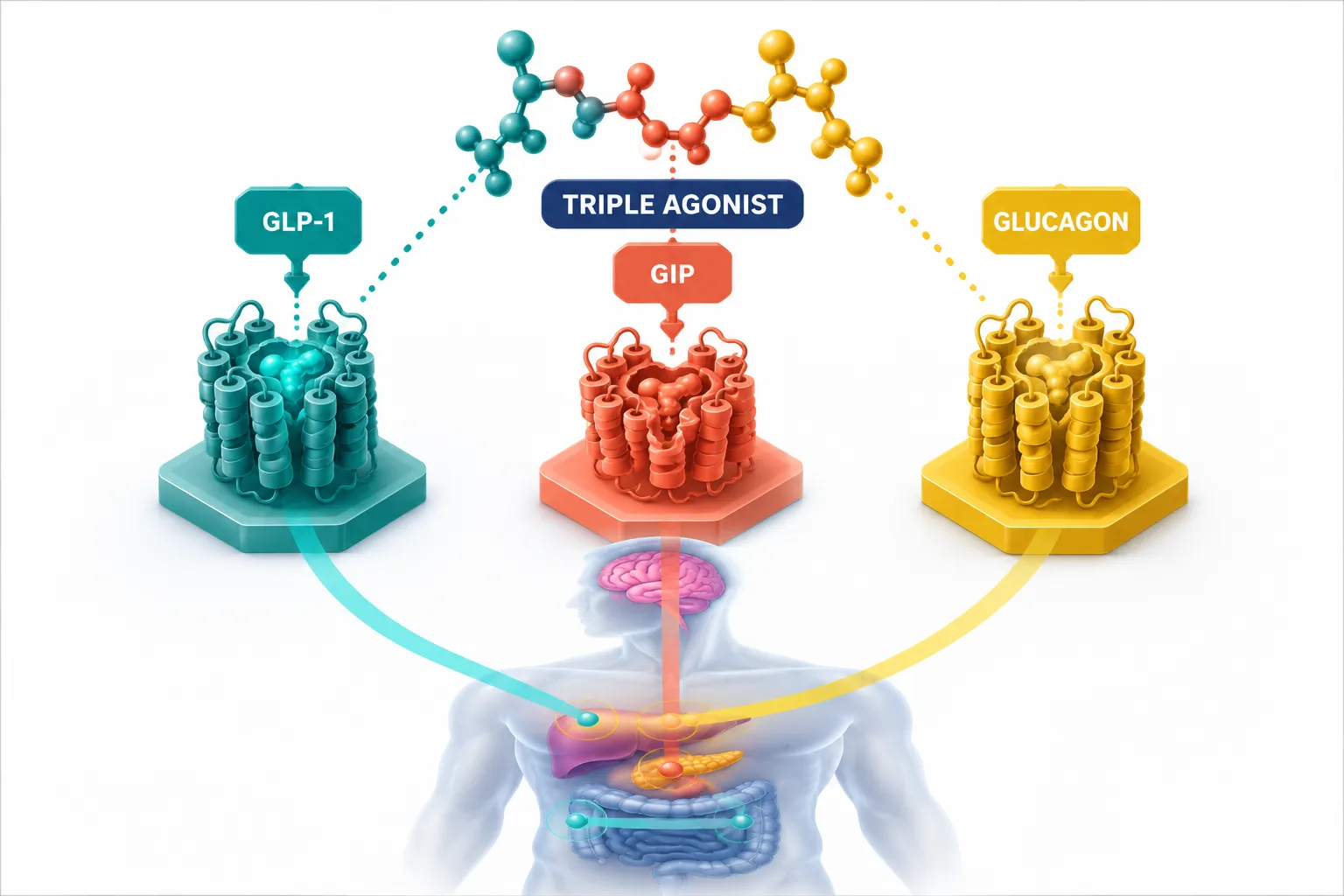
Detailed () scientific infographic illustration showing three distinct receptor pathways — GLP-1, GIP, and Glucagon — as

Key Takeaways

  • Retatrutide simultaneously activates GLP-1, GIP, and glucagon receptors, earning the informal label "GLP-3" in research circles.
  • TRIUMPH-1 Phase 3 data shows 28.3% average weight loss at 80 weeks with the 12 mg dose, nearly double the results seen with semaglutide.
  • Participants with a BMI of 35 or higher who continued for 104 weeks lost an average of 30.3% of body weight.
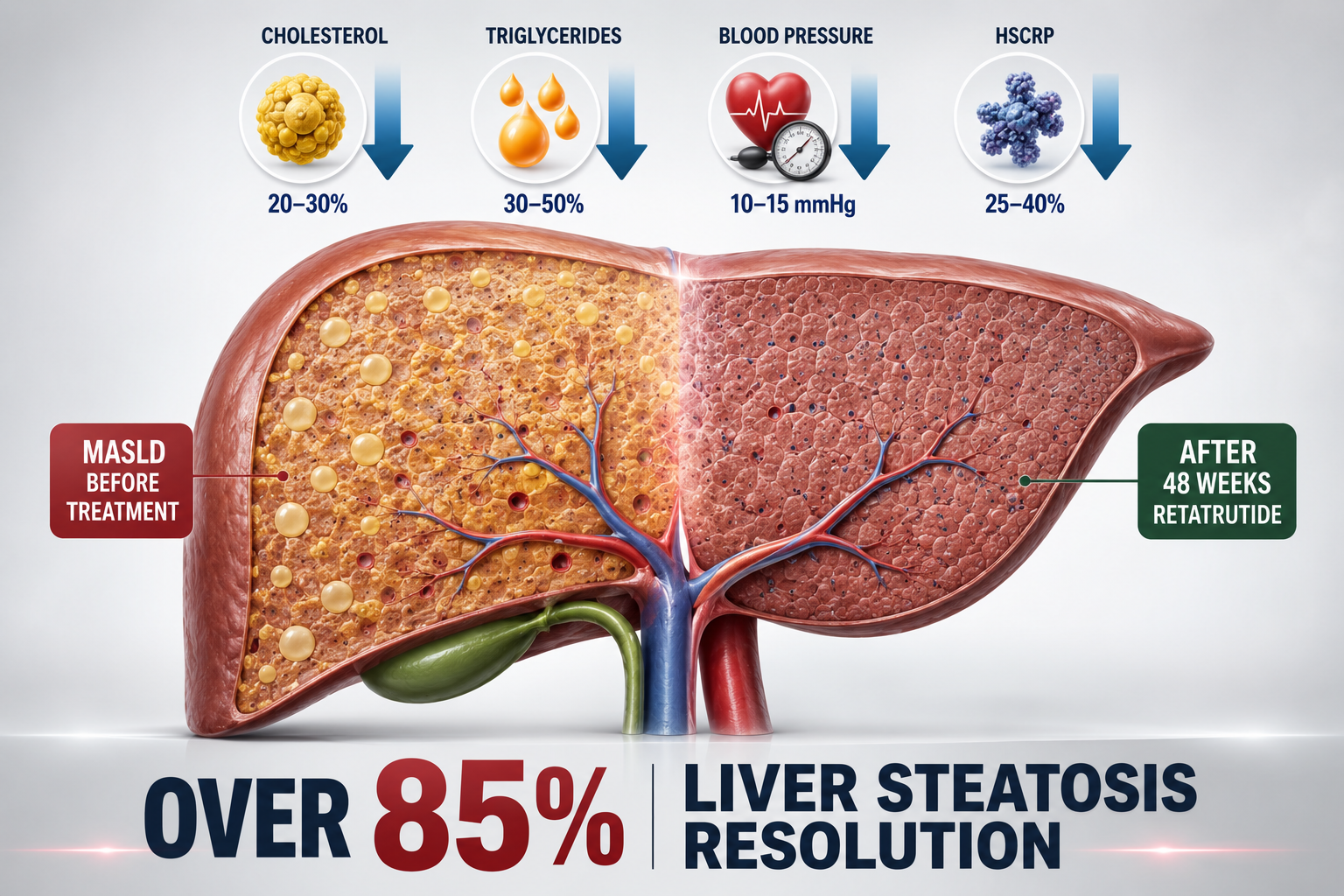
  • Phase 2 MASLD data shows over 85% of participants achieved complete liver steatosis resolution after 48 weeks.
  • An FDA New Drug Application is expected by late 2026 or early 2027.

What Makes Retatrutide a "GLP-3" Triple Agonist

The "GLP-3" label is informal, no third GLP receptor exists, but it captures the core idea neatly. Where standard GLP-1 receptor agonists like semaglutide or liraglutide target a single receptor pathway, retatrutide activates three simultaneously: the glucagon-like peptide-1 (GLP-1) receptor, the glucose-dependent insulinotropic polypeptide (GIP) receptor, and the glucagon receptor.

Each receptor contributes a distinct metabolic effect:

Receptor Primary Effect
GLP-1 Appetite suppression, slowed gastric emptying
GIP Enhanced insulin secretion, fat metabolism support
Glucagon Increased energy expenditure, enhanced fat oxidation

The glucagon receptor component is what separates retatrutide most sharply from dual agonists like tirzepatide. Glucagon receptor activation ramps up thermogenesis and fat burning in ways that GLP-1 alone cannot achieve. For a deeper look at how incretin receptor families interact, the GLP-3 and incretin research themes overview provides useful context, as does this GLP-1 generations overview covering how the drug class has evolved.

Understanding the GIP receptor and its importance is also valuable for grasping why dual and triple agonism consistently outperforms single-receptor approaches.


TRIUMPH-1 Phase 3 Obesity Data: Retatrutide vs. GLP-1 Drugs

TRIUMPH-1 Phase 3 Obesity Data: Retatrutide vs. GLP-1 Drugs

The TRIUMPH-1 trial is the headline result of 2026 for obesity pharmacology. Eli Lilly reported that participants receiving the 12 mg dose of retatrutide lost an average of 28.3% of body weight (roughly 70.3 lbs) over 80 weeks. The distribution of results was equally striking:

  • 45.3% of participants achieved 30% or more weight loss
  • 65.3% reduced their BMI below 30, moving out of the obesity range entirely

In a pre-specified extension for participants with a baseline BMI of 35 or higher who continued treatment for 104 weeks, average weight loss reached 30.3%, equivalent to approximately 85 lbs.

"Retatrutide's 28-30% weight loss figures place it in the same territory as bariatric surgery outcomes, something no oral or injectable drug has previously achieved."

For comparison, semaglutide, currently the most prescribed GLP-1 agonist, produces roughly 15% weight loss in similar populations. Retatrutide's triple agonism roughly doubles that benchmark.

Cardiometabolic improvements were broad and clinically meaningful, including reductions in:

  • Waist circumference
  • Non-HDL cholesterol and triglycerides
  • Systolic blood pressure
  • High-sensitivity C-reactive protein (hsCRP)

Researchers studying metabolic peptides alongside incretin agents may also find AOD-9604 metabolic research relevant as a complementary area of fat metabolism investigation.


MASLD Resolution and Liver Health Data

MASLD Resolution and Liver Health Data

Metabolic dysfunction-associated steatotic liver disease (MASLD) is closely tied to obesity, and retatrutide's Phase 2 data presented at the American Association for the Study of Liver Diseases (AASLD) delivered a landmark finding: over 85% of participants with MASLD and obesity achieved complete resolution of liver steatosis after 48 weeks of treatment.

This is a dramatic outcome. Current standard-of-care options for MASLD are limited, and no drug has previously shown steatosis resolution rates at this scale in a controlled study. The improvements came alongside broader metabolic health gains, reinforcing that retatrutide's mechanism targets the root metabolic dysfunction driving liver fat accumulation, not just body weight.

For researchers interested in mitochondrial and cellular health aspects of metabolic disease, MOTS-c and metabolic stress research offers a complementary perspective on how peptide-based interventions interact with energy metabolism pathways.


Safety Profile and Regulatory Outlook

The adverse event profile of retatrutide is consistent with the broader incretin drug class. The most commonly reported side effects are gastrointestinal: nausea, diarrhea, constipation, and vomiting. One notable finding specific to retatrutide is that 20.9% of participants at the 12 mg dose reported dysesthesia, tingling or burning sensations, though the majority of cases were mild and did not lead to discontinuation.

Eli Lilly plans to submit a New Drug Application (NDA) to the FDA by late 2026 or early 2027, pending completion of additional Phase 3 trials. Those ongoing studies are evaluating retatrutide across broader populations, including people with type 2 diabetes and other metabolic conditions.

Researchers tracking the broader peptide research landscape may also find tesa's role in visceral fat reduction relevant as a separate but related area of metabolic peptide science.


Conclusion

Retatrutide as so-called "GLP-3" triple agonist vs. GLP-1 drugs represents one of the most significant inflection points in obesity pharmacology in decades. The latest Phase 3 obesity and MASLD data confirm that simultaneous activation of GLP-1, GIP, and glucagon receptors produces weight loss and liver fat reduction outcomes that single-receptor drugs cannot match.

Actionable next steps for researchers and clinicians:

  1. Review the full TRIUMPH-1 dataset when published in peer-reviewed form to assess subgroup performance.
  2. Monitor AASLD and upcoming hepatology conference presentations for Phase 3 MASLD data.
  3. Track the FDA NDA submission timeline, expected by late 2026 or early 2027.
  4. Consider how triple agonism compares to emerging peptide combinations in your own research protocols.
  5. Explore the GLP-1 product research tag for research-grade incretin-related peptide options.

The era of surgery-level weight loss from a once-weekly injection is no longer theoretical. It is arriving.

https://www.puretestedpeptides.com/wp-content/uploads/2026/07/Retatrutide-as-so‑called-GLP‑3-triple-agonist-vs.-GLP‑1-drugs-latest-Phase-3-obesity-and-MASLD-data.png 1024 1536 https://www.puretestedpeptides.com/wp-content/uploads/2026/01/buy-peptides-online.jpg 2026-07-03 13:03:352026-07-03 13:03:35Retatrutide as so‑called “GLP‑3” triple agonist vs. GLP‑1 drugs (latest Phase 3 obesity and MASLD data)
×

Helpful Links

  • My account
  • Cart
  • Checkout
  • Refund and Returns Policy
  • Privacy Policy
  • SMS Privacy Policy
  • Login
  • My Account
  • Logout

USA Made Lab Tested Peptides

All products are sold for research, laboratory, or analytical purposes only, and are not for human consumption


Pure Tested Peptides is a chemical supplier. Pure Tested Peptides is not a compounding / chemical compounding facility as defined under 503A of the Federal Food, Drug, and Cosmetic act. Pure Tested Peptides is not an outsourcing facility as defined under 503B of the Federal Food, Drug, and Cosmetic act.

The statements made within this website have not been evaluated by the US Food and Drug Administration. The products we offer are not intended to diagnose, treat, cure or prevent any disease.

Human/Animal Consumption Prohibited. Laboratory/In-Vitro Experimental Use Only

Scroll to top Scroll to top Scroll to top