Call or Text 727-513-9780
  • Shopping Cart Shopping Cart
    0Shopping Cart
Pure Tested Peptides | America's most trusted Peptides for sale online
  • Peptides for sale
    • Oral Peptides for sale
      • Peptide Capsules for sale
      • BPC 157 Capsules 1000mcg
      • SLU-PP-332 Capsules | 1000 mcg
      • 5-Amino-1MQ 50mg Capsules
      • Tesofensine 500mcg
    • All Peptides for sale
    • Peptide Sprays
      • BPC 157 Nasal Spray Kit
      • BPC-157 TB500 Nasal Spray Kit
      • Semax Nasal Spray 10mg
      • Selank – Nasal Spray Kit – 10mg
      • Epithalon 50MG Nasal Spray Kit
      • Ipamorelin 10mg Nasal Spray
      • Klow Nasal Spray (BPC-157 + TB-500 + GHK-Cu + KPV) | 80mg
      • Hulk Nasal Spray Tesa / Ipa Blend 6/3 MG
      • Klow Nasal Spray
      • NAD + 500 mg Nasal Spray
      • PT-141 Nasal Spray Kit
    • GHRH Peptides
      • Ipa Peptides
      • CJC-1295 Peptides
        • CJC-1295 with DAC 5 mg
        • CJC-1295 without DAC 5 mg
        • CJC-1295 Ipa 10mg
      • Tesa Peptides
        • Tesa Peptide
        • Tesa 20 mg
    • GHK-Cu Peptides
      • All GHK-Cu Peptides
      • GHK-Cu 100mg
      • KLOW Peptide Blend – Buy KLOW blend online
    • BPC Peptides
      • All BPC Peptides
      • BPC-157
      • BPC-157 TB-500
      • BPC 157 capsules 1000mcg
    • SLU-PP-332 Peptides
      • All SLU-PP-332 Peptides
      • SLU-PP-332 5mg
    • GLP3 Peptides
      • GLP3-R
      • GLP3-R CAG 10mg
      • GLP3-R 20mg
    • PT-141 Peptides
      • PT-141 Peptides for sale
      • PT-141 10mg
      • PT-141 Nasal Spray
    • CAG Peptides
      • Lipo-C Peptide Blend
      • CAG 5mg
      • CAG 10mg
    • MOTS-C Peptides
      • MOTS-C Peptides for sale
      • MOTS-c peptide
      • MOTS-c 10mg *6 pack*
    • 5 Amino 1MQ Peptides
      • 5 Amino 1MQ Peptides for sale
      • 5-Amino-1MQ 50mg Capsules
      • 5-Amino-1MQ 5mg
    • Epithalon Peptides
      • Epithalon Peptides for sale
      • Epithalon 10mg
      • Epithalon 50mg
  • Shop
    • GLPs
      • 5-Amino-1MQ 50mg Capsules
      • 5-Amino-1MQ 5mg
      • GLP3-Reta
      • L-Carnitine 500mg/ml
      • Tesofensine 500mcg
      • SLU-PP-332 5mg
      • MOTS-c 10mg *6 pack*
    • Epithalon & BPC Peptides
      • Epithalon 10mg
      • Epithalon 50mg
      • BPC-157
      • BPC 157 capsules 1000mcg
      • BPC-157 TB-500
      • BPC-157 TB500 Nasal Spray Kit
      • BPC 157 Nasal Spray Kit
    • BPC TB-500 & NAD+ Peptides
      • NAD+ 500 mg
      • KLOW Peptide Blend – Buy KLOW blend online
      • GLOW Peptide Blend
      • TB 500 5mg
      • BPC 157 capsules 1000mcg – Supplement
      • BPC 157 Nasal Spray Kit
      • BPC-157
      • BPC-157 TB500 Nasal Spray Kit
      • BPC-157 TB-500
      • BPC 157 capsules 1000mcg
    • LL-37 Peptide
      • LL-37 10 mg
    • MOTS-C & Selank
      • MOTS-c peptide
      • Selank 10mg
    • GHK Peptides
      • GHK-Cu 100mg
      • GLOW Peptide Blend
      • KLOW Peptide Blend – Buy KLOW blend online
  • COAs
  • Wholesale
    • Wholesale Peptides for sale
  • PTP FAQ
  • Affiliates
    • Affiliate Program
    • Affiliate Signup
  • Contact
    • Contact Customer Service
    • Text Customer Support
  • About US
  • Shop all peptides
  • Login / Register Login / Register Page Link Login / Register Page Link
  • Click to open the search input field Click to open the search input field Search
  • Menu Menu

Tag Archive for: hba1c reduction

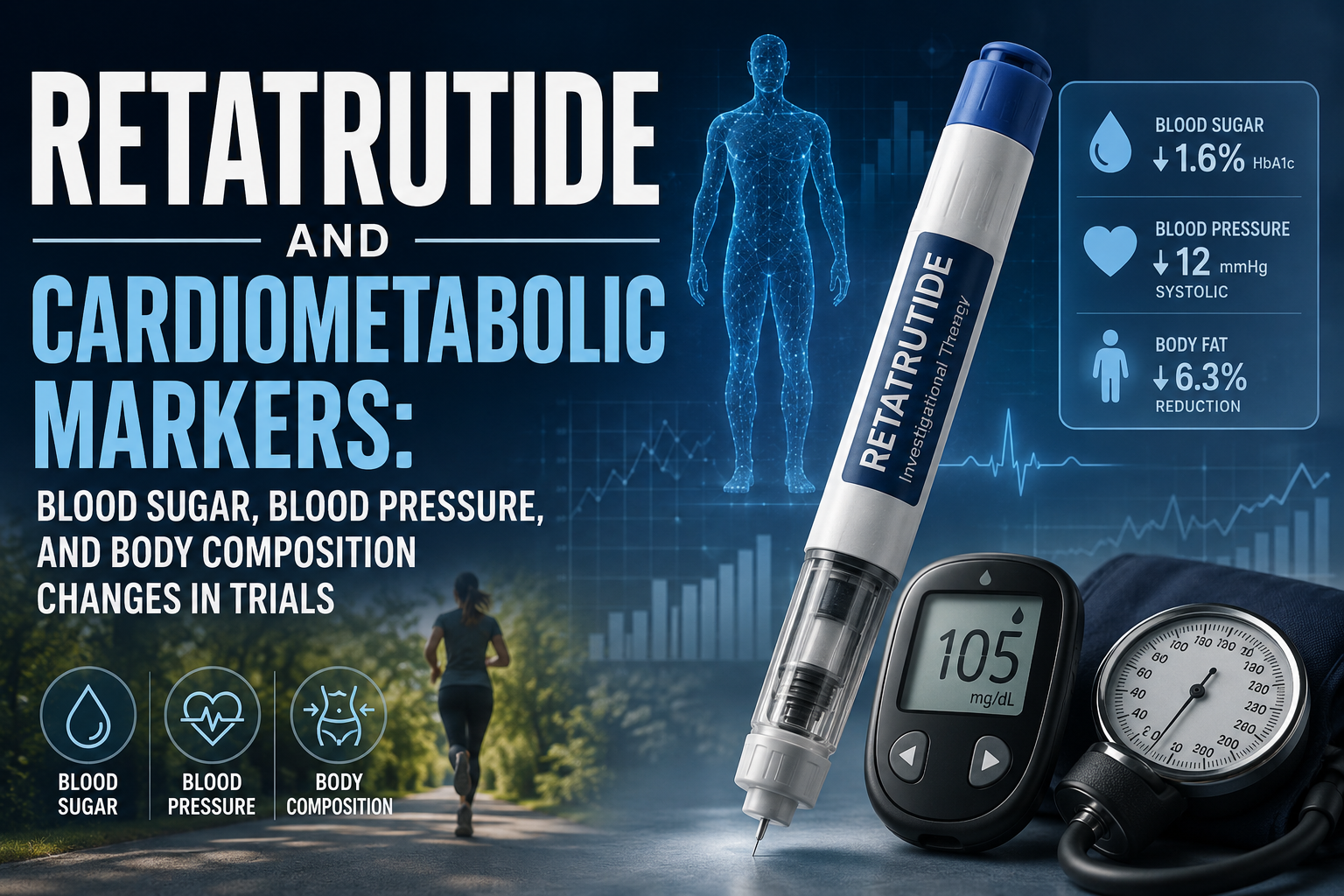
Retatrutide and Cardiometabolic Markers: Blood Sugar, Blood Pressure, and Body Composition Changes in Trials

Retatrutide and Cardiometabolic Markers: Blood Sugar, Blood Pressure, and Body Composition Changes in Trials

June 15, 2026/0 Comments/in Uncategorized/by

{"cover":"Professional landscape format (1536×1024) hero image with bold text overlay: 'Retatrutide & Cardiometabolic Markers: Blood Sugar, Blood Pressure & Body Composition in Trials', modern sans-serif 70pt white text with dark semi-transparent background panel, centered upper-third composition. Background shows a clinical research laboratory with glowing metabolic panel displays, blood glucose monitors, blood pressure cuffs, and molecular structure overlays in deep navy blue and teal. High contrast, editorial magazine cover quality, 2026 research aesthetic.","content":["Detailed landscape format (1536×1024) scientific infographic illustration showing a triple-agonist receptor mechanism diagram with GLP-1, GIP, and glucagon receptor nodes connected by glowing pathways, surrounded by molecular peptide chain structures, set against a dark blue gradient background. Small labeled callouts highlight each receptor type. Clean, modern medical illustration style with teal, white, and gold color accents. No people, purely conceptual receptor biology visualization.","Wide landscape format (1536×1024) clinical data visualization showing side-by-side bar charts comparing HbA1c reduction percentages, systolic blood pressure drops, triglyceride levels, and waist circumference changes between retatrutide 12mg and placebo groups. Charts rendered in a clean white-background medical journal style with teal and navy bars, percentage annotations, and bold axis labels. A small inset shows a body silhouette with fat mass reduction highlighted in orange. Professional, data-rich, research-focused aesthetic.","Landscape format (1536×1024) split-scene image: left side shows a close-up of a gastrointestinal anatomy diagram with mild adverse event callouts (nausea, diarrhea icons in soft amber), right side shows a heart rate monitor waveform graph with a dose-escalation timeline overlay. Background is a soft clinical white with subtle blue grid lines. Bold text label reads 'Safety Profile: TRIUMPH-1 Trial Findings'. Modern medical infographic style, no people, professional editorial quality with high contrast navy and amber color scheme."]

Professional landscape hero image () with : "Retatrutide and Cardiometabolic Markers: Blood Sugar, Blood Pressure, and Body

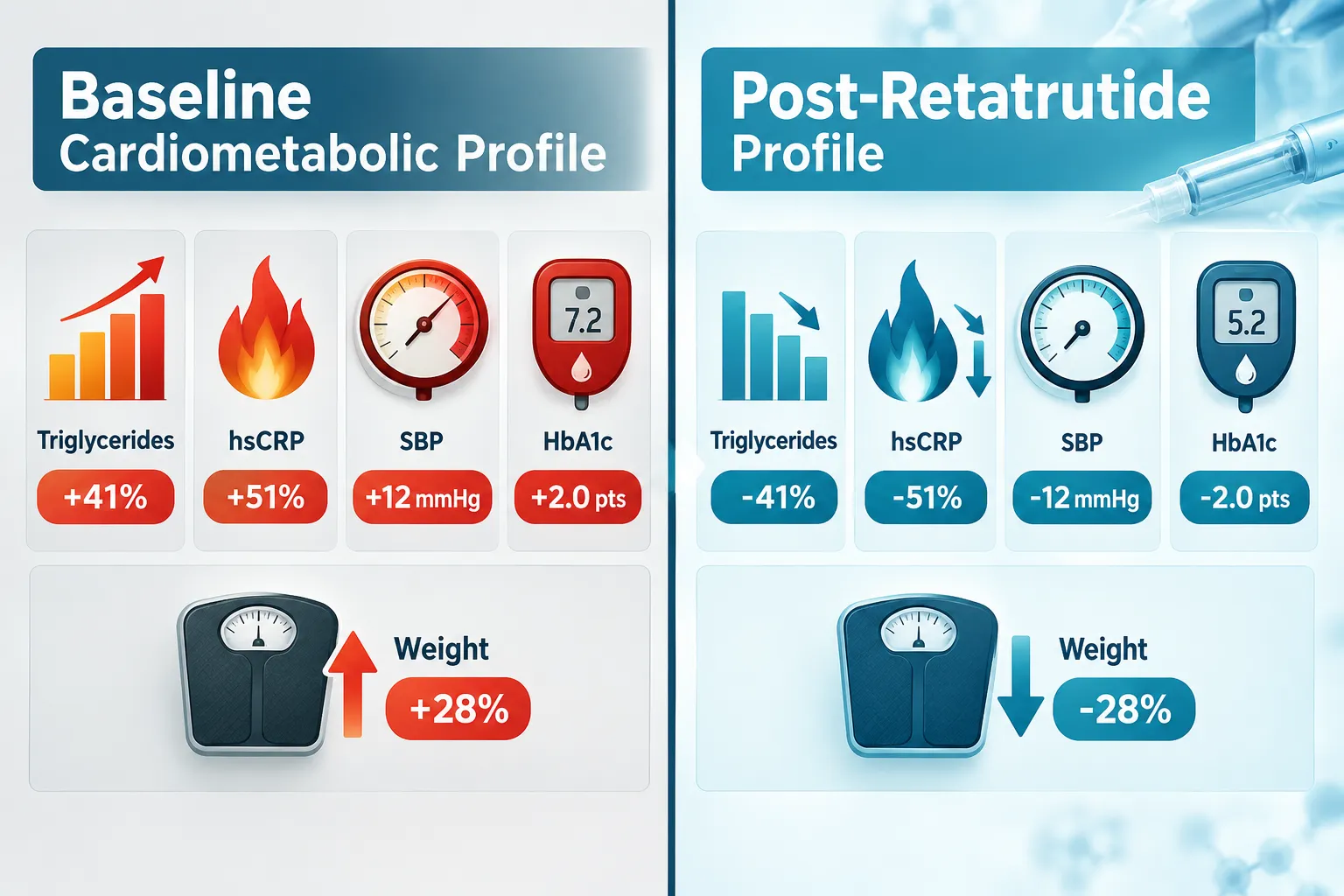
Most weight-loss headlines focus on the number on the scale. But for researchers and clinicians tracking Retatrutide and Cardiometabolic Markers: Blood Sugar, Blood Pressure, and Body Composition Changes in Trials, the more important story is what happens inside the body — to blood glucose, arterial pressure, fat distribution, and inflammatory markers — as weight falls away.

Retatrutide is Eli Lilly's triple agonist, targeting GLP-1, GIP, and glucagon receptors simultaneously. That triple action sets it apart from earlier single- or dual-receptor agents and helps explain why its cardiometabolic effects reach well beyond simple calorie restriction. For researchers comparing multi-endpoint trial data, the breadth of these metabolic improvements is striking.

Key Takeaways

  • Retatrutide 12 mg produced an average weight loss of 28.3% over 80 weeks in the TRIUMPH-1 Phase 3 trial, with 65.3% of participants dropping below a BMI of 30.
  • HbA1c fell by a mean of 1.9 percentage points from a baseline of 7.9% in participants with type 2 diabetes over 40 weeks.
  • Systolic blood pressure, non-HDL cholesterol, triglycerides, and waist circumference all improved significantly.
  • High-sensitivity C-reactive protein (hsCRP) levels declined, pointing to reduced systemic inflammation.
  • Gastrointestinal side effects were the most common adverse events and were primarily mild to moderate.

Key Takeaways

How Retatrutide Works: The Triple-Agonist Mechanism

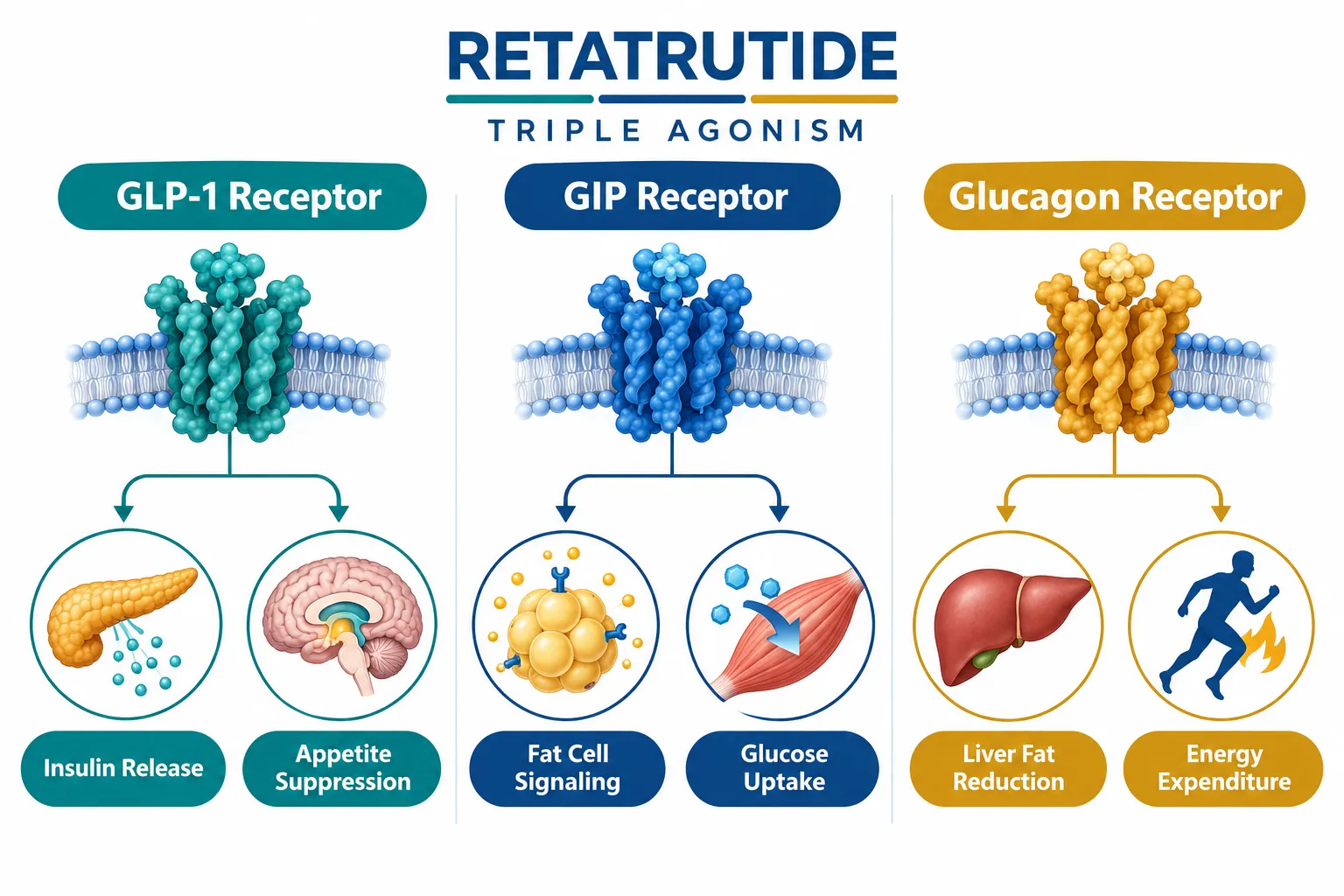
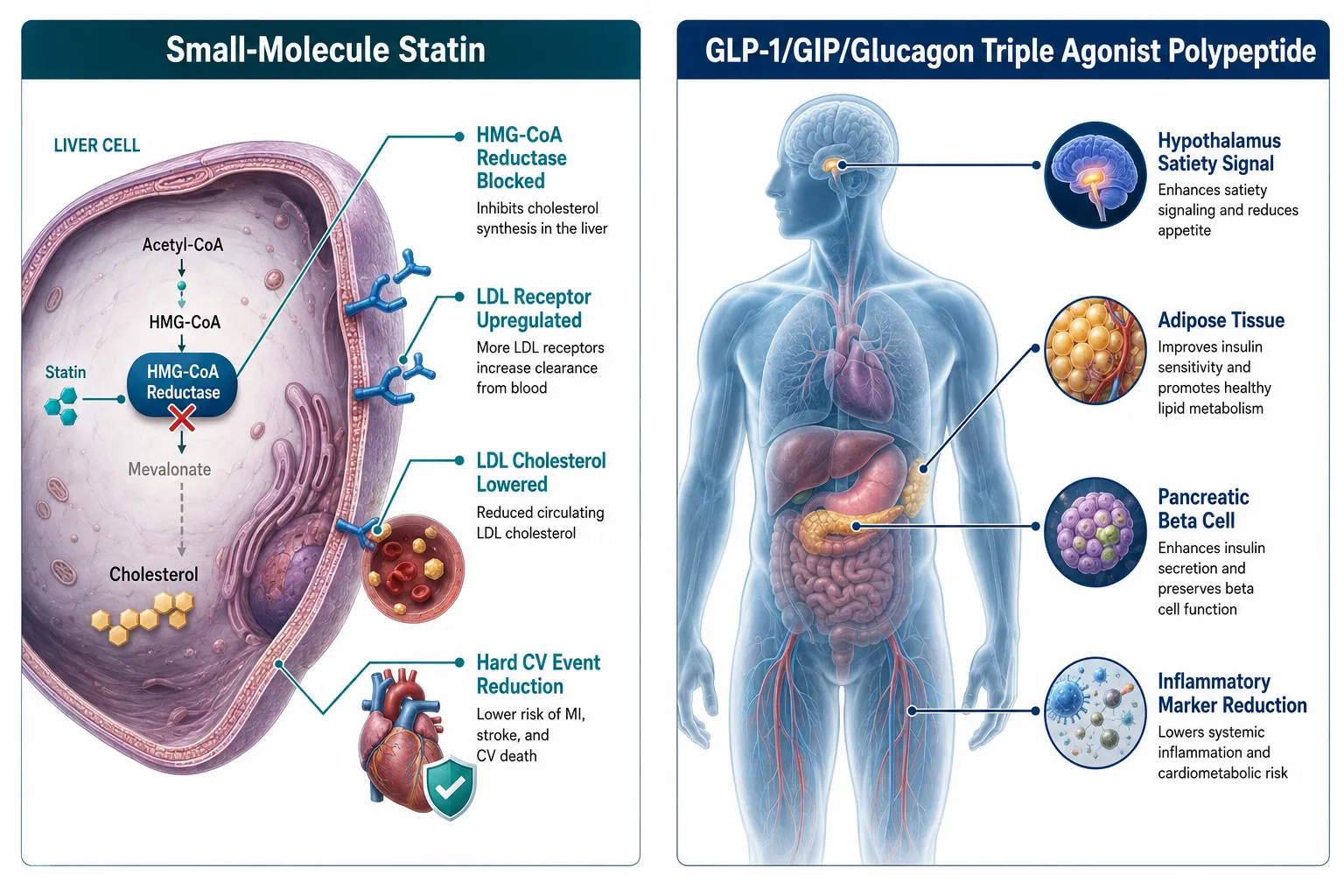
Understanding the cardiometabolic breadth of retatrutide starts with its receptor targets. GLP-1 receptor agonism slows gastric emptying and reduces appetite. GIP receptor activation enhances insulin secretion and may improve fat metabolism. Glucagon receptor stimulation increases energy expenditure and promotes hepatic fat clearance.

This combination creates a synergistic effect that no single-target agent can fully replicate. Researchers interested in GIP receptor biology and its metabolic importance will recognize why adding glucagon agonism on top of the GLP-1/GIP dual axis produces such wide-ranging metabolic changes. The result is not just weight loss — it is a coordinated shift in how the body manages glucose, lipids, and inflammation.

For context on how other peptide agents approach metabolic health from different angles, the GLP-1 peptide research and sourcing overview provides useful background on the broader GLP-1 class.

Retatrutide and Cardiometabolic Markers: Blood Sugar, Blood Pressure, and Body Composition Changes in Trials — Key Data Points

The Phase 3 TRIUMPH-1 trial and the TRANSCEND-T2D-1 trial together offer the most comprehensive picture of retatrutide's cardiometabolic profile to date.

Blood Sugar Control

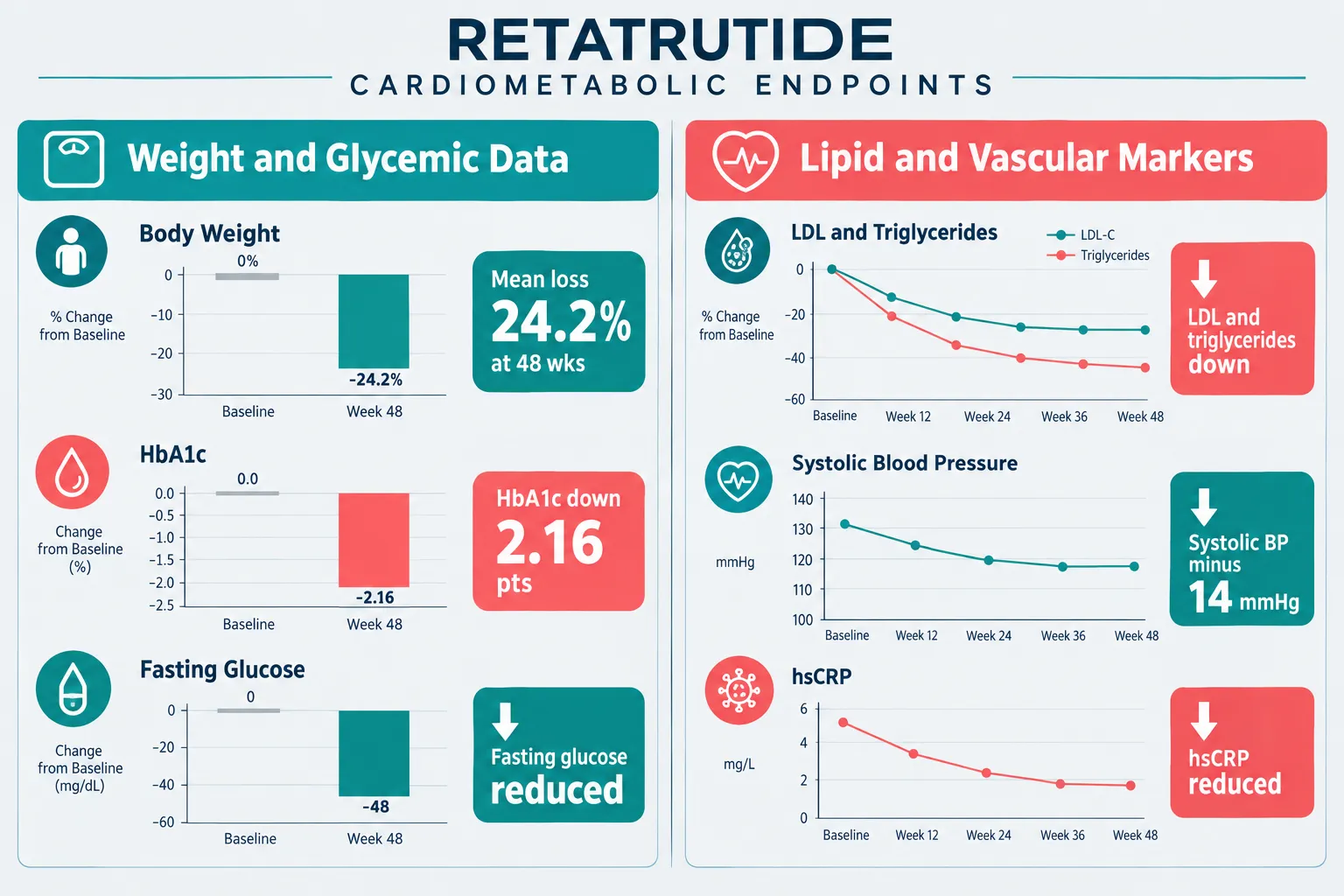
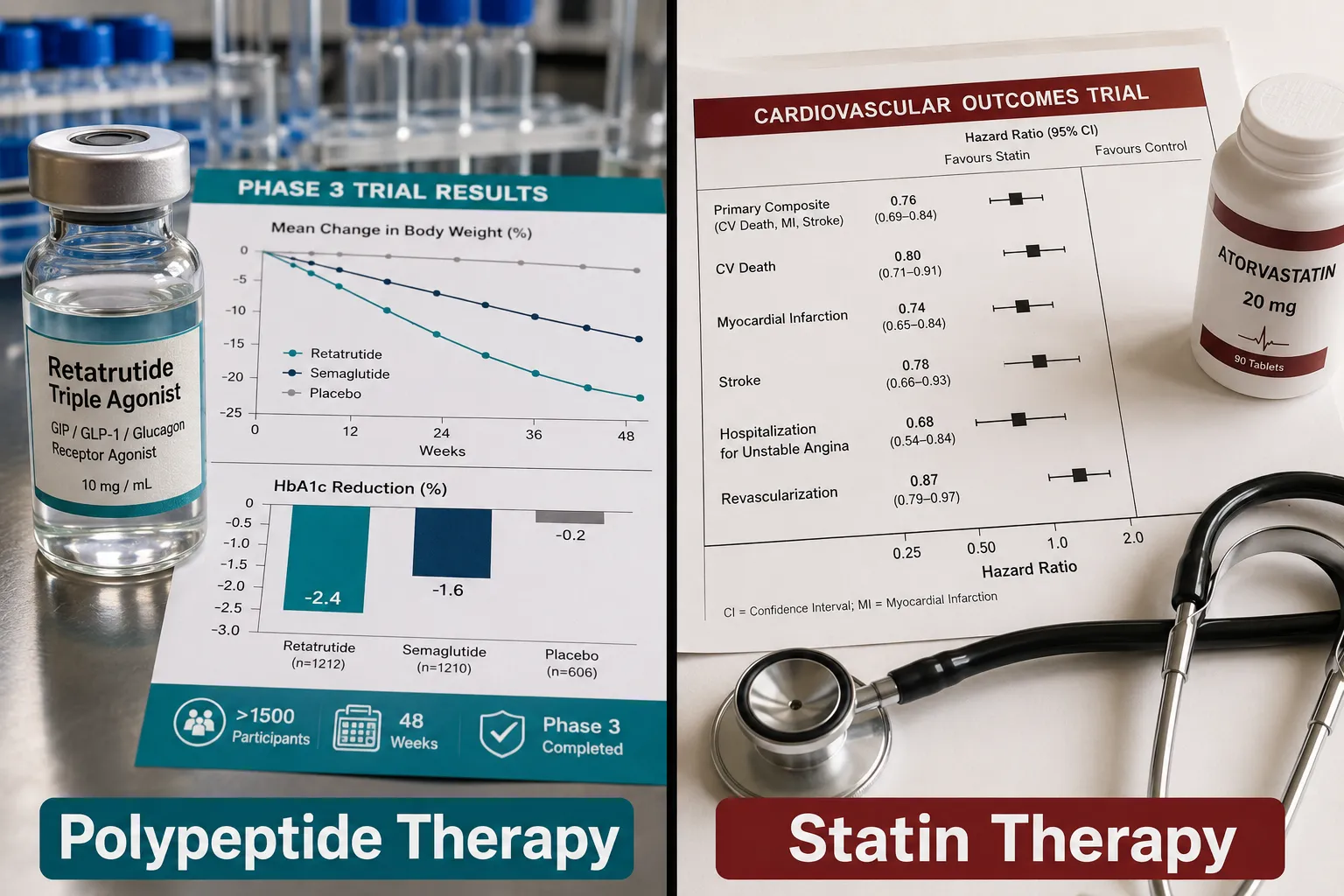
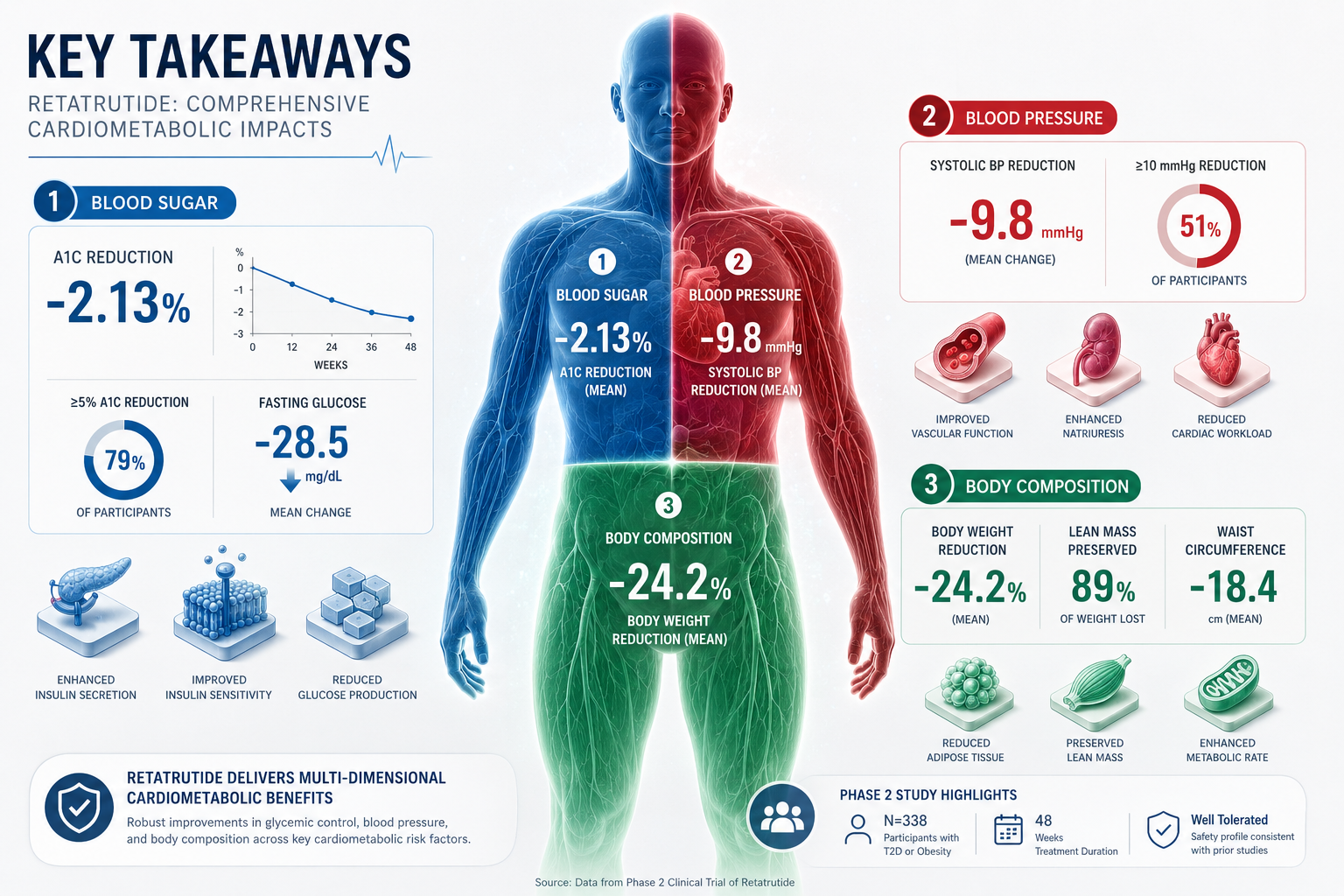
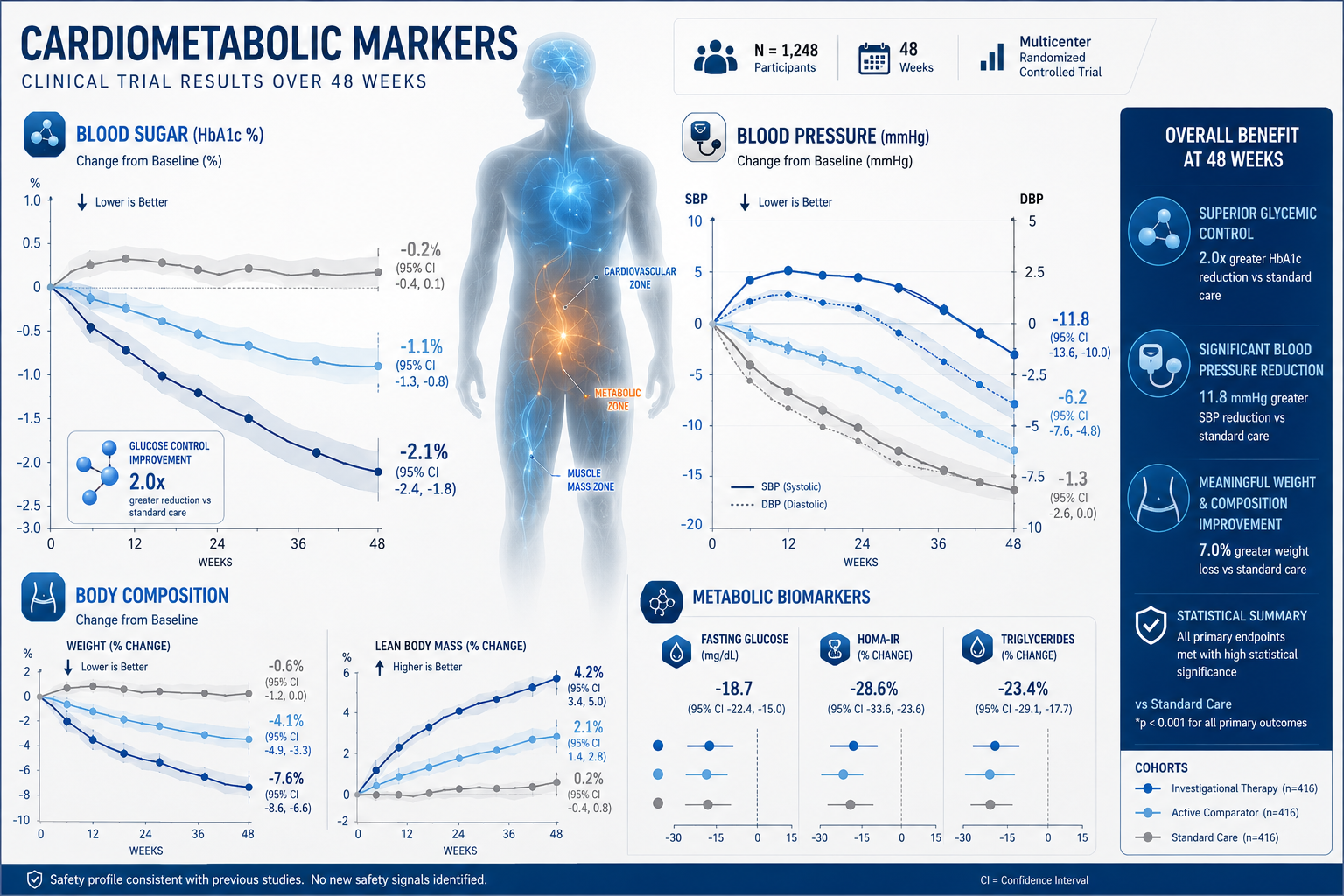
In the TRANSCEND-T2D-1 trial, participants with type 2 diabetes receiving retatrutide 12 mg achieved a mean HbA1c reduction of 1.9% from a baseline of 7.9% over 40 weeks. That brings average HbA1c close to the 6.5% diagnostic threshold for diabetes — a clinically meaningful shift. Improvements in insulin resistance markers were also documented in metabolite profiling studies, suggesting the drug addresses glucose dysregulation at multiple levels.

Blood Pressure and Lipid Markers

Cardiometabolic Marker Direction of Change
Systolic blood pressure Decreased
Non-HDL cholesterol Decreased
Triglycerides Decreased
hsCRP (inflammation) Decreased
Waist circumference Decreased

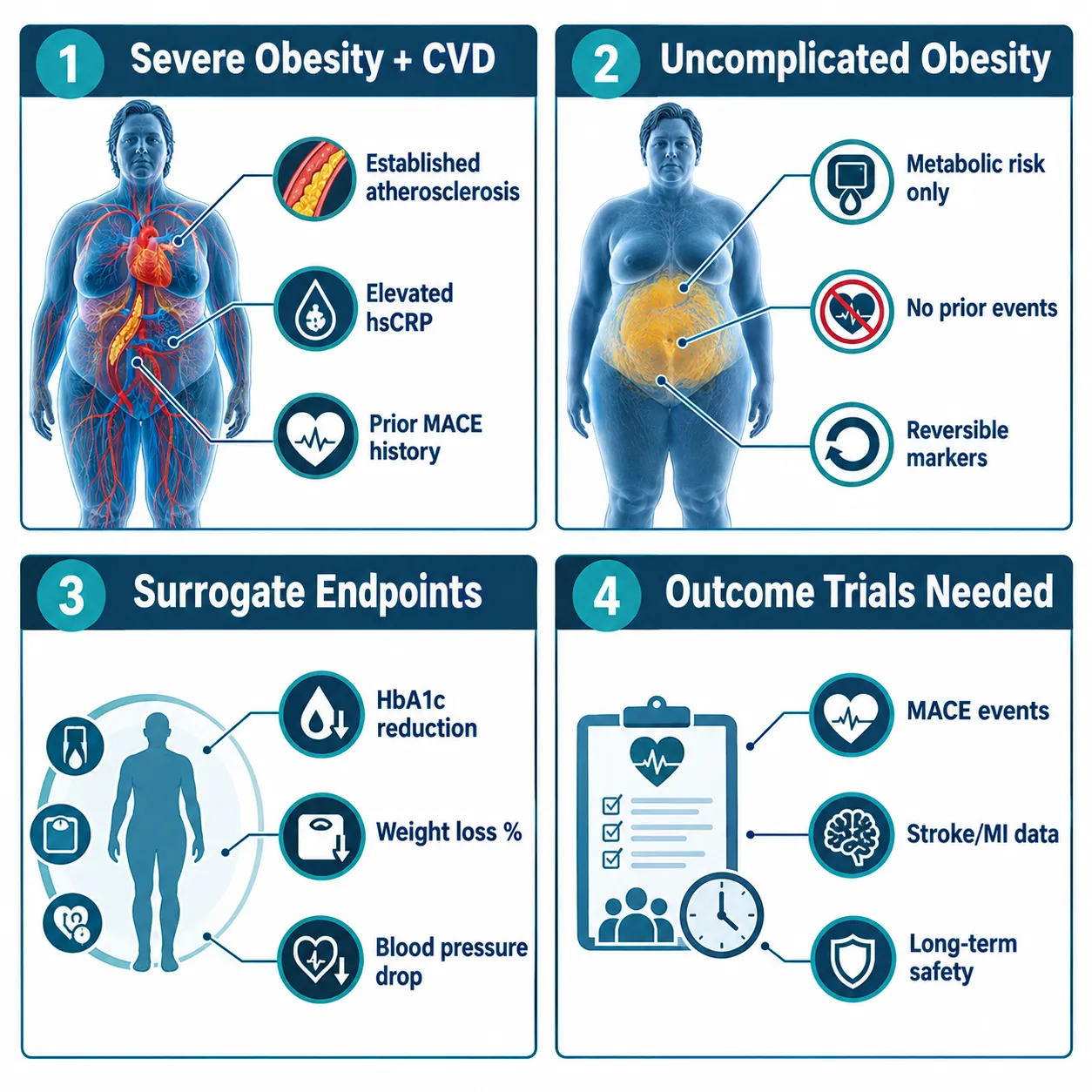
Reductions in systolic blood pressure, non-HDL cholesterol, and triglycerides were all statistically significant. The drop in hsCRP is particularly notable because elevated hsCRP is an independent cardiovascular risk factor. Taken together, these changes suggest retatrutide may reduce cardiovascular risk beyond what weight loss alone would predict.

Body Composition

A substudy published in The Lancet Diabetes & Endocrinology confirmed that retatrutide produced significantly greater reductions in total body fat mass compared to both placebo and dulaglutide. Waist circumference reductions in TRIUMPH-1 reinforced this finding, indicating preferential loss of central adiposity — the fat depot most closely linked to metabolic and cardiovascular disease.

Researchers exploring related body composition peptides may find the AOD-9604 research overview and the tesa benefits research page relevant for comparison, particularly given tesa's established role in visceral fat reduction.

Body Composition

Safety Profile and Monitoring Considerations

No cardiometabolic analysis is complete without a clear-eyed look at safety. In TRIUMPH-1, the most common adverse events were gastrointestinal:

  • Nausea: 16.4% to 26.5% of participants
  • Diarrhea: 18.7% to 26.3%
  • Vomiting: 15.7% to 17.6%

These events were primarily mild to moderate and clustered during dose escalation. Discontinuation rates due to adverse events ranged from 2.2% to 5.1% across dosage groups — relatively low for a drug of this potency.

One monitoring point worth flagging: participants experienced dose-dependent increases in heart rate, peaking at 24 weeks before declining. No major cardiovascular events were attributed to this change, but it warrants ongoing surveillance in cardiovascular-risk populations.

Researchers comparing safety profiles across metabolic peptides may also find value in reviewing tesa side effects research and the SLU-PP-332 oral and subcutaneous evidence for broader context on metabolic agent tolerability.

Safety Profile and Monitoring Considerations

Retatrutide and Cardiometabolic Markers: Blood Sugar, Blood Pressure, and Body Composition Changes in Trials — What the Data Means for Research

The data from 2026 Phase 3 trials positions retatrutide as one of the most comprehensively studied metabolic agents in the current pipeline. Its ability to simultaneously improve glycemic control, lipid profiles, blood pressure, inflammatory markers, and body composition in a single treatment course is rare in clinical pharmacology.

For researchers building comparative datasets, the MOTS-c mitochondrial research themes and NAD scientific evidence pages offer complementary perspectives on metabolic regulation at the cellular level — useful for understanding how systemic agents like retatrutide interact with upstream energy metabolism pathways.

Conclusion

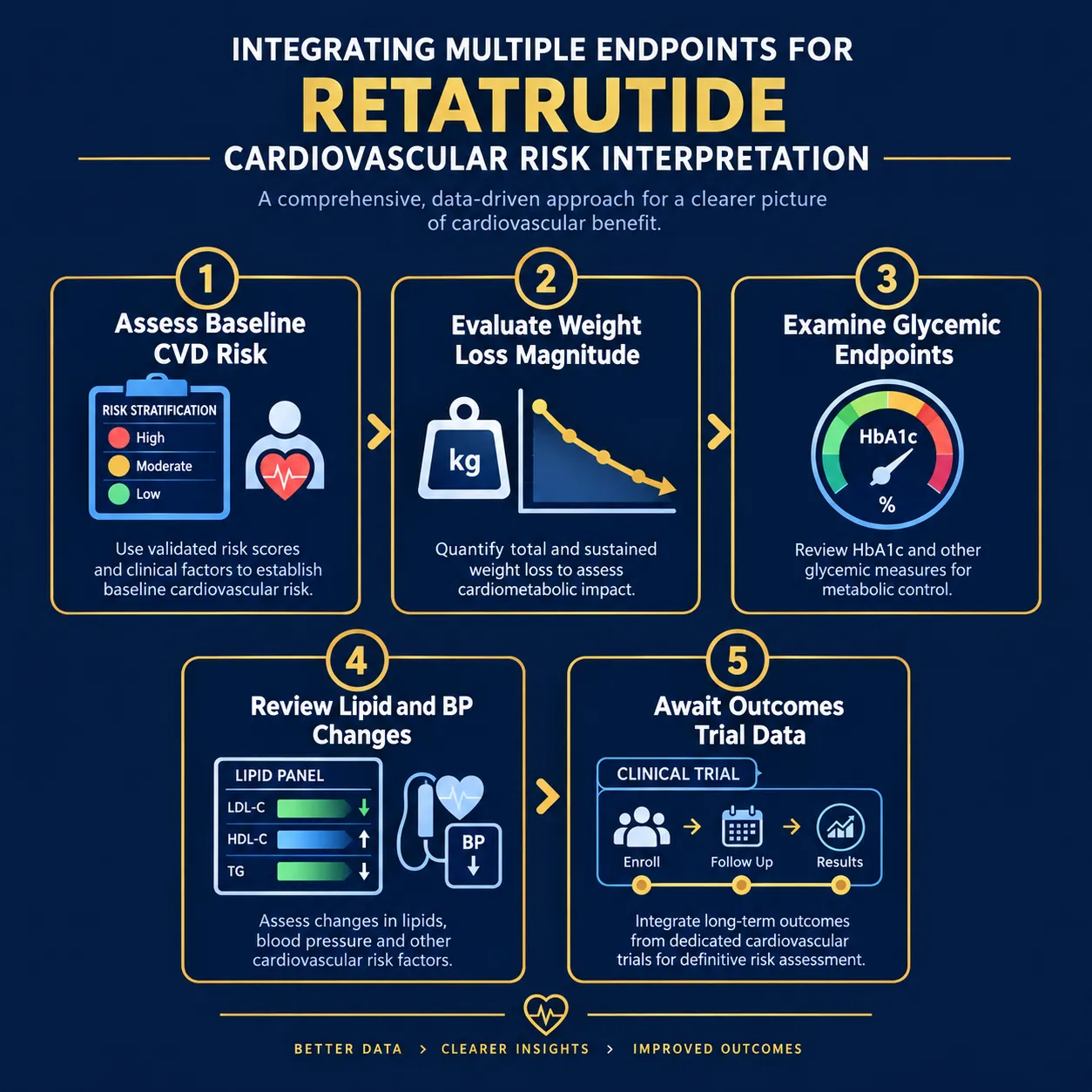
The cardiometabolic case for retatrutide extends well beyond its headline weight-loss numbers. Researchers and clinicians tracking multi-endpoint outcomes should focus on the full picture: meaningful HbA1c reductions, lower systolic blood pressure, improved lipid panels, reduced central adiposity, and declining inflammatory markers. These changes, documented across multiple Phase 3 trials in 2026, suggest retatrutide may reshape how metabolic disease is treated at a systemic level.

Actionable next steps for researchers:

  • Review the full TRIUMPH-1 and TRANSCEND-T2D-1 datasets for endpoint-specific effect sizes relevant to your study population.
  • Compare retatrutide's body composition data against dual-agonist benchmarks and GH-axis peptides to contextualize fat mass changes.
  • Monitor heart rate trends in any cardiovascular-risk subgroup analysis, given the dose-dependent pattern observed in trials.
  • Explore the comprehensive peptide catalog for research-grade agents relevant to metabolic and cardiometabolic study designs.
https://www.puretestedpeptides.com/wp-content/uploads/2026/06/Retatrutide-and-Cardiometabolic-Markers-Blood-Sugar-Blood-Pressure-and-Body-Composition-Changes-in-Trials.png 1024 1536 https://www.puretestedpeptides.com/wp-content/uploads/2026/01/buy-peptides-online.jpg 2026-06-15 13:04:242026-06-15 13:04:24Retatrutide and Cardiometabolic Markers: Blood Sugar, Blood Pressure, and Body Composition Changes in Trials
Retatrutide Clinical Trials Explained: Phase 2 to Phase 3 Outcomes, Endpoints, and What Researchers Should Track

Retatrutide Clinical Trials Explained: Phase 2 to Phase 3 Outcomes, Endpoints, and What Researchers Should Track

June 14, 2026/0 Comments/in Uncategorized/by

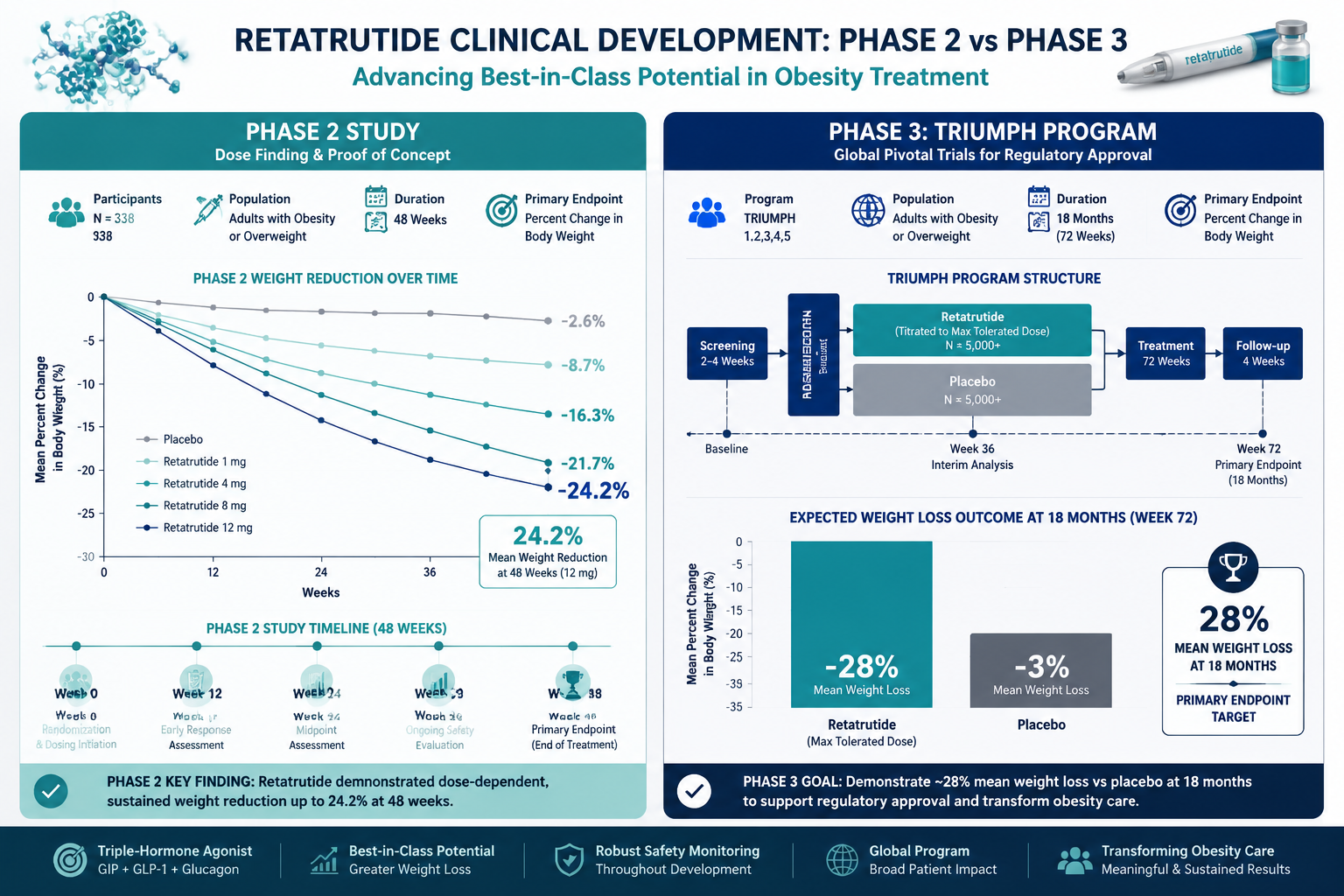
A drug that produces roughly 28% average body weight loss in 18 months — approaching outcomes typically associated with bariatric surgery — demands a clear-eyed reading of the trial record behind it. That is exactly what this guide delivers. Understanding the Retatrutide Clinical Trials Explained: Phase 2 to Phase 3 Outcomes, Endpoints, and What Researchers Should Track framework helps researchers, clinicians, and informed readers interpret efficacy data, dose-escalation patterns, and cardiometabolic endpoints without getting lost in trial jargon.

Key Takeaways

  • Retatrutide is a once-weekly triple agonist targeting GLP-1, GIP, and glucagon receptors simultaneously.
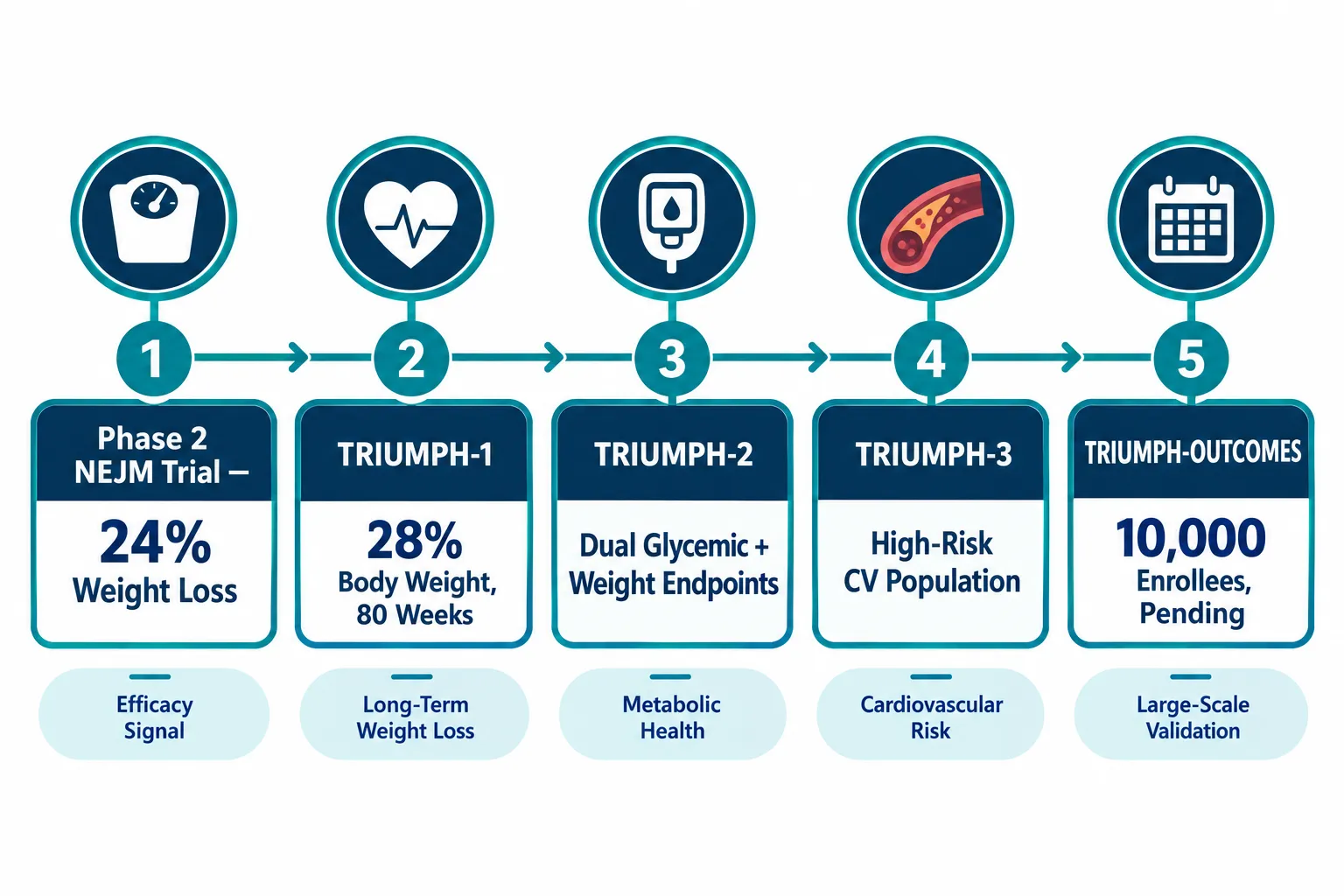
  • Phase 2 trials showed up to 24.2% weight reduction at 48 weeks; Phase 3 data now shows approximately 28% over 18 months.
  • The TRIUMPH Phase 3 program spans obesity, type 2 diabetes, knee osteoarthritis, and obstructive sleep apnea.
  • Gastrointestinal adverse events are the most common safety signal, with discontinuation rates of 12-18% at higher doses.
  • Researchers should track both primary efficacy endpoints and secondary cardiometabolic biomarkers across dose cohorts.

Key Takeaways

From Phase 2 to Phase 3: How the Trial Record Builds

The Retatrutide Clinical Trials Explained: Phase 2 to Phase 3 Outcomes, Endpoints, and What Researchers Should Track story begins with mechanism. Retatrutide activates three receptors — GLP-1, GIP, and glucagon — in a single once-weekly subcutaneous injection. This triple-agonist profile distinguishes it from earlier GLP-1 mono-agonists and dual agonists. For context on how GLP-1 receptor pharmacology has evolved across generations, the GLP-1 generations overview provides useful background, and a deeper look at dual receptor agonism in research shows why adding a third receptor target changes the efficacy ceiling.

Phase 2 results published in a landmark study demonstrated a mean weight reduction of up to 24.2% at 48 weeks in adults with obesity or overweight without diabetes. Crucially, this was dose-dependent: participants on higher dose arms consistently outperformed those on lower doses, establishing the dose-escalation rationale that Phase 3 protocols would formalize.

Phase 3 results from the TRIUMPH program have now confirmed and extended those findings. In an obesity-focused trial, retatrutide produced approximately 28% average weight loss over 18 months — a figure that rivals surgical intervention. The TRANSCEND-T2D-1 Phase 3 trial in type 2 diabetes reported a mean HbA1c reduction of 1.94% alongside a 15.3% decrease in body weight over 40 weeks in adults inadequately controlled by diet and exercise alone.

Trial Phase Population Duration Key Outcome
Phase 2 Obesity/Overweight (no T2D) 48 weeks Up to 24.2% weight loss
Phase 3 (TRIUMPH) Obesity 18 months ~28% weight loss
Phase 3 (TRANSCEND-T2D-1) Type 2 Diabetes 40 weeks 1.94% HbA1c reduction, 15.3% weight loss

From Phase 2 to Phase 3: How the Trial Record Builds

Endpoints and Cardiometabolic Outcomes Researchers Must Prioritize

When reading any retatrutide trial report, distinguishing primary endpoints from secondary and exploratory endpoints is essential.

Primary efficacy endpoints in obesity trials are typically:

  • Percentage change in body weight from baseline
  • Proportion of participants achieving 5%, 10%, or 15% weight loss thresholds

Secondary endpoints that carry significant clinical weight include:

  • Waist circumference reduction
  • Fasting glucose and insulin sensitivity markers
  • HbA1c trajectory (especially in metabolic subgroups)
  • Lipid panel changes (LDL, triglycerides, HDL)
  • Blood pressure and resting heart rate

Cardiometabolic outcomes deserve special attention because glucagon receptor activation — the component that separates retatrutide from tirzepatide — appears to amplify energy expenditure and lipid mobilization beyond what GLP-1/GIP alone achieves. Researchers tracking these outcomes should note that the TRIUMPH program also evaluates retatrutide across knee osteoarthritis pain and obstructive sleep apnea, with over 5,800 participants enrolled across indications. This breadth is unusual and signals confidence in the mechanism's systemic reach.

For researchers interested in how metabolic peptides interact with body composition endpoints more broadly, the tesa body composition research themes page offers a useful parallel in lipid mobilization science, and lipid mobilization research themes provides additional mechanistic context.


Endpoints and Cardiometabolic Outcomes Researchers Must Prioritize

Safety Signals, Dose Escalation, and What the Data Shows

The safety profile of retatrutide follows a pattern familiar to GLP-1 class agents but with important nuances researchers should document carefully.

Most common adverse events:

  • Nausea
  • Diarrhea
  • Vomiting
  • Constipation

Discontinuation rates due to adverse events ranged from approximately 12-18% at higher doses, compared to roughly 4% with placebo. This gap is clinically meaningful and underscores why dose-escalation schedules matter. Trials used gradual titration — starting at lower milligram doses and stepping up over weeks — to improve tolerability. Researchers reviewing trial data should always note which dose arm a participant was in when an adverse event occurred, as pooling across arms obscures this signal.

"The dose-escalation pattern in retatrutide trials is not incidental — it is the primary tool for balancing efficacy against gastrointestinal tolerability."

Regulatory momentum is building. Eli Lilly plans to seek FDA approval for retatrutide, potentially before the end of 2026, pending completion of remaining TRIUMPH trial arms. For researchers following the broader GLP-1 triple agonist landscape, retatrutide represents the most advanced compound in this class currently in late-stage development. Those sourcing research-grade reference compounds can also explore the retatrutide product tag and GLP-1 research peptide category for laboratory use context.


Conclusion

The Retatrutide Clinical Trials Explained: Phase 2 to Phase 3 Outcomes, Endpoints, and What Researchers Should Track framework comes down to three practical actions. First, always read trial results stratified by dose arm — aggregate numbers hide the dose-response relationship that defines this compound. Second, track secondary cardiometabolic endpoints alongside primary weight outcomes; the glucagon receptor component makes these particularly informative. Third, monitor the TRIUMPH program's remaining readouts on sleep apnea and osteoarthritis, which will determine how broadly retatrutide's label is eventually written. As 2026 progresses toward a likely FDA submission, the trial record already makes one thing clear: triple-receptor agonism has moved from hypothesis to high-confidence clinical outcome.

https://www.puretestedpeptides.com/wp-content/uploads/2026/06/Retatrutide-Clinical-Trials-Explained-Phase-2-to-Phase-3-Outcomes-Endpoints-and-What-Researchers-Should-Track.png 1024 1536 https://www.puretestedpeptides.com/wp-content/uploads/2026/01/buy-peptides-online.jpg 2026-06-14 16:48:362026-06-14 16:48:36Retatrutide Clinical Trials Explained: Phase 2 to Phase 3 Outcomes, Endpoints, and What Researchers Should Track
×

Helpful Links

  • My account
  • Cart
  • Checkout
  • Refund and Returns Policy
  • Privacy Policy
  • SMS Privacy Policy
  • Login
  • My Account
  • Logout

USA Made Lab Tested Peptides

All products are sold for research, laboratory, or analytical purposes only, and are not for human consumption


Pure Tested Peptides is a chemical supplier. Pure Tested Peptides is not a compounding / chemical compounding facility as defined under 503A of the Federal Food, Drug, and Cosmetic act. Pure Tested Peptides is not an outsourcing facility as defined under 503B of the Federal Food, Drug, and Cosmetic act.

The statements made within this website have not been evaluated by the US Food and Drug Administration. The products we offer are not intended to diagnose, treat, cure or prevent any disease.

Human/Animal Consumption Prohibited. Laboratory/In-Vitro Experimental Use Only

Scroll to top Scroll to top Scroll to top