Where to Buy Research-Use Peptides: A Vendor-Comparison Framework for COAs, Identity Testing, and Batch Traceability
A 2026 cross-vendor review found that fewer than half of ten surveyed research peptide suppliers published lot-specific Certificates of Analysis before purchase, meaning most researchers were ordering compounds without confirmed identity data in hand. For scientists who depend on reproducible results, that gap is not a minor inconvenience; it is a direct threat to experimental validity. Knowing where to buy research-use peptides requires more than finding a supplier with a product listing. It demands a structured framework for evaluating COAs, identity testing methods, and batch traceability before a single order is placed.
Key Takeaways
- Batch-specific COAs, not generic or on-request documents, are the baseline standard for credible research-use peptide suppliers in 2026.
- Identity testing should use at least two orthogonal analytical methods; LC-MS combined with HPLC retention time is the current minimum.
- Independent, third-party laboratory testing (not in-house) is essential to eliminate financial conflicts of interest in purity reporting.
- Lot numbers on vials, searchable COA libraries, and QR-code or digital traceability systems are now moving from premium features to baseline expectations.
- A multi-parameter testing panel covering purity, identity, heavy metals, endotoxin, and sterility represents the highest tier of vendor documentation.
Why Documentation Standards Define Vendor Quality
The research peptide market has matured rapidly. What differentiated a top-tier supplier in 2022, publishing any HPLC result at all, is now considered a floor, not a ceiling. By 2026, the benchmark has shifted toward comprehensive, independently verified, batch-specific documentation that a researcher can interrogate before committing to a purchase.
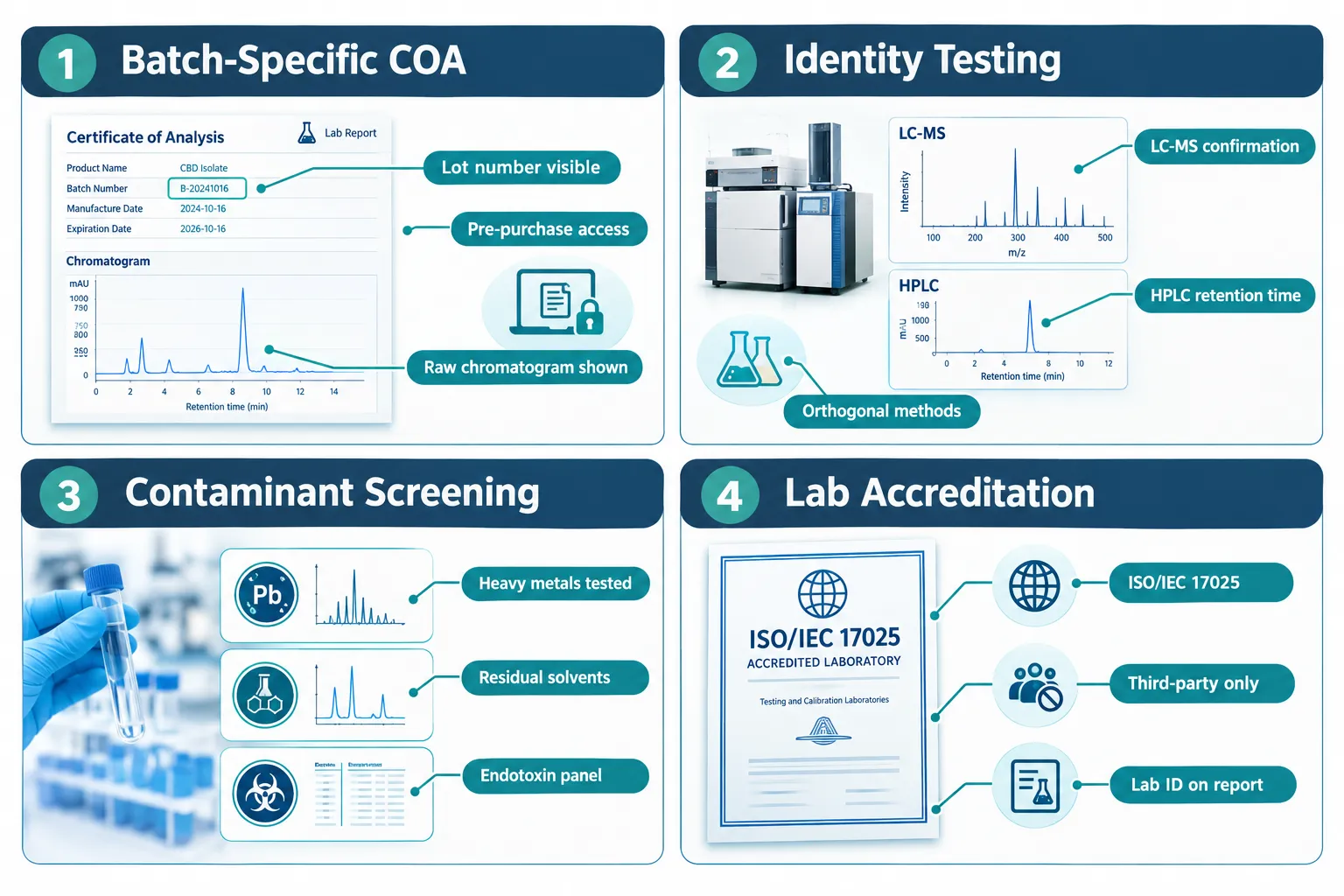
Three documentation pillars define vendor quality in the current landscape:
1. Certificate of Analysis (COA) accessibility
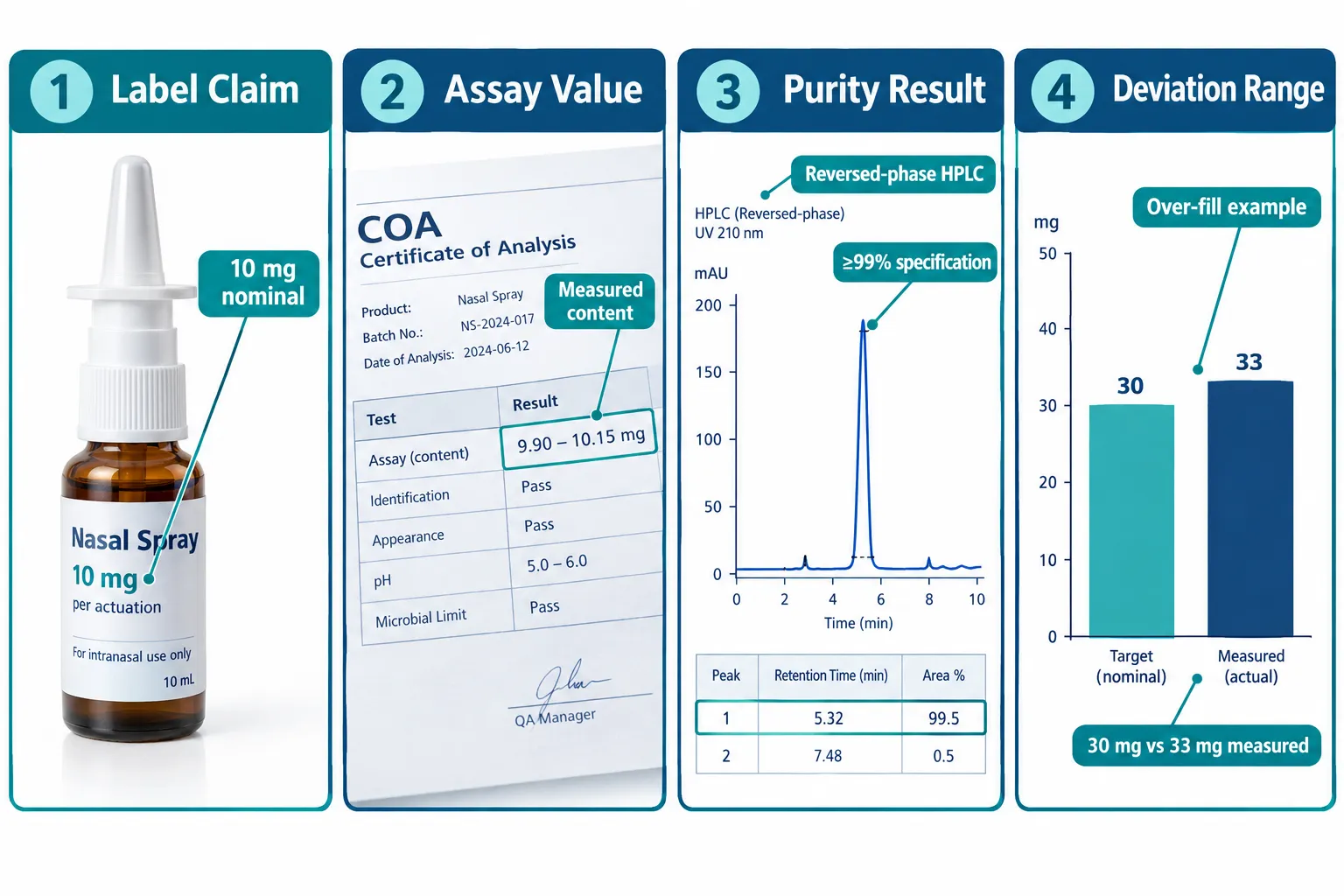
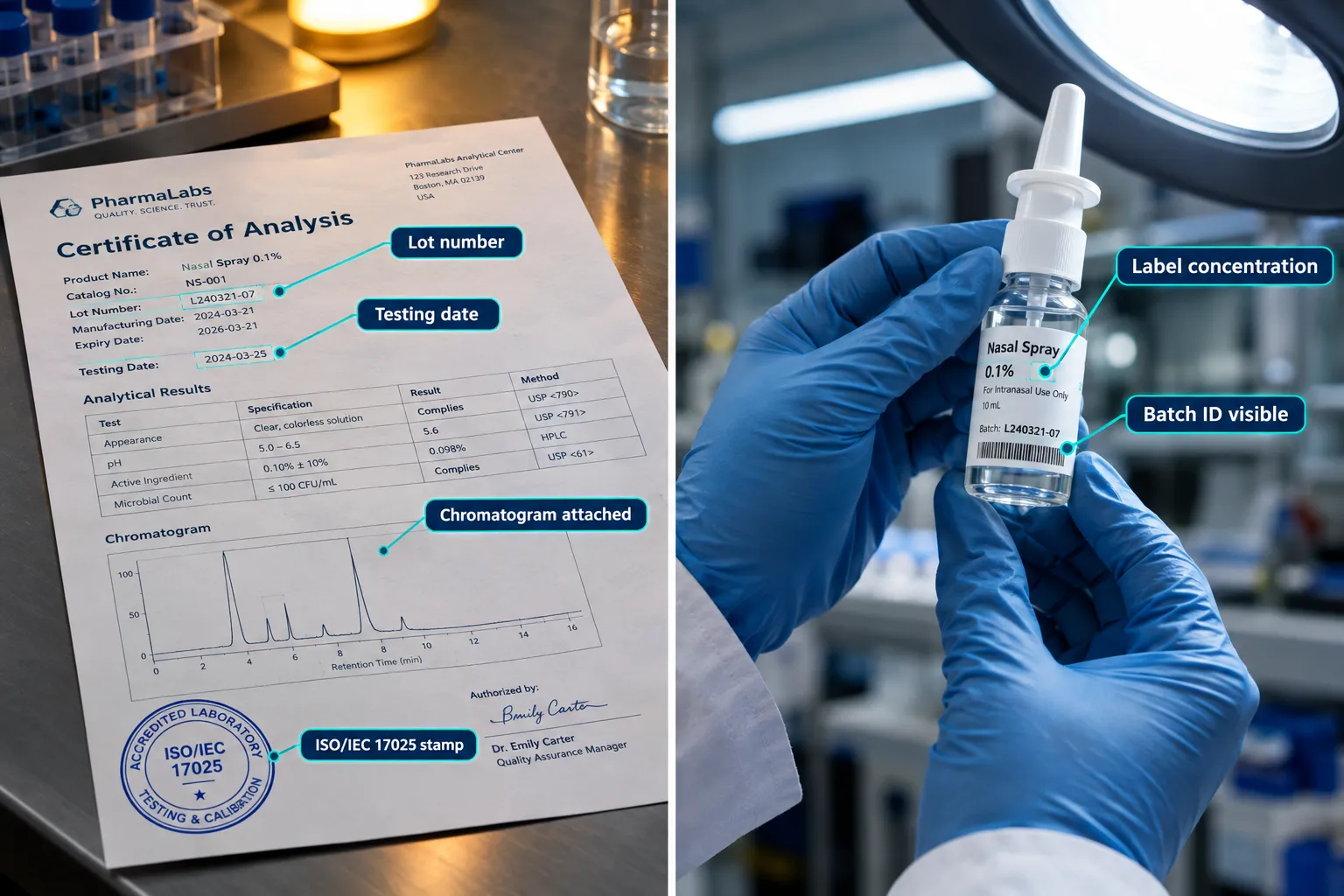
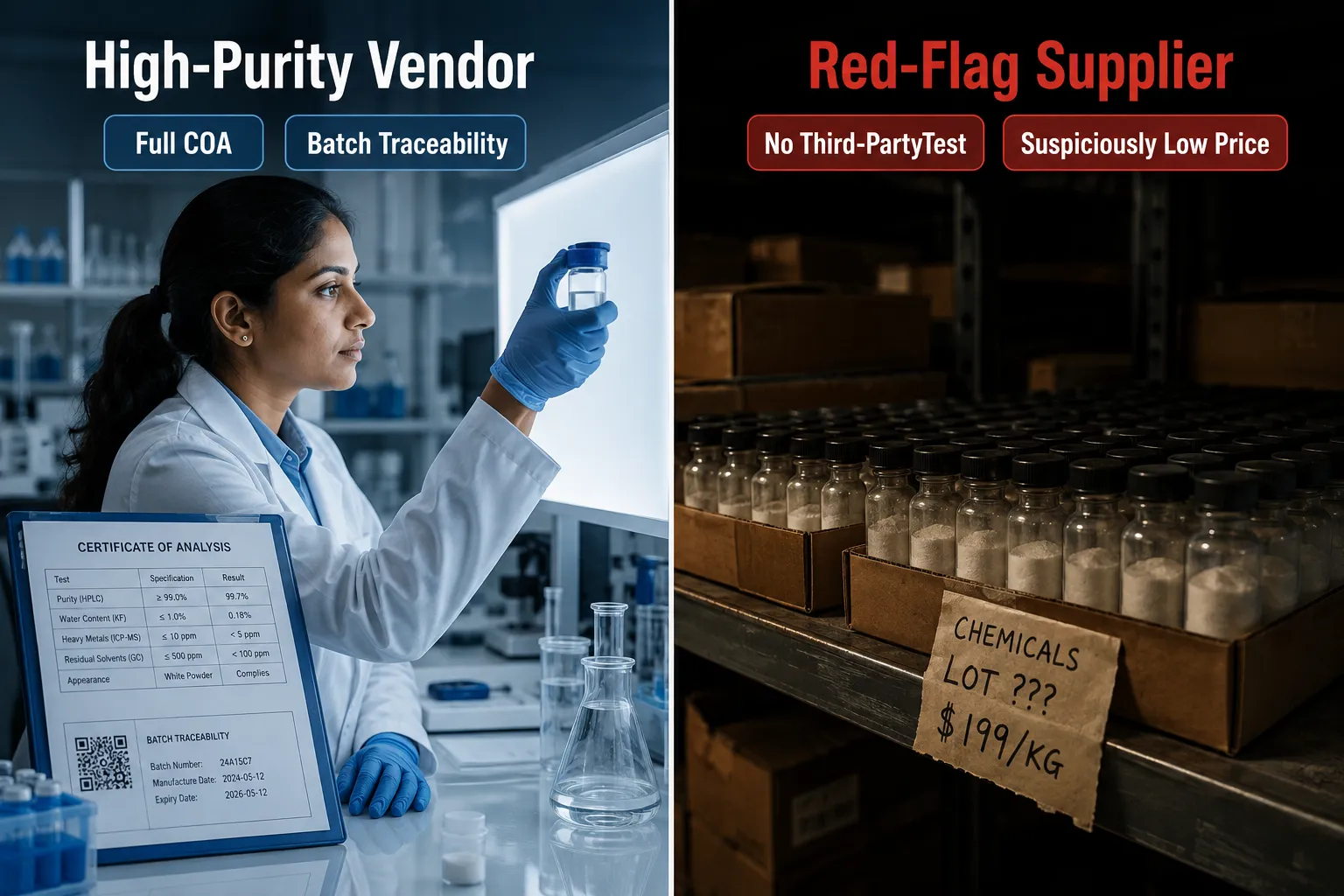
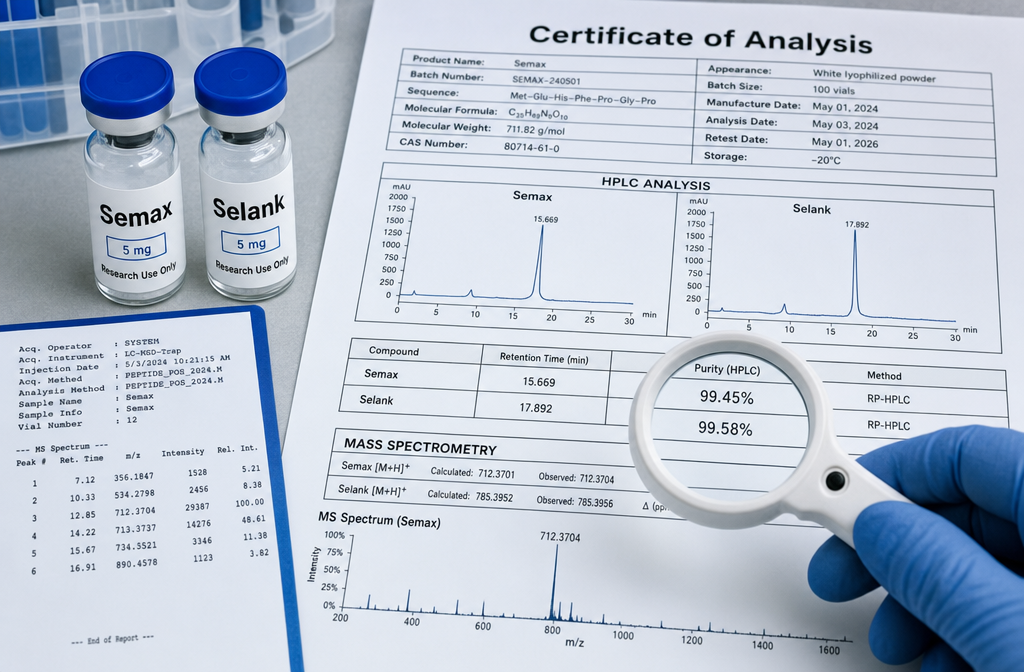
A COA should be batch-specific, meaning it reflects the exact lot being sold, not a representative sample from a prior production run. Reputable suppliers publish COAs directly on product pages, accessible before purchase, with the lot number visible and matching the vial label. Generic or on-request-only COAs are a red flag.
2. Analytical method breadth
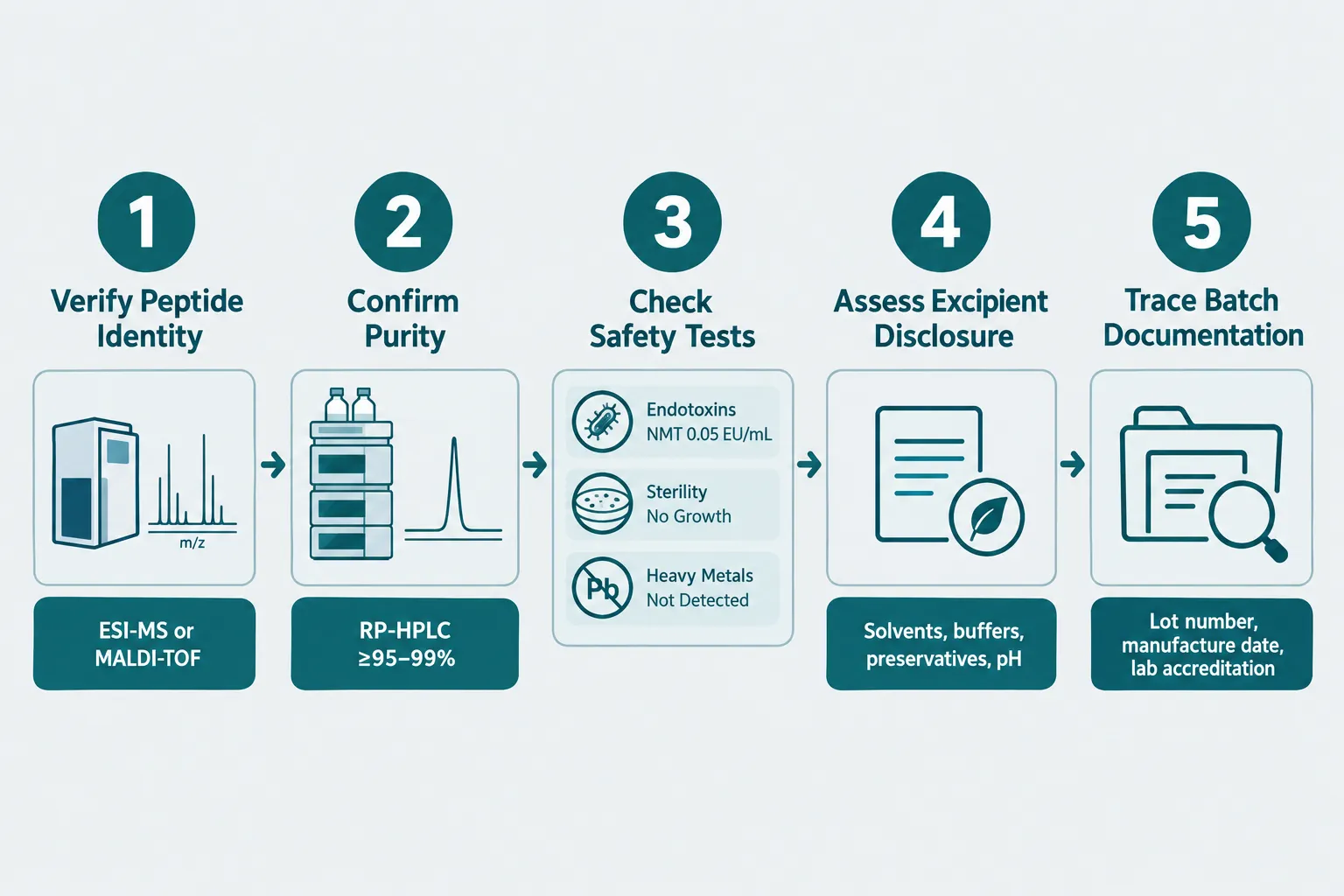
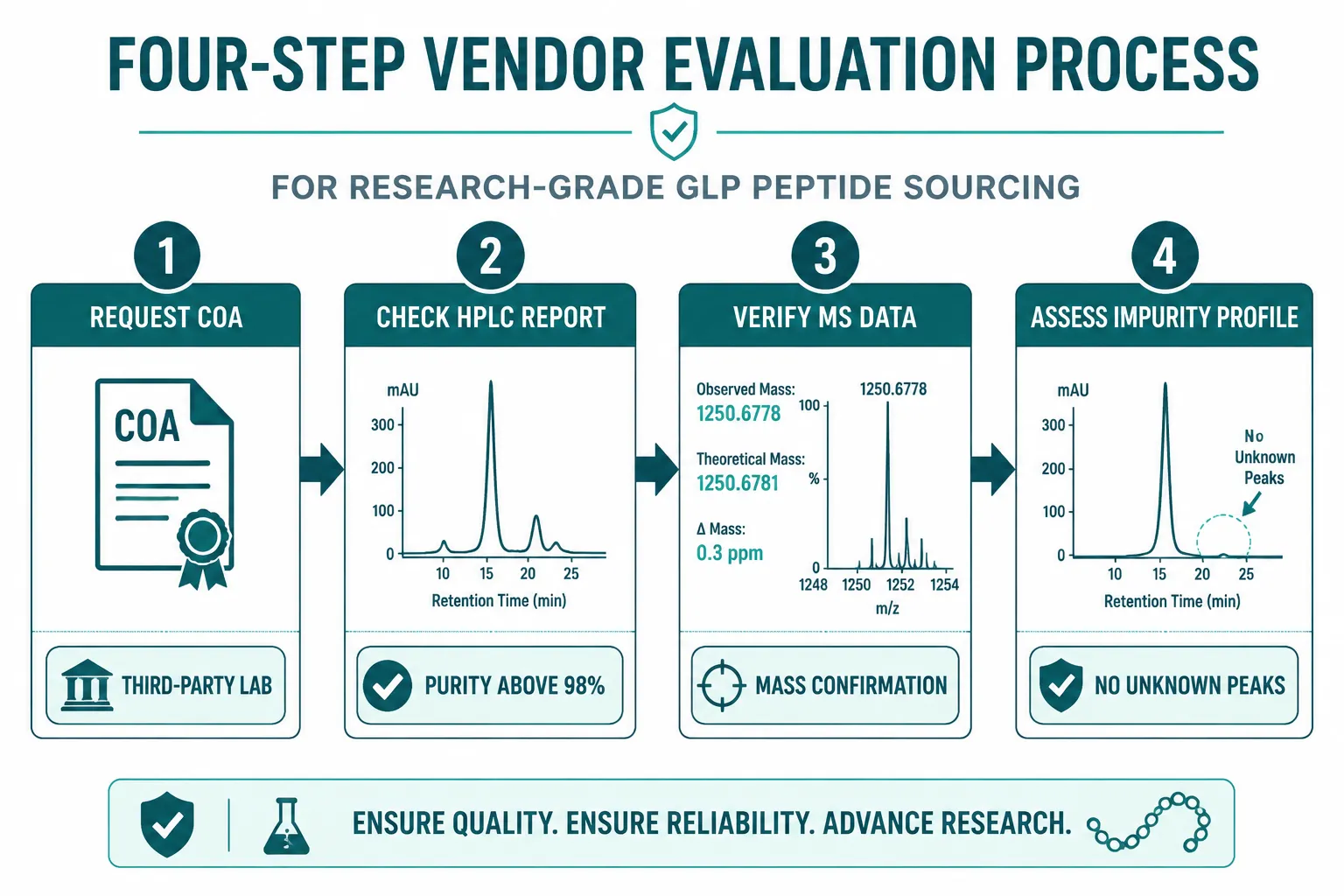
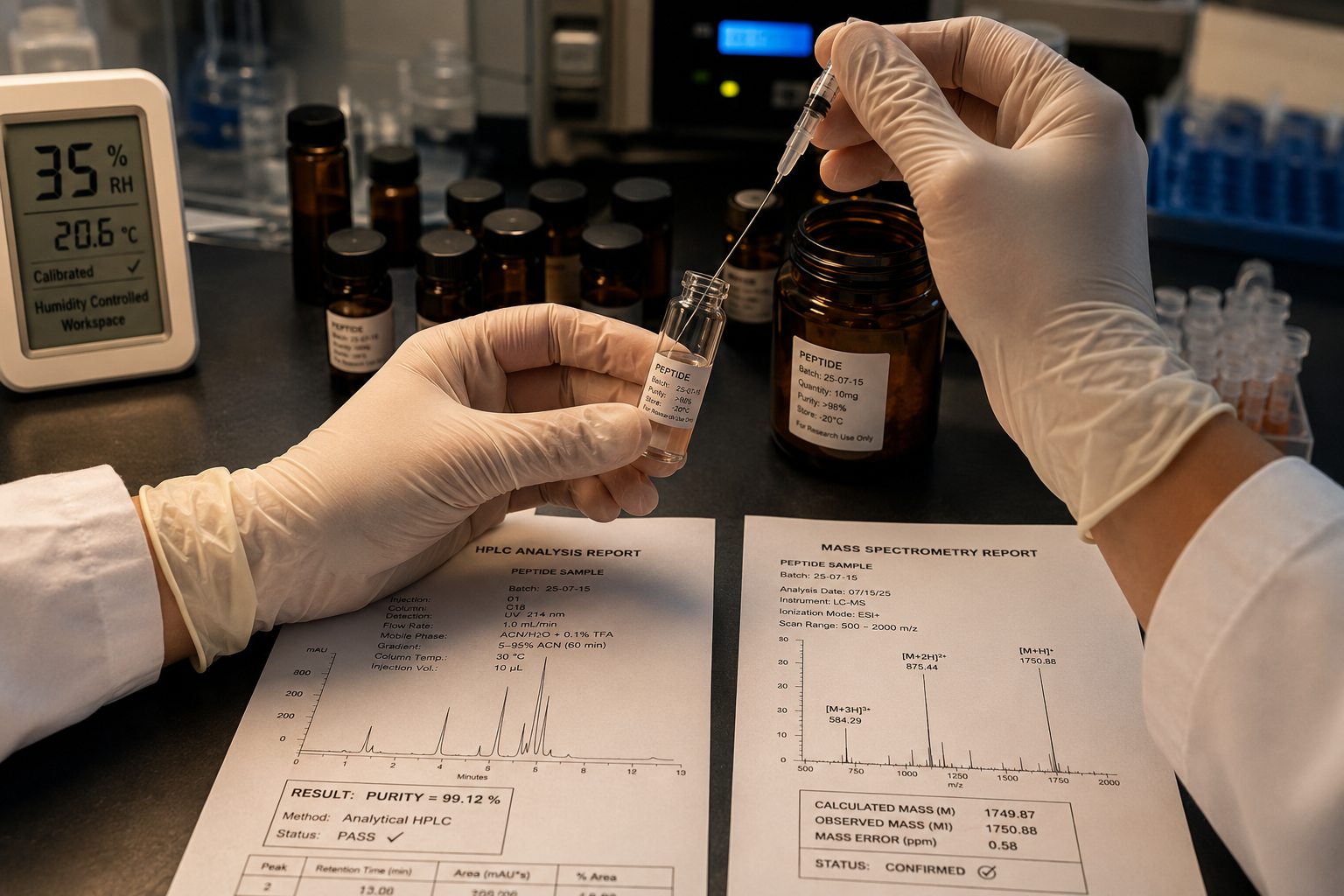
A purity percentage alone is insufficient. The COA should include the raw HPLC chromatogram, the mass spectrum or LC-MS data confirming molecular identity, and, for smaller peptides where higher-confidence structural confirmation is needed, potentially NMR data. Technical guidance published in 2026 is explicit: identity confirmation requires at least two orthogonal analytical methods.
3. Third-party laboratory independence
In-house testing creates a direct financial conflict of interest. The laboratory name, accreditation status (ideally ISO/IEC 17025), and a unique lab identifier should appear on every COA. This allows researchers to cross-reference results independently.
"Batch-specific COAs made available directly on product pages, rather than only on request, are the clearest signal of a supplier's commitment to transparency."
Building a Vendor-Comparison Framework for COAs, Identity Testing, and Batch Traceability
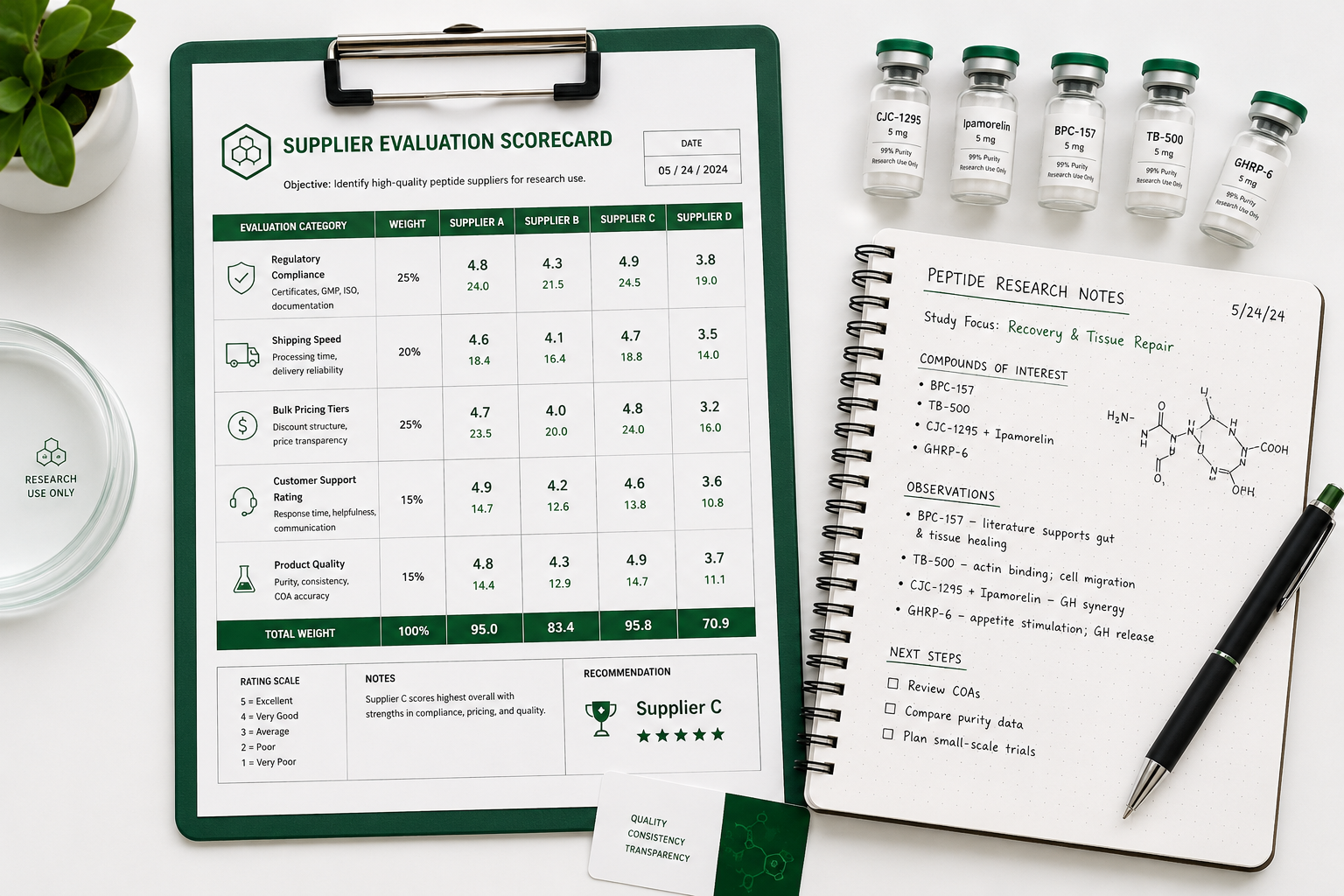
Applying a consistent framework when deciding where to buy research-use peptides removes guesswork and protects experimental integrity. The following criteria can be used to score and compare any supplier.
Tier 1: COA Completeness
| COA Element | Minimum Standard | High-Coverage Standard |
|---|---|---|
| Lot number | Present, matches vial | Linked via QR or digital library |
| Purity method | HPLC-UV, ≥98% target | HPLC + net peptide content |
| Identity method | MS or LC-MS | LC-MS/MS + NMR for small peptides |
| Contaminant screening | Residual solvents | Heavy metals, endotoxin, sterility, fentanyl screen |
| Lab accreditation | Third-party named | ISO/IEC 17025, unique lab ID |
Tier 2: Identity Testing Depth
Identity testing is the area where vendor claims diverge most sharply from actual practice. HPLC alone confirms purity but not molecular identity, a compound can be highly pure and still be the wrong molecule. LC-MS confirms molecular weight and, combined with HPLC retention time, provides strong identity evidence. Suppliers offering LC-MS/MS or multi-lab cross-verification represent the current gold standard.
When researching specific compounds, for example, exploring SS31 peptide or reviewing tesa sourcing and science, the same documentation criteria apply regardless of peptide class.
Tier 3: Batch Traceability Systems
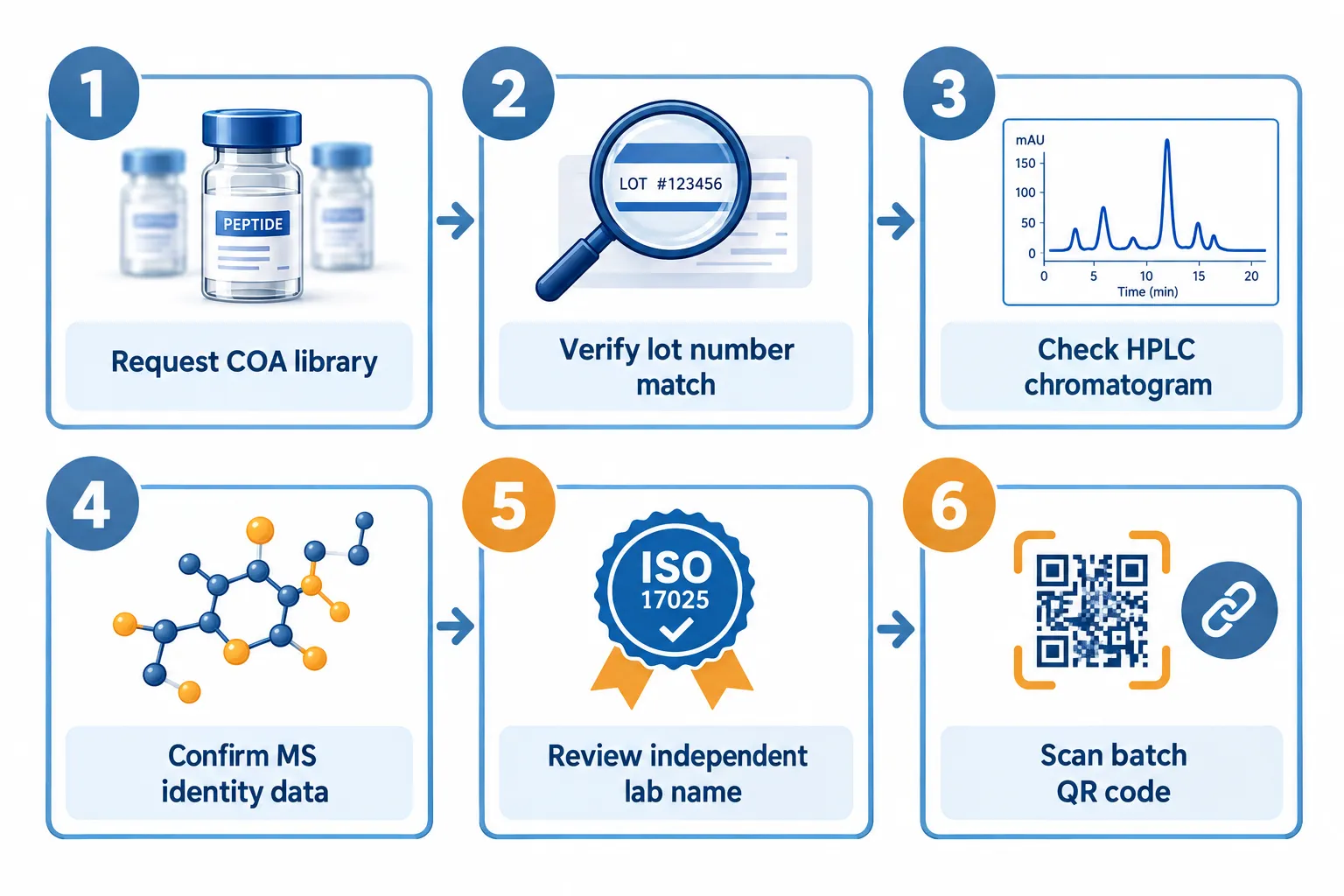
Traceability means a researcher can link a specific vial to a specific production run and its associated analytical data. Best-practice suppliers assign unique lot numbers to every vial, maintain searchable COA libraries, and increasingly use QR codes or digital batch IDs that connect directly to the testing lab's portal. This supports reproducibility: if an experiment needs to be replicated, the exact batch parameters are recoverable.
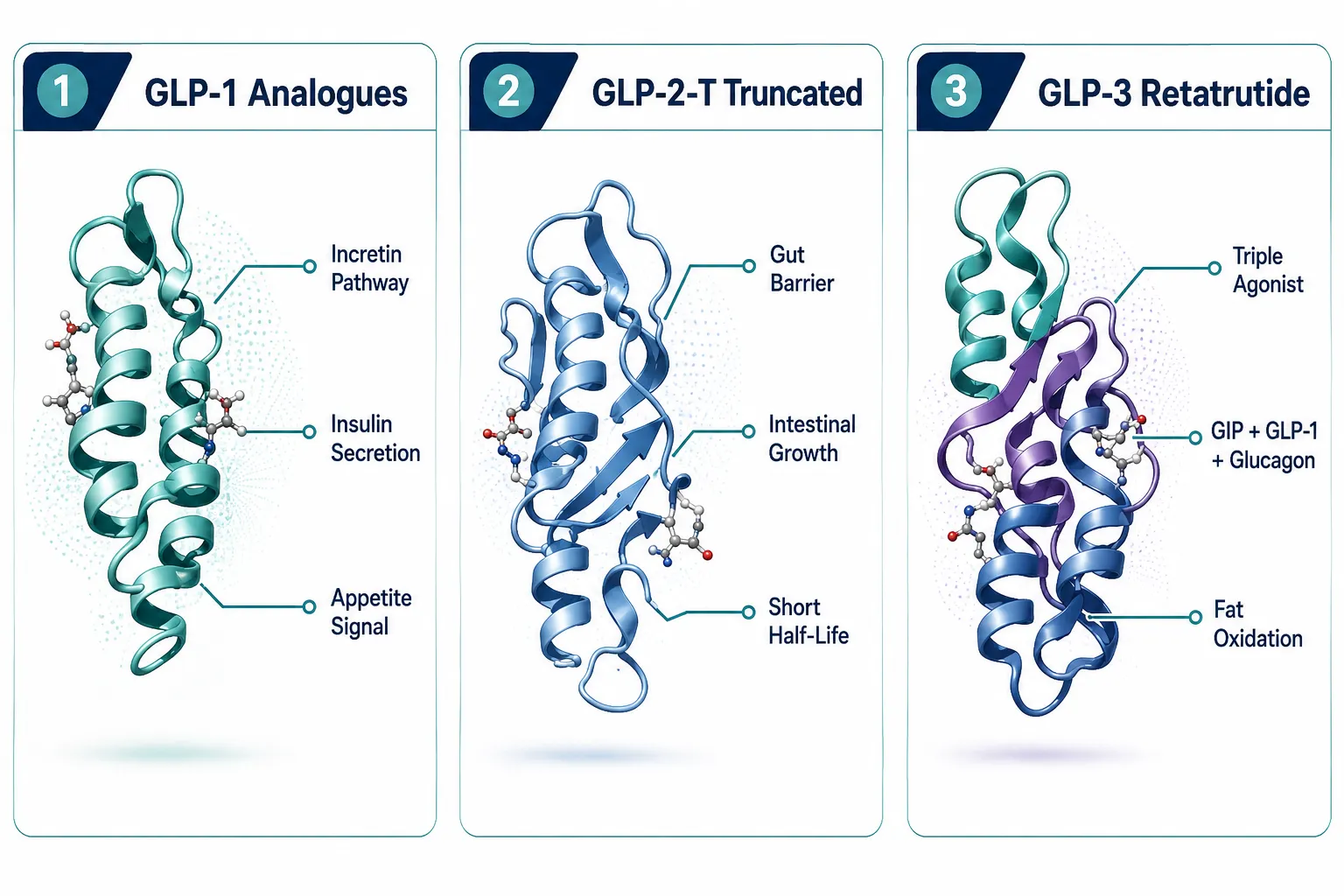
For researchers sourcing compounds such as GLP-3R peptides or cagrilinitide, batch traceability is particularly important given the complexity of these molecules and the sensitivity of downstream assays.
Practical Vendor Evaluation: What to Check Before Ordering
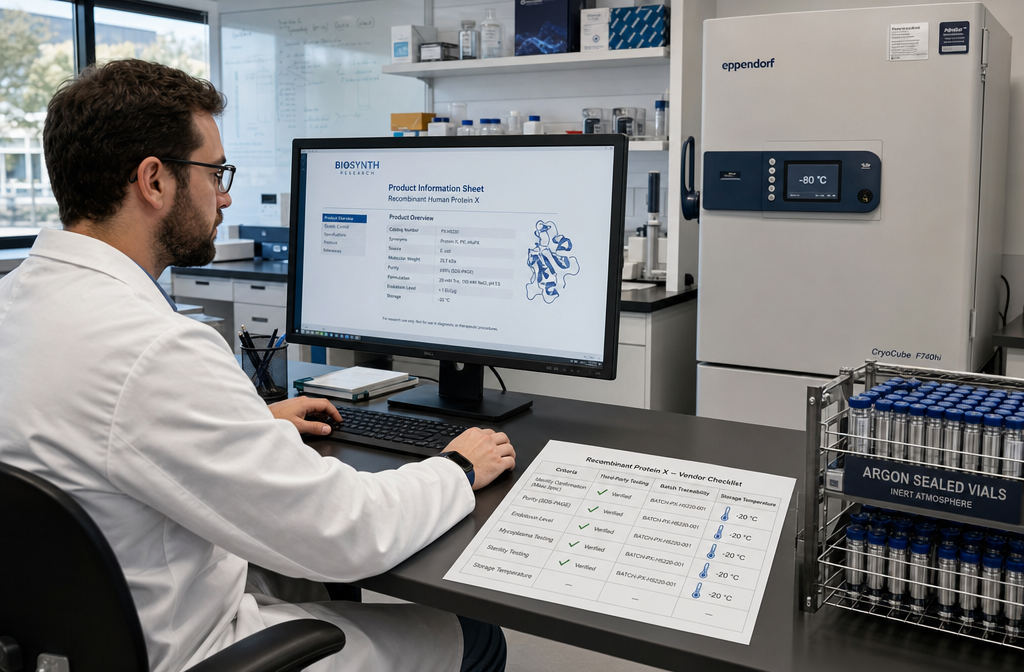
The framework above translates into a short pre-purchase checklist that researchers can apply to any supplier, including those listed in general where to buy peptides directories.
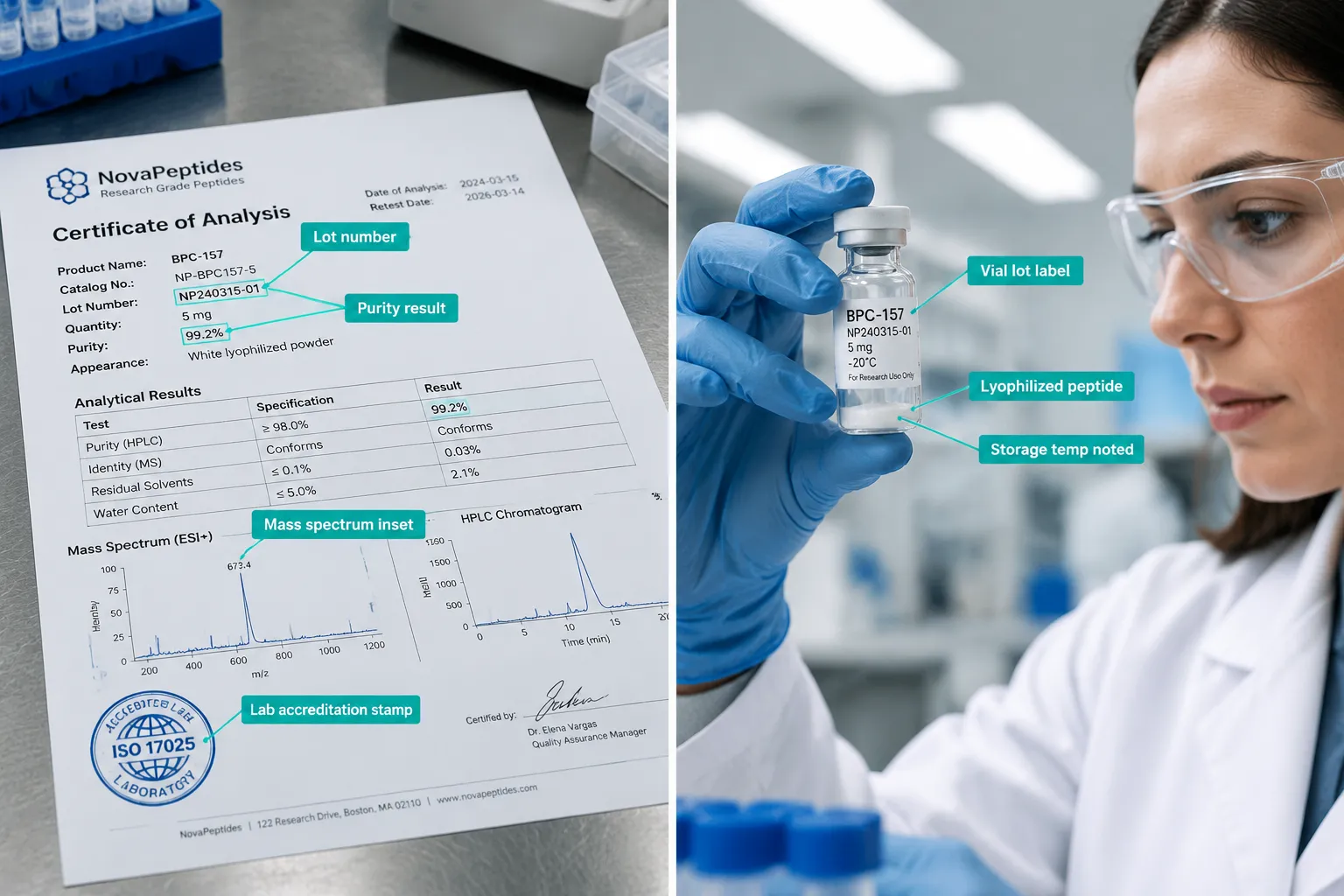
Before placing an order, confirm the following:
- The COA on the product page carries the same lot number as the vial being shipped.
- The HPLC chromatogram and mass spectrum are visible on the COA, not just a summary percentage.
- The testing laboratory is named and independently accredited, not the vendor's own facility.
- The supplier's "Research Use Only" policy is clearly stated on the site and product pages.
- Contaminant screening results are included, or the supplier can specify which analytes are tested.
For compounds where purity and identity are especially critical, such as SS31 and epithalon or sermorelin, a seven-parameter independent panel (covering purity, net peptide content, identity, heavy metals, sterility, endotoxin, and adulterant screening) now exists as a documented benchmark in the industry.
Signals that indicate lower documentation standards:
- COAs available "on request" only, after purchase
- No laboratory name or accreditation number on the document
- Purity stated as a single number with no supporting chromatogram
- No lot number on the vial or product page
- Identity confirmed by HPLC alone, without mass spectrometry
Conclusion
The question of where to buy research-use peptides is ultimately a question about documentation quality. A vendor-comparison framework built around COAs, identity testing, and batch traceability gives researchers an objective, repeatable method for evaluating any supplier, independent of marketing claims or price.
Actionable next steps:
- Download or screenshot the COA from any supplier under consideration before ordering, and verify the lot number matches the product listing.
- Confirm the testing laboratory is third-party and independently accredited; search the lab name to verify its existence and scope.
- Check that identity is confirmed by mass spectrometry, not HPLC alone.
- For high-stakes research, prioritize suppliers with multi-parameter panels and digital batch traceability systems.
- Revisit vendor documentation standards with each new order, lot-level quality can vary even within a single supplier.
Applying this framework consistently transforms a purchasing decision into a quality-control step, protecting both research integrity and the reproducibility of results.