

Glow Blend vs. Klow Blend: Which Peptide Formulation is Best for Skin Rejuvenation Research?
{"cover":"Professional landscape format (1536×1024) hero image with bold text overlay: 'Glow Blend vs. Klow Blend: Which Peptide Formulation is Best for Skin Rejuvenation Research?' in extra large 72pt white bold sans-serif font with dark drop shadow, centered upper third. Background features a split-panel laboratory aesthetic: left side glowing amber-gold vials labeled Glow Blend on a clean white lab bench, right side cool blue-tinted vials labeled Klow Blend, with microscopic skin cell imagery subtly overlaid. Color palette: deep navy, gold, white. Magazine cover quality, editorial style, high contrast, cinematic lighting.","content":["Detailed landscape format (1536×1024) scientific comparison infographic showing two peptide vial sets side by side on a sterile lab surface, left vial cluster labeled Glow Blend with GHK-Cu, BPC-157, TB-500 ingredient callouts in gold text, right cluster labeled Klow Blend with added KPV callout in blue text. Molecular structure diagrams float above each set. Clean white background with subtle skin-texture overlay. Professional research aesthetic, annotated diagram style, high contrast labels.","Landscape format (1536×1024) close-up macro photography of human skin cross-section illustration showing collagen fiber networks and cellular repair activity, with split overlay: left half showing smooth rejuvenated skin texture representing Glow Blend effects, right half showing reduced redness and inflammation representing Klow Blend KPV action. Warm amber and cool teal color grading. Scientific diagram aesthetic with subtle peptide molecule graphics, editorial quality, research-focused composition.","Landscape format (1536×1024) overhead flat-lay research planning scene on a dark slate surface: open laboratory notebook with peptide comparison notes, two clearly labeled research vials (Glow Blend and Klow Blend), a magnifying glass, printed assay results, and a checklist. Soft directional lighting from upper left. Color palette: charcoal, white, gold accents. Clean, professional research workspace aesthetic, editorial quality, no people, organized composition emphasizing decision-making in peptide research."]
Collagen synthesis declines by roughly 1% per year after age 20, a fact that has driven researchers toward multi-peptide formulations designed to address skin aging at the cellular level. Among the most discussed options in 2026 are two closely related blends: Glow Blend and Klow Blend. The question of Glow Blend vs. Klow Blend: Which Peptide Formulation is Best for Skin Rejuvenation Research? is not simply a matter of preference, it depends on the specific biological pathways a study aims to target.
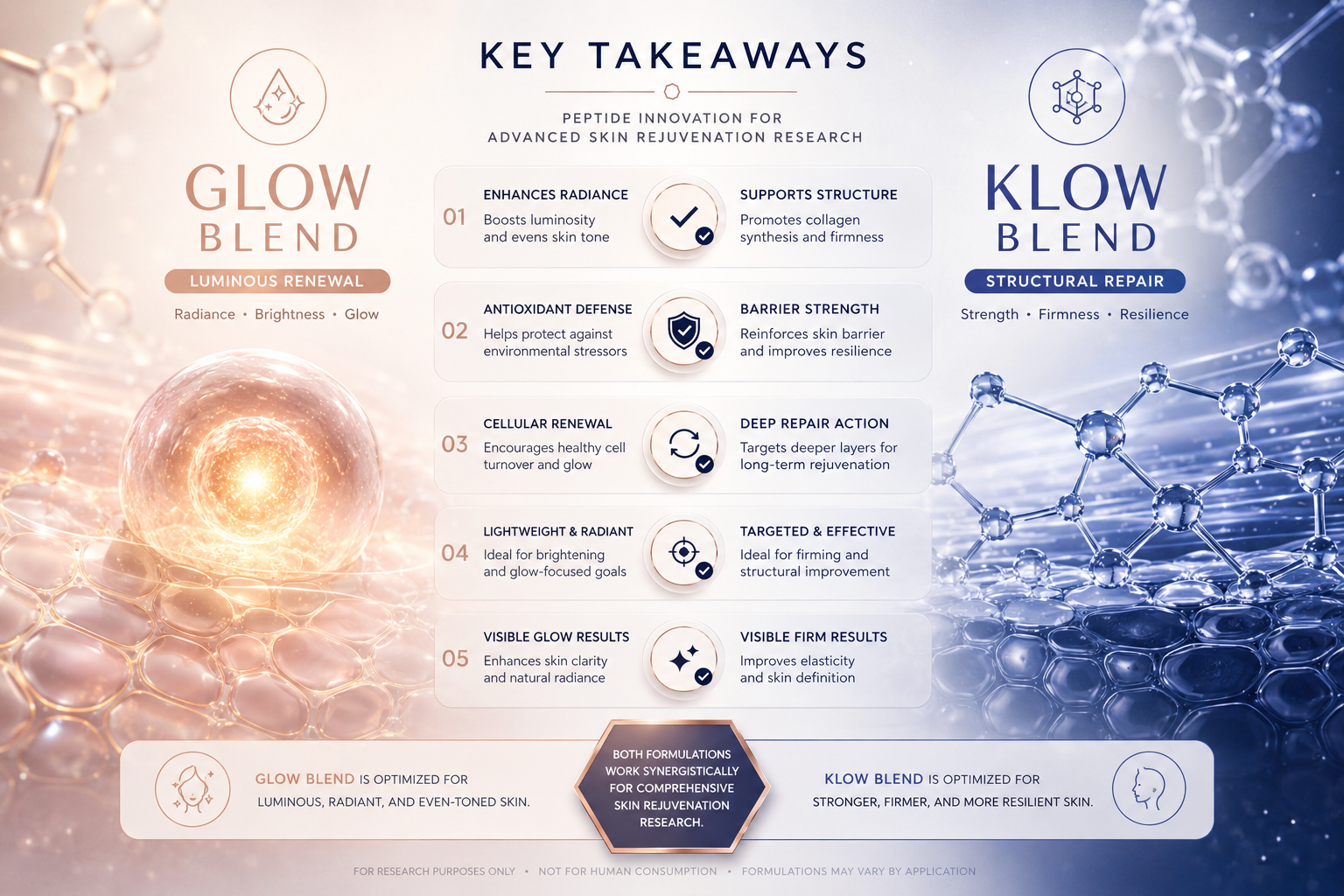
Key Takeaways
- Glow Blend and Klow Blend share three core peptides: GHK-Cu, BPC-157, and TB-500.
- Klow Blend adds KPV, a tripeptide with targeted anti-inflammatory properties.
- Glow Blend is best suited for collagen-focused and general anti-aging research protocols.
- Klow Blend is more appropriate for studies involving inflammation-driven skin conditions such as rosacea or post-procedure redness.
- Choosing between the two depends on the primary research endpoint: structural rejuvenation versus inflammatory modulation.
Composition: What Sets These Two Formulations Apart
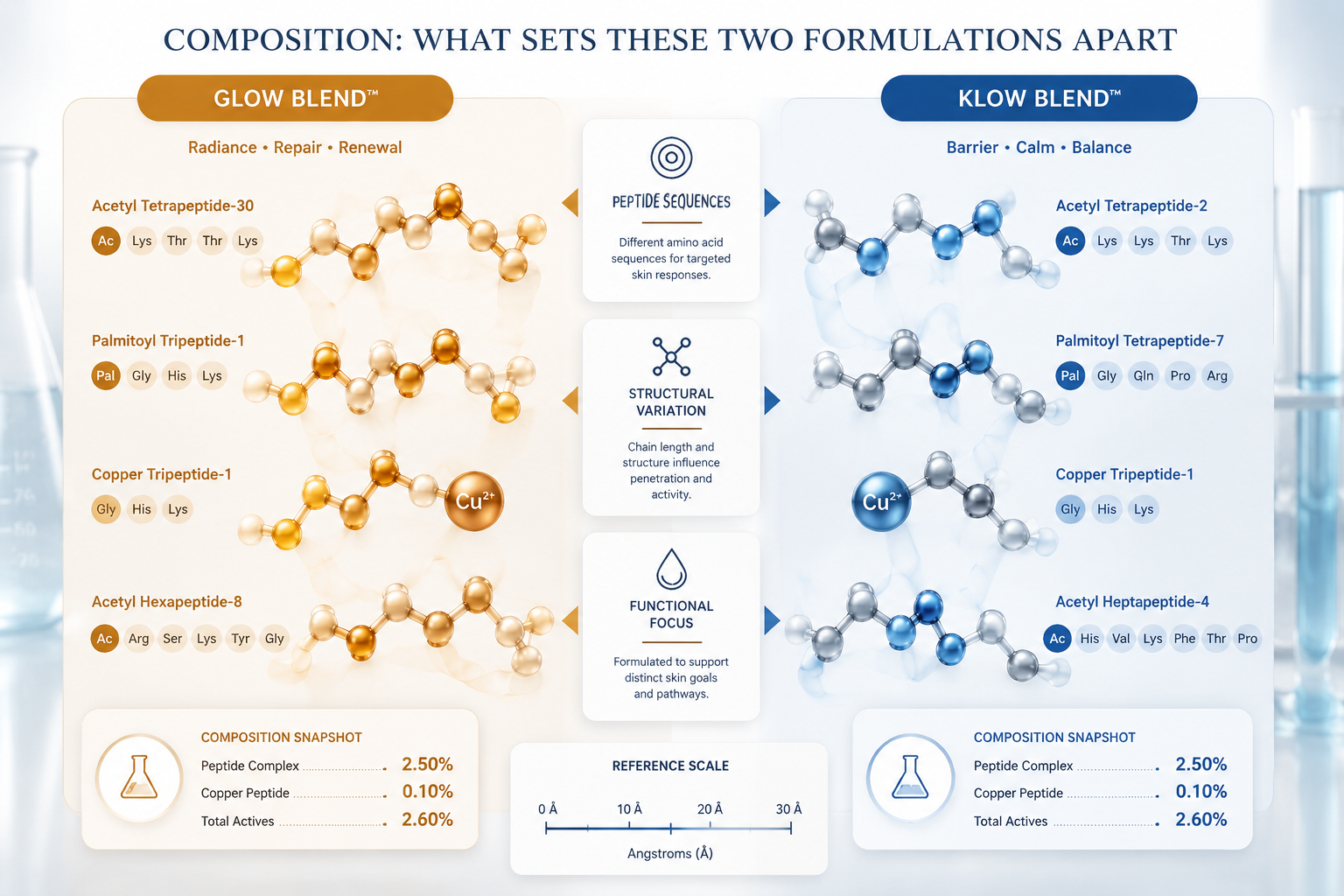
Both blends are built on a shared foundation of three well-studied peptides.
| Peptide | Glow Blend | Klow Blend |
|---|---|---|
| GHK-Cu (50 mg) | Yes | Yes |
| BPC-157 (10 mg) | Yes | Yes |
| TB-500 (10 mg) | Yes | Yes |
| KPV (10 mg) | No | Yes |
The addition of KPV in Klow Blend is the defining difference. KPV is a tripeptide fragment derived from alpha-melanocyte-stimulating hormone. It works primarily by inhibiting NF-kB signaling, which reduces the production of pro-inflammatory cytokines. This makes Klow Blend a more targeted tool for research involving skin inflammation rather than structural remodeling alone.
Researchers exploring the Glow Blend formulation will find it optimized for collagen-centric endpoints, while those examining the Klow Blend formulation gain an additional inflammatory modulation variable.
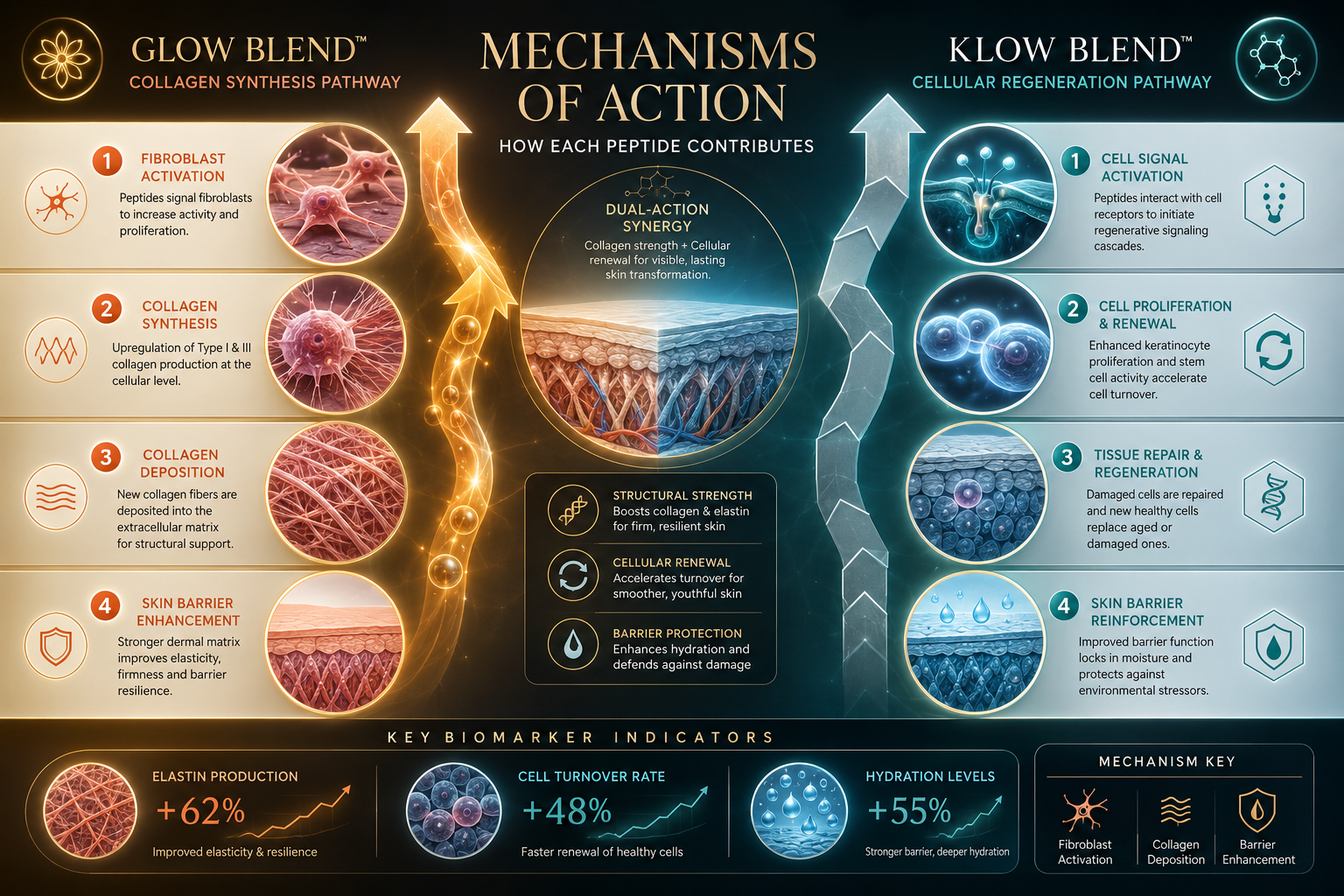
Mechanisms of Action: How Each Peptide Contributes
Understanding the role of each component is essential when evaluating Glow Blend vs. Klow Blend: Which Peptide Formulation is Best for Skin Rejuvenation Research?
GHK-Cu (Copper Peptide)
This peptide stimulates collagen and elastin synthesis, promotes skin remodeling, and supports the activity of antioxidant enzymes. It is considered the primary driver of anti-aging effects in both blends. Researchers interested in the broader regenerative context of copper peptides can also review GHK-Cu research themes.
BPC-157 (Body Protection Compound)
BPC-157 supports tissue repair and promotes angiogenesis, the formation of new blood vessels. This is relevant to skin research because improved vascularization supports nutrient delivery to dermal layers. For additional context on tissue repair peptide research, see BPC-157 and TB-500 research.
TB-500 (Thymosin Beta-4 Fragment)
TB-500 facilitates cell migration, reduces localized inflammation, and accelerates wound-healing responses. It works synergistically with BPC-157 in both formulations.
KPV (Klow Blend Only)
By blocking NF-kB pathways, KPV specifically targets the inflammatory cascade. This makes it highly relevant for studies on rosacea, post-procedure skin recovery, and chronic inflammatory dermatological conditions.
"The distinction between these two blends is not about potency, it is about pathway specificity."
Choosing the Right Blend for Your Research Protocol
When evaluating Glow Blend vs. Klow Blend: Which Peptide Formulation is Best for Skin Rejuvenation Research?, the answer hinges on the study's primary endpoint.
Choose Glow Blend if the research focuses on:
- Collagen and elastin production
- General skin texture and firmness improvement
- Anti-aging biomarker studies
- Skin remodeling without an inflammatory component
Choose Klow Blend if the research focuses on:
- Inflammatory skin conditions (rosacea, eczema-adjacent models)
- Post-procedure recovery protocols
- NF-kB pathway modulation
- Multi-pathway skin rejuvenation with an inflammatory variable
Researchers working on broader longevity and skin health themes may also find value in reviewing Glow Blend longevity research themes and Klow Blend multi-pathway research for additional context on how each formulation fits within wider research frameworks.
For labs sourcing multiple peptide compounds, the wholesale peptides catalog offers relevant procurement options, and reviewing quality testing protocols is strongly recommended before initiating any assay.
Conclusion
The Glow Blend vs. Klow Blend: Which Peptide Formulation is Best for Skin Rejuvenation Research? question does not have a single universal answer. Glow Blend is the stronger choice for studies centered on structural skin rejuvenation, collagen synthesis, and general anti-aging endpoints. Klow Blend is better suited when inflammatory modulation is a core variable in the research design.
Actionable next steps for researchers:
- Define the primary biological endpoint before selecting a formulation.
- Review the full ingredient profiles of both Glow Blend and Klow Blend against your assay requirements.
- Verify purity and concentration data through third-party certificates of analysis.
- Consider whether a multi-pathway approach (Klow Blend) adds value or introduces confounding variables to your specific protocol.
Selecting the right peptide blend from the outset saves time, reduces variability, and produces more interpretable data.