
What Is GLP2-T Peptide? A Research-Only Guide to Gut Barrier Biology and Intestinal Recovery Models
Roughly 70% of the immune system resides in or around the gut wall — a fact that makes intestinal barrier research one of the most consequential areas in modern peptide science. This guide answers the core question of what is GLP2-T peptide, then expands into gut barrier biology, nutrient absorption mechanisms, and why GLP-2 analog discussions matter in preclinical research settings as of 2026.
Key Takeaways
- GLP-2 is a 33-amino acid peptide hormone produced by intestinal L-cells that drives mucosal growth and barrier repair.
- GLP2-T refers to a modified, tirzepatide-conjugated or truncation-resistant analog designed to extend the peptide's short half-life in research models.
- The peptide acts through multiple growth factors, including IGF-1, IGF-2, keratinocyte growth factor, and ErbB ligands.
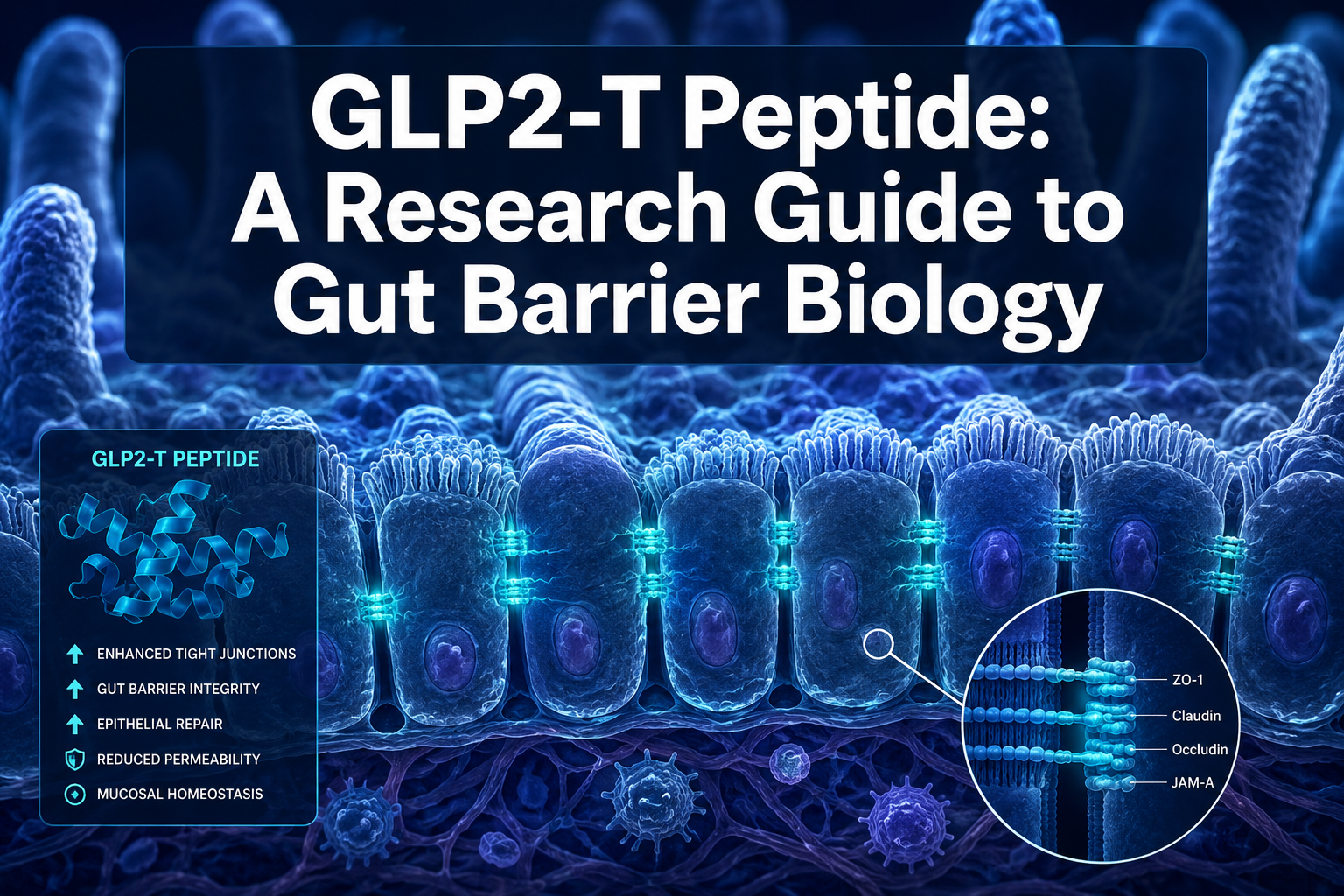
- GLP-2 receptor activation upregulates tight junction proteins such as claudin-3, occludin, and ZO-1.
- All research discussed here applies strictly to preclinical and in vitro models; GLP2-T is not approved for human therapeutic use.
Understanding GLP-2: The Foundation Behind GLP2-T
GLP-2 (glucagon-like peptide-2) is a 33-amino acid hormone cleaved from proglucagon in the intestinal L-cells of the small bowel and colon. Its primary biological role is to promote intestinal mucosal growth, enhance nutrient absorption, and reduce gut permeability. In animal models, GLP-2 administration produced dramatic increases in small intestinal mass, villus height, crypt depth, and mucosal thickness — findings that positioned it as a physiological hormone dedicated almost entirely to intestinal growth and repair.
GLP2-T is a research designation for a truncation-resistant or structurally modified GLP-2 analog. The "T" suffix in various research catalogs typically signals enhanced stability against dipeptidyl peptidase-4 (DPP-4) degradation, which is the primary reason native GLP-2 has a half-life of only a few minutes in circulation. By extending that window, GLP2-T analogs allow researchers to study downstream intestinal effects over longer experimental timeframes.
The clinically approved GLP-2 analog teduglutide (Gattex) validates this approach — it was engineered on the same principle of DPP-4 resistance and is currently the only approved therapy for short bowel syndrome. GLP2-T represents the next generation of that research lineage.
For context on how incretin-class peptides overlap in research themes, see the GLP-3 Reta incretin research overview.
Gut Barrier Biology: How GLP2-T Research Models Work
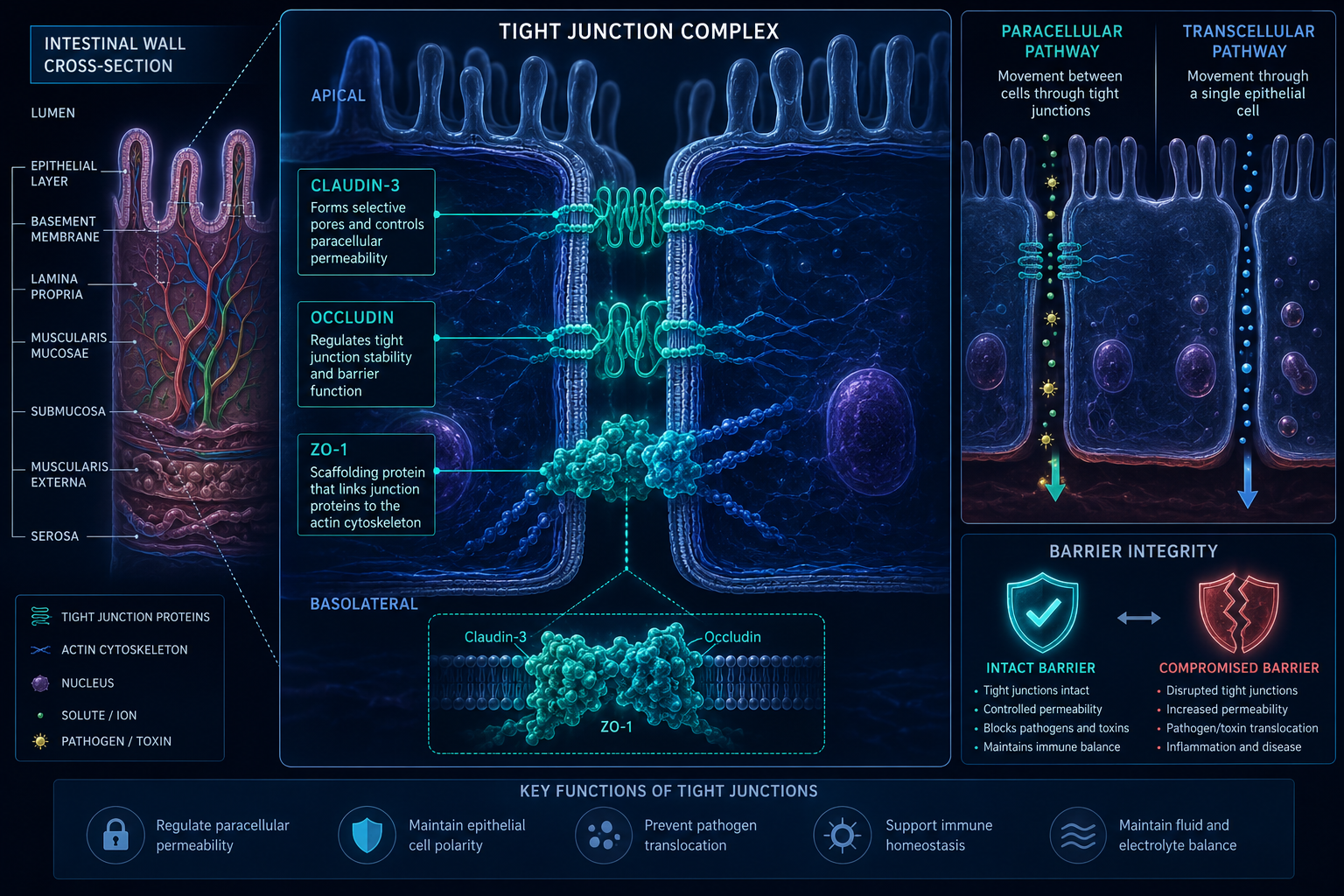
The intestinal epithelial barrier is a single-cell-thick layer that separates luminal contents from systemic circulation. Its integrity depends on tight junction proteins — specifically claudin-3, occludin, and zonula occludens-1 (ZO-1). GLP-2 receptor activation has been shown to upregulate all three of these proteins, reinforcing both paracellular and transcellular pathways.
Key mechanisms identified in preclinical models include:
| Mechanism | Growth Factor Involved | Primary Site |
|---|---|---|
| Crypt cell proliferation | IGF-1, IGF-2 | Small intestine |
| Colonic mucosal growth | Keratinocyte growth factor, IGF-2 | Colon |
| Epithelial restitution | ErbB ligands | Small intestine |
| Barrier protein upregulation | GLP-2R signaling | Entire epithelium |
In Caco-2 cell studies, GLP-2 enhanced epithelial barrier formation and reduced the damaging effects of TNF-alpha, a key pro-inflammatory cytokine. This finding is particularly relevant to inflammatory bowel disease models, where barrier disruption and immune activation are central features.
GLP-2 also plays a role in intestine-microbiota-immune system crosstalk, helping to maintain metabolic homeostasis alongside barrier integrity. Researchers studying gut-adjacent peptides such as BPC-157 research themes often compare findings with GLP-2 data given overlapping mucosal recovery endpoints.
For broader peptide longevity research context, the longevity peptide research hub provides relevant background on how gut health intersects with systemic aging models.
GLP2-T in Intestinal Recovery Models: Research-Only Considerations
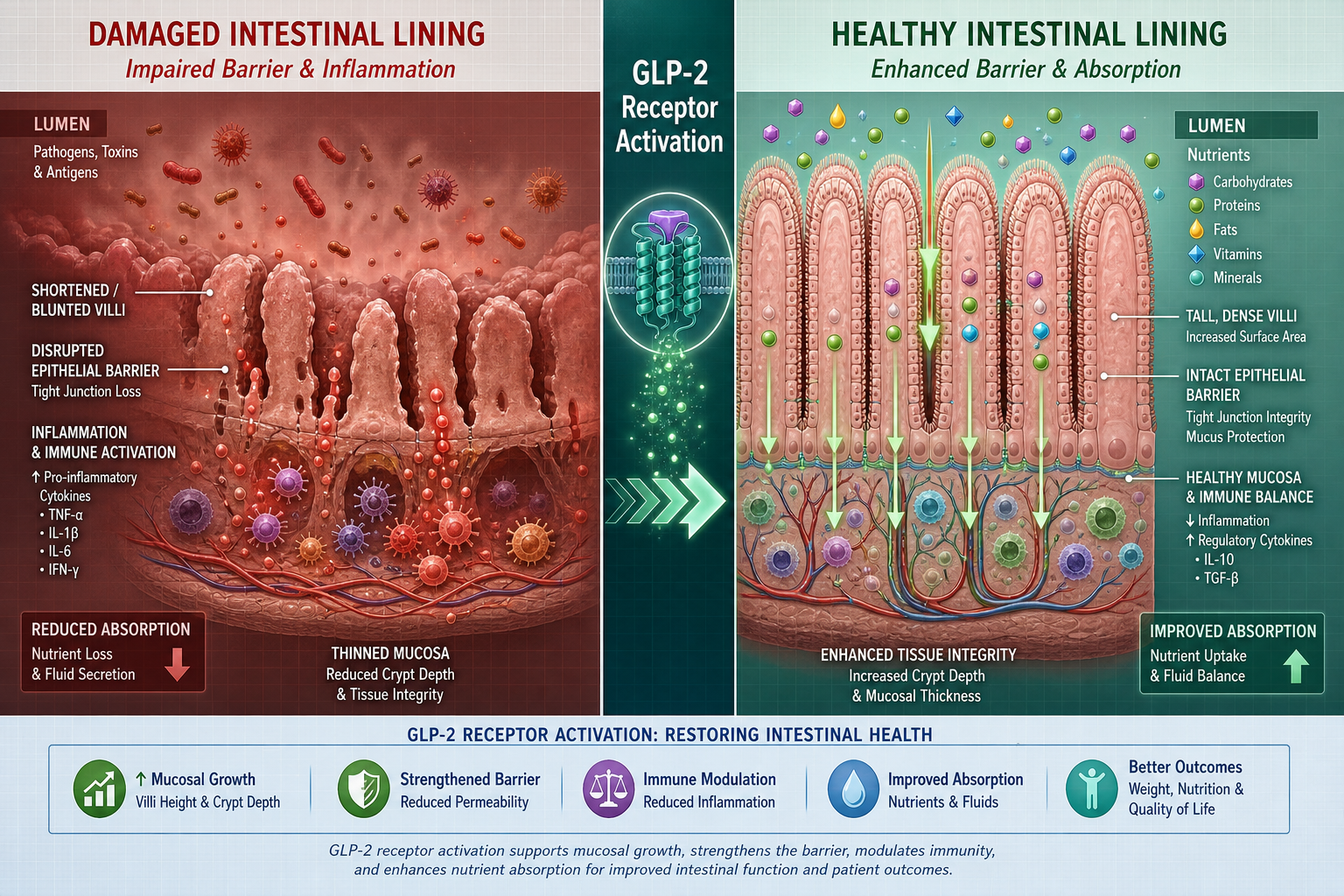
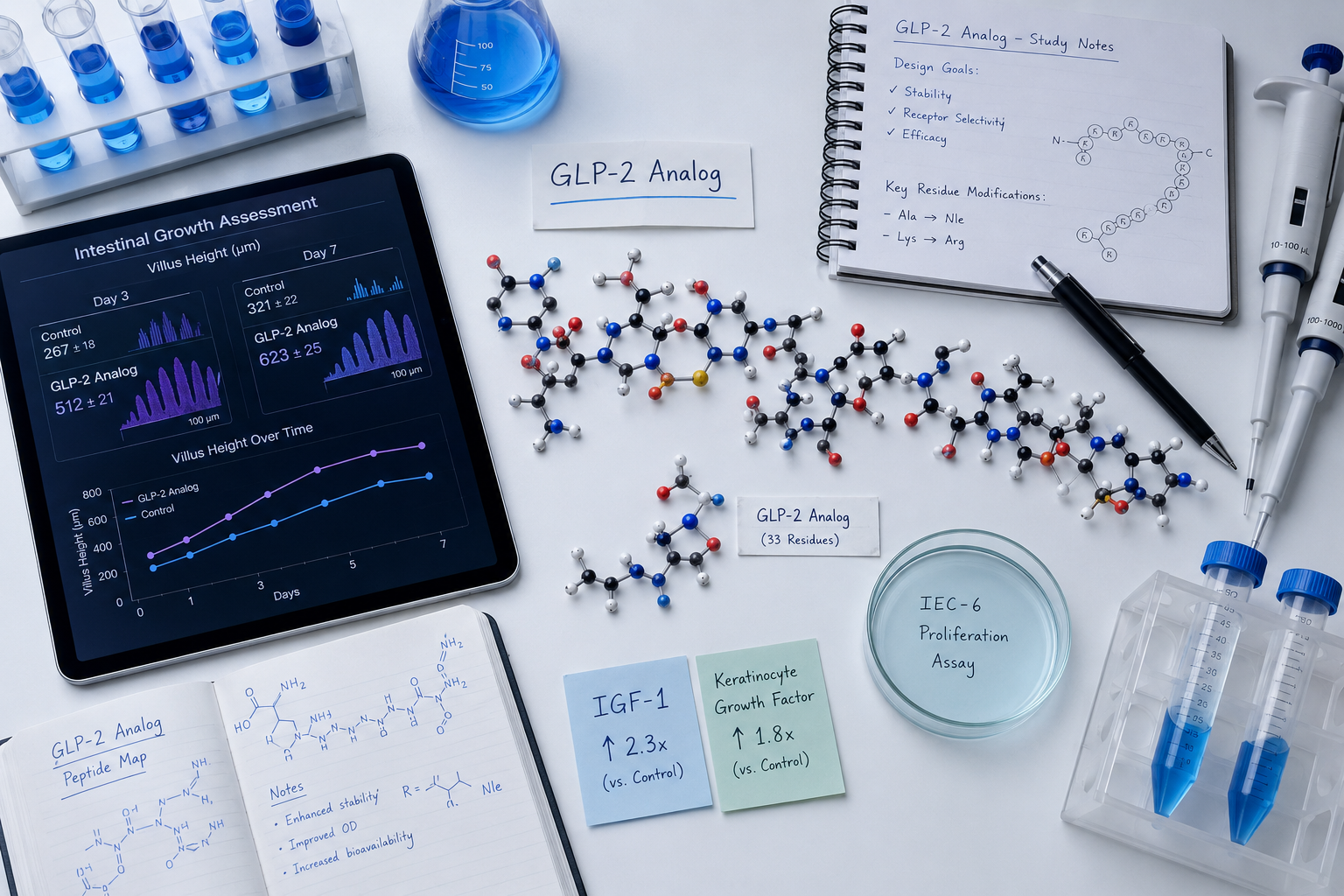
Preclinical intestinal recovery models using GLP-2 analogs typically fall into three categories: enteritis models, colitis models, and acid-injury restitution models. In all three, GLP-2 treatment has been associated with reduced mucosal damage, faster epithelial restitution, and improved barrier function scores.
What this guide to gut barrier biology and intestinal recovery models emphasizes is that GLP2-T's research value lies in its stability profile. Longer receptor engagement allows investigators to isolate downstream signaling events that are otherwise masked by rapid peptide clearance.
Researchers sourcing analogs for these models should prioritize purity verification. Resources like the peptide supplier comparison guide and the quality testing protocols page provide practical frameworks for evaluating vendor documentation.
Parallel research into gut-adjacent peptides such as TB-500 experimental models and GHK-Cu copper peptide sourcing can offer complementary data on tissue repair signaling in adjacent biological systems.
Conclusion
What is GLP2-T peptide, in practical terms? It is a research-grade GLP-2 analog engineered for enhanced stability, designed to help investigators study intestinal mucosal growth, tight junction regulation, and epithelial barrier recovery in controlled preclinical settings. The underlying biology — involving IGF-1, keratinocyte growth factor, and ErbB ligands — is well-documented, and the clinical validation of teduglutide confirms that this pathway has real-world relevance.
Actionable next steps for researchers in 2026:
- Review existing GLP-2 receptor signaling literature before designing intestinal recovery protocols.
- Confirm DPP-4 resistance specifications when sourcing GLP2-T to ensure experimental half-life matches study duration.
- Cross-reference barrier integrity endpoints with tight junction protein assays (claudin-3, occludin, ZO-1).
- Consult the comprehensive peptide catalog to identify complementary research compounds for multi-pathway gut models.
- Always operate within institutional research guidelines; GLP2-T is not approved for human use.