Call or Text 727-513-9780
  • Shopping Cart Shopping Cart
    0Shopping Cart
Pure Tested Peptides | America's most trusted Peptides for sale online
  • Peptides for sale
    • Oral Peptides for sale
      • Peptide Capsules for sale
      • BPC 157 Capsules 1000mcg
      • SLU-PP-332 Capsules | 1000 mcg
      • 5-Amino-1MQ 50mg Capsules
      • Tesofensine 500mcg
    • All Peptides for sale
    • Peptide Sprays
      • BPC 157 Nasal Spray Kit
      • BPC-157 TB500 Nasal Spray Kit
      • Semax Nasal Spray 10mg
      • Selank – Nasal Spray Kit – 10mg
      • Epithalon 50MG Nasal Spray Kit
      • Ipamorelin 10mg Nasal Spray
      • Klow Nasal Spray (BPC-157 + TB-500 + GHK-Cu + KPV) | 80mg
      • Hulk Nasal Spray Tesa / Ipa Blend 6/3 MG
      • Klow Nasal Spray
      • NAD + 500 mg Nasal Spray
      • PT-141 Nasal Spray Kit
    • GHRH Peptides
      • Ipa Peptides
      • CJC-1295 Peptides
        • CJC-1295 with DAC 5 mg
        • CJC-1295 without DAC 5 mg
        • CJC-1295 Ipa 10mg
      • Tesa Peptides
        • Tesa Peptide
        • Tesa 20 mg
    • GHK-Cu Peptides
      • All GHK-Cu Peptides
      • GHK-Cu 100mg
      • KLOW Peptide Blend – Buy KLOW blend online
    • BPC Peptides
      • All BPC Peptides
      • BPC-157
      • BPC-157 TB-500
      • BPC 157 capsules 1000mcg
    • SLU-PP-332 Peptides
      • All SLU-PP-332 Peptides
      • SLU-PP-332 5mg
    • GLP3 Peptides
      • GLP3-R
      • GLP3-R CAG 10mg
      • GLP3-R 20mg
    • PT-141 Peptides
      • PT-141 Peptides for sale
      • PT-141 10mg
      • PT-141 Nasal Spray
    • CAG Peptides
      • Lipo-C Peptide Blend
      • CAG 5mg
      • CAG 10mg
    • MOTS-C Peptides
      • MOTS-C Peptides for sale
      • MOTS-c peptide
      • MOTS-c 10mg *6 pack*
    • 5 Amino 1MQ Peptides
      • 5 Amino 1MQ Peptides for sale
      • 5-Amino-1MQ 50mg Capsules
      • 5-Amino-1MQ 5mg
    • Epithalon Peptides
      • Epithalon Peptides for sale
      • Epithalon 10mg
      • Epithalon 50mg
  • Shop
    • GLPs
      • 5-Amino-1MQ 50mg Capsules
      • 5-Amino-1MQ 5mg
      • GLP3-Reta
      • L-Carnitine 500mg/ml
      • Tesofensine 500mcg
      • SLU-PP-332 5mg
      • MOTS-c 10mg *6 pack*
    • Epithalon & BPC Peptides
      • Epithalon 10mg
      • Epithalon 50mg
      • BPC-157
      • BPC 157 capsules 1000mcg
      • BPC-157 TB-500
      • BPC-157 TB500 Nasal Spray Kit
      • BPC 157 Nasal Spray Kit
    • BPC TB-500 & NAD+ Peptides
      • NAD+ 500 mg
      • KLOW Peptide Blend – Buy KLOW blend online
      • GLOW Peptide Blend
      • TB 500 5mg
      • BPC 157 capsules 1000mcg – Supplement
      • BPC 157 Nasal Spray Kit
      • BPC-157
      • BPC-157 TB500 Nasal Spray Kit
      • BPC-157 TB-500
      • BPC 157 capsules 1000mcg
    • LL-37 Peptide
      • LL-37 10 mg
    • MOTS-C & Selank
      • MOTS-c peptide
      • Selank 10mg
    • GHK Peptides
      • GHK-Cu 100mg
      • GLOW Peptide Blend
      • KLOW Peptide Blend – Buy KLOW blend online
  • COAs
  • Wholesale
    • Wholesale Peptides for sale
  • PTP FAQ
  • Affiliates
    • Affiliate Program
    • Affiliate Signup
  • Contact
    • Contact Customer Service
    • Text Customer Support
  • About US
  • Shop all peptides
  • Login / Register Login / Register Page Link Login / Register Page Link
  • Click to open the search input field Click to open the search input field Search
  • Menu Menu

Tag Archive for: lh fsh stimulation

Enclomiphene vs. Tamoxifen: Comparative Research on serm Peptide Receptor Modulation

Enclomiphene vs. Tamoxifen: Comparative Research on serm Peptide Receptor Modulation

June 22, 2026/0 Comments/in Uncategorized/by

Only one of these two compounds preserves male fertility while raising testosterone — and the distinction comes down to how each molecule interacts with estrogen receptors at the cellular level. The field of Enclomiphene vs. Tamoxifen: Comparative Research on serm Peptide Receptor Modulation has grown substantially as researchers seek more targeted hormonal interventions that avoid the reproductive suppression caused by conventional testosterone replacement therapy.

Both enclomiphene and tamoxifen belong to the Selective Estrogen Receptor Modulator (serm) class, yet their pharmacological profiles, half-lives, and clinical applications differ in ways that matter deeply for research design and therapeutic strategy.


Key Takeaways

  • Enclomiphene is the trans-isomer of clomiphene citrate and acts as a pure estrogen receptor antagonist in the hypothalamus and pituitary, stimulating endogenous testosterone production.
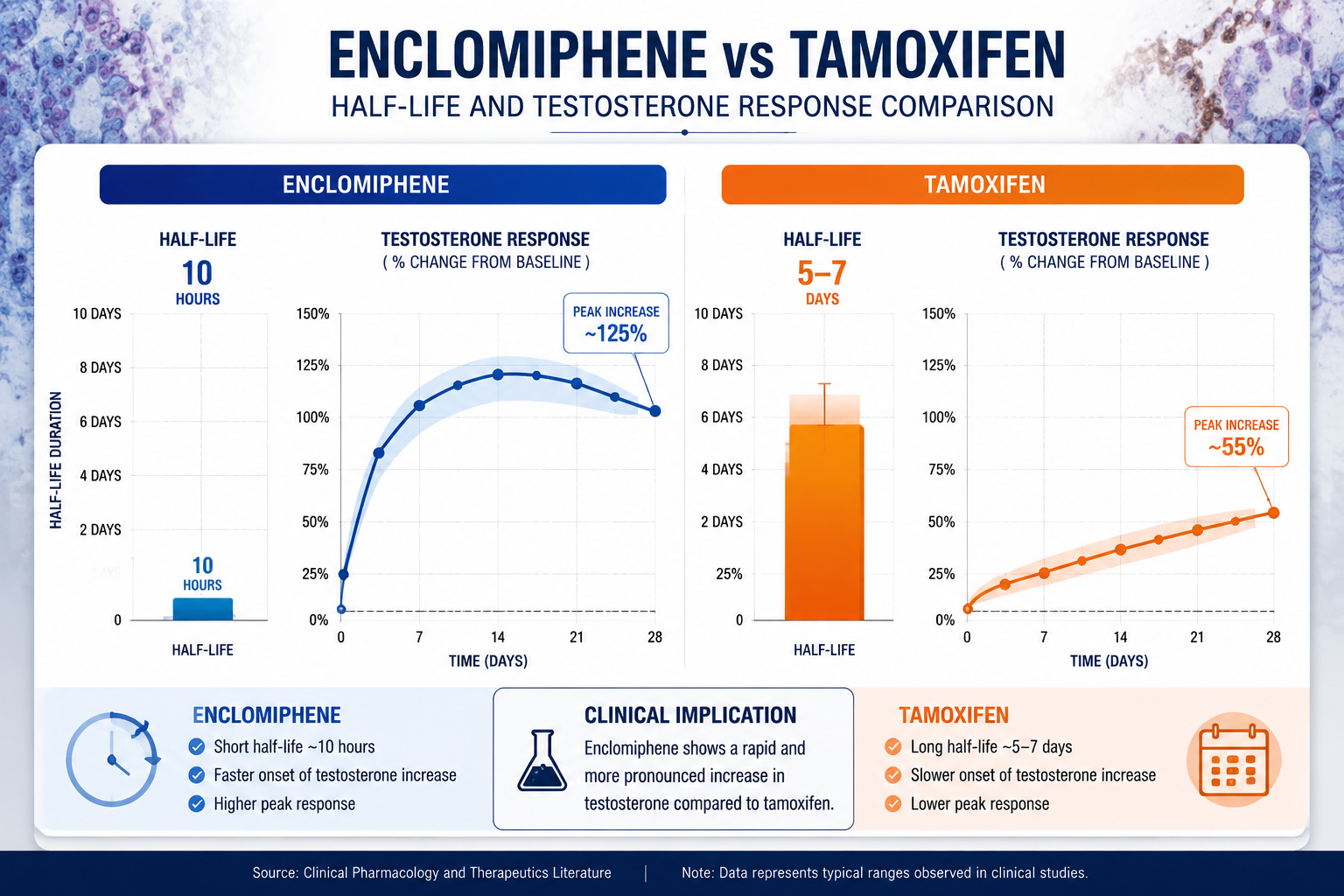
  • Tamoxifen has a significantly longer half-life (5-7 days) compared to enclomiphene (approximately 10 hours), affecting how quickly dosing adjustments take effect.
  • Enclomiphene shows a cleaner side-effect profile than clomiphene citrate because it lacks the zuclomiphene (cis-isomer) component associated with visual disturbances and mood changes.
  • Tamoxifen remains the preferred serm for gynecomastia management due to its potent antagonism at breast tissue estrogen receptors.
  • Neither compound has received FDA approval as a standalone male hypogonadism treatment as of 2026, though both are used off-label in clinical and research contexts.
Key Takeaways

Mechanisms of Action: How Each serm Engages Estrogen Receptors

Understanding Enclomiphene vs. Tamoxifen: Comparative Research on serm Peptide Receptor Modulation begins at the receptor level. Both compounds bind estrogen receptors but do so in different tissues with different downstream effects.

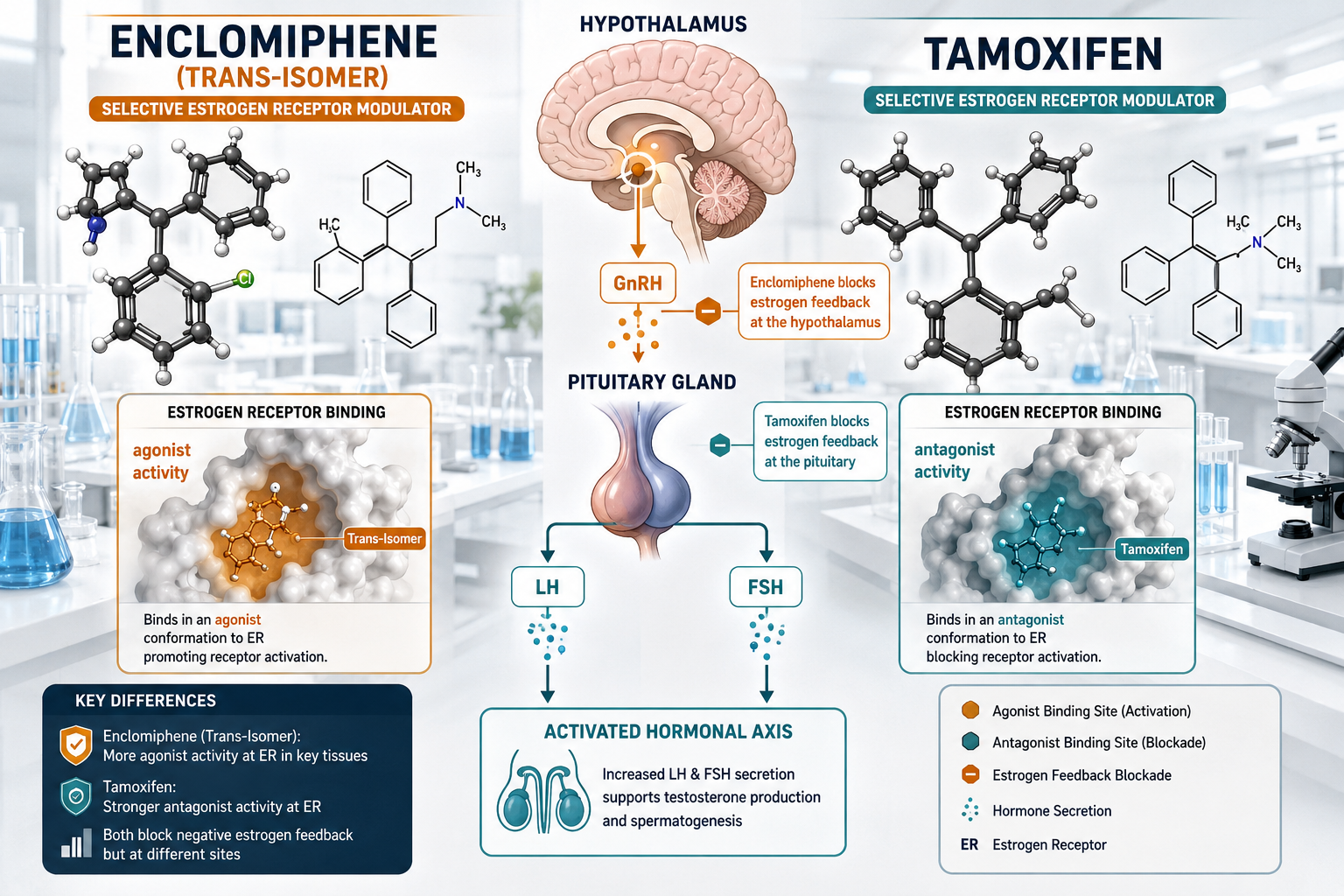
Enclomiphene is the trans-isomer of clomiphene citrate. It acts as an estrogen receptor antagonist specifically in the hypothalamus and pituitary gland. By blocking estrogen's negative feedback signal at these sites, enclomiphene triggers increased secretion of:

  • Gonadotropin-releasing hormone (GnRH)
  • Luteinizing hormone (LH)
  • Follicle-stimulating hormone (FSH)

This cascade stimulates the testes to produce testosterone endogenously, preserving the hypothalamic-pituitary-testicular (HPT) axis rather than bypassing it.

Tamoxifen operates through a similar upstream mechanism but was originally developed for breast cancer treatment. It competitively blocks estrogen receptors in breast tissue and, when used in male health contexts, also reduces pituitary estrogen feedback — raising LH and FSH levels and, consequently, testosterone output.

"The key distinction is tissue selectivity: enclomiphene's activity is concentrated at the hypothalamic-pituitary axis, while tamoxifen's receptor modulation extends to peripheral tissues including breast, bone, and liver."

For researchers exploring broader receptor modulation frameworks, metabolic modulation research lines provide useful context on how peptide-receptor interactions extend beyond hormonal axes.

Mechanisms of Action: How Each serm Engages Estrogen Receptors

Pharmacokinetics and Clinical Profiles Compared

The pharmacokinetic differences between these two serms are significant for research protocol design.

Parameter Enclomiphene Tamoxifen
Half-life ~10 hours 5-7 days
Active metabolites Minimal Yes (endoxifen)
Dosing frequency Daily (12.5-25 mg) Daily or less frequent
FDA approval (male use) Not approved (2026) Not approved (male use)
Primary research use Secondary hypogonadism Gynecomastia, hypogonadism

Enclomiphene's shorter half-life allows researchers and clinicians to make faster dosing adjustments. Tamoxifen's longer half-life and active metabolite (endoxifen) mean that steady-state concentrations take longer to establish and dissipate.

Side-effect profiles also diverge meaningfully:

  • Enclomiphene: transient headaches, hot flashes; notably absent are the visual disturbances linked to zuclomiphene in standard clomiphene citrate
  • Tamoxifen: risk of thromboembolic events, mood changes, and potential hepatotoxicity with long-term use

Both compounds maintain or enhance spermatogenesis, which gives them a clear advantage over exogenous testosterone therapy for fertility-conscious research subjects. For comparison with other peptide compounds studied in neuroendocrine contexts, neuroendocrine and innate immunity research offers relevant background.

Those researching serm compounds for laboratory use can review the serm 10mg research product for sourcing reference.


Pharmacokinetics and Clinical Profiles Compared

Research Applications and Comparative Utility in 2026

The comparative analysis of Enclomiphene vs. Tamoxifen: Comparative Research on serm Peptide Receptor Modulation reveals distinct niches for each compound in active research programs.

Enclomiphene has completed Phase III clinical trials demonstrating statistically significant increases in testosterone levels alongside preserved spermatogenesis. Researchers studying secondary hypogonadism in younger males favor enclomiphene because it stimulates the natural HPT axis without suppressing it. Its cleaner isomer profile reduces confounding variables in study design.

Tamoxifen remains the more established compound for gynecomastia management research, given its potent and well-documented antagonism at breast tissue estrogen receptors. Its longer half-life also makes it useful in protocols where less frequent dosing is preferred.

Both serms are being examined alongside peptide-based interventions. Researchers comparing hormonal optimization strategies often cross-reference findings with growth hormone secretagogue research, such as ipamorelin vs. tesa comparisons and tesa mechanism and application data, since both categories affect body composition and metabolic signaling.

For researchers interested in longevity and cellular signaling intersections, the Glow Blend longevity research themes and Epithalon vs. NAD evidence pages provide complementary reading on receptor-level interventions.


Conclusion

The comparative research on Enclomiphene vs. Tamoxifen: Comparative Research on serm Peptide Receptor Modulation makes clear that these are not interchangeable compounds. Enclomiphene offers a more targeted hypothalamic-pituitary mechanism, a shorter half-life for flexible dosing, and a favorable side-effect profile — making it the stronger candidate for secondary hypogonadism and fertility-preservation research. Tamoxifen retains its edge in gynecomastia management and longer-duration protocols.

Actionable next steps for researchers:

  1. Define the target tissue and hormonal axis before selecting a serm for a given protocol.
  2. Account for half-life differences when designing washout periods and dosing schedules.
  3. Cross-reference serm data with peptide-based hormonal research to build a more complete picture of receptor modulation strategies.
  4. Monitor regulatory updates, as neither compound holds FDA approval for male hypogonadism treatment as of 2026.

https://www.puretestedpeptides.com/wp-content/uploads/2026/06/Enclomiphene-vs.-Tamoxifen-Comparative-Research-on-serm-Peptide-Receptor-Modulation.png 1024 1536 https://www.puretestedpeptides.com/wp-content/uploads/2026/01/buy-peptides-online.jpg 2026-06-22 13:03:462026-06-22 13:03:46Enclomiphene vs. Tamoxifen: Comparative Research on serm Peptide Receptor Modulation
Enclomiphene for Research: Understanding its Mechanism in Hormone Regulation Studies

Enclomiphene for Research: Understanding its Mechanism in Hormone Regulation Studies

June 13, 2026/0 Comments/in Uncategorized/by

Fewer than 15% of men diagnosed with secondary hypogonadism have access to treatments that raise testosterone without shutting down sperm production — a gap that makes enclomiphene for research: understanding its mechanism in hormone regulation studies one of the most actively pursued topics in endocrinology today. As a selective estrogen receptor modulator (serm) with a uniquely targeted action on the hypothalamic-pituitary-gonadal (HPG) axis, enclomiphene has drawn significant scientific attention for its ability to restore hormonal balance through the body's own signaling pathways.

Key Takeaways

  • Enclomiphene blocks hypothalamic estrogen receptors, triggering a natural cascade of LH, FSH, and testosterone production.
  • Unlike testosterone replacement therapy (TRT), enclomiphene preserves spermatogenesis, making it valuable in fertility-focused research.
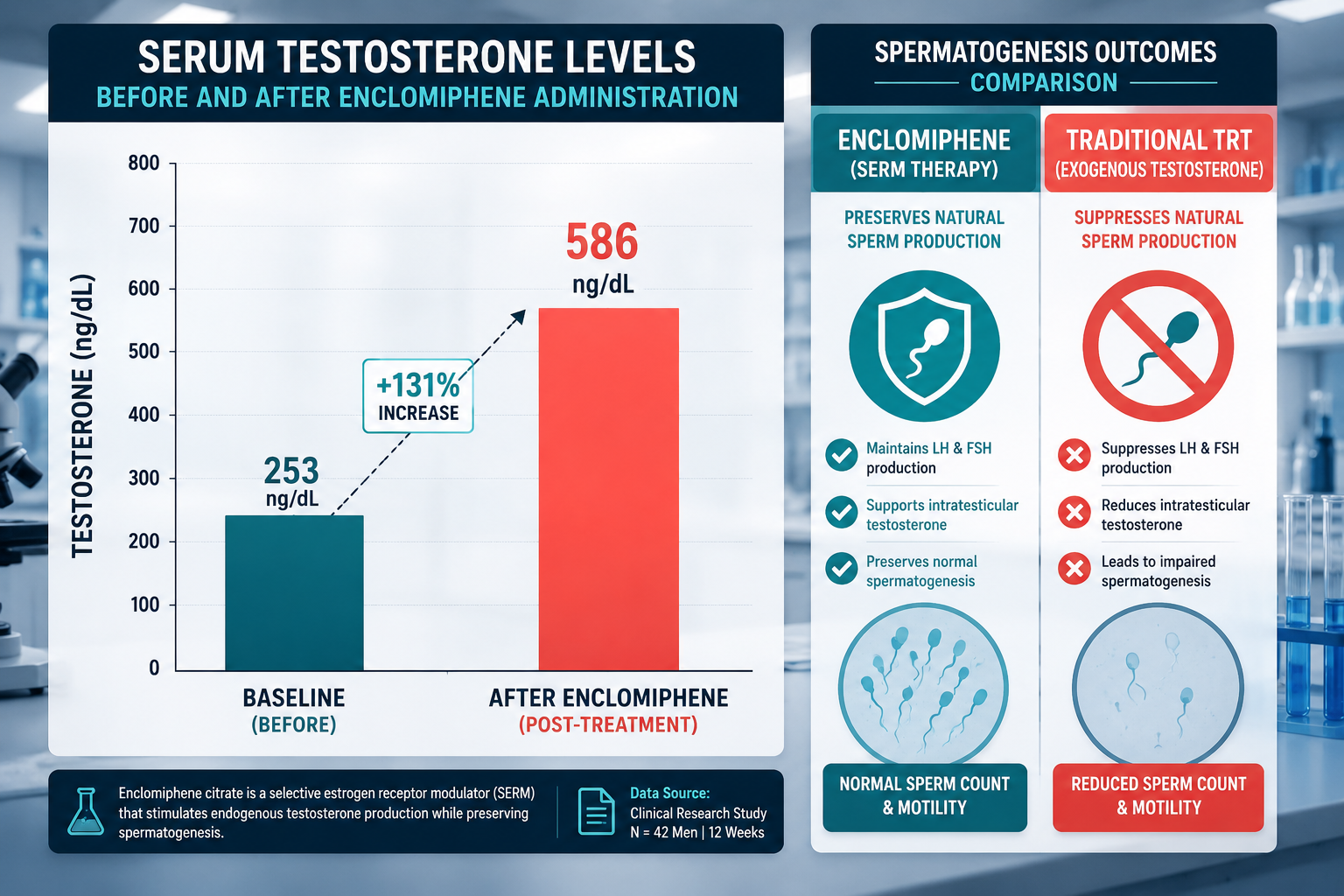
  • Clinical data show testosterone levels rising from roughly 253 ng/dL to 586 ng/dL after six weeks at higher doses.
  • Enclomiphene is the isolated trans-isomer of clomiphene, offering a cleaner serm profile with fewer estrogenic side effects.
  • As of 2026, enclomiphene has not received FDA approval, and long-term safety data remain limited.

Key Takeaways

How Enclomiphene Works: The HPG Axis Mechanism

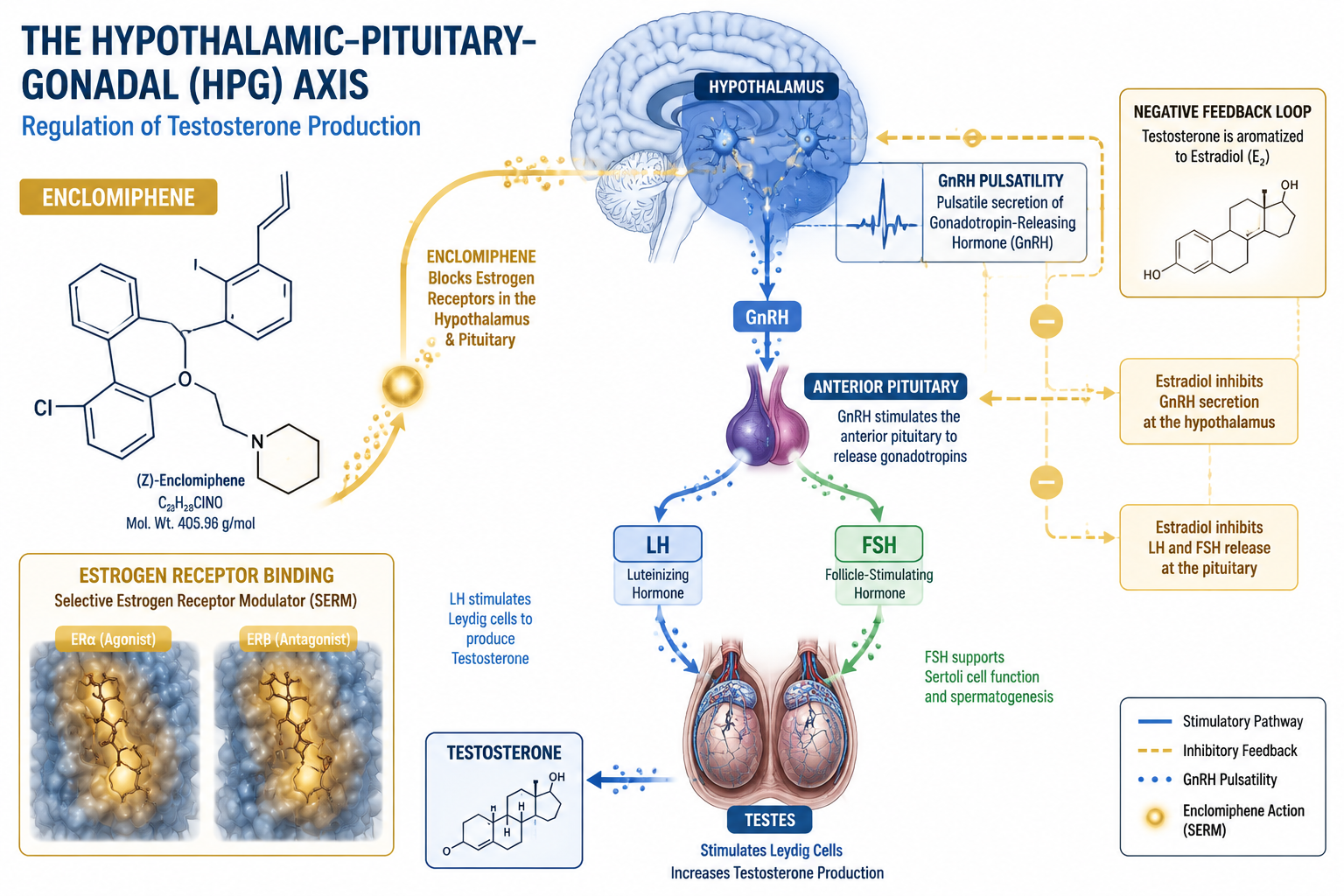
At the core of enclomiphene for research: understanding its mechanism in hormone regulation studies is its precise action on the HPG axis. Enclomiphene functions as a serm by competitively binding to estrogen receptors in the hypothalamus. Under normal conditions, circulating estradiol binds to these receptors and signals the hypothalamus to reduce gonadotropin-releasing hormone (GnRH) secretion — a classic negative feedback loop.

By blocking this feedback, enclomiphene removes the "brake" on GnRH pulsatility. The result is a downstream surge in both luteinizing hormone (LH) and follicle-stimulating hormone (FSH) from the anterior pituitary, which in turn stimulates Leydig cells in the testes to produce endogenous testosterone.

"Enclomiphene essentially resets the hormonal thermostat by working upstream rather than adding exogenous hormone."

This mechanism stands in sharp contrast to traditional TRT, which suppresses the HPG axis entirely. Researchers studying gonadorelin and GnRH pulsatility will find enclomiphene's upstream action particularly relevant, as both compounds engage the same signaling architecture.

Key receptor interactions in enclomiphene's mechanism:

Site Action Downstream Effect
Hypothalamus Blocks estrogen receptor Increases GnRH pulsatility
Anterior pituitary Elevated GnRH input Raises LH and FSH output
Testes (Leydig cells) LH stimulation Boosts endogenous testosterone
Testes (Sertoli cells) FSH stimulation Preserves spermatogenesis

How Enclomiphene Works: The HPG Axis Mechanism

Clinical Research Findings and Fertility Preservation

The practical value of enclomiphene for research: understanding its mechanism in hormone regulation studies becomes clearest when examining clinical trial data. In one well-cited trial, men with secondary hypogonadism who had baseline testosterone levels averaging 253 ng/dL reached an average of 586 ng/dL after six weeks on the highest tested dose. This restoration to normal physiological range without exogenous hormone administration is a significant research milestone.

What makes this especially notable for researchers:

  • Sperm counts remained stable or improved, unlike outcomes seen with TRT
  • LH and FSH levels rose proportionally, confirming HPG axis engagement
  • Some participants showed improvements in fasting plasma glucose, suggesting potential metabolic benefits worth investigating further

This fertility-preserving profile makes enclomiphene a subject of interest in studies that also examine IPA serm stack research, where multiple compounds are evaluated for their combined effects on the endocrine system.

Enclomiphene vs. Clomiphene: A Cleaner Research Tool

Enclomiphene is the trans-isomer of clomiphene citrate. Standard clomiphene contains both the enclomiphene (trans) and zuclomiphene (cis) isomers. The zuclomiphene isomer carries weak estrogenic activity that can contribute to unwanted side effects. By isolating enclomiphene, researchers work with a compound that delivers a more targeted serm effect, reducing confounding variables in hormone regulation studies.

For labs exploring broader endocrine research, this specificity pairs well with investigations into longevity peptide research and metabolic hormone modulation.


Enclomiphene vs. Clomiphene: A Cleaner Research Tool

Research Applications, Dosing Context, and Regulatory Landscape

Standard dosing protocols in research settings typically range from 12.5 mg to 25 mg orally once daily, with adjustments guided by serum testosterone and gonadotropin measurements. Short-term safety data have been satisfactory and broadly comparable to testosterone gels and placebo in controlled settings. However, long-term safety data remain limited — a critical gap that researchers are actively working to address.

As of 2026, enclomiphene has not received FDA approval. Regulatory reviewers have indicated that raising testosterone levels alone may not constitute sufficient clinical benefit without demonstrated symptomatic improvement. This regulatory context shapes how enclomiphene is sourced and studied; it is currently available through compounding pharmacies, which means quality and dosing consistency can vary.

Researchers investigating related hormonal compounds may find useful context in NAD research and metabolic regulation and thymosin alpha-1 mechanism studies, both of which intersect with endocrine health pathways. For those reviewing the latest developments across the field, the peptide research blog provides ongoing updates relevant to serm and hormone regulation research.

Expert consensus points toward placebo-controlled, randomized trials as the next necessary step — particularly for populations with obesity, metabolic syndrome, and infertility-related hypogonadism.


Conclusion

Enclomiphene occupies a distinctive position in hormone regulation research because it works with the body's own feedback architecture rather than bypassing it. Its ability to elevate endogenous testosterone while preserving spermatogenesis addresses a genuine gap in the endocrinology research toolkit. For investigators studying the HPG axis, serm pharmacology, or fertility-adjacent hormone therapies, the compound offers a well-characterized mechanism and a growing clinical evidence base.

Actionable next steps for researchers:

  1. Review existing clinical trial data on HPG axis modulation to establish baseline comparisons.
  2. Prioritize sourcing from suppliers with verified testing protocols to ensure compound purity.
  3. Design studies that measure symptomatic outcomes alongside biomarker changes to address the FDA's stated evidentiary concerns.
  4. Consider pairing enclomiphene studies with metabolic markers, given preliminary data on fasting glucose improvements.
  5. Monitor regulatory developments in 2026, as the approval landscape for serms in hypogonadism continues to evolve.
https://www.puretestedpeptides.com/wp-content/uploads/2026/06/Enclomiphene-for-Research-Understanding-its-Mechanism-in-Hormone-Regulation-Studies.png 1024 1536 https://www.puretestedpeptides.com/wp-content/uploads/2026/01/buy-peptides-online.jpg 2026-06-13 13:04:362026-06-13 13:04:36Enclomiphene for Research: Understanding its Mechanism in Hormone Regulation Studies
×

Helpful Links

  • My account
  • Cart
  • Checkout
  • Refund and Returns Policy
  • Privacy Policy
  • SMS Privacy Policy
  • Login
  • My Account
  • Logout

USA Made Lab Tested Peptides

All products are sold for research, laboratory, or analytical purposes only, and are not for human consumption


Pure Tested Peptides is a chemical supplier. Pure Tested Peptides is not a compounding / chemical compounding facility as defined under 503A of the Federal Food, Drug, and Cosmetic act. Pure Tested Peptides is not an outsourcing facility as defined under 503B of the Federal Food, Drug, and Cosmetic act.

The statements made within this website have not been evaluated by the US Food and Drug Administration. The products we offer are not intended to diagnose, treat, cure or prevent any disease.

Human/Animal Consumption Prohibited. Laboratory/In-Vitro Experimental Use Only

Scroll to top Scroll to top Scroll to top