

PT-141 in Research: Mechanism, Receptor Targets, and How It Differs from PDE5 Inhibitors
Most compounds studied for sexual dysfunction work from the outside in — targeting blood vessels, smooth muscle, and nitric oxide signaling. PT-141 takes the opposite approach, working from the brain down. That fundamental difference is what makes PT-141 in research: mechanism, receptor targets, and how it differs from PDE5 inhibitors such a compelling area of scientific inquiry in 2026.
PT-141 (bremelanotide) is a synthetic analog of alpha-melanocyte-stimulating hormone (alpha-MSH). Rather than acting on peripheral vasculature, it engages central melanocortin pathways — a mechanism that places it in an entirely different research category than sildenafil or tadalafil.
Key Takeaways
- PT-141 activates melanocortin-4 receptors (MC4R) in the hypothalamus and limbic system, driving sexual desire centrally.
- Unlike PDE5 inhibitors, PT-141 does not depend on nitric oxide or vascular function to produce its effects.
- The FDA approved PT-141 (Vyleesi) in 2019 for hypoactive sexual desire disorder (HSDD) in premenopausal women.
- Early research suggests PT-141 may benefit individuals who do not respond to PDE5 inhibitors.
- Emerging studies point to potential roles in obesity management and renal protection.
The Central Mechanism Behind PT-141 in Research
PT-141 binds primarily to melanocortin-4 receptors (MC4R), which are densely expressed in the hypothalamus and limbic system — regions governing motivation, emotion, and sexual behavior. This central action is the defining feature of PT-141 in research: mechanism, receptor targets, and how it differs from PDE5 inhibitors.
When MC4R is activated, it modulates two key downstream pathways:
- Dopaminergic signaling — increasing motivation and reward-seeking behavior linked to sexual arousal
- Oxytocinergic signaling — promoting bonding and desire responses
This neurochemical cascade produces sexual motivation without requiring external stimulation or intact vascular function. That is a meaningful distinction from every major PDE5 inhibitor currently on the market.
PT-141 also binds to MC1R and MC3R, though MC4R activation is considered the primary driver of its pro-sexual effects. Researchers studying peptide-based neuromodulation — including work on compounds like BPC-157 and its tissue-level signaling — recognize that central receptor targeting opens research doors that peripheral compounds simply cannot.
How PT-141 Differs from PDE5 Inhibitors
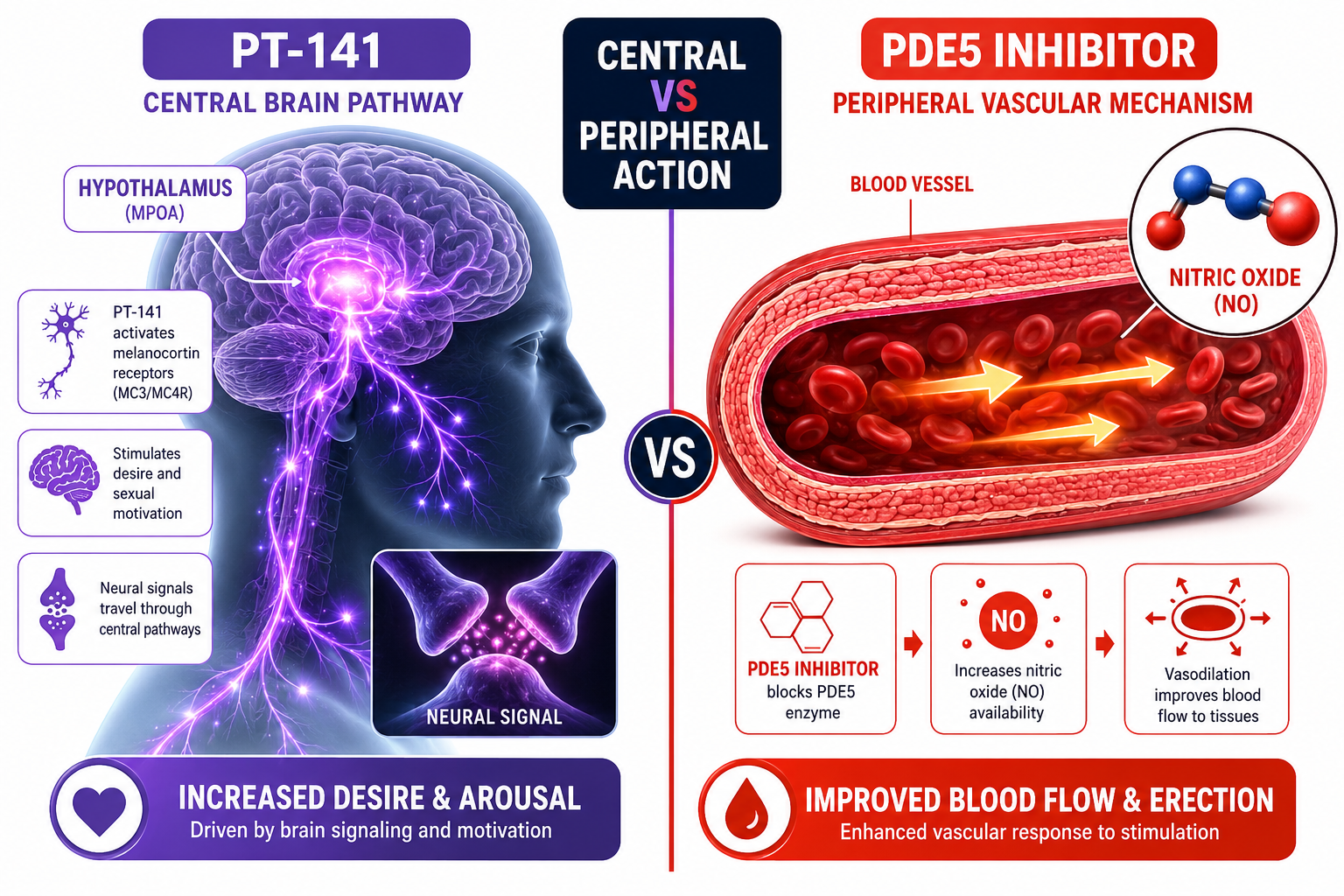
Understanding PT-141 in research: mechanism, receptor targets, and how it differs from PDE5 inhibitors requires a clear comparison of their pharmacological targets.
| Feature | PT-141 (Bremelanotide) | PDE5 Inhibitors (e.g., Sildenafil) |
|---|---|---|
| Primary target | MC4R in hypothalamus | PDE5 enzyme in vascular smooth muscle |
| Site of action | Central nervous system | Peripheral vasculature |
| Requires nitric oxide? | No | Yes |
| Affects sexual desire? | Yes, directly | No |
| Requires sexual stimulation? | Not necessarily | Yes |
PDE5 inhibitors block the enzyme that breaks down cyclic GMP, which relaxes smooth muscle and increases genital blood flow. They are entirely dependent on the nitric oxide pathway. If that pathway is compromised — as it often is in diabetic or cardiovascular patients — PDE5 inhibitors lose effectiveness.
PT-141 bypasses this limitation entirely. Early clinical studies showed it could induce erections in men who had not responded adequately to PDE5 inhibitors, which strongly supports its mechanistic independence. This makes PT-141 a subject of serious interest alongside other centrally acting peptides such as Selank, which also modulates neurochemical signaling.
Expanding Research Frontiers for PT-141
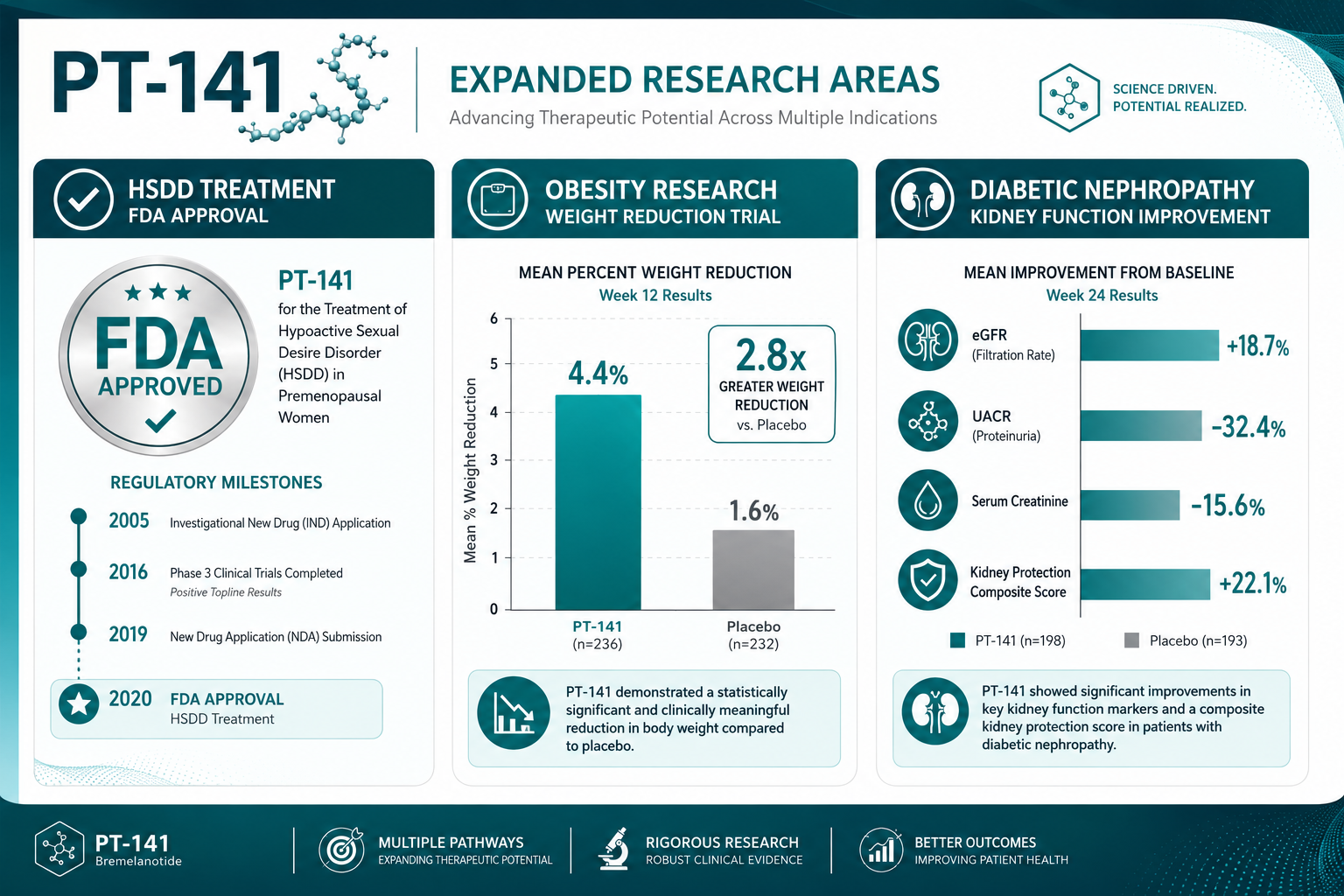
The FDA approved PT-141 as Vyleesi in 2019 for HSDD in premenopausal women, based on Phase 3 trial data showing significant improvements in sexual desire scores and reductions in distress. That approval validated the melanocortin pathway as a legitimate therapeutic target.
Research has since expanded beyond sexual dysfunction:
Obesity and metabolic regulation: A Phase 2 trial combining PT-141 with tirzepatide produced a 4.4% weight reduction versus 1.6% with placebo, suggesting MC4R activation may influence appetite and energy balance. This parallels metabolic research themes seen in compounds like GLP-1 dual receptor agonism studies.
Renal protection: The BREAKOUT Phase 2b study found that 71% of patients with type 2 diabetic kidney disease achieved more than a 30% reduction in urine protein/creatinine ratio with PT-141 treatment — a striking finding that researchers are still working to fully explain.
Female sexual dysfunction beyond HSDD: Ongoing studies are evaluating PT-141 for broader female sexual dysfunction categories, building on the established HSDD approval.
Safety profile: Common adverse effects include nausea and transient flushing. Long-term safety data collection is ongoing, but current profiles are considered manageable in research contexts.
Researchers interested in peptide purity and quality for controlled studies can review lab-tested peptide research options and the site's quality testing protocols for sourcing considerations.
For broader context on how peptides engage receptor systems at the cellular level, the research themes around MOTS-c and mitochondrial dynamics offer a useful comparative framework for understanding receptor-driven peptide biology.
Conclusion
PT-141 occupies a unique position in peptide research precisely because it does not follow the vascular playbook. Its activation of MC4R in the hypothalamus and limbic system drives sexual desire through dopaminergic and oxytocinergic pathways — mechanisms that PDE5 inhibitors never touch. The 2019 FDA approval for HSDD confirmed the clinical relevance of this pathway, while emerging data on obesity and renal protection suggest the research scope is still widening.
Actionable next steps for researchers:
- Review published Phase 2 and Phase 3 trial data on MC4R agonism to understand dose-response relationships.
- Compare PT-141's central mechanism against other neuromodulatory peptides to identify synergy opportunities.
- Prioritize sourcing from suppliers with verified purity documentation and transparent quality testing protocols before initiating any controlled study.
The melanocortin system is proving to be far more than a sexual function switch — and PT-141 is the compound that opened that research door.