Biolife Plasma, Octapharma Plasma, and Research Peptides: How Plasma Donation Labs Differ From Peptide Suppliers
More than 50 million plasma donations are collected annually in the United States alone, making plasma centers among the most visited medical facilities in the country. That high public awareness has created an unexpected source of confusion: many researchers and consumers searching for compounds like BPC-157, MOTS-c, or GLP-3 analogs land on information about BioLife Plasma or Octapharma Plasma, assuming these organizations operate in the same space as research peptide suppliers. They do not. Understanding the distinction between Biolife Plasma, Octapharma Plasma, and Research Peptides — and how plasma donation labs differ from peptide suppliers — is essential for anyone navigating either field in 2026.
Key Takeaways
- BioLife Plasma and Octapharma Plasma are FDA-regulated human plasma collection centers, not peptide manufacturers or suppliers.
- Research peptide suppliers synthesize short-chain amino acid compounds in laboratory settings under entirely different regulatory and quality frameworks.
- Plasma-derived therapies (PDTs) are processed from donated human blood; research peptides are synthetically produced compounds.
- Quality benchmarks for peptide suppliers — including purity certificates and third-party testing — differ significantly from blood establishment regulations.
- Researchers sourcing compounds such as GLP-3, MOTS-c, or BPC-157 should evaluate peptide suppliers on criteria that have no parallel in plasma donation.
What BioLife Plasma and Octapharma Plasma Actually Do
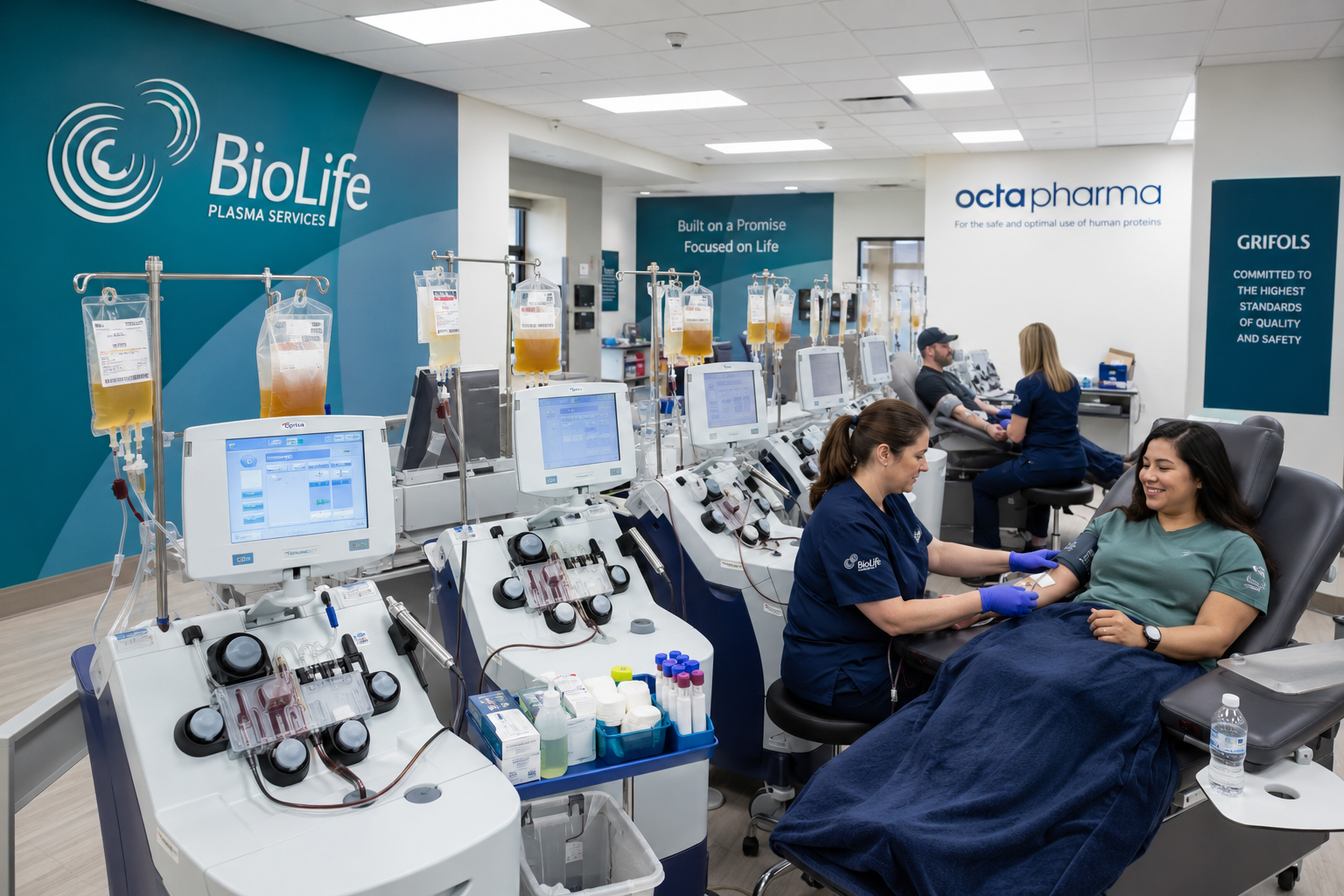
BioLife Plasma Services operates as the plasma-collection arm of Takeda Pharmaceutical, supporting Takeda's plasma-derived therapies (PDT) business. Donors visit BioLife centers to undergo plasmapheresis — a process that separates plasma from whole blood and returns red cells to the donor. The collected plasma feeds downstream manufacturing of immunoglobulins, albumin, clotting factors, and other protein-based therapies used in hospitals and clinics worldwide.
Octapharma follows a vertically integrated model. The company owns collection centers, fractionation plants, and the final manufacturing pipeline for protein therapeutics. Its plasma centers collect source plasma that is later fractionated into licensed medical products. Both organizations operate under FDA blood establishment regulations, which govern donor eligibility, testing protocols, storage, and traceability.
Key characteristics of plasma donation centers:
| Feature | Plasma Donation Centers |
|---|---|
| Raw material | Human blood plasma from donors |
| Regulatory body | FDA (21 CFR Part 606, Part 640) |
| End products | Immunoglobulins, albumin, clotting factors |
| Donor compensation | Yes, per session |
| Research peptide supply | No |
These organizations are not in the business of supplying synthetic peptides to researchers. The confusion arises largely because both sectors use the word "plasma" and both involve biological or biochemical science.
How Research Peptide Suppliers Operate Under a Different Framework
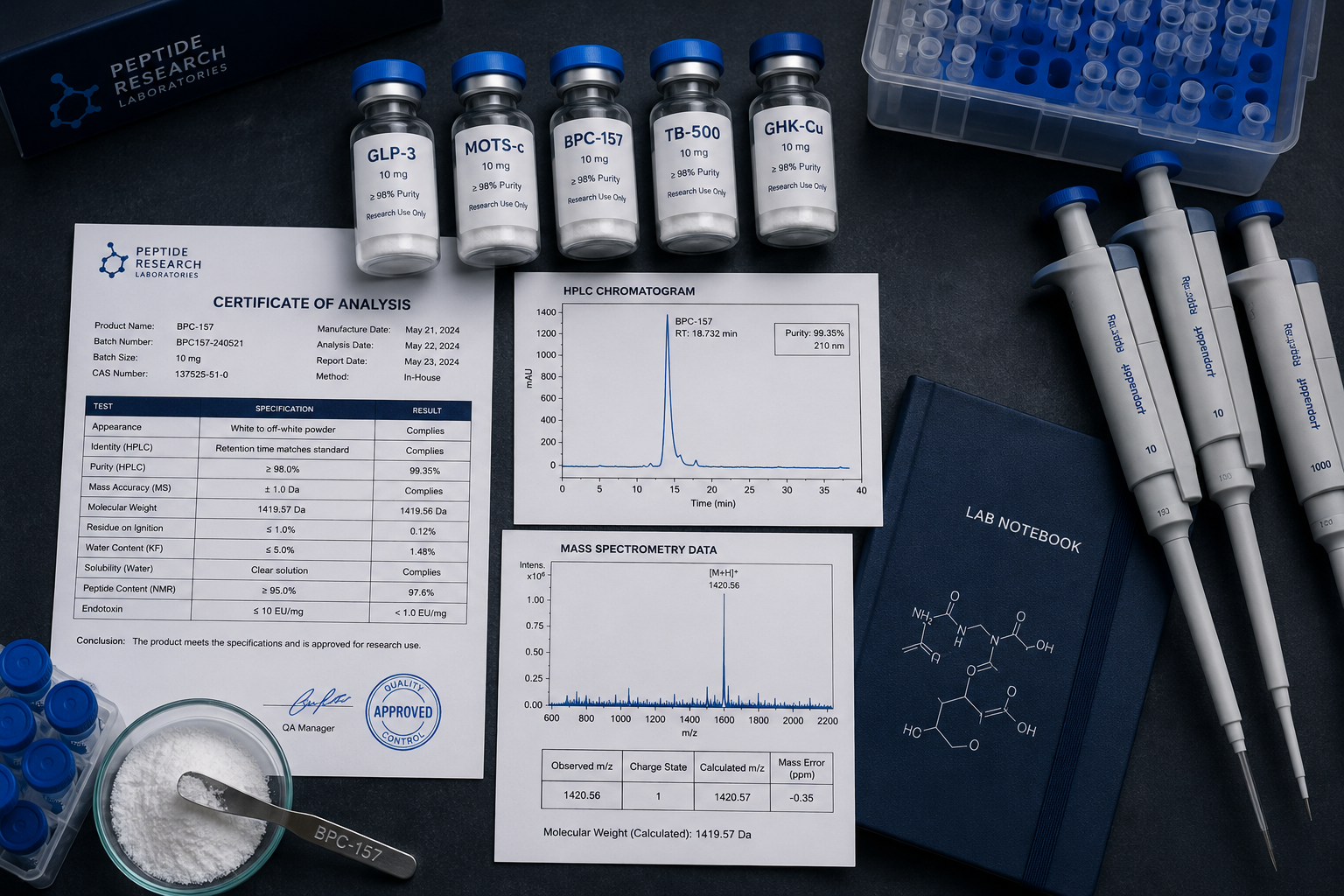
Research peptide suppliers synthesize short-chain amino acid sequences in controlled laboratory environments using solid-phase peptide synthesis (SPPS) or similar chemical methods. There is no human donor involved. The compounds — ranging from metabolic peptides like MOTS-c for mitochondrial research to cardioprotective candidates like SS-31 (elamipretide) — are produced, purified, and tested before being sold strictly for laboratory and preclinical research purposes.
Quality benchmarks for reputable peptide suppliers include:
- Purity verification via high-performance liquid chromatography (HPLC), typically targeting 98%+ purity
- Mass confirmation through mass spectrometry to verify molecular identity
- Certificate of Analysis (CoA) provided with each batch
- Third-party testing from independent laboratories
- Sterile filtration for injectable-format research compounds
Suppliers offering compounds such as GLP-3 triple agonist peptides, BPC-157 and TB-500 blends, or nasal spray peptide formats must maintain these standards independently, because no single federal agency currently governs research peptide synthesis the way the FDA governs plasma collection.
"The absence of a unified regulatory body for research peptides makes third-party testing and transparent documentation the most reliable proxies for quality assurance."
This is why researchers sourcing compounds like epithalon or PT-141 must evaluate suppliers on documentation standards rather than FDA licensure status.
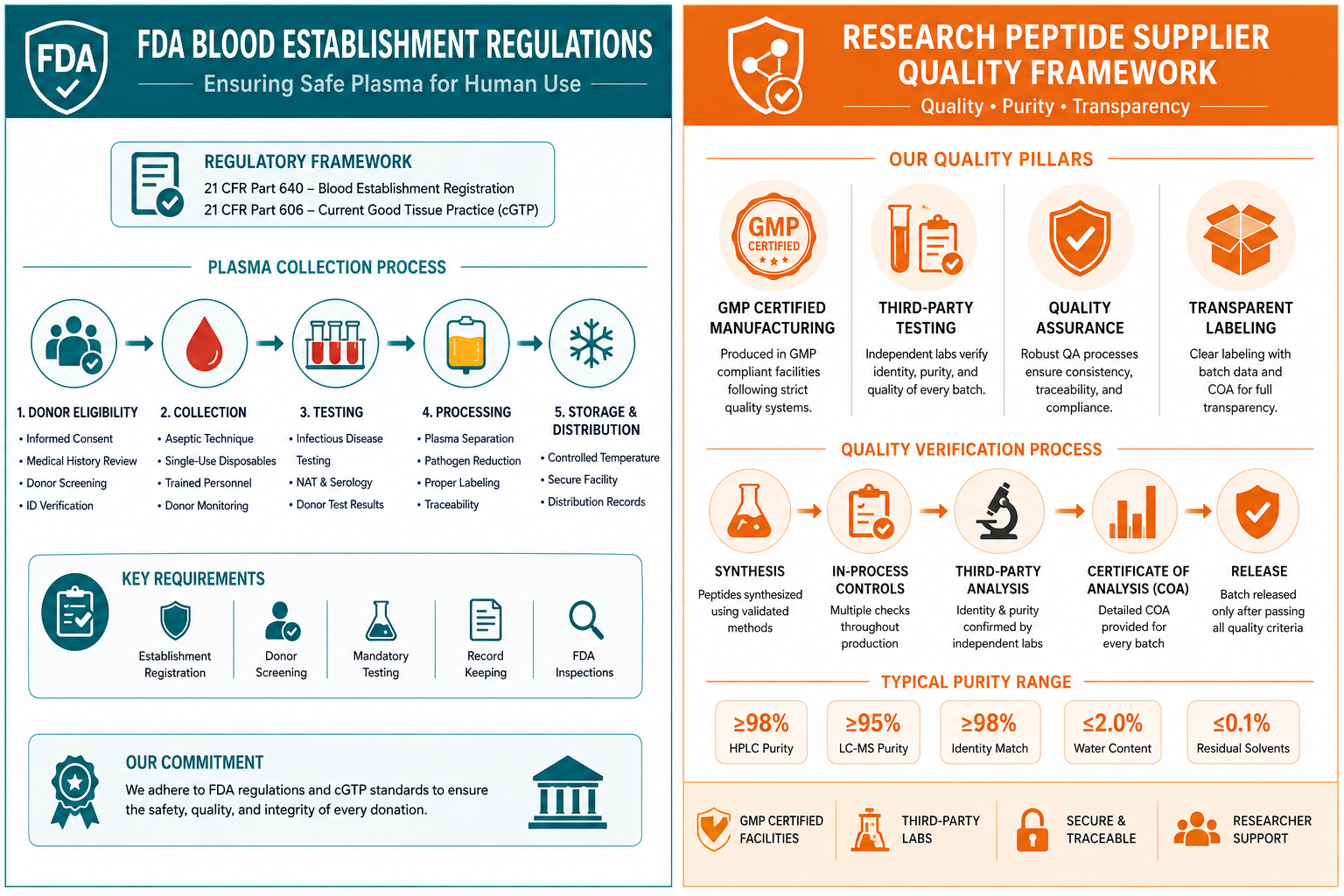
Why the Distinction Matters for Labs Sourcing GLP-3, MOTS-c, or BPC-157
When a research team searches for MOTS-c or CJC-1295 with ipamorelin and encounters BioLife or Octapharma in search results, the mismatch can waste significant time. More importantly, the quality criteria that matter for each sector are fundamentally different.
For plasma donation, donor health screening and viral inactivation steps are paramount. For research peptides, the critical variables are synthetic purity, sequence fidelity, and batch-to-batch consistency. A researcher evaluating a supplier for GLP-1 and incretin-related peptides should ask for HPLC data and CoAs — documents that plasma centers simply do not produce because they are irrelevant to their operations.
Practical checklist for evaluating a research peptide supplier:
- Is a CoA available for every product batch?
- Does the supplier use third-party HPLC and mass spectrometry?
- Are storage and shipping conditions clearly specified?
- Is the compound labeled explicitly for research use only?
- Does the supplier maintain transparent contact and return policies?
Researchers can browse verified peptides for sale from suppliers that publish this documentation openly, which remains the clearest differentiator from unverified sources in 2026.
Conclusion
The overlap in public search behavior between plasma donation centers and research peptide suppliers reflects genuine curiosity about biological science — but the two sectors serve entirely different purposes under entirely different frameworks. BioLife Plasma and Octapharma Plasma collect human plasma to manufacture licensed protein therapies. Research peptide suppliers synthesize compounds like MOTS-c, GLP-3, and BPC-157 for preclinical investigation, governed by quality standards built around chemical purity rather than donor safety.
Actionable next steps:
- If the goal is plasma donation, visit BioLife or Octapharma's official center locators.
- If the goal is sourcing research peptides, prioritize suppliers that publish third-party CoAs, HPLC data, and clear research-use labeling.
- Review the full catalog of research peptides from verified suppliers and request documentation before any purchase.
- Bookmark regulatory guidance from the FDA's blood establishment resources separately from peptide supplier evaluation criteria.
Keeping these two worlds clearly separated protects research integrity and ensures the right questions are asked of the right organizations.