
Epithalon Peptide Research: Telomere Biology, Aging Pathways, and What the Current Evidence Can Actually Support
Fewer than a dozen peptides in longevity research have generated as much interest — and as much overstated certainty — as Epithalon. A tetrapeptide composed of just four amino acids (Ala-Glu-Asp-Gly), it has been studied since the 1980s primarily through the work of Russian scientist Vladimir Khavinson. Yet in 2026, the gap between what researchers have observed and what is being claimed online remains wide. This article examines Epithalon peptide research: telomere biology, aging pathways, and what the current evidence can actually support — without the hype.
Key Takeaways
- Epithalon activates telomerase (hTERT) in human cell cultures, but this does not automatically translate to safe lifespan extension in humans.
- Animal model data shows 10-25% lifespan extension, but independent replication in Western research programs is still limited.
- The peptide appears to influence multiple aging pathways: epigenetic remodeling, melatonin synthesis, oxidative stress resilience, and immune function.
- Telomerase activation carries a documented cancer risk concern that researchers must weigh carefully.
- Epithalon is not FDA-approved and lacks standardized clinical dosing protocols as of 2026.
How Epithalon Interacts With Telomere Biology
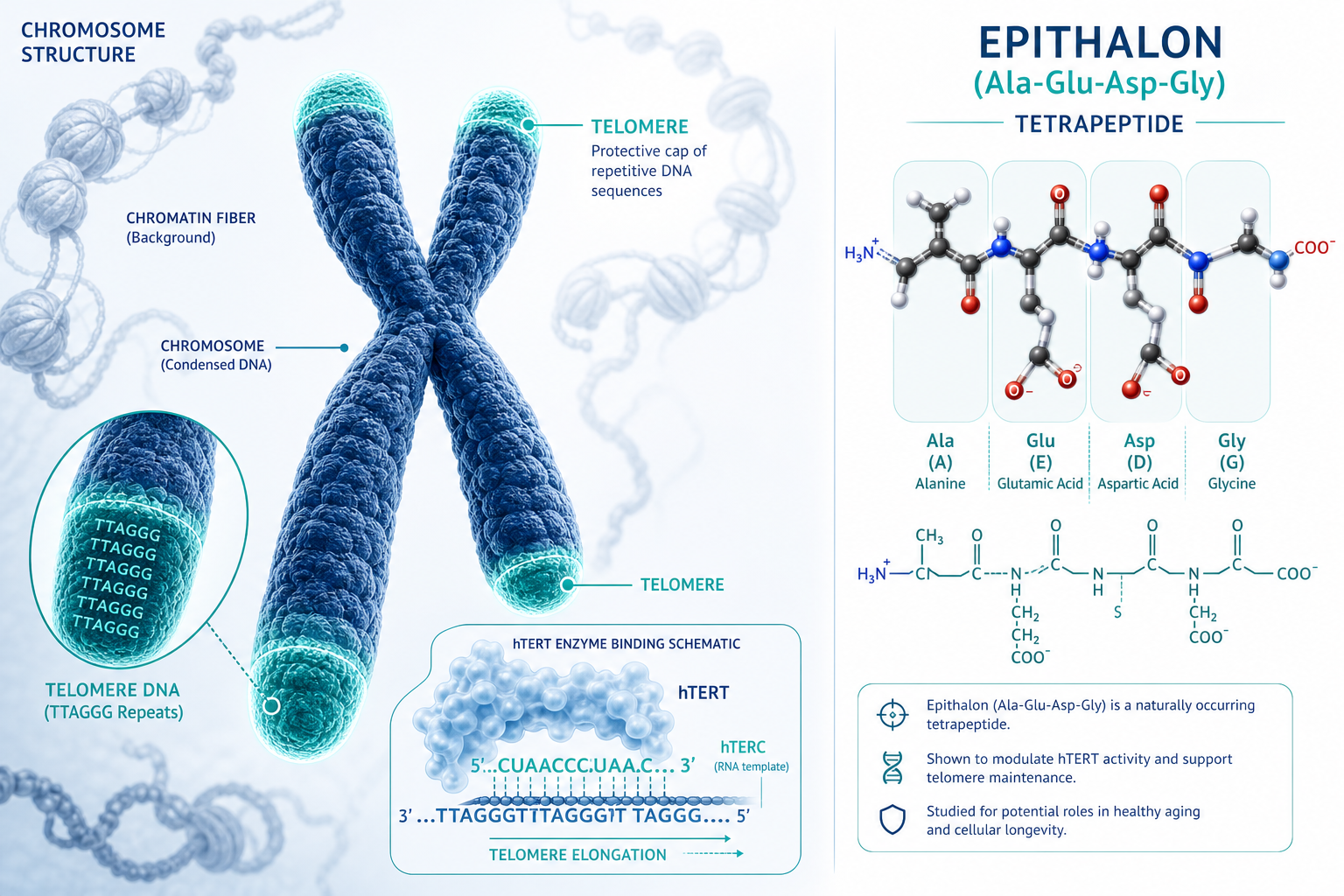
Telomeres are the protective caps at the ends of chromosomes. With each cell division, they shorten. When they become critically short, the cell stops dividing — a process called replicative senescence. This is one of the central clocks of biological aging.
Epithalon peptide research into telomere biology shows that the compound can induce expression of hTERT, the catalytic subunit of telomerase — the enzyme that rebuilds telomere length. In human somatic cell cultures, this has led to measurable telomere elongation, theoretically pushing cells past the Hayflick limit.
"The ability to upregulate hTERT in non-germline cells is scientifically significant — but it is not a free pass. Telomerase is also active in roughly 85% of human cancers."
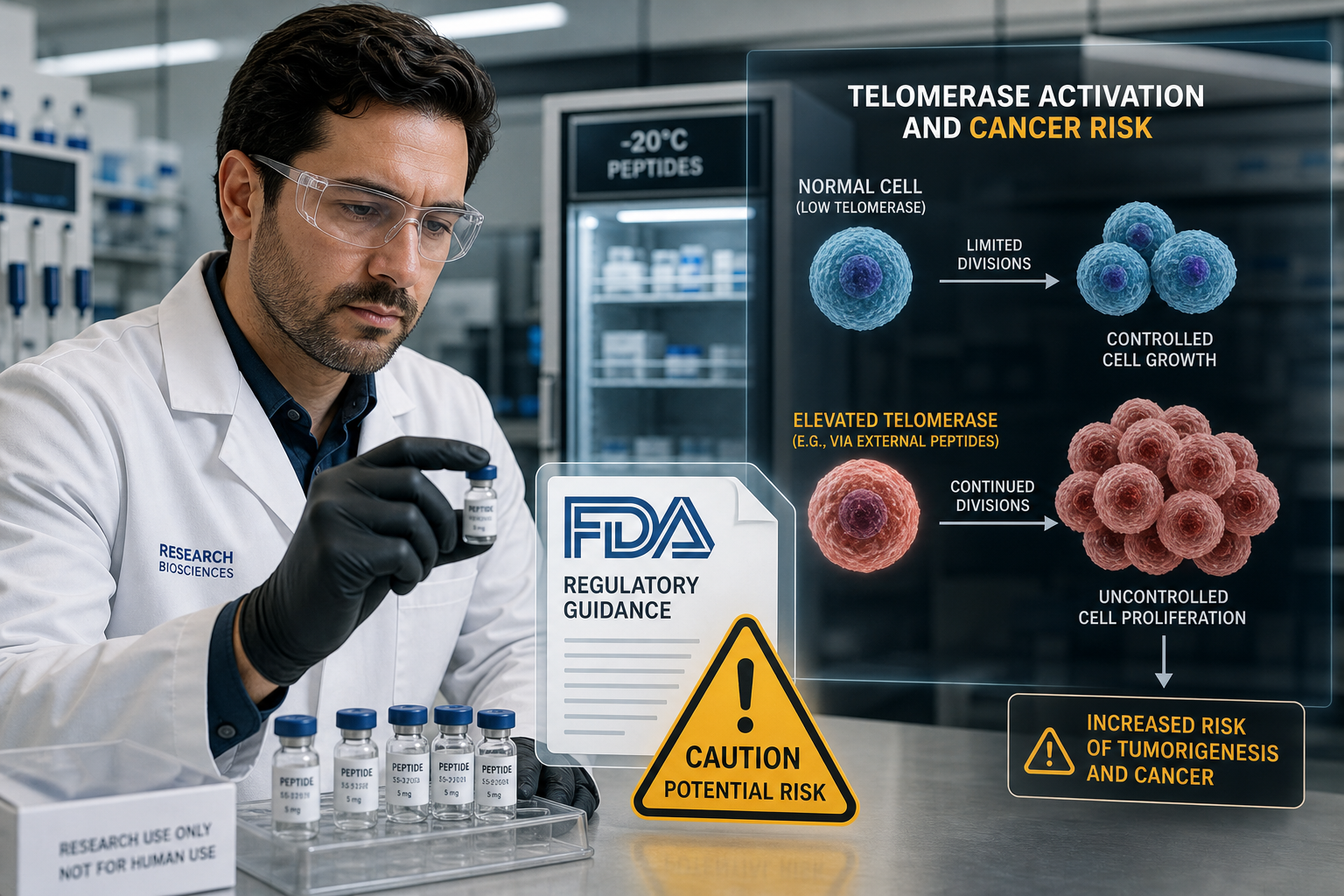
This dual nature is the central tension in Epithalon research. The same mechanism that may slow cellular aging could, under certain conditions, support unchecked cell proliferation. Researchers studying aging support peptides must weigh this trade-off carefully.
Epigenetic effects add another layer. Epithalon appears to bind to gene promoter regions and loosen chromatin structure, potentially restoring youthful gene expression patterns and enhancing DNA repair. This epigenetic remodeling could explain effects that go beyond simple telomere length.
What Animal and Human Studies Can Actually Support
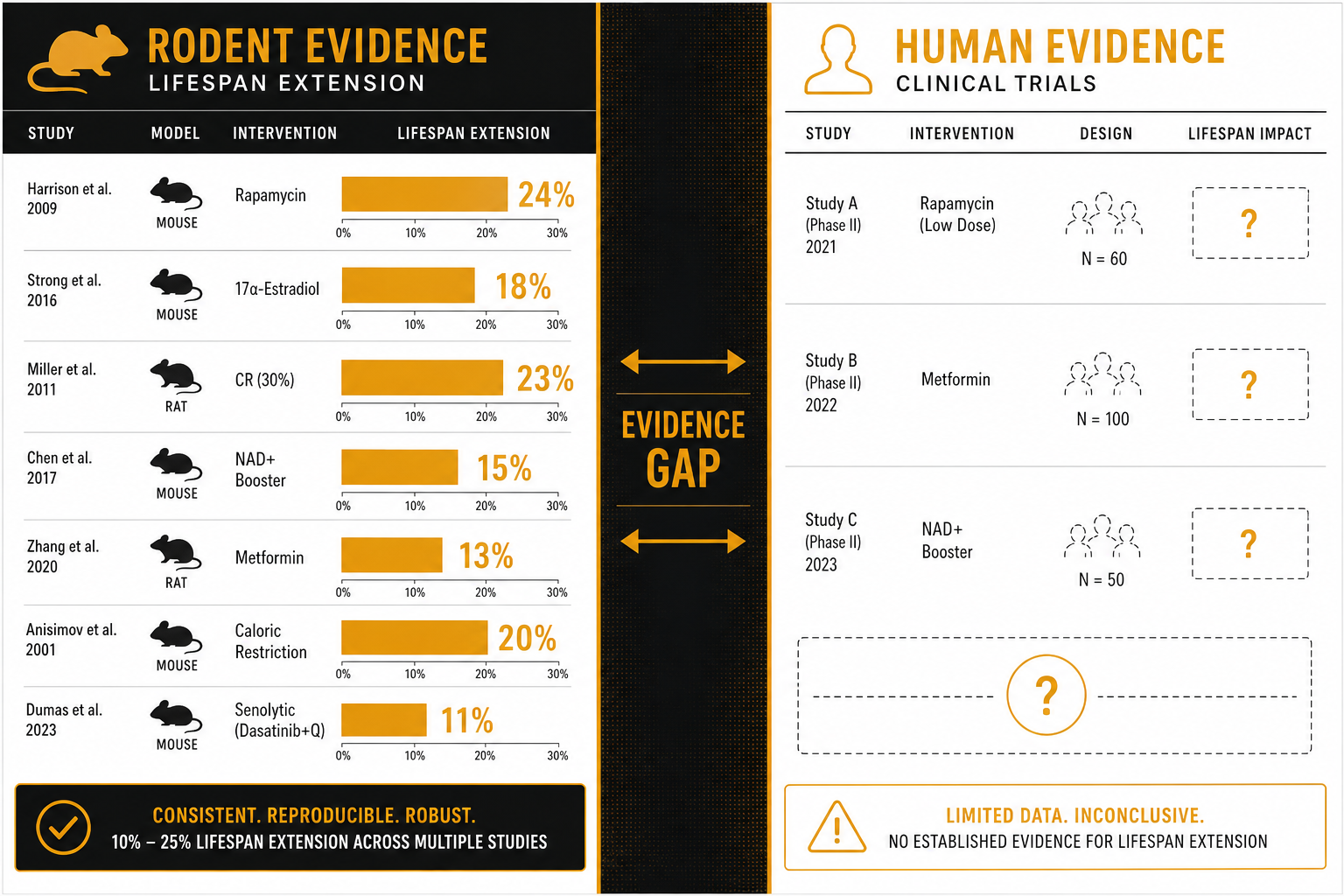
The most cited longevity data comes from rodent studies within the Khavinson research program. Epithalon administration extended lifespan by 10 to 25% in treated animals. These are notable figures — but they come with caveats.
| Study Type | Key Finding | Limitation |
|---|---|---|
| Rodent models | 10-25% lifespan extension | Primarily one research group |
| Human cell cultures | hTERT induction, telomere elongation | In vitro, not in vivo |
| Small human studies (elderly) | Improved melatonin synthesis, circadian rhythm support | Limited sample sizes |
| Immune function observations | Potential immune recalibration | Requires larger trials |
Independent replication by Western research institutions remains sparse. This is not evidence that the findings are wrong — it is evidence that the field needs more rigorous, controlled trials before clinical conclusions can be drawn.
Melatonin and circadian rhythm effects are among the more consistently reported observations. Epithalon appears to stimulate pineal gland activity, boosting melatonin synthesis. In elderly subjects, this may help restore disrupted sleep-wake cycles — a meaningful quality-of-life pathway that is separate from telomere biology entirely.
The peptide also shows associations with reduced oxidative stress markers and immune system recalibration, suggesting it may act across multiple aging pathways simultaneously rather than through a single mechanism. For researchers comparing multi-pathway peptides, the SS-31 mechanism and research overview offers a useful parallel, given SS-31's focus on mitochondrial protection as a complementary aging pathway.
Evidence Quality, Safety Considerations, and Research Context in 2026
Understanding what the current evidence can actually support requires honest assessment of its quality. Most Epithalon data originates from a single research program, uses animal models, or involves small human cohorts. That is not a dismissal — it is a baseline for calibrating expectations.
Key safety considerations researchers should note:
- Telomerase activation raises legitimate oncological concerns that have not been fully resolved in long-term studies
- Reported side effects are minimal in existing literature, but comprehensive safety profiles are absent
- Commonly discussed research protocols involve subcutaneous administration of 5-10 mg daily for 10-20 day cycles, repeated 2-3 times per year — but no standardized clinical guidelines exist
- Reconstituted peptide remains stable for approximately 21 days under proper storage conditions
Epithalon is not approved by the FDA for any therapeutic use as of 2026. It exists strictly within a research context. Researchers exploring related peptides in aging and metabolic pathways — such as BPC-157 research documentation or SS-31 mitochondrial research themes — will recognize this regulatory landscape as common across investigational peptides.
For those sourcing compounds for structured research, reviewing certificates of analysis and third-party purity testing documentation is a non-negotiable step. Purity directly affects the validity of any experimental outcome.
Researchers interested in how Epithalon compares within the broader aging-support peptide category may also find value in reviewing SS-31 peptide research considerations as a methodological reference point.
Conclusion
Epithalon peptide research into telomere biology, aging pathways, and what the current evidence can actually support points to a compound with genuine scientific interest — and genuine scientific uncertainty. The telomerase activation data is mechanistically compelling. The animal lifespan data is suggestive. The epigenetic, melatonin, and oxidative stress findings add breadth to the research profile.
What the evidence cannot yet support is clinical certainty. Independent replication, larger human trials, and long-term safety data are all needed before stronger conclusions are warranted.
Actionable next steps for researchers:
- Prioritize sourcing Epithalon only from suppliers providing verified purity documentation and third-party testing.
- Design studies that account for the telomerase-cancer risk variable with appropriate biomarker monitoring.
- Track melatonin and circadian markers alongside telomere length to capture the full pathway picture.
- Follow emerging Western replication studies closely — this is where the evidence base will either strengthen or fracture.
- Treat existing animal model data as hypothesis-generating, not hypothesis-confirming.
The science is worth watching. The claims require scrutiny.