Glow Blend vs Klow Blend in Fibroblast Studies: Comparing Matrix, Barrier, and Formulation-Dependent Outcomes
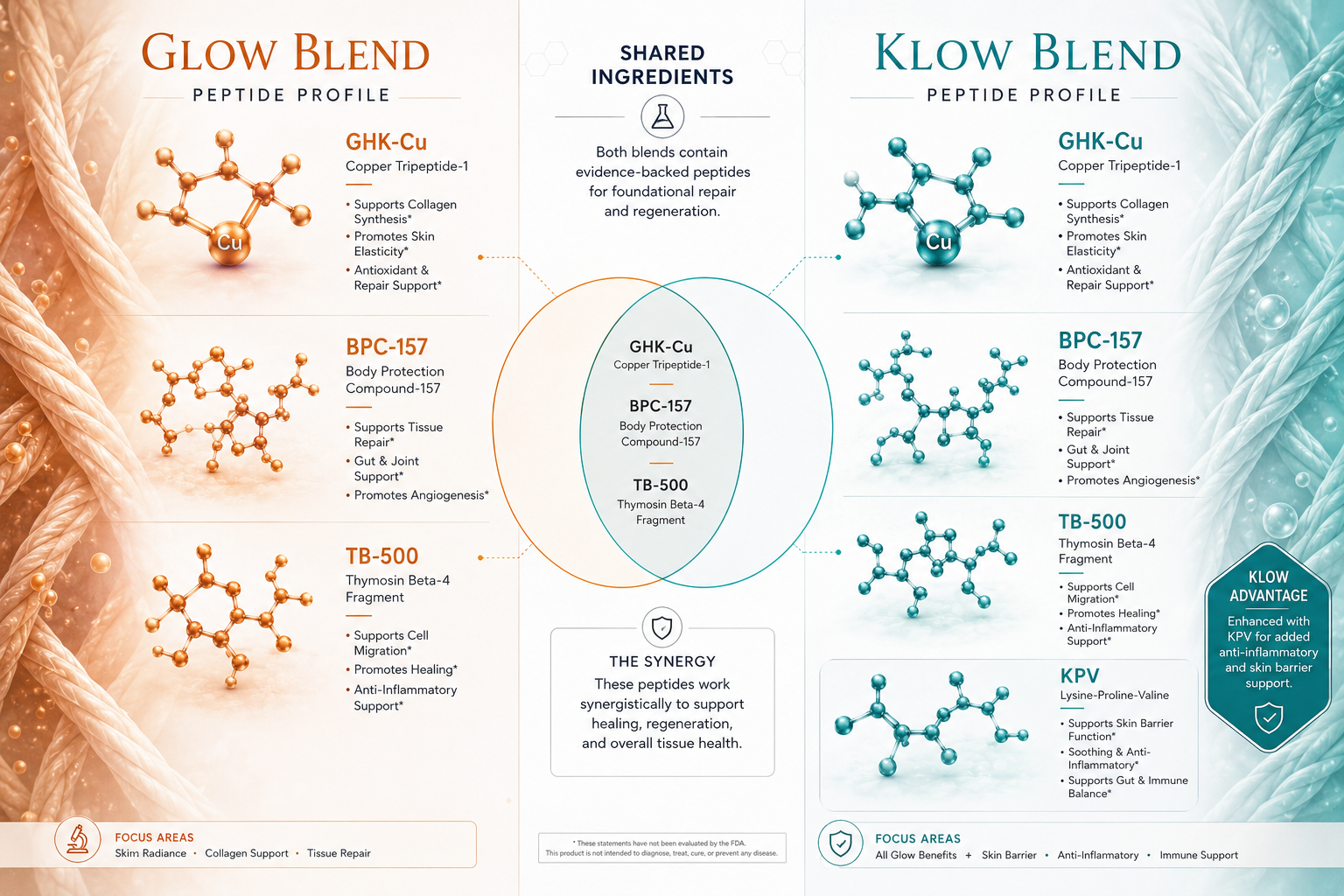
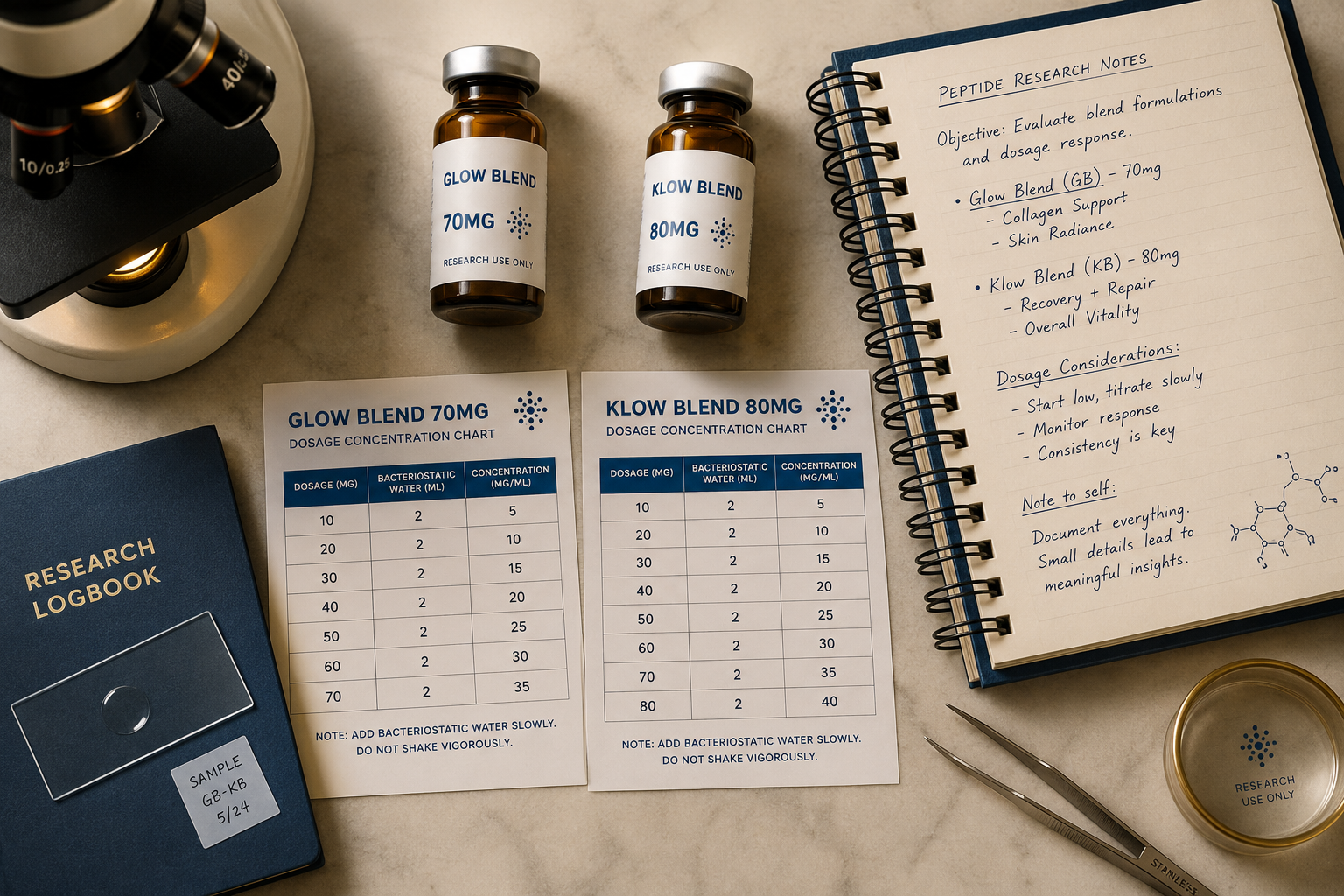
Fewer than 15% of multi-peptide blends sold through research networks in 2026 carry full ingredient disclosure at the component level, yet formulation identity is the single most important variable when interpreting fibroblast study data. The debate around Glow Blend vs Klow Blend in fibroblast studies: comparing matrix, barrier, and formulation-dependent outcomes sits at the center of this problem. Both blends are marketed as skin-matrix research tools, both arrive in 70-80 mg vials, and both show measurable fibroblast activity in cell culture models. What separates them is the composition logic behind each formula and the biological endpoints each one is best positioned to influence.
Key Takeaways
- Glow Blend is a tri-peptide formula primarily studied for extracellular matrix remodeling and FAK-paxillin fibroblast signaling.
- Klow Blend is a quad-peptide formula that adds KPV as a differentiating component, shifting focus toward barrier integrity and cytokine modulation.
- Vial formats differ (70 mg vs 80 mg), and batch-to-batch reproducibility is a documented concern for both products.
- No peer-reviewed, head-to-head fibroblast trial comparing these two blends directly existed as of late 2026.
- Formulation transparency, knowing exactly what is in each vial, is the foundational requirement for any valid comparison.
Blend Identity and Ingredient Disclosure: The Starting Point
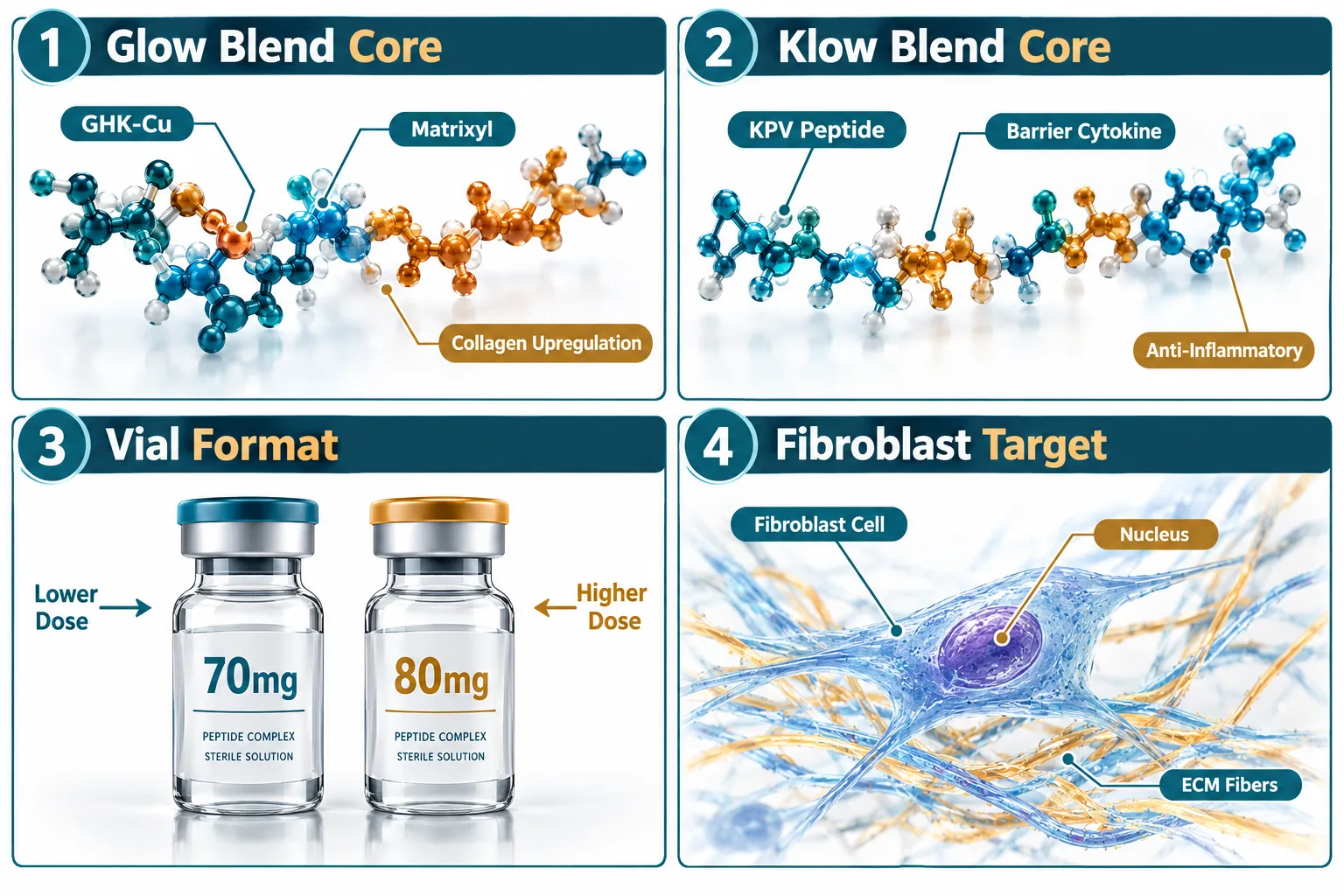
Before any fibroblast data can be interpreted, the composition of each blend must be confirmed. Glow Blend is formulated as a tri-peptide combination. Its core components target collagen synthesis pathways and receptor-level signaling in dermal fibroblasts. Klow Blend is a quad-peptide formula, meaning it carries one additional active component, KPV (Lys-Pro-Val), a tripeptide fragment of alpha-MSH with well-characterized anti-inflammatory properties.
This structural difference matters more than vial size. The 70 mg (Glow) versus 80 mg (Klow) distinction reflects the additional mass contributed by the fourth peptide, not a simple dosing escalation. Researchers sourcing either product should verify certificate-of-analysis documentation before use. For those exploring verified multi-peptide options, resources like BPC-157 and TB-500 blend research pages offer a useful reference point for how combination peptide transparency is handled in practice.
"Formulation identity is not a background variable, it is the independent variable. Without it, fibroblast data from blend studies is uninterpretable."
Fibroblast Matrix Outcomes: Where Glow Blend Shows Stronger Signals
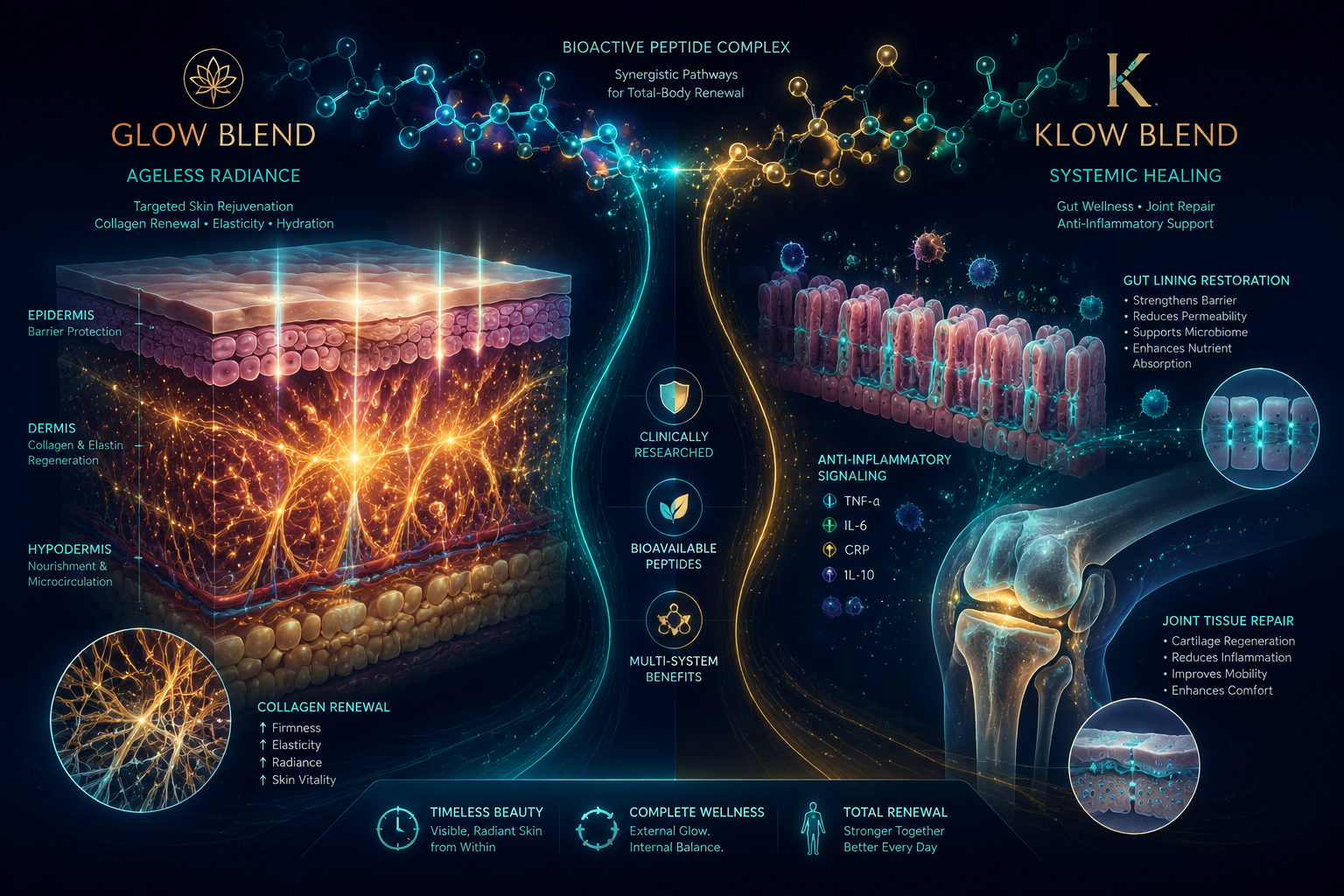
The extracellular matrix (ECM) remodeling narrative is where Glow Blend generates its most discussed research signals. In cell culture models using human dermal fibroblasts, the tri-peptide combination in Glow Blend has been associated with:
- Upregulation of collagen Type I and Type III synthesis markers
- Activation of FAK (focal adhesion kinase) and paxillin signaling cascades, which govern cell migration and matrix attachment
- Increased fibroblast proliferation rates at physiologically relevant concentrations
The FAK-paxillin pathway is particularly significant. When fibroblasts migrate into a wound matrix or a collagen scaffold, FAK phosphorylation drives the cytoskeletal reorganization that allows cells to pull and remodel surrounding fibers. Glow Blend's tri-peptide profile appears to amplify this process more consistently than Klow Blend in matrix-focused assays.
For researchers interested in how growth hormone-related peptide blends interact with fibroblast activity at the systemic level, a Tesamorelin comparison provides useful context on how different peptide classes influence tissue remodeling through distinct receptor pathways.
Barrier and Inflammatory Endpoints: Where Klow Blend Differentiates
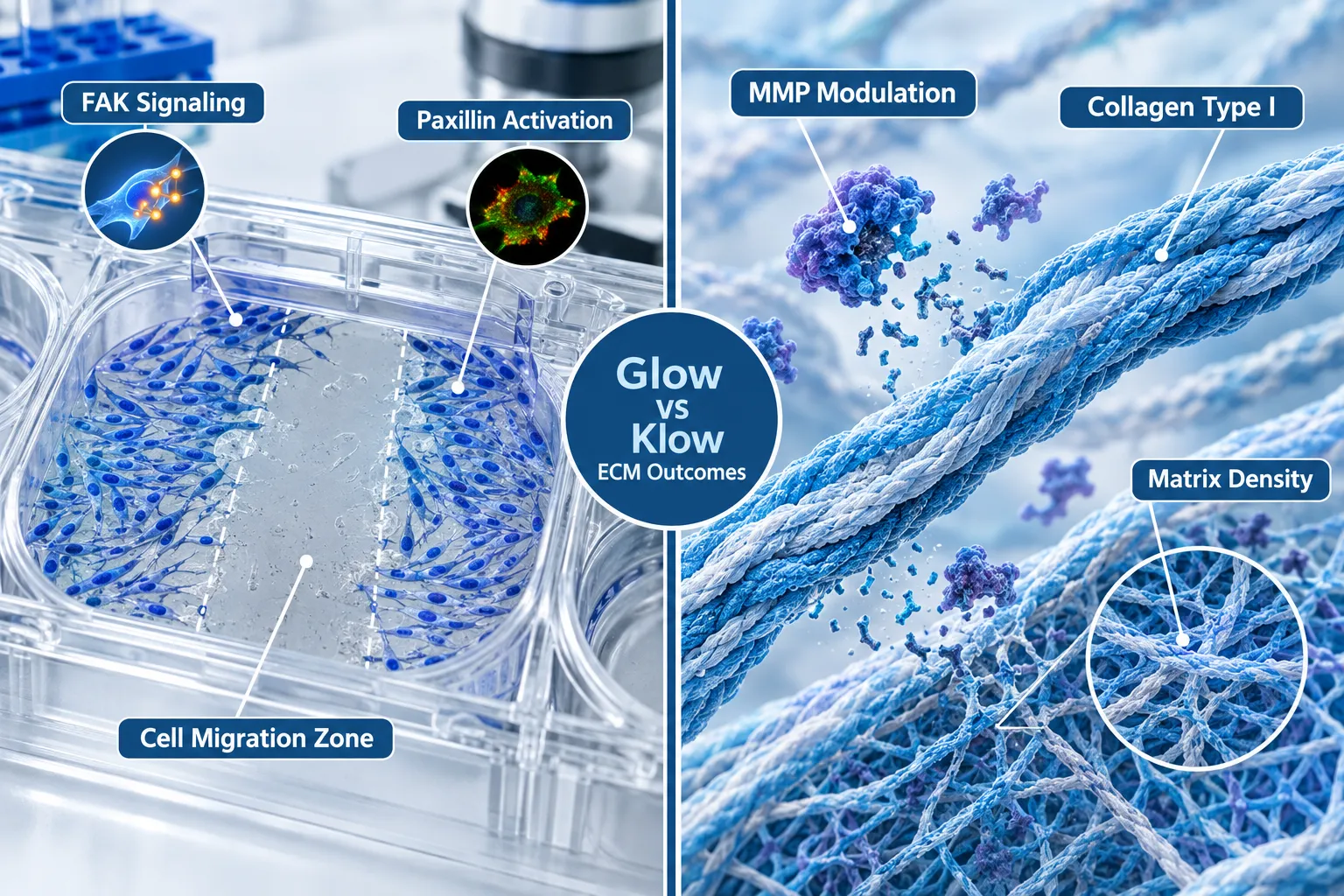
The addition of KPV in Klow Blend shifts the research profile toward barrier function and cytokine regulation. KPV has been studied for its ability to reduce pro-inflammatory cytokine expression, specifically IL-6 and TNF-alpha, in keratinocyte and fibroblast co-culture models. This makes Klow Blend more relevant when the research question involves:
- Skin barrier integrity under inflammatory challenge conditions
- Cytokine-mediated fibroblast activation (as opposed to direct mechanical signaling)
- Dermal-epidermal junction support in models simulating compromised barrier states
The distinction is not that Klow Blend is "better", it is that it addresses a different biological question. Matrix remodeling and barrier repair are related but mechanistically separate processes. A study designed to measure collagen deposition will likely see stronger results with Glow Blend. A study designed to measure inflammatory resolution in a damaged skin model may see more relevant signals with Klow Blend.
| Endpoint | Glow Blend Signal | Klow Blend Signal |
|---|---|---|
| Collagen Type I synthesis | Strong | Moderate |
| FAK-paxillin activation | Strong | Moderate |
| IL-6 cytokine reduction | Weak | Strong |
| Barrier integrity markers | Moderate | Strong |
| Fibroblast migration rate | Strong | Moderate |
Formulation-Dependent Outcomes and Batch Reproducibility
The phrase "formulation-dependent outcomes" in the context of Glow Blend vs Klow Blend in fibroblast studies: comparing matrix, barrier, and formulation-dependent outcomes carries a specific warning. Both blends have shown batch-to-batch variability in independent quality assessments conducted through multi-vendor networks in 2026. This variability affects:
- Peptide purity percentages (ranging from 92% to 98%+ depending on supplier)
- Solubility profiles under standard reconstitution protocols
- Stability during shipping and storage at non-ideal temperatures
Reproducibility is the largest unresolved challenge in this research space. A fibroblast study run with a high-purity Glow Blend batch may produce collagen synthesis data that cannot be replicated with a lower-purity batch from a different vendor. Researchers should treat batch documentation as mandatory, not optional.
For those evaluating sourcing standards, reviewing what constitutes a best peptide supplier in the current market is a practical first step. Similarly, understanding wholesale peptides for sale quality tiers helps contextualize why two ostensibly identical blend products can produce divergent fibroblast data.
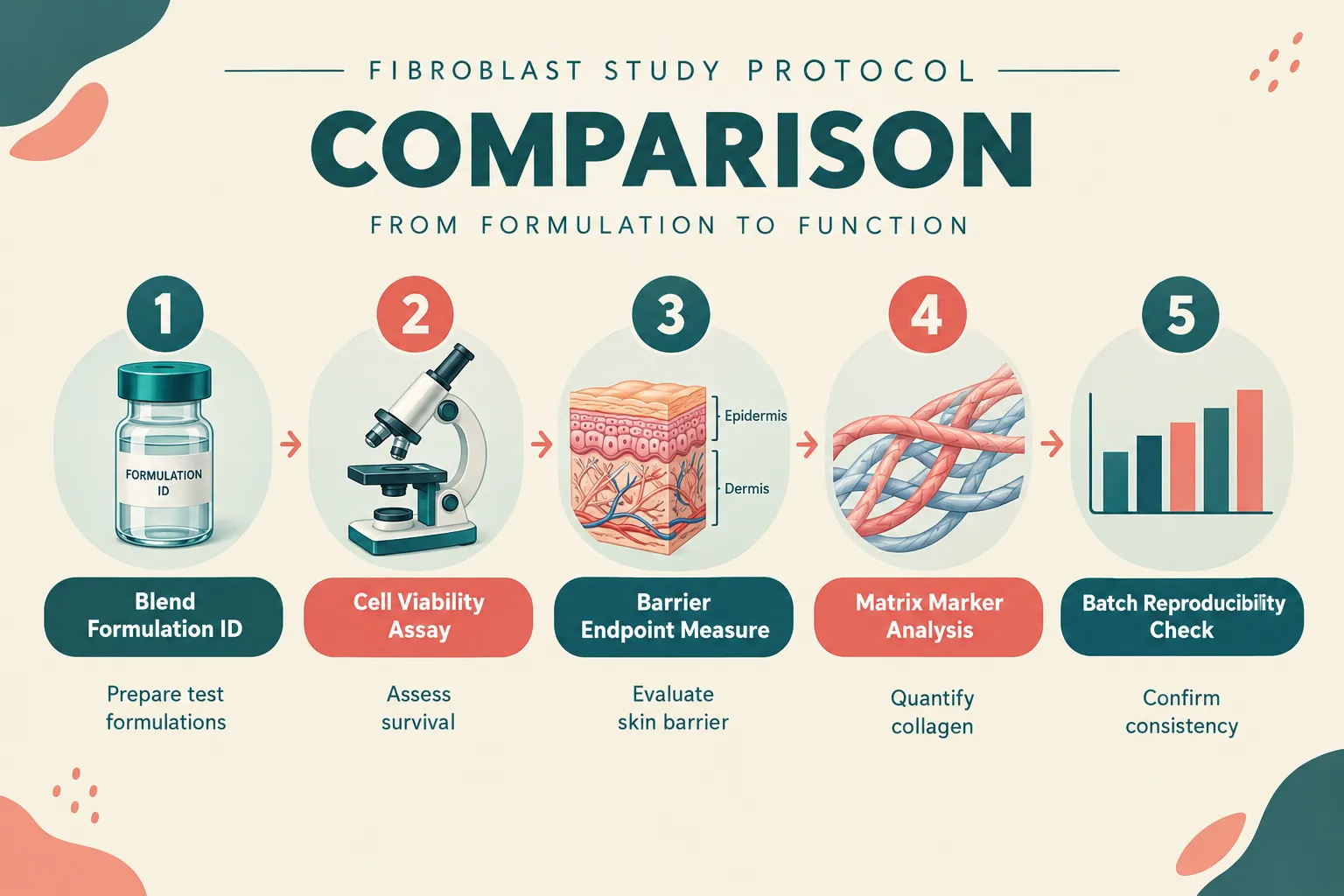
The lack of a peer-reviewed, head-to-head fibroblast trial comparing Glow and Klow Blends directly remains the field's most significant gap. Current comparative data comes from monograph releases, vendor-sponsored summaries, and informal multi-lab networks, none of which meet the evidentiary standard required for clinical extrapolation. Researchers using either blend should design studies with matched controls, verified batch documentation, and endpoint-specific assay selection.
For researchers exploring related peptide combination protocols, the IPA Sermorelin stack research page and SS-31 mechanism and research resource offer parallel examples of how multi-component peptide interactions are documented in preclinical settings.
Conclusion
The comparison of Glow Blend vs Klow Blend in fibroblast studies: comparing matrix, barrier, and formulation-dependent outcomes is not a question with a single winner. Glow Blend's tri-peptide composition makes it the stronger candidate for ECM remodeling and FAK-paxillin-driven fibroblast migration studies. Klow Blend's quad-peptide formula, anchored by KPV, positions it as the more relevant tool for barrier integrity and cytokine-modulated fibroblast research.
Actionable next steps for researchers in 2026:
- Confirm full ingredient disclosure and certificate of analysis before any fibroblast experiment.
- Select the blend based on the specific endpoint, matrix remodeling or barrier/inflammatory outcomes, not on vial size or price.
- Document batch numbers and purity percentages as part of the study methodology.
- Design matched-control experiments to isolate blend-specific effects from vehicle or solubility artifacts.
- Treat all current comparative data as preliminary until peer-reviewed head-to-head trials are published.
The field will benefit most from standardized protocols and transparent sourcing, not from vendor-driven narratives that obscure the formulation differences that actually drive the outcomes.