
BPC-157 and TB-500 Stack: Mechanistic Overlap, Research Logic, and Experimental Design
{"cover":"Professional landscape format (1536×1024) hero image with bold text overlay: 'BPC-157 & TB-500 Stack: Mechanistic Overlap, Research Logic & Experimental Design' in extra large 72pt white bold sans-serif font with dark semi-transparent background panel, centered upper-third composition. Background shows a high-resolution macro photograph of peptide vials and syringes on a clean laboratory bench with soft blue and white lighting, molecular structure diagrams subtly overlaid. Color scheme: deep navy blue, crisp white, and steel teal accents. Magazine cover aesthetic, editorial quality, high contrast.","content":["Detailed landscape format (1536×1024) scientific illustration showing two distinct molecular pathways side by side: left panel depicts BPC-157 angiogenesis pathway with VEGFR2 receptor activation and nitric oxide signaling arrows in warm amber tones; right panel shows TB-500 actin sequestration and cell migration pathway with cytoskeletal filaments in cool teal tones. Central overlap zone highlighted in purple gradient showing mechanistic convergence. Clean white background, labeled pathway nodes, editorial infographic style, research-focused aesthetic.","Landscape format (1536×1024) overhead flat-lay photograph of a research laboratory notebook open to a page showing a structured experimental protocol table with columns for peptide name, dose, route, frequency, and phase. Beside the notebook: two labeled peptide vials, a precision scale, sterile syringes, and a timer. Soft clinical lighting, muted gray and white tones with blue accent highlights. Text overlay reads 'Experimental Design Framework' in 36pt bold sans-serif. Editorial research aesthetic, high detail.","Landscape format (1536×1024) split-scene image: left half shows a preclinical rodent tendon repair model diagram with annotated tissue cross-section showing collagen fiber alignment and tensile strength improvement arrows; right half shows a cautionary regulatory panel with WADA prohibited substance symbol and FDA non-approval badge rendered in clean iconographic style. Central dividing line with text overlay 'Evidence vs. Regulation' in bold 40pt sans-serif. Color palette: clinical white, warning amber, regulatory red, research blue. Professional editorial quality."]
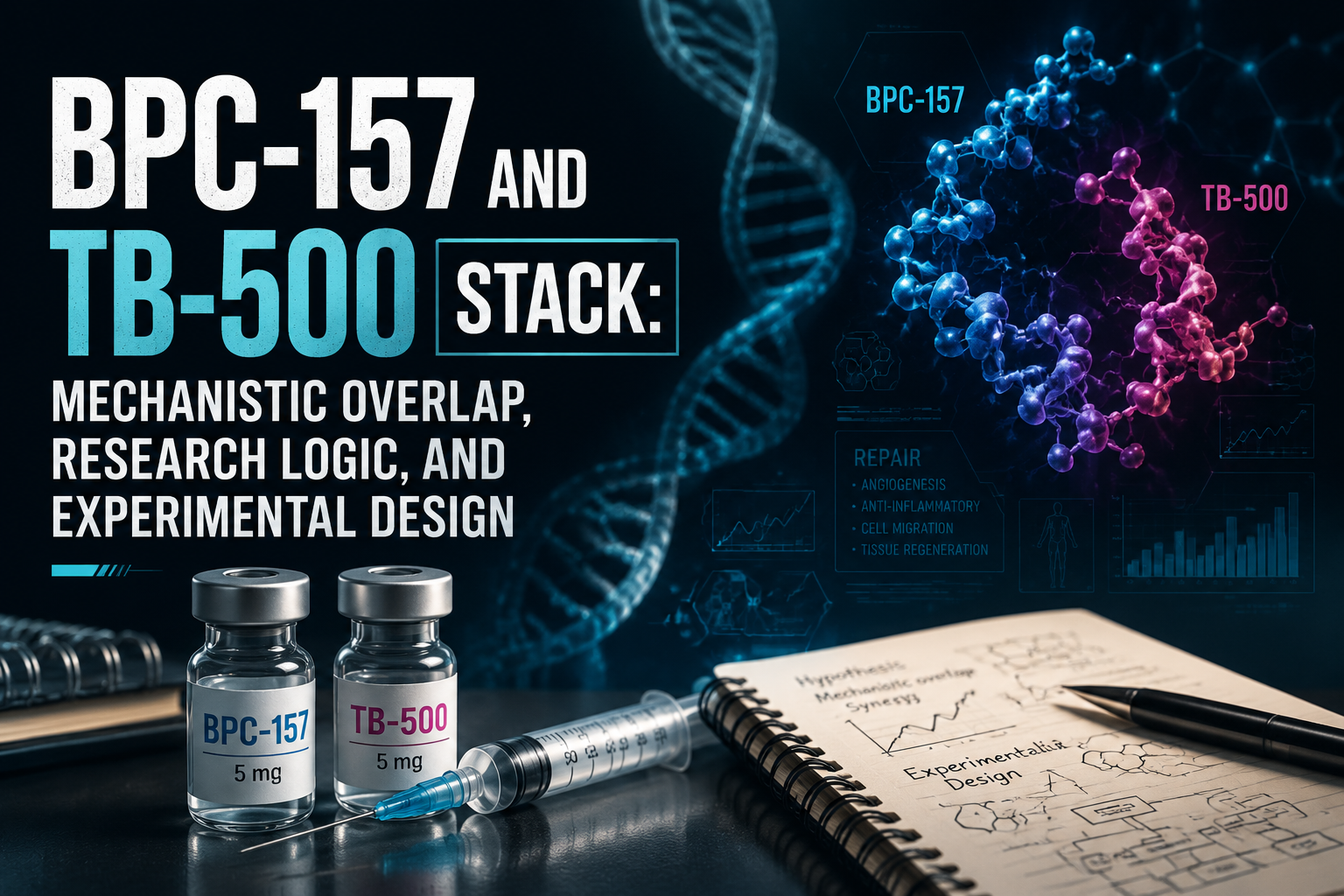
Over 100 preclinical studies support BPC-157 as a tissue-repair peptide, yet researchers increasingly pair it with TB-500 rather than study it alone. That choice is not arbitrary. The BPC-157 and TB-500 stack: mechanistic overlap, research logic, and experimental design represent a deliberate strategy to target two distinct but complementary repair pathways simultaneously, producing outcomes that neither peptide achieves as efficiently on its own.
Key Takeaways
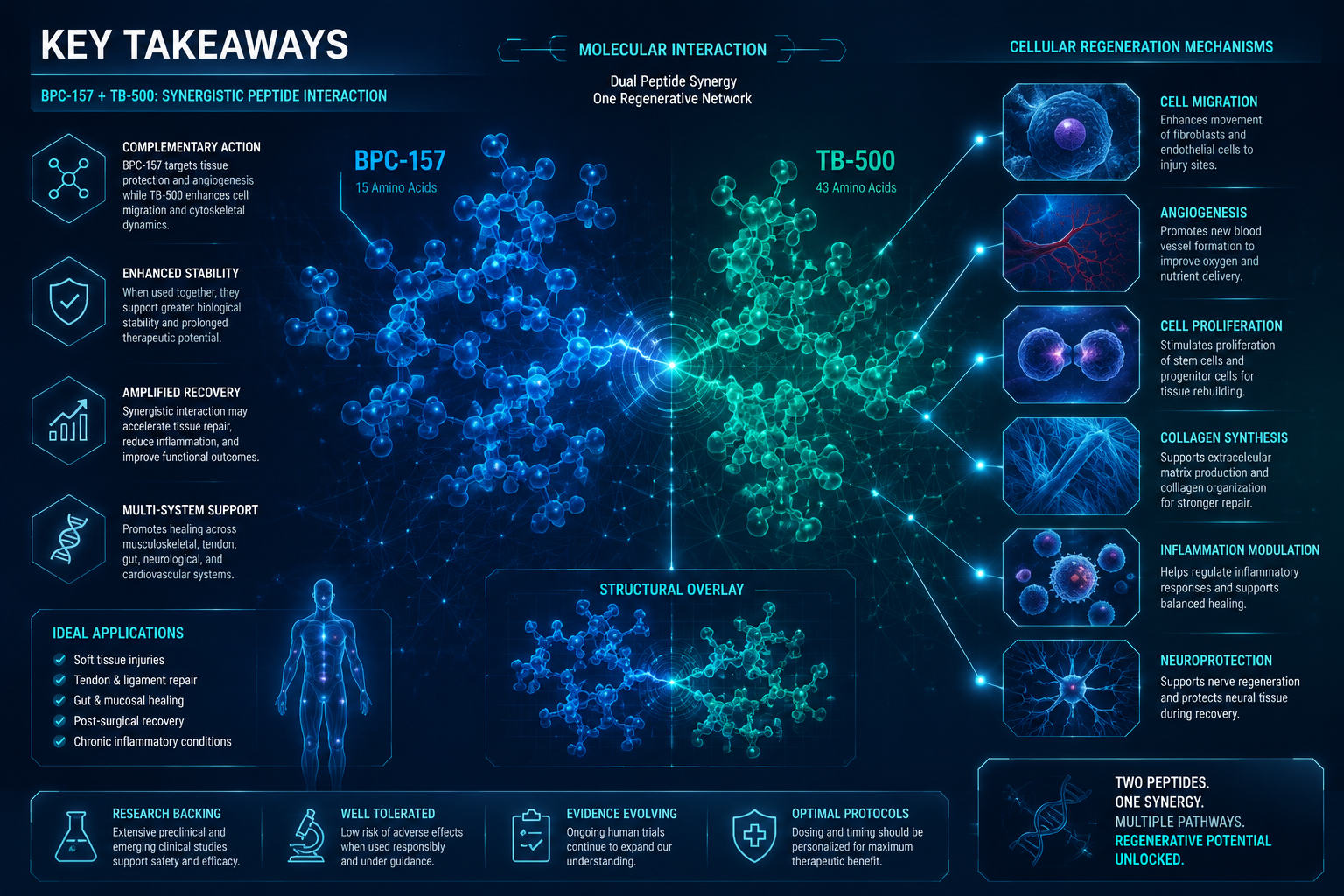
- BPC-157 drives angiogenesis via VEGFR2 activation; TB-500 promotes cell migration through actin sequestration — the pathways are distinct yet additive.
- Preclinical rodent models show improved tensile strength, collagen-I:III ratio, and recovery time when both peptides are combined.
- Neither peptide is FDA-approved; both are banned by WADA under the S0 Non-Approved Substances category.
- Human clinical data on the combination is sparse, making rigorous experimental design essential for any research protocol.
- Purity, sourcing, and dosing consistency are critical variables in any credible stack study.
Distinct Mechanisms That Create Research Logic for the Stack
Understanding why this combination is studied begins with understanding what each peptide does at the molecular level.
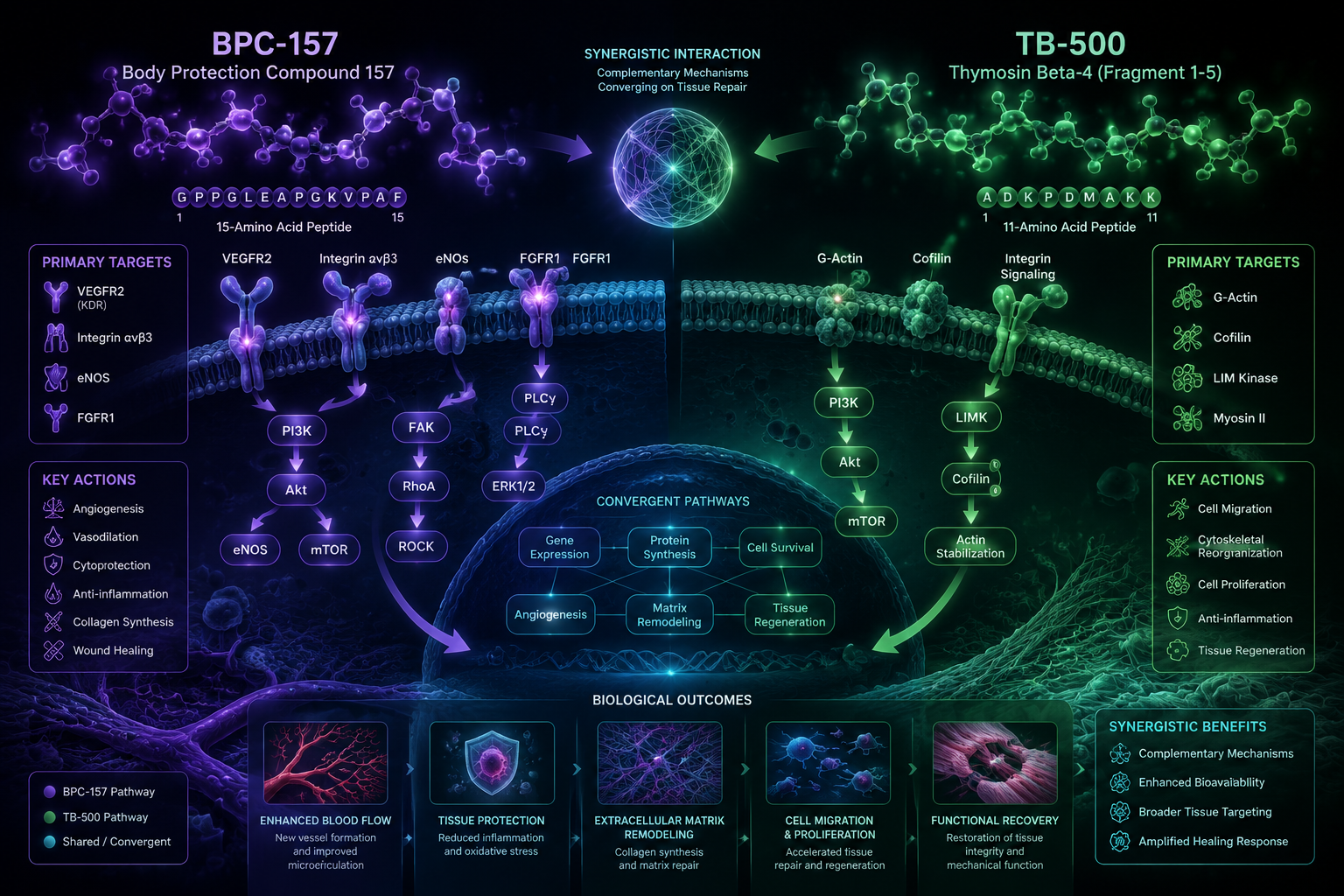
BPC-157 is a 15-amino-acid peptide derived from human gastric juice. Its primary repair mechanism involves activating VEGFR2 receptors to stimulate angiogenesis — the formation of new blood vessels. It also modulates the nitric oxide system, which regulates vascular tone and inflammatory signaling. This makes BPC-157 particularly relevant in the acute phase of tissue injury, when restoring blood supply is the first priority.
TB-500, a synthetic fragment of thymosin beta-4, operates through a different mechanism entirely. It works by sequestering G-actin, which frees up actin monomers to drive cytoskeletal reorganization. This enhances cell migration and activates integrin-linked kinase signaling, supporting progenitor cell recruitment and longer-term tissue remodeling.
The mechanistic overlap between these two peptides is minimal — and that is precisely the point. BPC-157 handles the vascular phase; TB-500 handles the cellular migration and remodeling phase. Together, they cover a broader repair timeline than either covers alone. Researchers studying multi-pathway repair strategies often explore similar logic in blends like the KLow multi-pathway research blend, where targeting multiple systems simultaneously is the core hypothesis.
Preclinical Evidence and Experimental Design Considerations
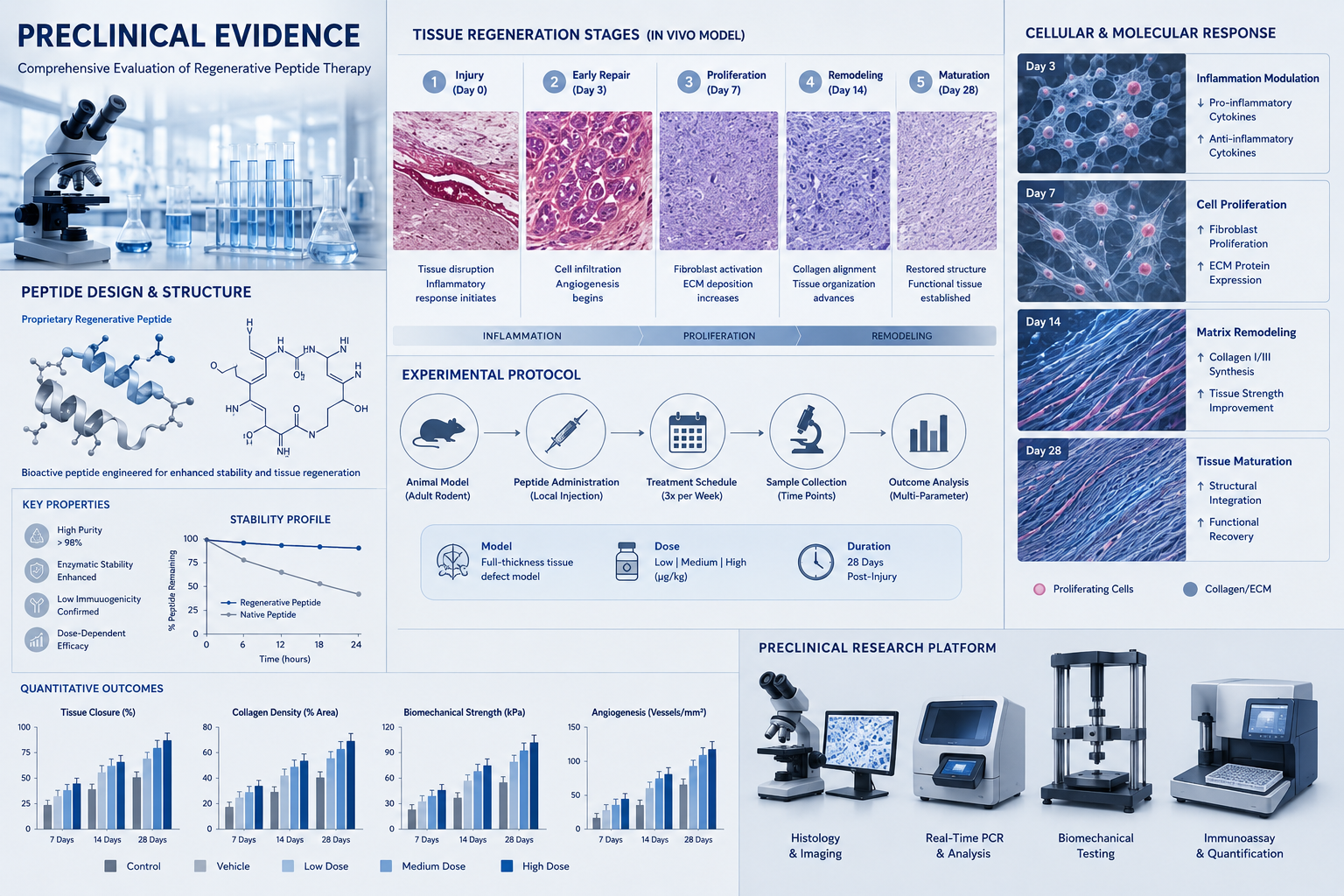
Rodent models of Achilles tendon injury, ligament damage, and cardiac ischemia/reperfusion have all been used to evaluate the BPC-157 and TB-500 stack. The combination has shown measurable improvements in tensile strength, collagen-I:III ratio, and recovery time compared to single-peptide controls. These outcomes align with the mechanistic logic: angiogenesis precedes and enables the cellular remodeling that TB-500 supports.
Typical Research Protocol Parameters
| Variable | BPC-157 | TB-500 |
|---|---|---|
| Dose range | 250-500 mcg/day | 2-2.5 mg twice weekly (loading) |
| Maintenance phase | Same daily dose | 2 mg weekly |
| Route | Subcutaneous | Subcutaneous |
| Protocol duration | 6-8 weeks | 6-8 weeks |
Well-designed experiments using this stack should include single-peptide control arms, a vehicle-only control, and matched injury models. Outcome measures should include histological collagen analysis, biomechanical tensile testing, and inflammatory marker panels. Researchers interested in delivery format variables can review BPC-157 nasal spray and capsule evidence for context on how route of administration affects bioavailability assumptions.
For broader context on stacking logic in peptide research, the approach mirrors reasoning found in GLP-1 dual receptor agonism research and MOTS-c and SLU-PP-332 combination studies, where mechanistic separation between agents justifies co-administration.
Regulatory Status, Safety Signals, and Research Limitations
The BPC-157 and TB-500 stack: mechanistic overlap, research logic, and experimental design cannot be discussed without addressing the regulatory and safety landscape.
As of 2026, neither peptide holds FDA approval. Both are classified as Category 2 bulk drug substances and are prohibited by WADA under the S0 Non-Approved Substances category. This means they are banned in competitive sports and are not approved for human therapeutic use.
Key safety concerns include:
- Pro-angiogenic activity raises theoretical concerns about tumor-growth promotion in oncology-risk populations
- Quality control variability in commercially sourced peptides poses a real contamination risk
- No large-scale human safety data exists for the combination
TB-500's evidence base draws heavily from thymosin beta-4 Phase 2/3 clinical trials, which provide some safety signal data, but these trials did not study the combination with BPC-157. BPC-157 has three small human pilot studies, none of which examined the stack.
Researchers studying peptide safety profiles in adjacent areas — such as SS-31 kidney health research or LL-37 innate immunity themes — follow similar frameworks: preclinical dose-response data first, safety biomarker panels second, and controlled human protocols only after both are established.
Sourcing purity is non-negotiable. Any credible experimental design for the BPC-157 and TB-500 stack: mechanistic overlap, research logic, and experimental design must include certificate-of-analysis verification and third-party testing. Researchers can review the full peptide catalog for sourcing reference points.
Conclusion
The case for studying BPC-157 and TB-500 together is mechanistically sound: one peptide initiates vascular repair, the other drives cellular remodeling, and the two phases are sequential rather than redundant. Preclinical data supports additive outcomes, and the experimental design logic is clear.
Actionable next steps for researchers:
- Design protocols with single-peptide control arms to isolate each peptide's contribution.
- Prioritize purity verification through third-party CoA documentation before any experiment begins.
- Include both histological and biomechanical outcome measures to capture the full repair timeline.
- Monitor inflammatory and angiogenic biomarkers to detect any adverse signaling.
- Treat all findings as preclinical until human trial data is available — and consult regulatory guidance before advancing to any human research phase.
The combination holds genuine scientific interest. Responsible experimental design is what separates productive research from speculation.