Klow Blend vs Klow Peptide Nasal Spray: How Researchers Compare Intranasal Formulations
Naming conventions in peptide research can be deceptively consequential. When researchers search for "Klow Blend vs Klow Peptide Nasal Spray: How Researchers Compare Intranasal Formulations," they are not simply comparing two products with similar labels, they are evaluating fundamentally different delivery architectures built around overlapping but distinct peptide compositions. Understanding what separates these two formulations, and why the distinction matters in a research context, is the focus of this article.
Key Takeaways
- The Klow Blend and Klow Peptide Nasal Spray share core peptide components but differ critically in delivery format, concentration, and intended research application.
- The primary compositional difference between "KLOW" and "GLOW" naming conventions relates to the inclusion of KPV, a tripeptide with distinct anti-inflammatory research properties.
- Intranasal formulations offer researchers a needle-free route of administration, but require different handling protocols compared to lyophilized vial formats.
- Both formulations carry research-only status and have not received regulatory drug approval for human therapeutic use.
- Purity verification through third-party Certificates of Analysis (COAs) is a critical quality-control step for both formats in 2026.
What Is the Klow Blend and How Does It Differ from the Nasal Spray Format
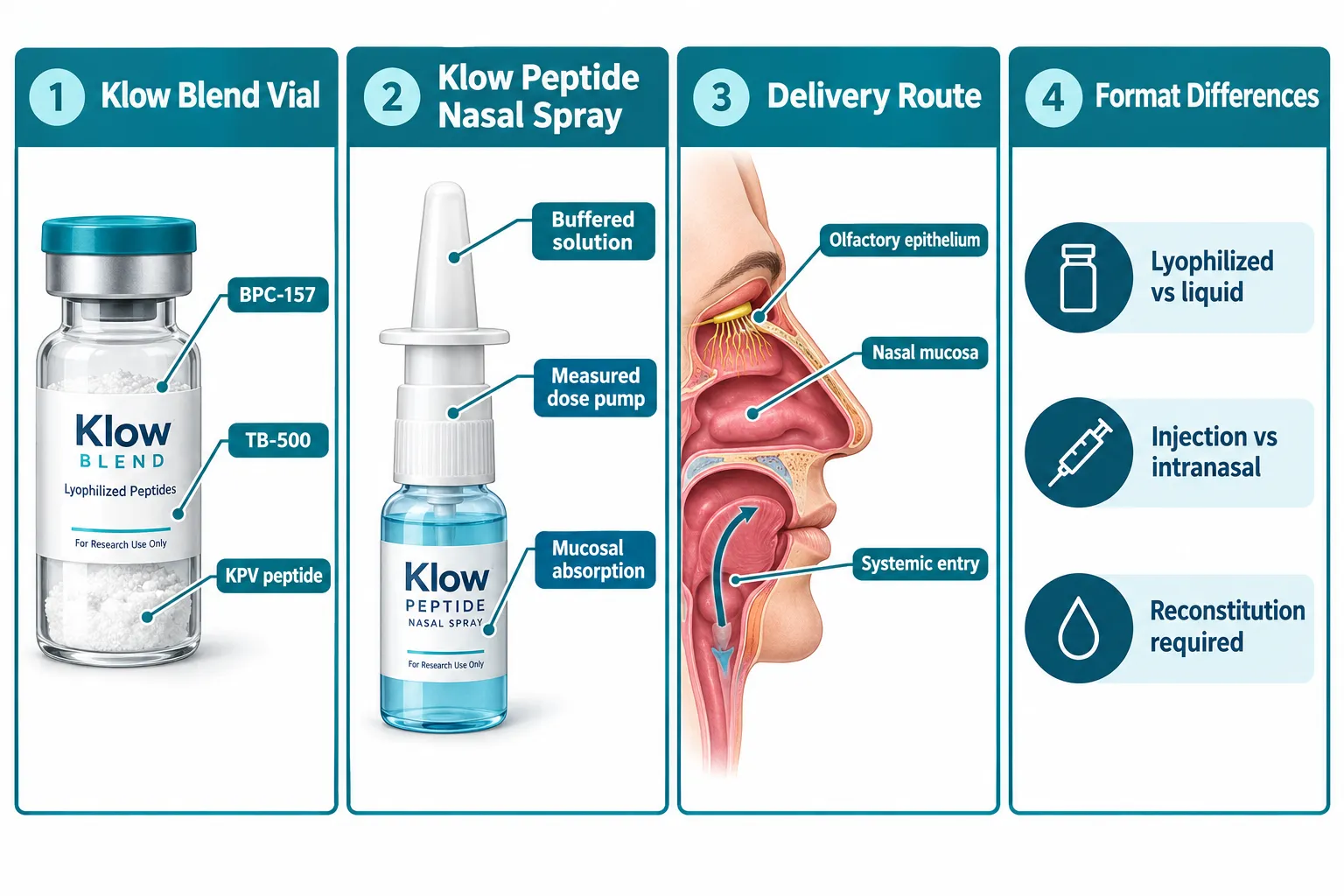
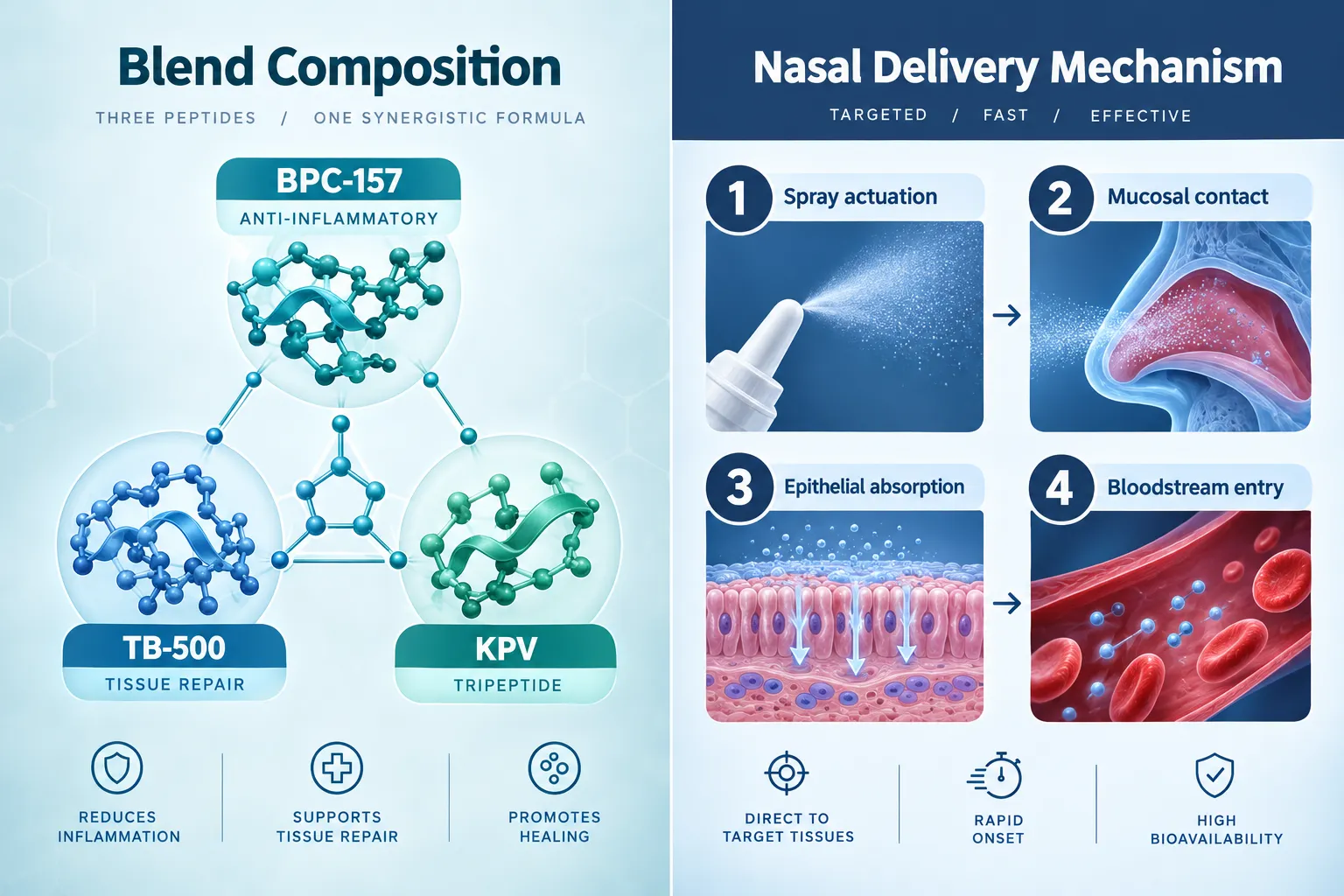
The Klow Blend is typically supplied as a lyophilized powder in a multi-peptide vial format. Standard lot specifications in 2026 include a combination of BPC-157, TB-500, and KPV, the latter being the defining component that distinguishes the "KLOW" designation from the similarly named "GLOW" blend, which omits KPV. KPV is a tripeptide fragment (Lys-Pro-Val) derived from alpha-melanocyte-stimulating hormone, and its inclusion adds a distinct anti-inflammatory research dimension to the overall blend.
In vial format, the Klow Blend requires reconstitution before use, typically with bacteriostatic water. Researchers working with this format must calculate dose volumes based on total peptide mass per vial, a process that demands precision but allows flexible dosing across a range of experimental protocols.
The Klow Peptide Nasal Spray, by contrast, arrives as a pre-buffered aqueous solution loaded into a metered-dose pump device. Dose ranges for nasal spray formulations typically fall between 100 mcg and 300 mcg per actuation, depending on the specific product lot and supplier specifications. This format eliminates the reconstitution step entirely and provides a consistent, reproducible delivery volume with each pump actuation.
"The shift from vial to intranasal format is not simply a matter of convenience, it represents a fundamentally different pharmacokinetic pathway that researchers must account for in their study designs."
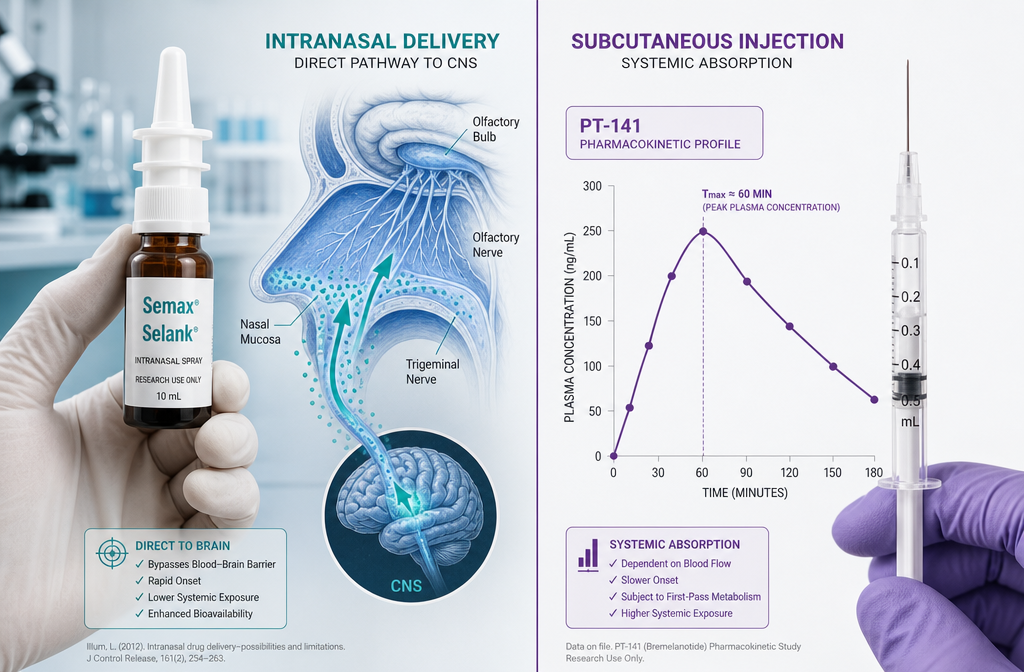
Researchers comparing intranasal formulations note that the nasal route bypasses hepatic first-pass metabolism and allows peptides to reach systemic circulation through the nasal mucosa and, in some cases, the olfactory epithelium. This makes the GLP nasal spray delivery model a point of reference when evaluating how peptide blends perform across different administration routes.
How Researchers Compare Intranasal Formulations: Key Variables
When applying a Klow Blend vs Klow Peptide Nasal Spray comparison framework, researchers typically evaluate several variables side by side:
Delivery Route and Absorption
| Variable | Klow Blend (Vial) | Klow Peptide Nasal Spray |
|---|---|---|
| Administration | Reconstituted injection | Intranasal pump actuation |
| Absorption pathway | Subcutaneous/systemic | Nasal mucosa, olfactory epithelium |
| Reconstitution required | Yes | No |
| Dose precision | Researcher-calculated | Fixed per actuation |
| Stability (post-preparation) | Hours to days | Manufacturer-determined shelf life |
Peptide Composition
Both formats contain BPC-157 and TB-500 as foundational components. BPC-157 is a synthetic pentadecapeptide studied extensively in the context of wound healing peptide research, while TB-500 (Thymosin Beta-4 fragment) is associated with tissue repair and cytoskeletal organization. The addition of KPV in both Klow formats, as opposed to GLOW variants, represents the key compositional distinction that researchers must verify when sourcing materials.
For researchers already familiar with multi-component systems such as the BPC-157 and TB-500 blend, the Klow formulation adds a third active component that broadens the research scope.
Emerging Research Themes for Intranasal Klow
Nasal spray delivery of peptide blends has attracted growing interest in 2026 for several thematic research areas:
- Gut-brain axis signaling, given the olfactory-to-CNS proximity of the intranasal route
- Mucosal inflammation models, where KPV's anti-inflammatory properties are particularly relevant
- Comparative bioavailability studies contrasting nasal versus subcutaneous delivery
Researchers exploring broader peptide delivery systems may also reference GLP-1 peptides and GLP-3 nasal spray platforms as parallel models for intranasal peptide pharmacokinetics.
Quality Control, Research Status, and Sourcing Considerations

Both the Klow Blend and Klow Peptide Nasal Spray carry strict research-only status as of 2026. Neither formulation has received approval from the FDA, EMA, or equivalent regulatory bodies for therapeutic use in humans. This classification is consistent across the broader peptide research supply landscape and places responsibility on researchers to handle materials under appropriate laboratory conditions.
Certificate of Analysis (COA) Verification
Recent quality-control data for Klow Blend lots in 2026 highlights the importance of third-party COA verification. Researchers should confirm:
- Purity levels at or above 98% by HPLC analysis
- Correct peptide identity confirmed by mass spectrometry
- Absence of endotoxins and microbial contamination
- Lot-specific documentation matching the received product
For the nasal spray format, additional quality parameters include pH range verification (typically 4.5-6.5 for nasal tolerability), preservative concentration, and pump actuation consistency.
When sourcing either format, working with a best peptide supplier that provides transparent, lot-specific COA documentation is non-negotiable for credible research outcomes. Researchers can also explore wholesale peptides options for larger-scale study requirements, provided purity standards are maintained.
International Availability
As of late 2026, both Klow formats are available through specialized peptide research suppliers in North America, Europe, and select Asia-Pacific markets. Pricing varies by lot size and supplier, with nasal spray formats generally commanding a modest premium over equivalent vial-format peptide mass due to formulation and device costs.
Conclusion
The comparison between Klow Blend vs Klow Peptide Nasal Spray: How Researchers Compare Intranasal Formulations ultimately centers on three core considerations: delivery route, compositional verification, and quality documentation. The vial format offers dosing flexibility and is well-suited to researchers with established reconstitution protocols. The nasal spray format reduces handling complexity and introduces a distinct pharmacokinetic pathway that may be advantageous for specific research designs.
Actionable next steps for researchers:
- Confirm KPV inclusion in any sourced Klow product to distinguish it from GLOW-variant blends.
- Request lot-specific COAs from suppliers before initiating any study protocol.
- Design comparative studies that account for the different absorption kinetics of intranasal versus subcutaneous delivery.
- Consult the latest regulatory guidance in your jurisdiction before handling research-only peptide materials.
- Cross-reference findings with parallel intranasal peptide research, including GLP-class and GLP-3 peptide delivery studies, to contextualize results.
The naming distinction between these two formulations is not cosmetic, it reflects a meaningful difference in research application. Precision in product identification is the first step toward rigorous, reproducible peptide research.