Enclomiphene Citrate vs Enclomiphene: Stability, Storage, and Research Handling
Most researchers who order enclomiphene for laboratory work assume the citrate salt and the free base are the same compound with a different label. That assumption can compromise data, shorten shelf life, and introduce variables that are difficult to trace back to the source material. Understanding the distinctions in Enclomiphene Citrate vs Enclomiphene: Stability, Storage, and Research Handling is not a minor technical footnote, it is foundational to reproducible science.
Key Takeaways
- Enclomiphene citrate is a salt form of enclomiphene; the citrate counterion meaningfully changes solubility, crystalline stability, and handling requirements.
- Research-grade powder in either form is significantly more stable than aqueous or organic solutions, which degrade faster under ambient conditions.
- Both forms are sensitive to light, moisture, and heat; amber vials, desiccants, and cold storage are non-negotiable for long-term integrity.
- Finished formulations such as capsules and liquid suspensions show acceptable stability at or below 25 °C when properly packaged.
- Vendor quality documentation, including certificates of analysis and HPLC purity data, is a critical checkpoint before any research use.
What the Citrate Salt Actually Changes
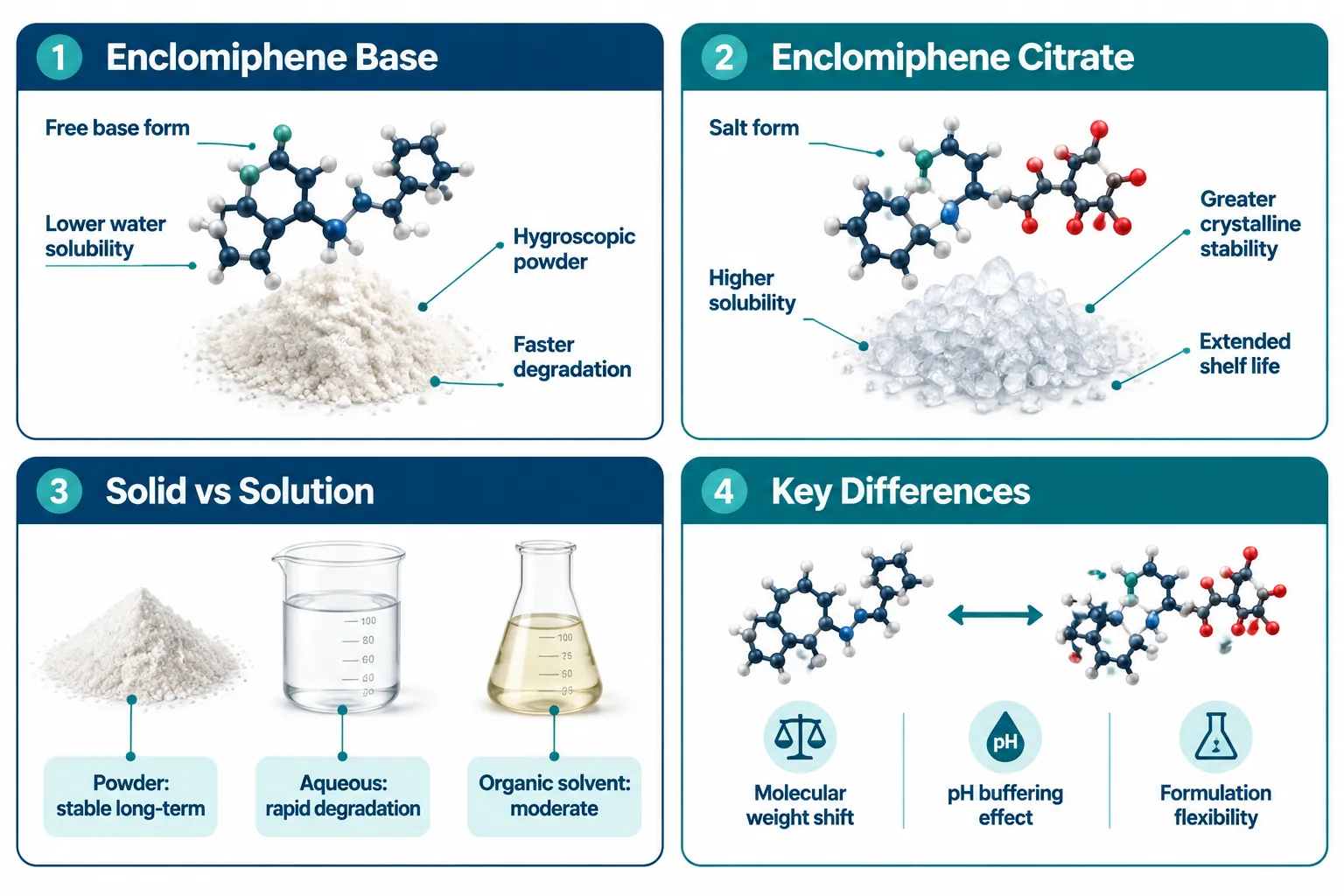
Enclomiphene is the trans-isomer of clomiphene, a selective estrogen receptor modulator with growing research interest in male reproductive endocrinology. When enclomiphene is converted to its citrate salt, a citric acid molecule pairs ionically with the enclomiphene base. This is not a cosmetic change.
The citrate counterion delivers three practical advantages:
| Property | Enclomiphene (Free Base) | Enclomiphene Citrate |
|---|---|---|
| Water solubility | Low | Moderately higher |
| Crystalline stability | Moderate | Greater |
| Formulation flexibility | Limited | Broader |
| Hygroscopicity | High | Reduced |
The increased water solubility of the citrate form matters when preparing stock solutions for in vitro work. The free base requires organic solvents such as DMSO or ethanol to dissolve reliably, and those solvents introduce their own biological variables at higher concentrations. The citrate salt can often be dissolved in aqueous buffers at research-relevant concentrations, which simplifies assay design.
"The choice between enclomiphene base and enclomiphene citrate is not arbitrary, it directly affects dissolution behavior, solution stability, and the reproducibility of downstream assays."
The molecular weight difference between the two forms is also worth noting. Enclomiphene free base has a molecular weight of approximately 406 g/mol, while the citrate salt sits closer to 598 g/mol. Researchers calculating molar concentrations must account for this difference to avoid systematic dosing errors across experiments.
This distinction mirrors well-established patterns seen with the parent compound clomiphene citrate, where the salt form has long been preferred for pharmaceutical manufacturing because of its superior stability profile and more predictable dissolution kinetics.
Stability Factors: Light, Moisture, Heat, and Form
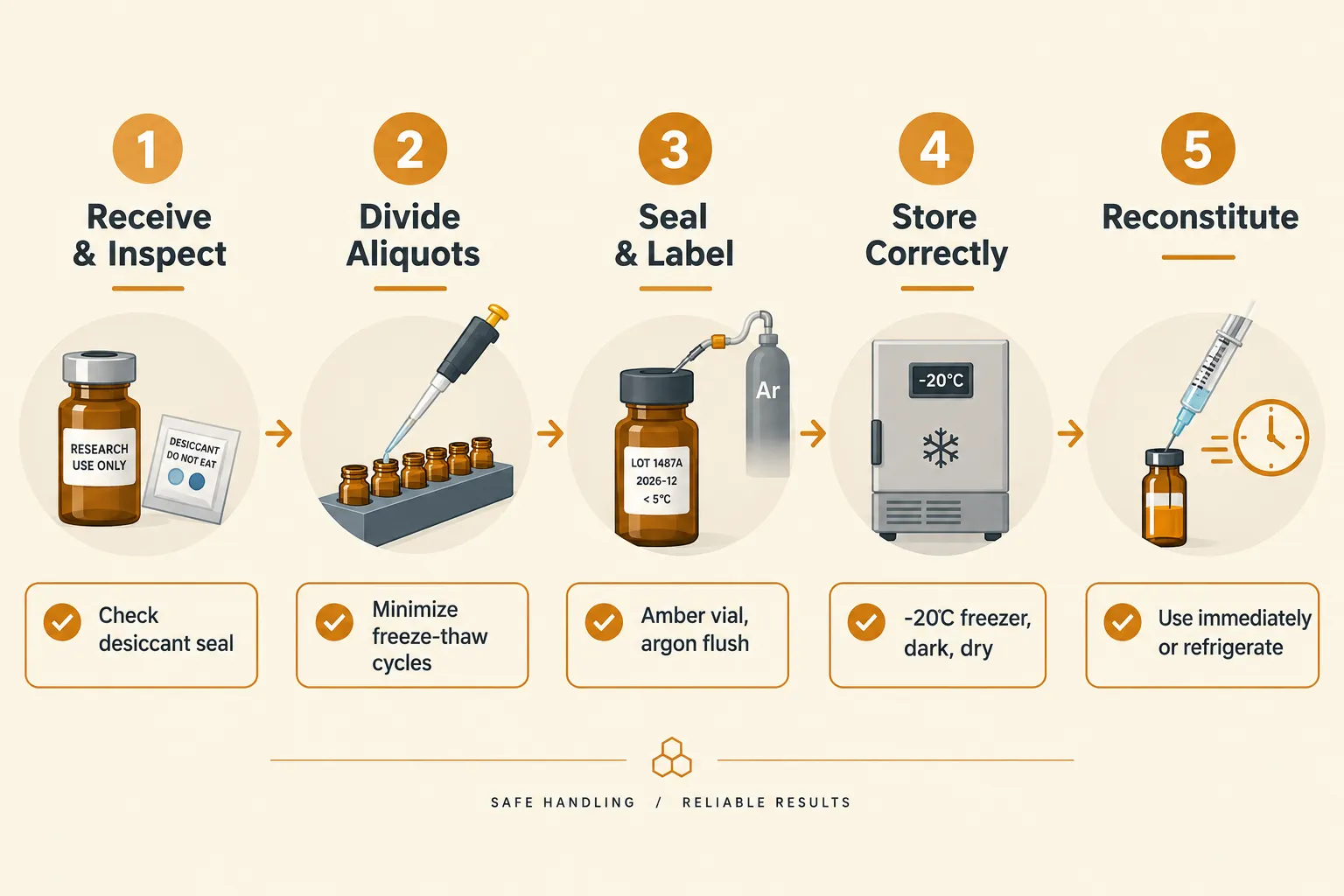
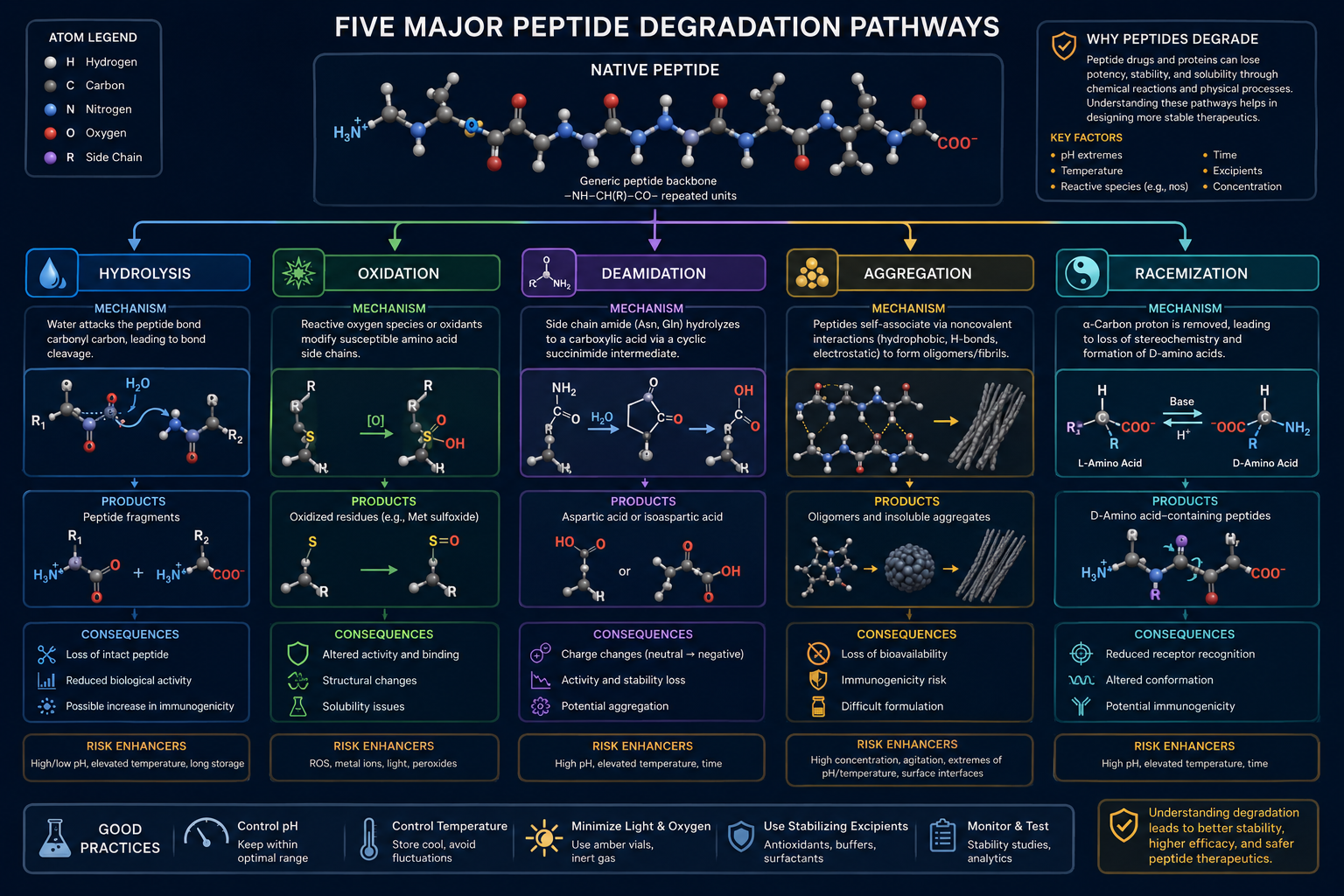
Both enclomiphene and enclomiphene citrate are susceptible to the same primary degradation drivers: ultraviolet light, ambient moisture, and elevated temperature. However, the degree of vulnerability differs between solid powder, aqueous solution, and organic solution.
Solid Powder Stability
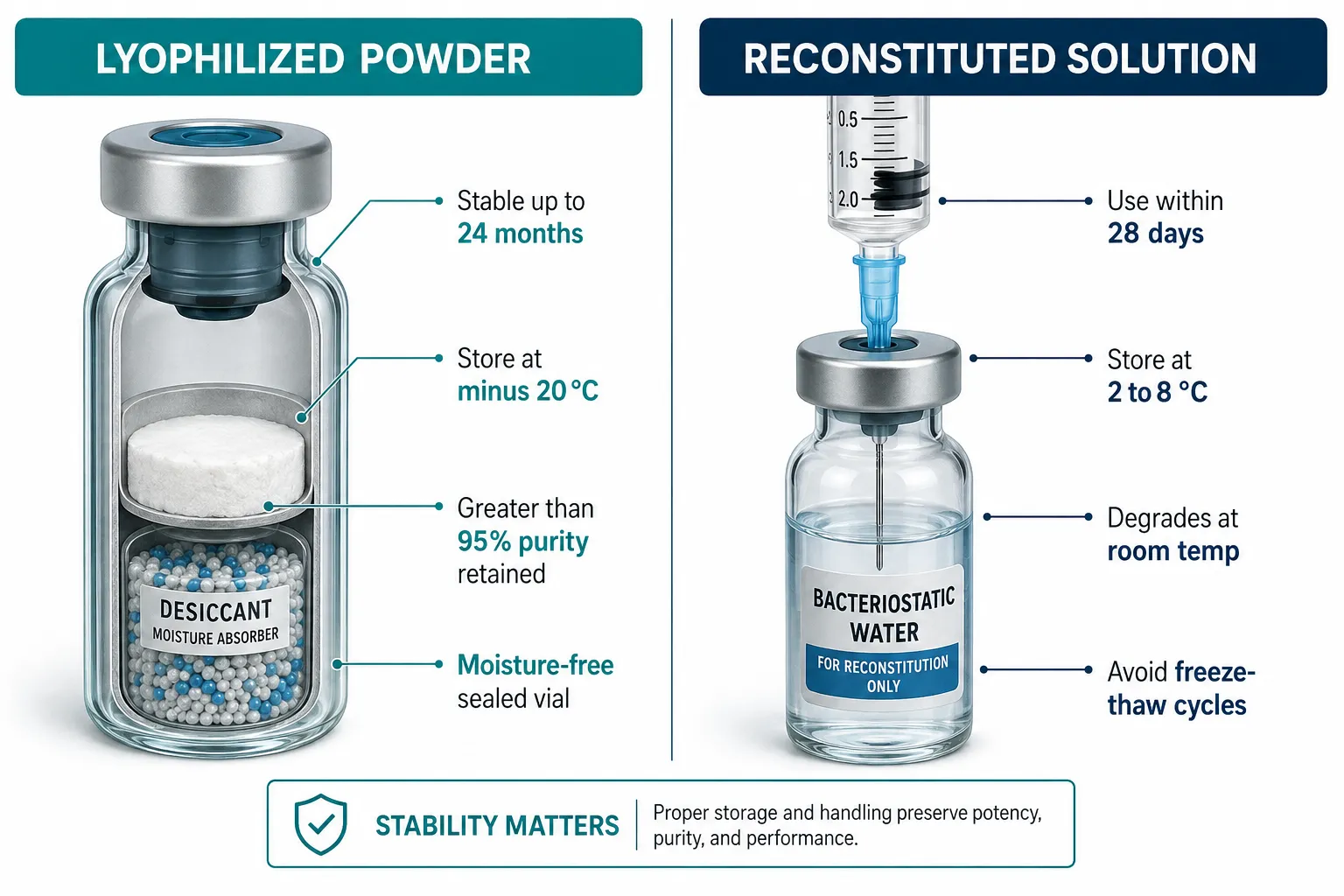
Research-grade powder, whether free base or citrate, is the most stable form. When stored correctly, properly manufactured powder can maintain integrity for 24 months or longer. Correct storage means:
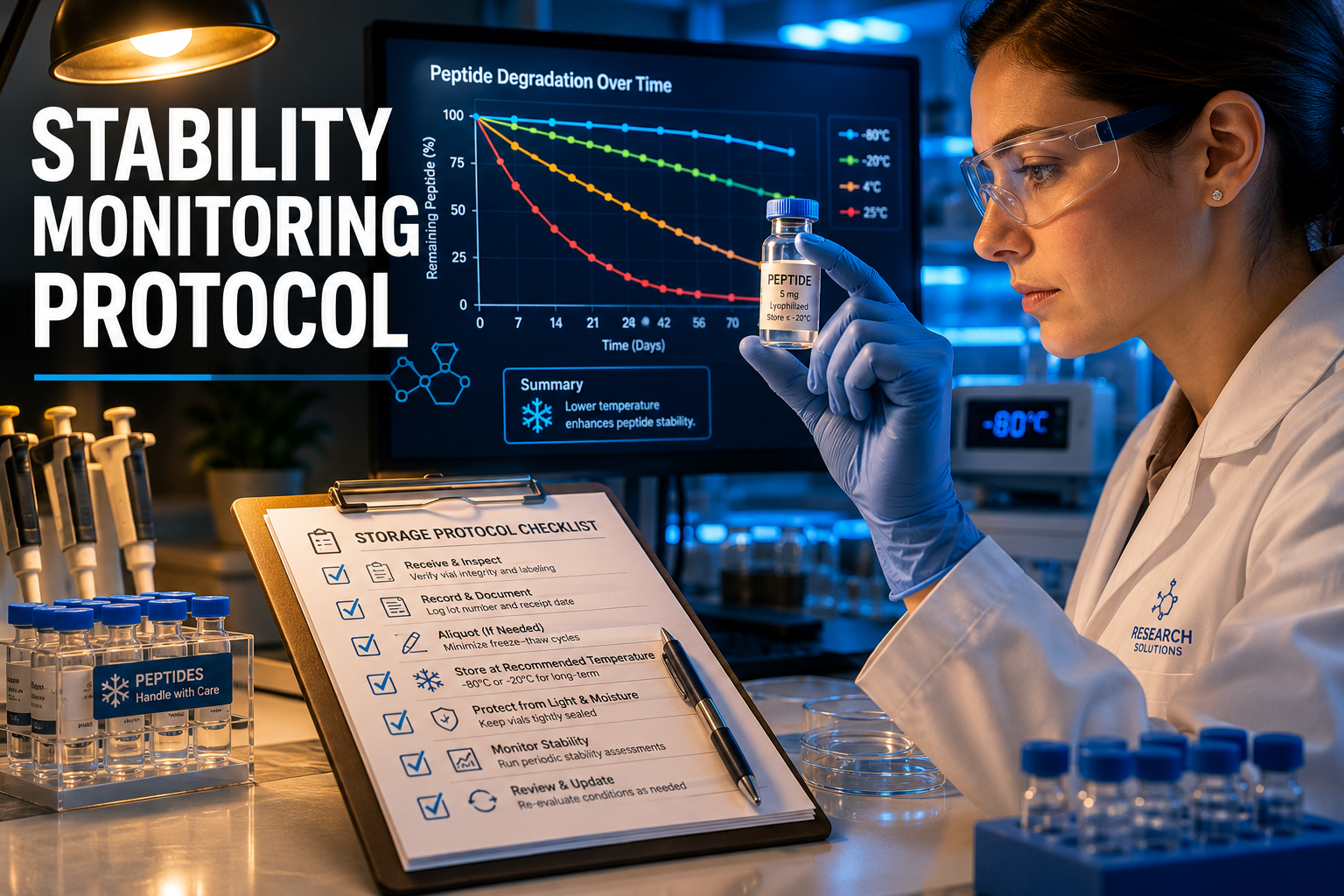
- Temperature at or below -20 °C for long-term archival
- Desiccant packs inside a sealed, airtight container
- Amber or opaque vials to block UV exposure
- Minimal handling that introduces ambient air or humidity
The citrate form benefits from reduced hygroscopicity relative to the free base. In practical terms, this means the citrate powder is less likely to absorb atmospheric moisture during brief handling windows, which is a meaningful advantage in non-controlled lab environments.
Solution Stability
Aqueous solutions of enclomiphene citrate are markedly less stable than the solid form. At room temperature, degradation can become measurable within days. Refrigerated aqueous solutions (2-8 °C) extend working life but should still be used within a short window, typically 48 to 72 hours for research applications.
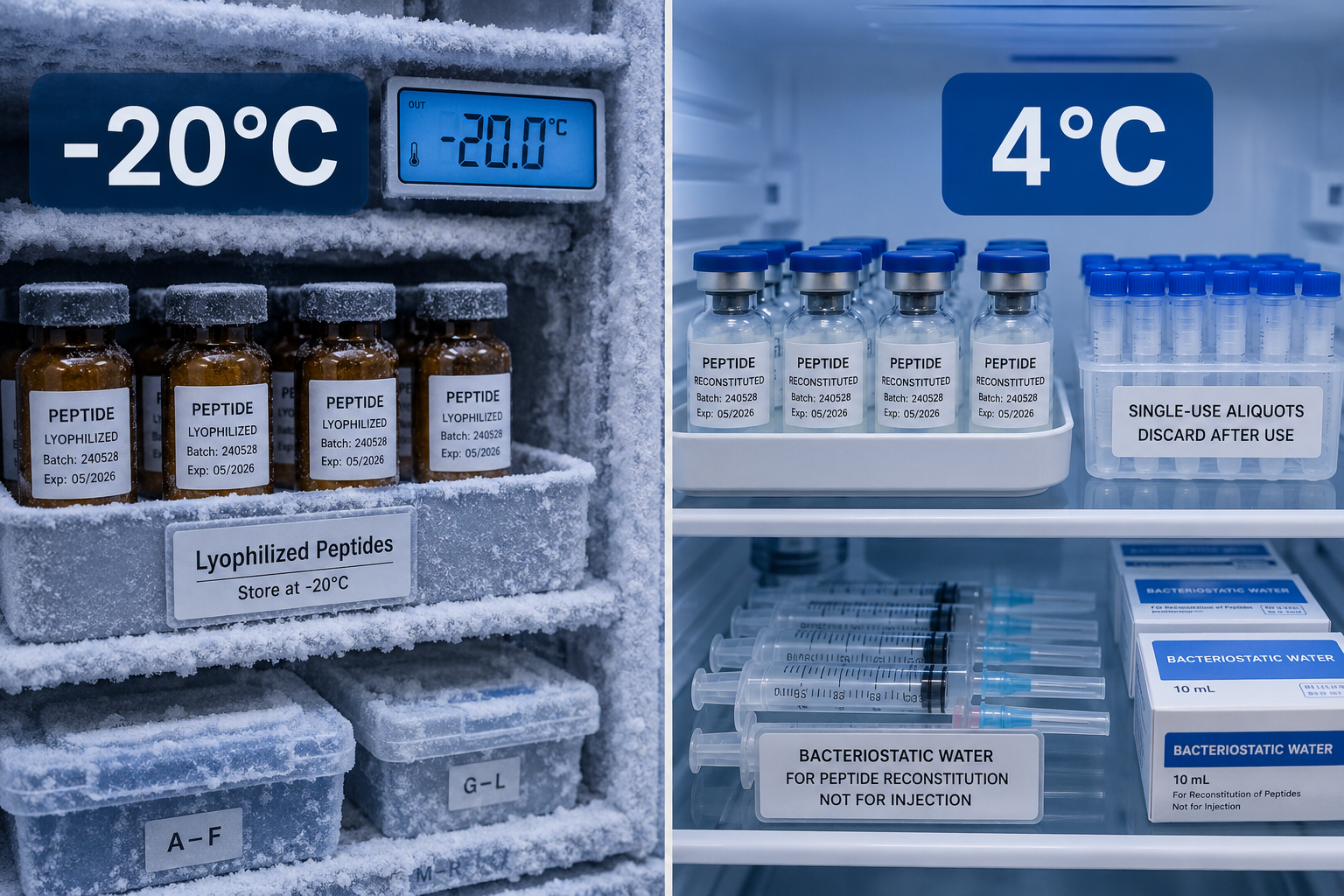
Organic solvent solutions (DMSO, ethanol) offer moderate stability but are not suitable for extended storage. Freeze-thaw cycling accelerates degradation in both aqueous and organic solutions, which is why aliquoting into single-use volumes before freezing is standard practice.
Finished Formulations
Capsule and liquid suspension formulations of enclomiphene citrate demonstrate extended stability at or below 25 °C when packaged with appropriate moisture barriers. Regulatory stability expectations for finished dosage forms generally require data supporting a shelf life of 24 months under controlled conditions, and enclomiphene citrate formulations have been evaluated under those frameworks in clinical development programs.
Practical Research Handling for Enclomiphene Citrate vs Enclomiphene
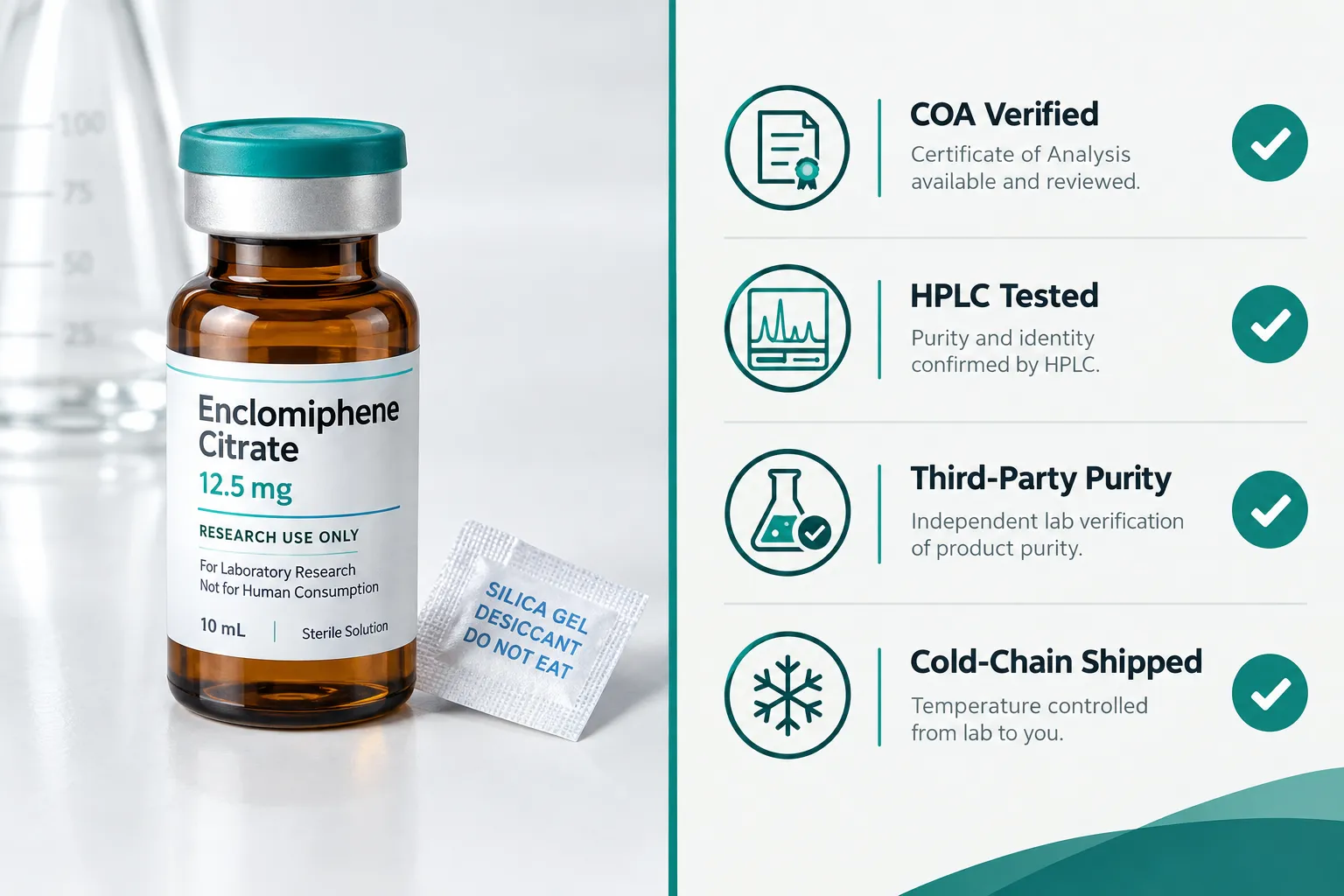
Applying the stability science above to day-to-day laboratory practice requires a clear protocol. The following guidance applies to both forms but is especially relevant for enclomiphene citrate given its broader use in research pipelines.
Before Use
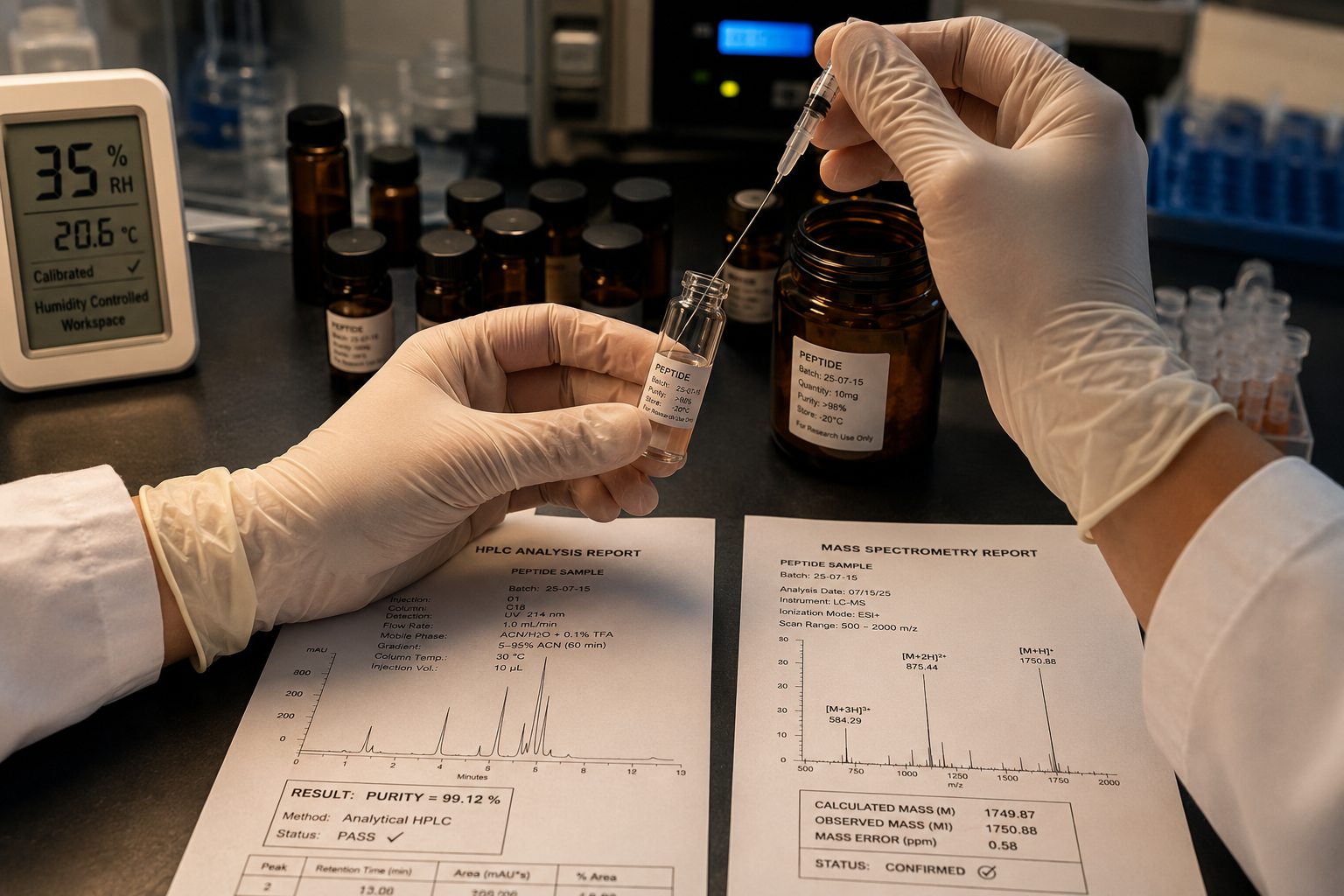
- Verify the certificate of analysis (COA) from the supplier, confirming HPLC purity of 98% or above
- Confirm the compound is labeled correctly as citrate salt or free base, the two are not interchangeable in concentration calculations
- Inspect the desiccant seal; a broken seal is grounds for rejection
During Reconstitution
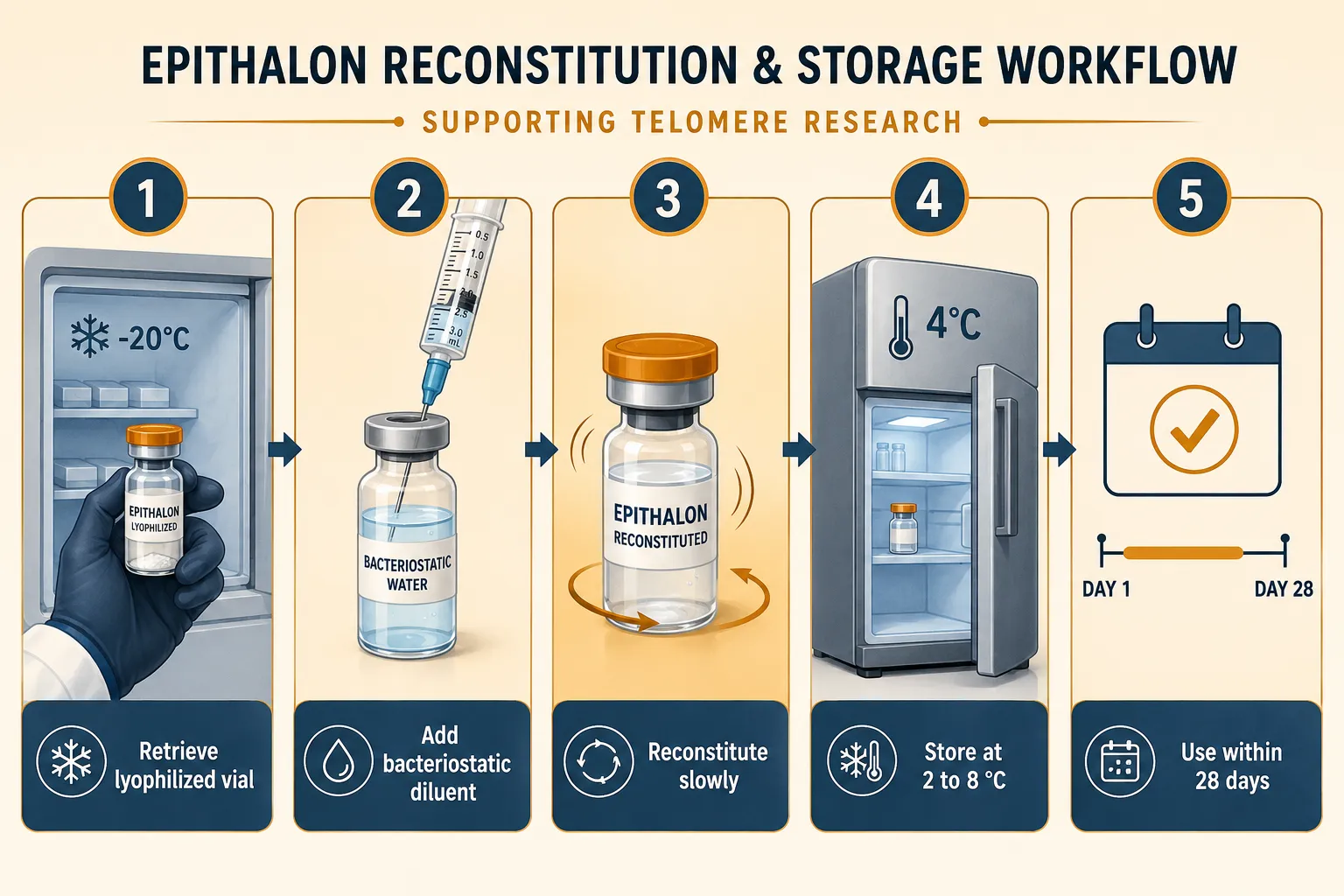
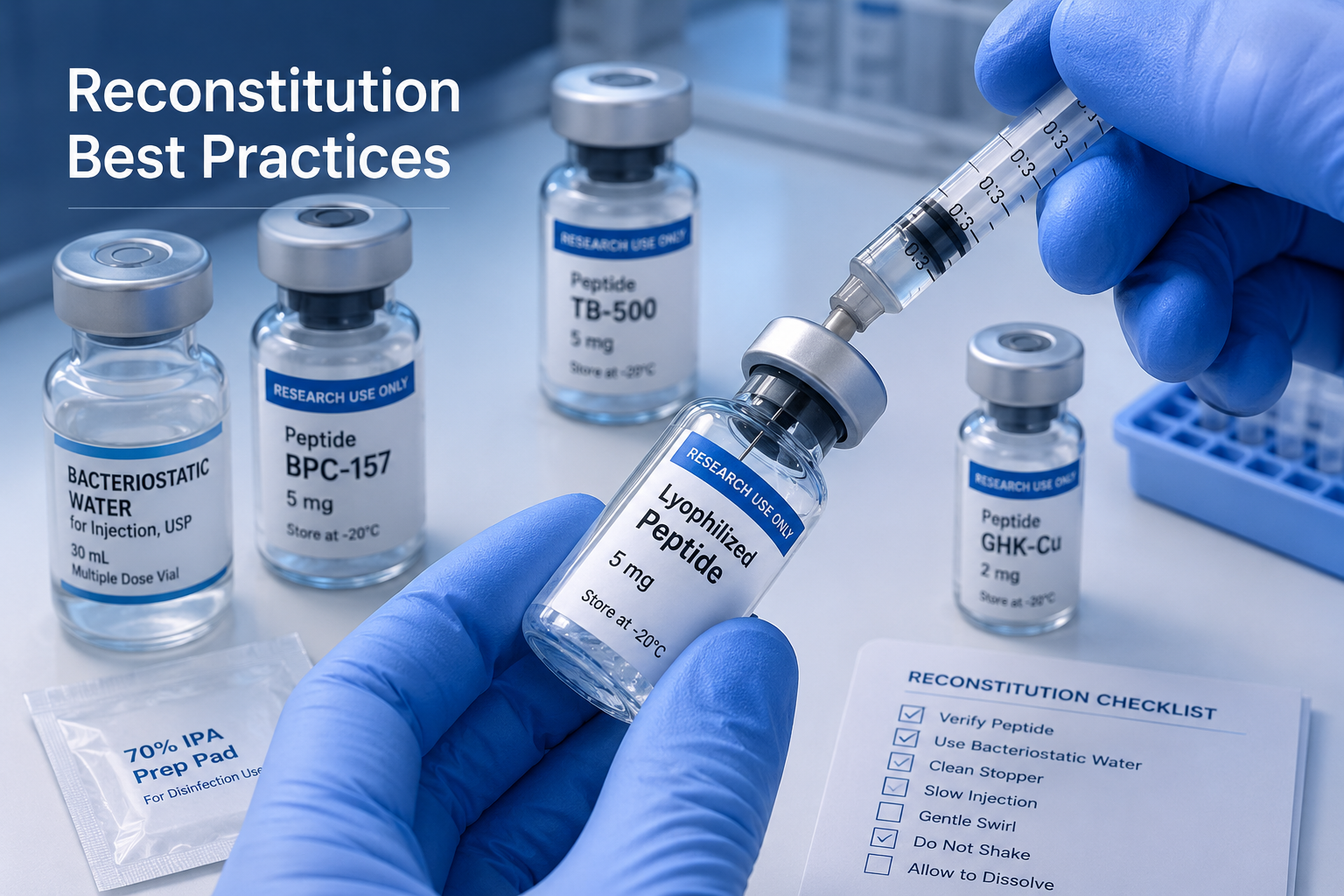
- Warm sealed vials to room temperature before opening to prevent condensation on the powder
- Use the appropriate solvent for the form: aqueous buffer for citrate, DMSO or ethanol for free base
- Prepare only the volume needed; do not reconstitute bulk quantities
During Storage
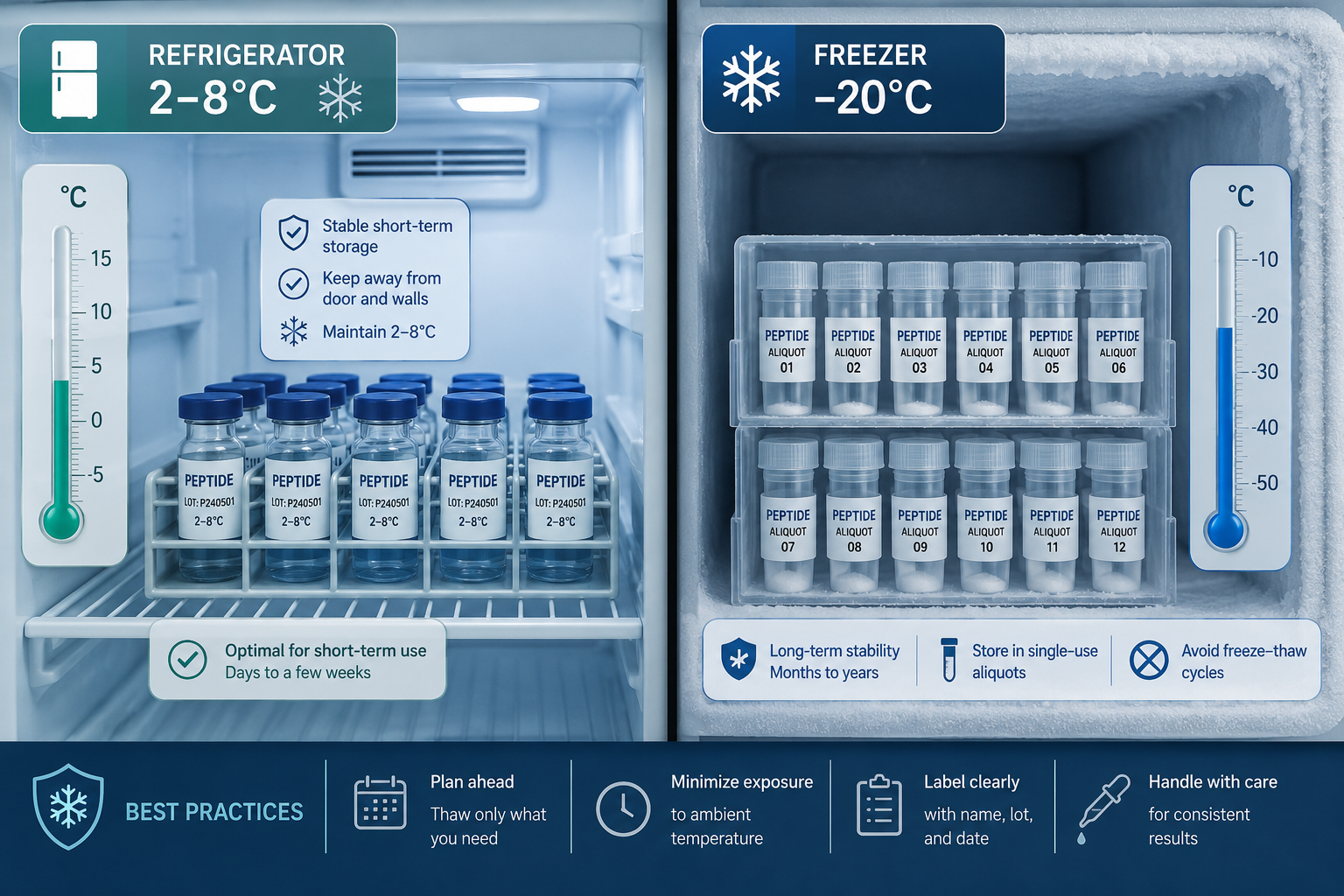
- Store reconstituted solutions at 2-8 °C and use within 48-72 hours
- Store dry powder at -20 °C in amber vials with desiccant
- Log every freeze-thaw cycle; limit to no more than two per aliquot
Researchers sourcing serms for comparative studies should apply the same handling discipline to related compounds. For those working with peptide-based research compounds alongside small-molecule serms, foundational guidance on compound classes is available in resources covering peptides 101 for research-use only buyers.
Vendor selection is equally important. A vendor scoring rubric that evaluates third-party testing, cold-chain shipping, and documentation practices will reduce the risk of receiving degraded or mislabeled material. Researchers running multi-compound protocols, for example, pairing a serm with a growth hormone secretagogue, can find relevant product context in resources such as the IPA Sermorelin stack research overview.
For those evaluating research-grade serm products specifically, the serm 10mg product page provides purity and specification details relevant to procurement decisions.
Conclusion
The distinction between enclomiphene citrate and enclomiphene free base is not semantic. The citrate salt offers measurably better crystalline stability, reduced hygroscopicity, and broader formulation options, but it also carries a different molecular weight that must be factored into every concentration calculation. Both forms demand cold, dark, dry storage in the solid state, and both degrade significantly faster once dissolved.
Actionable next steps for researchers in 2026:
- Audit current stock: confirm whether materials on hand are labeled as citrate salt or free base and recalculate molar concentrations accordingly.
- Implement single-use aliquoting before freezing to eliminate freeze-thaw degradation.
- Require HPLC-verified COAs from all suppliers before accepting shipments.
- Establish a 48-72 hour use window for all reconstituted solutions stored at 2-8 °C.
- Apply the same vendor documentation standards to all research compounds, not just serms.
Reproducibility in enclomiphene research depends on treating the compound form as a controlled variable, not an afterthought.