
Best Research Peptides for Mitochondrial Health: A Comparison of MOTS-c, 5-Amino-1MQ, and Emerging Compounds
Mitochondrial dysfunction now appears in the mechanistic pathway of over 50 human diseases, from type 2 diabetes to neurodegeneration — yet the pharmacological toolkit for directly targeting these organelles remained thin until the last decade. The field of best research peptides for mitochondrial health: a comparison of MOTS-c, 5-Amino-1MQ, and emerging compounds has moved quickly, giving researchers a growing menu of targeted molecules to evaluate. This article breaks down the leading candidates, their mechanisms, and what distinguishes each for preclinical study design in 2026.
Key Takeaways
- MOTS-c is a 16-amino-acid mitochondrial-derived peptide that activates AMPK, reduces oxidative stress, and declines naturally with age.
- 5-Amino-1MQ targets NNMT enzyme inhibition, influencing NAD+ metabolism and energy expenditure at the cellular level.
- SS-31 (elamipretide) protects the inner mitochondrial membrane and is one of the most studied structural mitochondrial peptides.
- Researchers should evaluate purity, mechanism specificity, and study context when selecting among these compounds.
- Emerging molecules such as SLU-PP-332 and humanin analogs are expanding the mitochondrial peptide research landscape.
MOTS-c: The Mitochondrial-Derived Peptide Redefining Metabolic Research
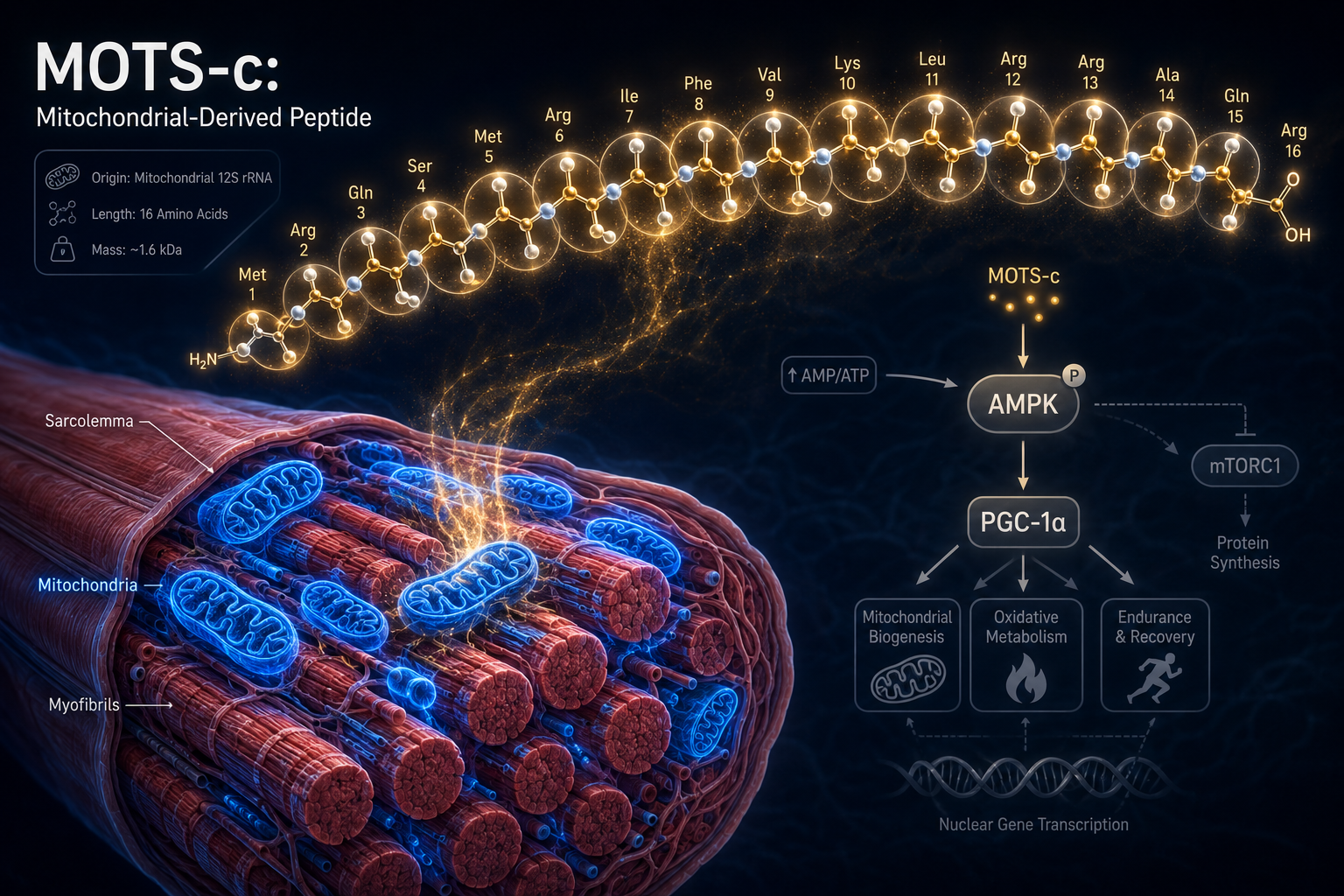
MOTS-c is encoded within the mitochondrial genome itself — a distinction that separates it from most synthetic research peptides. This 16-amino-acid peptide translocates to the nucleus under metabolic stress and exercise, where it activates antioxidant response elements and regulates stress-adaptation genes.
Key mechanisms of MOTS-c:
- Inhibits the folate cycle and de novo purine biosynthesis
- Activates AMPK, the master cellular energy sensor
- Upregulates PGC-1alpha, promoting mitochondrial biogenesis
- Reduces reactive oxygen species (ROS) emission and protein oxidative damage
Research shows that MOTS-c levels increase in skeletal muscle, systemic circulation, and the hypothalamus following exercise. Critically, circulating MOTS-c declines with age, which correlates with reduced insulin sensitivity, increased adiposity, and impaired muscle homeostasis. Exogenous MOTS-c administration in animal models has reversed age-dependent and diet-induced insulin resistance.
"MOTS-c acts as a molecular signal linking mitochondrial stress to whole-body metabolic adaptation — a property no synthetic small molecule fully replicates."
For researchers building study frameworks around this peptide, the MOTS-c mitochondrial research themes resource provides a useful orientation to current experimental directions. Those interested in mechanistic depth can also explore MOTS-c and mitochondrial dynamics for pathway-level detail.
Comparing the Best Research Peptides for Mitochondrial Health: A Comparison of MOTS-c, 5-Amino-1MQ, and Emerging Compounds
5-Amino-1MQ: NNMT Inhibition and NAD+ Metabolism
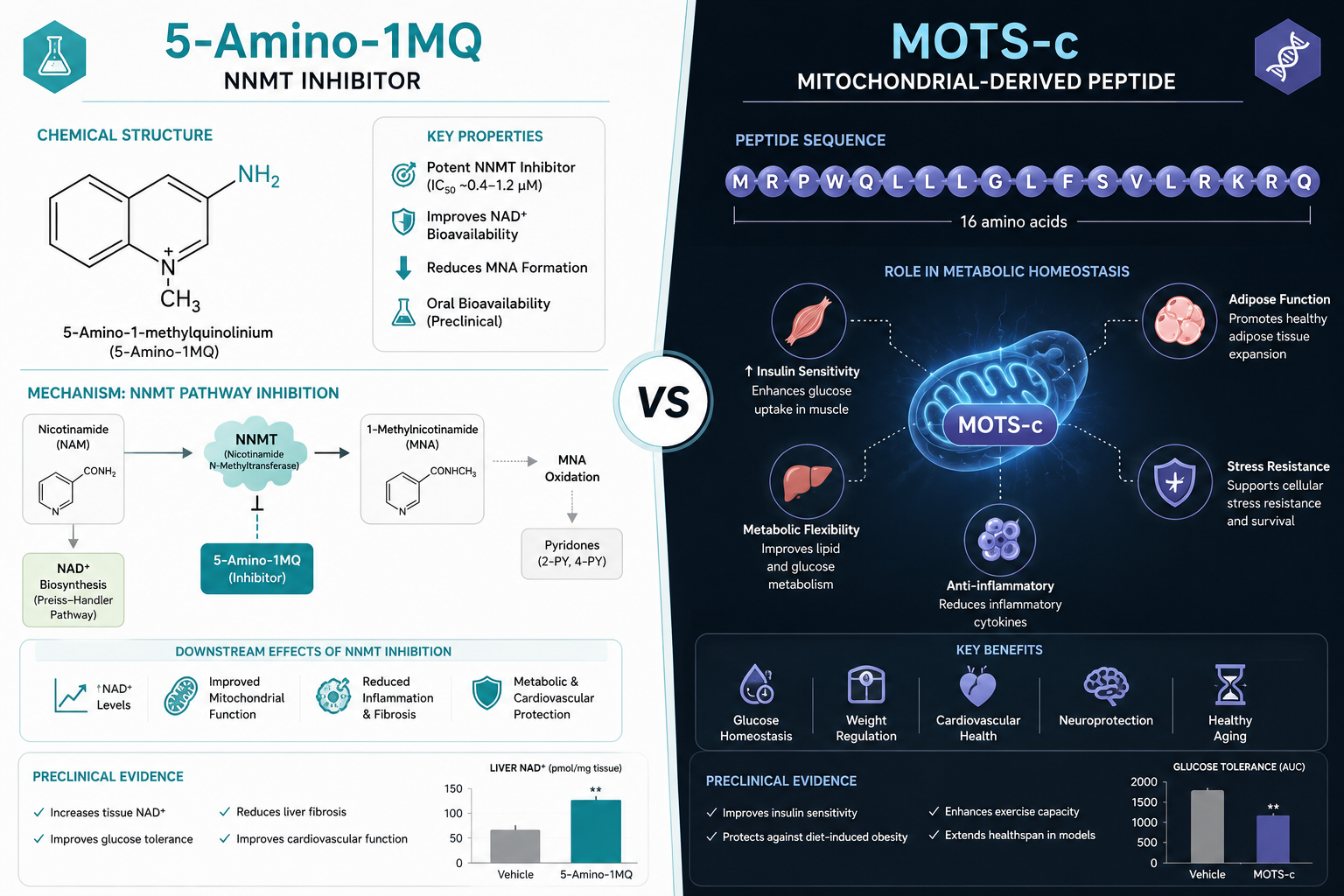
5-Amino-1MQ is a small-molecule NNMT (nicotinamide N-methyltransferase) inhibitor rather than a peptide in the classical sense, but it is routinely grouped with research peptides given its metabolic targeting profile. NNMT consumes SAM (S-adenosylmethionine) and reduces NAD+ precursor availability. By blocking NNMT, 5-Amino-1MQ effectively raises intracellular NAD+ levels, which supports mitochondrial electron transport chain efficiency.
Comparison table: MOTS-c vs. 5-Amino-1MQ
| Feature | MOTS-c | 5-Amino-1MQ |
|---|---|---|
| Origin | Mitochondrial genome | Synthetic small molecule |
| Primary target | AMPK / PGC-1alpha | NNMT enzyme |
| NAD+ effect | Indirect (via AMPK) | Direct (via NNMT inhibition) |
| Oxidative stress reduction | Demonstrated | Under active study |
| Age-related decline | Yes | Not applicable |
SS-31 (Elamipretide): Structural Mitochondrial Protection
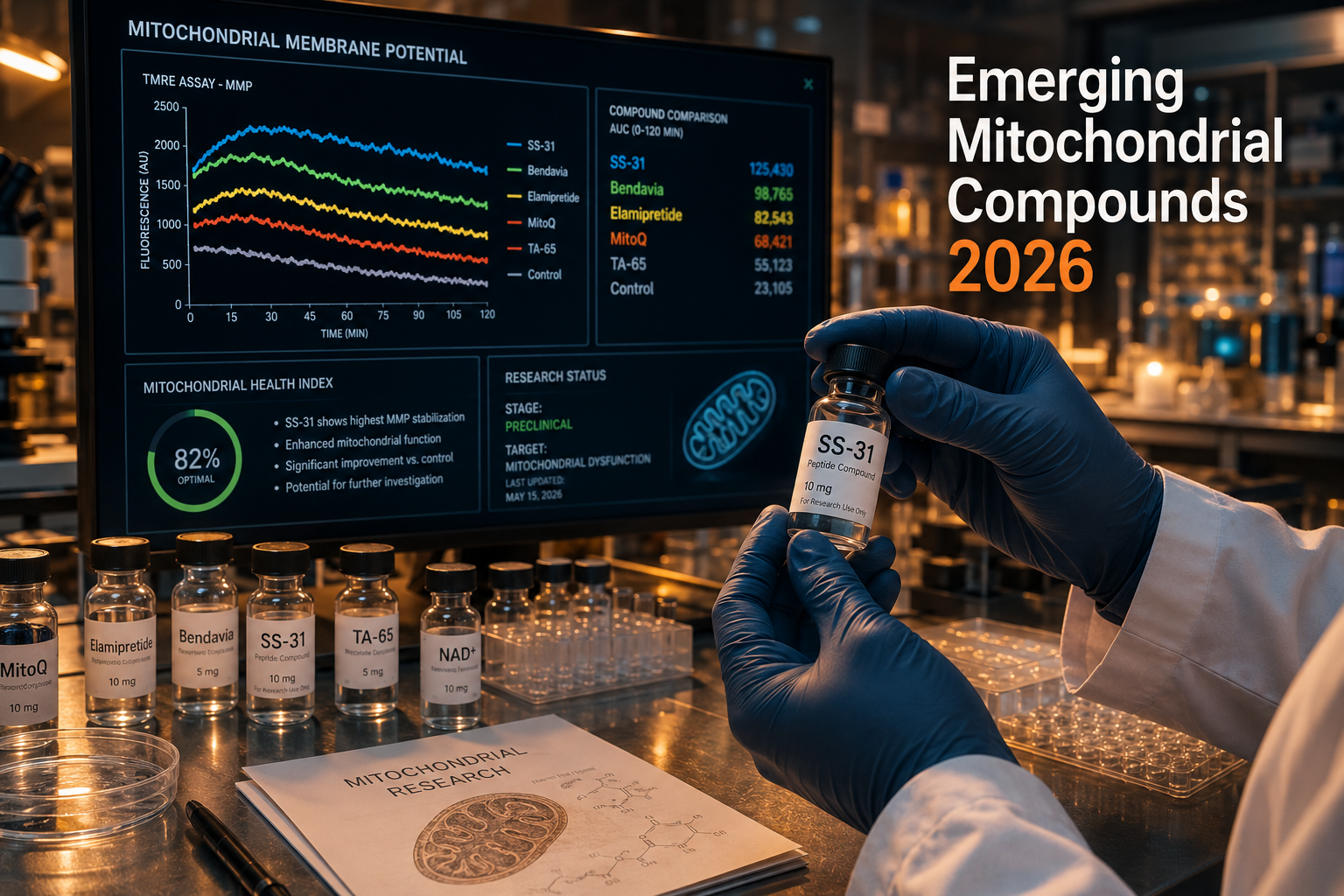
SS-31 targets cardiolipin on the inner mitochondrial membrane, stabilizing cristae architecture and improving ATP synthesis efficiency. Unlike MOTS-c, SS-31 does not rely on nuclear translocation — it acts directly at the membrane. Researchers studying kidney, cardiac, or skeletal muscle models frequently pair SS-31 with MOTS-c to address both structural and signaling dimensions of mitochondrial health. The SS-31 and MOTS-c research tag reflects this growing interest in combinatorial study designs.
For kidney-specific mitochondrial research, the SS-31 kidney health research page offers relevant preclinical context.
Emerging Compounds and Sourcing Considerations
Humanin, SLU-PP-332, and Beyond
The mitochondrial-derived peptide (MDP) family extends beyond MOTS-c. Humanin and SHLP2 (small humanin-like peptides) are encoded in the same mitochondrial 16S rRNA region and show cytoprotective effects in neuronal and cardiomyocyte models. SLU-PP-332 is an ERR-alpha/gamma agonist that mimics exercise-induced mitochondrial gene expression — a distinct but complementary mechanism. Researchers interested in this compound can review the SLU-PP-332 metabolic research overview for study design notes.
Longevity-oriented research programs increasingly stack these compounds. The longevity peptide research framework outlines how multiple mitochondrial targets can be addressed within a single experimental protocol.
Sourcing and Purity Standards
Compound quality is non-negotiable in mitochondrial research. ROS-sensitive assays and AMPK phosphorylation readouts are highly vulnerable to contaminant interference. Researchers should prioritize suppliers with documented certificate of analysis (COA) data and reference standard benchmarking. The Bachem and reference standards guide addresses how to evaluate peptide purity against validated benchmarks.
For researchers building broader metabolic study panels, the MOTS-c and elamipretide comparison page provides a useful side-by-side of two of the field's most studied mitochondrial compounds.
Conclusion
Selecting among the best research peptides for mitochondrial health requires matching mechanism to research question. MOTS-c is the strongest candidate for studies targeting AMPK activation, age-related metabolic decline, and exercise physiology. 5-Amino-1MQ suits protocols focused on NAD+ metabolism and NNMT-driven energy regulation. SS-31 remains the reference compound for inner mitochondrial membrane integrity. Emerging molecules like SLU-PP-332 and humanin analogs are broadening the toolkit further.
Actionable next steps for researchers:
- Define the specific mitochondrial pathway under investigation before compound selection.
- Obtain COA-verified peptides from suppliers using validated reference standards.
- Consider combinatorial designs (e.g., MOTS-c plus SS-31) for multi-target mitochondrial studies.
- Monitor the MDP literature actively — this field is advancing rapidly in 2026.