

Safety, stability, and storage of research‑grade retatrutide/“GLP‑3” solutions
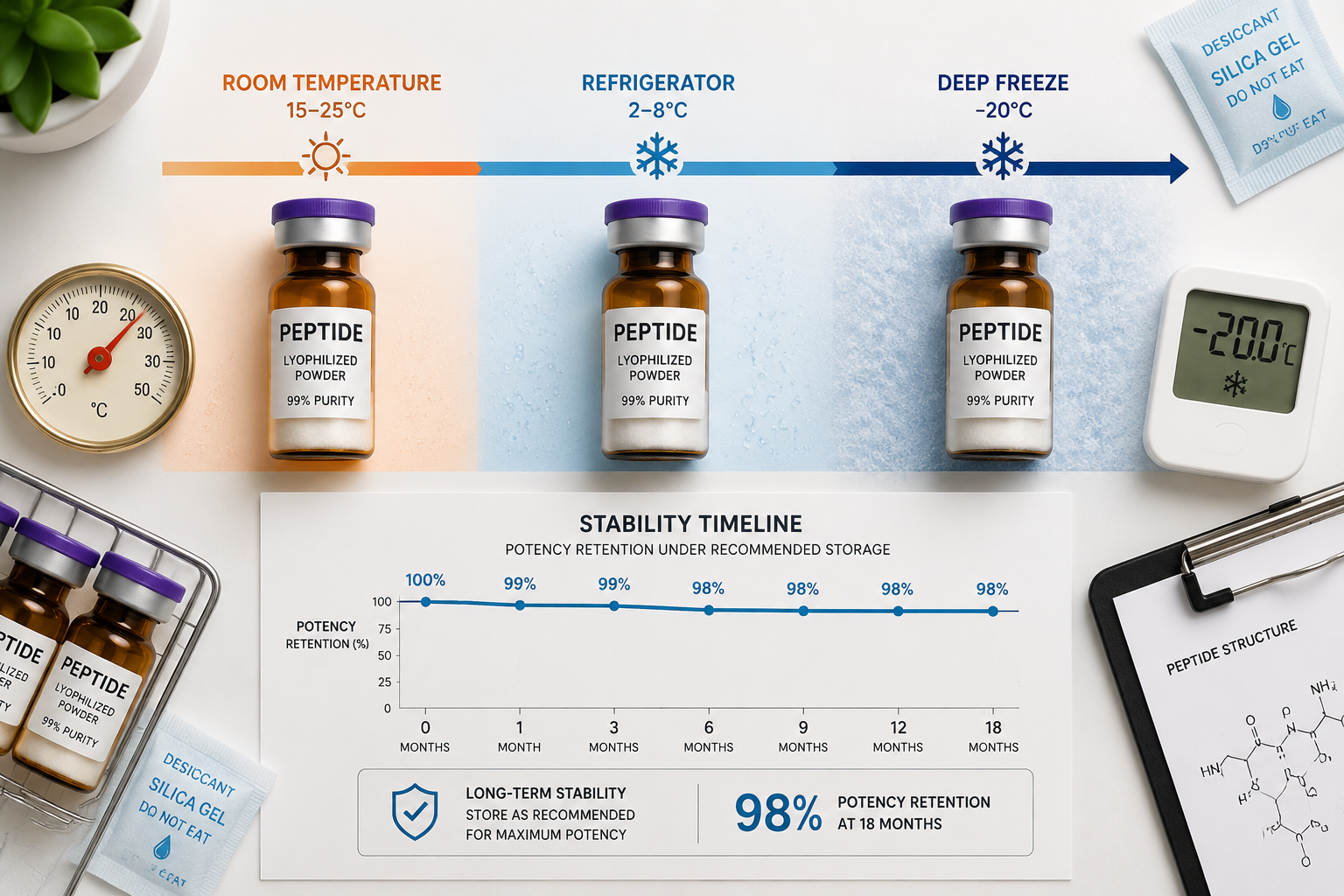
Lyophilized retatrutide stored at −20 °C retains approximately 98% of its potency after 12 months, yet a significant share of research buyers still keep peptide vials at room temperature, a practice that can destroy bioactivity within days. As new stability data emerges and interest in this triple-receptor agonist grows, understanding the safety, stability, and storage of research-grade retatrutide/"GLP-3" solutions has become essential knowledge for any serious laboratory.
Key Takeaways
- Retatrutide is an investigational research peptide only, not approved for human use.
- Lyophilized (freeze-dried) powder is far more stable than reconstituted solution and can last up to 48 months at −20 °C.
- Reconstituted solutions should be refrigerated at 2-8 °C and used within 4 weeks.
- Proper PPE, biological safety cabinets, and biohazardous waste disposal are required for safe handling.
- Light, heat, and repeated freeze-thaw cycles are the primary causes of peptide degradation.
Safe Handling of Research-Grade Retatrutide/"GLP-3" Solutions
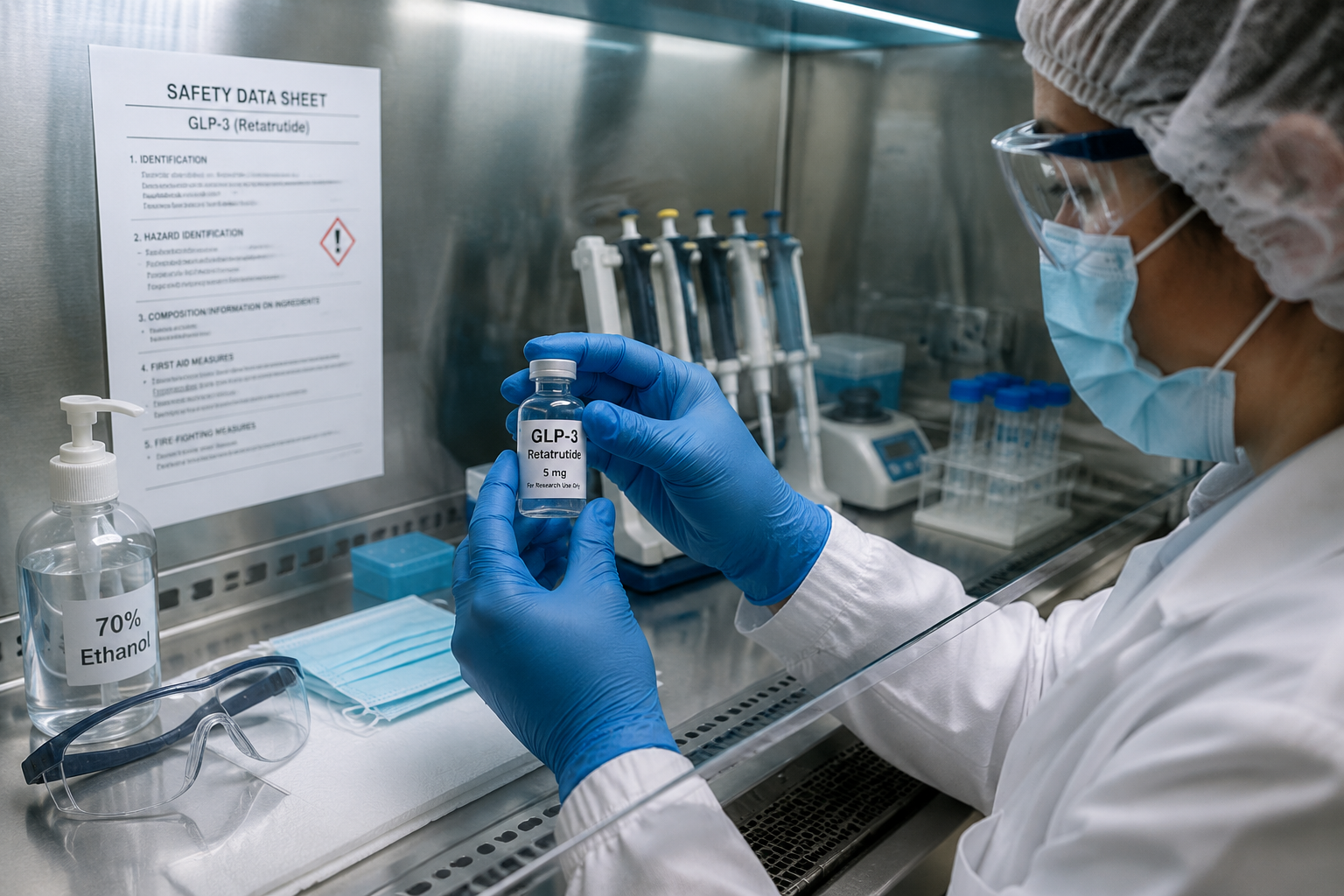
Retatrutide, often labeled GLP-3 RT by vendors, is sold strictly as a research chemical. Safety Data Sheet (SDS) documentation classifies it as a laboratory chemical with health hazards typical of peptide and protein compounds, including potential for skin irritation and allergenic responses.
Required PPE for safe handling:
- Nitrile gloves (minimum)
- Lab coat or protective gown
- Safety glasses or goggles
- Work within a biological safety cabinet when handling powders
Researchers must avoid inhalation of lyophilized powder, ingestion, and direct skin or eye contact. Any spill should be absorbed with inert material and disposed of as biohazardous waste following local regulations.
"Research peptides like retatrutide must be treated with the same rigor as any uncharacterized bioactive compound, controlled environment, documented handling, and proper disposal."
For researchers exploring other peptides with similar handling requirements, guidance on safe peptide combinations and research protocols provides a useful reference point. Similarly, those working with mitochondria-targeted compounds can consult SS-31 research peptide handling considerations for parallel best practices.
Stability of Research-Grade Retatrutide/"GLP-3" Solutions: What the Data Shows
Peptide stability depends on three core variables: temperature, moisture, and light exposure. Retatrutide is no exception.
Lyophilized Powder Stability
| Storage Condition | Estimated Shelf Life | Notes |
|---|---|---|
| −20 °C or below (frozen) | 24-48 months | Gold standard; ~98% potency at 12 months |
| 2-8 °C (refrigerated) | 12-24 months | Acceptable for shorter-term storage |
| Room temperature | Days to weeks | Not recommended; rapid degradation risk |
Reconstituted Solution Stability
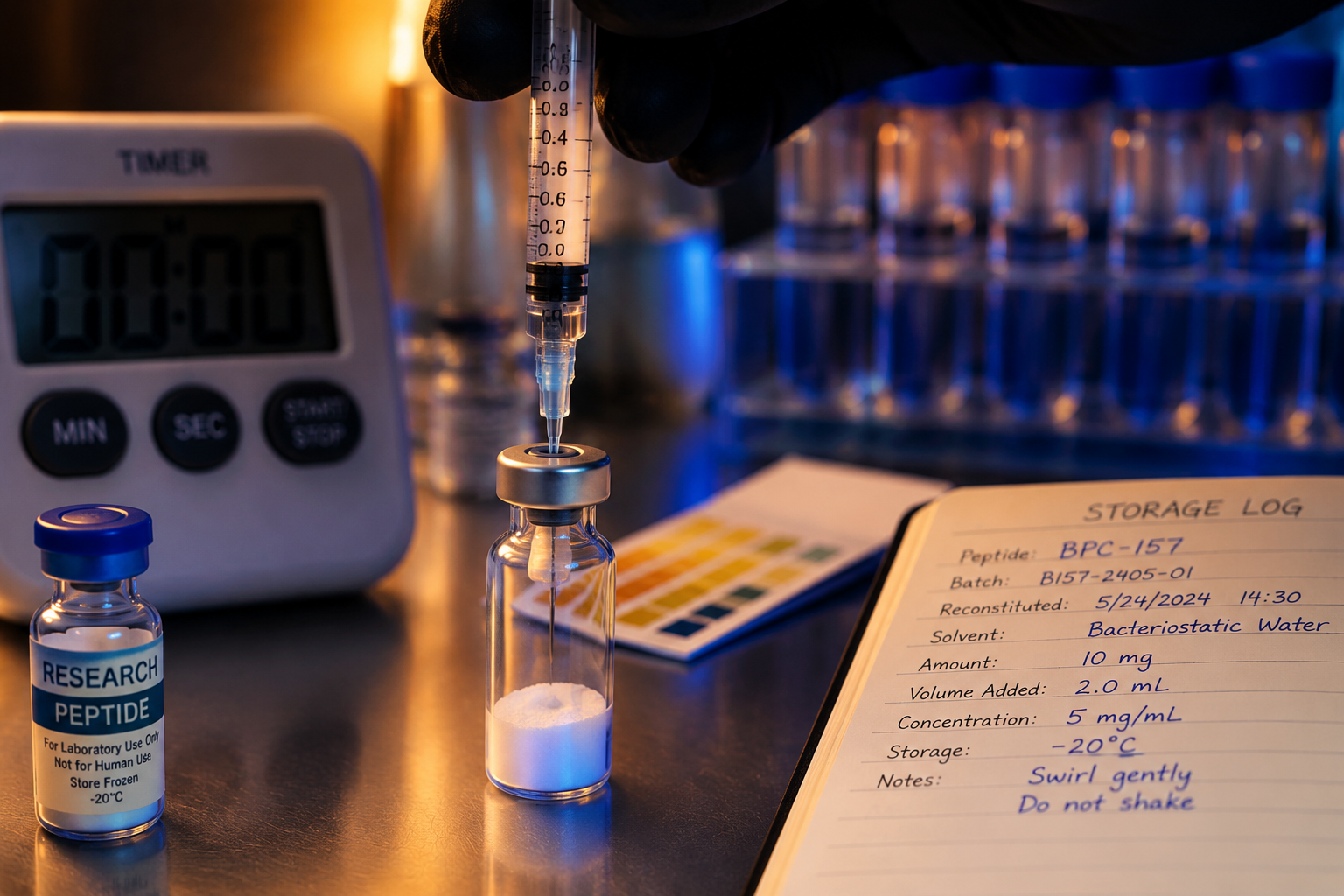
Once reconstituted with bacteriostatic water, retatrutide solutions are considerably more vulnerable. Key guidelines include:
- Store reconstituted vials at 2-8 °C (standard refrigerator)
- Use within 4 weeks of reconstitution
- Never freeze a reconstituted solution, ice crystal formation disrupts peptide structure
- Protect from light by wrapping vials in foil or storing in opaque containers
The primary degradation pathways are oxidation, hydrolysis, and aggregation, all of which accelerate with heat and UV exposure. Researchers working with other sensitive peptides such as MOTS-c and Elamipretide will recognize these same degradation risks.
Storage Best Practices for Research-Grade Retatrutide/"GLP-3" Solutions
Consistent, documented storage protocols protect both sample integrity and research validity.
Practical storage checklist:
- Store lyophilized vials at −20 °C in a dedicated laboratory freezer
- Include a desiccant packet in the storage container to control moisture
- Label each vial with the date of receipt and reconstitution date
- Minimize the number of times a vial is opened to reduce contamination risk
- Avoid storing near freezer doors where temperature fluctuates
Researchers sourcing retatrutide should verify that suppliers provide Certificates of Analysis (CoA) confirming purity and identity. Reviewing a supplier's CoA documentation standards is a critical step before beginning any protocol. For those evaluating the retatrutide GLP-3 research peptide directly, verified purity data should accompany every order.
Researchers comparing peptide classes may also find value in reviewing how related compounds like ipamorelin and sermorelin stacks are handled, as overlapping storage principles apply across many research-grade peptides.
Conclusion
The safety, stability, and storage of research-grade retatrutide/"GLP-3" solutions demand the same disciplined approach applied to any high-value investigational compound. Three actionable priorities stand out:
- Handle with full PPE in a controlled environment and dispose of waste as biohazardous material.
- Store lyophilized powder at −20 °C to maximize shelf life up to 48 months; refrigerate reconstituted solutions and use within four weeks.
- Source from verified suppliers that provide independent CoA documentation confirming peptide identity and purity before beginning any research protocol.
Following these standards protects both the integrity of the research and the safety of everyone in the laboratory.