

Retatrutide for Liver Fat and MASLD Research: What the Phase 2 Data Suggests
Metabolic dysfunction-associated steatotic liver disease (MASLD) now affects roughly one in four adults worldwide, yet until recently, no pharmacological agent had produced liver fat reductions dramatic enough to shift clinical expectations. The Phase 2 trial data on retatrutide for liver fat and MASLD research changes that picture in ways researchers are still working to fully understand.
Key Takeaways
- Retatrutide reduced liver fat by up to 86% at 48 weeks in Phase 2 participants receiving the 12 mg dose.
- A substantial proportion of participants achieved normal liver fat content (below 5%) by week 24.
- The drug's triple-receptor mechanism — targeting GLP-1, GIP, and glucagon receptors — appears to drive hepatic fat oxidation beyond what dual-agonist therapies achieve.
- Liver fat reductions correlated strongly with body weight loss, with the 12 mg group averaging a 24.2% weight reduction at 48 weeks.
- Phase 3 trials are underway, with FDA approval pathways being actively pursued by Eli Lilly.
How Retatrutide Works: A Triple-Agonist Mechanism
Retatrutide is not a standard GLP-1 receptor agonist. It simultaneously activates three receptors: glucagon-like peptide-1 (GLP-1), glucose-dependent insulinotropic polypeptide (GIP), and the glucagon receptor. This triple-agonist profile is central to understanding why the GLP-1 and incretin research landscape has shifted so sharply toward this compound.
The glucagon receptor component is particularly relevant for liver health. Glucagon receptor activation is believed to enhance hepatic fatty acid oxidation — the process by which liver cells burn stored fat for energy. This mechanism goes beyond the appetite suppression and insulin sensitization offered by GLP-1 alone, which may explain why retatrutide outperforms earlier incretin-based therapies in head-to-head comparisons of liver fat endpoints.
Researchers interested in the broader GLP-1 peptide research and sourcing landscape will note that this triple-agonist approach represents a meaningful structural departure from earlier single or dual-receptor compounds.
Phase 2 Data: Liver Fat and MASLD Outcomes in Detail
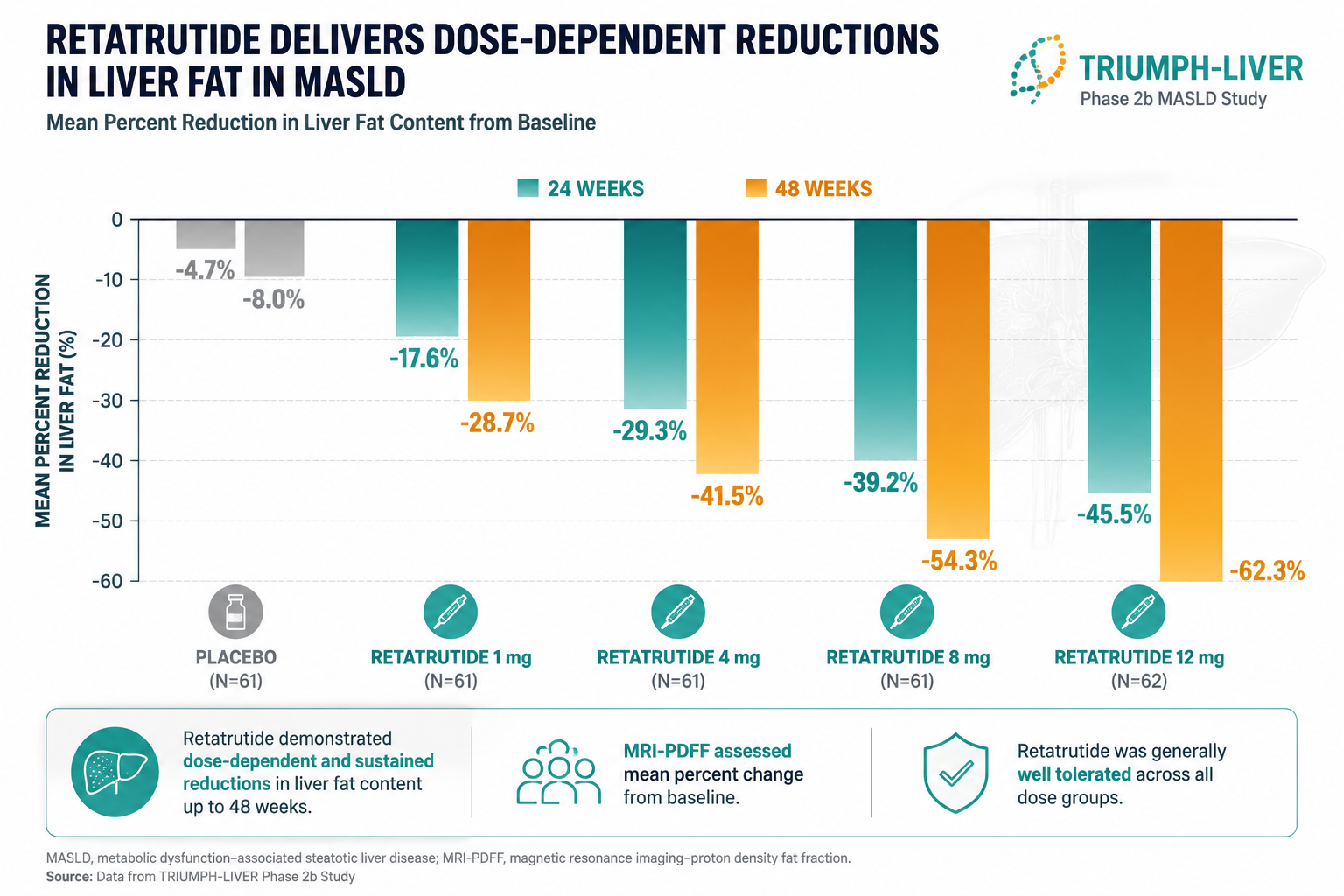
The Phase 2 findings on retatrutide for liver fat and MASLD research are among the most compelling hepatic endpoints reported for any investigational metabolic agent to date.
Liver fat reduction at 24 weeks by dose group:
| Dose Group | Liver Fat Reduction (%) |
|---|---|
| Placebo | +0.3% (slight increase) |
| Low dose | Moderate reduction |
| 8 mg | Substantial reduction |
| 12 mg | Near-complete reduction |
By week 24, a meaningful percentage of participants in the higher-dose groups had achieved normal liver fat content, defined as below 5% hepatic fat fraction. This threshold matters clinically because crossing it is associated with reduced risk of fibrosis progression.
At 48 weeks, the 12 mg dose group achieved an 86% mean reduction in liver fat — a figure that has few precedents in the MASLD pharmacology literature. These reductions were durable, not simply a front-loaded effect that faded over time.
"An 86% reduction in liver fat at 48 weeks positions retatrutide in a category that no prior incretin-based agent has reached."
Liver fat outcomes also correlated strongly with systemic weight loss. Participants in the 12 mg group experienced a mean body weight reduction of 24.2% at 48 weeks. While weight loss alone can reduce hepatic steatosis, the glucagon receptor pathway is thought to contribute additional, weight-independent effects on liver fat metabolism.
For researchers following related metabolic peptides, tesa's research profile offers a useful comparison point, as tesa has also demonstrated visceral and hepatic fat reduction in specific populations through a growth hormone-mediated pathway.

Safety, Comparisons, and What the Data Suggests for Phase 3
Retatrutide was generally well-tolerated across the Phase 2 cohort. The most common adverse events were gastrointestinal in nature — nausea, vomiting, and diarrhea — consistent with the GLP-1 class profile. These effects were typically mild to moderate and tended to diminish over time with dose titration.
Key safety observations:
- Gastrointestinal events were the primary adverse effect category
- No unexpected safety signals emerged at higher doses
- Discontinuation rates remained comparable to other GLP-1-class agents
When compared to other incretin-based therapies, retatrutide's liver fat reductions are notably superior. Semaglutide and tirzepatide have both shown hepatic benefit, but neither has matched the magnitude of effect observed here. This positions retatrutide as a leading candidate for MASLD-specific indications, not just general obesity management.
Researchers exploring complementary metabolic peptide research may also find value in reviewing IPA muscle and fat research themes and longevity peptide research for context on how different mechanisms intersect in metabolic health models.
Eli Lilly's Phase 3 program is now actively enrolling, with endpoints that include liver histology, fibrosis markers, and cardiometabolic outcomes. FDA approval pathways are being pursued pending successful Phase 3 results.
Those sourcing retatrutide for research purposes can explore GLP-3 retatrutide research-grade options and the retatrutide product page for current availability.

Conclusion
The Phase 2 data on retatrutide for liver fat and MASLD research establishes a new benchmark for hepatic steatosis reduction in a pharmacological setting. An 86% liver fat reduction at 48 weeks, durable outcomes, and a manageable safety profile make this compound a priority to watch as Phase 3 data matures.
Actionable next steps for researchers and clinicians:
- Monitor Phase 3 trial publications for histological fibrosis endpoints, which will determine clinical utility beyond fat reduction alone.
- Examine the glucagon receptor agonism component separately to understand its independent contribution to hepatic fatty acid oxidation.
- Compare retatrutide's liver outcomes against emerging MASLD-specific agents entering late-stage trials in 2026.
- Review related GLP-1 receptor agonist research resources to build a complete picture of the incretin class landscape.
The liver-specific data from this trial is not a secondary finding — it may ultimately define retatrutide's most important clinical role.