

BPC-157 Peptide: Gastrointestinal, Tendon, and Neurological Findings From Animal Models
A single synthetic peptide derived from a naturally occurring gastric protein has produced consistent healing results across three entirely different tissue types in rodent studies — that convergence is what makes the preclinical literature on BPC-157 so compelling for new investigators.
BPC-157 (Body Protection Compound-157) is a 15-amino-acid sequence isolated from human gastric juice. The breadth of findings documented in BPC-157 Peptide: Gastrointestinal, Tendon, and Neurological Findings From Animal Models spans gut mucosa repair, connective tissue regeneration, and nerve recovery — all within controlled animal experiments. Understanding this literature is a useful starting point before any translational research is designed.
Key Takeaways
- BPC-157 consistently accelerates mucosal healing in rodent GI injury models, including NSAID-induced lesions.
- Tendon and ligament studies show improved collagen organization, cell migration, and biomechanical strength.
- Neurological models demonstrate functional recovery following spinal cord injury in rats.
- Angiogenesis — new blood vessel formation — appears to be a shared mechanism across all three tissue types.
- All findings to date come from animal and in vitro models; human clinical data remain limited.
Gastrointestinal Findings in Rodent Models
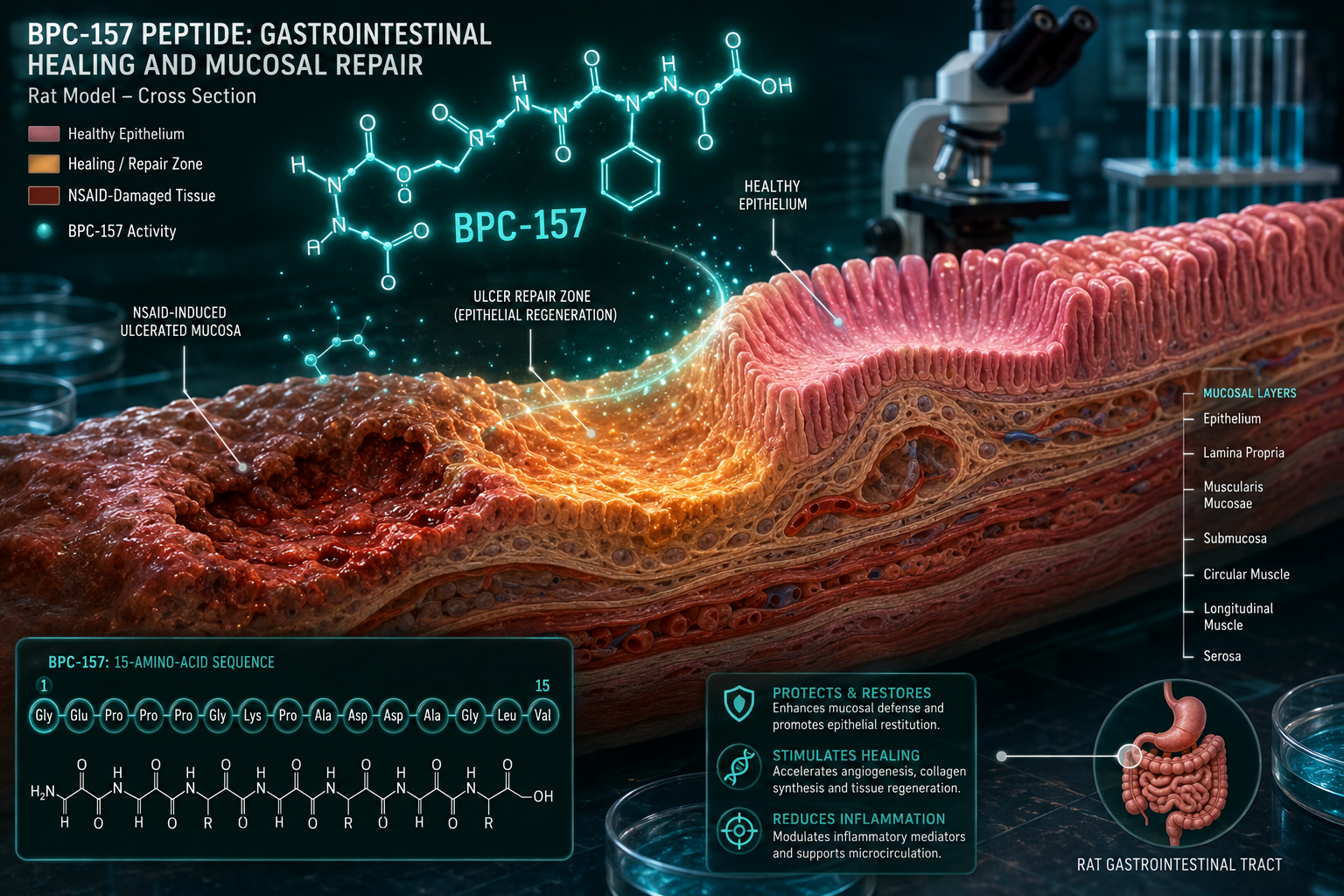
The GI tract is where BPC-157 research began. The peptide was first studied for its ability to counteract damage caused by non-steroidal anti-inflammatory drugs (NSAIDs), which are well-known for eroding the stomach lining. In rat models, BPC-157 administration — both oral and parenteral — significantly reduced the size and severity of NSAID-induced gastric lesions.
Beyond NSAID damage, researchers observed that BPC-157 accelerated healing across a range of GI injuries, including:
- Esophageal lesions caused by reflux-like conditions
- Intestinal anastomosis sites, where surgical reconnection of bowel segments was performed
- Colitis models, in which chemically induced colon inflammation was measurably reduced
A key mechanism identified in these studies is upregulation of growth factor expression, particularly vascular endothelial growth factor (VEGF), which promotes the formation of new blood vessels in damaged tissue. This angiogenic effect helps restore blood supply to injured mucosa, accelerating cellular repair.
For investigators exploring related tissue repair pathways, a review of recovery and tissue biology fundamentals provides useful background context.
Tendon and Ligament Findings in Animal Studies
Musculoskeletal research on BPC-157 Peptide: Gastrointestinal, Tendon, and Neurological Findings From Animal Models has produced some of the most reproducible results in the preclinical literature.
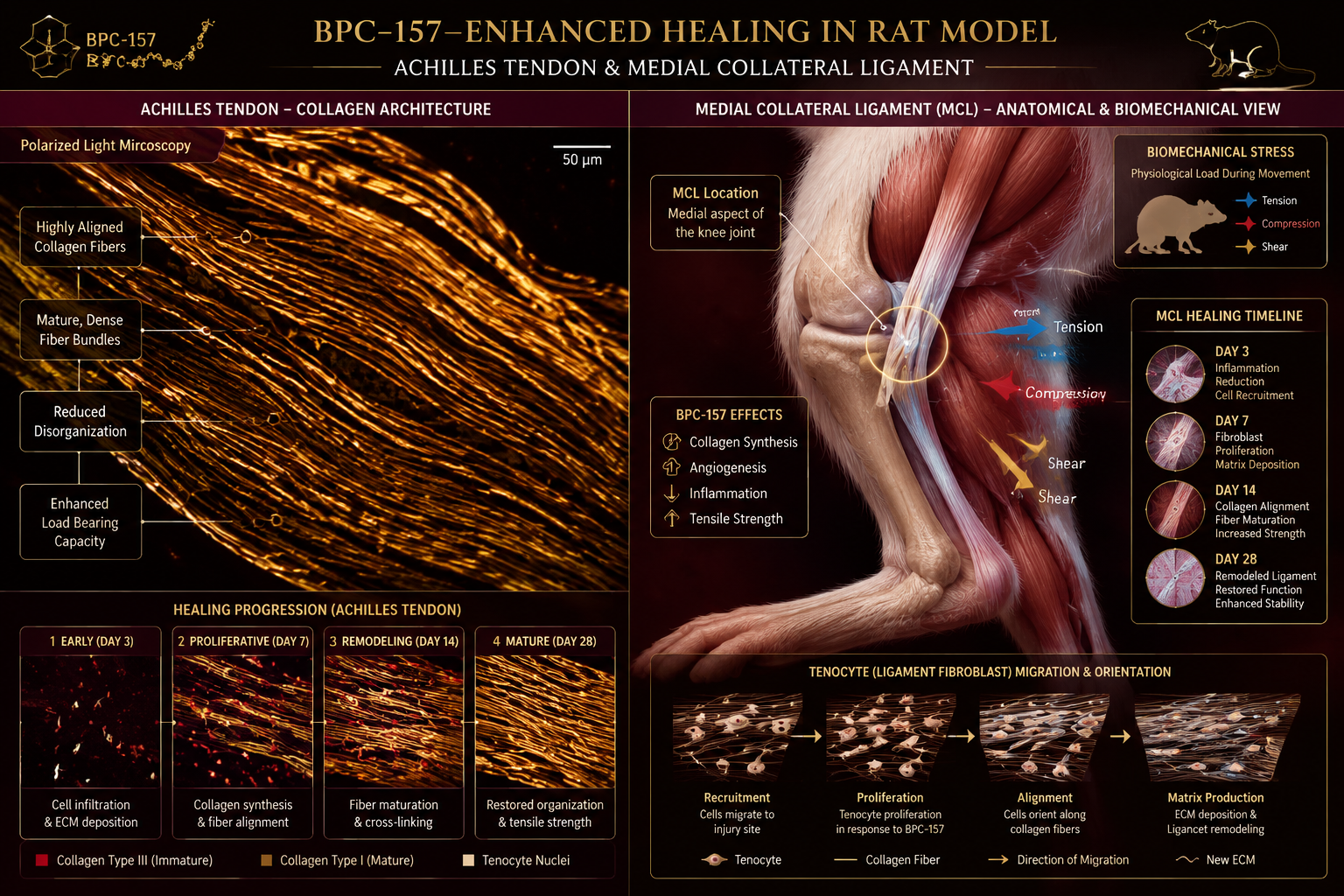
In a widely cited 2003 study, BPC-157 was administered to rats following complete transection of the Achilles tendon. Animals receiving BPC-157 showed:
| Outcome Measure | BPC-157 Group | Control Group |
|---|---|---|
| Tendon fiber organization | Improved | Disorganized |
| Tendocyte proliferation (in vitro) | Stimulated | Baseline |
| Functional recovery speed | Faster | Slower |
A 2010 study on medial collateral ligament (MCL) injuries in rats found that BPC-157 improved outcomes across functional, biomechanical, macroscopic, and histological assessments. The ligaments of treated animals showed denser collagen fiber alignment and greater tensile strength at follow-up.
A 2021 study extended these findings to myotendinous junctions — the critical interface between muscle and tendon. BPC-157 repaired disabled junctions in rats, confirmed through macro/microscopic imaging, biomechanical testing, and functional assessments.
Cell-level research confirms that BPC-157 enhances tendon outgrowth, cell survival, and cell migration, which explains the structural improvements seen in whole-animal studies.
Researchers interested in related musculoskeletal peptide research may find the BPC-157 10mg vial research themes page and the broader top healing peptides overview useful for comparative context.
Neurological Findings From Animal Models
The neurological data on BPC-157 Peptide: Gastrointestinal, Tendon, and Neurological Findings From Animal Models is perhaps the most surprising given the peptide's gastric origins.
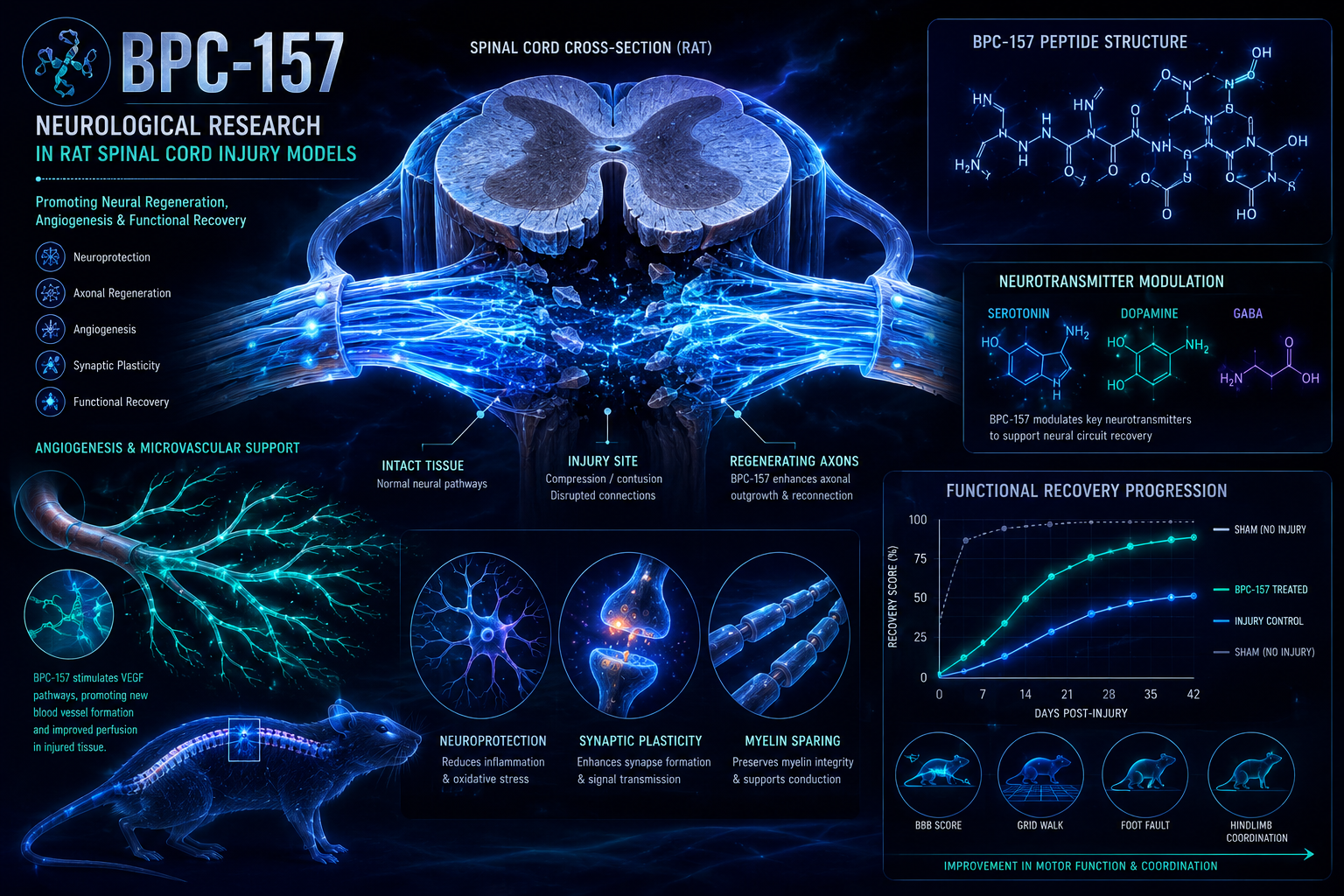
A 2019 study examined BPC-157 in a rat spinal cord injury model. Animals treated with BPC-157 showed measurable functional recovery compared to untreated controls, with improvements in motor coordination and limb use. Researchers attributed this partly to the peptide's ability to promote angiogenesis near the injury site, restoring microvascular supply to damaged neural tissue.
Additional neurological findings from rodent models include:
- Reduced dopaminergic system disruption following neurotoxin exposure
- Modulation of serotonin and dopamine pathways, relevant to behavioral outcomes
- Protection against excitotoxic damage in brain tissue models
The shared thread across GI, tendon, and neurological findings is the peptide's consistent pro-angiogenic and cytoprotective profile. New blood vessel formation supports healing regardless of tissue type, which may explain BPC-157's broad activity across systems.
Investigators comparing peptides with overlapping cytoprotective mechanisms may also want to review GHK-Cu peptide research and oral BPC-157 formulation notes for route-of-administration considerations.
For those building a broader peptide research framework, the longevity peptide research overview and quality testing protocols are practical next references.
Conclusion
The preclinical record on BPC-157 is notable for its consistency across tissue types. Rodent and in vitro studies point to a peptide that accelerates mucosal healing in the GI tract, improves structural and functional outcomes in tendons and ligaments, and supports neurological recovery following spinal cord injury. Angiogenesis and cytoprotection appear to be the central mechanisms linking these effects.
Actionable next steps for new investigators:
- Review the primary rodent studies organized by tissue type before designing any translational protocol.
- Clarify route of administration (systemic vs. local) based on the target tissue, as delivery method affects outcomes in the literature.
- Consult quality testing protocols to ensure peptide purity standards are met before any experimental use.
- Compare BPC-157's angiogenic profile against related peptides such as GHK-Cu to identify potential mechanistic overlaps.
- Note that all current evidence is preclinical — human trials are needed before any clinical conclusions can be drawn.