
What Shouldn't You Mix with Peptides? Your Complete Safety Guide
Imagine investing hundreds of dollars in premium peptides only to destroy their effectiveness—or worse, create a dangerous compound—because you mixed them with the wrong substance. What shouldn't you mix with peptides? This critical question could mean the difference between achieving your research goals and wasting valuable resources while potentially compromising safety protocols.
As someone who's worked extensively with peptide research, I've seen firsthand how mixing errors can derail entire projects. The good news? Understanding peptide compatibility is straightforward once you know the essential rules.
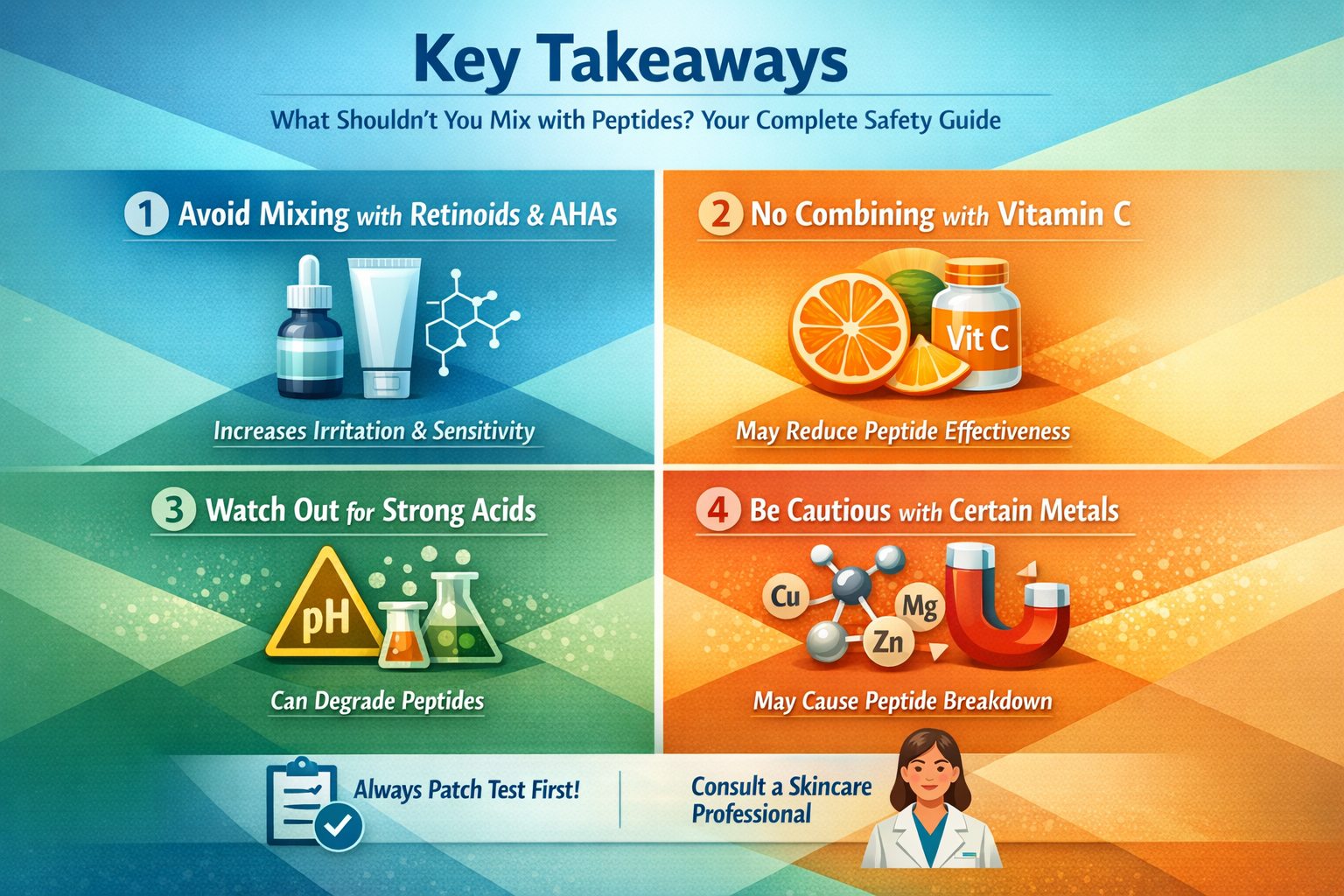
Key Takeaways
- Never mix peptides with alcohol-based solutions, as alcohol can denature peptide structures and render them ineffective
- Avoid combining different peptides in the same vial unless specifically formulated together, as this can cause degradation and unpredictable interactions
- Don't use tap water or non-sterile solutions for reconstitution—always use bacteriostatic water or sterile saline
- Keep peptides away from extreme temperatures and direct sunlight, which can break down molecular bonds
- Certain medications and supplements may interfere with peptide effectiveness and should be researched carefully
Quick Answer: What Shouldn't You Mix with Peptides?
Never mix peptides with alcohol-based solutions, tap water, or expired reconstitution fluids. Avoid combining different peptide types in one vial unless they're pre-formulated blends. Don't expose peptides to extreme heat, direct sunlight, or contaminated equipment. Keep peptides separate from certain medications like corticosteroids and blood thinners without proper consultation. Always use bacteriostatic water or sterile saline for reconstitution, and maintain strict sterile protocols. When sourcing quality peptides, trusted suppliers like PureTestedPeptides.com provide detailed mixing and storage guidelines. Popular research peptides like 5-Amino-1MQ and AOD-9604 require specific handling protocols to maintain their integrity and effectiveness.
Understanding Peptide Stability and Compatibility
Peptides are delicate chains of amino acids that maintain specific three-dimensional structures. This structure determines their biological activity and effectiveness. When you introduce incompatible substances, you risk denaturing these proteins—essentially unfolding them and destroying their function.
Think of peptides like a carefully folded origami crane. The exact folds matter. If you get them wet with the wrong liquid or expose them to harsh conditions, the paper becomes soggy and the structure collapses. The same principle applies to peptides at a molecular level.
Why Mixing Matters for Research Quality
In research settings, peptide purity and stability directly impact data quality. Contaminated or degraded peptides produce:
- ❌ Inconsistent results across trials
- ❌ False negative outcomes
- ❌ Wasted research resources
- ❌ Compromised safety profiles
- ❌ Unreliable data for analysis
When working with specialized peptides from trusted research suppliers, maintaining proper mixing protocols ensures you're actually studying the compound you intended to study.
What Shouldn't You Mix with Peptides? Substances to Avoid
🚫 Alcohol and Alcohol-Based Solutions
Alcohol is peptide enemy number one. Isopropyl alcohol, ethanol, and other alcohols denature proteins by disrupting hydrogen bonds and hydrophobic interactions that maintain peptide structure.
This means:
- Never use alcohol swabs directly on peptide vials
- Avoid alcohol-based reconstitution solutions
- Don't store peptides near alcohol-containing products
- Clean injection sites with alcohol, but let them dry completely before peptide administration
🚫 Tap Water and Non-Sterile Solutions
Tap water contains minerals, chlorine, bacteria, and other contaminants that can:
- Degrade peptide chains through chemical reactions
- Introduce bacterial contamination that spreads through your sample
- Alter pH levels beyond peptide stability ranges
- Create unpredictable interactions with trace elements
Always use:
- Bacteriostatic water (contains 0.9% benzyl alcohol as preservative)
- Sterile saline solution
- Pharmaceutical-grade reconstitution fluids
🚫 Mixing Different Peptides Together
Unless you're working with professionally formulated peptide blends, never combine different peptides in the same vial.
Here's why this matters:
| Risk Factor | Consequence |
|---|---|
| Chemical incompatibility | Peptides may react with each other, forming inactive compounds |
| pH conflicts | Different peptides have different optimal pH ranges |
| Degradation acceleration | Some peptides catalyze breakdown of others |
| Dosing complications | Impossible to accurately measure individual peptide amounts |
| Contamination spread | If one peptide is compromised, both are lost |
Specialized formulations like AOD9604 and MOTS-C combinations are specifically designed with compatible peptides at precise ratios—these are exceptions created through careful research.
🚫 Expired or Degraded Reconstitution Fluids
Check expiration dates religiously. Expired bacteriostatic water:
- Loses sterility guarantees
- May have degraded preservatives
- Can introduce bacterial growth
- Compromises peptide stability
"In my research experience, using expired reconstitution fluid is one of the most common yet easily preventable mistakes. Always check dates before mixing—it takes five seconds and saves entire research batches."
🚫 Contaminated Equipment
Cross-contamination destroys research integrity. Never mix peptides with:
- Previously used syringes or needles
- Unsterilized vials or containers
- Equipment exposed to other compounds
- Tools that haven't been properly cleaned
Sterile technique isn't optional—it's essential.
Medication and Supplement Interactions
What Shouldn't You Mix with Peptides? Common Medication Conflicts
Certain medications can interfere with peptide research protocols:
Corticosteroids 💊
- May counteract peptide effects
- Can suppress natural peptide production
- Timing separation is critical
Blood Thinners 💊
- Increase injection site complications
- May interact with vascular peptides
- Require careful monitoring
Insulin and Diabetes Medications 💊
- Can interact with metabolic peptides like 5-Amino-1MQ
- Require glucose monitoring adjustments
- Timing protocols need careful planning
Immunosuppressants 💊
- May alter peptide immune responses
- Can affect peptide metabolism
- Need professional oversight
Supplement Considerations
While less critical than medications, certain supplements warrant attention:
- High-dose antioxidants may interfere with oxidative signaling peptides
- Enzyme supplements could potentially degrade peptides in the digestive system
- Mineral supplements might bind to certain peptide structures
When researching specialized peptides like Adipotide or Epithalon, always review specific interaction profiles.
Environmental Factors That Compromise Peptides
Temperature Extremes
Heat ☀️
- Breaks peptide bonds
- Accelerates degradation
- Denatures protein structures
- Creates inactive fragments
Freezing (improper) ❄️
- Repeated freeze-thaw cycles damage peptides
- Ice crystal formation can disrupt structures
- Only freeze lyophilized (powdered) peptides, not reconstituted ones
Optimal storage:
- Lyophilized peptides: -20°C freezer
- Reconstituted peptides: 2-8°C refrigerator
- Never store at room temperature long-term
Light Exposure
Direct sunlight and UV light cause photodegradation:
- Store peptides in amber or opaque vials
- Keep away from windows and bright lights
- Use dark storage containers
- Minimize light exposure during handling
Humidity and Moisture
Excess moisture can:
- Trigger premature degradation of lyophilized peptides
- Promote bacterial growth
- Cause clumping and uneven reconstitution
- Reduce shelf life significantly
Store in low-humidity environments with desiccant packs when possible.
Proper Peptide Reconstitution: What You SHOULD Mix
Now that we've covered what to avoid, let's discuss correct mixing protocols:
✅ Bacteriostatic Water (Most Common)
Best for: Most peptide types, multi-dose vials
Benefits:
- Contains benzyl alcohol preservative (0.9%)
- Prevents bacterial growth for up to 28 days
- Widely compatible
- Easy to source
✅ Sterile Saline (0.9% NaCl)
Best for: Single-dose applications, benzyl alcohol sensitivity
Benefits:
- Isotonic with body fluids
- No preservatives (use immediately)
- Gentle on sensitive peptides
- Pharmaceutical grade available
✅ Sterile Water for Injection
Best for: Immediate use, specific peptide requirements
Benefits:
- Purest option
- No additives
- Must use within 24 hours
- Ideal for single-dose protocols
Proper Mixing Technique
- Wash hands thoroughly and prepare clean workspace
- Gather sterile supplies: syringe, needles, alcohol swabs, peptide vial, reconstitution fluid
- Clean vial tops with alcohol swab and let dry completely
- Draw reconstitution fluid using sterile syringe
- Inject slowly down the side of the peptide vial (never spray directly onto powder)
- Gently swirl (never shake) until dissolved
- Store properly according to peptide specifications
- Label clearly with peptide name, concentration, and reconstitution date
For specific protocols on popular research peptides, check detailed guides like 5-Amino-1MQ dosage information or AOD-9604 peptide dosage charts.
Special Considerations for Different Peptide Types
Growth Hormone Peptides
These sensitive compounds require:
- Extra attention to pH levels
- Immediate refrigeration after reconstitution
- Protection from agitation
- Specific reconstitution ratios
Metabolic Peptides
Compounds like 5-Amino-1MQ capsules have unique considerations:
- May have oral formulations with different stability
- Temperature sensitivity varies
- Interaction profiles differ from injectable forms
Cosmetic and Topical Peptides
Topical formulations like GHK-Cu need:
- Compatible carrier bases
- pH-balanced solutions
- Preservative systems
- Penetration enhancers
Blended Peptide Formulations
Pre-formulated combinations like KLOW and GLOW blends are engineered for compatibility but still require:
- Proper reconstitution protocols
- Appropriate storage
- Sterile handling
- Correct dosing calculations
Red Flags: Signs Your Peptide Has Been Compromised
Watch for these warning signs that indicate improper mixing or degradation:
🚩 Visual Changes
- Cloudiness or precipitation
- Color changes (most peptides are clear/white)
- Particles floating in solution
- Crystallization after reconstitution
🚩 Physical Changes
- Unusual odors
- Gel-like consistency
- Separation of layers
- Clumping that won't dissolve
🚩 Storage Issues
- Vial left at room temperature
- Exposure to direct light
- Contamination suspected
- Past expiration date
If you observe any of these signs, do not use the peptide. The research integrity is already compromised, and safety cannot be guaranteed.
Best Practices for Peptide Research Safety
Documentation Protocols
Maintain detailed records:
- Peptide source and lot numbers
- Reconstitution dates and methods
- Storage conditions
- Observation notes
- Any deviations from protocol
Quality Sourcing
Work with reputable suppliers who provide:
- Third-party testing certificates
- Proper storage during shipping
- Clear documentation on handling
- Responsive support for questions
Established suppliers like PureTestedPeptides.com offer comprehensive product information and quality assurances that support proper research protocols.
Workspace Organization
Create a dedicated peptide preparation area:
- Clean, clutter-free surface
- Good lighting
- Proper refrigeration nearby
- Organized storage for supplies
- Waste disposal system
Continuing Education
Stay informed about:
- New research on peptide stability
- Updated handling protocols
- Emerging interaction data
- Community experiences (like 5-Amino-1MQ Reddit discussions)
Conclusion: Protecting Your Peptide Research Investment
Understanding what shouldn't you mix with peptides is fundamental to successful research outcomes. The key principles are straightforward: avoid alcohol, use only sterile reconstitution fluids, never combine different peptides without proper formulation, maintain strict temperature control, and practice impeccable sterile technique.
Your peptide research represents significant investment—both financial and time. Protecting that investment requires attention to detail and adherence to proven protocols. The substances and conditions we've covered in this guide can destroy months of work in seconds, but following proper procedures ensures reliable, reproducible results.
Your Next Steps
- Audit your current practices against the guidelines in this article
- Upgrade your supplies if needed—invest in quality bacteriostatic water, sterile syringes, and proper storage
- Review product-specific guidelines for each peptide you're researching
- Establish written protocols for your workspace to ensure consistency
- Source quality peptides from reputable suppliers with proper documentation
- Join research communities to stay updated on best practices and new findings
Whether you're exploring metabolic research with 5-Amino-1MQ peptides, investigating Adipotide results, or working with beginner peptide kits, these fundamental safety principles apply universally.
Remember: proper peptide handling isn't just about following rules—it's about respecting the science and ensuring your research contributes meaningful, reliable data to the field.
SEO Meta Title and Description
Meta Title: What Shouldn't You Mix with Peptides? Safety Guide 2026
Meta Description: Discover what shouldn't you mix with peptides to protect your research. Learn about dangerous combinations, proper reconstitution, and safety protocols.