Call or Text 727-513-9780
  • Shopping Cart Shopping Cart
    0Shopping Cart
Pure Tested Peptides | America's most trusted Peptides for sale online
  • Peptides for sale
    • Oral Peptides for sale
      • Peptide Capsules for sale
      • BPC 157 Capsules 1000mcg
      • SLU-PP-332 Capsules | 1000 mcg
      • 5-Amino-1MQ 50mg Capsules
      • Tesofensine 500mcg
    • All Peptides for sale
    • Peptide Sprays
      • BPC 157 Nasal Spray Kit
      • BPC-157 TB500 Nasal Spray Kit
      • Semax Nasal Spray 10mg
      • Selank – Nasal Spray Kit – 10mg
      • Epithalon 50MG Nasal Spray Kit
      • Ipamorelin 10mg Nasal Spray
      • Klow Nasal Spray (BPC-157 + TB-500 + GHK-Cu + KPV) | 80mg
      • Hulk Nasal Spray Tesa / Ipa Blend 6/3 MG
      • Klow Nasal Spray
      • NAD + 500 mg Nasal Spray
      • PT-141 Nasal Spray Kit
    • GHRH Peptides
      • Ipa Peptides
      • CJC-1295 Peptides
        • CJC-1295 with DAC 5 mg
        • CJC-1295 without DAC 5 mg
        • CJC-1295 Ipa 10mg
      • Tesa Peptides
        • Tesa Peptide
        • Tesa 20 mg
    • GHK-Cu Peptides
      • All GHK-Cu Peptides
      • GHK-Cu 100mg
      • KLOW Peptide Blend – Buy KLOW blend online
    • BPC Peptides
      • All BPC Peptides
      • BPC-157
      • BPC-157 TB-500
      • BPC 157 capsules 1000mcg
    • SLU-PP-332 Peptides
      • All SLU-PP-332 Peptides
      • SLU-PP-332 5mg
    • GLP3 Peptides
      • GLP3-R
      • GLP3-R CAG 10mg
      • GLP3-R 20mg
    • PT-141 Peptides
      • PT-141 Peptides for sale
      • PT-141 10mg
      • PT-141 Nasal Spray
    • CAG Peptides
      • Lipo-C Peptide Blend
      • CAG 5mg
      • CAG 10mg
    • MOTS-C Peptides
      • MOTS-C Peptides for sale
      • MOTS-c peptide
      • MOTS-c 10mg *6 pack*
    • 5 Amino 1MQ Peptides
      • 5 Amino 1MQ Peptides for sale
      • 5-Amino-1MQ 50mg Capsules
      • 5-Amino-1MQ 5mg
    • Epithalon Peptides
      • Epithalon Peptides for sale
      • Epithalon 10mg
      • Epithalon 50mg
  • Shop
    • GLPs
      • 5-Amino-1MQ 50mg Capsules
      • 5-Amino-1MQ 5mg
      • GLP3-Reta
      • L-Carnitine 500mg/ml
      • Tesofensine 500mcg
      • SLU-PP-332 5mg
      • MOTS-c 10mg *6 pack*
    • Epithalon & BPC Peptides
      • Epithalon 10mg
      • Epithalon 50mg
      • BPC-157
      • BPC 157 capsules 1000mcg
      • BPC-157 TB-500
      • BPC-157 TB500 Nasal Spray Kit
      • BPC 157 Nasal Spray Kit
    • BPC TB-500 & NAD+ Peptides
      • NAD+ 500 mg
      • KLOW Peptide Blend – Buy KLOW blend online
      • GLOW Peptide Blend
      • TB 500 5mg
      • BPC 157 capsules 1000mcg – Supplement
      • BPC 157 Nasal Spray Kit
      • BPC-157
      • BPC-157 TB500 Nasal Spray Kit
      • BPC-157 TB-500
      • BPC 157 capsules 1000mcg
    • LL-37 Peptide
      • LL-37 10 mg
    • MOTS-C & Selank
      • MOTS-c peptide
      • Selank 10mg
    • GHK Peptides
      • GHK-Cu 100mg
      • GLOW Peptide Blend
      • KLOW Peptide Blend – Buy KLOW blend online
  • COAs
  • Wholesale
    • Wholesale Peptides for sale
  • PTP FAQ
  • Affiliates
    • Affiliate Program
    • Affiliate Signup
  • Contact
    • Contact Customer Service
    • Text Customer Support
  • About US
  • Shop all peptides
  • Login / Register Login / Register Page Link Login / Register Page Link
  • Click to open the search input field Click to open the search input field Search
  • Menu Menu

Tag Archive for: endocrine peptides

Polypeptide Peptides in Endocrine and Metabolic Pathways: How GLP‑3, GLP‑2‑T, and CJC‑1295 Drive Hormone Research

July 7, 2026/0 Comments/in Uncategorized/by

Fewer than 30 amino acids separate a simple dipeptide from a full-length polypeptide hormone, yet that structural gap represents decades of endocrinology research and some of the most consequential therapeutic discoveries in modern medicine. The phrase "polypeptide peptides" is technically redundant, but it reflects a real gap in how researchers, students, and clinicians talk about these molecules. Understanding that gap is the first step toward grasping how compounds like GLP-3, GLP-2-T, and CJC-1295 are reshaping endocrine and metabolic science in 2026.

This article clarifies the structure-function basics of polypeptide hormones, then maps those principles onto three research-stage peptides that are generating significant scientific interest.

Key Takeaways

  • All peptide hormones are polypeptides, but the term "polypeptide peptides" is often used loosely to describe multi-chain signaling molecules derived from larger precursor proteins.
  • GLP-3, GLP-2-T (a stabilized GLP-2 analog), and CJC-1295 each act on distinct receptor systems, incretin, intestinal trophic, and growth hormone-releasing pathways respectively.
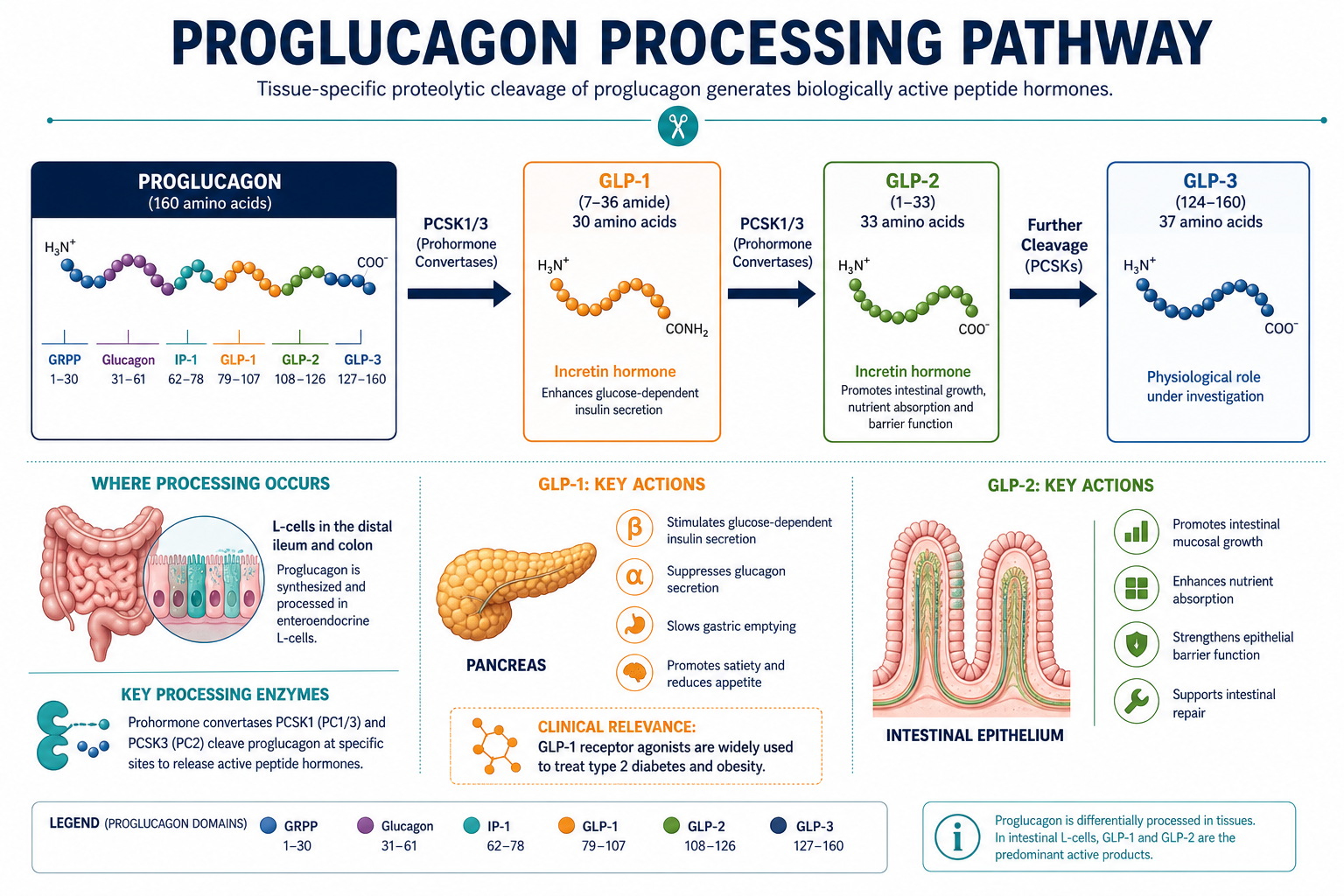
  • Proglucagon is the shared precursor for GLP-1, GLP-2, and GLP-3, with tissue-specific enzyme processing determining which hormone is produced.
  • CJC-1295 extends its half-life through covalent albumin binding, making it a useful model for studying sustained growth hormone axis stimulation.
  • All three compounds are currently restricted to preclinical and research contexts; none are approved for general clinical use.
Key Takeaways

What "Polypeptide Peptides" Actually Means in Endocrine Science

A peptide is any chain of amino acids linked by peptide bonds. A polypeptide is simply a longer chain, conventionally above 10 amino acids. In endocrinology, most signaling hormones fall into this polypeptide range, including insulin, glucagon, and the glucagon-like peptides. When researchers use the phrase "polypeptide peptides in endocrine and metabolic pathways," they are usually describing these multi-residue signaling molecules that bind to G-protein-coupled receptors (GPCRs) to regulate metabolism, growth, and energy balance.

Why does the distinction matter? Because the length and folding of a polypeptide chain determine receptor selectivity, enzymatic stability, and pharmacokinetic behavior. Small modifications, a single amino acid substitution or the addition of a fatty acid chain, can shift a rapidly degraded native peptide into a research-grade compound with a half-life measured in days rather than minutes.

The Proglucagon Precursor: One Gene, Multiple Hormones

Glucagon, GLP-1, GLP-2, and GLP-3 all derive from a single precursor protein called proglucagon. Tissue-specific prohormone convertases (PC2 in the pancreatic alpha cells, PC1/3 in intestinal L-cells) cleave proglucagon at different sites, producing distinct hormones with distinct roles.

  • Glucagon: raises blood glucose; produced in the pancreas
  • GLP-1: stimulates insulin secretion; produced in the gut and brain
  • GLP-2: promotes intestinal mucosal growth and nutrient absorption
  • GLP-3: a less-characterized fragment still under active investigation

For researchers exploring GLP-1 peptide sourcing and generational research concepts, understanding this shared precursor is essential context.


GLP-3 and GLP-2-T: Incretin-Adjacent Peptides in Metabolic Research
GLP-3 and GLP-2-T: Incretin-Adjacent Peptides in Metabolic Research

GLP-3 and the Triple-Agonist Frontier

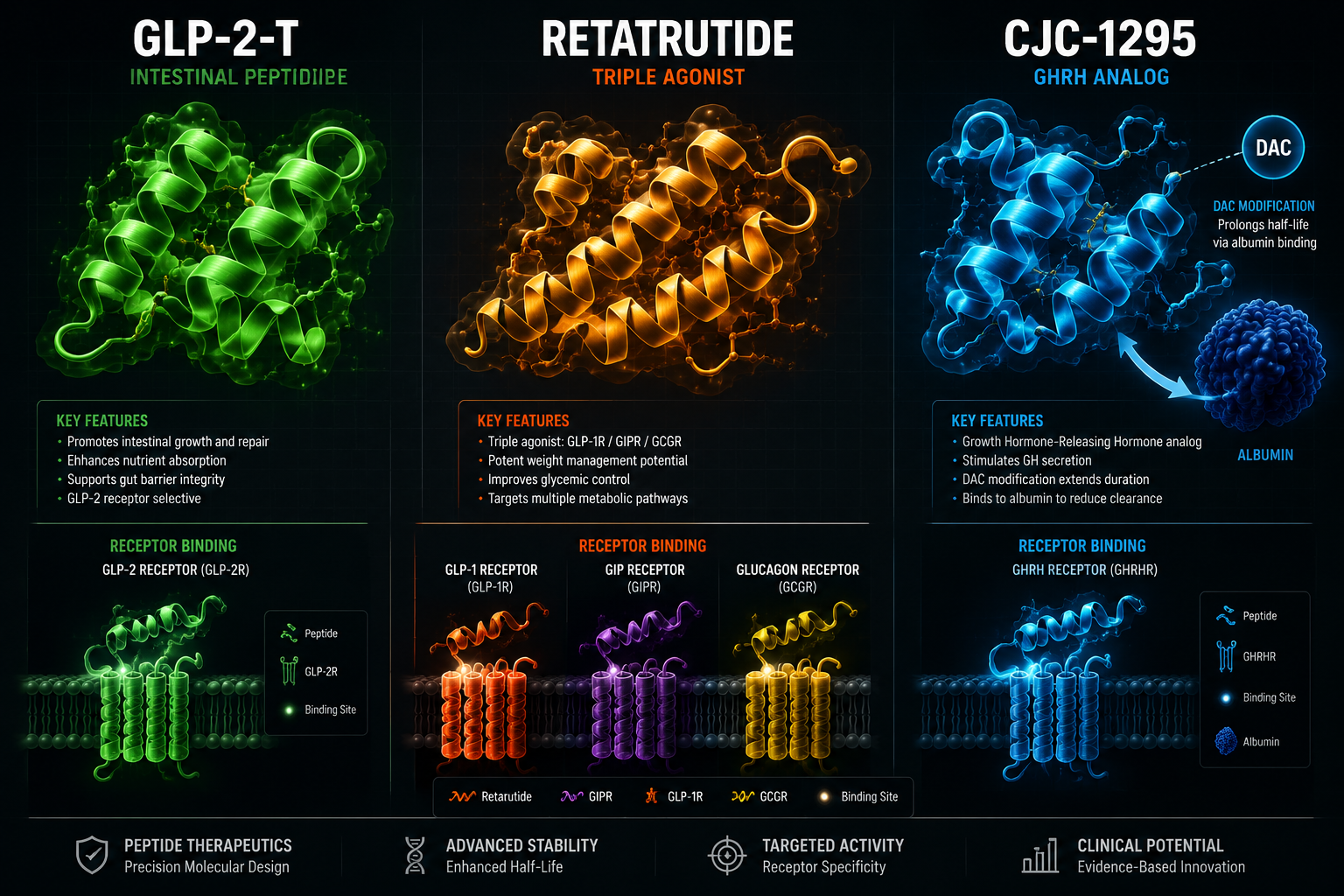
GLP-3 is a proglucagon-derived fragment whose receptor binding profile is still being characterized. Research interest intensified when it became clear that multi-receptor agonism, hitting GLP-1R, GIPR, and glucagon receptors simultaneously, produces additive metabolic effects. Retatrutide, sometimes discussed in the context of GLP-3 triple-agonist research planning, is a synthetic peptide designed to exploit this multi-agonist principle.

"Multi-receptor agonism represents a shift from single-target pharmacology toward systems-level metabolic intervention, a paradigm that polypeptide research is uniquely positioned to advance."

Proglucagon-derived peptides, including GLP-1 and GIP, regulate energy storage through actions on adipose tissue, influencing white and brown fat activity, islet hormone secretion, and food intake. GLP-3 research extends this framework into less-mapped receptor territory. You can also explore related research on retatrutide and GLP-3 pathway studies for additional context.

GLP-2-T: Stabilized Intestinal Trophic Research

GLP-2-T refers to a stabilized, modified form of GLP-2 designed to resist dipeptidyl peptidase-4 (DPP-4) degradation, the same enzyme that rapidly inactivates native GLP-1 and GLP-2. Native GLP-2 has a half-life of approximately 7 minutes; structural modifications extend this substantially, making it viable for controlled research protocols examining intestinal mucosal integrity, nutrient absorption, and gut barrier function.

The chemical modification strategy mirrors what has been applied to other peptide hormones: amino acid substitutions at DPP-4 cleavage sites, combined in some analogs with fatty acid acylation to enable albumin binding.


CJC-1295 and the Growth Hormone Axis: A Model for Polypeptide Peptides in Endocrine and Metabolic Pathways

Mechanism and Pharmacokinetics

CJC-1295 is a synthetic analog of growth hormone-releasing hormone (GHRH). It binds to GHRH receptors on anterior pituitary somatotrophs, activating the cAMP/PKA signaling pathway. This triggers growth hormone (GH) release and subsequent elevation of insulin-like growth factor 1 (IGF-1).

What makes CJC-1295 a standout research model is its Drug Affinity Complex (DAC) modification. The DAC enables covalent binding to circulating serum albumin, extending the peptide's half-life to approximately 6 to 8 days in humans, compared to minutes for native GHRH. This sustained action allows researchers to study prolonged GH and IGF-1 elevation without repeated dosing.

CJC-1295 underwent Phase II clinical trials for HIV-associated visceral obesity before being discontinued following the death of a trial participant. The death was attributed to pre-existing coronary artery disease and deemed unrelated to the compound, but development did not continue. It remains a research-only compound.

For researchers reviewing CJC-1295 and Ipamorelin assay planning and sourcing, the DAC pharmacokinetics are a central variable in experimental design. Multi-peptide blend studies, such as those examining Tesamorelin and CJC-1295 combinations, also rely on this extended half-life as a design consideration.

CREB Signaling: The Downstream Pathway

CJC-1295's activation of cAMP/PKA feeds into the CREB (cAMP response element-binding protein) transcriptional pathway. CREB and its co-activators act as sensors for hormonal and metabolic signals, mediating gene transcription involved in glucose metabolism and energy balance. This makes CJC-1295 not just a GH secretagogue but a tool for studying broader hormonal gene regulation.

Researchers interested in growth hormone-axis peptides may also find value in reviewing Tesamorelin peptide research, another GHRH analog with a distinct modification profile and its own clinical data set.

Ipamorelin as a Complementary Research Tool

Ipamorelin is a GH secretagogue receptor (GHSR) agonist that stimulates GH release through a different receptor than CJC-1295. Used together in research models, they provide a dual-pathway approach to studying GH axis regulation. Detailed information on Ipamorelin research applications offers useful background for designing multi-peptide studies.


Conclusion

Polypeptide peptides in endocrine and metabolic pathways, from the proglucagon-derived incretin family to synthetic GHRH analogs, represent a structurally diverse but mechanistically coherent class of research tools. GLP-3 and GLP-2-T extend incretin biology into multi-receptor and intestinal trophic territory, while CJC-1295 provides a well-characterized model for sustained growth hormone axis stimulation through albumin-binding pharmacokinetics.

Actionable next steps for researchers:

  • Map the proglucagon processing pathway before designing any GLP-family study to ensure receptor selectivity is clearly defined.
  • Evaluate DPP-4 stability data when selecting GLP-2-T analogs, as modification sites directly affect experimental half-life.
  • Review CJC-1295 DAC pharmacokinetics and CREB pathway literature before establishing dosing intervals in GH-axis protocols.
  • Source peptides from suppliers with documented purity standards; consult peptide supplier comparison resources and reference standard benchmarking guides to validate compound integrity before use.

All compounds discussed here are for preclinical research purposes only and are not approved for human therapeutic use outside of authorized clinical trial frameworks.

https://www.puretestedpeptides.com/wp-content/uploads/2026/01/buy-peptides-online.jpg 0 0 https://www.puretestedpeptides.com/wp-content/uploads/2026/01/buy-peptides-online.jpg 2026-07-07 13:20:052026-07-07 13:20:05Polypeptide Peptides in Endocrine and Metabolic Pathways: How GLP‑3, GLP‑2‑T, and CJC‑1295 Drive Hormone Research
The Role of Peptides in Regulating Estrogen Receptor Activity: A Focus on Enclomiphene Research

The Role of Peptides in Regulating Estrogen Receptor Activity: A Focus on Enclomiphene Research

June 30, 2026/0 Comments/in Uncategorized/by

Secondary hypogonadism affects an estimated 2–4% of adult men, yet a large portion of cases remain undertreated or managed with therapies that compromise fertility. The role of peptides in regulating estrogen receptor activity: a focus on enclomiphene research offers a compelling alternative pathway — one that works with the body's own hormonal architecture rather than bypassing it.

Detailed () scientific illustration showing a cross-sectional diagram of the hypothalamic-pituitary-gonadal axis with

Key Takeaways

  • Enclomiphene is the trans-isomer of clomiphene citrate and acts as a pure estrogen receptor antagonist in the hypothalamus and pituitary.
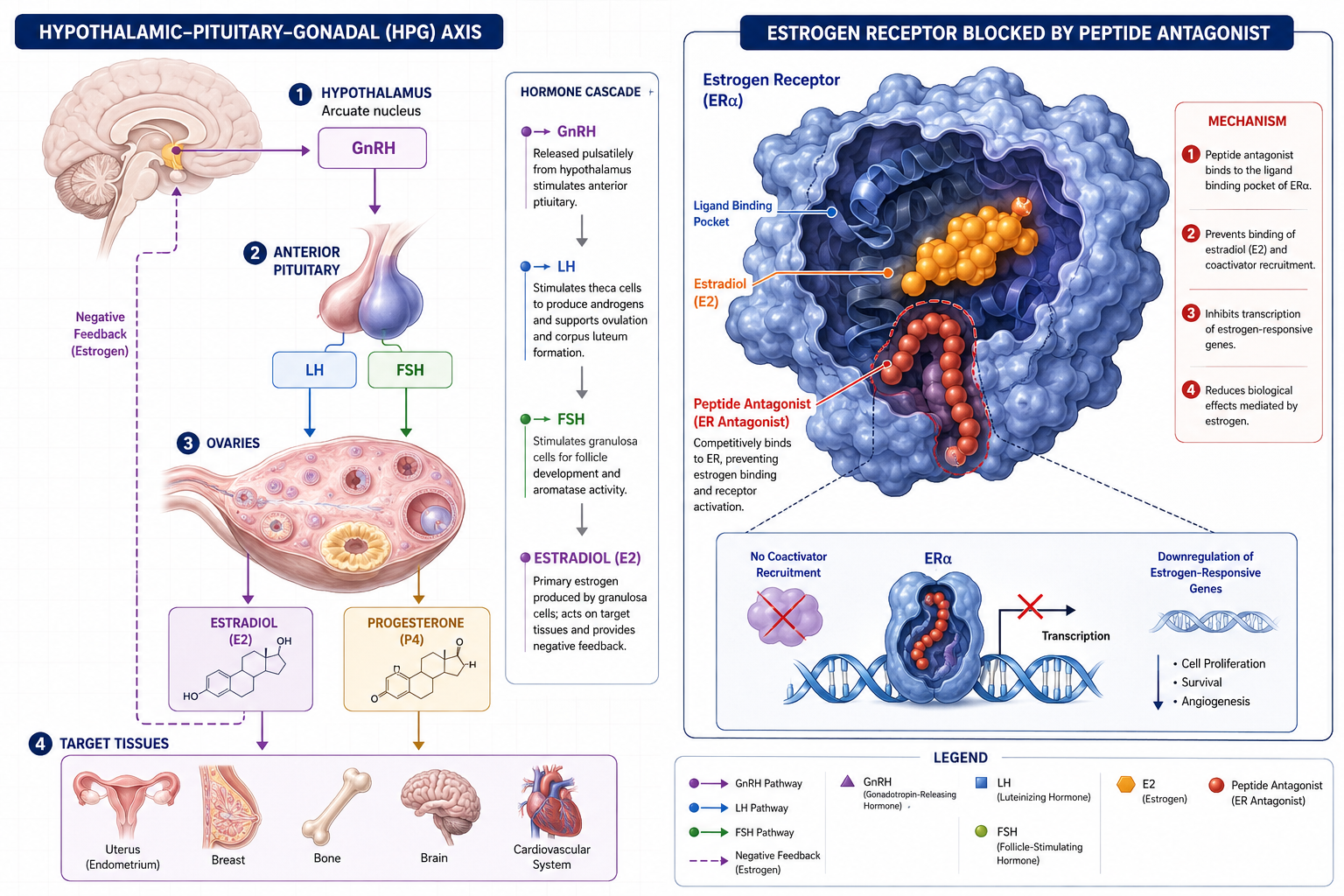
  • By blocking estradiol's negative feedback signal, enclomiphene triggers a natural cascade that raises GnRH, LH, FSH, and ultimately testosterone.
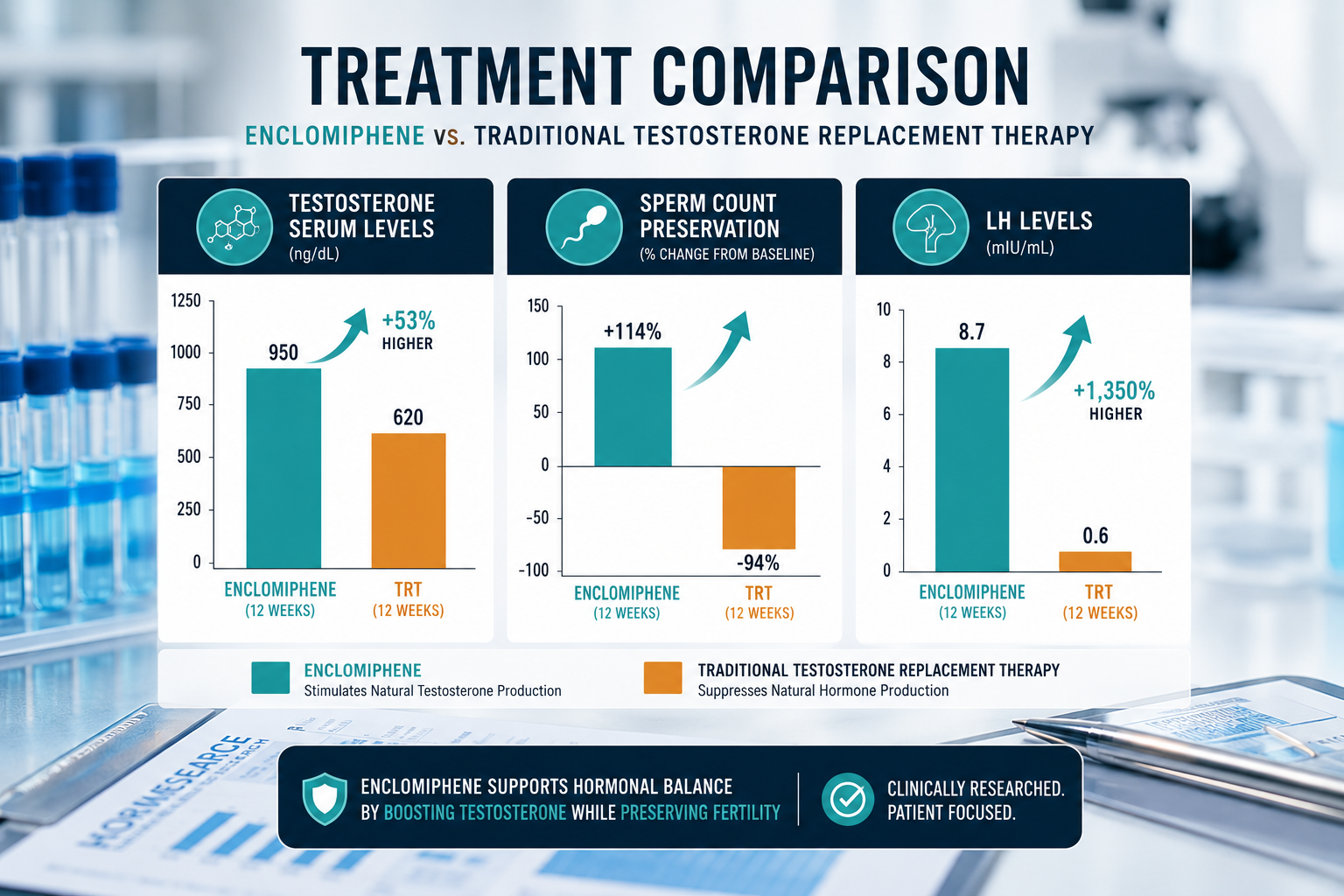
  • Unlike traditional testosterone replacement therapy (TRT), enclomiphene preserves sperm counts and testicular function.
  • Early research suggests favorable effects on fasting plasma glucose, pointing to potential metabolic benefits.
  • Enclomiphene is currently available through compounding pharmacies and is not FDA-approved as a standalone compound as of 2026.

How Enclomiphene Interacts with Estrogen Receptors

Enclomiphene belongs to a class of compounds called selective estrogen receptor modulators, or serms. Its molecular formula is C26H28ClNO, with a molecular weight of 406.0 g/mol. As the trans-isomer of clomiphene citrate, it functions as a pure estrogen receptor antagonist specifically in the hypothalamus and pituitary gland.

Here is how the mechanism unfolds:

  1. Circulating estradiol normally binds to estrogen receptors in the hypothalamus, sending a negative feedback signal that suppresses GnRH release.
  2. Enclomiphene occupies those same receptors, blocking estradiol from binding.
  3. With the negative feedback removed, the hypothalamus increases GnRH secretion.
  4. Elevated GnRH drives the pituitary to release more luteinizing hormone (LH) and follicle-stimulating hormone (FSH).
  5. Higher LH levels signal the testes to produce more endogenous testosterone.

"Enclomiphene stimulates natural testosterone production while preserving fertility — a key distinction from exogenous testosterone therapies." — Dr. Joe S. Lancaster, MD, board-certified OB-GYN and hormone specialist.

This cascade is precisely why the role of peptides in regulating estrogen receptor activity: a focus on enclomiphene research has gained traction among endocrinology researchers. Researchers exploring related peptide mechanisms, such as those studying epithalon and NAD-based hormonal pathways, have noted similar upstream signaling dynamics worth comparing.


Clinical Evidence and Comparison with Traditional TRT

Clinical Evidence and Comparison with Traditional TRT

A randomized phase II clinical trial demonstrated that enclomiphene citrate successfully raised morning serum testosterone and LH levels in men with secondary hypogonadism — results comparable to those achieved with topical testosterone gel. Critically, participants maintained normal sperm counts throughout the study period.

Enclomiphene vs. Traditional Testosterone Replacement

Parameter Enclomiphene Exogenous TRT
Endogenous testosterone Increased Suppressed
Sperm count Preserved Often reduced
Testicular function Maintained Risk of atrophy
HPG axis activity Stimulated Suppressed
Metabolic effect Favorable glucose data Variable

Traditional TRT introduces testosterone from an external source, which suppresses the hypothalamic-pituitary-gonadal (HPG) axis. This can result in testicular atrophy and oligospermia — a significant concern for men who wish to maintain fertility. Enclomiphene sidesteps this problem entirely.

Short-term safety data for enclomiphene have been satisfactory and broadly comparable to testosterone gels and placebo groups. Additionally, early data showed improved fasting plasma glucose levels, suggesting potential utility in men with secondary hypogonadism linked to obesity or metabolic syndrome.

For researchers exploring related hormonal optimization compounds, resources on MOTS-C peptide research and the IPA-Sermorelin research stack provide useful context on how peptide-based approaches can complement endocrine modulation strategies.


Dosage, Regulatory Status, and Research Outlook

Dosage, Regulatory Status, and Research Outlook

The standard oral dosage studied in research protocols ranges from 12.5 to 25 mg per day. Enclomiphene's half-life of approximately 10 hours supports once-daily dosing, making it practically convenient for research administration.

As of 2026, enclomiphene is not FDA-approved as a standalone drug. It remains accessible through compounding pharmacies. Clomiphene citrate — which contains both the enclomiphene (trans) and zuclomiphene (cis) isomers — holds FDA approval for female ovulatory dysfunction.

Ongoing research is investigating enclomiphene's potential across several areas:

  • Secondary hypogonadism associated with obesity
  • Metabolic syndrome management in men
  • Male infertility where HPG axis preservation is essential

Researchers interested in the broader landscape of serm-adjacent compounds can review the serm 10mg product research page for additional context. Those exploring recovery-oriented peptides may also find value in reviewing top healing peptides and their mechanisms as complementary reading.

For quality benchmarking in peptide research, understanding Bachem reference standards and peptide benchmarks is essential when evaluating compound purity and study reliability.


Conclusion

The role of peptides in regulating estrogen receptor activity: a focus on enclomiphene research represents one of the more nuanced intersections of endocrinology and peptide science available for study in 2026. Enclomiphene's ability to block estrogen receptor activity at the hypothalamic-pituitary level — triggering a natural hormonal cascade without suppressing the HPG axis — sets it apart from conventional testosterone replacement approaches.

Actionable next steps for researchers:

  • Review phase II clinical trial data on enclomiphene citrate and secondary hypogonadism before designing new protocols.
  • Compare enclomiphene's receptor-binding profile against other serms when assessing research scope.
  • Consult compounding pharmacy documentation and current regulatory guidance before sourcing.
  • Explore synergistic peptide research areas, including metabolic and recovery pathways, to build a more complete endocrine research framework.
https://www.puretestedpeptides.com/wp-content/uploads/2026/06/The-Role-of-Peptides-in-Regulating-Estrogen-Receptor-Activity-A-Focus-on-Enclomiphene-Research.png 1024 1536 https://www.puretestedpeptides.com/wp-content/uploads/2026/01/buy-peptides-online.jpg 2026-06-30 13:04:582026-06-30 13:04:58The Role of Peptides in Regulating Estrogen Receptor Activity: A Focus on Enclomiphene Research
×

Helpful Links

  • My account
  • Cart
  • Checkout
  • Refund and Returns Policy
  • Privacy Policy
  • SMS Privacy Policy
  • Login
  • My Account
  • Logout

USA Made Lab Tested Peptides

All products are sold for research, laboratory, or analytical purposes only, and are not for human consumption


Pure Tested Peptides is a chemical supplier. Pure Tested Peptides is not a compounding / chemical compounding facility as defined under 503A of the Federal Food, Drug, and Cosmetic act. Pure Tested Peptides is not an outsourcing facility as defined under 503B of the Federal Food, Drug, and Cosmetic act.

The statements made within this website have not been evaluated by the US Food and Drug Administration. The products we offer are not intended to diagnose, treat, cure or prevent any disease.

Human/Animal Consumption Prohibited. Laboratory/In-Vitro Experimental Use Only

Scroll to top Scroll to top Scroll to top