Call or Text 727-513-9780
  • Shopping Cart Shopping Cart
    0Shopping Cart
Pure Tested Peptides | America's most trusted Peptides for sale online
  • Peptides for sale
    • Oral Peptides for sale
      • Peptide Capsules for sale
      • BPC 157 Capsules 1000mcg
      • SLU-PP-332 Capsules | 1000 mcg
      • 5-Amino-1MQ 50mg Capsules
      • Tesofensine 500mcg
    • All Peptides for sale
    • Peptide Sprays
      • BPC 157 Nasal Spray Kit
      • BPC-157 TB500 Nasal Spray Kit
      • Semax Nasal Spray 10mg
      • Selank – Nasal Spray Kit – 10mg
      • Epithalon 50MG Nasal Spray Kit
      • Ipamorelin 10mg Nasal Spray
      • Klow Nasal Spray (BPC-157 + TB-500 + GHK-Cu + KPV) | 80mg
      • Hulk Nasal Spray Tesa / Ipa Blend 6/3 MG
      • Klow Nasal Spray
      • NAD + 500 mg Nasal Spray
      • PT-141 Nasal Spray Kit
    • GHRH Peptides
      • Ipa Peptides
      • CJC-1295 Peptides
        • CJC-1295 with DAC 5 mg
        • CJC-1295 without DAC 5 mg
        • CJC-1295 Ipa 10mg
      • Tesa Peptides
        • Tesa Peptide
        • Tesa 20 mg
    • GHK-Cu Peptides
      • All GHK-Cu Peptides
      • GHK-Cu 100mg
      • KLOW Peptide Blend – Buy KLOW blend online
    • BPC Peptides
      • All BPC Peptides
      • BPC-157
      • BPC-157 TB-500
      • BPC 157 capsules 1000mcg
    • SLU-PP-332 Peptides
      • All SLU-PP-332 Peptides
      • SLU-PP-332 5mg
    • GLP3 Peptides
      • GLP3-R
      • GLP3-R CAG 10mg
      • GLP3-R 20mg
    • PT-141 Peptides
      • PT-141 Peptides for sale
      • PT-141 10mg
      • PT-141 Nasal Spray
    • CAG Peptides
      • Lipo-C Peptide Blend
      • CAG 5mg
      • CAG 10mg
    • MOTS-C Peptides
      • MOTS-C Peptides for sale
      • MOTS-c peptide
      • MOTS-c 10mg *6 pack*
    • 5 Amino 1MQ Peptides
      • 5 Amino 1MQ Peptides for sale
      • 5-Amino-1MQ 50mg Capsules
      • 5-Amino-1MQ 5mg
    • Epithalon Peptides
      • Epithalon Peptides for sale
      • Epithalon 10mg
      • Epithalon 50mg
  • Shop
    • GLPs
      • 5-Amino-1MQ 50mg Capsules
      • 5-Amino-1MQ 5mg
      • GLP3-Reta
      • L-Carnitine 500mg/ml
      • Tesofensine 500mcg
      • SLU-PP-332 5mg
      • MOTS-c 10mg *6 pack*
    • Epithalon & BPC Peptides
      • Epithalon 10mg
      • Epithalon 50mg
      • BPC-157
      • BPC 157 capsules 1000mcg
      • BPC-157 TB-500
      • BPC-157 TB500 Nasal Spray Kit
      • BPC 157 Nasal Spray Kit
    • BPC TB-500 & NAD+ Peptides
      • NAD+ 500 mg
      • KLOW Peptide Blend – Buy KLOW blend online
      • GLOW Peptide Blend
      • TB 500 5mg
      • BPC 157 capsules 1000mcg – Supplement
      • BPC 157 Nasal Spray Kit
      • BPC-157
      • BPC-157 TB500 Nasal Spray Kit
      • BPC-157 TB-500
      • BPC 157 capsules 1000mcg
    • LL-37 Peptide
      • LL-37 10 mg
    • MOTS-C & Selank
      • MOTS-c peptide
      • Selank 10mg
    • GHK Peptides
      • GHK-Cu 100mg
      • GLOW Peptide Blend
      • KLOW Peptide Blend – Buy KLOW blend online
  • COAs
  • Wholesale
    • Wholesale Peptides for sale
  • PTP FAQ
  • Affiliates
    • Affiliate Program
    • Affiliate Signup
  • Contact
    • Contact Customer Service
    • Text Customer Support
  • About US
  • Shop all peptides
  • Login / Register Login / Register Page Link Login / Register Page Link
  • Click to open the search input field Click to open the search input field Search
  • Menu Menu

Tag Archive for: ghk-cu longevity

The Role of Adenosine Triphosphate (ATP) in Peptide-Mediated Cellular Energy Research

The Role of Adenosine Triphosphate (ATP) in Peptide-Mediated Cellular Energy Research

July 1, 2026/0 Comments/in Uncategorized/by

Every cell in the human body runs on a molecule so fundamental that without it, life stops within seconds. Adenosine triphosphate (ATP) powers nearly every biological process, yet researchers are only beginning to understand how peptides actively shape its production, regulation, and distribution at the cellular level. The role of adenosine triphosphate (ATP) in peptide-mediated cellular energy research has emerged as one of the most productive areas in modern biochemistry, connecting mitochondrial biology to therapeutic peptide science in ways that were not fully appreciated even a decade ago.

Key Takeaways

  • ATP is the primary energy currency of the cell, produced mainly within mitochondria through oxidative phosphorylation.
  • Specific peptides, including MOTS-c, directly influence ATP synthesis by interacting with mitochondrial pathways.
  • ATP also acts as a signaling molecule, not just a fuel source, affecting peptide behavior and cellular communication.
  • Research into peptide-ATP interactions is opening new directions in longevity, metabolic health, and tissue repair science.
  • Understanding this relationship helps researchers design more targeted peptide protocols for cellular energy optimization.

Key Takeaways

ATP as the Foundation of Cellular Energy Metabolism

ATP is produced primarily inside the mitochondria through a process called oxidative phosphorylation. The inner mitochondrial membrane houses ATP synthase complexes that harness the energy from a proton gradient to convert ADP into ATP. This continuous cycle of synthesis and hydrolysis drives muscle contraction, protein synthesis, ion transport, and virtually every other energy-demanding cellular event.

What makes ATP especially relevant to peptide research is its dual role. It functions both as a fuel molecule and as an extracellular signaling agent. When released from cells, ATP activates purinergic receptors, particularly P2 receptors, which regulate tissue responses including inflammation, wound healing, and mechanosensation. Research into mechanosensitive channels such as Piezo1 has shown that ATP release triggered by physical stimuli plays a key role in how tissues adapt to mechanical stress.

Beyond energy transfer, ATP has been shown to suppress the fibrillation of amyloid peptides associated with neurodegenerative conditions such as Alzheimer's disease. This finding positions ATP not merely as a passive fuel but as an active modulator of peptide behavior in biological systems.

Key ATP functions at a glance:

Function Mechanism
Energy transfer Phosphate bond hydrolysis
Cell signaling Purinergic receptor activation
Peptide modulation Amyloid fibrillation suppression
Skin cell regulation Calcium mobilization in keratinocytes

How Peptides Influence the Role of Adenosine Triphosphate (ATP) in Cellular Energy Research

How Peptides Influence the Role of Adenosine Triphosphate (ATP) in Cellular Energy Research

Peptides are not passive bystanders in energy metabolism. Several research-grade peptides interact directly with mitochondrial function and ATP output. Among the most studied is MOTS-c, a mitochondria-derived peptide encoded within mitochondrial DNA. Research on MOTS-c and mitochondrial dynamics shows that this peptide translocates to the nucleus under metabolic stress, where it activates pathways that restore ATP production efficiency.

MOTS-c is particularly notable because it appears to act as a retrograde signal from the mitochondria to the nucleus, coordinating the cell's response to energy deficits. This places it at the center of the peptide-ATP relationship. Research on MOTS-c and metabolic stress responses further supports its role in maintaining mitochondrial homeostasis during oxidative challenge.

Another well-researched peptide in this context is SS-31 (elamipretide). This tetrapeptide targets cardiolipin on the inner mitochondrial membrane, stabilizing the architecture needed for efficient ATP synthase function. Detailed SS-31 mitochondrial research themes document how this peptide reduces mitochondrial membrane potential loss and preserves ATP output under conditions of oxidative stress. Related work on SS-31 mitochondrial dynamics reinforces these findings across multiple tissue models.

GHK-Cu also appears in this research landscape. Studies reviewed in GHK-Cu longevity research themes suggest this copper-binding tripeptide supports mitochondrial gene expression, indirectly supporting ATP production capacity in aging tissue models.


Research Applications and the Broader Significance of ATP-Peptide Interactions

Research Applications and the Broader Significance of ATP-Peptide Interactions

The role of adenosine triphosphate (ATP) in peptide-mediated cellular energy research extends well beyond basic science. Oral ATP supplementation studies have demonstrated measurable improvements in strength, power output, fatigue reduction, and cardiovascular efficiency, suggesting that systemic ATP availability is a modifiable variable in performance and recovery research.

Bioelectronic applications have also emerged. ATPases, the enzymes that hydrolyze ATP, have been integrated into hybrid biological-electronic devices capable of converting chemical energy into electrical signals. Tandem mass spectrometry has advanced understanding of ATPase catalytic mechanisms at the molecular level, enabling more precise research into how peptides modulate these enzymes.

For researchers exploring the intersection of longevity and mitochondrial health, the connection between NAD+ metabolism and ATP synthesis is equally important. Reviewing NAD+ scientific evidence provides context for how upstream cofactors feed into ATP production pathways, and how peptides may amplify those effects.

Additionally, mitochondrial longevity focus research highlights the growing interest in peptides that target mitochondrial biogenesis as a strategy for extending cellular healthspan.


Conclusion

The relationship between ATP and peptide signaling is one of the most consequential areas in current cellular energy research. ATP is not simply a fuel molecule. It is a dynamic regulator of peptide behavior, mitochondrial function, and intercellular communication. Peptides such as MOTS-c and SS-31 demonstrate that targeted molecular interventions can meaningfully influence ATP production, opening research pathways relevant to aging, metabolic disease, and tissue repair.

Actionable next steps for researchers:

  • Review published data on SS-31 and MOTS-c mechanisms before designing mitochondrial energy studies.
  • Consider the interplay between NAD+ pathways and ATP synthesis when evaluating peptide protocols.
  • Examine mechanosensitive ATP release pathways when studying tissue-level peptide effects.
  • Source research-grade peptides from verified suppliers to ensure assay reliability and reproducibility.

Understanding the full scope of ATP's role in peptide-mediated cellular energy research is not optional for serious investigators. It is the foundation upon which meaningful experimental design is built.

https://www.puretestedpeptides.com/wp-content/uploads/2026/07/The-Role-of-Adenosine-Triphosphate-ATP-in-Peptide-Mediated-Cellular-Energy-Research.png 1024 1536 https://www.puretestedpeptides.com/wp-content/uploads/2026/01/buy-peptides-online.jpg 2026-07-01 13:03:522026-07-01 13:03:52The Role of Adenosine Triphosphate (ATP) in Peptide-Mediated Cellular Energy Research
GHK-Cu Peptide: Collagen Synthesis, Wound Healing & Anti-Aging Research

GHK-Cu Peptide: Collagen Synthesis, Wound Healing & Anti-Aging Research

June 26, 2026/0 Comments/in Uncategorized/by

Copper is one of the most biologically active trace metals in the human body, and a tiny three-amino-acid sequence called GHK (glycyl-L-histidyl-L-lysine) has a remarkable ability to bind it. First isolated from human plasma in 1973, GHK-Cu was found to stimulate liver tissue regeneration — a discovery that launched decades of research into its role as a tissue-signaling molecule. Today, GHK-Cu Peptide: Collagen Synthesis, Wound Healing & Anti-Aging Research sits at the intersection of dermatology, wound biology, and longevity science, attracting growing attention from researchers worldwide.

Key Takeaways

  • GHK-Cu is a naturally occurring copper-binding tripeptide with documented roles in collagen synthesis and tissue repair.
  • Preclinical research shows it activates fibroblasts, upregulates collagen and elastin production, and modulates inflammatory pathways.
  • It has demonstrated wound-healing potential in animal models, including accelerated closure and reduced scar formation.
  • As of 2026, GHK-Cu remains classified as a cosmetic ingredient and experimental research peptide — no FDA-approved prescription formulation exists.
  • Ongoing research explores its anti-aging, antioxidant, and gene-expression-modulating properties.

Key Takeaways

How GHK-Cu Works: Fibroblast Activation and Collagen Pathways

The central mechanism behind GHK-Cu Peptide: Collagen Synthesis, Wound Healing & Anti-Aging Research involves its interaction with fibroblasts — the cells responsible for producing structural proteins in connective tissue.

Key biological actions observed in preclinical studies include:

Mechanism Observed Effect
Fibroblast stimulation Increased collagen I and III synthesis
Elastin upregulation Improved tissue elasticity markers
MMP modulation Balanced matrix metalloproteinase activity
Antioxidant activity Reduced oxidative stress markers
Gene expression Activation of over 30 tissue-repair genes

When GHK-Cu binds copper ions, it delivers them directly to enzymes like lysyl oxidase, which cross-links collagen and elastin fibers. This cross-linking is essential for structural integrity in skin, tendons, and vascular tissue.

"GHK-Cu does not simply add collagen — it appears to recalibrate the entire remodeling environment."

Research also shows GHK-Cu modulates transforming growth factor beta (TGF-beta) signaling, which governs both scar formation and normal tissue repair. This dual action — promoting repair while limiting excessive scarring — makes it particularly interesting for wound biology research. For a broader look at how peptides are reshaping tissue science, the latest peptide research updates provide useful context.


How GHK-Cu Works: Fibroblast Activation and Collagen Pathways

GHK-Cu in Wound Healing and Tissue Remodeling Research

Animal model studies have consistently shown that topical or injected GHK-Cu accelerates wound closure. In rodent excision models, treated wounds demonstrated faster re-epithelialization, denser collagen deposition, and reduced inflammatory cell infiltration compared to controls.

Three wound-healing properties highlighted in preclinical research:

  1. Angiogenesis support — GHK-Cu promotes the formation of new blood vessels, improving nutrient delivery to healing tissue.
  2. Nerve outgrowth — Early studies suggest it may support peripheral nerve regeneration at wound sites.
  3. Anti-inflammatory signaling — It appears to downregulate NF-kB pathways, reducing chronic inflammation that delays healing.

These findings place GHK-Cu alongside other tissue-repair peptides currently under investigation. Researchers interested in comparing repair-focused compounds may also find value in reviewing BPC-157 research themes and TB-500 research, both of which target overlapping tissue remodeling pathways.

The GHK-Cu longevity research overview explores additional preclinical data on systemic aging markers, including its effects on oxidative damage and cellular senescence.


GHK-Cu in Wound Healing and Tissue Remodeling Research

Anti-Aging Research: Gene Expression and Systemic Implications

Beyond skin and wounds, GHK-Cu Peptide: Collagen Synthesis, Wound Healing & Anti-Aging Research has expanded into the field of gene modulation. A landmark analysis found that GHK-Cu reversed the gene expression signature of aged human tissue, activating pathways associated with DNA repair, proteasome function, and mitochondrial activity.

This positions GHK-Cu as more than a topical ingredient. Researchers now classify it as a systemic signaling molecule that may influence:

  • Cellular senescence markers
  • Oxidative stress response genes
  • Tissue regeneration networks across multiple organ systems

The peptide's role in skin aging has been studied in both in vitro and clinical settings. Topical formulations have shown measurable improvements in skin density and fine-line depth in small human trials, though large randomized controlled trials remain limited.

For researchers exploring peptide delivery formats, nasal spray peptide delivery systems and innovative peptide delivery research address how bioavailability affects outcomes for compounds like GHK-Cu. The broader science of peptides in skincare also provides relevant background for understanding topical application research.

Regulatory status in 2026: GHK-Cu is classified as a cosmetic ingredient and research peptide. No FDA-approved prescription formulation exists for any indication — skin, hair, wound, or systemic. NIH-linked sources continue to describe it as experimental, and researchers should distinguish it from approved therapies when designing studies.


Conclusion

GHK-Cu is one of the most studied naturally occurring peptides in tissue biology, with a research profile spanning collagen synthesis, wound repair, antioxidant activity, and gene expression modulation. Its ability to activate fibroblasts, balance matrix remodeling enzymes, and influence aging-related gene signatures makes it a compelling subject for continued preclinical and clinical investigation.

Actionable next steps for researchers:

  • Review preclinical wound-healing models to identify gaps where GHK-Cu data could be applied.
  • Examine gene expression datasets comparing GHK-Cu-treated versus untreated aged tissue.
  • Source research-grade GHK-Cu only from verified, tested suppliers — purity directly affects experimental validity. Reviewing best peptide manufacturer standards is a practical starting point.
  • Stay current with evolving regulatory classifications before designing human-subject protocols.

The compound's transition from a plasma-isolated curiosity to a multi-pathway research target reflects the broader maturation of peptide science — and its most significant findings may still be ahead.

https://www.puretestedpeptides.com/wp-content/uploads/2026/06/GHK-Cu-Peptide-Collagen-Synthesis-Wound-Healing-Anti-Aging-Research.png 1024 1536 https://www.puretestedpeptides.com/wp-content/uploads/2026/01/buy-peptides-online.jpg 2026-06-26 13:04:512026-06-26 13:04:51GHK-Cu Peptide: Collagen Synthesis, Wound Healing & Anti-Aging Research
GHK-Cu Peptide Mechanism: Copper Binding, Extracellular Matrix Signaling, and Tissue-Repair Research

GHK-Cu Peptide Mechanism: Copper Binding, Extracellular Matrix Signaling, and Tissue-Repair Research

June 8, 2026/0 Comments/in Uncategorized/by

Plasma levels of GHK — the tripeptide glycyl-L-histidyl-L-lysine — drop by roughly 60% between the ages of 20 and 60. That single biochemical fact helps explain why researchers studying regenerative biology keep returning to the GHK-Cu peptide mechanism: copper binding, extracellular matrix signaling, and tissue-repair research as a framework for understanding age-related decline in wound closure, collagen turnover, and cellular defense.
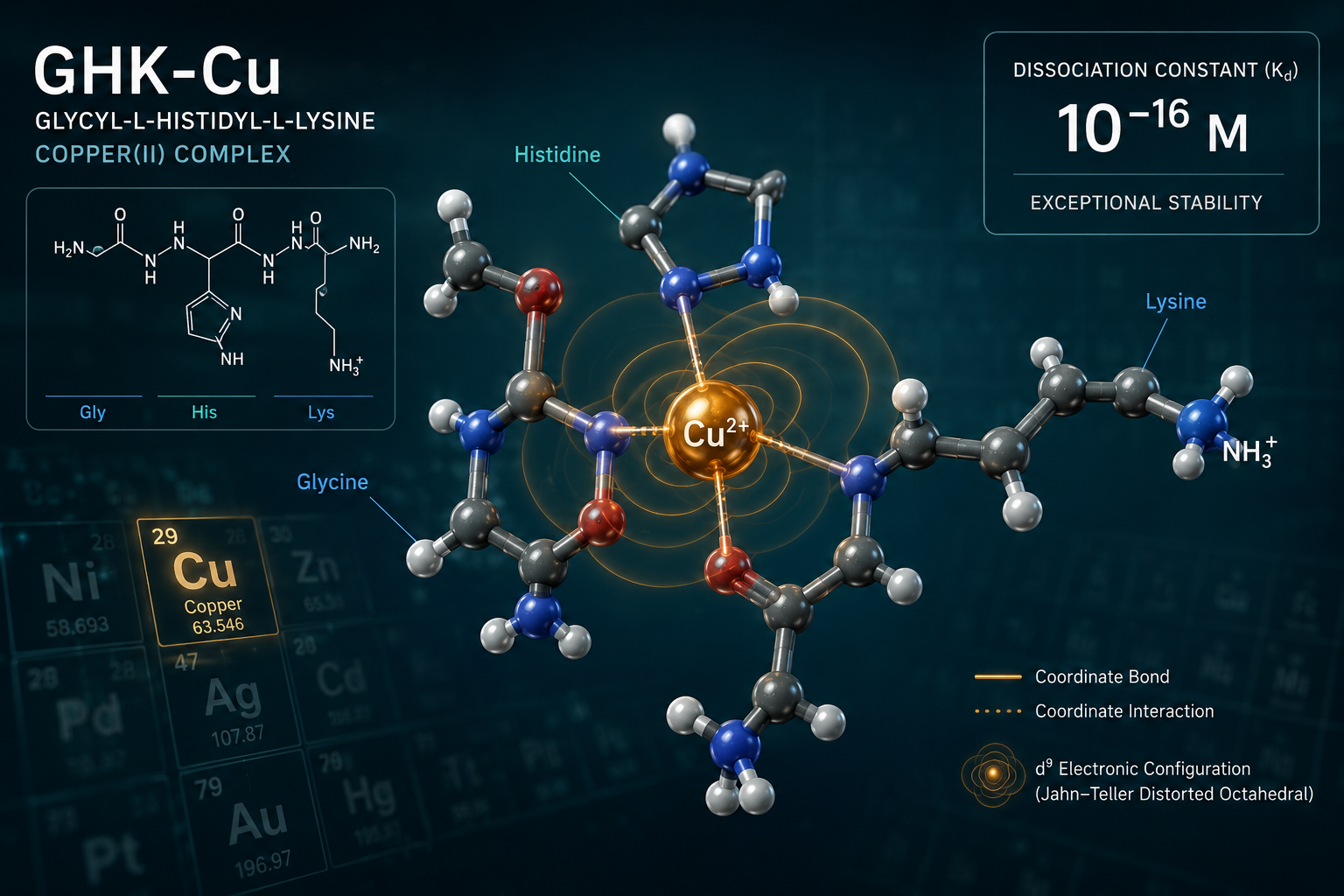
Scientific diagram-style landscape image () illustrating GHK-Cu copper binding chemistry: a three-dimensional molecular

Key Takeaways

  • GHK-Cu binds copper(II) with extraordinary affinity (dissociation constant near 10⁻¹⁶ M), enabling targeted copper delivery to tissues.
  • The peptide modulates expression of more than 4,000 human genes, influencing repair, inflammation, and antioxidant pathways simultaneously.
  • GHK-Cu activates TGF-beta signaling and upregulates VEGF and FGF-2, driving collagen synthesis and angiogenesis.
  • Anti-inflammatory effects stem from NF-kB pathway inhibition, reducing TNF-alpha and IL-6 production.
  • Unlike receptor-targeted peptides, GHK-Cu acts primarily through direct extracellular matrix interaction and redox chemistry.

How the GHK-Cu Copper Binding Mechanism Works

The tripeptide GHK (Gly-His-Lys) naturally forms a stable complex with copper(II) ions. What makes this binding unusual is its strength: the dissociation constant sits near 10⁻¹⁶ M, placing it among the tightest metal-peptide interactions documented in biochemistry. This affinity is not incidental — it is the structural basis for everything else the molecule does.

The histidine residue provides the primary coordination site for Cu²⁺, while the glycine and lysine flanking residues stabilize the complex geometrically. The result is a molecule that can transport bioavailable copper to target tissues without releasing it prematurely into circulation, where free copper would generate oxidative damage.

Why copper matters here: Copper is an essential cofactor for lysyl oxidase, the enzyme that crosslinks collagen and elastin fibers in connective tissue. Without adequate copper delivery, newly synthesized matrix proteins remain structurally weak. GHK-Cu effectively solves a delivery problem that free copper supplementation cannot address safely.

For researchers comparing copper-dependent mechanisms across peptide classes, the GHK-Cu longevity research themes page provides additional context on how these pathways intersect with aging biology.


Extracellular Matrix Signaling: The Core of GHK-Cu Peptide Mechanism Research
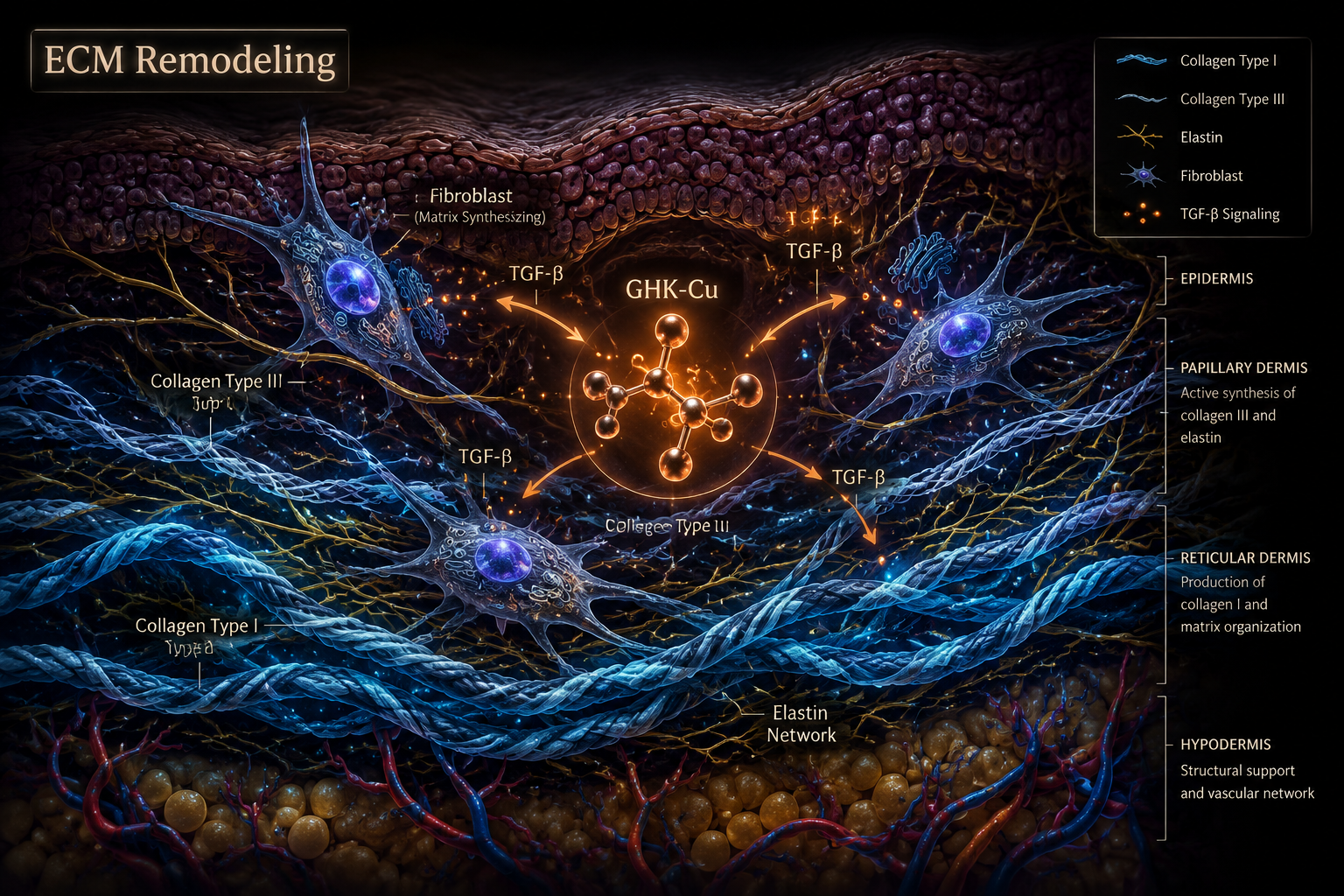
Extracellular Matrix Signaling: The Core of GHK-Cu Peptide Mechanism Research

Most regenerative peptides work by binding a specific receptor. GHK-Cu operates differently. Its primary influence on tissue biology runs through direct extracellular matrix (ECM) interaction combined with downstream gene expression changes — a mechanistic distinction that gives it an unusually broad biological footprint.

Collagen, Elastin, and Decorin Upregulation

GHK-Cu stimulates synthesis of:

ECM Component Function
Type I Collagen Structural tensile strength in skin and tendons
Type III Collagen Early wound scaffolding, vascular walls
Elastin Tissue recoil and flexibility
Decorin Collagen fiber organization, TGF-beta regulation

This multi-target ECM effect is driven partly through TGF-beta pathway activation. When GHK-Cu engages fibroblasts, it upregulates TGF-beta signaling, which in turn amplifies collagen gene transcription and matrix metalloproteinase (MMP) regulation — clearing damaged matrix while simultaneously building replacement structure.

Gene Expression at Scale

One of the most striking findings in GHK-Cu research is the breadth of its genomic influence. Studies suggest the peptide modulates expression of over 4,000 human genes — approximately 32% of the genome. These include genes governing:

  • Tissue repair and regeneration
  • Antioxidant enzyme production
  • Inflammatory cytokine regulation
  • Neuronal and vascular remodeling

This scale of influence is unusual for a tripeptide and has led researchers to describe GHK-Cu as a biological reset signal rather than a simple growth factor mimic.

Researchers interested in how other peptides influence gene-level repair pathways may find the BPC-157 core peptides documentation and research guide a useful parallel reference.


Tissue-Repair Research: Wound Healing, Inflammation, and Antioxidant Defense
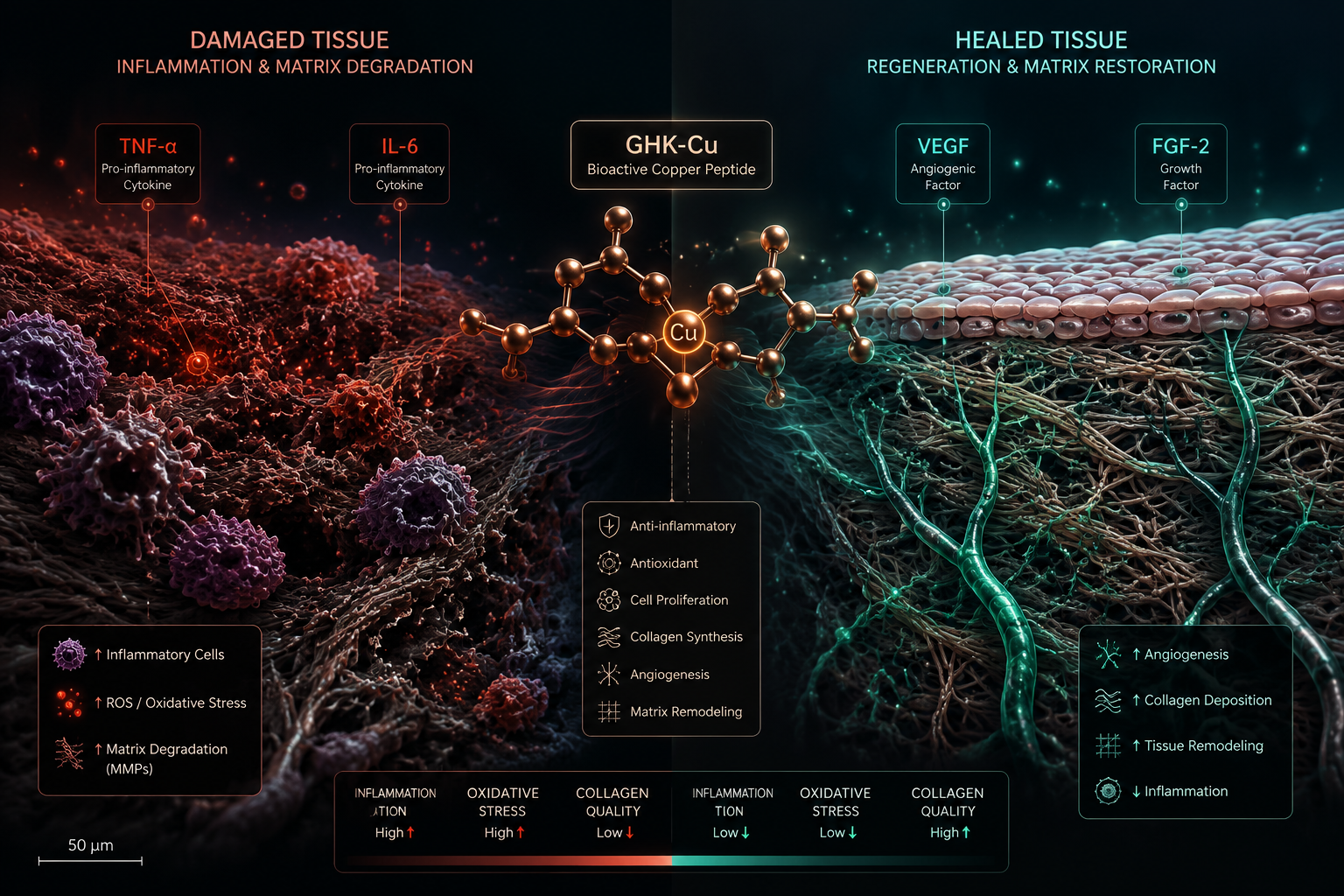
Tissue-Repair Research: Wound Healing, Inflammation, and Antioxidant Defense

The practical research interest in GHK-Cu centers on three interconnected repair processes: accelerating wound closure, suppressing damaging inflammation, and neutralizing oxidative stress.

Angiogenesis and Growth Factor Upregulation

Wound healing requires new blood vessel formation. GHK-Cu upregulates both vascular endothelial growth factor (VEGF) and fibroblast growth factor-2 (FGF-2), two primary drivers of angiogenesis. This vascular recruitment accelerates oxygen and nutrient delivery to healing tissue, shortening repair timelines in preclinical models.

NF-kB Inhibition and Cytokine Control

Chronic inflammation is a major obstacle to tissue repair. GHK-Cu inhibits the NF-kB pathway, which controls transcription of pro-inflammatory cytokines including TNF-alpha and IL-6. By dampening this inflammatory cascade without eliminating it entirely, the peptide creates a biochemical environment that supports repair rather than prolonged destruction.

This mechanism is conceptually related to how other anti-inflammatory peptides operate. For context on related signaling work, see the synergy of LL-37 and MOTS-c research overview.

Superoxide Dismutase and Redox Protection

The copper ion within GHK-Cu serves as a cofactor for superoxide dismutase (SOD), the enzyme responsible for converting damaging superoxide radicals into less harmful molecules. During active tissue repair, oxidative stress is elevated. GHK-Cu's antioxidant contribution through SOD activity helps protect newly forming tissue from free radical damage — a function that complements its matrix-building role.

Researchers studying mitochondrial redox biology alongside copper-peptide mechanisms may also want to review SS-31 mitochondrial research themes for comparative antioxidant pathway data.

"GHK-Cu does not fit neatly into a single pharmacological category — it is simultaneously a copper carrier, a gene modulator, an ECM stimulant, and an antioxidant cofactor."

Age-Related Decline and Research Implications

The drop in endogenous GHK from roughly 200 ng/mL at age 20 to approximately 80 ng/mL by age 60 is not merely a biomarker curiosity. It maps directly onto the well-documented decline in wound healing speed, skin thickness, and regenerative capacity seen in older populations. This correlation has made GHK-Cu a focus of longevity-oriented peptide research in 2026.

Topical formulations have shown measurable improvements in skin elasticity and collagen density in cosmetic studies. Controlled human trials for systemic or injectable applications remain limited, which represents an active gap in the research landscape. Those looking to explore available research-grade material can review GHK-Cu peptides for sale and the associated GHK-Cu research documentation.

For broader context on how copper-peptide signaling fits within the wider peptide research landscape, the comprehensive peptide catalog overview offers a useful starting point.


Conclusion

The GHK-Cu peptide mechanism — spanning copper binding, extracellular matrix signaling, and tissue-repair research — represents one of the more mechanistically rich areas in current peptide biology. Its value lies not in a single action but in a coordinated set of effects: precise copper delivery, broad gene expression modulation, TGF-beta and growth factor activation, NF-kB suppression, and SOD-mediated antioxidant defense.

Actionable next steps for researchers:

  • Review preclinical wound-healing and gene expression data before designing any in-vitro protocol.
  • Compare GHK-Cu's ECM-direct mechanism against receptor-mediated peptides like BPC-157 to identify complementary research angles.
  • Monitor the controlled human trial literature, which remains sparse and represents the most significant knowledge gap in 2026.
  • Source only purity-verified, lab-tested material to ensure research data integrity.

Understanding the mechanism at this level of detail is what separates productive research from superficial application — and GHK-Cu rewards that depth of inquiry.

https://www.puretestedpeptides.com/wp-content/uploads/2026/06/GHK-Cu-Peptide-Mechanism-Copper-Binding-Extracellular-Matrix-Signaling-and-Tissue-Repair-Research.png 1024 1536 https://www.puretestedpeptides.com/wp-content/uploads/2026/01/buy-peptides-online.jpg 2026-06-08 13:03:252026-06-08 13:03:25GHK-Cu Peptide Mechanism: Copper Binding, Extracellular Matrix Signaling, and Tissue-Repair Research
×

Helpful Links

  • My account
  • Cart
  • Checkout
  • Refund and Returns Policy
  • Privacy Policy
  • SMS Privacy Policy
  • Login
  • My Account
  • Logout

USA Made Lab Tested Peptides

All products are sold for research, laboratory, or analytical purposes only, and are not for human consumption


Pure Tested Peptides is a chemical supplier. Pure Tested Peptides is not a compounding / chemical compounding facility as defined under 503A of the Federal Food, Drug, and Cosmetic act. Pure Tested Peptides is not an outsourcing facility as defined under 503B of the Federal Food, Drug, and Cosmetic act.

The statements made within this website have not been evaluated by the US Food and Drug Administration. The products we offer are not intended to diagnose, treat, cure or prevent any disease.

Human/Animal Consumption Prohibited. Laboratory/In-Vitro Experimental Use Only

Scroll to top Scroll to top Scroll to top