Call or Text 727-513-9780
  • Shopping Cart Shopping Cart
    0Shopping Cart
Pure Tested Peptides | America's most trusted Peptides for sale online
  • Peptides for sale
    • Oral Peptides for sale
      • Peptide Capsules for sale
      • BPC 157 Capsules 1000mcg
      • SLU-PP-332 Capsules | 1000 mcg
      • 5-Amino-1MQ 50mg Capsules
      • Tesofensine 500mcg
    • All Peptides for sale
    • Peptide Sprays
      • BPC 157 Nasal Spray Kit
      • BPC-157 TB500 Nasal Spray Kit
      • Semax Nasal Spray 10mg
      • Selank – Nasal Spray Kit – 10mg
      • Epithalon 50MG Nasal Spray Kit
      • Ipamorelin 10mg Nasal Spray
      • Klow Nasal Spray (BPC-157 + TB-500 + GHK-Cu + KPV) | 80mg
      • Hulk Nasal Spray Tesa / Ipa Blend 6/3 MG
      • Klow Nasal Spray
      • NAD + 500 mg Nasal Spray
      • PT-141 Nasal Spray Kit
    • GHRH Peptides
      • Ipa Peptides
      • CJC-1295 Peptides
        • CJC-1295 with DAC 5 mg
        • CJC-1295 without DAC 5 mg
        • CJC-1295 Ipa 10mg
      • Tesa Peptides
        • Tesa Peptide
        • Tesa 20 mg
    • GHK-Cu Peptides
      • All GHK-Cu Peptides
      • GHK-Cu 100mg
      • KLOW Peptide Blend – Buy KLOW blend online
    • BPC Peptides
      • All BPC Peptides
      • BPC-157
      • BPC-157 TB-500
      • BPC 157 capsules 1000mcg
    • SLU-PP-332 Peptides
      • All SLU-PP-332 Peptides
      • SLU-PP-332 5mg
    • GLP3 Peptides
      • GLP3-R
      • GLP3-R CAG 10mg
      • GLP3-R 20mg
    • PT-141 Peptides
      • PT-141 Peptides for sale
      • PT-141 10mg
      • PT-141 Nasal Spray
    • CAG Peptides
      • Lipo-C Peptide Blend
      • CAG 5mg
      • CAG 10mg
    • MOTS-C Peptides
      • MOTS-C Peptides for sale
      • MOTS-c peptide
      • MOTS-c 10mg *6 pack*
    • 5 Amino 1MQ Peptides
      • 5 Amino 1MQ Peptides for sale
      • 5-Amino-1MQ 50mg Capsules
      • 5-Amino-1MQ 5mg
    • Epithalon Peptides
      • Epithalon Peptides for sale
      • Epithalon 10mg
      • Epithalon 50mg
  • Shop
    • GLPs
      • 5-Amino-1MQ 50mg Capsules
      • 5-Amino-1MQ 5mg
      • GLP3-Reta
      • L-Carnitine 500mg/ml
      • Tesofensine 500mcg
      • SLU-PP-332 5mg
      • MOTS-c 10mg *6 pack*
    • Epithalon & BPC Peptides
      • Epithalon 10mg
      • Epithalon 50mg
      • BPC-157
      • BPC 157 capsules 1000mcg
      • BPC-157 TB-500
      • BPC-157 TB500 Nasal Spray Kit
      • BPC 157 Nasal Spray Kit
    • BPC TB-500 & NAD+ Peptides
      • NAD+ 500 mg
      • KLOW Peptide Blend – Buy KLOW blend online
      • GLOW Peptide Blend
      • TB 500 5mg
      • BPC 157 capsules 1000mcg – Supplement
      • BPC 157 Nasal Spray Kit
      • BPC-157
      • BPC-157 TB500 Nasal Spray Kit
      • BPC-157 TB-500
      • BPC 157 capsules 1000mcg
    • LL-37 Peptide
      • LL-37 10 mg
    • MOTS-C & Selank
      • MOTS-c peptide
      • Selank 10mg
    • GHK Peptides
      • GHK-Cu 100mg
      • GLOW Peptide Blend
      • KLOW Peptide Blend – Buy KLOW blend online
  • COAs
  • Wholesale
    • Wholesale Peptides for sale
  • PTP FAQ
  • Affiliates
    • Affiliate Program
    • Affiliate Signup
  • Contact
    • Contact Customer Service
    • Text Customer Support
  • About US
  • Shop all peptides
  • Login / Register Login / Register Page Link Login / Register Page Link
  • Click to open the search input field Click to open the search input field Search
  • Menu Menu

Tag Archive for: glp-3 retatrutide

Stacking Metabolic Modulators: 5‑Amino‑1MQ with GLP‑3 and SLUPP332‑Style Blends in Adiposity Research

Stacking Metabolic Modulators: 5‑Amino‑1MQ with GLP‑3 and SLUPP332‑Style Blends in Adiposity Research

July 8, 2026/0 Comments/in Uncategorized/by

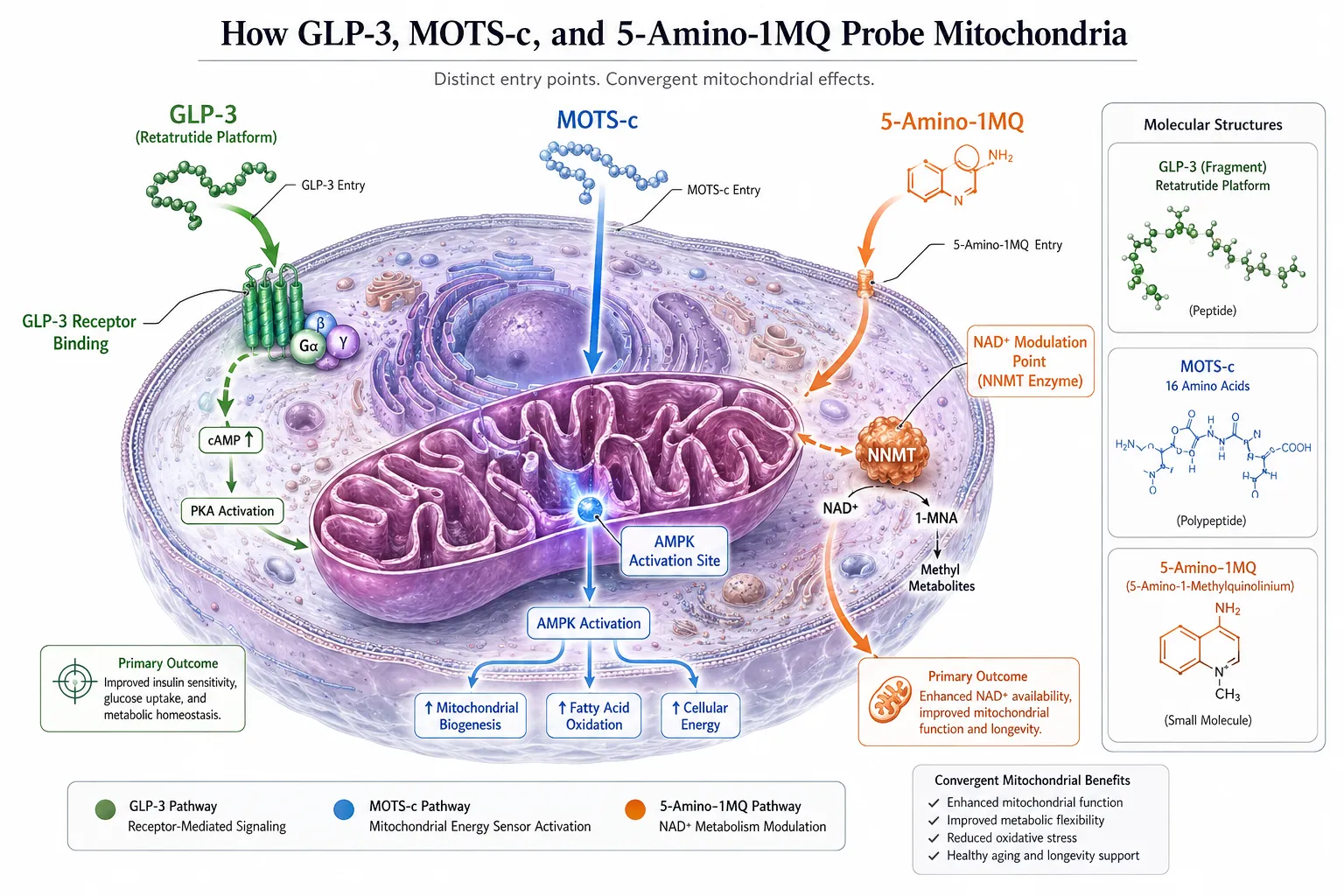
Obesity now affects more than one billion people globally, yet the molecular toolkit available to researchers studying adipose dysfunction has never been more mechanistically diverse. Stacking metabolic modulators, specifically 5-Amino-1MQ with GLP-3 and SLUPP332-style blends in adiposity research, has emerged as one of the most discussed multi-pathway strategies in preclinical metabolic science as of 2026. This guide translates that momentum into a clear mechanistic framework for research professionals.

Key Takeaways

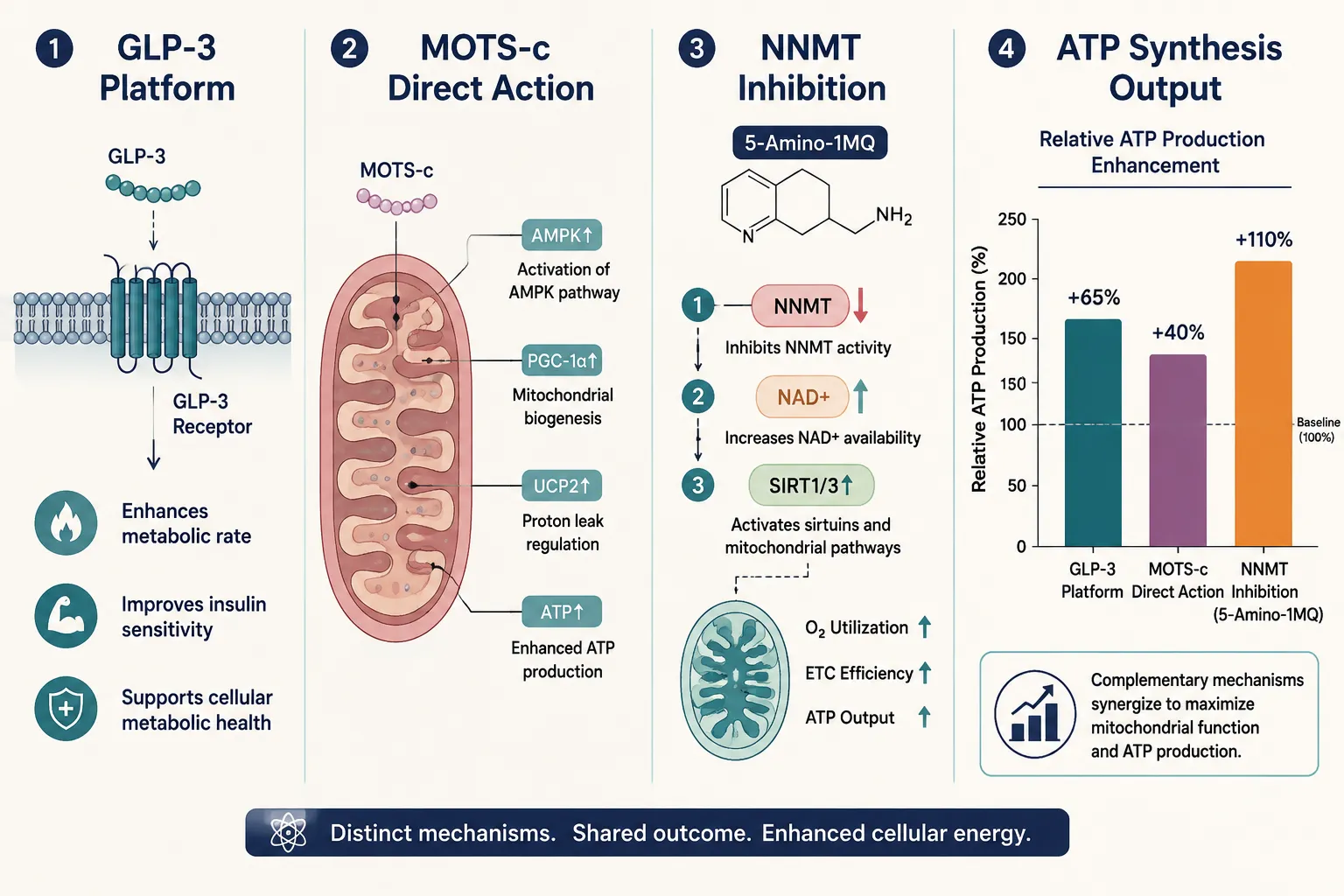
  • 5-Amino-1MQ inhibits NNMT, raising cellular NAD+ and shifting adipocyte metabolism toward energy expenditure.
  • SLUPP332-style compounds activate ERRalpha/gamma receptors, driving mitochondrial biogenesis and fat oxidation through a distinct but complementary pathway.
  • GLP-3/retatrutide-class agents add incretin-mediated appetite and lipid signaling to the stack, creating a three-axis model.
  • No human clinical trials have yet validated any of these combinations; all data remains preclinical as of mid-2026.
  • Multi-pathway stacking is theoretically additive, but rigorous safety profiling for combined use is still absent from the literature.

Key Takeaways

Mechanistic Foundations of Stacking Metabolic Modulators

Understanding why researchers are interested in stacking metabolic modulators begins with the biology of adipose tissue dysfunction in obesity and metabolic-associated steatotic liver disease (MASLD).

5-Amino-1MQ: NNMT Inhibition and NAD+ Elevation

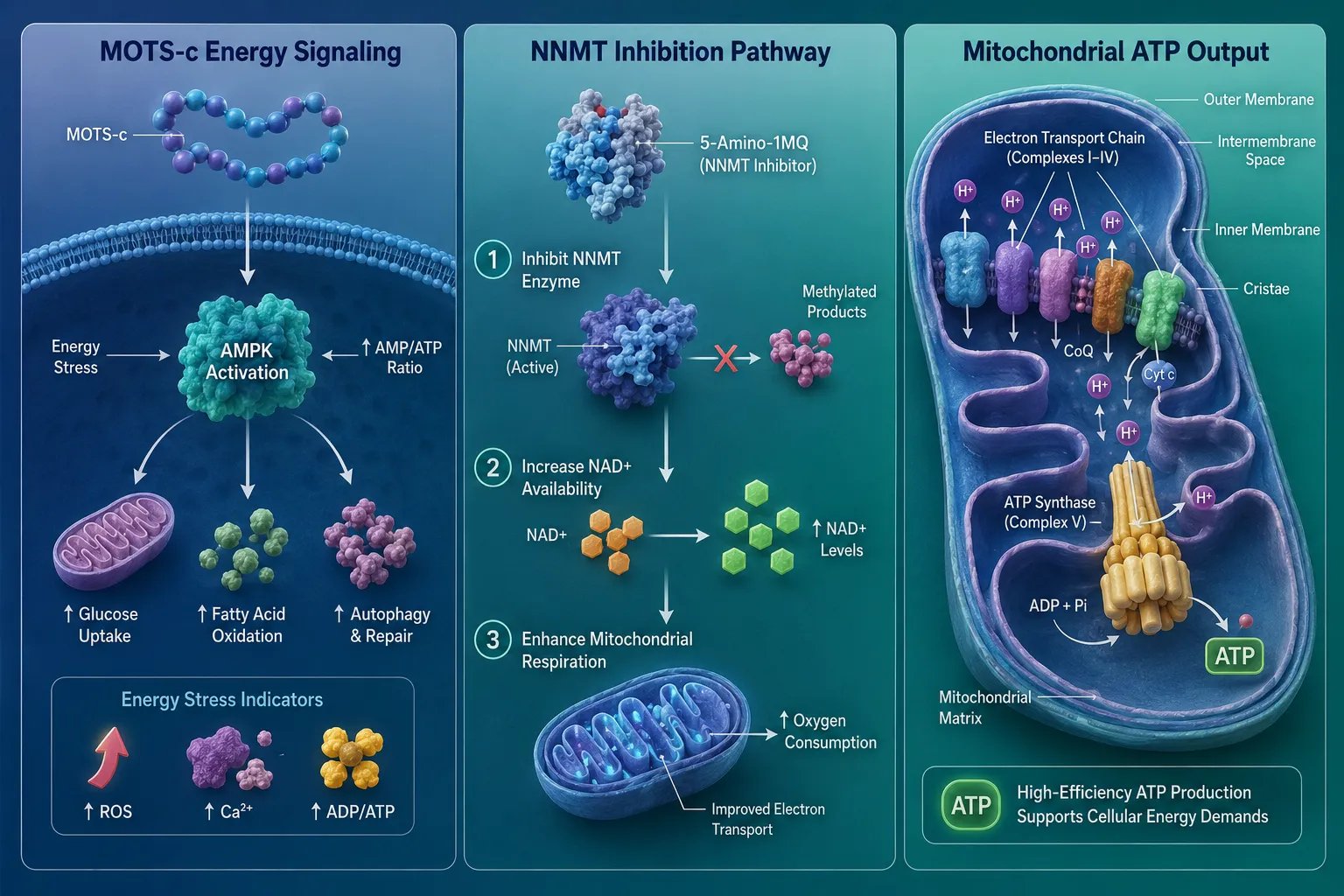
5-Amino-1MQ is a small-molecule inhibitor of nicotinamide N-methyltransferase (NNMT), an enzyme significantly overexpressed in the adipose tissue of obese subjects. When NNMT is active, it consumes methyl groups and depletes the NAD+ precursor pool, effectively suppressing mitochondrial activity in fat cells.

By blocking NNMT, 5-Amino-1MQ:

  • Elevates intracellular NAD+, activating sirtuins and PARP pathways
  • Reduces lipid accumulation in adipocytes in preclinical models
  • Shifts energy balance toward oxidative metabolism rather than storage

Preclinical data in rodent obesity models is compelling, though human clinical trial data remains absent as of 2026.

SLUPP332-Style Compounds: ERR Agonism and Mitochondrial Biogenesis

SLU-PP-332 metabolic modulation research centers on estrogen-related receptor alpha and gamma (ERRalpha/gamma) agonism. These nuclear receptors regulate genes governing oxidative phosphorylation and mitochondrial biogenesis, processes that are blunted in obese and insulin-resistant tissue.

Key SLUPP332-style effects in preclinical models:

Mechanism Observed Effect
ERRalpha activation Upregulation of fatty acid oxidation genes
ERRgamma agonism Increased mitochondrial density in skeletal muscle
Combined ERR agonism Improved exercise endurance without training

This makes SLUPP332-style compounds mechanistically distinct from, yet complementary to, 5-Amino-1MQ.


SLUPP332-Style Compounds: ERR Agonism and Mitochondrial Biogenesis

GLP-3, Retatrutide, and the Incretin Axis in Multi-Agent Stacking

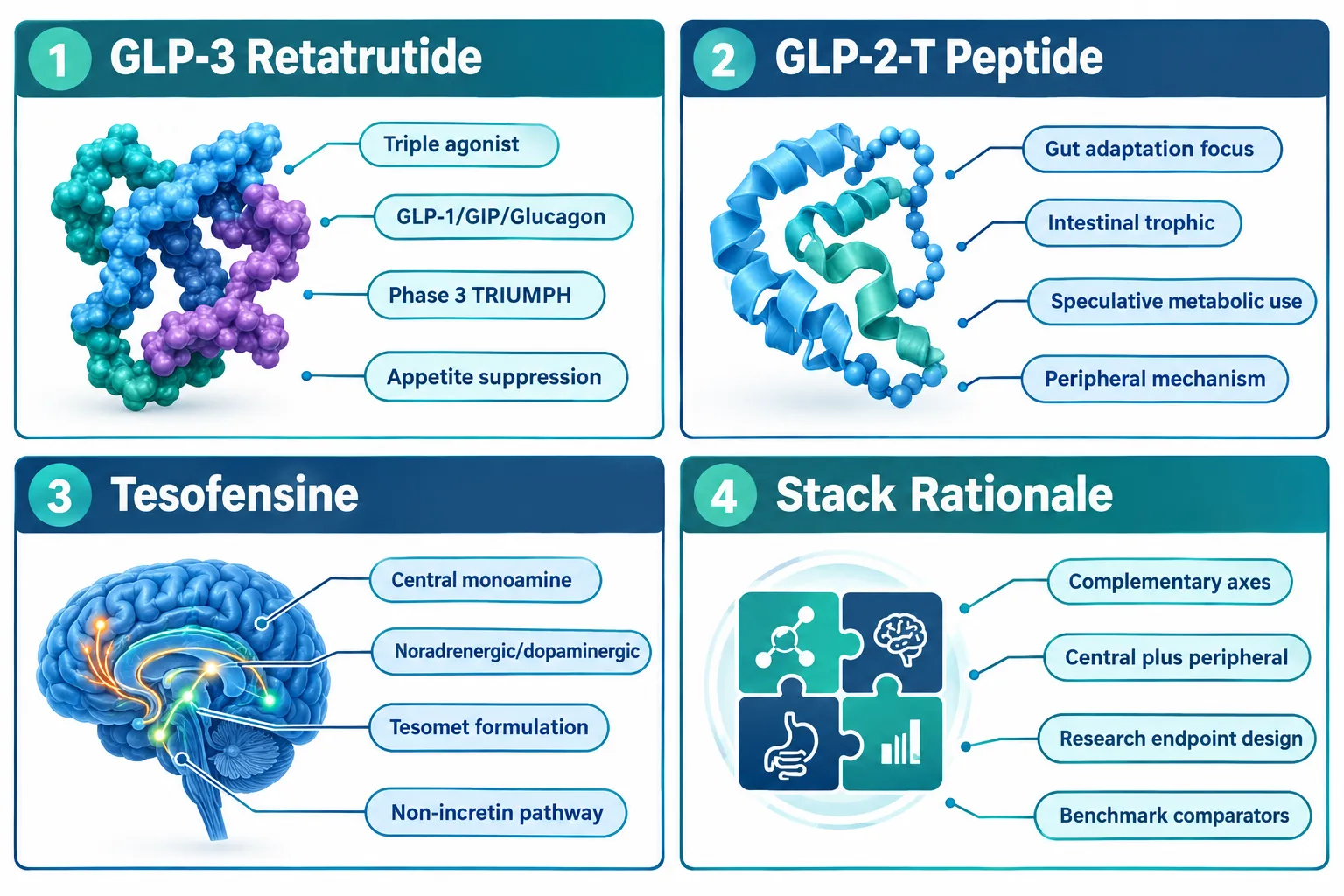
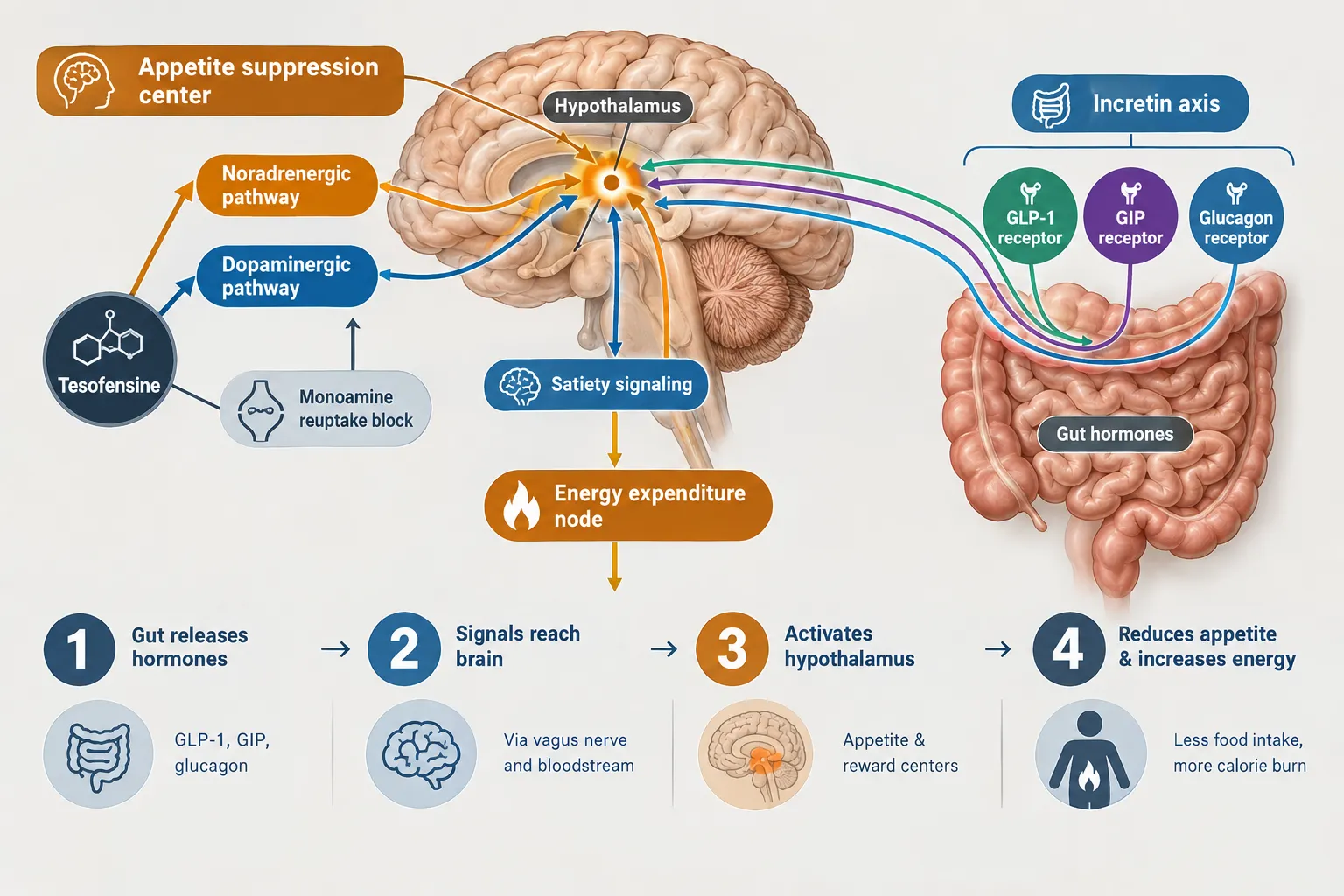
The term "GLP-3" does not correspond to a well-characterized receptor class in current peer-reviewed literature. In practice, researchers using this terminology are typically referencing retatrutide-class agents, triple agonists acting on GLP-1, GIP, and glucagon receptors simultaneously. For context on incretin-based research frameworks, GLP-1 incretin research themes provide foundational background, while GLP-3/retatrutide research covers the emerging triple-agonist landscape directly.

Why add an incretin agonist to a 5-Amino-1MQ/SLUPP332 stack?

Retatrutide-class agents address appetite regulation and hepatic lipid flux, dimensions that NNMT inhibition and ERR agonism do not directly target. In MASLD models, the combination theoretically creates a three-axis attack on adiposity:

  1. Axis 1 (NNMT): Restore NAD+ metabolism in dysfunctional adipocytes
  2. Axis 2 (ERR): Rebuild mitochondrial capacity for fat oxidation
  3. Axis 3 (Incretin): Reduce caloric intake and hepatic triglyceride synthesis

Researchers exploring peptide blends for research have noted growing interest in exactly this type of complementary multi-pathway design.

MOTS-C as a Fourth Axis

MOTS-C and SLU-PP-332 combined research suggests that adding MOTS-C, a mitochondria-derived peptide that activates AMPK, may further reinforce the stack. AMPK activation overlaps with, but does not duplicate, the ERR and NAD+ pathways, potentially offering additive benefit in insulin-sensitization models.


MOTS-C as a Fourth Axis

Research Gaps and Critical Considerations for Stacking Metabolic Modulators in Adiposity Research

"Mechanistic elegance in preclinical models does not guarantee clinical translation, the history of metabolic pharmacology is filled with promising stacks that failed at the human trial stage."

This caution is especially relevant when stacking metabolic modulators: 5-Amino-1MQ with GLP-3 and SLUPP332-style blends in adiposity research represents a frontier that, as of mid-2026, lacks any published human clinical trial data for any individual component in this combination, let alone the full stack.

Critical gaps researchers must acknowledge:

  • No human pharmacokinetic data for 5-Amino-1MQ or SLUPP332 combinations
  • No established safety profile for concurrent NNMT inhibition plus ERR agonism
  • GLP-3 terminology ambiguity risks conflating distinct receptor pharmacologies
  • Interaction effects between NAD+ elevation and incretin signaling are unstudied

Those following what is new in peptide research will note that multi-agent metabolic stacks are among the most actively discussed topics in 2026 research communities, precisely because the mechanistic rationale is strong while clinical validation lags behind.

For researchers interested in adjacent body composition modalities, tesa and body composition research offers a more clinically validated comparator framework.


Conclusion

Stacking metabolic modulators, 5-Amino-1MQ with GLP-3 and SLUPP332-style blends in adiposity research, represents one of the most mechanistically sophisticated multi-pathway approaches in current obesity and MASLD research. The theoretical framework is coherent: NNMT inhibition restores NAD+ metabolism, ERR agonism rebuilds mitochondrial capacity, and incretin-class agents address appetite and hepatic lipid flux simultaneously.
Actionable next steps for researchers:

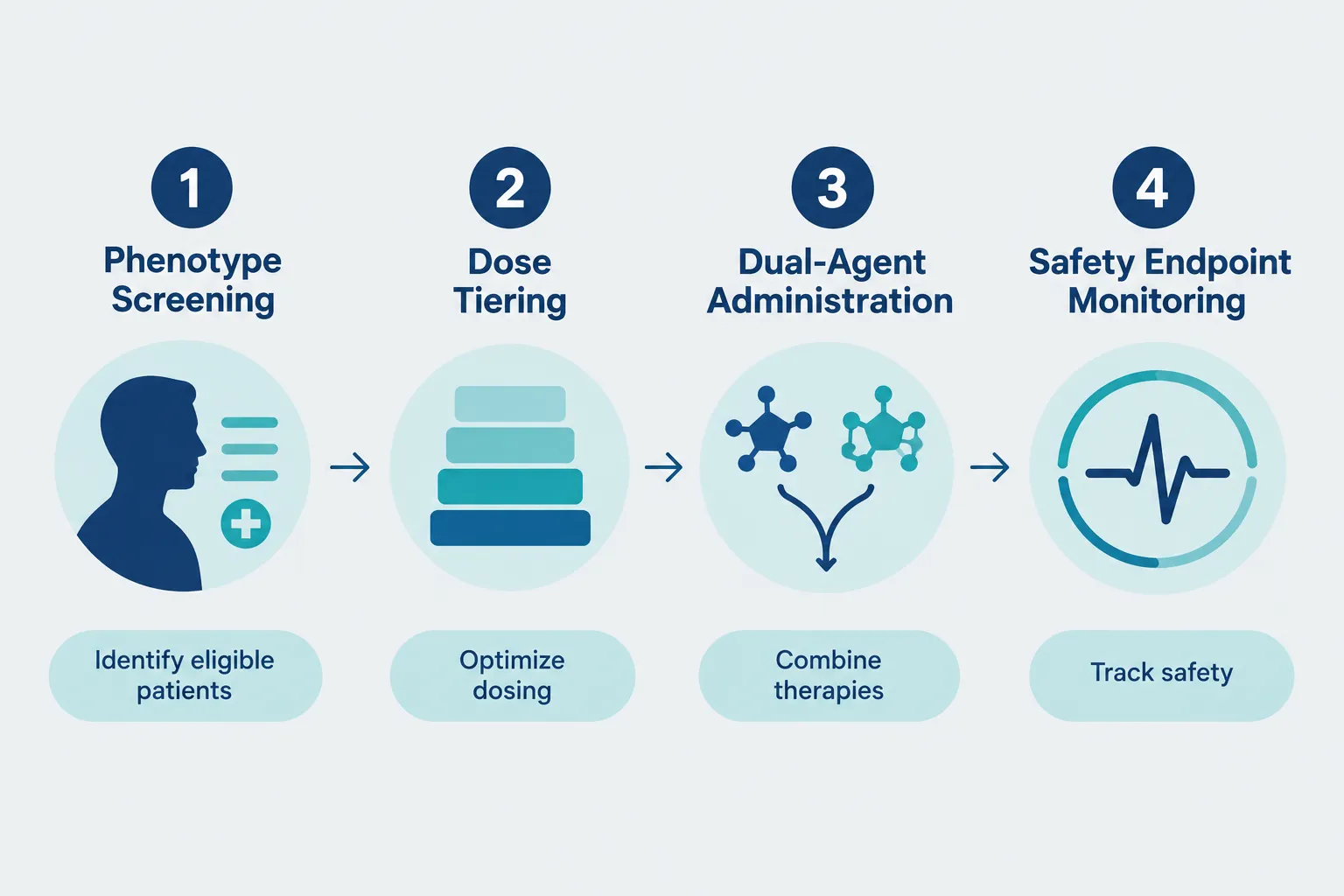
  1. Prioritize single-agent preclinical characterization before advancing to combination models
  2. Clarify receptor nomenclature, confirm whether "GLP-3" references retatrutide-class triple agonism
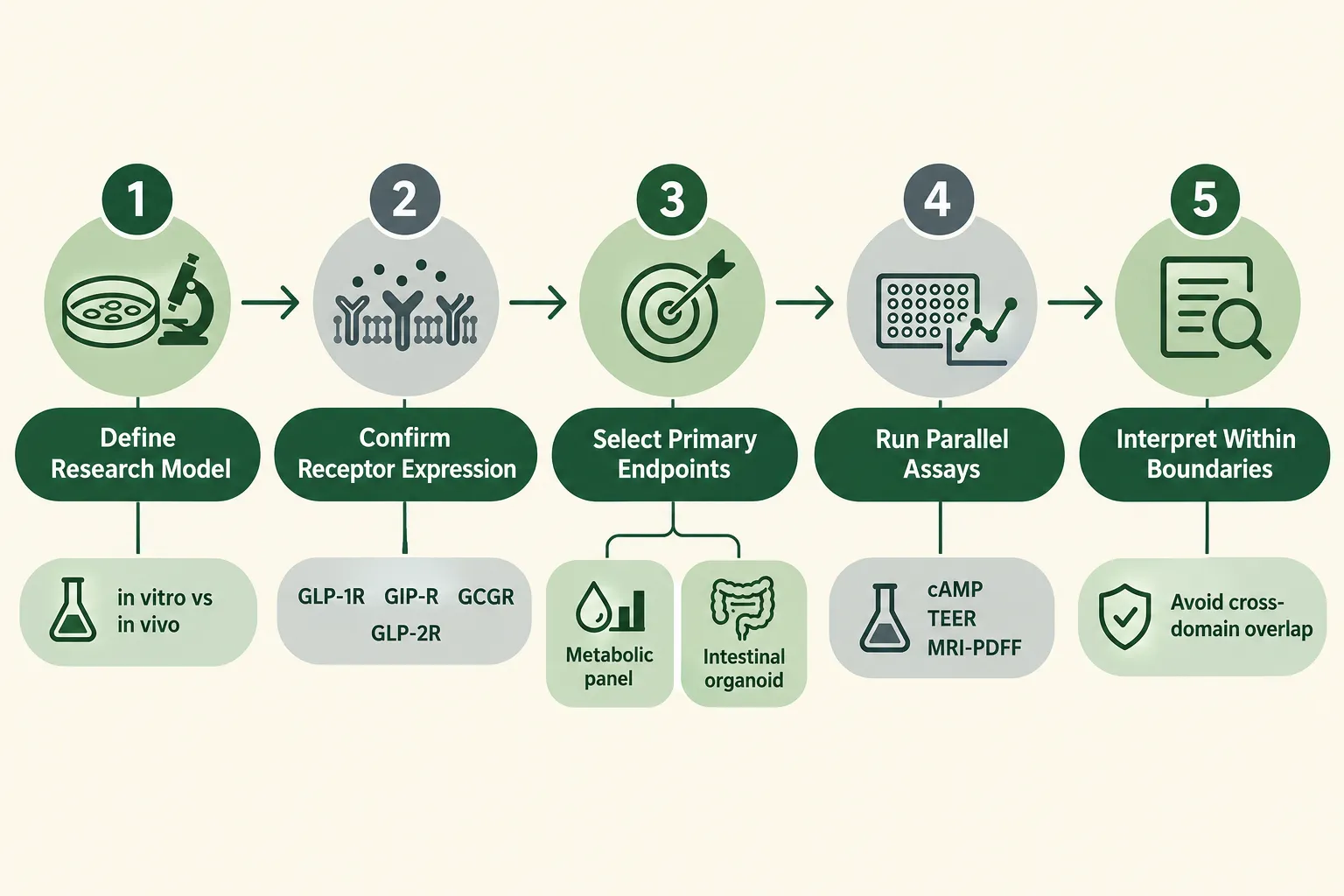
  3. Design combination studies with clear biomarker endpoints (NAD+/NADH ratio, mitochondrial density, hepatic triglyceride content)
  4. Monitor the clinical trial registry for first-in-human studies on NNMT inhibitors, anticipated in the near term
  5. Apply rigorous quality control standards to any research-grade compounds used in experimental models

The science is promising. The clinical evidence is not yet there. That gap is precisely where rigorous, well-designed research belongs.

https://www.puretestedpeptides.com/wp-content/uploads/2026/07/Stacking-Metabolic-Modulators-5‑Amino‑1MQ-with-GLP‑3-and-SLUPP332‑Style-Blends-in-Adiposity-Research.png 1024 1024 https://www.puretestedpeptides.com/wp-content/uploads/2026/01/buy-peptides-online.jpg 2026-07-08 13:05:002026-07-08 13:05:00Stacking Metabolic Modulators: 5‑Amino‑1MQ with GLP‑3 and SLUPP332‑Style Blends in Adiposity Research
GLP-3 Retatrutide vs. GLP-1 Receptor Agonists: A Comprehensive Research Review

GLP-3 Retatrutide vs. GLP-1 Receptor Agonists: A Comprehensive Research Review

July 5, 2026/0 Comments/in Uncategorized/by

A 28% average body weight reduction over 18 months, that figure, emerging from Phase 3 clinical data on retatrutide, rivals outcomes typically seen only with bariatric surgery. For researchers tracking the evolution of metabolic peptide science, this GLP-3 Retatrutide vs. GLP-1 Receptor Agonists: A Comprehensive Research Review examines what sets retatrutide apart from established GLP-1 therapies, how their mechanisms diverge, and what the latest trial data reveals about their comparative potential.

Key Takeaways

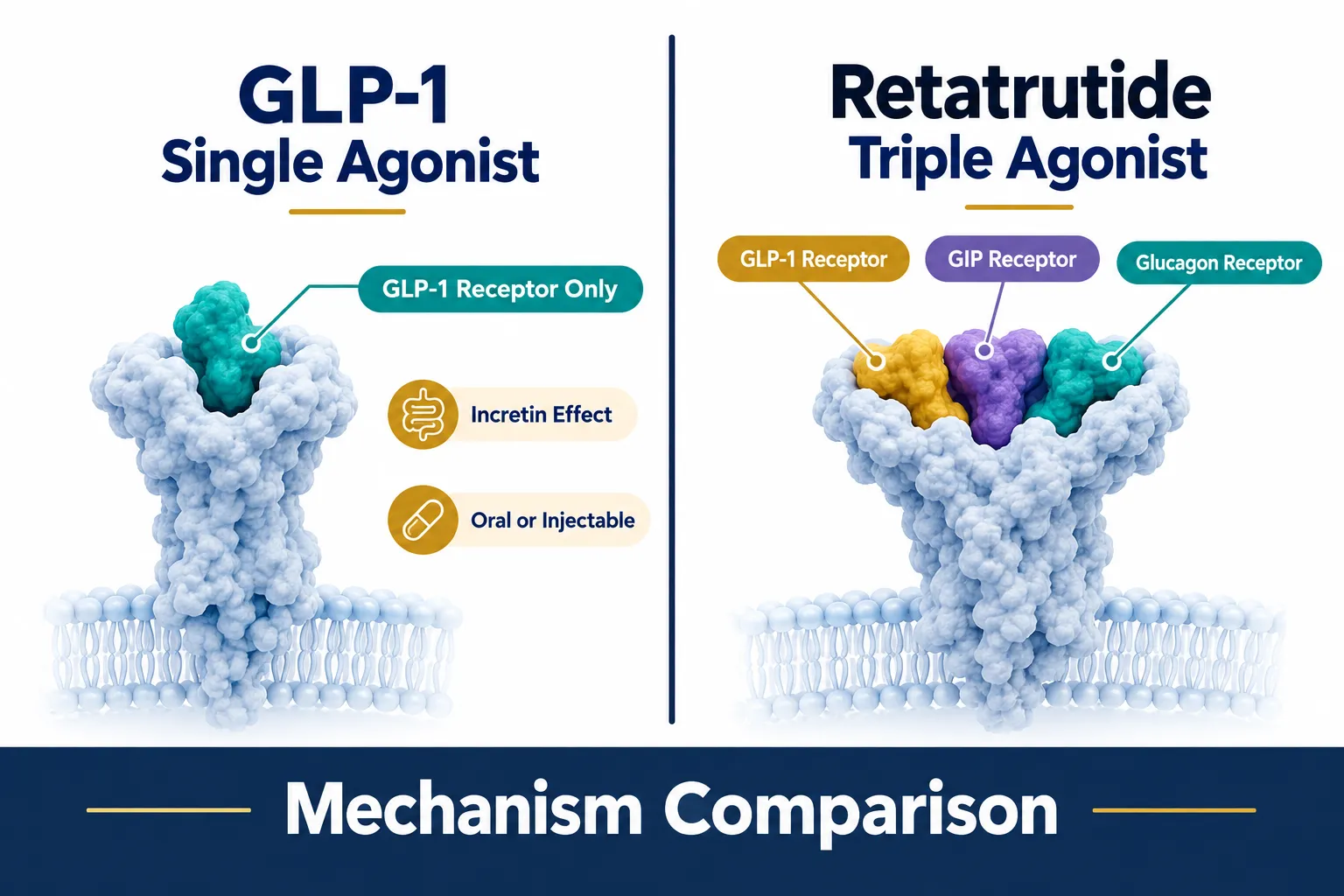
  • Retatrutide is a triple agonist targeting GIP, GLP-1, and glucagon receptors, a fundamentally different mechanism from single GLP-1 receptor agonists.
  • Phase 3 data shows retatrutide achieving approximately 28% body weight reduction, surpassing current GLP-1 benchmarks.
  • A network meta-analysis found retatrutide 12 mg produced a 22.10% body weight reduction, outperforming all compared GLP-1 receptor agonists.
  • Phase 2 trials reported HbA1c reductions of up to 1.94% and body weight reductions up to 15.3% over 40 weeks in type 2 diabetes subjects.
  • Gastrointestinal side effects were mild to moderate and diminished over time, with no severe hypoglycemia reported.

Key Takeaways

Mechanism of Action: How Retatrutide Differs from GLP-1 Receptor Agonists

Understanding the GLP-3 Retatrutide vs. GLP-1 Receptor Agonists: A Comprehensive Research Review begins at the receptor level. Standard GLP-1 receptor agonists, such as semaglutide and liraglutide, work by binding exclusively to glucagon-like peptide-1 receptors. This drives insulin secretion, suppresses glucagon release, and slows gastric emptying, producing meaningful but bounded metabolic effects.

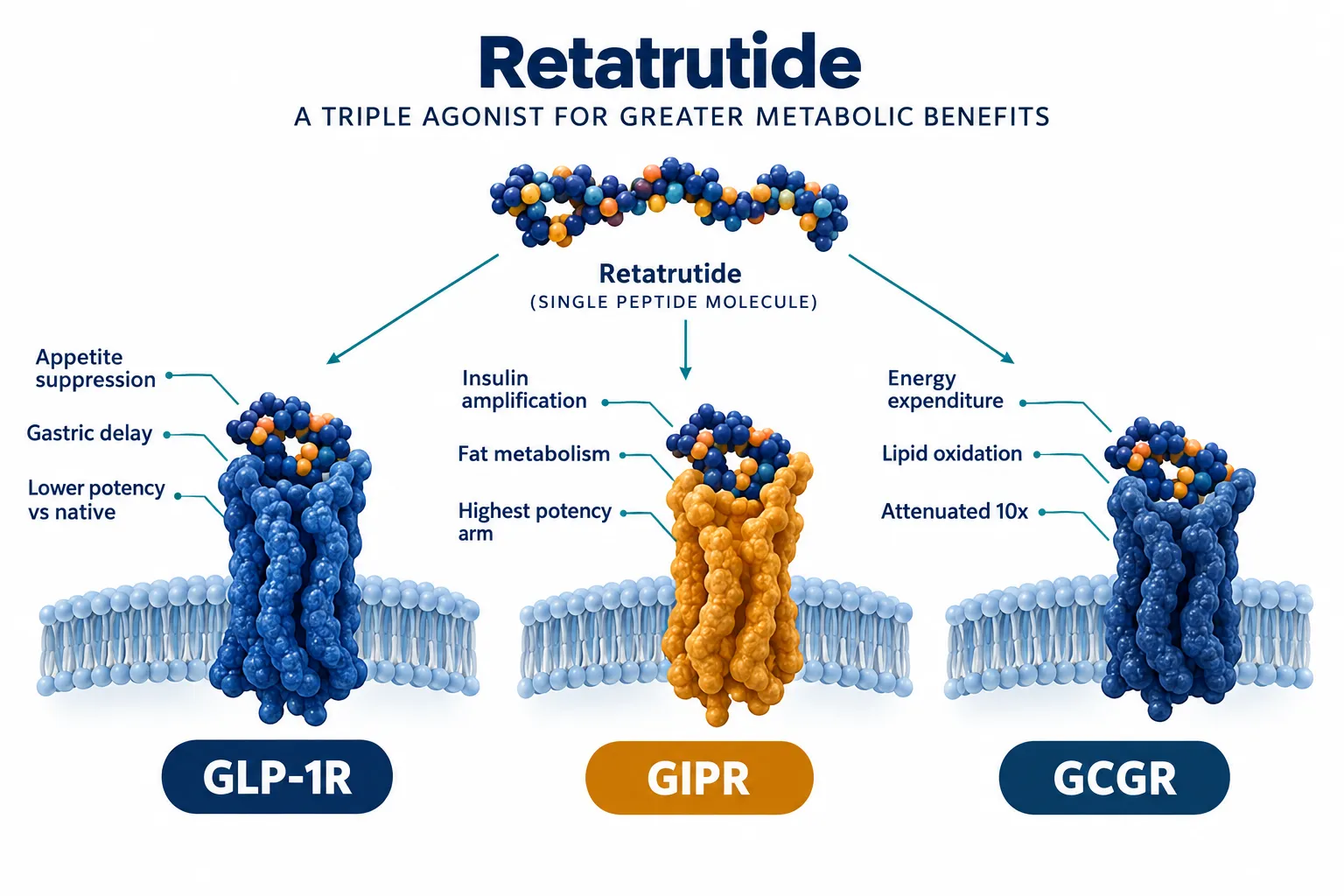
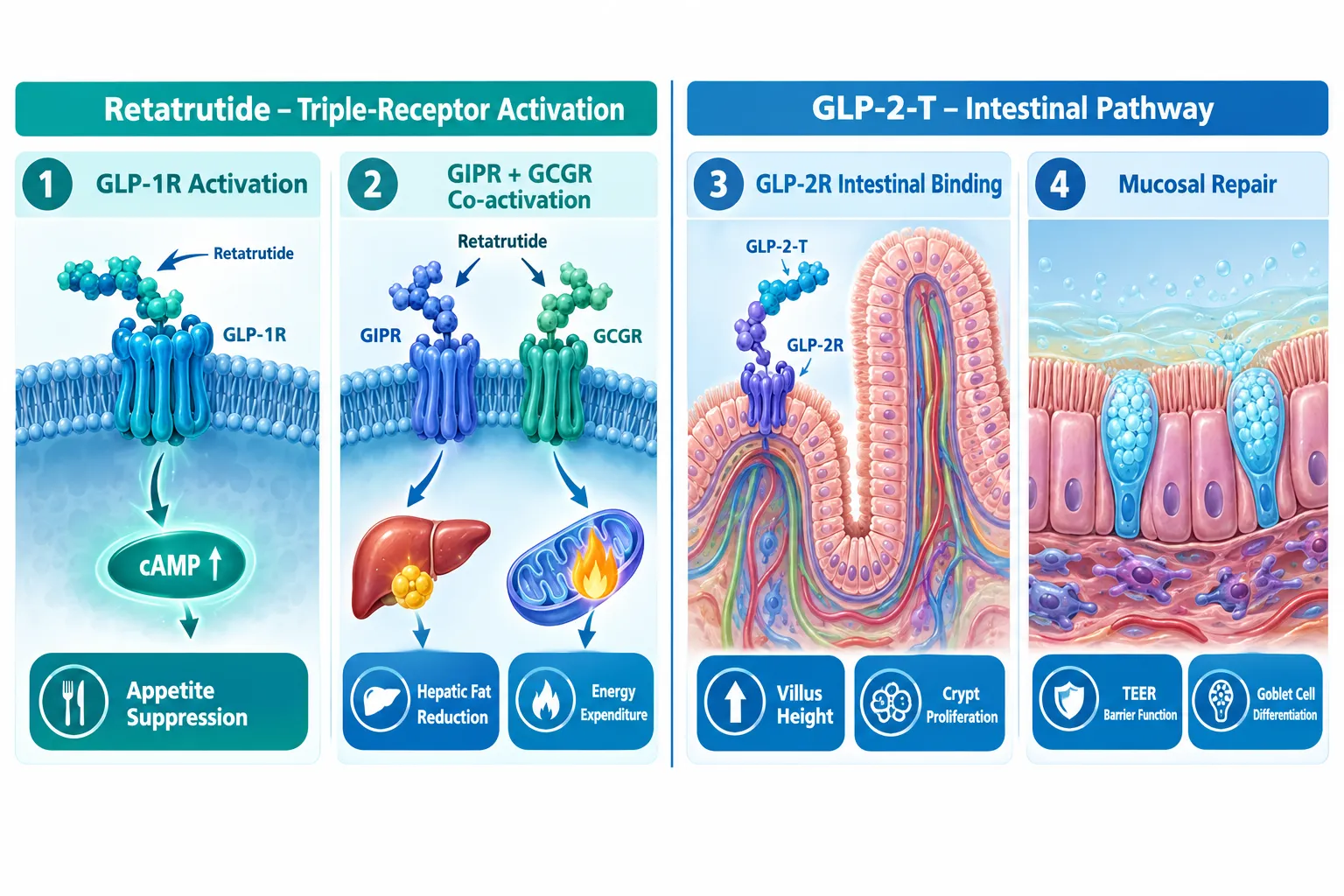
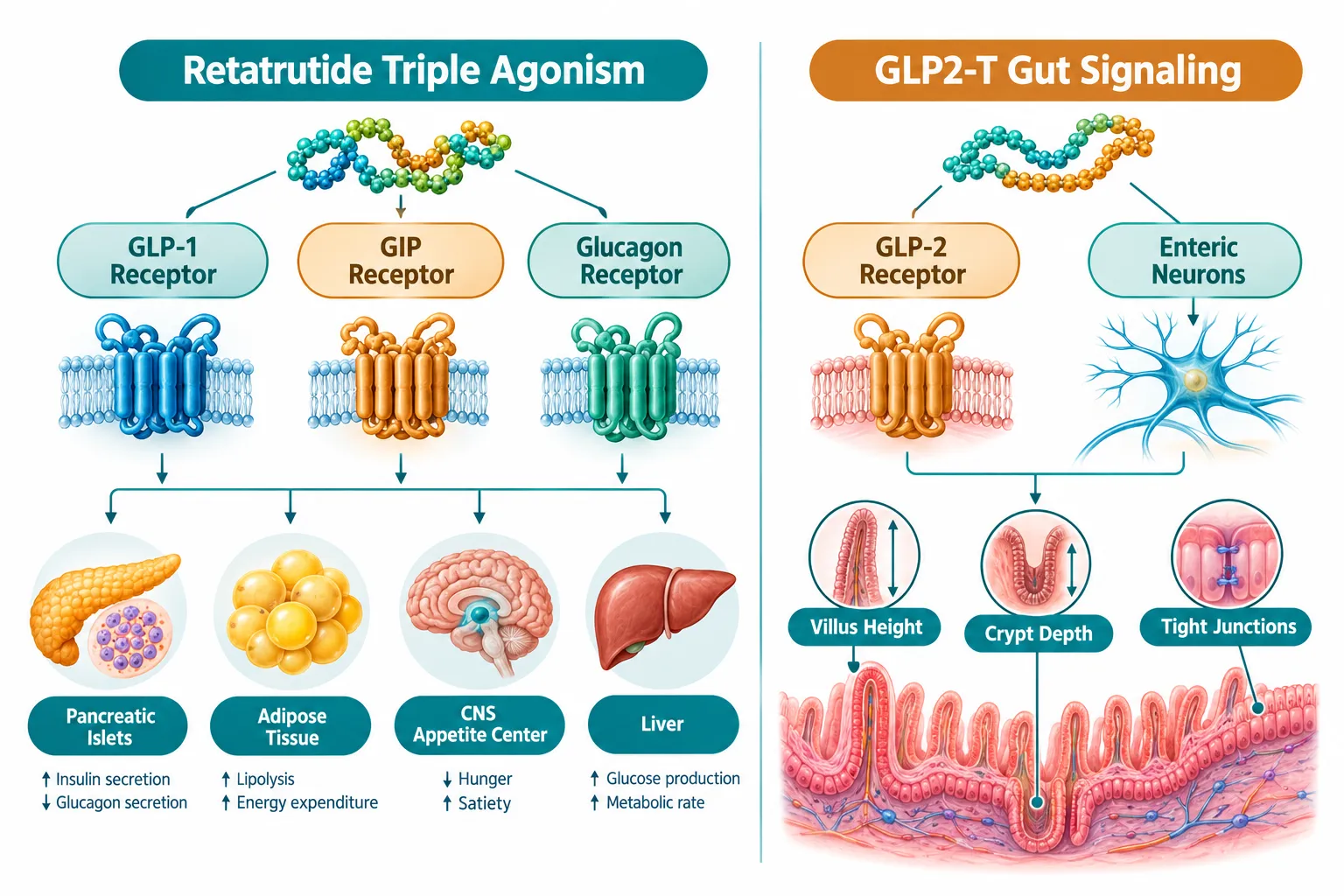
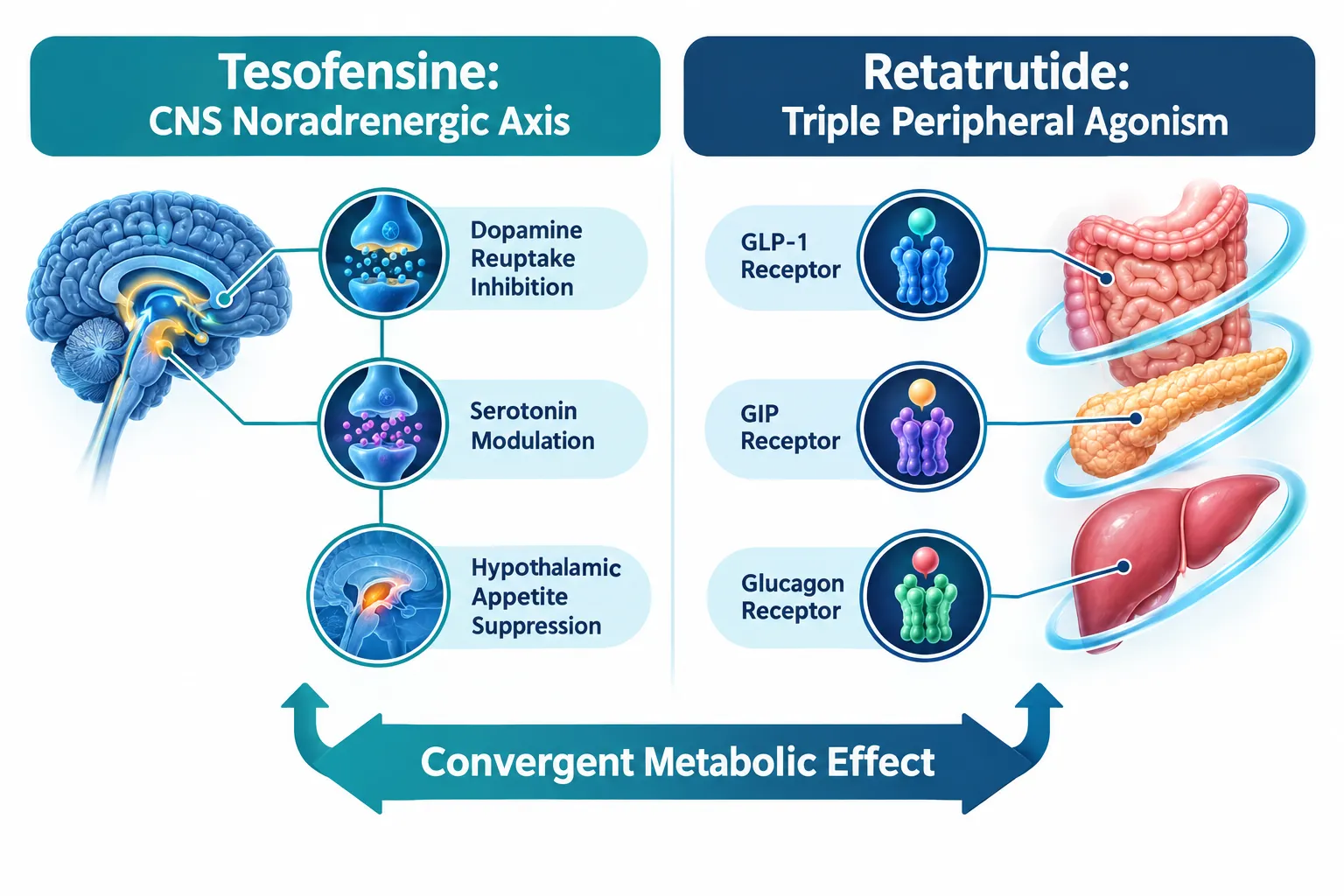
Retatrutide operates on an entirely different scale. It is a 39-amino acid peptide engineered as a triple agonist, simultaneously activating three receptor types:

  • GIP (Glucose-dependent Insulinotropic Polypeptide) receptors, enhancing insulin sensitivity and fat metabolism
  • GLP-1 receptors, regulating appetite, glucose, and gastric motility
  • Glucagon receptors, increasing energy expenditure and promoting hepatic fat oxidation

"The inclusion of glucagon receptor agonism is considered a significant advancement, it adds a thermogenic and lipolytic dimension that single-target GLP-1 agents simply cannot replicate."

This multi-receptor engagement is why researchers exploring GLP-3 retatrutide research are paying close attention. The glucagon component, in particular, drives enhanced energy expenditure, which may explain retatrutide's outsized weight loss results compared to dual or single agonists. Researchers interested in related metabolic peptide mechanisms may also find value in reviewing AOD9604 metabolic research themes for comparative context on fat-targeted peptide signaling.


Mechanism of Action: How Retatrutide Differs from GLP-1 Receptor Agonists

Clinical Trial Data: What the Research Shows

The clinical evidence in this GLP-3 Retatrutide vs. GLP-1 Receptor Agonists: A Comprehensive Research Review paints a compelling picture across multiple trial phases.

Phase 2 Findings

In a Phase 2 trial focused on individuals with type 2 diabetes, retatrutide demonstrated:

Outcome Measure Result
Mean HbA1c reduction Up to 1.94%
Mean body weight reduction Up to 15.3%
Trial duration 40 weeks
Severe hypoglycemia events None reported

These results were notable not only for their magnitude but for the absence of serious glycemic complications, a key safety consideration in diabetic populations.

Phase 3 Findings

The Phase 3 trial expanded the scope to a broader population with obesity or overweight conditions. The headline result, approximately 28% average weight loss over 18 months, placed retatrutide in a category previously occupied only by surgical interventions.

A separate systematic review and network meta-analysis reinforced these findings, reporting that retatrutide 12 mg produced a 22.10% reduction in body weight and a 17.00 cm decrease in waist circumference, outperforming all other GLP-1 receptor agonists and polyagonists included in the analysis.

For researchers also studying body composition peptides, the TESA body composition research themes and IPA muscle and fat research themes offer relevant comparative frameworks.

Safety Profile

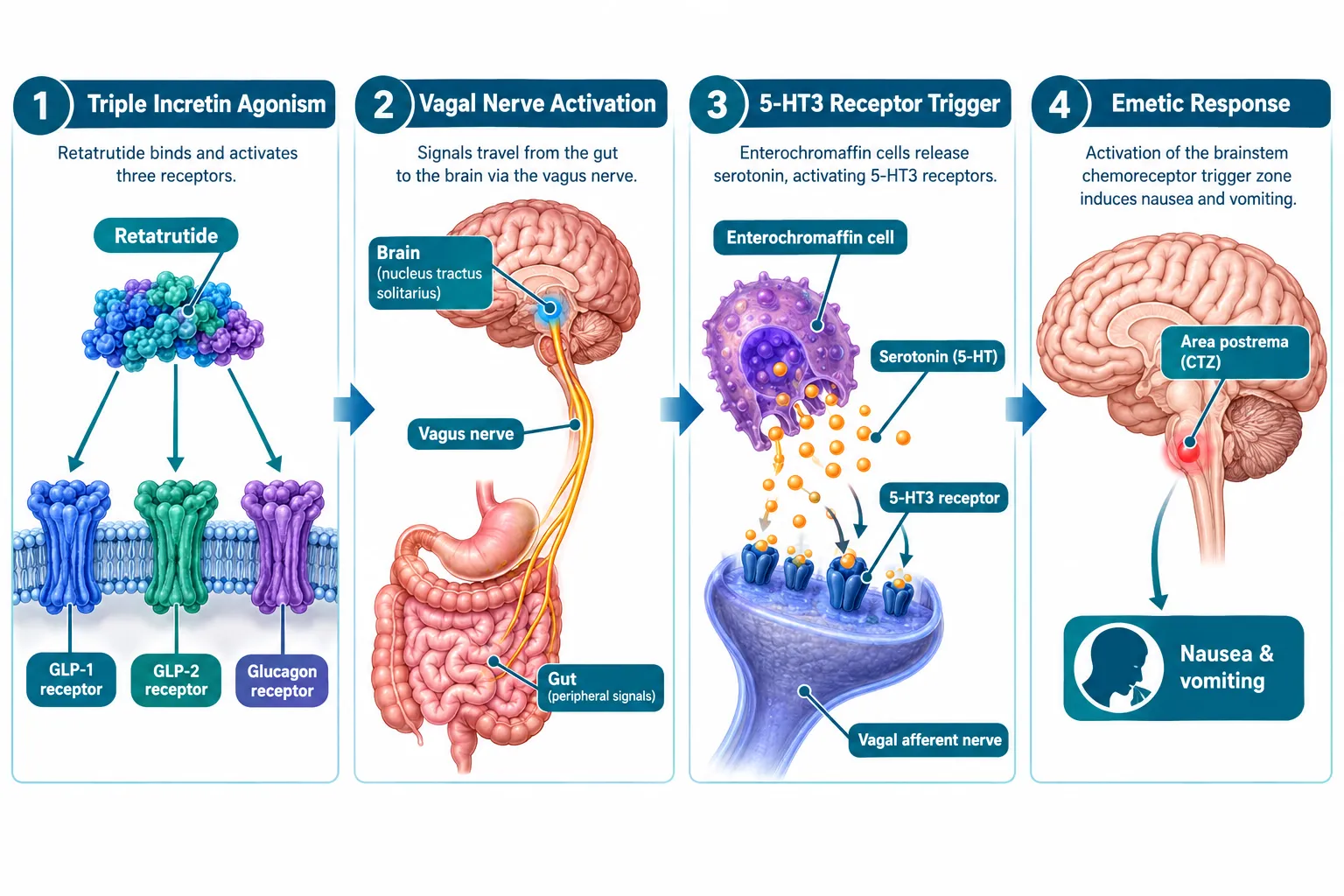
The most frequently reported adverse events were mild to moderate gastrointestinal symptoms, nausea, vomiting, and diarrhea, consistent with the GLP-1 class profile. Importantly, these effects tended to subside as the trial progressed. No severe hypoglycemia was observed across the trials reviewed.


Safety Profile

Comparative Efficacy and Research Implications

When mapping the landscape of incretin-based therapies, the data consistently positions retatrutide above current GLP-1 benchmarks. The table below summarizes the key comparative differences:

Feature GLP-1 Agonists Retatrutide (Triple Agonist)
Receptor targets GLP-1 only GIP + GLP-1 + Glucagon
Average weight loss 10-15% Up to 28%
Thermogenic effect Minimal Enhanced via glucagon axis
Regulatory status (2026) FDA approved (various) Late-stage trials; FDA submission anticipated

As of 2026, Eli Lilly continues late-stage trials with an anticipated FDA submission by year-end. Analysts project that approval could position retatrutide as a leading therapy across obesity, type 2 diabetes, and metabolic liver disease.

Researchers exploring the broader peptide landscape may find useful context in what is new in peptide research and the GLP-1 Retatrutide research product page. Those interested in metabolic synergy combinations may also review CJC and IPA synergy research themes for adjacent growth hormone axis considerations.

For researchers sourcing verified research-grade material, the GLP-3 Retatrutide 10mg product listing provides specification details relevant to preclinical study design.


Conclusion

The evidence reviewed here makes a clear case: retatrutide represents a meaningful step beyond conventional GLP-1 receptor agonist therapy. Its triple-receptor mechanism, particularly the addition of glucagon receptor agonism, produces weight loss outcomes that current single-target agents cannot match. Phase 2 and Phase 3 data both support its superior efficacy in reducing body weight and improving glycemic control, with a manageable safety profile.

Actionable next steps for researchers:

  • Review the full Phase 2 and Phase 3 trial datasets to assess applicability to specific research populations.
  • Compare retatrutide's glucagon receptor activity against established metabolic peptides to identify potential synergy or overlap.
  • Monitor FDA submission timelines closely, as approval would significantly expand the translational research landscape.
  • Explore innovative peptide delivery systems to understand how formulation advances may affect retatrutide's future clinical utility.

The gap between GLP-1 agonists and triple agonists like retatrutide is not incremental, it is structural. Researchers who map that gap now will be best positioned when the regulatory landscape shifts.

https://www.puretestedpeptides.com/wp-content/uploads/2026/07/GLP-3-Retatrutide-vs.-GLP-1-Receptor-Agonists-A-Comprehensive-Research-Review.png 1024 1536 https://www.puretestedpeptides.com/wp-content/uploads/2026/01/buy-peptides-online.jpg 2026-07-05 13:07:052026-07-05 13:07:05GLP-3 Retatrutide vs. GLP-1 Receptor Agonists: A Comprehensive Research Review
GLP-3 Retatrutide Dose Escalation: Understanding Tolerability and Side Effects in Research Studies

GLP-3 Retatrutide Dose Escalation: Understanding Tolerability and Side Effects in Research Studies

July 3, 2026/0 Comments/in Uncategorized/by

Discontinuation rates in Retatrutide research groups reached as high as 16% due to adverse events, compared to 0% in placebo groups. That single data point frames the central challenge researchers face when designing protocols around GLP-3 Retatrutide dose escalation: understanding tolerability and side effects in research studies is not optional; it is foundational to sound experimental design.

Key Takeaways

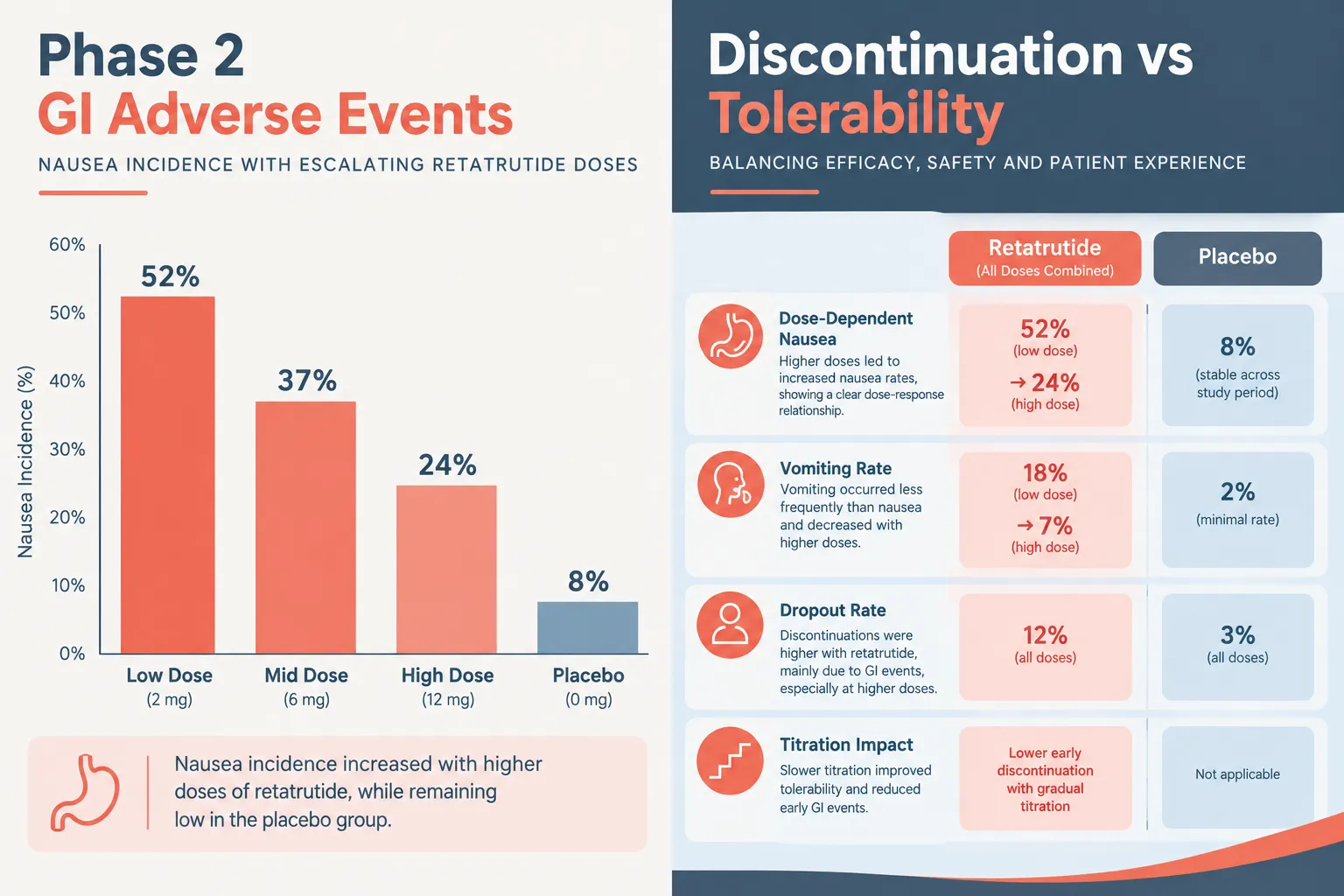
  • Gastrointestinal side effects are the most common adverse events and are strongly dose-dependent, peaking during escalation phases.
  • Gradual four-week dose escalation intervals significantly improve tolerability compared to rapid titration.
  • A unique dysesthesia signal, abnormal tingling or burning, affects up to 20.9% of participants at the highest doses.
  • Modest heart rate increases averaging 5 to 10 BPM have been observed, peaking around week 24.
  • Approximately 25 to 40% of total weight lost may come from lean mass, making resistance training and protein intake critical protocol considerations.

Key Takeaways

Dose Escalation Protocol and the Tolerability Framework

The core principle guiding GLP-3 Retatrutide dose escalation in research settings is gradual titration. Starting at 2 mg and increasing in four-week intervals allows biological systems to adapt before advancing to higher dose tiers. This approach directly reduces the frequency and intensity of adverse events.

Retatrutide is a triple agonist acting on GLP-1, GIP, and glucagon receptors simultaneously. This multi-receptor activity drives its potent metabolic effects, but it also broadens the side effect profile compared to single-target GLP-1 agents. Researchers exploring GLP-1 and incretin research themes will recognize the GI tolerability pattern, but Retatrutide introduces additional signals not seen with earlier-generation compounds.

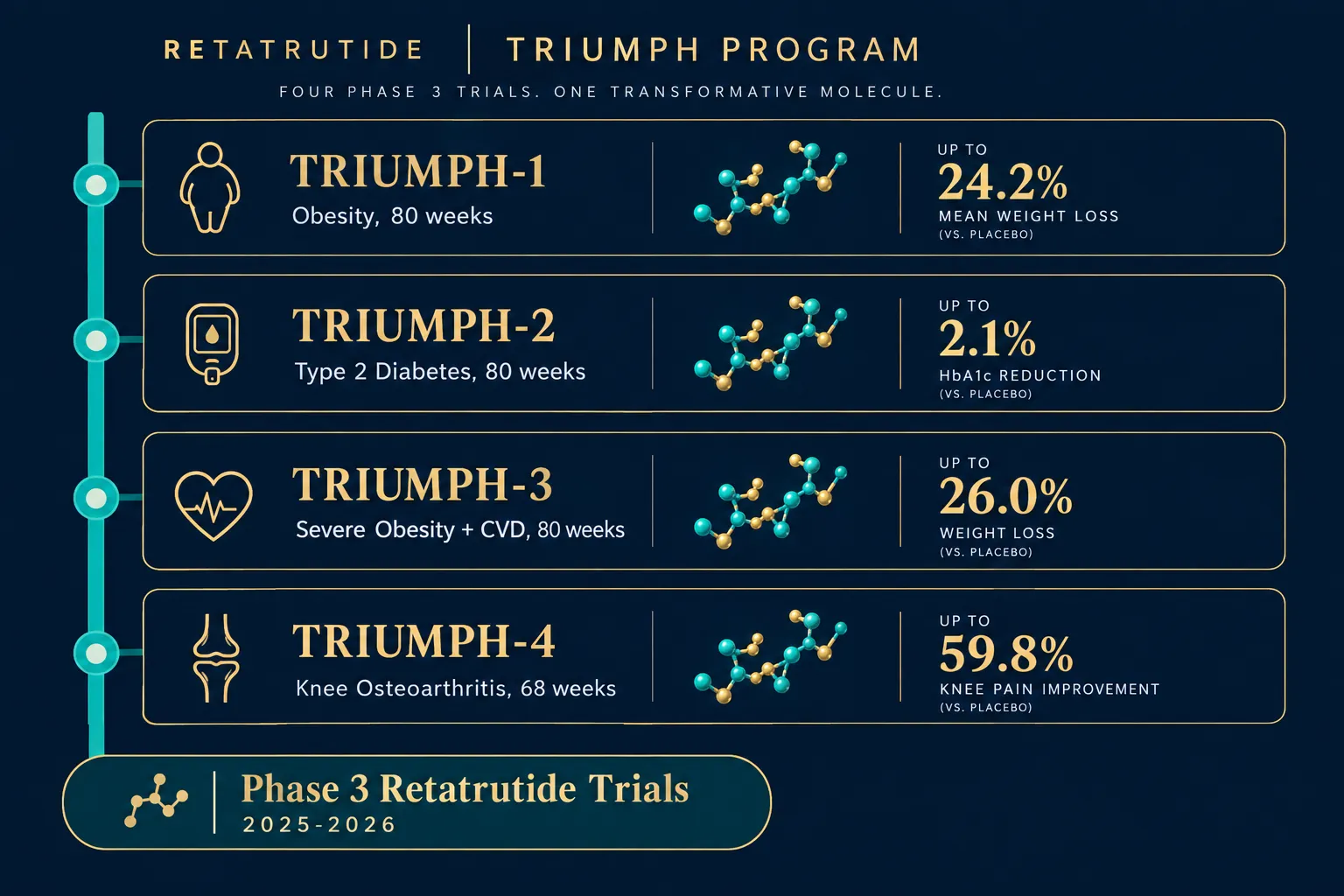
In the 48-week Phase 2 obesity trial, weight loss outcomes were clearly dose-dependent, reinforcing that higher doses carry both greater efficacy and greater tolerability burden. The 68-week TRIUMPH-4 Phase 3 trial further confirmed this relationship, with nausea rates of 38.1% at 9 mg and 43.2% at 12 mg, versus 10.7% in the placebo group.

Practical protocol guidance:

Dose Tier Approximate Duration Primary Tolerability Risk
2 mg Weeks 1-4 Minimal GI symptoms
4 mg Weeks 5-8 Mild nausea onset
8 mg Weeks 9-16 Moderate GI events peak
12 mg Weeks 17+ Highest GI and dysesthesia risk

Researchers sourcing material for metabolic studies can review the GLP-3 triple agonist research planning catalog for further context on compound availability and protocol scaffolding.


Side Effect Profile: What Research Data Reveals

Side Effect Profile: What Research Data Reveals

Understanding the full tolerability and side effects in research studies requires examining each adverse event category individually.

Gastrointestinal Events

Nausea, vomiting, diarrhea, and constipation are the dominant adverse events. These are mild to moderate in most cases and cluster heavily during the escalation window rather than persisting at maintenance doses. Comparing Retatrutide to tirzepatide, GI event rates are measurably higher, a distinction researchers should factor into study design and participant selection criteria.

The Dysesthesia Signal

"Up to 20.9% of participants at the 12 mg dose reported dysesthesia, abnormal tingling or burning sensations, compared to just 0.7% in the placebo group."

This signal is notably absent from standard GLP-1 agonist profiles. The glucagon receptor component of Retatrutide is the suspected driver. Researchers designing longer-duration studies should include dysesthesia monitoring checkpoints, particularly at higher dose tiers. This distinguishes Retatrutide's side effect map from compounds like tesa, which carries its own distinct tolerability considerations.

Cardiovascular Signal: Heart Rate

Resting heart rate increases averaging 5 to 10 BPM have been documented, peaking near week 24 before partially attenuating. While modest, this elevation warrants baseline cardiovascular assessment in research subjects and ongoing monitoring throughout the protocol. Researchers interested in broader metabolic modulation research will find this cardiovascular signal relevant to multi-compound study design.

Lean Mass Considerations

Roughly 25 to 40% of total weight lost during Retatrutide studies is lean mass, a finding consistent across the broader GLP-1 drug class. Research protocols that do not account for this risk may produce confounded body composition data. Resistance exercise protocols and elevated protein intake are the primary mitigation strategies supported by current evidence.

For researchers examining complementary compounds that may address lean mass preservation, ipamorelin muscle and fat research themes offer relevant parallel data.


Designing Safer Research Protocols Around Retatrutide

Designing Safer Research Protocols Around Retatrutide

Translating the GLP-3 Retatrutide dose escalation tolerability and side effects data into actionable protocol design requires structured decision-making.

Key protocol design checkpoints:

  • Baseline screening: Cardiovascular status, GI history, and neurological baselines before initiating escalation.
  • Escalation pacing: Strict four-week minimum intervals between dose increases; do not accelerate based on early tolerance.
  • Adverse event monitoring windows: Heightened observation during weeks 5 through 20, when GI and dysesthesia events peak.
  • Discontinuation thresholds: Pre-define stopping criteria; trial data shows 6 to 16% discontinuation rates, and researchers should plan for this range.
  • Body composition tracking: Dual-energy X-ray absorptiometry (DEXA) or equivalent methods to monitor lean mass changes.

Long-term cardiovascular, renal, and oncological safety data remain incomplete pending results from the ongoing TRIUMPH-5 multi-year trial. This gap is a meaningful limitation for researchers planning extended protocols. Researchers interested in renal-adjacent peptide safety profiles may find value in reviewing SS-31 kidney health research as a comparative reference point.

Those sourcing Retatrutide for research can explore the Reta 10mg product tag for catalog options, while researchers building broader metabolic panels may also reference GLP-1 peptide product options for complementary compounds.


Conclusion

GLP-3 Retatrutide dose escalation: understanding tolerability and side effects in research studies is not a peripheral concern, it is the operational core of any well-designed Retatrutide protocol. The data from Phase 2 and TRIUMPH-4 trials provide a clear roadmap: GI events dominate the escalation window, dysesthesia is a unique and dose-dependent signal, heart rate elevations require cardiovascular monitoring, and lean mass loss demands proactive mitigation strategies.

Actionable next steps for researchers in 2026:

  1. Build four-week escalation intervals into every protocol from the outset.
  2. Include dysesthesia and cardiovascular monitoring checkpoints at weeks 12, 24, and 48.
  3. Define discontinuation criteria before the study begins, accounting for the 6 to 16% adverse-event dropout range.
  4. Pair Retatrutide protocols with body composition tracking to capture lean mass data.
  5. Monitor TRIUMPH-5 trial publications for emerging long-term safety data before extending protocol durations.

Researchers who treat the tolerability profile as a design input, not an afterthought, will produce more reliable, reproducible, and ethically sound data from their Retatrutide studies.

https://www.puretestedpeptides.com/wp-content/uploads/2026/07/GLP-3-Retatrutide-Dose-Escalation-Understanding-Tolerability-and-Side-Effects-in-Research-Studies.png 1024 1536 https://www.puretestedpeptides.com/wp-content/uploads/2026/01/buy-peptides-online.jpg 2026-07-03 13:04:132026-07-03 13:04:13GLP-3 Retatrutide Dose Escalation: Understanding Tolerability and Side Effects in Research Studies
GLP-3 Retatrutide: Latest Research on Its Impact on Liver Fat Reduction and MASLD Management

GLP-3 Retatrutide: Latest Research on Its Impact on Liver Fat Reduction and MASLD Management

July 3, 2026/0 Comments/in Uncategorized/by

More than 80% of participants with fatty liver disease who received retatrutide in a phase 2 trial had their liver fat completely normalized by week 48, a result researchers described as among the largest liver-fat reductions ever reported in an obesity or MASLD trial. That single data point has reshaped how the research community thinks about triple receptor agonists and metabolic liver disease.

This article examines what the most current evidence says about GLP-3 Retatrutide: Latest Research on Its Impact on Liver Fat Reduction and MASLD Management, who may benefit most, and what questions still need answering.

Key Takeaways

  • Retatrutide is a triple agonist targeting GLP-1, GIP, and glucagon receptors simultaneously.
  • Phase 2 data show mean relative liver fat reductions exceeding 80% at 48 weeks.
  • More than 90% of participants on the 12 mg dose achieved liver fat normalization below the 5% MRI threshold.
  • Weight loss of nearly 24-26% accompanied the liver fat improvements, suggesting dual metabolic benefit.
  • The safety profile mirrors other incretin-based therapies, with no new hepatotoxicity signal identified.

Key Takeaways

What Is Retatrutide and Why Does It Matter for MASLD

Metabolic Dysfunction-Associated Steatotic Liver Disease (MASLD), formerly called NAFLD, affects an estimated 25% of the global adult population. It ranges from simple fat accumulation in liver cells to progressive inflammation, fibrosis, and cirrhosis. Until recently, no pharmacological agent had demonstrated the ability to reliably normalize liver fat across a broad patient population.

Retatrutide changes that conversation. Unlike semaglutide or tirzepatide, which act on one or two receptors, retatrutide simultaneously activates three receptors:

Receptor Primary Role
GLP-1 Appetite suppression, insulin secretion
GIP Energy metabolism, fat storage regulation
Glucagon Hepatic fat oxidation, energy expenditure

The glucagon component is particularly relevant for liver fat. Glucagon receptor activation directly stimulates hepatic fat burning, meaning retatrutide works on the liver through a mechanism that single or dual agonists do not fully replicate. Researchers interested in the broader landscape of GLP-1 peptide research will recognize this as a meaningful mechanistic step forward.


Phase 2 Trial Data: Retatrutide and Liver Fat Reduction

Phase 2 Trial Data: Retatrutide and Liver Fat Reduction

The most compelling evidence comes from a pre-specified MASLD sub-study within the obesity phase 2 trial. Participants with confirmed hepatic steatosis received weekly injections of either 8 mg or 12 mg retatrutide for 48 weeks, with liver fat measured by MRI-PDFF, the gold-standard imaging method.

The headline results:

  • Mean relative liver fat reduction exceeded 80% in both dose groups
  • More than 80% of participants on either dose achieved at least a 70% relative reduction in liver fat
  • Hepatic steatosis resolved in over 85% of participants on 8 mg
  • Over 90% achieved liver fat normalization (below the 5% MRI threshold) on 12 mg

A Virginia Commonwealth University-led analysis of the same sub-study reported that 81.7% relative liver fat reduction occurred with 8 mg and 86% with 12 mg. Average body weight fell by 23.8% and 25.9% respectively, underscoring that retatrutide delivers simultaneous, substantial benefits to both body weight and liver health.

"These are not incremental improvements. Resolving fatty liver in more than 9 out of 10 participants represents a potential paradigm shift in MASLD pharmacotherapy."

For context on how peptide-based approaches compare in metabolic research, the MOTS-c metabolic flexibility research page offers useful background on mitochondrial and metabolic mechanisms.


2026 Research Updates and Remaining Questions

2026 Research Updates and Remaining Questions

A 2026 ENDO meeting presentation reviewing phase 2 data confirmed weight reductions up to 24.2%, HbA1c reductions up to 2.16%, and liver fat normalization in up to 86% of MASLD participants. The safety profile remained consistent with other incretin-based therapies, primarily dose-dependent gastrointestinal side effects, with no new hepatotoxicity signal.

However, critical gaps remain:

  • No liver biopsy data, histological confirmation of fibrosis regression is still pending from phase 3
  • Long-term durability beyond 48 weeks has not been established
  • Head-to-head comparisons with tirzepatide or semaglutide in MASLD-specific populations are lacking

Phase 3 trials are underway in 2026, and the field is watching closely for histological endpoints that would confirm whether the dramatic MRI improvements translate to reduced fibrosis and cirrhosis risk.

Those following the evolution of retatrutide peptide research will find the upcoming phase 3 data particularly significant. Related metabolic research on compounds like tesa for fat loss and AOD-9604 provides additional context for how peptide science is advancing metabolic health broadly. Researchers also tracking longevity peptide research themes may find retatrutide's hepatic effects relevant to long-term metabolic aging.


Conclusion

The evidence on GLP-3 Retatrutide: Latest Research on Its Impact on Liver Fat Reduction and MASLD Management is, by any measure, striking. Phase 2 data consistently show liver fat normalization rates above 85-90%, weight loss approaching 25%, and a safety profile that does not introduce new hepatic risk. The triple-receptor mechanism, particularly glucagon receptor activation, appears to be the key driver of effects that surpass what single or dual agonists have achieved.

Actionable next steps for researchers and clinicians:

  1. Monitor phase 3 trial readouts for histological fibrosis data, which will determine whether MRI improvements predict long-term liver health outcomes.
  2. Review the GLP-1 Retatrutide product research page for the latest compound specifications and purity standards relevant to preclinical study design.
  3. Consider how retatrutide's metabolic profile compares to other peptides in your research stack by exploring the full peptide catalog.
  4. Stay current with ENDO and EASL 2026 conference updates, where phase 3 interim data are expected to be presented.

The next 12-18 months will determine whether retatrutide becomes the first agent to achieve broad regulatory approval specifically for MASLD, a milestone the field has been working toward for decades.

https://www.puretestedpeptides.com/wp-content/uploads/2026/07/GLP-3-Retatrutide-Latest-Research-on-Its-Impact-on-Liver-Fat-Reduction-and-MASLD-Management.png 1024 1536 https://www.puretestedpeptides.com/wp-content/uploads/2026/01/buy-peptides-online.jpg 2026-07-03 13:03:342026-07-03 13:03:34GLP-3 Retatrutide: Latest Research on Its Impact on Liver Fat Reduction and MASLD Management
×

Helpful Links

  • My account
  • Cart
  • Checkout
  • Refund and Returns Policy
  • Privacy Policy
  • SMS Privacy Policy
  • Login
  • My Account
  • Logout

USA Made Lab Tested Peptides

All products are sold for research, laboratory, or analytical purposes only, and are not for human consumption


Pure Tested Peptides is a chemical supplier. Pure Tested Peptides is not a compounding / chemical compounding facility as defined under 503A of the Federal Food, Drug, and Cosmetic act. Pure Tested Peptides is not an outsourcing facility as defined under 503B of the Federal Food, Drug, and Cosmetic act.

The statements made within this website have not been evaluated by the US Food and Drug Administration. The products we offer are not intended to diagnose, treat, cure or prevent any disease.

Human/Animal Consumption Prohibited. Laboratory/In-Vitro Experimental Use Only

Scroll to top Scroll to top Scroll to top