GHK-Cu Peptide Mechanism: Copper Binding, Extracellular Matrix Signaling, and Tissue-Repair Research
Plasma levels of GHK — the tripeptide glycyl-L-histidyl-L-lysine — drop by roughly 60% between the ages of 20 and 60. That single biochemical fact helps explain why researchers studying regenerative biology keep returning to the GHK-Cu peptide mechanism: copper binding, extracellular matrix signaling, and tissue-repair research as a framework for understanding age-related decline in wound closure, collagen turnover, and cellular defense.
Key Takeaways
- GHK-Cu binds copper(II) with extraordinary affinity (dissociation constant near 10⁻¹⁶ M), enabling targeted copper delivery to tissues.
- The peptide modulates expression of more than 4,000 human genes, influencing repair, inflammation, and antioxidant pathways simultaneously.
- GHK-Cu activates TGF-beta signaling and upregulates VEGF and FGF-2, driving collagen synthesis and angiogenesis.
- Anti-inflammatory effects stem from NF-kB pathway inhibition, reducing TNF-alpha and IL-6 production.
- Unlike receptor-targeted peptides, GHK-Cu acts primarily through direct extracellular matrix interaction and redox chemistry.
How the GHK-Cu Copper Binding Mechanism Works
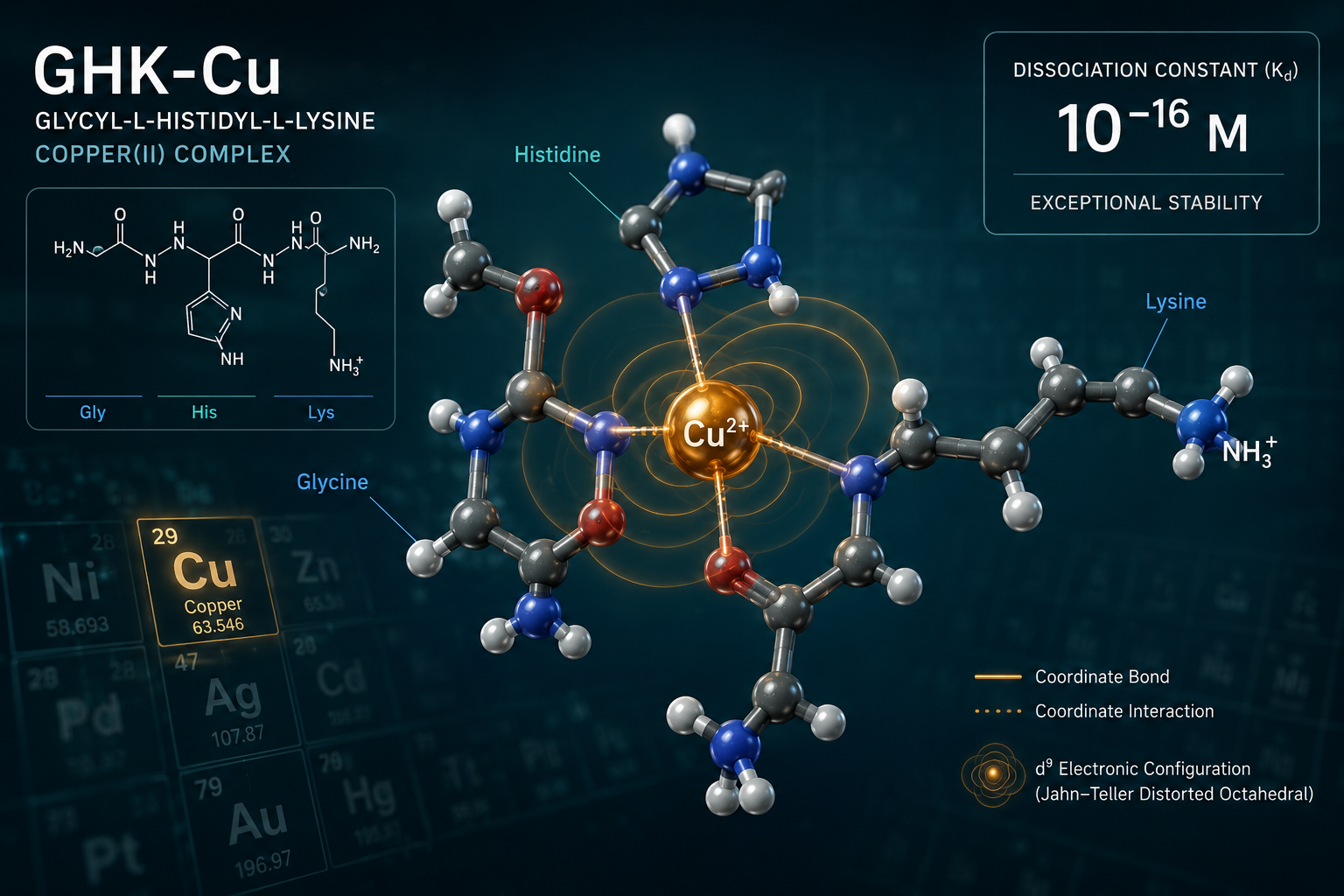
The tripeptide GHK (Gly-His-Lys) naturally forms a stable complex with copper(II) ions. What makes this binding unusual is its strength: the dissociation constant sits near 10⁻¹⁶ M, placing it among the tightest metal-peptide interactions documented in biochemistry. This affinity is not incidental — it is the structural basis for everything else the molecule does.
The histidine residue provides the primary coordination site for Cu²⁺, while the glycine and lysine flanking residues stabilize the complex geometrically. The result is a molecule that can transport bioavailable copper to target tissues without releasing it prematurely into circulation, where free copper would generate oxidative damage.
Why copper matters here: Copper is an essential cofactor for lysyl oxidase, the enzyme that crosslinks collagen and elastin fibers in connective tissue. Without adequate copper delivery, newly synthesized matrix proteins remain structurally weak. GHK-Cu effectively solves a delivery problem that free copper supplementation cannot address safely.
For researchers comparing copper-dependent mechanisms across peptide classes, the GHK-Cu longevity research themes page provides additional context on how these pathways intersect with aging biology.
Extracellular Matrix Signaling: The Core of GHK-Cu Peptide Mechanism Research
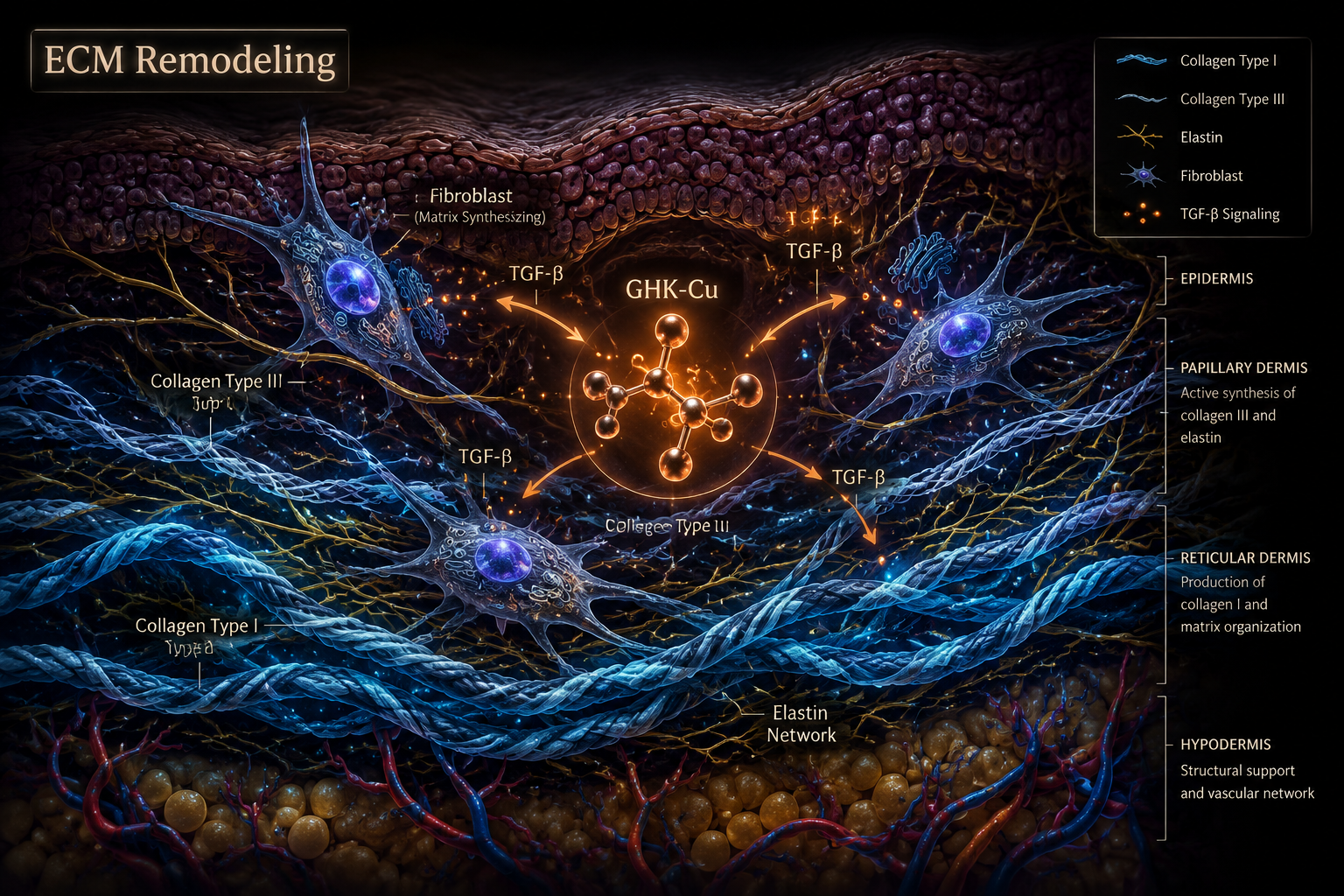
Most regenerative peptides work by binding a specific receptor. GHK-Cu operates differently. Its primary influence on tissue biology runs through direct extracellular matrix (ECM) interaction combined with downstream gene expression changes — a mechanistic distinction that gives it an unusually broad biological footprint.
Collagen, Elastin, and Decorin Upregulation
GHK-Cu stimulates synthesis of:
| ECM Component | Function |
|---|---|
| Type I Collagen | Structural tensile strength in skin and tendons |
| Type III Collagen | Early wound scaffolding, vascular walls |
| Elastin | Tissue recoil and flexibility |
| Decorin | Collagen fiber organization, TGF-beta regulation |
This multi-target ECM effect is driven partly through TGF-beta pathway activation. When GHK-Cu engages fibroblasts, it upregulates TGF-beta signaling, which in turn amplifies collagen gene transcription and matrix metalloproteinase (MMP) regulation — clearing damaged matrix while simultaneously building replacement structure.
Gene Expression at Scale
One of the most striking findings in GHK-Cu research is the breadth of its genomic influence. Studies suggest the peptide modulates expression of over 4,000 human genes — approximately 32% of the genome. These include genes governing:
- Tissue repair and regeneration
- Antioxidant enzyme production
- Inflammatory cytokine regulation
- Neuronal and vascular remodeling
This scale of influence is unusual for a tripeptide and has led researchers to describe GHK-Cu as a biological reset signal rather than a simple growth factor mimic.
Researchers interested in how other peptides influence gene-level repair pathways may find the BPC-157 core peptides documentation and research guide a useful parallel reference.
Tissue-Repair Research: Wound Healing, Inflammation, and Antioxidant Defense
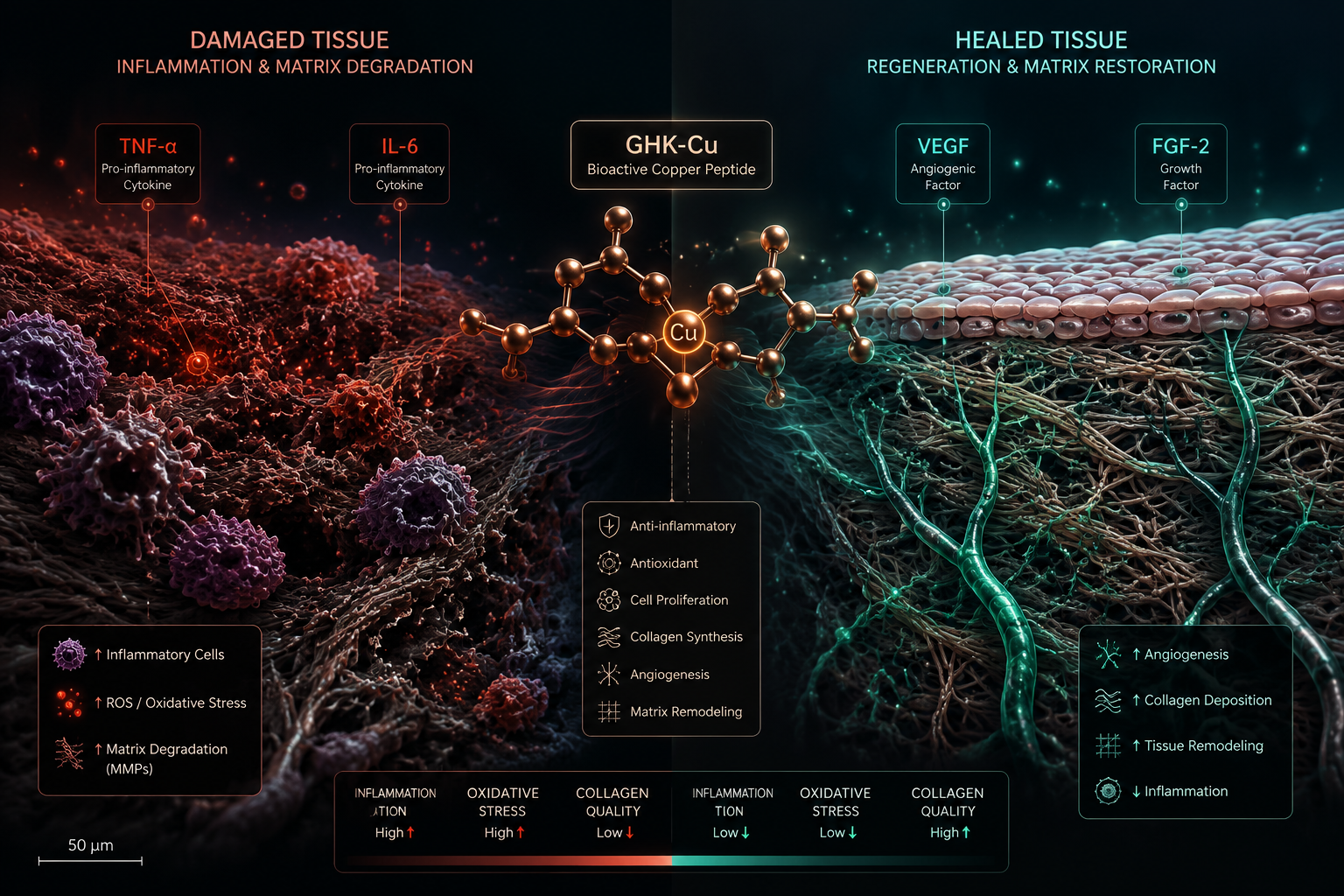
The practical research interest in GHK-Cu centers on three interconnected repair processes: accelerating wound closure, suppressing damaging inflammation, and neutralizing oxidative stress.
Angiogenesis and Growth Factor Upregulation
Wound healing requires new blood vessel formation. GHK-Cu upregulates both vascular endothelial growth factor (VEGF) and fibroblast growth factor-2 (FGF-2), two primary drivers of angiogenesis. This vascular recruitment accelerates oxygen and nutrient delivery to healing tissue, shortening repair timelines in preclinical models.
NF-kB Inhibition and Cytokine Control
Chronic inflammation is a major obstacle to tissue repair. GHK-Cu inhibits the NF-kB pathway, which controls transcription of pro-inflammatory cytokines including TNF-alpha and IL-6. By dampening this inflammatory cascade without eliminating it entirely, the peptide creates a biochemical environment that supports repair rather than prolonged destruction.
This mechanism is conceptually related to how other anti-inflammatory peptides operate. For context on related signaling work, see the synergy of LL-37 and MOTS-c research overview.
Superoxide Dismutase and Redox Protection
The copper ion within GHK-Cu serves as a cofactor for superoxide dismutase (SOD), the enzyme responsible for converting damaging superoxide radicals into less harmful molecules. During active tissue repair, oxidative stress is elevated. GHK-Cu's antioxidant contribution through SOD activity helps protect newly forming tissue from free radical damage — a function that complements its matrix-building role.
Researchers studying mitochondrial redox biology alongside copper-peptide mechanisms may also want to review SS-31 mitochondrial research themes for comparative antioxidant pathway data.
"GHK-Cu does not fit neatly into a single pharmacological category — it is simultaneously a copper carrier, a gene modulator, an ECM stimulant, and an antioxidant cofactor."
Age-Related Decline and Research Implications
The drop in endogenous GHK from roughly 200 ng/mL at age 20 to approximately 80 ng/mL by age 60 is not merely a biomarker curiosity. It maps directly onto the well-documented decline in wound healing speed, skin thickness, and regenerative capacity seen in older populations. This correlation has made GHK-Cu a focus of longevity-oriented peptide research in 2026.
Topical formulations have shown measurable improvements in skin elasticity and collagen density in cosmetic studies. Controlled human trials for systemic or injectable applications remain limited, which represents an active gap in the research landscape. Those looking to explore available research-grade material can review GHK-Cu peptides for sale and the associated GHK-Cu research documentation.
For broader context on how copper-peptide signaling fits within the wider peptide research landscape, the comprehensive peptide catalog overview offers a useful starting point.
Conclusion
The GHK-Cu peptide mechanism — spanning copper binding, extracellular matrix signaling, and tissue-repair research — represents one of the more mechanistically rich areas in current peptide biology. Its value lies not in a single action but in a coordinated set of effects: precise copper delivery, broad gene expression modulation, TGF-beta and growth factor activation, NF-kB suppression, and SOD-mediated antioxidant defense.
Actionable next steps for researchers:
- Review preclinical wound-healing and gene expression data before designing any in-vitro protocol.
- Compare GHK-Cu's ECM-direct mechanism against receptor-mediated peptides like BPC-157 to identify complementary research angles.
- Monitor the controlled human trial literature, which remains sparse and represents the most significant knowledge gap in 2026.
- Source only purity-verified, lab-tested material to ensure research data integrity.
Understanding the mechanism at this level of detail is what separates productive research from superficial application — and GHK-Cu rewards that depth of inquiry.