Call or Text 727-513-9780
  • Shopping Cart Shopping Cart
    0Shopping Cart
Pure Tested Peptides | America's most trusted Peptides for sale online
  • Peptides for sale
    • Oral Peptides for sale
      • Peptide Capsules for sale
      • BPC 157 Capsules 1000mcg
      • SLU-PP-332 Capsules | 1000 mcg
      • 5-Amino-1MQ 50mg Capsules
      • Tesofensine 500mcg
    • All Peptides for sale
    • Peptide Sprays
      • BPC 157 Nasal Spray Kit
      • BPC-157 TB500 Nasal Spray Kit
      • Semax Nasal Spray 10mg
      • Selank – Nasal Spray Kit – 10mg
      • Epithalon 50MG Nasal Spray Kit
      • Ipamorelin 10mg Nasal Spray
      • Klow Nasal Spray (BPC-157 + TB-500 + GHK-Cu + KPV) | 80mg
      • Hulk Nasal Spray Tesa / Ipa Blend 6/3 MG
      • Klow Nasal Spray
      • NAD + 500 mg Nasal Spray
      • PT-141 Nasal Spray Kit
    • GHRH Peptides
      • Ipa Peptides
      • CJC-1295 Peptides
        • CJC-1295 with DAC 5 mg
        • CJC-1295 without DAC 5 mg
        • CJC-1295 Ipa 10mg
      • Tesa Peptides
        • Tesa Peptide
        • Tesa 20 mg
    • GHK-Cu Peptides
      • All GHK-Cu Peptides
      • GHK-Cu 100mg
      • KLOW Peptide Blend – Buy KLOW blend online
    • BPC Peptides
      • All BPC Peptides
      • BPC-157
      • BPC-157 TB-500
      • BPC 157 capsules 1000mcg
    • SLU-PP-332 Peptides
      • All SLU-PP-332 Peptides
      • SLU-PP-332 5mg
    • GLP3 Peptides
      • GLP3-R
      • GLP3-R CAG 10mg
      • GLP3-R 20mg
    • PT-141 Peptides
      • PT-141 Peptides for sale
      • PT-141 10mg
      • PT-141 Nasal Spray
    • CAG Peptides
      • Lipo-C Peptide Blend
      • CAG 5mg
      • CAG 10mg
    • MOTS-C Peptides
      • MOTS-C Peptides for sale
      • MOTS-c peptide
      • MOTS-c 10mg *6 pack*
    • 5 Amino 1MQ Peptides
      • 5 Amino 1MQ Peptides for sale
      • 5-Amino-1MQ 50mg Capsules
      • 5-Amino-1MQ 5mg
    • Epithalon Peptides
      • Epithalon Peptides for sale
      • Epithalon 10mg
      • Epithalon 50mg
  • Shop
    • GLPs
      • 5-Amino-1MQ 50mg Capsules
      • 5-Amino-1MQ 5mg
      • GLP3-Reta
      • L-Carnitine 500mg/ml
      • Tesofensine 500mcg
      • SLU-PP-332 5mg
      • MOTS-c 10mg *6 pack*
    • Epithalon & BPC Peptides
      • Epithalon 10mg
      • Epithalon 50mg
      • BPC-157
      • BPC 157 capsules 1000mcg
      • BPC-157 TB-500
      • BPC-157 TB500 Nasal Spray Kit
      • BPC 157 Nasal Spray Kit
    • BPC TB-500 & NAD+ Peptides
      • NAD+ 500 mg
      • KLOW Peptide Blend – Buy KLOW blend online
      • GLOW Peptide Blend
      • TB 500 5mg
      • BPC 157 capsules 1000mcg – Supplement
      • BPC 157 Nasal Spray Kit
      • BPC-157
      • BPC-157 TB500 Nasal Spray Kit
      • BPC-157 TB-500
      • BPC 157 capsules 1000mcg
    • LL-37 Peptide
      • LL-37 10 mg
    • MOTS-C & Selank
      • MOTS-c peptide
      • Selank 10mg
    • GHK Peptides
      • GHK-Cu 100mg
      • GLOW Peptide Blend
      • KLOW Peptide Blend – Buy KLOW blend online
  • COAs
  • Wholesale
    • Wholesale Peptides for sale
  • PTP FAQ
  • Affiliates
    • Affiliate Program
    • Affiliate Signup
  • Contact
    • Contact Customer Service
    • Text Customer Support
  • About US
  • Shop all peptides
  • Login / Register Login / Register Page Link Login / Register Page Link
  • Click to open the search input field Click to open the search input field Search
  • Menu Menu

Tag Archive for: peptide function

What Is Polypeptide Peptides? A Research-Friendly Guide to Terminology, Structure, and Function

What Is Polypeptide Peptides? A Research-Friendly Guide to Terminology, Structure, and Function

July 10, 2026/0 Comments/in Uncategorized/by

{"cover":"Professional landscape format (1536×1024) hero image with bold text overlay: 'What Is Polypeptide Peptides? A Research-Friendly Guide' in extra large 72pt white sans-serif font with deep shadow effect, centered upper-third composition. Background shows a stunning macro scientific visualization of an amino acid chain forming a helix structure, rendered in deep navy blue and teal with luminous molecular bond lines glowing in white and gold. Semi-transparent dark overlay panel behind text for maximum readability. Magazine cover aesthetic, editorial quality, high contrast, 2026 research theme.","content":["Detailed landscape format (1536×1024) scientific infographic-style illustration showing a side-by-side comparison diagram of dipeptide, oligopeptide, polypeptide, and protein structures as ascending chain lengths, each labeled with amino acid count ranges. Clean white laboratory background with color-coded chain segments in blue, green, and orange. Bold sans-serif annotation labels, molecular bond icons, and a horizontal scale bar. Research-oriented aesthetic, educational clarity, no people, flat design with subtle 3D depth on molecular models.","Landscape format (1536×1024) close-up overhead view of a molecular model of a polypeptide chain folding into secondary structure, alpha helix and beta sheet formations visible simultaneously. Rendered in photorealistic 3D with deep purple background and glowing cyan hydrogen bond lines. Amino acid residue nodes highlighted in warm amber. Scientific visualization style, dramatic lighting from below, high-detail molecular geometry, no text overlay, editorial research quality, visually distinct from chain-length comparison image.","Landscape format (1536×1024) wide-angle flat-lay composition of a research laboratory bench showing peptide vials, a molecular structure printout, digital tablet displaying a peptide sequence chart, and a periodic table fragment. Color palette: clean white surface, steel grey equipment, accent colors in teal and gold. Soft directional studio lighting, no people, organized scientific workspace aesthetic. Subtle branded research theme, editorial quality, visually distinct from molecular model images, conveys applied peptide research context.","cover":""}

Professional landscape hero image () with : "What Is Polypeptide Peptides? A Research-Friendly Guide to Terminology,

The phrase "polypeptide peptides" appears in thousands of monthly searches, yet it is technically redundant. Every polypeptide is already a peptide. So why does this search phrase generate so much traffic? Because most people typing it are genuinely trying to understand the chemistry behind these molecules, and the terminology around peptides, polypeptides, and proteins remains surprisingly confusing even in 2026. This guide resolves that confusion directly.


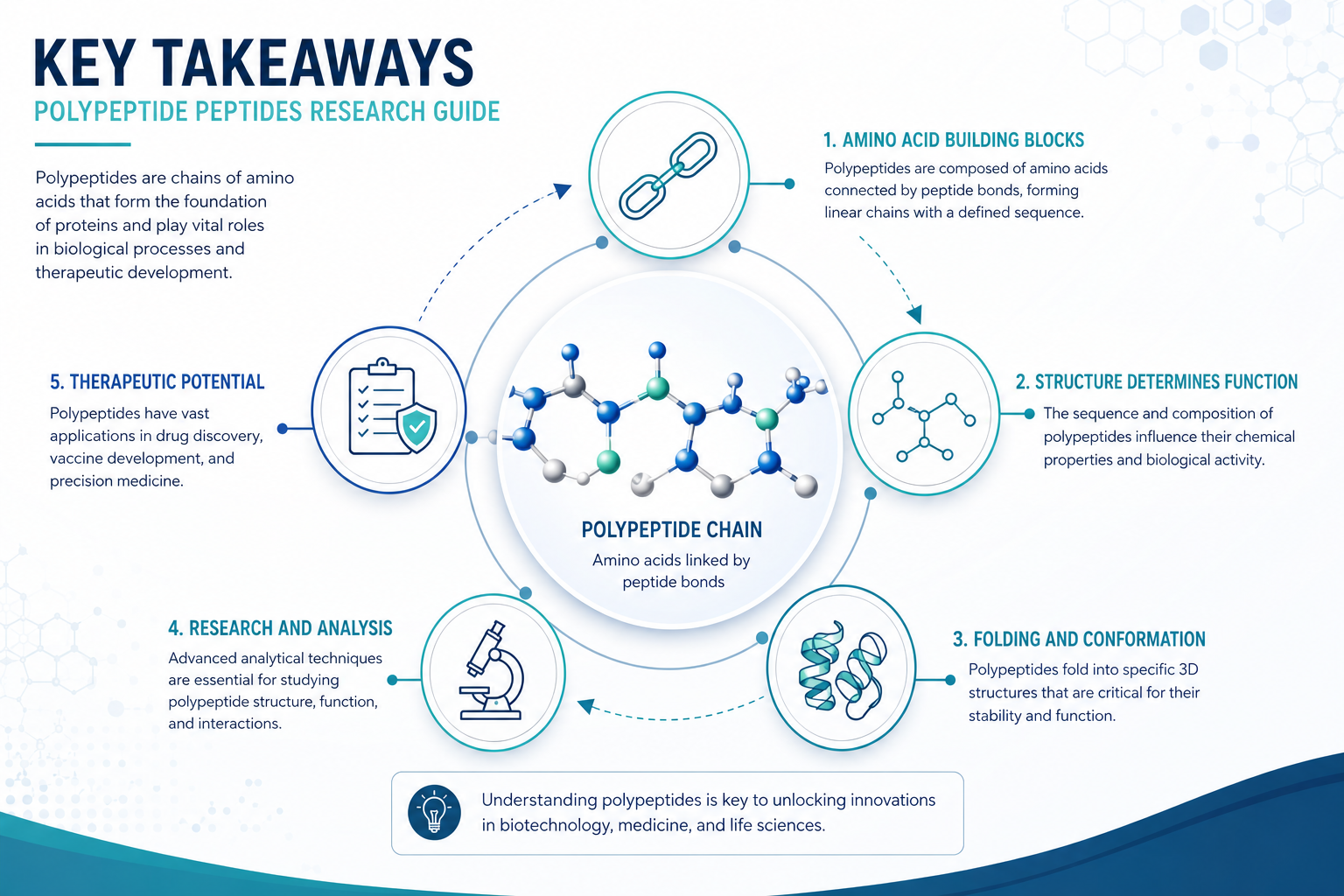
Key Takeaways

  • The term "polypeptide peptides" is redundant; a polypeptide is a specific type of peptide chain.
  • Peptides are short amino acid chains; polypeptides are longer chains; proteins are folded polypeptides with biological function.
  • Amino acids link together through peptide bonds to form these molecules.
  • Chain length and three-dimensional structure determine biological activity.
  • Understanding this terminology is essential for interpreting modern peptide research accurately.

Key Takeaways

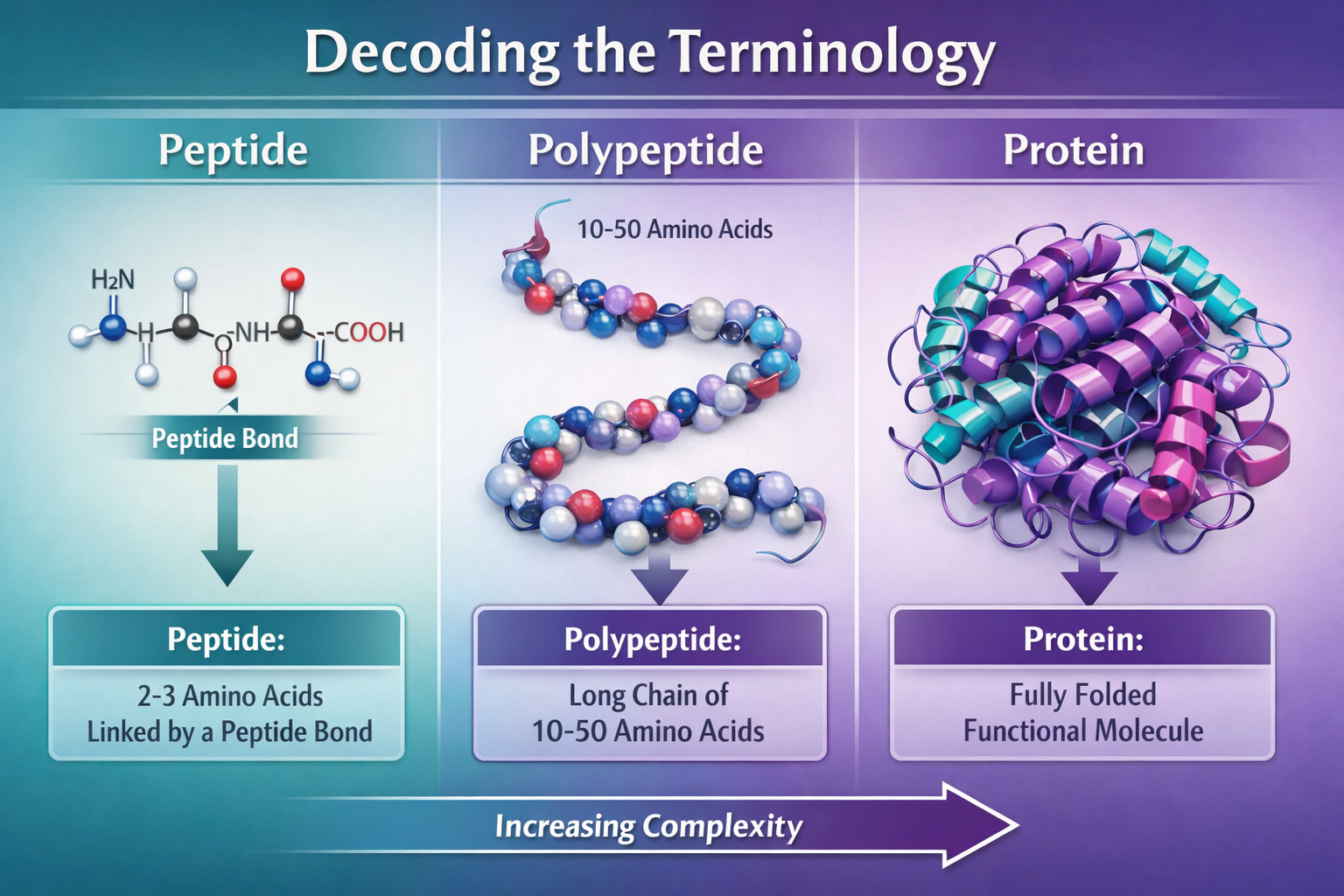
Decoding the Terminology: Peptide, Polypeptide, and Protein

When researchers and searchers ask about "polypeptide peptides," they are almost always asking one core question: what separates a peptide from a polypeptide from a protein?

The answer lies in chain length and structural complexity.

Term Amino Acid Count Key Characteristic
Dipeptide 2 Simplest peptide unit
Oligopeptide 3 to 10 Short signaling chains
Polypeptide 10 to ~100 Longer, more complex chains
Protein 100+ Folded, functional macromolecule

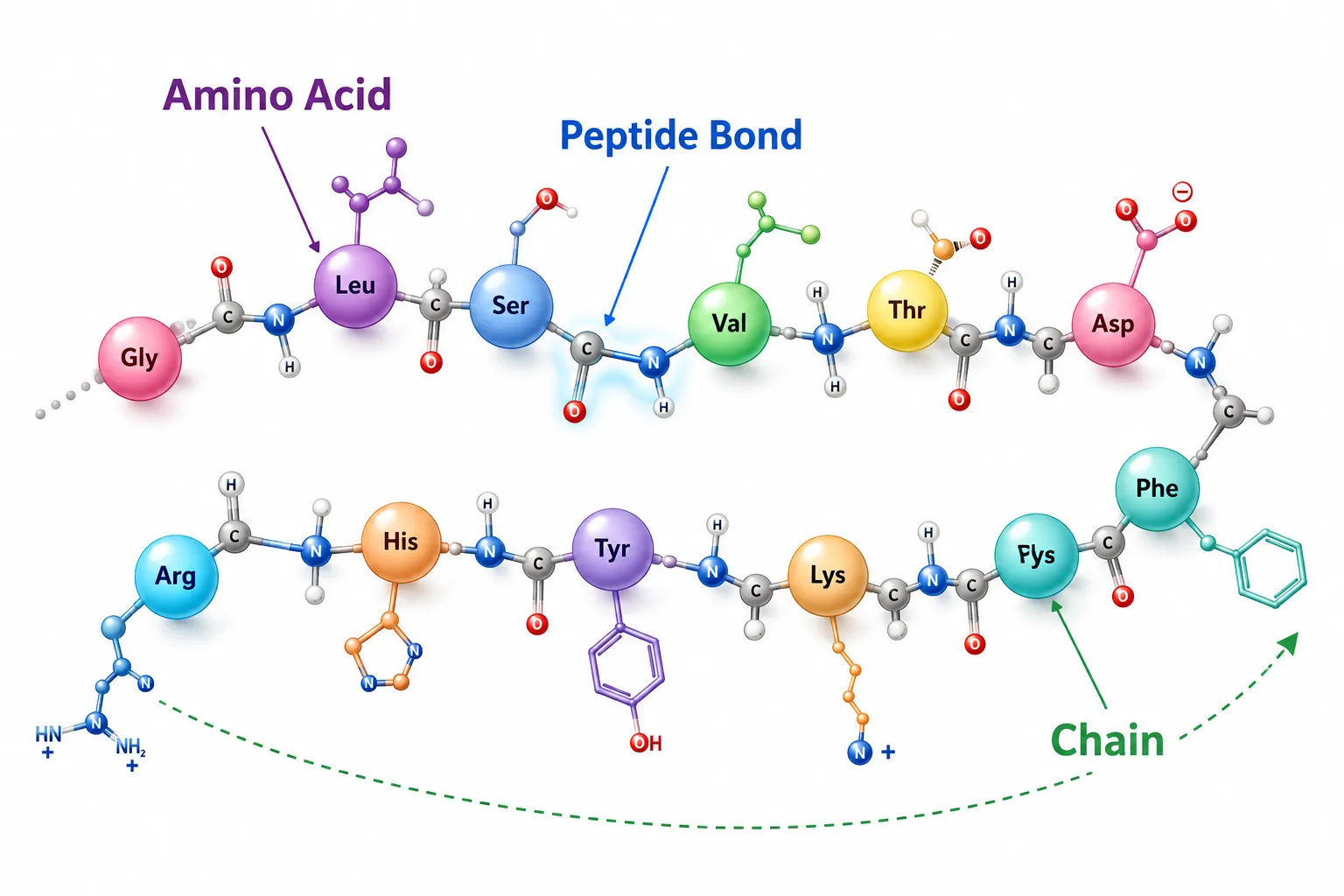
The prefix "poly" simply means "many." A polypeptide is therefore a chain of many amino acids joined by peptide bonds, covalent chemical links formed when the carboxyl group of one amino acid reacts with the amino group of the next.

"All proteins are polypeptides, but not all polypeptides are proteins. The distinction is function, not just length."

This is why the phrase "polypeptide peptides" makes sense as a search query even if it is chemically repetitive. Searchers are reaching for precision and landing on a term that captures both concepts at once.


Decoding the Terminology: Peptide, Polypeptide, and Protein

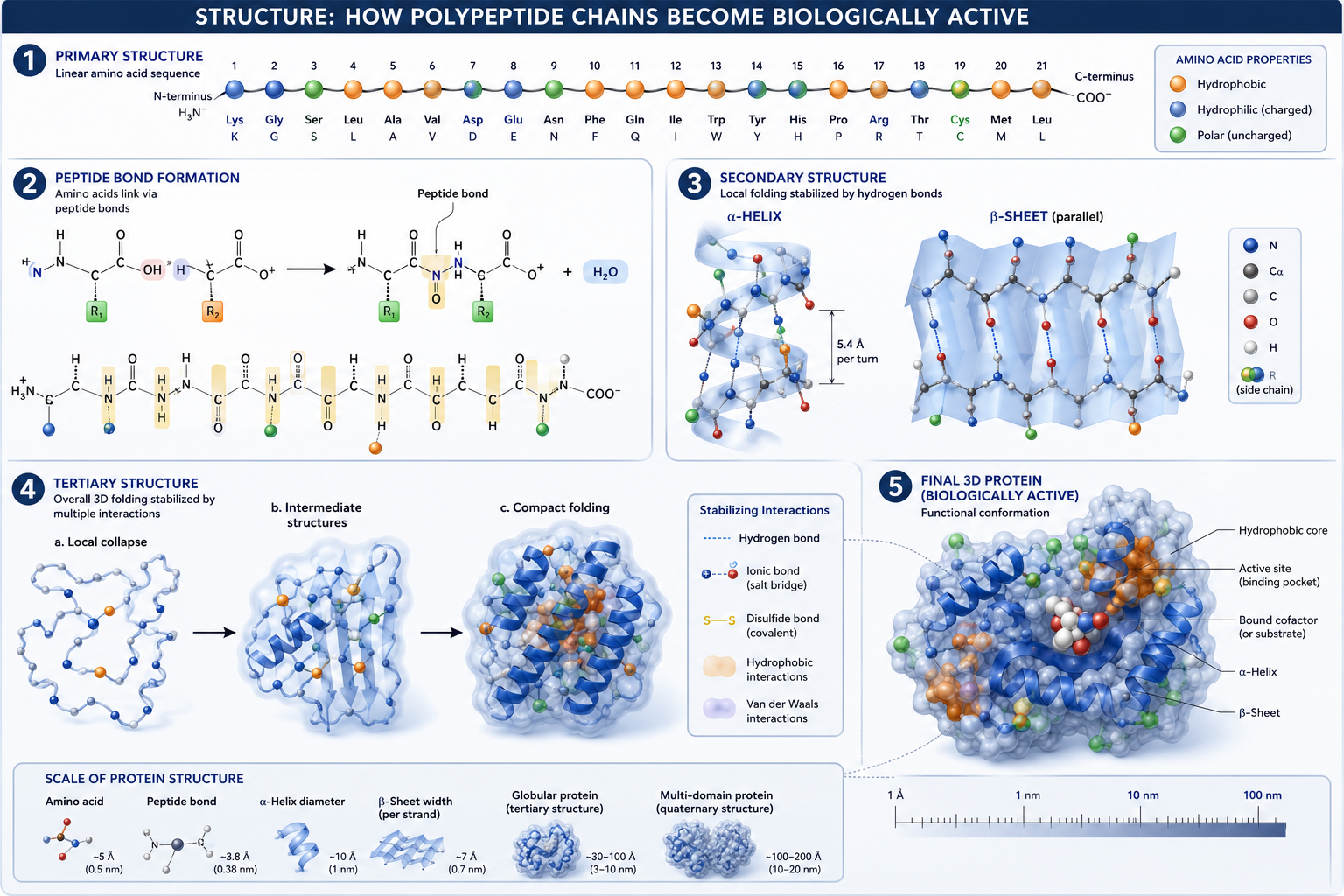
Structure: How Polypeptide Chains Become Biologically Active

Understanding what is polypeptide peptides, and why this research-friendly guide to terminology, structure, and function matters, requires looking at how structure drives activity.

Biochemists describe molecular architecture in four levels:

  1. Primary structure, the linear sequence of amino acids
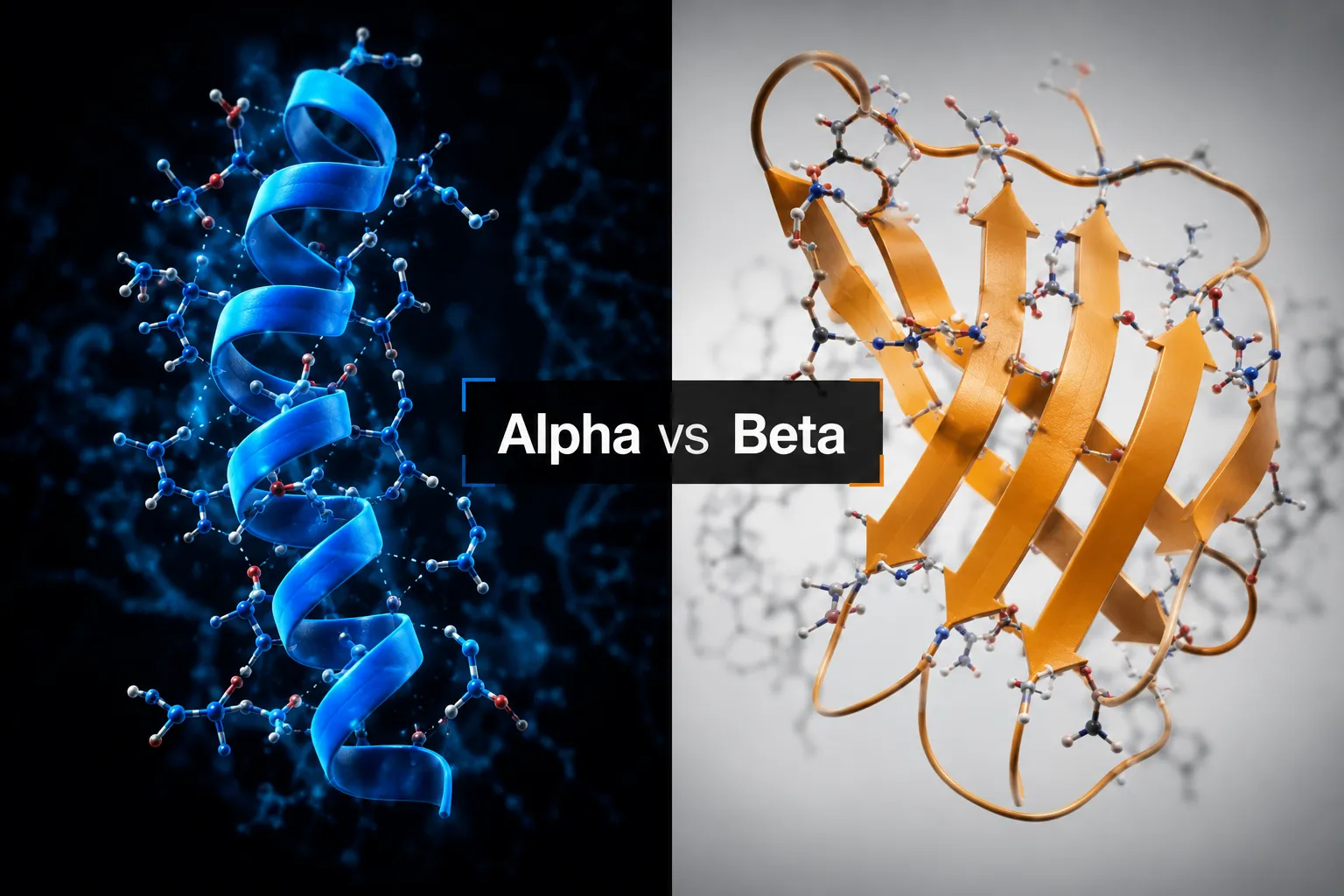
  2. Secondary structure, local folding patterns such as alpha helices and beta sheets
  3. Tertiary structure, the full three-dimensional shape of a single chain
  4. Quaternary structure, the arrangement of multiple polypeptide chains together

A polypeptide's biological function depends almost entirely on its three-dimensional shape. Change one amino acid in the sequence and the molecule may fold differently, binding to different receptors or losing activity entirely.

This structural sensitivity explains why peptide researchers pay close attention to sequence integrity and storage conditions. Molecules like tesa and MOTS-c are studied precisely because their specific amino acid sequences produce targeted biological interactions.

Similarly, research on SS-31 (elamipretide) focuses on a tetrapeptide, just four amino acids, demonstrating that even very short chains can carry significant functional specificity.


Structure: How Polypeptide Chains Become Biologically Active

Function: Why Polypeptides Matter in Research

The research landscape for polypeptides in 2026 spans metabolic signaling, cellular repair, immune modulation, and longevity biology. Each application traces back to a core principle: specific sequences produce specific effects.

Key functional categories include:

  • Signaling peptides, act as messengers between cells (e.g., growth hormone-releasing peptides)
  • Structural peptides, contribute to tissue integrity
  • Antimicrobial peptides, support innate immune defense
  • Enzyme-modulating peptides, alter metabolic pathways

For researchers exploring metabolic pathways, resources like the metabolic modulation research lines overview provide context on how specific polypeptide sequences are selected for study.

Peptides used in skincare research also illustrate functional diversity. Copper-binding sequences like GHK-Cu are studied for their role in tissue remodeling, while the broader science is explored in resources covering peptides in skincare.

For researchers interested in GLP-1 receptor-targeting polypeptides, the generations of GLP-1 differences breakdown illustrates how incremental changes to polypeptide structure have produced successive generations of research compounds.


Conclusion

The search phrase "polypeptide peptides" captures genuine curiosity about one of biochemistry's most important molecular categories. This research-friendly guide to terminology, structure, and function shows that the distinction between peptides, polypeptides, and proteins is not just academic, it directly shapes how researchers design studies, interpret results, and select compounds.

Actionable next steps for researchers:

  • Review the amino acid count and sequence of any peptide before drawing functional conclusions.
  • Consult structural data (primary through quaternary) when comparing similar compounds.
  • Explore the full peptide catalog to identify research-grade compounds with documented sequence integrity.
  • Cross-reference metabolic and signaling peptides using dedicated research theme pages for deeper context.

Terminology clarity is the foundation of credible peptide research. Getting the language right is the first step toward getting the science right.

https://www.puretestedpeptides.com/wp-content/uploads/2026/07/What-Is-Polypeptide-Peptides-A-Research-Friendly-Guide-to-Terminology-Structure-and-Function.png 1024 1536 https://www.puretestedpeptides.com/wp-content/uploads/2026/01/buy-peptides-online.jpg 2026-07-10 13:33:102026-07-10 13:33:10What Is Polypeptide Peptides? A Research-Friendly Guide to Terminology, Structure, and Function
Understanding Polypeptide Peptides: Structure, Function, and Advanced Research Applications

Understanding Polypeptide Peptides: Structure, Function, and Advanced Research Applications

July 8, 2026/0 Comments/in Uncategorized/by

Fewer than 50 amino acids linked together can trigger cascading biological events that influence everything from immune defense to metabolic regulation, a fact that underscores just how powerful polypeptide peptides truly are. This article delivers a comprehensive understanding of polypeptide peptides, detailing their complex structures, diverse biological functions, and advanced applications in cutting-edge research as of 2026.

Key Takeaways

  • Polypeptides are chains of amino acids linked by peptide bonds, and their three-dimensional shape determines their biological role.
  • Structural classes, including alpha-helices, beta-sheets, and cyclic forms, each carry distinct functional advantages.
  • Polypeptides serve critical roles in signaling, immune defense, enzymatic activity, and cellular regulation.
  • Advanced tools such as AlphaFold and molecular dynamics simulations are transforming how researchers design and predict peptide behavior.
  • Research-grade polypeptides are at the forefront of longevity science, metabolic research, and targeted therapeutic development.

Key Takeaways

The Architecture Behind Polypeptide Peptides: Structure, Function, and Advanced Research Applications

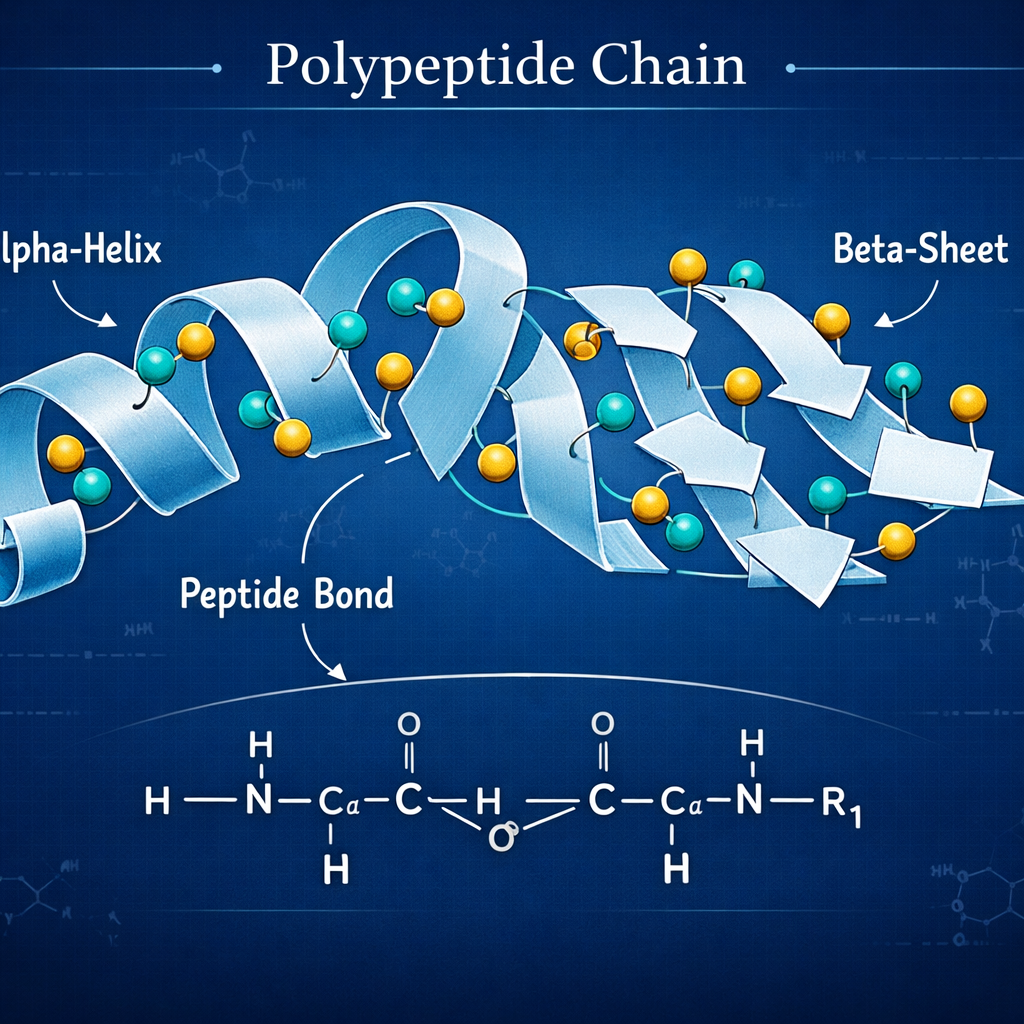
At the most basic level, a polypeptide is a linear chain of amino acids joined by covalent peptide bonds. The sequence of these amino acids, called the primary structure, dictates how the chain will fold into higher-order shapes.

Four levels of protein and polypeptide structure:

Level Description
Primary Linear amino acid sequence
Secondary Local folding into alpha-helices or beta-sheets
Tertiary Overall 3D shape of a single chain
Quaternary Assembly of multiple polypeptide chains

Alpha-helical polypeptides have received significant research attention for their helix-specific properties, including membrane permeability and receptor binding precision. Beta-sheets, by contrast, offer structural rigidity and are common in fibrous proteins. A third class, lasso peptides, features unique knot-like macrocyclic structures that confer remarkable stability and diverse bioactivities, including antimicrobial properties.

Constrained peptides, engineered to mimic protein secondary structures, have opened new doors for therapeutic design. By locking a peptide into a defined conformation, researchers improve target selectivity and resistance to enzymatic degradation. For a closer look at how simple peptide forms compare to complex ones, the overview of simple peptides offers useful foundational context.


Biological Functions: What Polypeptides Actually Do

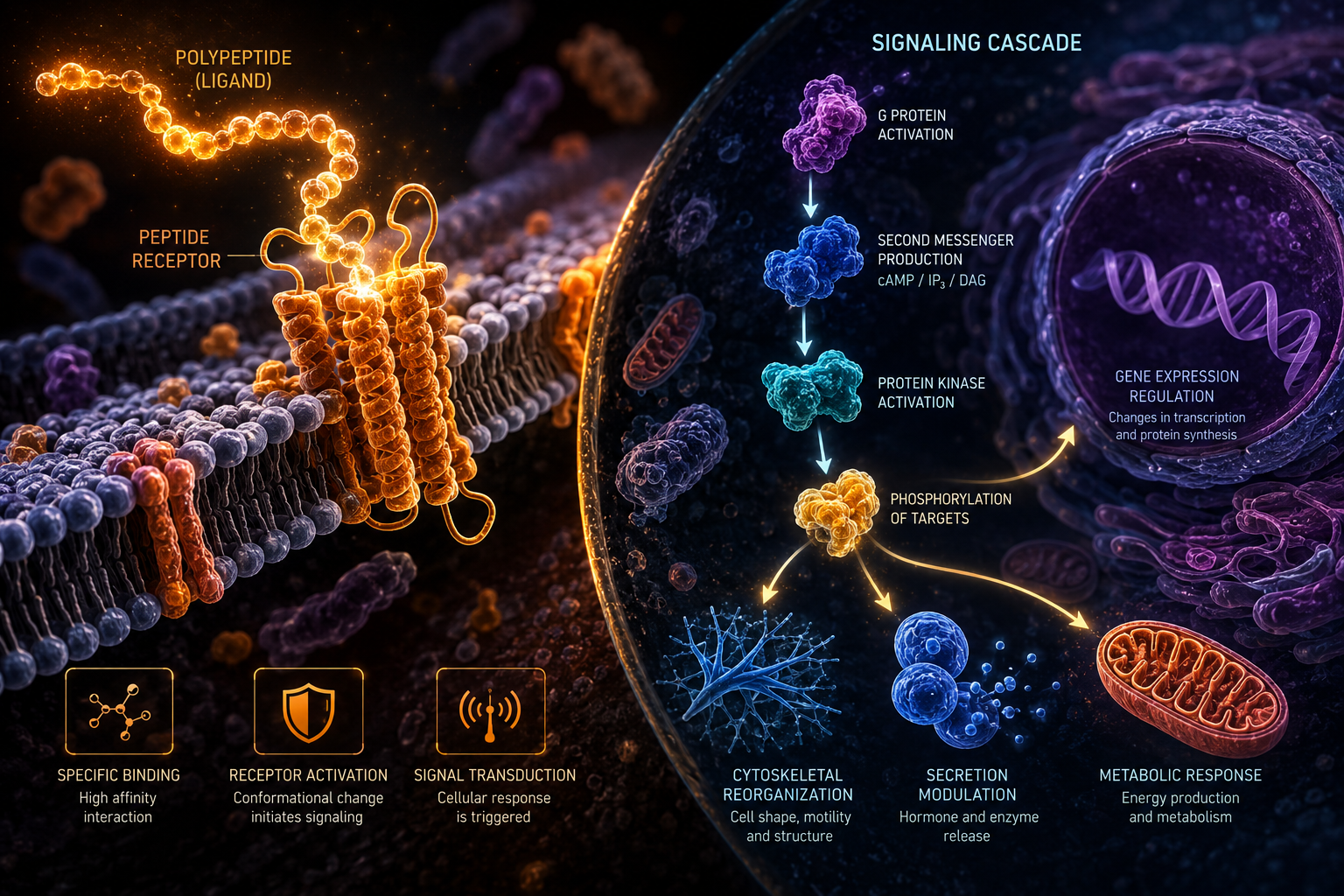
Polypeptides are not passive molecules. They act as hormones, enzymes, signaling agents, and structural components across virtually every tissue system.

Core biological roles include:

  • Hormonal signaling, peptides like growth hormone-releasing hormones regulate metabolism and tissue repair
  • Immune modulation, antimicrobial peptides defend against pathogens at epithelial barriers
  • Enzymatic catalysis, short polypeptide sequences can accelerate biochemical reactions
  • Cell-to-cell communication, neuropeptides and cytokines coordinate systemic responses

"Therapeutic peptides are gaining traction because of their cost-effectiveness, reduced immunogenicity, and ability to engage large protein-protein interaction surfaces that small molecules cannot reach."

Research into peptides like LL-37 illustrates how a single antimicrobial polypeptide can modulate immune responses, disrupt bacterial membranes, and influence wound healing simultaneously. Similarly, research on KPV and epithelial barrier function demonstrates how short tripeptide sequences exert targeted anti-inflammatory effects at mucosal surfaces.

The comparison of LL-37 versus SS-31 benefits further highlights how structural differences between polypeptides translate directly into divergent functional profiles.


Biological Functions: What Polypeptides Actually Do

Advanced Research Applications in 2026

Understanding polypeptide peptides, their structure, function, and advanced research applications, has never been more relevant than it is today, as computational and laboratory tools converge to accelerate discovery.

Key research frontiers include:

  1. AI-driven structure prediction, Tools like AlphaFold now enable precision design of cyclic peptides, including candidates targeting complex viral structures such as the HIV gp120 trimer.
  2. Molecular dynamics simulations, These computational models predict how peptides fold and interact with receptors under physiological conditions.
  3. Molecular fingerprints, Emerging research shows these are computationally efficient tools for predicting peptide function without requiring deep learning infrastructure.
  4. Self-assembling peptides, Active learning-directed simulations have identified pi-conjugated peptides capable of self-assembly, with applications in bioelectronics and energy materials.

Advanced Research Applications in 2026

Longevity research represents one of the most active application areas. Peptides such as SS-31 (elamipretide) are being studied for mitochondrial protection, as explored in the MOTS-c and elamipretide research overview. Growth hormone axis peptides, including tesa and CJC-1295, are central to body composition and metabolic research, detailed further in the GH axis product line overview.

For researchers tracking the latest developments, the what is new in peptide research resource provides regularly updated coverage of emerging findings.

Peptide-based biopolymers also continue to expand into drug delivery, tissue engineering, and biosurface engineering, reflecting the broad translational potential of polypeptide science.


Conclusion

Polypeptide peptides sit at the intersection of structural biology, biochemistry, and translational medicine. Their diverse conformations, from alpha-helices to lasso structures, directly shape their functional roles, while advances in computational design and laboratory synthesis are making precision peptide engineering increasingly achievable.

Actionable next steps for researchers and professionals:

  • Explore the structural class most relevant to your research target (helical, cyclic, or linear)
  • Use molecular dynamics tools to model conformational behavior before synthesis
  • Review current longevity and metabolic peptide research through dedicated resources such as longevity peptide research
  • Source research-grade compounds from verified suppliers by browsing the full catalog of peptides for sale

As structural data becomes more integrated into peptide design workflows, the gap between laboratory discovery and real-world application will continue to narrow, making 2026 a pivotal year for polypeptide research.

https://www.puretestedpeptides.com/wp-content/uploads/2026/07/Understanding-Polypeptide-Peptides-Structure-Function-and-Advanced-Research-Applications.png 1024 1536 https://www.puretestedpeptides.com/wp-content/uploads/2026/01/buy-peptides-online.jpg 2026-07-08 13:04:442026-07-08 13:04:44Understanding Polypeptide Peptides: Structure, Function, and Advanced Research Applications
×

Helpful Links

  • My account
  • Cart
  • Checkout
  • Refund and Returns Policy
  • Privacy Policy
  • SMS Privacy Policy
  • Login
  • My Account
  • Logout

USA Made Lab Tested Peptides

All products are sold for research, laboratory, or analytical purposes only, and are not for human consumption


Pure Tested Peptides is a chemical supplier. Pure Tested Peptides is not a compounding / chemical compounding facility as defined under 503A of the Federal Food, Drug, and Cosmetic act. Pure Tested Peptides is not an outsourcing facility as defined under 503B of the Federal Food, Drug, and Cosmetic act.

The statements made within this website have not been evaluated by the US Food and Drug Administration. The products we offer are not intended to diagnose, treat, cure or prevent any disease.

Human/Animal Consumption Prohibited. Laboratory/In-Vitro Experimental Use Only

Scroll to top Scroll to top Scroll to top