Where to Buy High-Purity Research Peptides: A Guide to Trusted Suppliers and COA Verification
Roughly 40% of peptide samples purchased from unverified online vendors fail independent purity testing — a figure that should stop any serious researcher before placing an order. For laboratories and research professionals navigating this guide to trusted suppliers and COA verification, the stakes are not just financial. Contaminated or mislabeled peptides can invalidate months of experimental work. This guide to buying high-purity research peptides lays out a systematic, verifiable framework for finding trustworthy sources and confirming the quality documents they provide.
Key Takeaways
- Supplier verifiability — not marketing language — is the first and most critical filter when sourcing research peptides.
- A legitimate Certificate of Analysis (COA) must come from an accredited, independent third-party laboratory, not the vendor's in-house team.
- HPLC purity data, mass spectrometry confirmation, and lot-specific results are the three non-negotiable elements of a credible COA.
- Red flags include COAs without named testing labs, purity claims above 99.9% with no supporting data, and pricing that is economically implausible for genuine analytical testing.
- Matching lot numbers between the COA and the product vial is a simple, fast verification step that filters out recycled or fabricated documents.
How to Evaluate a Trusted Supplier Before Ordering
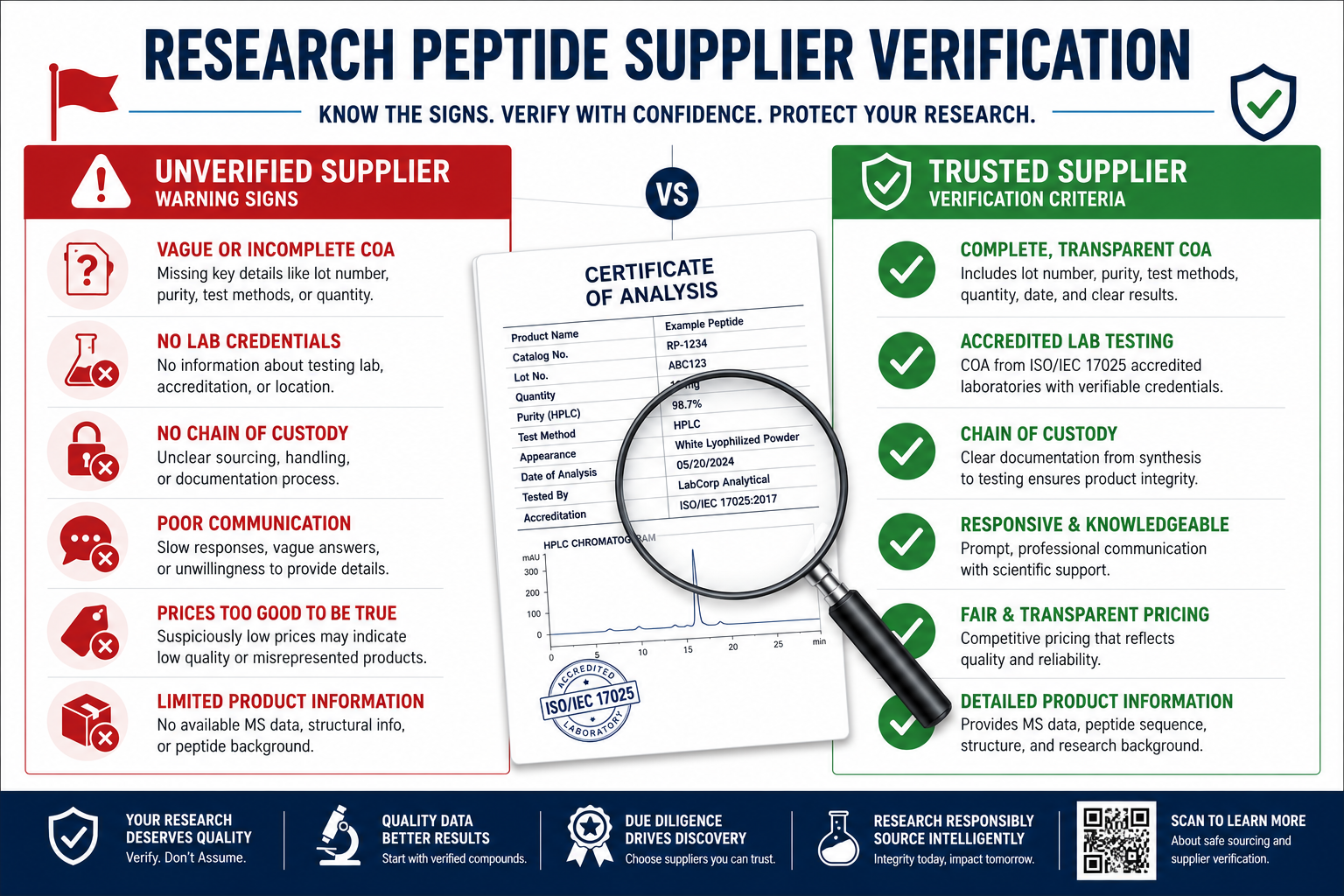
When the goal is finding where to buy high-purity research peptides, the evaluation process must begin with the supplier's identity and infrastructure — not its product catalog. In 2026, analytical guides consistently prioritize supplier verifiability over promotional claims.
Start with these supplier-level checks:
- Physical address and registration: A verifiable business address, not a P.O. box, is a baseline requirement.
- Transparent manufacturing or sourcing chain: Reputable vendors disclose whether peptides are synthesized in-house or sourced from established GMP-adjacent facilities.
- Customer service responsiveness: Send a pre-purchase question about a specific COA. A credible supplier answers with technical specificity, not generic reassurance.
- Peer-reviewed community presence: Look for the supplier's name in researcher forums, published procurement notes, or third-party review platforms — not just testimonials on their own website.
- Return and dispute policy: A clear, published refund and returns policy signals accountability.
Suppliers who invest in lab-tested peptides will make that testing infrastructure visible and easy to verify. If locating the testing documentation requires more than two clicks, treat that as a warning sign.
COA Verification: The Non-Negotiable Steps
A Certificate of Analysis is only as valuable as the process that produced it. Expert procurement protocols now begin by proving the COA is real and economically plausible — not simply present.
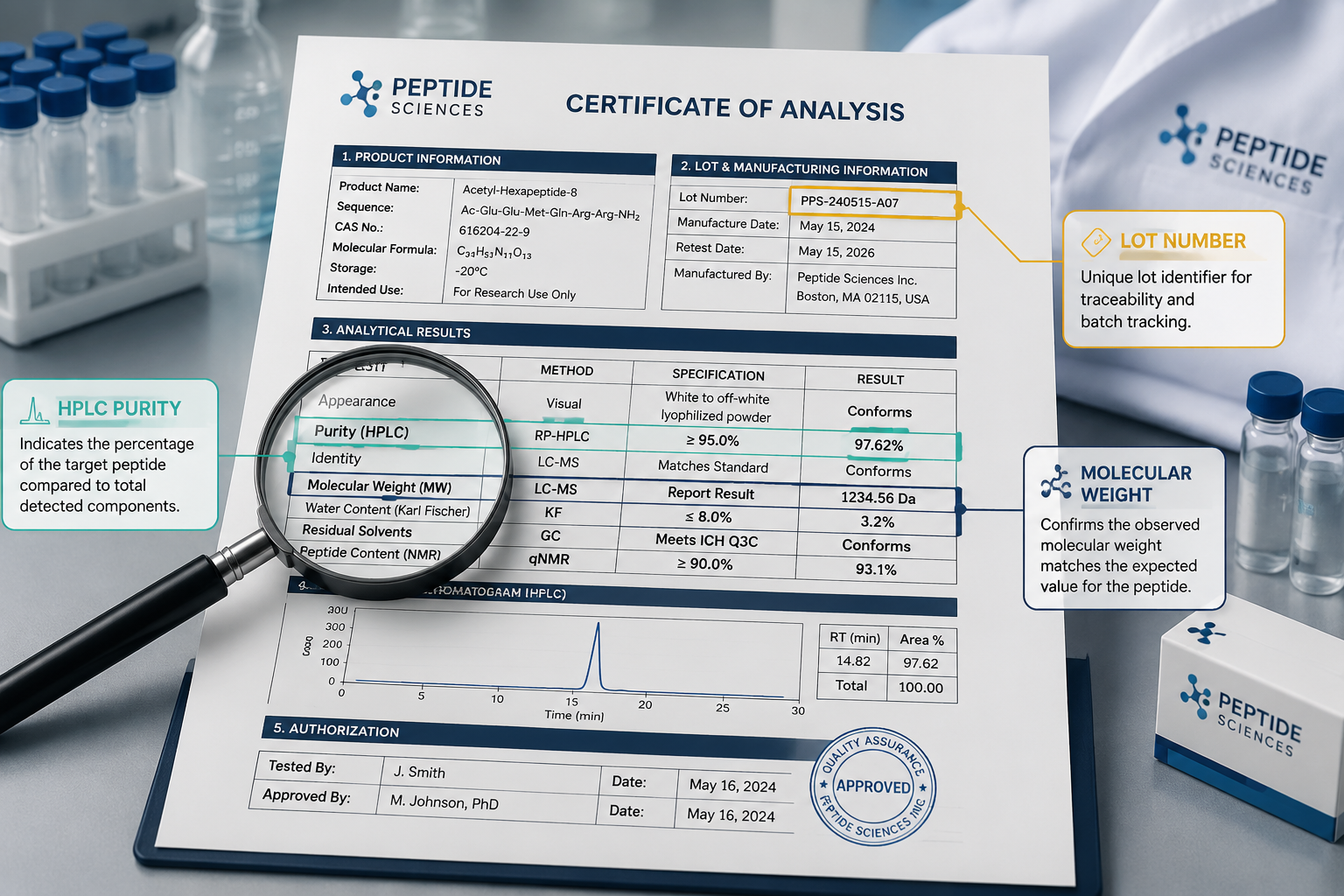
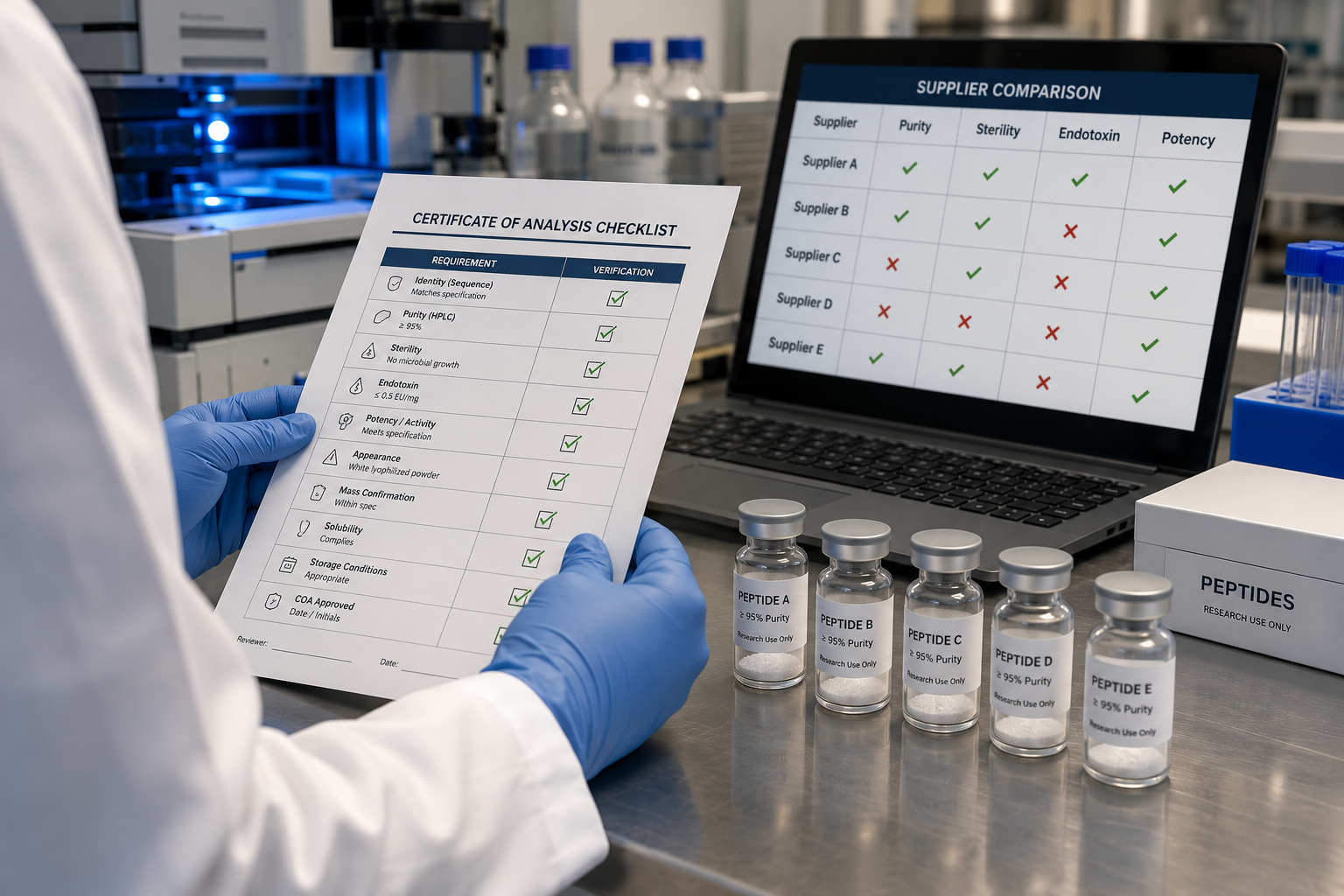
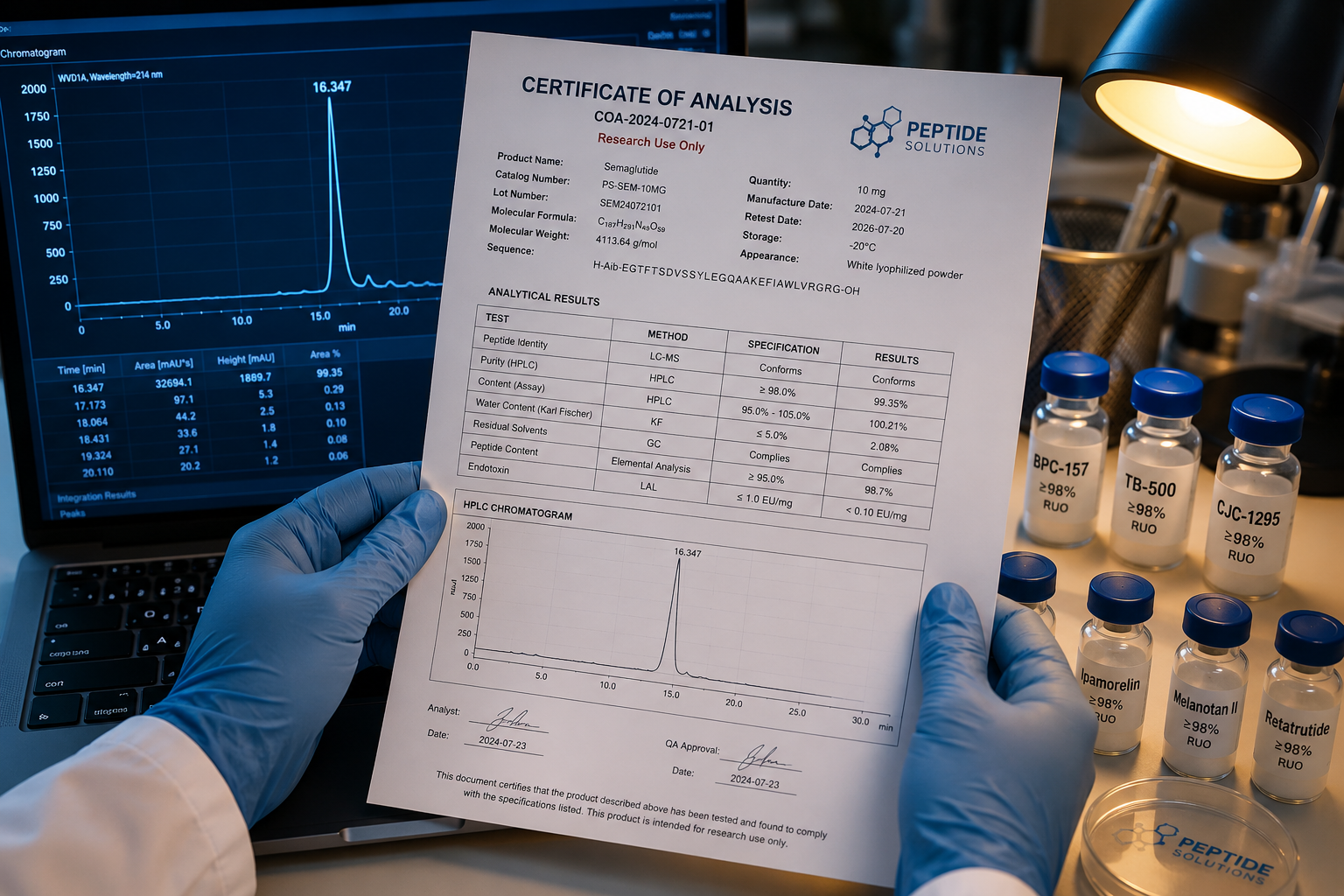
A credible COA must include:
| Element | What to Look For |
|---|---|
| Testing laboratory name | Accredited, independent, named facility |
| HPLC chromatogram | Visible peak data, not just a percentage |
| Mass spectrometry result | Confirms molecular identity of the peptide |
| Lot or batch number | Must match the number printed on the vial |
| Testing date | Recent; ideally within 12 months of purchase |
| Purity percentage | Typically 98%+ for research-grade material |
"A COA without a named third-party laboratory is a marketing document, not an analytical one."
Always cross-reference the lot number on the COA against the physical product. Vendors who publish a dedicated COA verification page make this step straightforward. If the COA is a generic document with no lot-specific data, it may have been recycled across multiple batches.
For specific compounds, purity requirements can vary. Researchers sourcing peptides such as BPC-157, CJC-1295 without DAC, or Tesamorelin should request compound-specific COAs rather than accepting a blanket purity certificate for an entire product line.
Applying This Guide to Specific Research Peptides
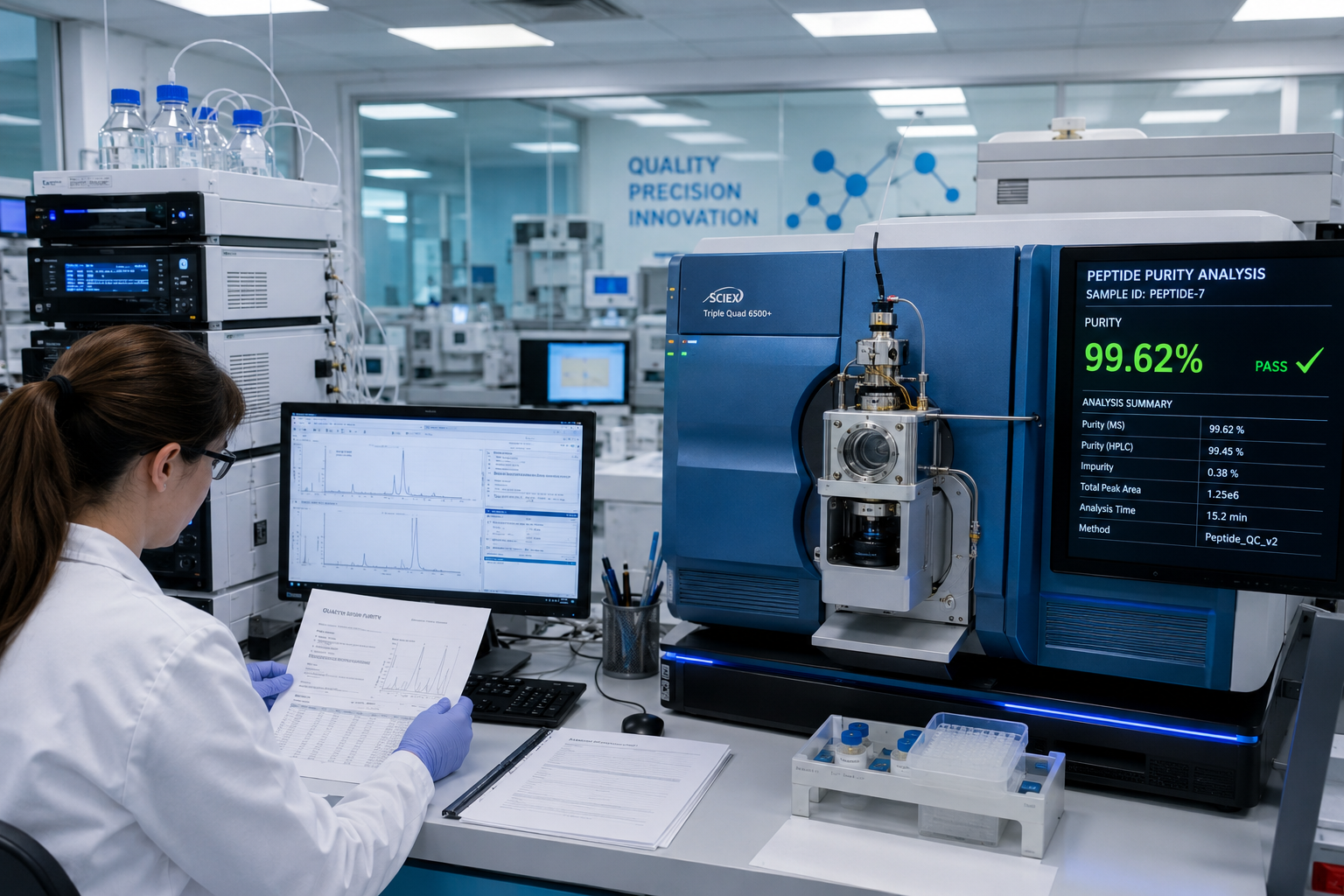
The principles above apply universally, but practical sourcing decisions benefit from compound-specific context. Researchers exploring longevity-focused peptide research or metabolic compounds like AOD-9604 should confirm that COA documentation covers the precise analog or salt form being purchased — not just the base peptide name.
For mitochondrial compounds such as SS-31 (Elamipretide), purity verification is especially critical because structural analogs can differ significantly in biological activity. Similarly, researchers working with neuropeptides like Selank should verify sequence fidelity through mass spectrometry data, not HPLC alone.
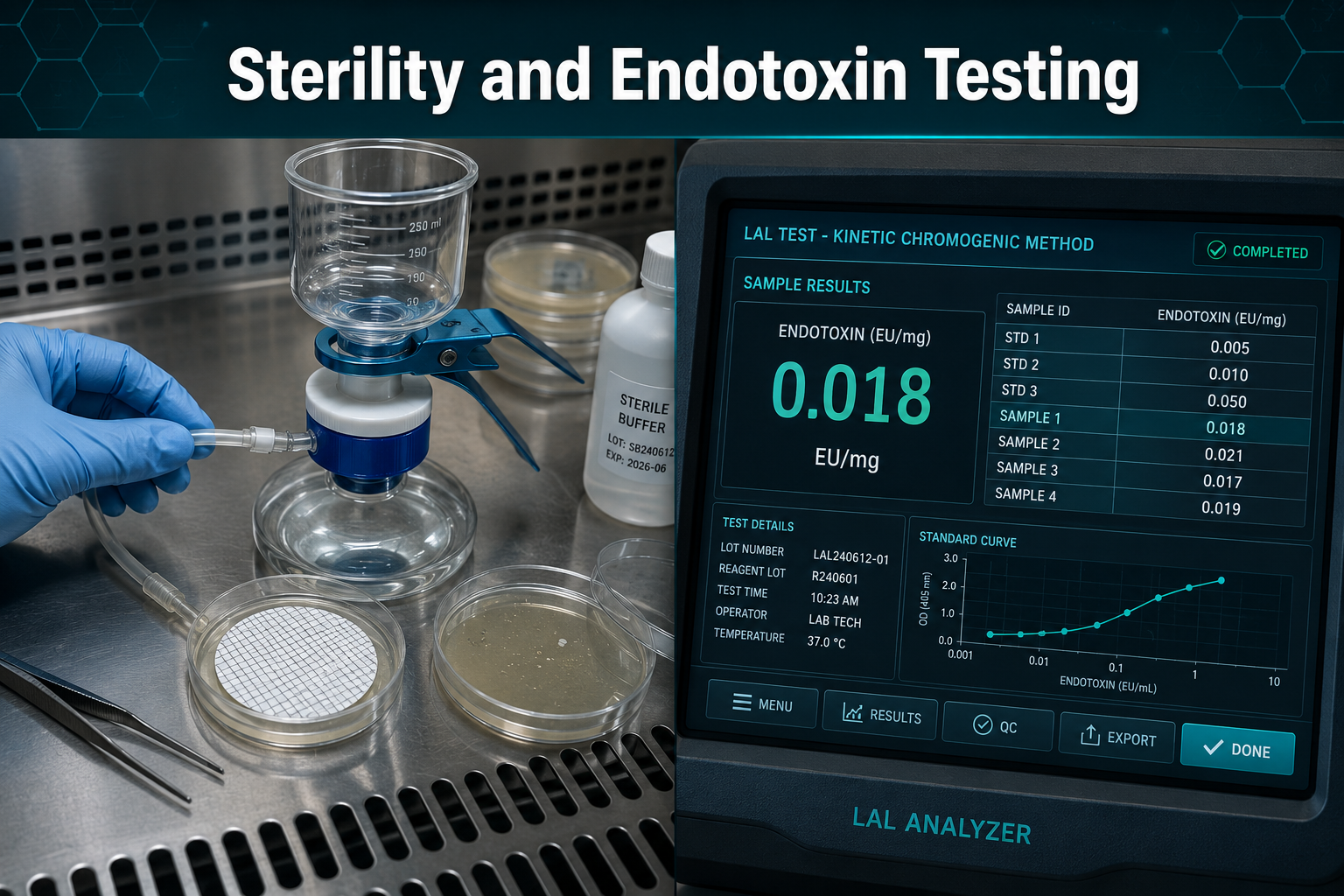
Pricing as a purity signal: Genuine third-party HPLC and mass spectrometry testing carries real cost. If a vendor's pricing is dramatically lower than the market average, that gap often reflects skipped analytical steps. Economically implausible pricing is a COA red flag before the document is even reviewed.
Conclusion
Sourcing high-purity research peptides in 2026 demands a structured, skeptical approach. The guide to trusted suppliers and COA verification outlined here reduces research risk through a clear sequence: verify the supplier exists and operates transparently, then verify the COA is compound-specific, lot-matched, and produced by a named independent laboratory. Researchers should bookmark their supplier's COA page, save lot-number records alongside purchase receipts, and repeat the verification process with every new batch — not just the first order. Applying these steps consistently protects both experimental integrity and research investment.