Call or Text 727-513-9780
  • Shopping Cart Shopping Cart
    0Shopping Cart
Pure Tested Peptides | America's most trusted Peptides for sale online
  • Peptides for sale
    • Oral Peptides for sale
      • Peptide Capsules for sale
      • BPC 157 Capsules 1000mcg
      • SLU-PP-332 Capsules | 1000 mcg
      • 5-Amino-1MQ 50mg Capsules
      • Tesofensine 500mcg
    • All Peptides for sale
    • Peptide Sprays
      • BPC 157 Nasal Spray Kit
      • BPC-157 TB500 Nasal Spray Kit
      • Semax Nasal Spray 10mg
      • Selank – Nasal Spray Kit – 10mg
      • Epithalon 50MG Nasal Spray Kit
      • Ipamorelin 10mg Nasal Spray
      • Klow Nasal Spray (BPC-157 + TB-500 + GHK-Cu + KPV) | 80mg
      • Hulk Nasal Spray Tesa / Ipa Blend 6/3 MG
      • Klow Nasal Spray
      • NAD + 500 mg Nasal Spray
      • PT-141 Nasal Spray Kit
    • GHRH Peptides
      • Ipa Peptides
      • CJC-1295 Peptides
        • CJC-1295 with DAC 5 mg
        • CJC-1295 without DAC 5 mg
        • CJC-1295 Ipa 10mg
      • Tesa Peptides
        • Tesa Peptide
        • Tesa 20 mg
    • GHK-Cu Peptides
      • All GHK-Cu Peptides
      • GHK-Cu 100mg
      • KLOW Peptide Blend – Buy KLOW blend online
    • BPC Peptides
      • All BPC Peptides
      • BPC-157
      • BPC-157 TB-500
      • BPC 157 capsules 1000mcg
    • SLU-PP-332 Peptides
      • All SLU-PP-332 Peptides
      • SLU-PP-332 5mg
    • GLP3 Peptides
      • GLP3-R
      • GLP3-R CAG 10mg
      • GLP3-R 20mg
    • PT-141 Peptides
      • PT-141 Peptides for sale
      • PT-141 10mg
      • PT-141 Nasal Spray
    • CAG Peptides
      • Lipo-C Peptide Blend
      • CAG 5mg
      • CAG 10mg
    • MOTS-C Peptides
      • MOTS-C Peptides for sale
      • MOTS-c peptide
      • MOTS-c 10mg *6 pack*
    • 5 Amino 1MQ Peptides
      • 5 Amino 1MQ Peptides for sale
      • 5-Amino-1MQ 50mg Capsules
      • 5-Amino-1MQ 5mg
    • Epithalon Peptides
      • Epithalon Peptides for sale
      • Epithalon 10mg
      • Epithalon 50mg
  • Shop
    • GLPs
      • 5-Amino-1MQ 50mg Capsules
      • 5-Amino-1MQ 5mg
      • GLP3-Reta
      • L-Carnitine 500mg/ml
      • Tesofensine 500mcg
      • SLU-PP-332 5mg
      • MOTS-c 10mg *6 pack*
    • Epithalon & BPC Peptides
      • Epithalon 10mg
      • Epithalon 50mg
      • BPC-157
      • BPC 157 capsules 1000mcg
      • BPC-157 TB-500
      • BPC-157 TB500 Nasal Spray Kit
      • BPC 157 Nasal Spray Kit
    • BPC TB-500 & NAD+ Peptides
      • NAD+ 500 mg
      • KLOW Peptide Blend – Buy KLOW blend online
      • GLOW Peptide Blend
      • TB 500 5mg
      • BPC 157 capsules 1000mcg – Supplement
      • BPC 157 Nasal Spray Kit
      • BPC-157
      • BPC-157 TB500 Nasal Spray Kit
      • BPC-157 TB-500
      • BPC 157 capsules 1000mcg
    • LL-37 Peptide
      • LL-37 10 mg
    • MOTS-C & Selank
      • MOTS-c peptide
      • Selank 10mg
    • GHK Peptides
      • GHK-Cu 100mg
      • GLOW Peptide Blend
      • KLOW Peptide Blend – Buy KLOW blend online
  • COAs
  • Wholesale
    • Wholesale Peptides for sale
  • PTP FAQ
  • Affiliates
    • Affiliate Program
    • Affiliate Signup
  • Contact
    • Contact Customer Service
    • Text Customer Support
  • About US
  • Shop all peptides
  • Login / Register Login / Register Page Link Login / Register Page Link
  • Click to open the search input field Click to open the search input field Search
  • Menu Menu

Tag Archive for: peptide signaling

Adenosine Triphosphate (ATP), Cell Energy, and Peptide Signaling: Where MOTS-c, 5-Amino-1MQ, and GLP-3 Retatrutide Fit

Adenosine Triphosphate (ATP), Cell Energy, and Peptide Signaling: Where MOTS-c, 5-Amino-1MQ, and GLP-3 Retatrutide Fit

June 23, 2026/0 Comments/in Uncategorized/by

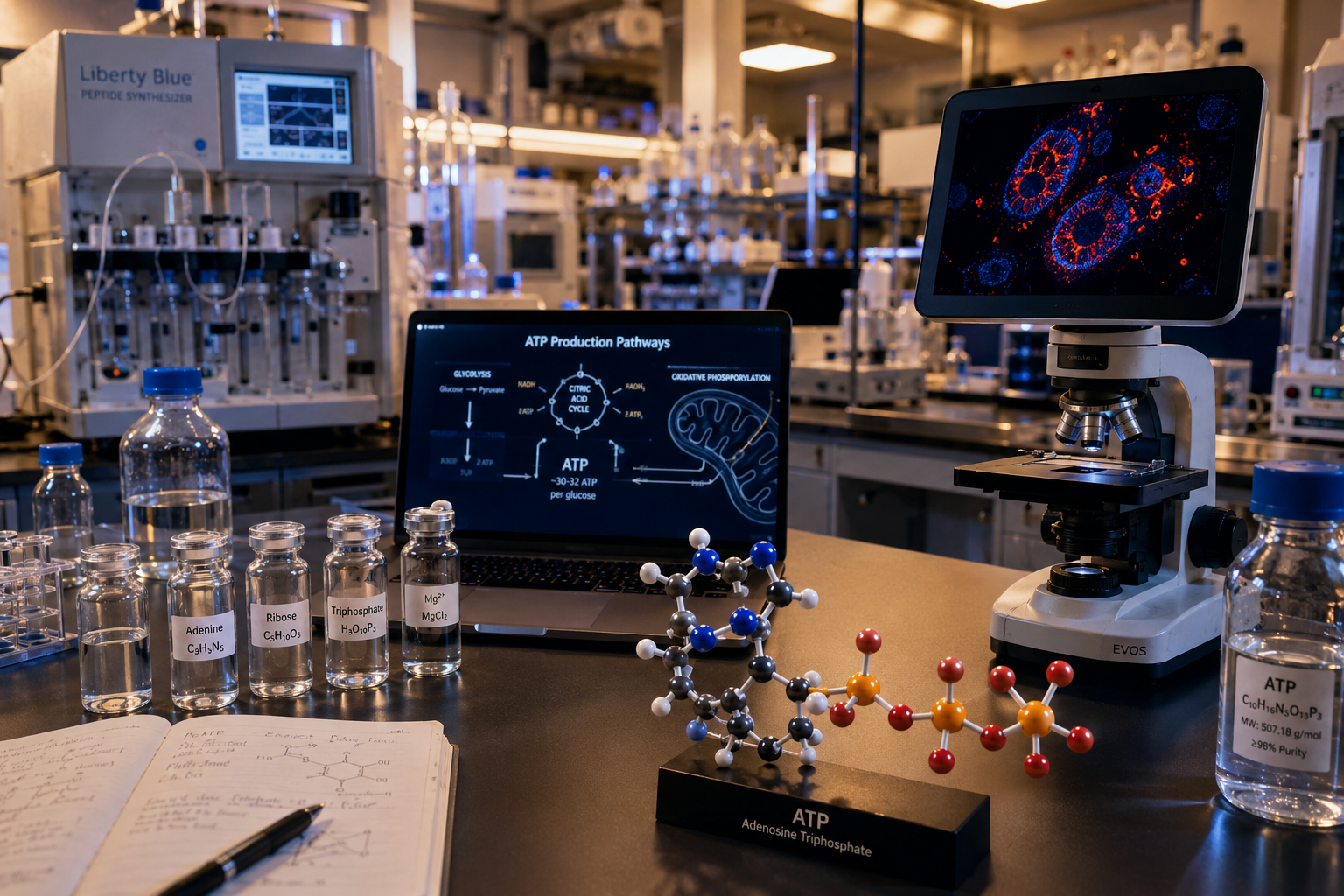
Every contraction of a muscle fiber, every nerve impulse, and every protein folded inside a cell depends on a single molecule: adenosine triphosphate. Without a steady ATP supply, cellular signaling collapses within seconds. That foundational fact is exactly why researchers studying Adenosine Triphosphate (ATP), cell energy, and peptide signaling have grown so interested in compounds like MOTS-c, 5-Amino-1MQ, and GLP-3 Retatrutide — each one interacts with ATP-related pathways in a distinct and measurable way.

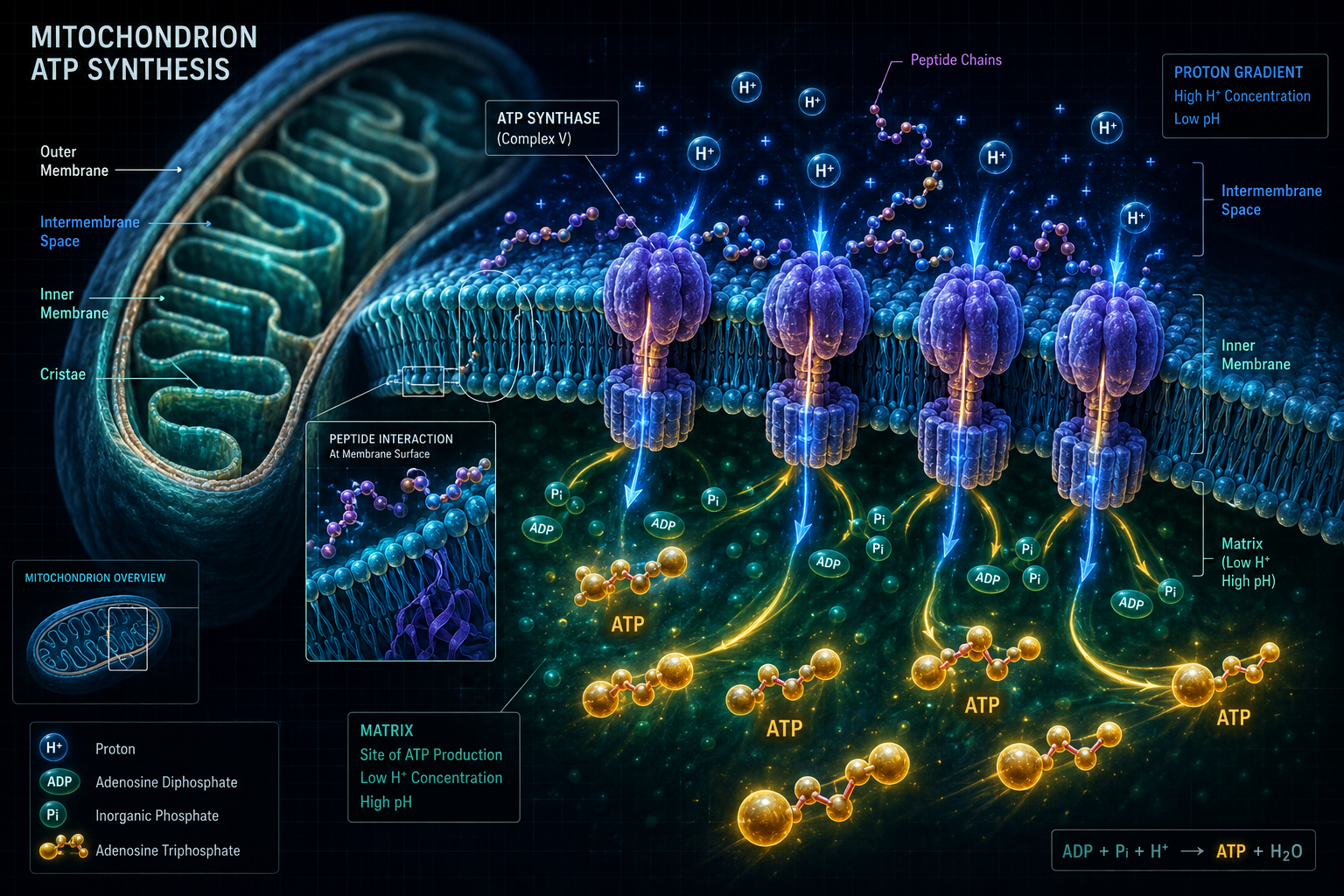
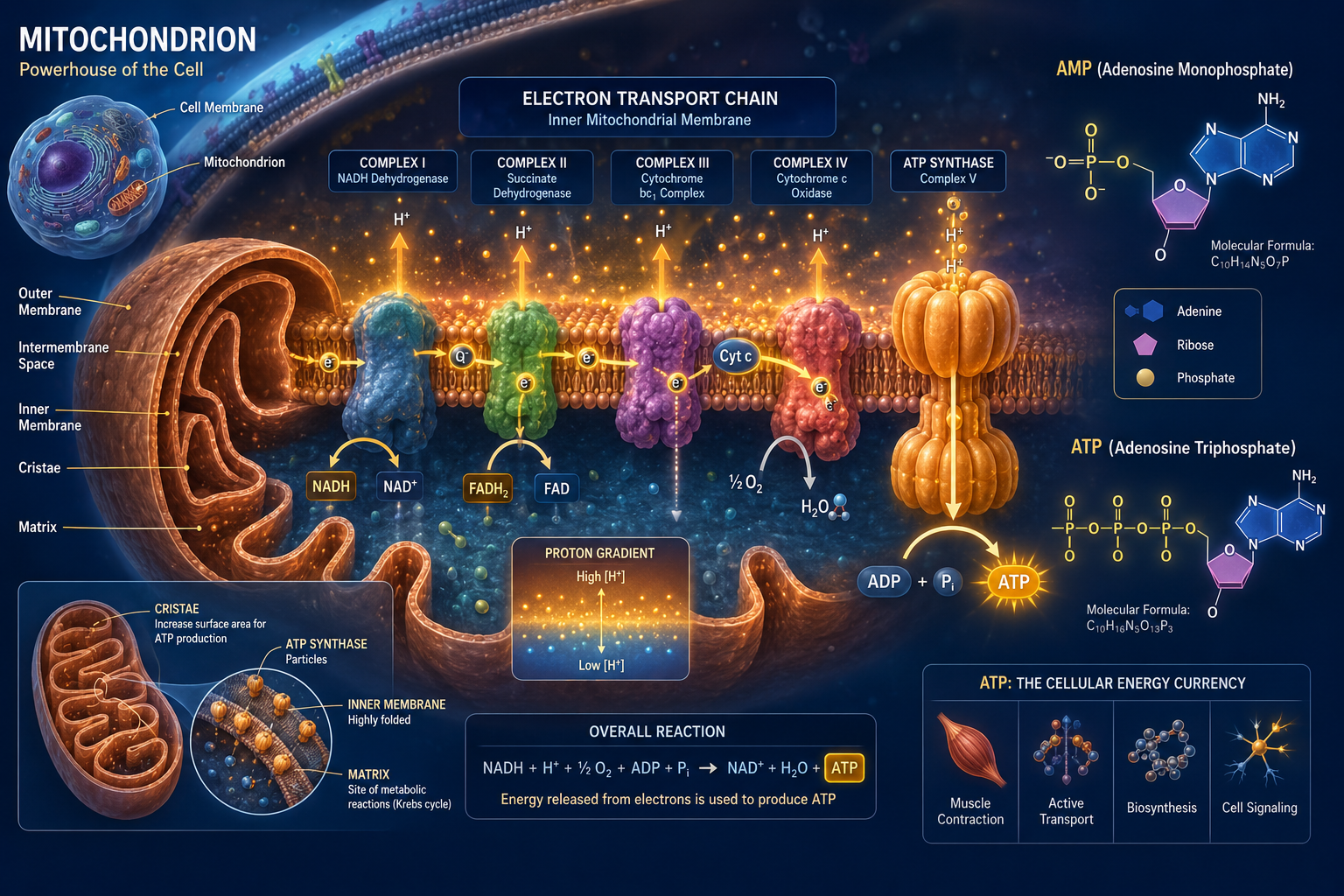
Detailed () scientific illustration showing a cross-section of a human mitochondrion with labeled ATP synthase complexes,

Key Takeaways

  • ATP is the universal energy currency of the cell; disruptions in its production underlie most metabolic diseases.
  • MOTS-c is a mitochondrial-encoded peptide that shifts the AMP/ATP ratio to activate AMPK, the cell's master energy sensor.
  • 5-Amino-1MQ raises intracellular nicotinamide levels by blocking NNMT, indirectly supporting NAD+ and ATP synthesis.
  • Retatrutide (GLP-3) is a triple agonist targeting GIP, GLP-1, and glucagon receptors, driving energy expenditure through hormonal signaling rather than direct mitochondrial action.
  • These three compounds represent complementary layers of metabolic intervention — mitochondrial, enzymatic, and hormonal.

The ATP Foundation: Why Cell Energy Metabolism Matters

ATP is built inside mitochondria through oxidative phosphorylation. Electrons stripped from glucose and fatty acids travel down the electron transport chain, and the resulting proton gradient powers ATP synthase. When this process is efficient, cells maintain a high ATP/AMP ratio, signaling an energy-replete state. When it falters — due to aging, obesity, or oxidative damage — the AMP/ATP ratio rises, triggering stress-response pathways.

Key facts about ATP biology:

Parameter Detail
ATP half-life in a cell Less than 1 minute
Daily ATP turnover (human body) Roughly equal to body weight
Primary production site Inner mitochondrial membrane
Master energy sensor activated by low ATP AMP-activated protein kinase (AMPK)

AMPK is the pivot point. When AMPK detects a falling ATP level, it switches on catabolic pathways — glucose uptake, fatty acid oxidation, mitochondrial biogenesis — and switches off energy-expensive anabolic processes. This is precisely the pathway that several modern peptides are designed to influence.

Researchers exploring mitochondrial longevity and energy research have documented how restoring mitochondrial efficiency can cascade into broad metabolic improvements, making the ATP-AMPK axis a high-value research target.


MOTS-c and 5-Amino-1MQ: Peptide Signaling at the Mitochondrial Level

Understanding Adenosine Triphosphate (ATP), cell energy, and peptide signaling requires a close look at how MOTS-c operates at the source of energy production.

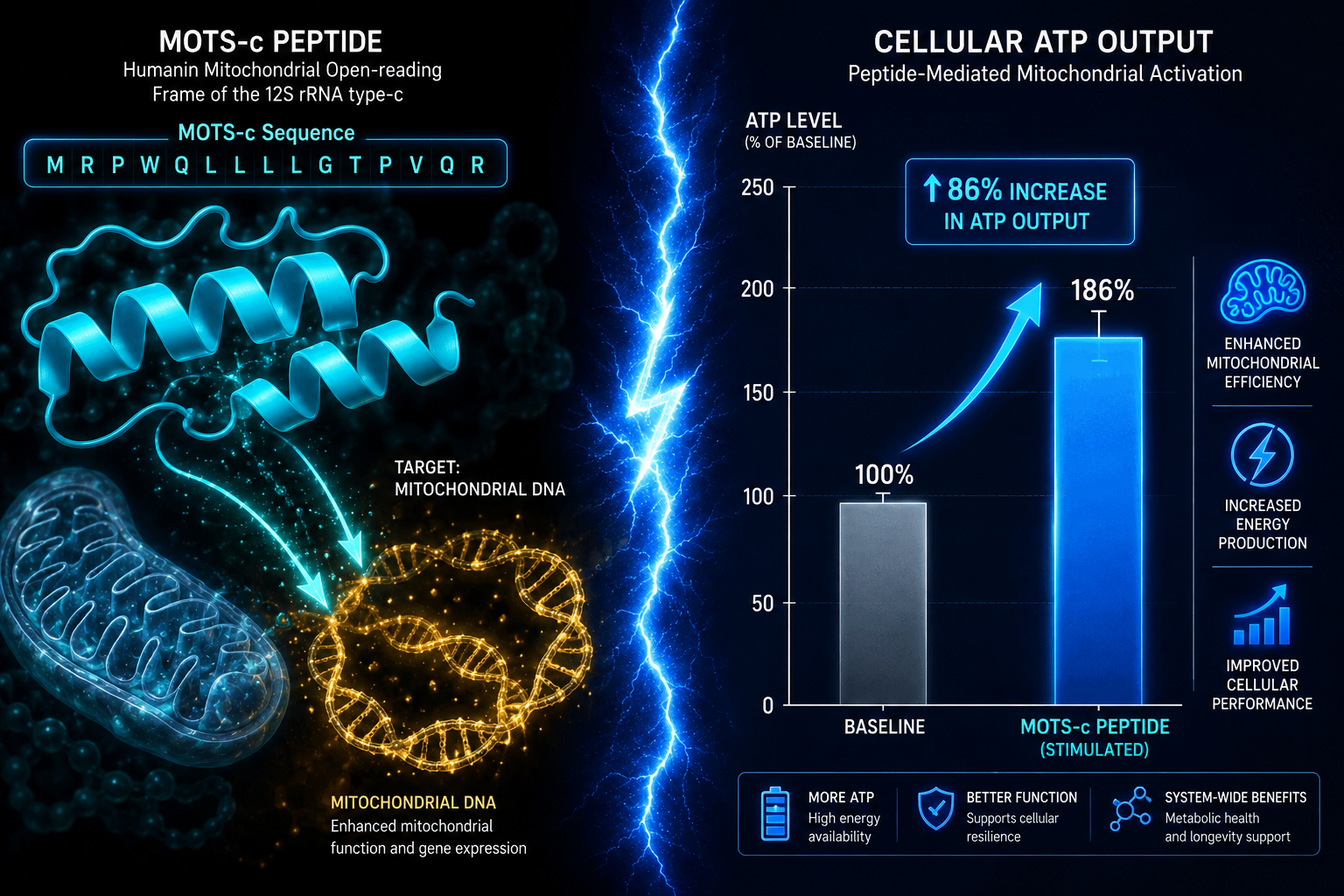
MOTS-c is a 16-amino-acid peptide encoded not by nuclear DNA but by the mitochondrial genome itself — specifically within the 12S rRNA gene. Discovered in 2015, it was the first mitochondrial-encoded peptide shown to act like a hormone throughout the body, establishing mitochondria as true endocrine organelles.

How MOTS-c influences ATP pathways:

  • Inhibits the folate cycle and de novo purine biosynthesis
  • This inhibition raises the intracellular AMP/ATP ratio
  • The elevated ratio activates AMPK
  • AMPK then promotes glucose uptake, fatty acid oxidation, and new mitochondrial growth

In preclinical models, MOTS-c has shown protective effects in metabolic syndrome, aging, and ischemia-reperfusion injury. Its ability to reduce oxidative stress while enhancing glycolysis positions it as a compelling subject in MOTS-c metabolic flexibility research.

"MOTS-c essentially teaches cells to respond to energy stress more efficiently — a biological adaptation with broad implications for metabolic disease research."

5-Amino-1MQ approaches the same problem from a different angle. It is a small-molecule inhibitor of nicotinamide N-methyltransferase (NNMT), an enzyme that consumes nicotinamide — the precursor to NAD+. By blocking NNMT, 5-Amino-1MQ raises intracellular nicotinamide levels, which supports NAD+ synthesis. Higher NAD+ availability feeds directly into the electron transport chain, improving ATP output. Preclinical models have shown weight reduction and enhanced energy metabolism with this compound. For researchers interested in the NAD+/ATP connection, the NAD+ scientific evidence overview provides useful context.


GLP-3 Retatrutide: Hormonal Signaling and Energy Expenditure

Where MOTS-c and 5-Amino-1MQ act at the cellular and enzymatic level, Retatrutide operates through a hormonal signaling cascade — yet the downstream result still connects to Adenosine Triphosphate (ATP), cell energy, and peptide signaling outcomes.

Retatrutide is a synthetic 39-amino-acid peptide built on a GIP backbone, conjugated to a C20 fatty diacid that enables albumin binding and extends its half-life to approximately six days — supporting once-weekly dosing. It functions as a triple agonist, activating:

  1. GIP receptor (highest potency, EC50 = 0.064 nM)
  2. GLP-1 receptor (EC50 = 0.775 nM)
  3. Glucagon receptor (EC50 = 5.79 nM)

This distinguishes it from semaglutide (single GLP-1 agonist) and tirzepatide (dual GIP/GLP-1 agonist). By simultaneously activating all three receptors, Retatrutide reduces food intake, augments insulin secretion, and increases energy expenditure through glucagon-driven thermogenesis.

Phase 2 and Phase 3 clinical trial highlights:

  • Up to 24.2% body weight reduction over 48 weeks (Phase 2)
  • Up to 28.7% body weight reduction over 68 weeks (Phase 3 preliminary data)
  • HbA1c reductions of up to 2.0% in Phase 3 trials
  • Active Phase 3 programs: TRIUMPH (obesity), TRANSCEND (type 2 diabetes), SYNERGY (MASLD/MASH)

Common adverse effects include nausea, vomiting, and gastrointestinal discomfort, typically dose-dependent. Researchers can review the GLP-3 Retatrutide research profile for a deeper look at its mechanism and trial data.

For those studying how GLP-1-class compounds interact with cagrilintide and other metabolic agents, the cagrilintide and GLP-1 synergy page offers relevant comparative data.


Comparing the Three Compounds: Complementary Layers

Compound Primary Target ATP/Energy Link Research Stage
MOTS-c Mitochondrial AMPK axis Direct: raises AMP/ATP ratio Preclinical/early clinical
5-Amino-1MQ NNMT enzyme Indirect: raises NAD+ for ATP synthesis Preclinical
Retatrutide GIP/GLP-1/Glucagon receptors Hormonal: increases energy expenditure Phase 3 clinical

These compounds are not redundant. MOTS-c works inside the mitochondria, 5-Amino-1MQ works at the enzyme level in the cytoplasm, and Retatrutide works through circulating hormonal signals. Together, they represent three distinct layers of metabolic intervention that researchers are exploring for metabolic syndrome, obesity, and age-related energy decline.

Researchers interested in MOTS-c mechanism and research context or broader longevity peptide research themes will find these compounds frequently discussed together in the literature.


Conclusion

The science of Adenosine Triphosphate (ATP), cell energy, and peptide signaling — and where MOTS-c, 5-Amino-1MQ, and GLP-3 Retatrutide fit — points toward a multi-layered model of metabolic intervention. MOTS-c targets the mitochondrial genome's own signaling output to activate AMPK. 5-Amino-1MQ preserves the NAD+ pool that powers the electron transport chain. Retatrutide drives energy expenditure and glycemic control through triple receptor agonism.

Actionable next steps for researchers in 2026:

  • Review the AMPK activation literature before designing MOTS-c protocols
  • Assess NAD+ precursor status when evaluating 5-Amino-1MQ research models
  • Monitor Retatrutide's Phase 3 trial readouts (TRIUMPH, TRANSCEND, SYNERGY) for updated efficacy and safety data
  • Prioritize peptide purity testing when sourcing any research compound to ensure data reliability

Understanding how these three compounds interact with ATP biology is not just academic — it is the foundation for designing more precise, effective metabolic research protocols.

https://www.puretestedpeptides.com/wp-content/uploads/2026/06/Adenosine-Triphosphate-ATP-Cell-Energy-and-Peptide-Signaling-Where-MOTS-c-5-Amino-1MQ-and-GLP-3-Retatrutide-Fit.png 1024 1536 https://www.puretestedpeptides.com/wp-content/uploads/2026/01/buy-peptides-online.jpg 2026-06-23 13:20:502026-06-23 13:20:50Adenosine Triphosphate (ATP), Cell Energy, and Peptide Signaling: Where MOTS-c, 5-Amino-1MQ, and GLP-3 Retatrutide Fit
Peptides and Polypeptides: A Complete Research Guide to Structure, Signaling, and Therapeutic Classes

Peptides and Polypeptides: A Complete Research Guide to Structure, Signaling, and Therapeutic Classes

June 16, 2026/0 Comments/in Uncategorized/by

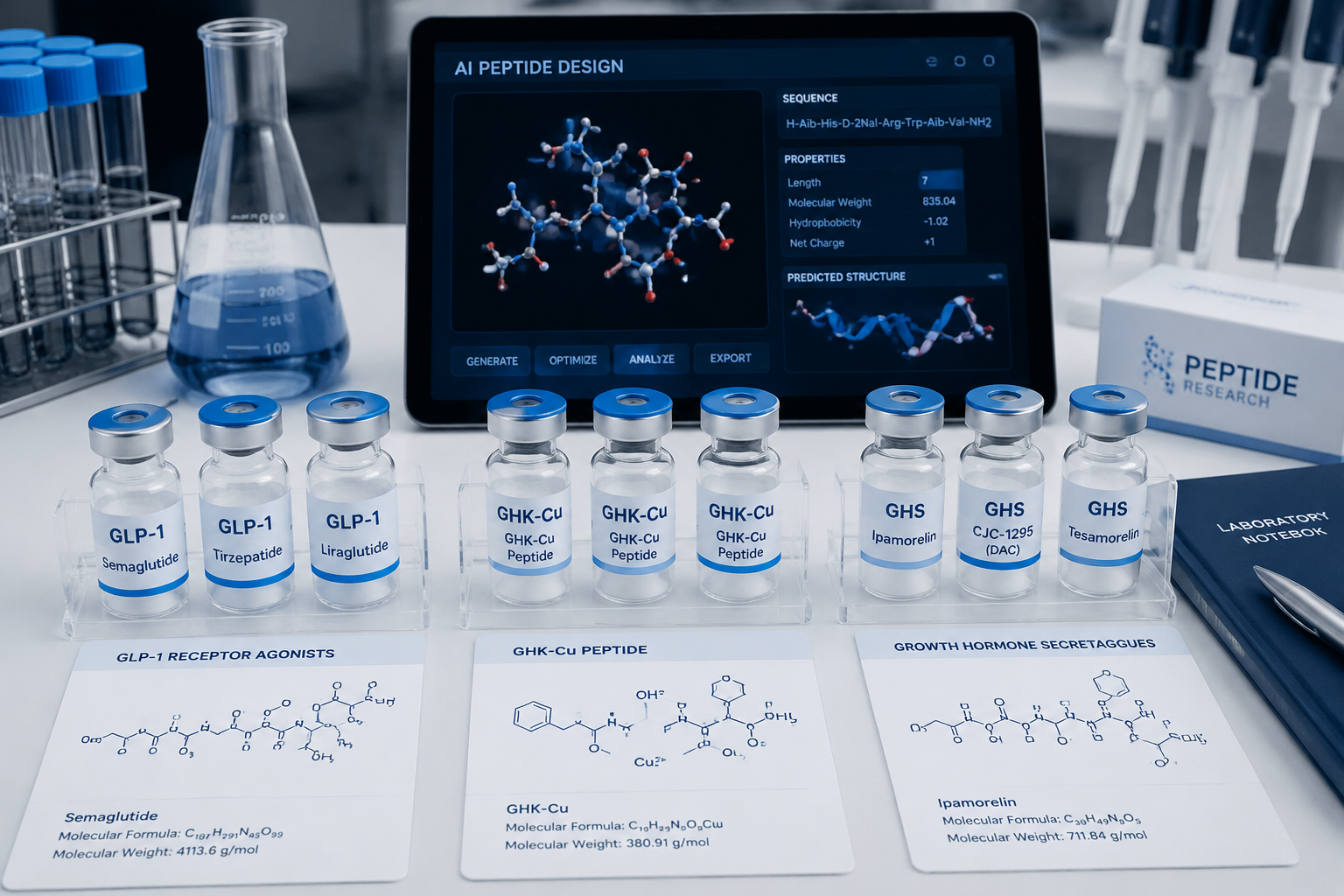
Over 80 peptide-based drugs are currently approved for clinical use worldwide, and that number is accelerating rapidly as manufacturing infrastructure and AI-driven design tools reshape what is possible. For researchers and science-curious readers alike, understanding the foundational biology behind these molecules is the essential first step. This guide to Peptides and Polypeptides: A Complete Research Guide to Structure, Signaling, and Therapeutic Classes builds that foundation — covering molecular structure, receptor signaling, and the major therapeutic categories active in research today.

Key Takeaways

  • Peptides are short amino acid chains (typically 2-50 residues); polypeptides are longer chains that may fold into functional proteins.
  • Peptide bonds form the backbone of all these molecules, and chain length determines biological behavior.
  • Peptides act as signaling molecules, binding receptors to trigger metabolic, regenerative, and neuroactive responses.
  • Major research classes include growth hormone secretagogues, GLP-family metabolic peptides, mitochondrial peptides, and tissue-repair compounds.
  • The global peptide drug pipeline is expanding fast, with new oral delivery formats and AI design tools entering the field in 2026.

Key Takeaways

Structure Basics: What Separates Peptides from Proteins

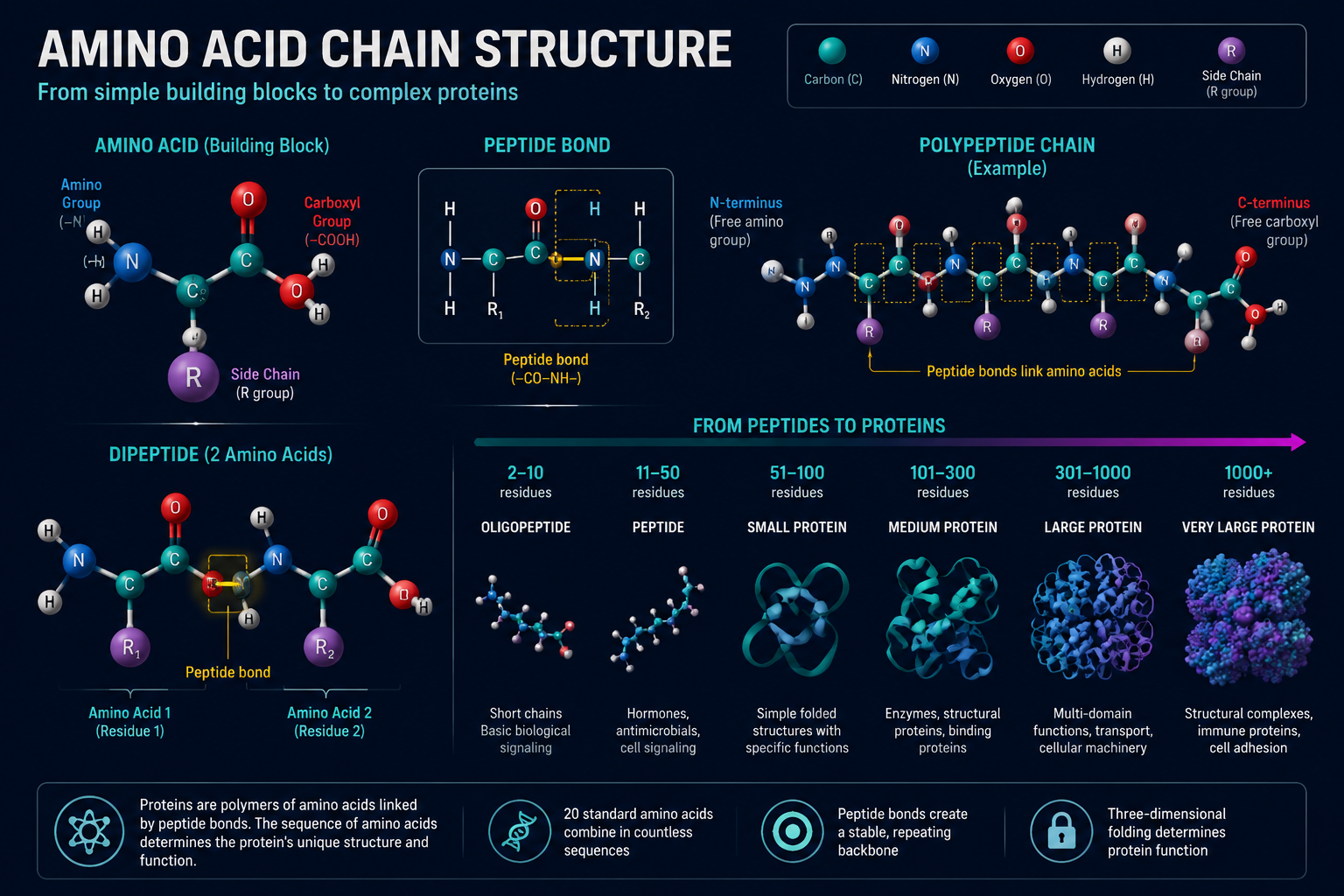
A peptide is a molecule made of two or more amino acids joined by peptide bonds. Each bond forms when the carboxyl group of one amino acid reacts with the amino group of the next, releasing water. The resulting chain is called a polypeptide.

The size distinction matters:

Category Residue Count Example
Dipeptide 2 Carnosine
Oligopeptide 3-10 Glutathione (tripeptide)
Polypeptide 10-50+ GLP-1, BPC-157
Protein 50+ (folded) Insulin, Growth Hormone

Chain length shapes function. Short peptides often act as direct signaling molecules. Longer polypeptides may fold into three-dimensional structures that enable enzymatic or structural roles. Researchers working with simple peptides often start with this size framework to predict solubility, stability, and receptor compatibility.

The primary structure (amino acid sequence) encodes all downstream behavior. Small changes in sequence — even a single residue swap — can dramatically alter receptor binding, half-life, and tissue targeting.


Structure Basics: What Separates Peptides from Proteins

How Peptides Signal: Receptors, Cascades, and Tissue Targets

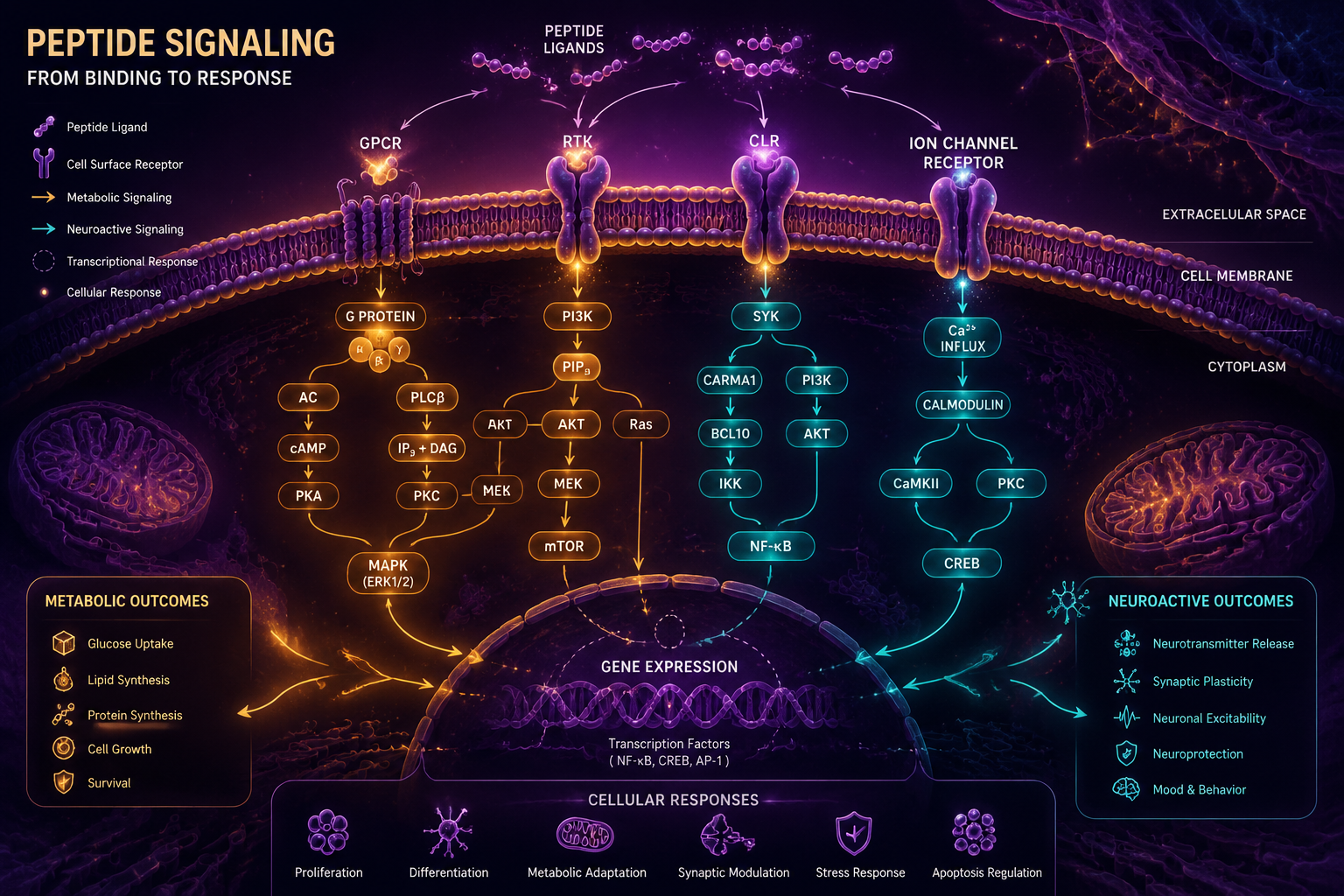
Peptides do not act randomly. They bind specific G protein-coupled receptors (GPCRs) or receptor tyrosine kinases on cell surfaces, triggering intracellular cascades that regulate gene expression, metabolism, and repair.

"A single peptide molecule binding its receptor can initiate a cascade affecting hundreds of downstream proteins — amplification is built into the system."

Key signaling categories in current research include:

  • Metabolic signaling: GLP-1 receptor agonists modulate insulin secretion and appetite. Research into GLP-1 peptide concepts and sourcing reflects intense interest in this pathway.
  • Growth hormone axis: Secretagogues like CJC-1295 and Ipamorelin stimulate pituitary GHRH receptors. The CJC-1295 plus Ipamorelin stack is one of the most studied combinations in this category.
  • Mitochondrial signaling: Peptides such as SS-31 and MOTS-c act on mitochondrial membranes to reduce oxidative stress. Detailed research themes for SS-31 mitochondrial research and MOTS-c metabolic flexibility explore these pathways.
  • Tissue repair: Compounds like BPC-157 and TB-500 influence angiogenesis and cytoskeletal remodeling. The BPC-157 core documentation guide provides a detailed starting point.
  • Neuroactive peptides: Selank and related compounds modulate anxiety and cognition pathways through GABAergic and serotonergic interactions.

Delivery format affects how well a peptide reaches its target receptor. Injectable routes preserve bioavailability, while newer sublingual and nasal spray peptide formats are being developed to improve compliance and absorption.


How Peptides Signal: Receptors, Cascades, and Tissue Targets

Major Therapeutic Classes in 2026 Research

This section of the Peptides and Polypeptides: A Complete Research Guide to Structure, Signaling, and Therapeutic Classes maps the primary research categories active today.

Growth Hormone Secretagogues
These peptides stimulate natural GH release rather than replacing it directly. Tesamorelin, CJC-1295, and Ipamorelin are the most studied. Research themes around body composition and tesa highlight visceral fat reduction as a key area.

GLP-Family Metabolic Peptides
GLP-1, GLP-3/retatrutide, and dual-receptor agonists represent a rapidly evolving class. The GLP-3 and retatrutide incretin research themes page covers next-generation variants.

Mitochondrial and Longevity Peptides
SS-31 and MOTS-c target mitochondrial function and metabolic flexibility. These compounds are gaining traction in aging research.

Regenerative and Skin Matrix Peptides
GHK-Cu is a copper-binding tripeptide studied for collagen synthesis and wound healing. Research into skin matrix biology connects peptide signaling to dermal repair mechanisms.

Industry momentum reinforces the importance of understanding these classes. In early 2026, Lifecore Biomedical and PolyPeptide Laboratories formed a GMP alliance linking domestic API production with fill-finish capacity. SK pharmteco invested $6.1 million to expand U.S. peptide manufacturing. Pinnacle Medicines raised $89 million for oral peptide development targeting asthma and COPD. AI tools like PepTune now generate optimized peptide sequences using diffusion models, compressing design timelines significantly.


Conclusion

Peptides and polypeptides are not a single category — they are a broad molecular language the body uses to coordinate metabolism, repair, and cognition. Understanding chain length, receptor specificity, and signaling class is the prerequisite for evaluating any specific compound.

Actionable next steps for researchers:

  1. Start with structural basics before evaluating any specific peptide compound.
  2. Identify the target receptor class (GPCR, mitochondrial, nuclear) before comparing delivery formats.
  3. Use foundational guides for individual compounds — such as those covering BPC-157, GLP-family peptides, or SS-31 — to move from general understanding to specific research design.
  4. Monitor the rapidly evolving oral and sublingual delivery landscape, as bioavailability improvements are changing research protocols in 2026.

The field is moving fast. A solid structural and signaling foundation makes every subsequent research decision more precise.

https://www.puretestedpeptides.com/wp-content/uploads/2026/06/Peptides-and-Polypeptides-A-Complete-Research-Guide-to-Structure-Signaling-and-Therapeutic-Classes.png 1024 1536 https://www.puretestedpeptides.com/wp-content/uploads/2026/01/buy-peptides-online.jpg 2026-06-16 13:04:522026-06-16 13:04:52Peptides and Polypeptides: A Complete Research Guide to Structure, Signaling, and Therapeutic Classes
×

Helpful Links

  • My account
  • Cart
  • Checkout
  • Refund and Returns Policy
  • Privacy Policy
  • SMS Privacy Policy
  • Login
  • My Account
  • Logout

USA Made Lab Tested Peptides

All products are sold for research, laboratory, or analytical purposes only, and are not for human consumption


Pure Tested Peptides is a chemical supplier. Pure Tested Peptides is not a compounding / chemical compounding facility as defined under 503A of the Federal Food, Drug, and Cosmetic act. Pure Tested Peptides is not an outsourcing facility as defined under 503B of the Federal Food, Drug, and Cosmetic act.

The statements made within this website have not been evaluated by the US Food and Drug Administration. The products we offer are not intended to diagnose, treat, cure or prevent any disease.

Human/Animal Consumption Prohibited. Laboratory/In-Vitro Experimental Use Only

Scroll to top Scroll to top Scroll to top