

Peptides and Polypeptides: A Complete Research Guide to Structure, Signaling, and Therapeutic Classes
Over 80 peptide-based drugs are currently approved for clinical use worldwide, and that number is accelerating rapidly as manufacturing infrastructure and AI-driven design tools reshape what is possible. For researchers and science-curious readers alike, understanding the foundational biology behind these molecules is the essential first step. This guide to Peptides and Polypeptides: A Complete Research Guide to Structure, Signaling, and Therapeutic Classes builds that foundation — covering molecular structure, receptor signaling, and the major therapeutic categories active in research today.
Key Takeaways
- Peptides are short amino acid chains (typically 2-50 residues); polypeptides are longer chains that may fold into functional proteins.
- Peptide bonds form the backbone of all these molecules, and chain length determines biological behavior.
- Peptides act as signaling molecules, binding receptors to trigger metabolic, regenerative, and neuroactive responses.
- Major research classes include growth hormone secretagogues, GLP-family metabolic peptides, mitochondrial peptides, and tissue-repair compounds.
- The global peptide drug pipeline is expanding fast, with new oral delivery formats and AI design tools entering the field in 2026.
Structure Basics: What Separates Peptides from Proteins
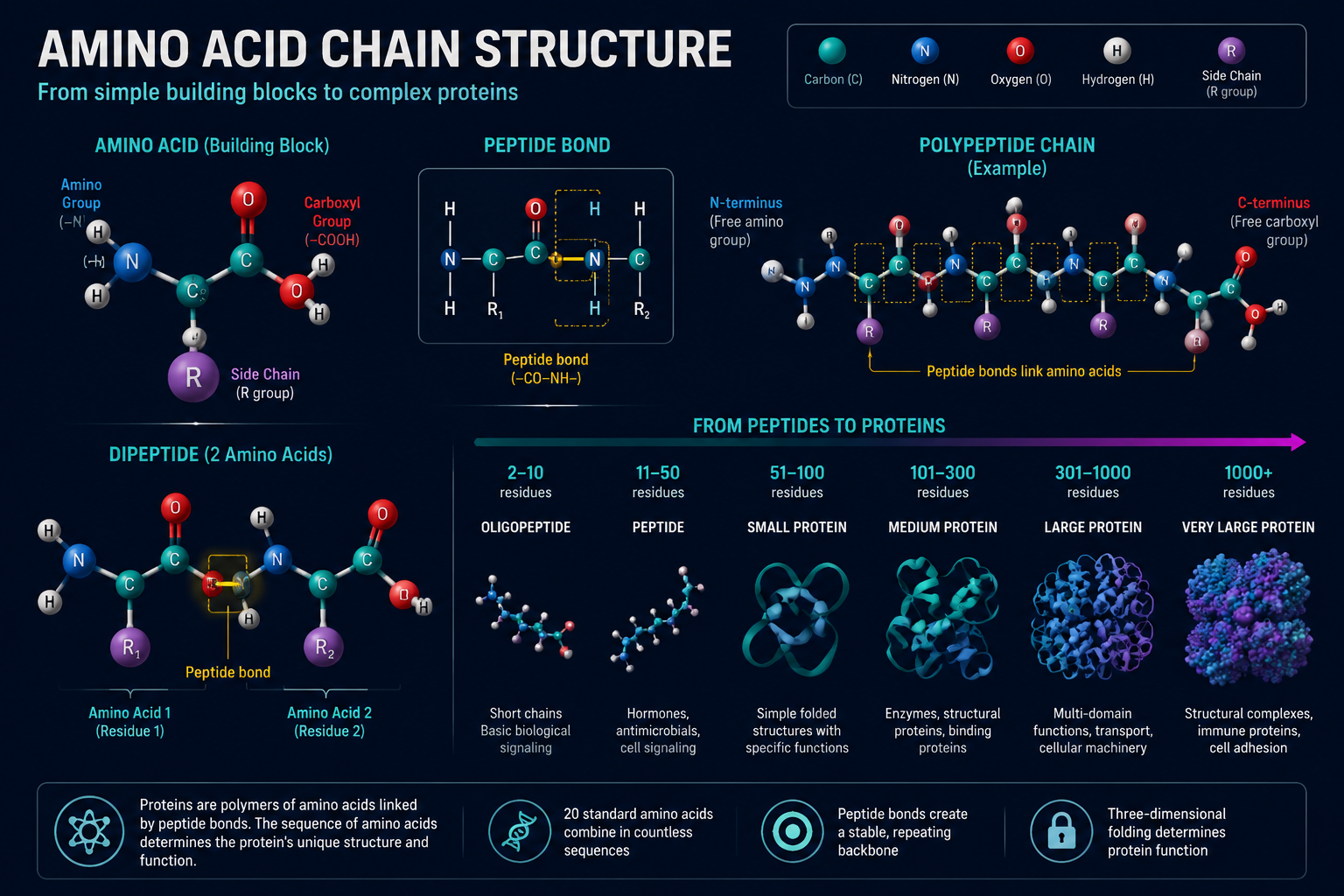
A peptide is a molecule made of two or more amino acids joined by peptide bonds. Each bond forms when the carboxyl group of one amino acid reacts with the amino group of the next, releasing water. The resulting chain is called a polypeptide.
The size distinction matters:
| Category | Residue Count | Example |
|---|---|---|
| Dipeptide | 2 | Carnosine |
| Oligopeptide | 3-10 | Glutathione (tripeptide) |
| Polypeptide | 10-50+ | GLP-1, BPC-157 |
| Protein | 50+ (folded) | Insulin, Growth Hormone |
Chain length shapes function. Short peptides often act as direct signaling molecules. Longer polypeptides may fold into three-dimensional structures that enable enzymatic or structural roles. Researchers working with simple peptides often start with this size framework to predict solubility, stability, and receptor compatibility.
The primary structure (amino acid sequence) encodes all downstream behavior. Small changes in sequence — even a single residue swap — can dramatically alter receptor binding, half-life, and tissue targeting.
How Peptides Signal: Receptors, Cascades, and Tissue Targets
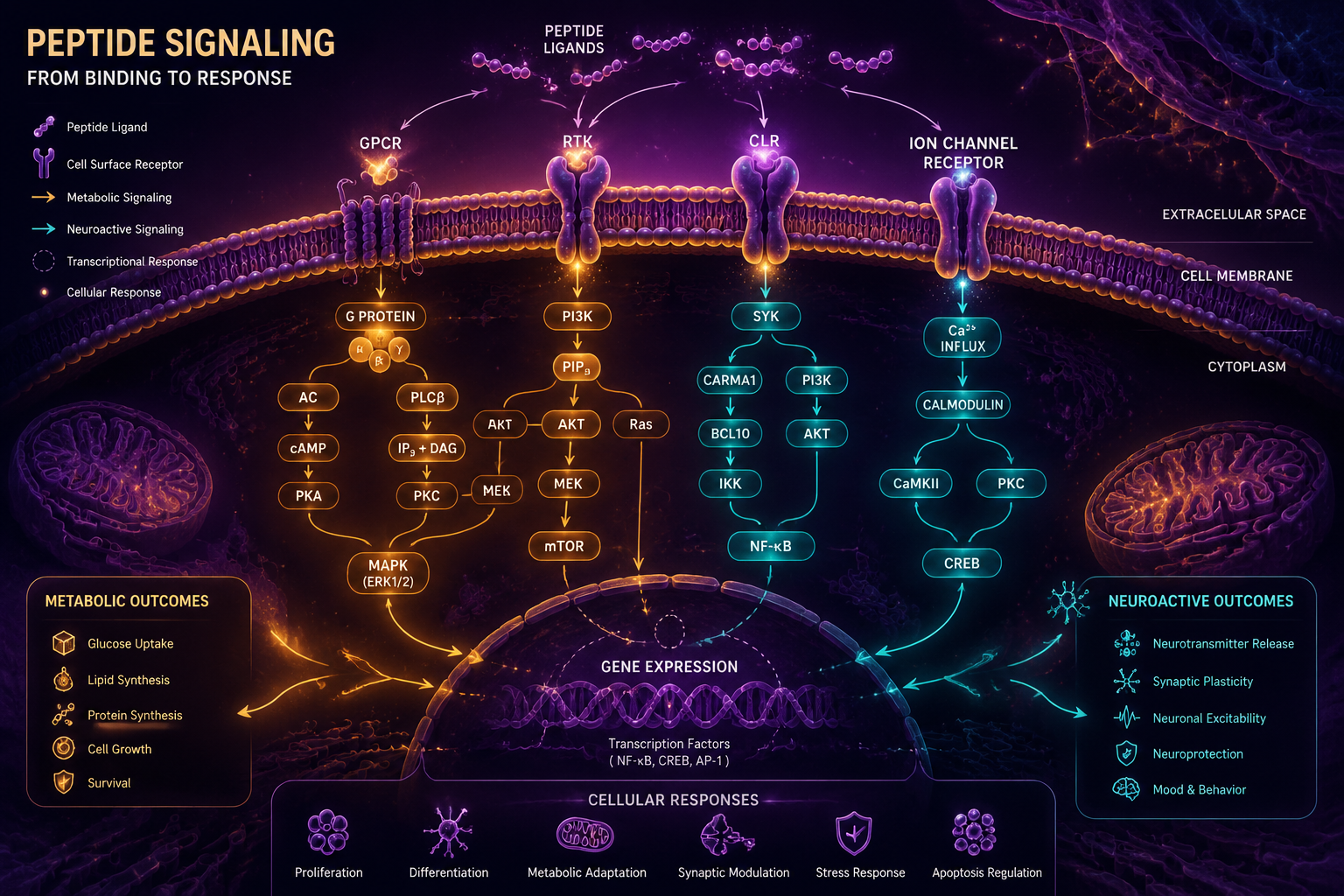
Peptides do not act randomly. They bind specific G protein-coupled receptors (GPCRs) or receptor tyrosine kinases on cell surfaces, triggering intracellular cascades that regulate gene expression, metabolism, and repair.
"A single peptide molecule binding its receptor can initiate a cascade affecting hundreds of downstream proteins — amplification is built into the system."
Key signaling categories in current research include:
- Metabolic signaling: GLP-1 receptor agonists modulate insulin secretion and appetite. Research into GLP-1 peptide concepts and sourcing reflects intense interest in this pathway.
- Growth hormone axis: Secretagogues like CJC-1295 and Ipamorelin stimulate pituitary GHRH receptors. The CJC-1295 plus Ipamorelin stack is one of the most studied combinations in this category.
- Mitochondrial signaling: Peptides such as SS-31 and MOTS-c act on mitochondrial membranes to reduce oxidative stress. Detailed research themes for SS-31 mitochondrial research and MOTS-c metabolic flexibility explore these pathways.
- Tissue repair: Compounds like BPC-157 and TB-500 influence angiogenesis and cytoskeletal remodeling. The BPC-157 core documentation guide provides a detailed starting point.
- Neuroactive peptides: Selank and related compounds modulate anxiety and cognition pathways through GABAergic and serotonergic interactions.
Delivery format affects how well a peptide reaches its target receptor. Injectable routes preserve bioavailability, while newer sublingual and nasal spray peptide formats are being developed to improve compliance and absorption.
Major Therapeutic Classes in 2026 Research
This section of the Peptides and Polypeptides: A Complete Research Guide to Structure, Signaling, and Therapeutic Classes maps the primary research categories active today.
Growth Hormone Secretagogues
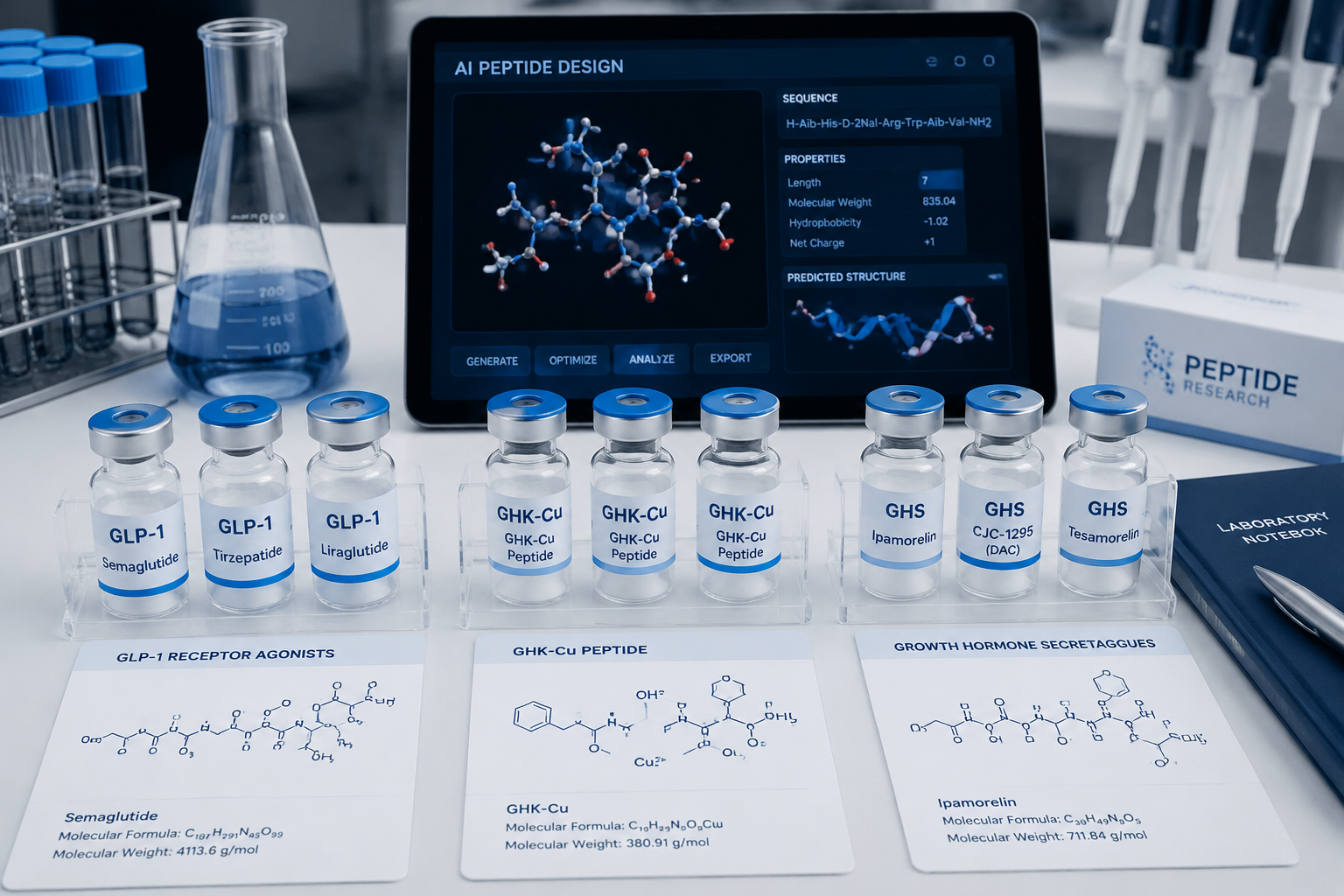
These peptides stimulate natural GH release rather than replacing it directly. Tesamorelin, CJC-1295, and Ipamorelin are the most studied. Research themes around body composition and tesa highlight visceral fat reduction as a key area.
GLP-Family Metabolic Peptides
GLP-1, GLP-3/retatrutide, and dual-receptor agonists represent a rapidly evolving class. The GLP-3 and retatrutide incretin research themes page covers next-generation variants.
Mitochondrial and Longevity Peptides
SS-31 and MOTS-c target mitochondrial function and metabolic flexibility. These compounds are gaining traction in aging research.
Regenerative and Skin Matrix Peptides
GHK-Cu is a copper-binding tripeptide studied for collagen synthesis and wound healing. Research into skin matrix biology connects peptide signaling to dermal repair mechanisms.
Industry momentum reinforces the importance of understanding these classes. In early 2026, Lifecore Biomedical and PolyPeptide Laboratories formed a GMP alliance linking domestic API production with fill-finish capacity. SK pharmteco invested $6.1 million to expand U.S. peptide manufacturing. Pinnacle Medicines raised $89 million for oral peptide development targeting asthma and COPD. AI tools like PepTune now generate optimized peptide sequences using diffusion models, compressing design timelines significantly.
Conclusion
Peptides and polypeptides are not a single category — they are a broad molecular language the body uses to coordinate metabolism, repair, and cognition. Understanding chain length, receptor specificity, and signaling class is the prerequisite for evaluating any specific compound.
Actionable next steps for researchers:
- Start with structural basics before evaluating any specific peptide compound.
- Identify the target receptor class (GPCR, mitochondrial, nuclear) before comparing delivery formats.
- Use foundational guides for individual compounds — such as those covering BPC-157, GLP-family peptides, or SS-31 — to move from general understanding to specific research design.
- Monitor the rapidly evolving oral and sublingual delivery landscape, as bioavailability improvements are changing research protocols in 2026.
The field is moving fast. A solid structural and signaling foundation makes every subsequent research decision more precise.