

Understanding Peptide Stability: A Guide to Optimizing Storage and Handling for Research Purity
A single improper storage decision can reduce a peptide's purity from over 98% to below 90% in less than four weeks. For researchers who depend on precise, reproducible results, that loss is not just inconvenient, it can invalidate entire experimental protocols. This guide to understanding peptide stability covers the essential storage and handling practices that protect research-grade compounds from the most common degradation threats.
Key Takeaways
- Lyophilized peptides stored at -20°C or below can remain stable for 2 to 3 years; reconstituted peptides degrade far more quickly.
- Five primary degradation pathways, hydrolysis, oxidation, deamidation, aggregation, and racemization, threaten purity at every stage.
- Aliquoting reconstituted peptides into single-use portions dramatically reduces freeze-thaw damage.
- Bacteriostatic water extends the usable life of reconstituted peptides compared to sterile water alone.
- HPLC and mass spectrometry remain the gold-standard methods for verifying purity after storage.
The Five Degradation Pathways Every Researcher Must Know
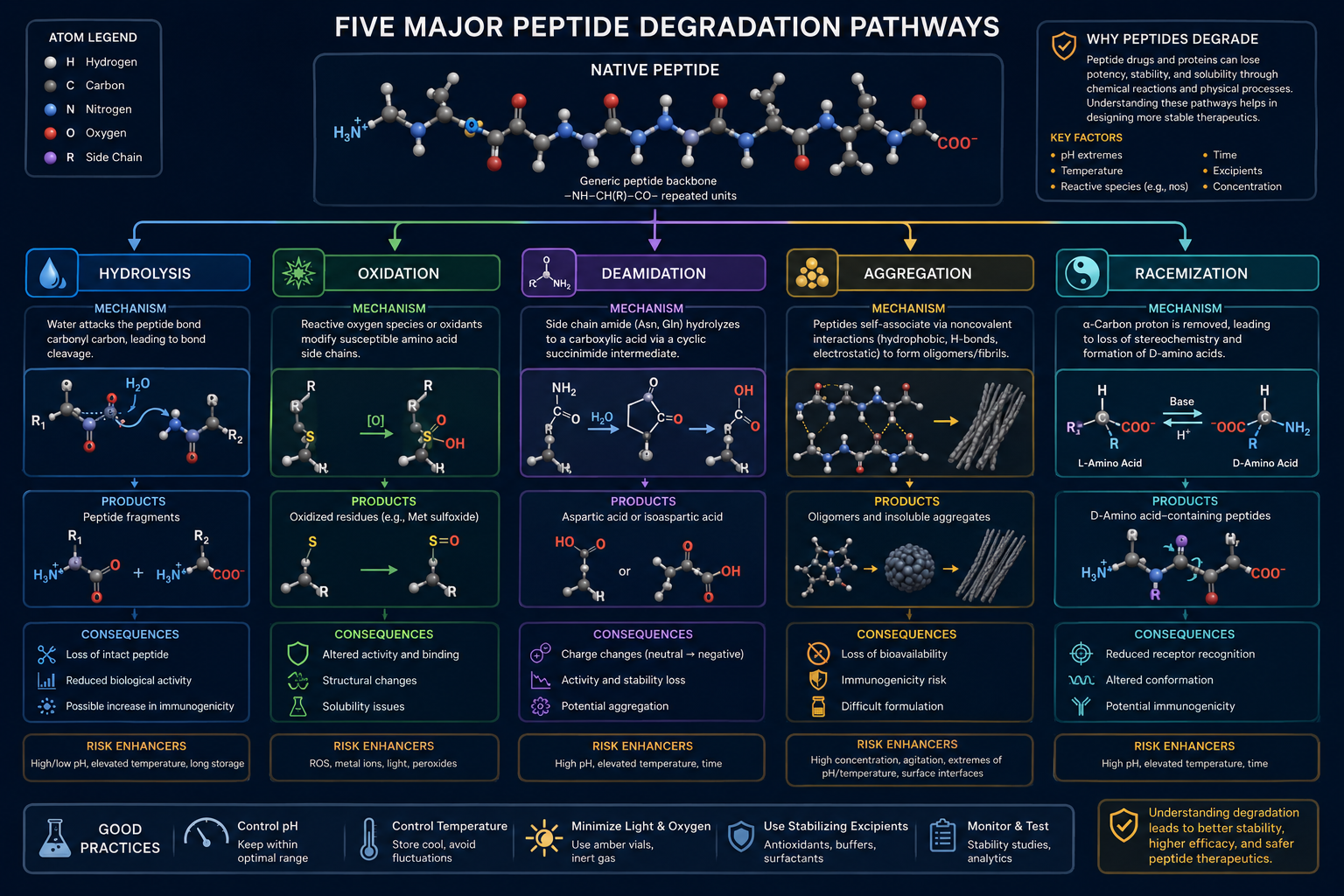
A foundational part of understanding peptide stability is recognizing how compounds break down. Peptides degrade through five main chemical and physical pathways:
| Degradation Pathway | Primary Trigger | Key Prevention Strategy |
|---|---|---|
| Hydrolysis | Moisture exposure | Sealed vials, low-humidity handling |
| Oxidation | Oxygen, light | Amber containers, inert atmosphere |
| Deamidation | Heat, alkaline pH | Cold storage, correct solvent pH |
| Aggregation | Freeze-thaw cycling | Single-use aliquots |
| Racemization | Heat, extreme pH | Stable temperature, proper solvent |
Each pathway can occur independently or in combination. Hydrolysis is among the most common, triggered by even trace moisture entering a vial. Oxidation is accelerated by light exposure, which is why amber or opaque containers are standard in professional research settings. Aggregation, where peptide chains clump together and lose bioactivity, is most often caused by repeated freeze-thaw cycles.
Researchers working with sensitive compounds such as those explored in longevity peptide research or mitochondria-targeted molecules like those covered in the MOTS-C mitochondrial peptide overview must be especially attentive to these pathways, as structural integrity directly affects experimental outcomes.
Storage Conditions: Lyophilized vs. Reconstituted Peptides
Understanding peptide stability requires treating lyophilized and reconstituted peptides as two distinct categories with very different requirements.
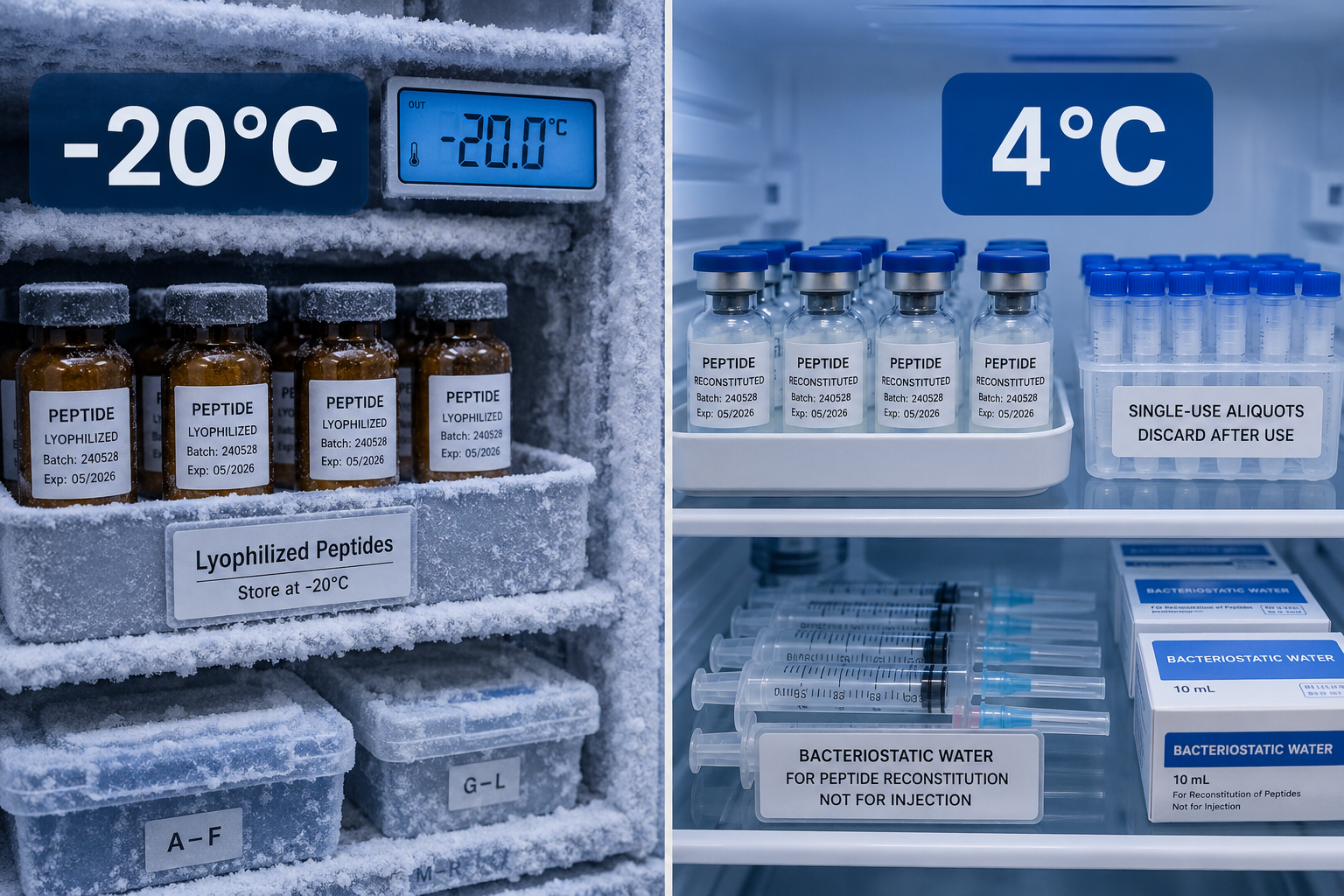
Lyophilized (freeze-dried) peptides are the more stable form. When stored at -20°C or below in sealed, moisture-protected vials, they can remain viable for 2 to 3 years. The freeze-drying process removes water, which is the primary driver of hydrolytic breakdown. Handling lyophilized peptides in low-humidity environments and ensuring vials are tightly sealed before returning them to cold storage is essential.
Reconstituted peptides are considerably more vulnerable. Research monitoring eight common peptides in bacteriostatic water at 4°C over 30 days found average purity retention of 98.2% at day 7, dropping to 91.3% by day 28. This decline underscores the importance of using reconstituted peptides promptly and storing them correctly.
"Bacteriostatic water extends the usable life of reconstituted peptides by inhibiting microbial growth, a meaningful advantage over sterile water for short-term research use."
Standard short-term storage for reconstituted peptides is 2 to 8°C, typically supporting a usable window of 30 to 60 days depending on the specific compound. For peptides like those discussed in the TB-500 muscle recovery research overview or GHK-Cu longevity research themes, following these guidelines helps ensure data reliability.
Practical Handling Protocols for Maintaining Research Purity
Optimizing storage and handling for research purity extends beyond temperature settings. The physical act of reconstitution matters.
Best practices for reconstitution:
- Add solvent slowly along the inside wall of the vial rather than directly onto the lyophilized cake.
- Swirl gently, never vortex, to dissolve the peptide without causing mechanical denaturation.
- Allow the vial to reach room temperature before opening to prevent condensation from entering.
Aliquoting strategy is equally important. Dividing a reconstituted batch into single-use portions before freezing eliminates the need to repeatedly thaw and refreeze the same vial. Each freeze-thaw cycle risks aggregation and structural damage.
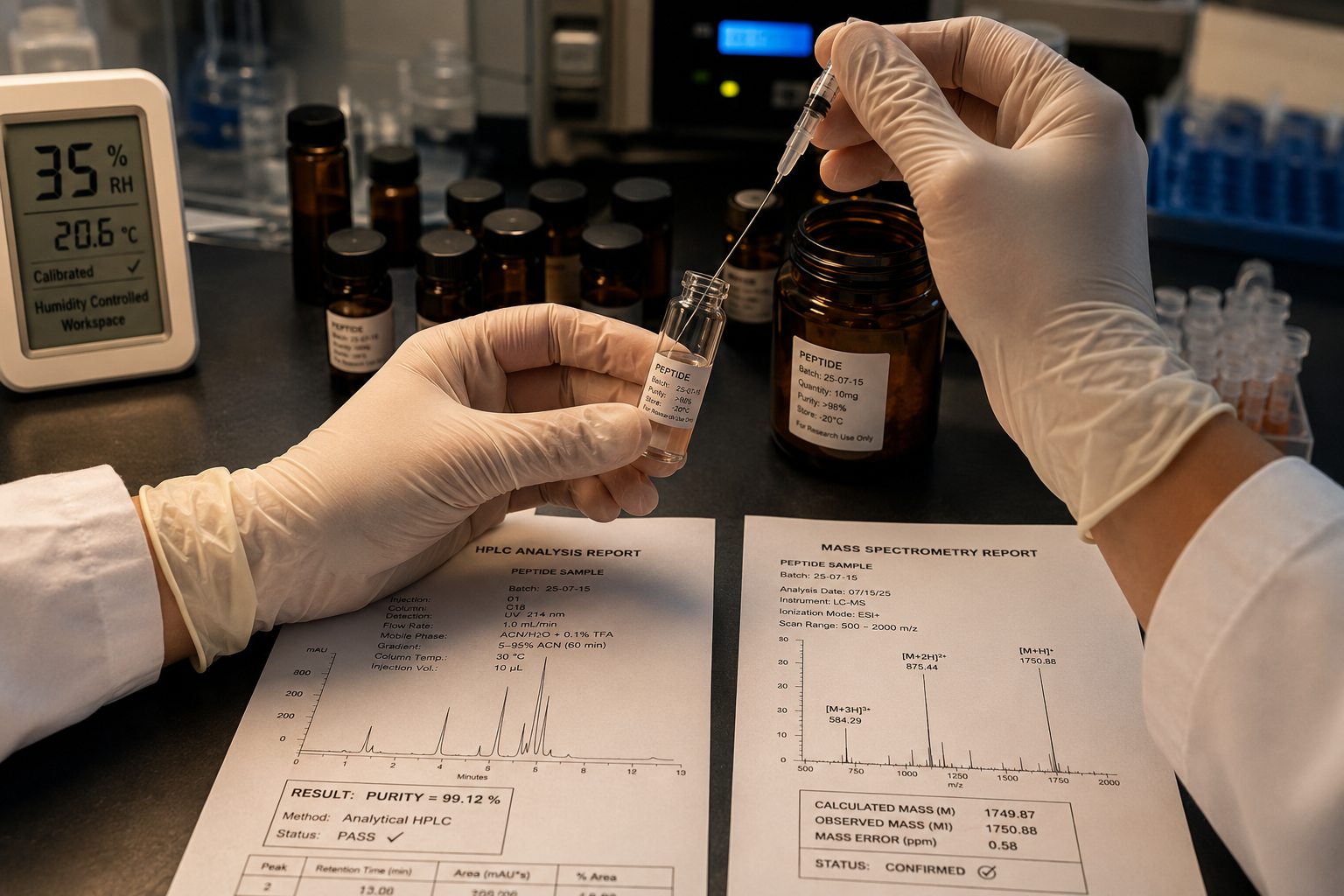
For researchers sourcing compounds, peptide purity testing provides a clear framework for evaluating quality before storage even begins. Verifying purity at the point of purchase using HPLC and mass spectrometry data ensures the baseline is sound. Those exploring newer compounds can also review what is new in peptide research for evolving best practices.
Light protection is another often-overlooked factor. Peptides susceptible to photodegradation, including many aromatic amino acid-containing sequences, should be stored in amber containers and handled away from direct light sources.
For those interested in sourcing verified compounds, lab-tested peptides with documented purity certificates reduce the variables that compromise downstream research integrity.
Conclusion
Protecting peptide purity is not a passive process. It requires deliberate decisions at every stage, from the moment a lyophilized vial arrives to the final use of a reconstituted aliquot. The core actions are clear: store lyophilized peptides at -20°C or below, reconstitute with bacteriostatic water, aliquot before freezing, shield from light and moisture, and verify purity with HPLC or mass spectrometry before critical experiments. Researchers who treat these protocols as non-negotiable will see more consistent, reproducible results and fewer compromised data sets. Start by auditing current storage conditions, identify any gaps against the guidelines above, and implement changes systematically to build a more reliable research workflow.