Call or Text 727-513-9780
  • Shopping Cart Shopping Cart
    0Shopping Cart
Pure Tested Peptides | America's most trusted Peptides for sale online
  • Peptides for sale
    • Oral Peptides for sale
      • Peptide Capsules for sale
      • BPC 157 Capsules 1000mcg
      • SLU-PP-332 Capsules | 1000 mcg
      • 5-Amino-1MQ 50mg Capsules
      • Tesofensine 500mcg
    • All Peptides for sale
    • Peptide Sprays
      • BPC 157 Nasal Spray Kit
      • BPC-157 TB500 Nasal Spray Kit
      • Semax Nasal Spray 10mg
      • Selank – Nasal Spray Kit – 10mg
      • Epithalon 50MG Nasal Spray Kit
      • Ipamorelin 10mg Nasal Spray
      • Klow Nasal Spray (BPC-157 + TB-500 + GHK-Cu + KPV) | 80mg
      • Hulk Nasal Spray Tesa / Ipa Blend 6/3 MG
      • Klow Nasal Spray
      • NAD + 500 mg Nasal Spray
      • PT-141 Nasal Spray Kit
    • GHRH Peptides
      • Ipa Peptides
      • CJC-1295 Peptides
        • CJC-1295 with DAC 5 mg
        • CJC-1295 without DAC 5 mg
        • CJC-1295 Ipa 10mg
      • Tesa Peptides
        • Tesa Peptide
        • Tesa 20 mg
    • GHK-Cu Peptides
      • All GHK-Cu Peptides
      • GHK-Cu 100mg
      • KLOW Peptide Blend – Buy KLOW blend online
    • BPC Peptides
      • All BPC Peptides
      • BPC-157
      • BPC-157 TB-500
      • BPC 157 capsules 1000mcg
    • SLU-PP-332 Peptides
      • All SLU-PP-332 Peptides
      • SLU-PP-332 5mg
    • GLP3 Peptides
      • GLP3-R
      • GLP3-R CAG 10mg
      • GLP3-R 20mg
    • PT-141 Peptides
      • PT-141 Peptides for sale
      • PT-141 10mg
      • PT-141 Nasal Spray
    • CAG Peptides
      • Lipo-C Peptide Blend
      • CAG 5mg
      • CAG 10mg
    • MOTS-C Peptides
      • MOTS-C Peptides for sale
      • MOTS-c peptide
      • MOTS-c 10mg *6 pack*
    • 5 Amino 1MQ Peptides
      • 5 Amino 1MQ Peptides for sale
      • 5-Amino-1MQ 50mg Capsules
      • 5-Amino-1MQ 5mg
    • Epithalon Peptides
      • Epithalon Peptides for sale
      • Epithalon 10mg
      • Epithalon 50mg
  • Shop
    • GLPs
      • 5-Amino-1MQ 50mg Capsules
      • 5-Amino-1MQ 5mg
      • GLP3-Reta
      • L-Carnitine 500mg/ml
      • Tesofensine 500mcg
      • SLU-PP-332 5mg
      • MOTS-c 10mg *6 pack*
    • Epithalon & BPC Peptides
      • Epithalon 10mg
      • Epithalon 50mg
      • BPC-157
      • BPC 157 capsules 1000mcg
      • BPC-157 TB-500
      • BPC-157 TB500 Nasal Spray Kit
      • BPC 157 Nasal Spray Kit
    • BPC TB-500 & NAD+ Peptides
      • NAD+ 500 mg
      • KLOW Peptide Blend – Buy KLOW blend online
      • GLOW Peptide Blend
      • TB 500 5mg
      • BPC 157 capsules 1000mcg – Supplement
      • BPC 157 Nasal Spray Kit
      • BPC-157
      • BPC-157 TB500 Nasal Spray Kit
      • BPC-157 TB-500
      • BPC 157 capsules 1000mcg
    • LL-37 Peptide
      • LL-37 10 mg
    • MOTS-C & Selank
      • MOTS-c peptide
      • Selank 10mg
    • GHK Peptides
      • GHK-Cu 100mg
      • GLOW Peptide Blend
      • KLOW Peptide Blend – Buy KLOW blend online
  • COAs
  • Wholesale
    • Wholesale Peptides for sale
  • PTP FAQ
  • Affiliates
    • Affiliate Program
    • Affiliate Signup
  • Contact
    • Contact Customer Service
    • Text Customer Support
  • About US
  • Shop all peptides
  • Login / Register Login / Register Page Link Login / Register Page Link
  • Click to open the search input field Click to open the search input field Search
  • Menu Menu

Tag Archive for: weight loss peptide

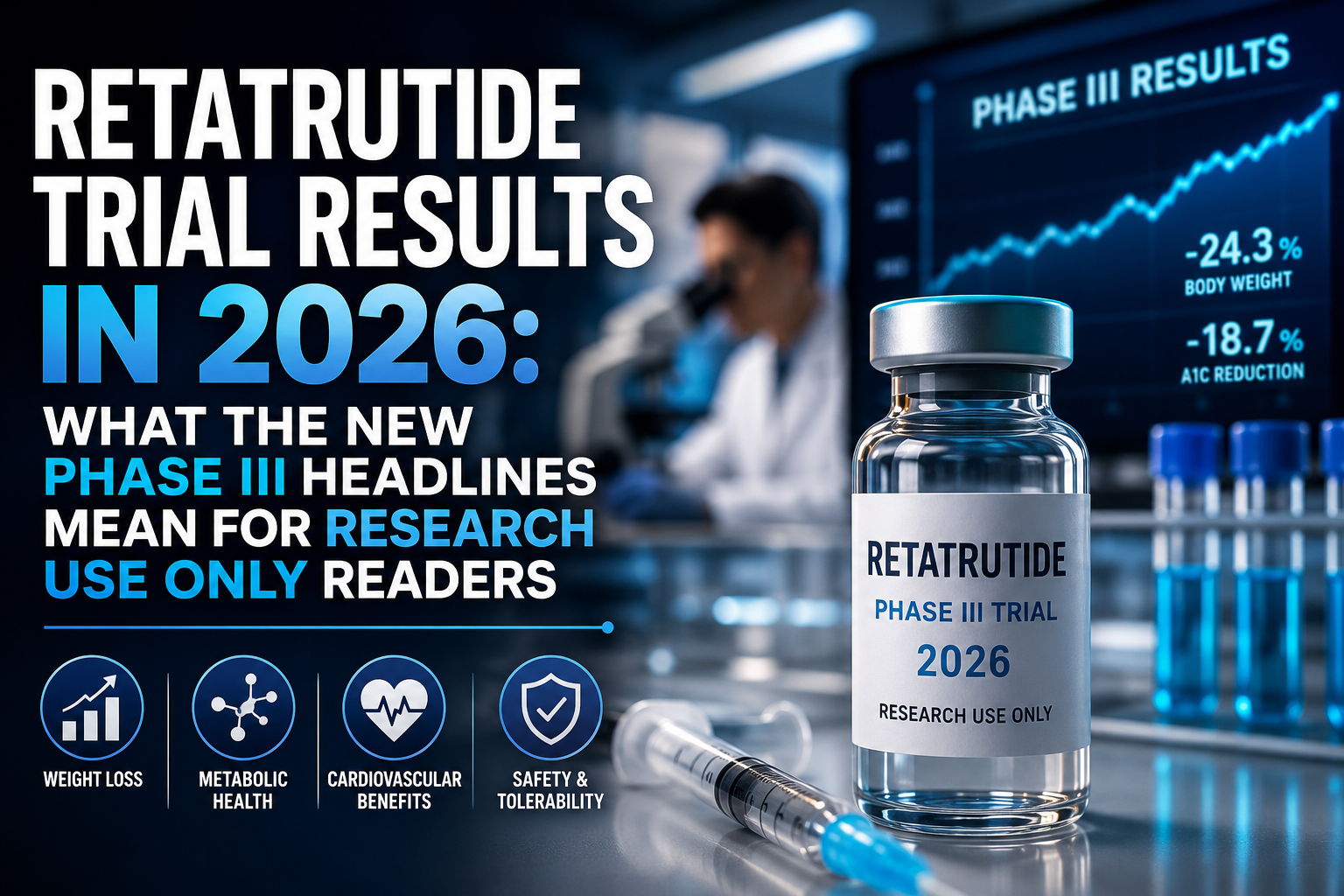
Retatrutide Trial Results in 2026: What the New Phase III Headlines Mean for Research Use Only Readers

Retatrutide Trial Results in 2026: What the New Phase III Headlines Mean for Research Use Only Readers

June 15, 2026/0 Comments/in Uncategorized/by

{"cover":"Professional landscape format (1536×1024) hero image with bold text overlay: 'Retatrutide Phase III Results 2026' in extra large 72pt white bold sans-serif font with dark semi-transparent overlay box, centered upper-third composition. Background shows a clean pharmaceutical research laboratory with glowing molecular structure models, clinical trial data charts on screens, and soft blue lighting. Color palette: deep navy blue, crisp white, and electric teal accents. Magazine cover aesthetic, high contrast, editorial quality, science-forward visual style.","content":["Landscape format (1536×1024) scientific infographic illustration showing a triple hormone receptor diagram with GLP-1, GIP, and glucagon receptor nodes connected by glowing pathways, overlaid on a clean white clinical background. Include subtle weight loss percentage data callouts (28.3% at 80 weeks, 30.3% at 104 weeks) as floating annotation labels in teal and navy. Modern flat-design aesthetic with molecular iconography, research-lab feel, no people, data-visualization focus.","Landscape format (1536×1024) editorial-style split comparison image: left side shows a detailed bar chart comparing retatrutide weight loss outcomes versus bariatric surgery benchmarks (25-35% range), right side shows smaller secondary charts for HbA1c reduction, AHI sleep apnea improvement, and WOMAC knee pain score reduction. Clean white background with navy and teal color scheme, bold percentage labels, professional medical data visualization aesthetic, no people, clinical research context.","Landscape format (1536×1024) overhead flat-lay research desk scene showing a printed Phase III clinical trial document labeled TRIUMPH-1, a glass vial with peptide label, a researcher notebook with handwritten protocol notes, and a laptop displaying a peptide sourcing checklist. Soft natural lighting from upper left, muted neutral tones with teal accent highlights, research-use-only stamp visible on document corner, clean and professional editorial composition."]

Professional landscape hero image () with : "Retatrutide Trial Results in 2026: What the New Phase III Headlines Mean for

A weight-loss drug that matches bariatric surgery outcomes without an operating room — that is the headline now circulating across the research community. The Retatrutide Trial Results in 2026 have moved from Phase II speculation into confirmed Phase III data, and the numbers are forcing researchers to rethink what pharmacological intervention can realistically achieve. For research-use-only readers tracking this compound, understanding what changed, what was confirmed, and what still remains open is essential before drawing any conclusions.

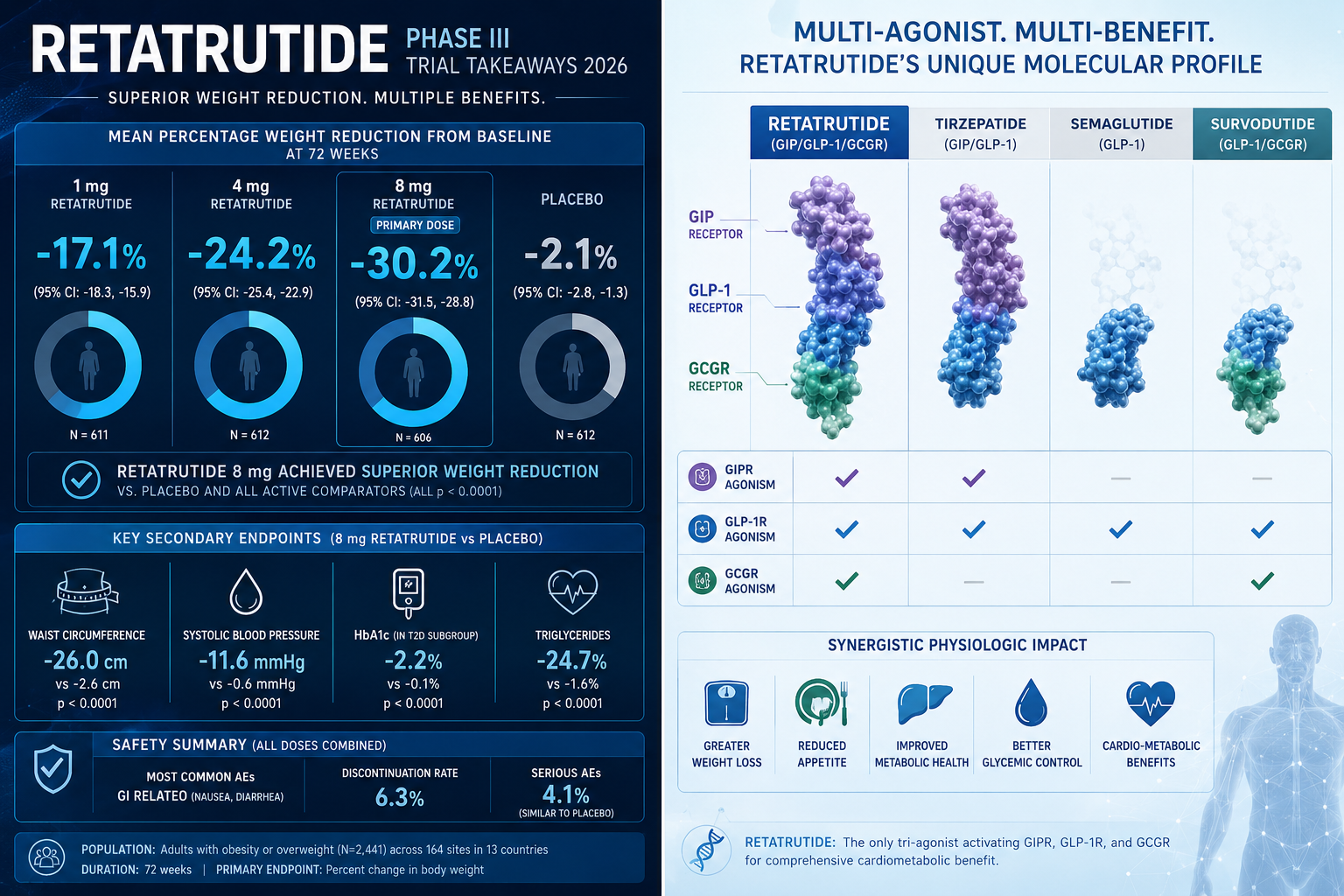
Split-screen medical research infographic visualizing key Retatrutide Phase III trial takeaways in 2026, left side showing

Key Takeaways

  • Retatrutide is a triple agonist targeting GLP-1, GIP, and glucagon receptors simultaneously.
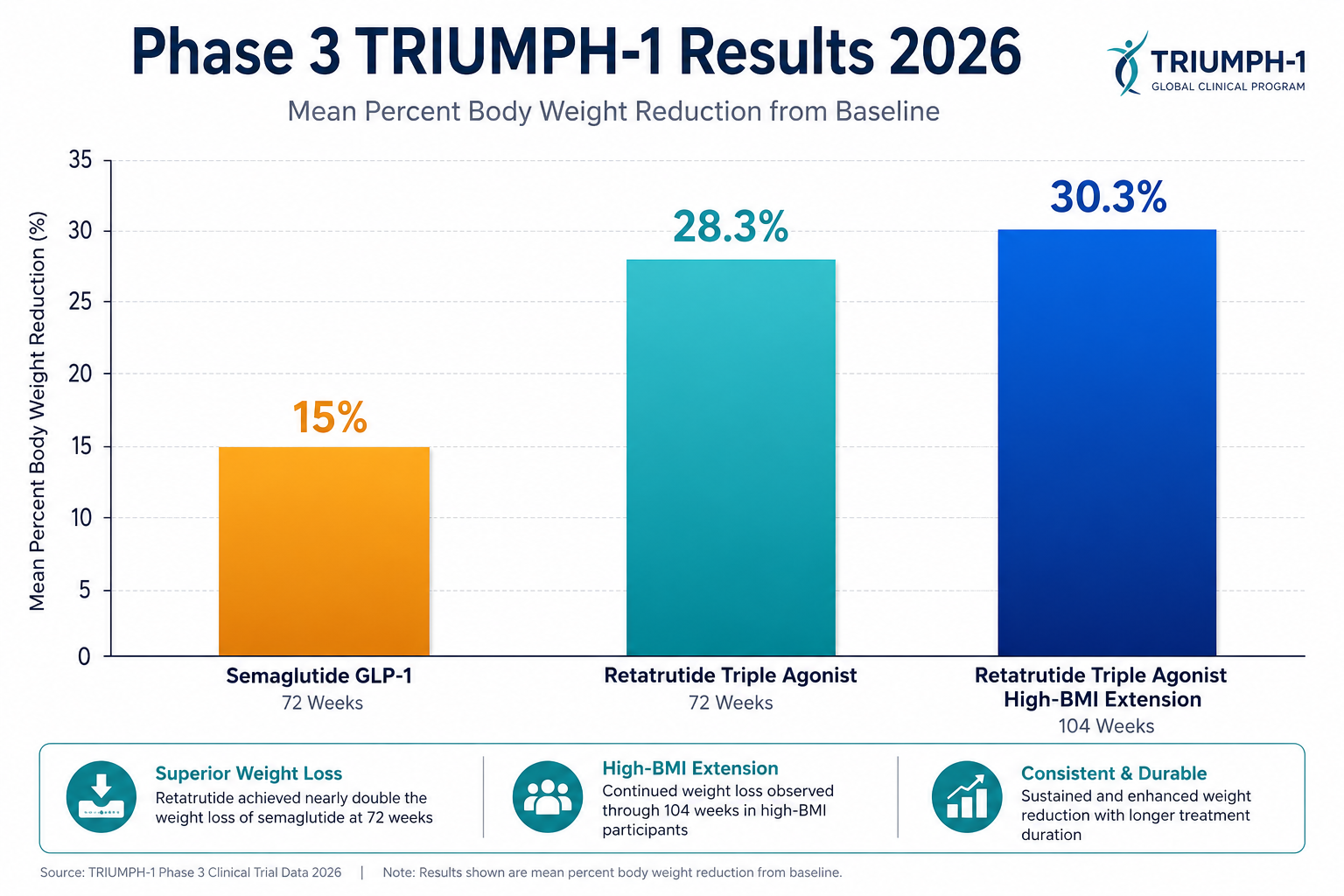
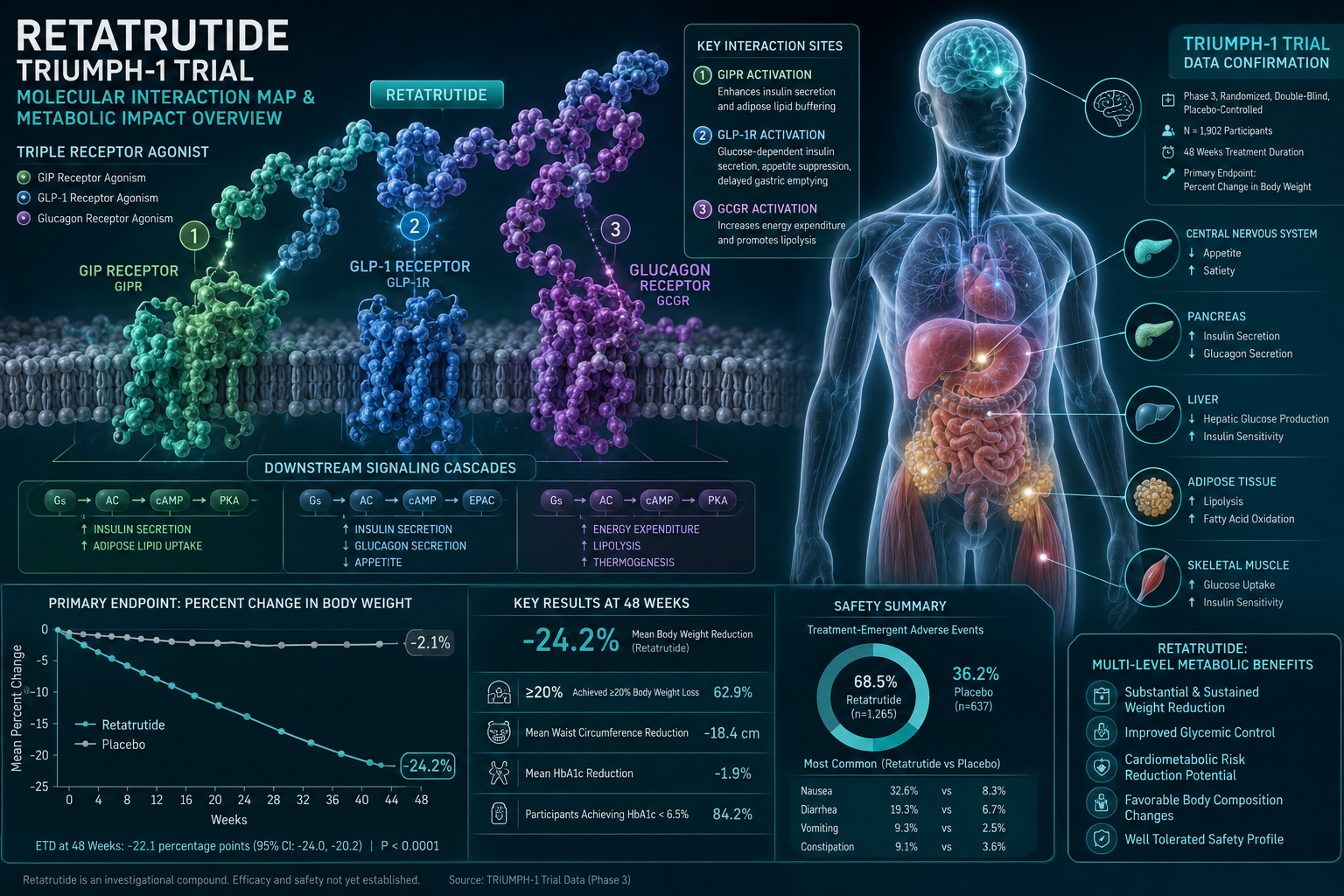
  • TRIUMPH-1 Phase III data showed an average weight loss of 28.3% at 80 weeks and 30.3% at 104 weeks on the 12 mg dose.
  • Beyond weight, the trial documented improvements in cardiovascular markers, sleep apnea severity, knee osteoarthritis pain, and glycemic control.
  • Weight loss outcomes are now comparable to bariatric surgery benchmarks of 25-35%.
  • Regulatory review is anticipated, but research-use-only readers should track sourcing standards and documentation carefully.

What the Phase III TRIUMPH-1 Data Actually Confirmed

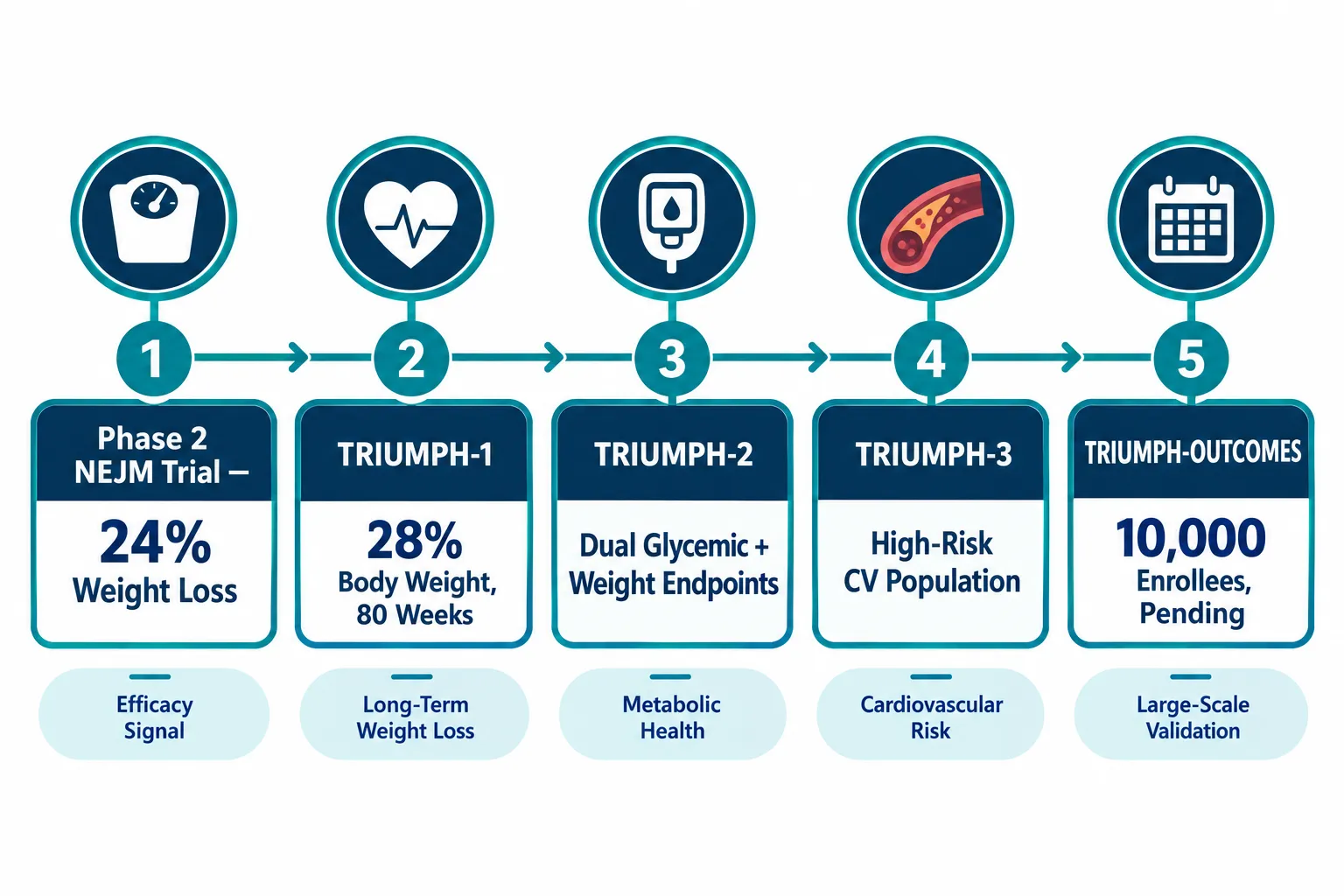
The TRIUMPH-1 trial delivered the clearest picture yet of retatrutide's weight-reduction potential. Participants receiving the 12 mg weekly dose lost an average of 28.3% of body weight — roughly 70.3 lbs — over 80 weeks. A pre-specified extension pushed that figure to 30.3%, or approximately 85.0 lbs, at 104 weeks.

Perhaps more striking than the raw weight numbers are the BMI reclassifications. Among participants on the 12 mg dose:

  • 65.3% dropped below a BMI of 30, exiting the obesity category entirely
  • 33.3% reached a BMI under 25, classified as normal weight

These are not incremental improvements. They represent a categorical shift in health status for a majority of participants.

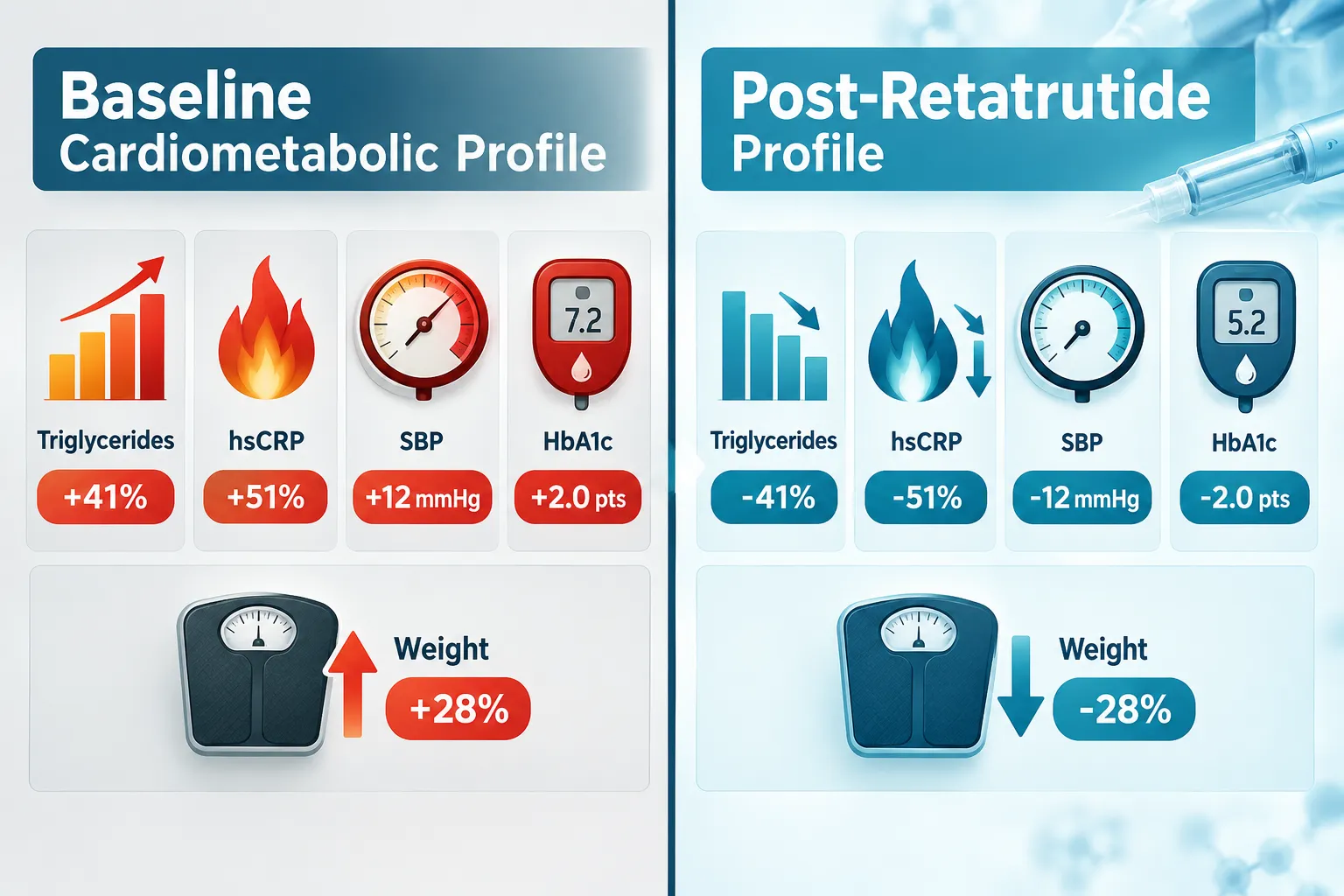
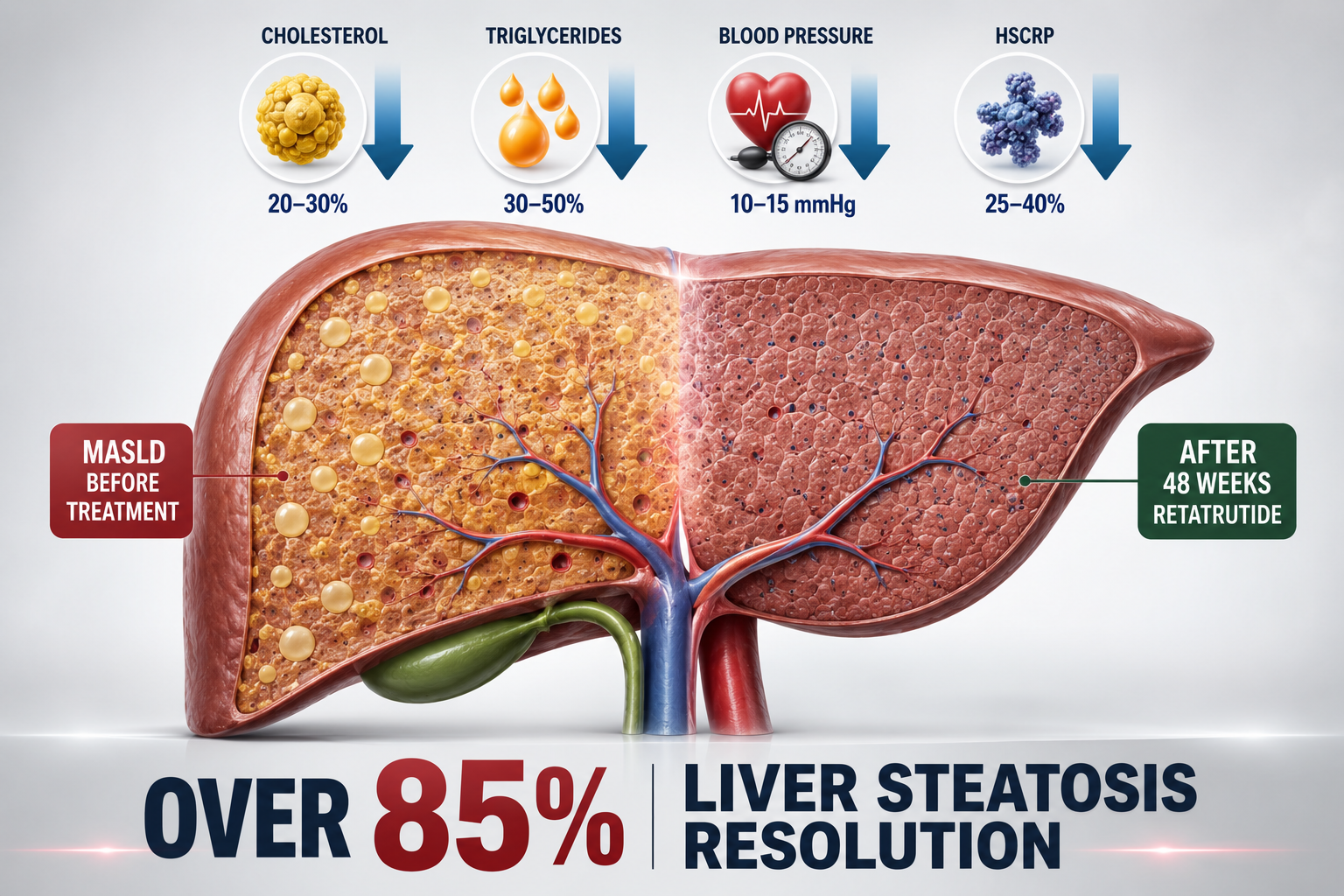
Cardiovascular markers also improved. Researchers documented reductions in waist circumference, non-HDL cholesterol, triglycerides, systolic blood pressure, and high-sensitivity C-reactive protein (hsCRP) — a cluster of risk factors that typically resist lifestyle intervention alone.

"The weight loss achieved with retatrutide is now comparable to outcomes typically associated with bariatric surgery, which generally results in 25% to 35% weight loss depending on the procedure."

For readers sourcing GLP-1 class peptides for research documentation, these Phase III benchmarks provide a meaningful reference point for experimental design.


Beyond Weight: Secondary Endpoints That Changed the Conversation

Beyond Weight: Secondary Endpoints That Changed the Conversation

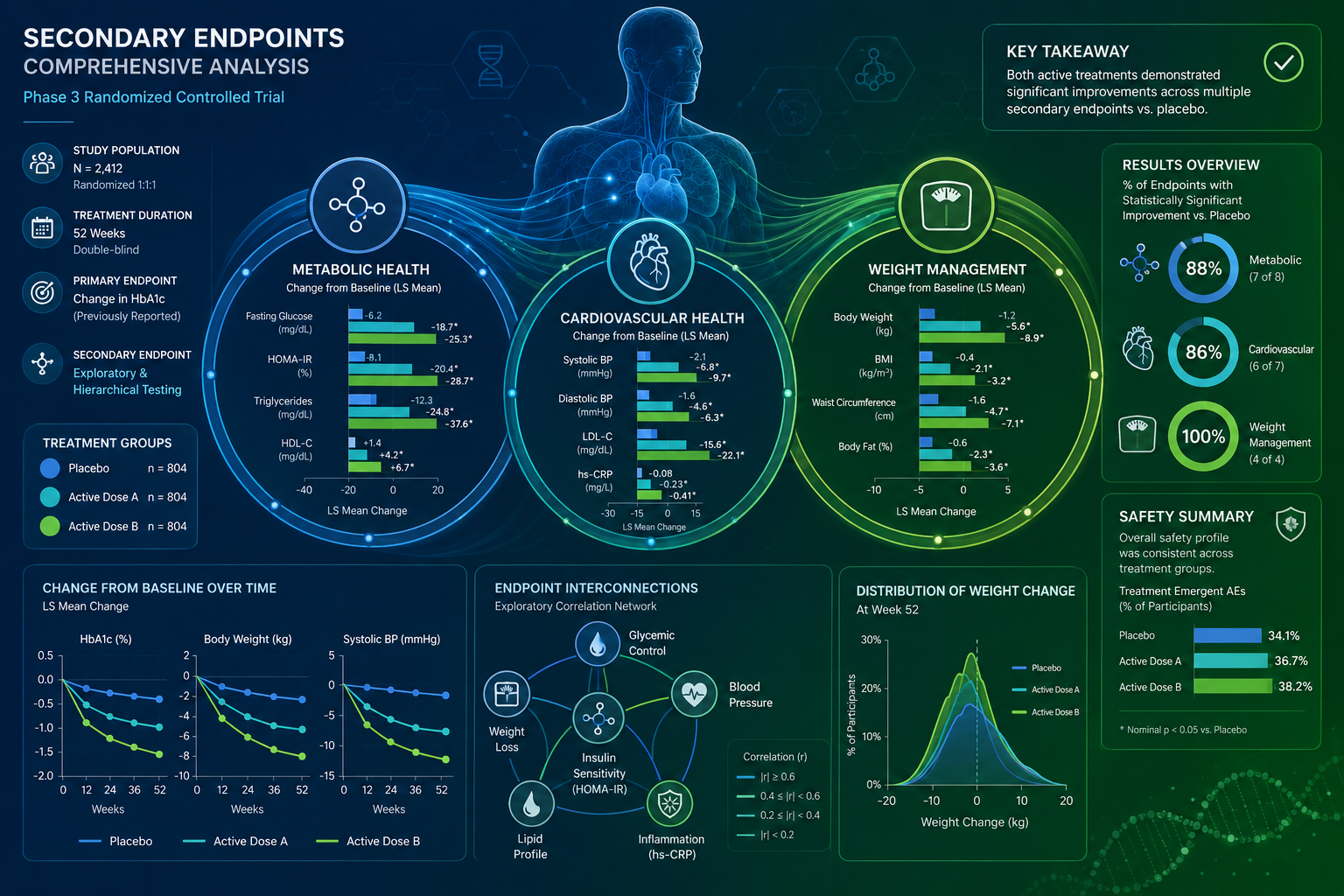
The Retatrutide Trial Results in 2026 extended well beyond body weight, and the secondary endpoints are where the research narrative became genuinely broader.

Obstructive Sleep Apnea (OSA): A nested study within TRIUMPH-1 found that retatrutide reduced the apnea-hypopnea index (AHI) by up to 36.1 events per hour — a 60.6% reduction from a baseline of 58.6 events per hour in participants with moderate-to-severe OSA.

Knee Osteoarthritis Pain: A separate nested study measured WOMAC pain subscale scores. Retatrutide reduced scores by up to 4.3 points (73.1%) from a baseline of 6.0. This signals a potential indirect benefit through mechanical offloading, though researchers note that direct anti-inflammatory mechanisms cannot be ruled out.

Type 2 Diabetes (TRANSCEND-T2D-1): The dedicated diabetes trial demonstrated significant HbA1c reductions in individuals whose glycemic control was inadequate with diet and exercise alone.

Endpoint Baseline Reduction
Body weight (12 mg, 80 wk) — 28.3%
AHI (sleep apnea events/hr) 58.6 60.6%
WOMAC pain score 6.0 73.1%

For researchers already familiar with metabolic peptides like AOD-9604 and its fat metabolism research context, or those reviewing GLP-1 retatrutide product documentation, these secondary findings add important context to experimental protocols.


What Still Remains Uncertain for Research Use Only Readers

What Still Remains Uncertain for Research Use Only Readers

Understanding the Retatrutide Trial Results in 2026 also means acknowledging what Phase III has not yet resolved.

Long-term safety beyond two years remains under evaluation. The 104-week extension is encouraging, but researchers tracking compounds like retatrutide 10 mg for research sourcing should note that post-marketing surveillance data does not yet exist.

Lean mass preservation is still being quantified. Weight loss at this magnitude raises questions about the ratio of fat to muscle lost — a variable that matters significantly in research models focused on body composition.

Regulatory timeline remains open. Eli Lilly has signaled intent to seek FDA approval, but approval timelines are not confirmed. Research-use-only readers operate in a distinct context from clinical use, and sourcing standards must reflect that distinction.

For those building broader peptide research frameworks, resources like the BPC-157 core peptides documentation guide and CJC-1295 with DAC research findings offer useful models for structuring documentation and traceability protocols across compound classes.

Researchers interested in metabolic and aging-related peptide categories can also explore the aging support peptide category for broader context on where retatrutide fits within current research landscapes.


Conclusion

The Phase III data released in 2026 confirms that retatrutide is not a modest improvement over existing GLP-1 therapies — it is a structurally different intervention with outcomes that rival surgical benchmarks. For research-use-only readers, the actionable steps are clear:

  1. Update experimental frameworks to reflect the 104-week efficacy data, not just the earlier Phase II findings.
  2. Expand secondary endpoint tracking to include cardiovascular markers, sleep metrics, and pain indices where relevant.
  3. Maintain rigorous sourcing and documentation standards, particularly as regulatory review approaches and compound availability evolves.
  4. Monitor lean mass data as it emerges from ongoing analyses.

The headline numbers are real. The research questions they generate are just beginning.

https://www.puretestedpeptides.com/wp-content/uploads/2026/06/Retatrutide-Trial-Results-in-2026-What-the-New-Phase-III-Headlines-Mean-for-Research-Use-Only-Readers.png 1024 1536 https://www.puretestedpeptides.com/wp-content/uploads/2026/01/buy-peptides-online.jpg 2026-06-15 13:04:342026-06-15 13:04:34Retatrutide Trial Results in 2026: What the New Phase III Headlines Mean for Research Use Only Readers
What Is GLP-3 Retatrutide? Triple-Agonist Biology, Receptor Targets, and Why It Is Different From GLP-1

What Is GLP-3 Retatrutide? Triple-Agonist Biology, Receptor Targets, and Why It Is Different From GLP-1

June 9, 2026/0 Comments/in Uncategorized/by

Forty-five percent of participants in a Phase 3 clinical trial lost at least 30% of their body weight — a result once reserved for bariatric surgery. That single data point from the TRIUMPH-1 trial has made retatrutide one of the most closely watched compounds in metabolic medicine today. Understanding what is GLP-3 retatrutide, its triple-agonist biology, receptor targets, and why it is different from GLP-1 drugs already on the market is the essential first step for any researcher or clinician tracking this space.

Key Takeaways

  • Retatrutide simultaneously activates three hormone receptors: GLP-1R, GIPR, and the glucagon receptor (GCG-R).
  • The informal label "GLP-3" is not a scientific hormone classification — it is shorthand for the compound's triple-receptor profile.
  • In the TRIUMPH-1 Phase 3 trial, participants on 12 mg weekly lost an average of 28.3% of body weight over 80 weeks.
  • Retatrutide outperforms single-agonist (semaglutide) and dual-agonist (tirzepatide) therapies in early head-to-head comparisons.
  • As of 2026, retatrutide has not received FDA approval and remains in Phase 3 development under Eli Lilly.

Key Takeaways

The Triple-Agonist Biology Behind Retatrutide

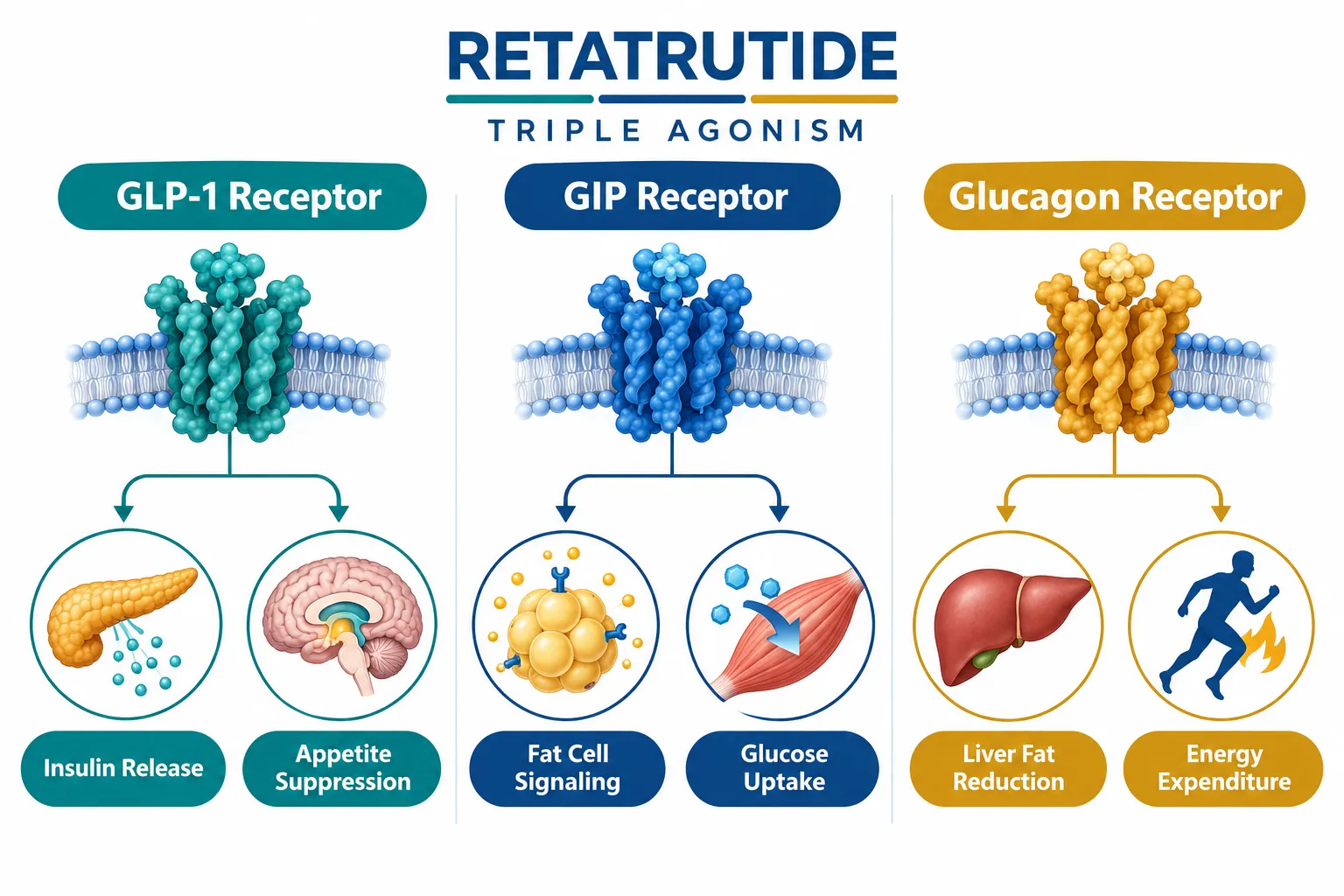
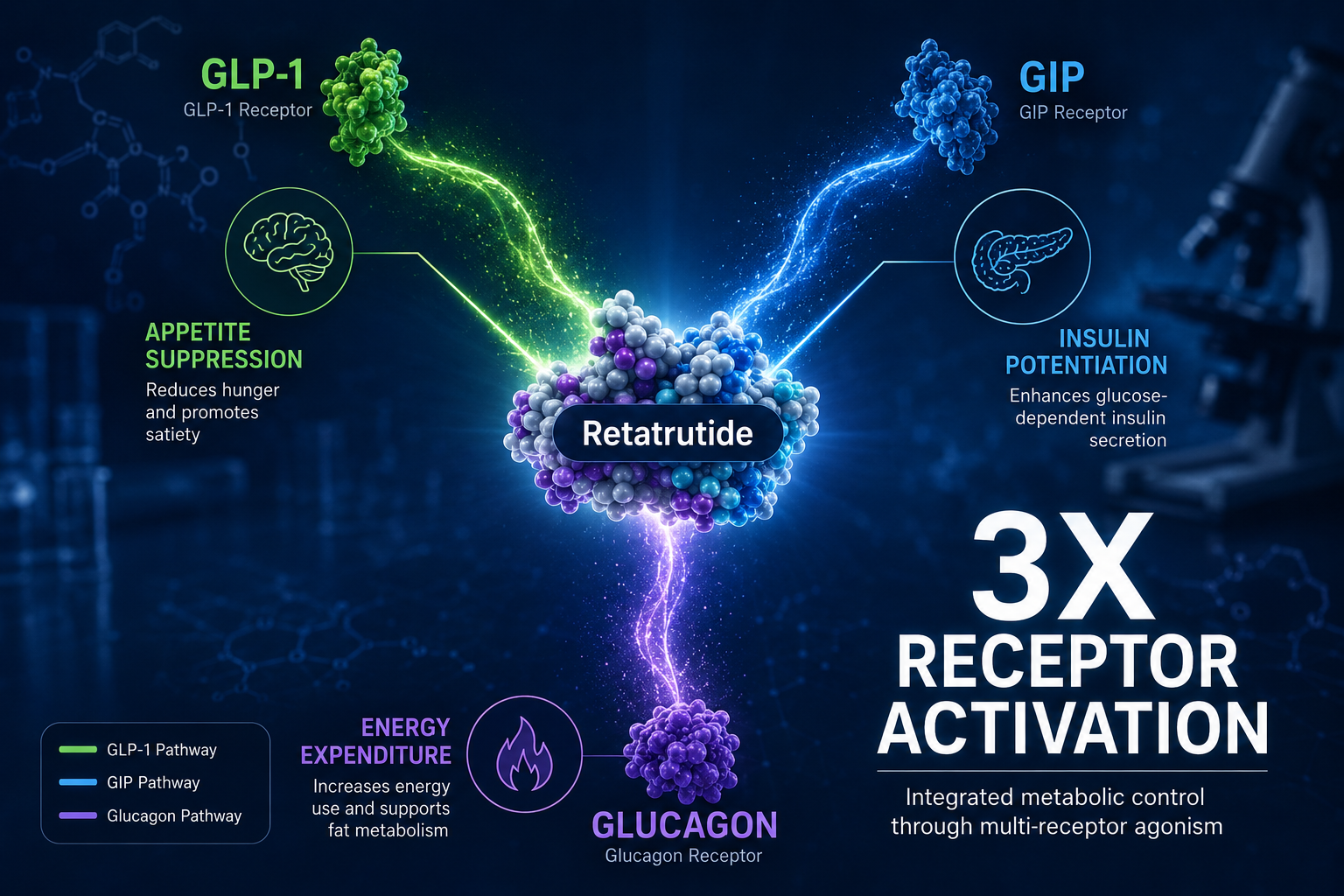
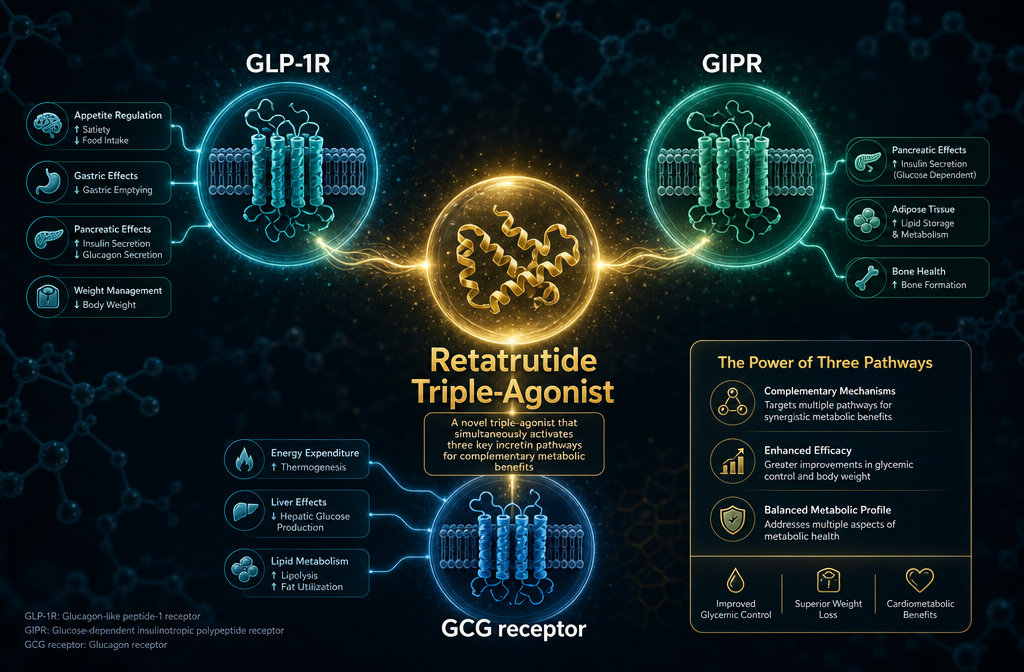
Retatrutide is a synthetic peptide engineered to bind and activate three distinct incretin and metabolic hormone receptors at the same time. Each receptor plays a separate but complementary role in energy regulation.

Receptor Primary Role Contribution to Retatrutide's Effect
GLP-1R (Glucagon-Like Peptide-1) Insulin secretion, appetite suppression Reduces hunger, slows gastric emptying
GIPR (Glucose-Dependent Insulinotropic Polypeptide) Insulin amplification, fat metabolism Enhances insulin response, supports fat tissue signaling
GCG-R (Glucagon Receptor) Energy expenditure, hepatic glucose output Increases calorie burn, reduces liver fat

This simultaneous three-receptor engagement is what separates retatrutide from every approved obesity drug on the market. The glucagon receptor component is particularly significant: glucagon typically raises blood sugar, but when its receptor is activated alongside GLP-1R and GIPR, the net effect shifts toward increased thermogenesis and fat oxidation rather than hyperglycemia.

Researchers exploring the GLP-1 generations overview will recognize this as a logical progression from first-generation single-agonist molecules toward increasingly complex multi-receptor strategies.

Why the "GLP-3" Label Is Informal — and What It Actually Means

The term "GLP-3" does not refer to a real hormone. No such molecule exists in human physiology. The label emerged informally to describe retatrutide's position as the third generation of GLP-based obesity therapies:

  • Generation 1: GLP-1 single agonists (e.g., semaglutide / Wegovy)
  • Generation 2: GLP-1 + GIP dual agonists (e.g., tirzepatide / Zepbound)
  • Generation 3: GLP-1 + GIP + Glucagon triple agonists (retatrutide)

The correct scientific description is triple hormone receptor agonist. Researchers browsing retatrutide research and catalog resources or the GLP-1 Reta product tag will encounter both terms, but the informal "GLP-3" label should always be understood as generational shorthand rather than pharmacological classification.

Why the "GLP-3" Label Is Informal — and What It Actually Means

How Retatrutide Differs From GLP-1 Drugs: Receptor Targets and Clinical Outcomes

This is the core question for anyone asking what is GLP-3 retatrutide and why it is different from GLP-1. The differences operate on two levels: mechanistic and clinical.

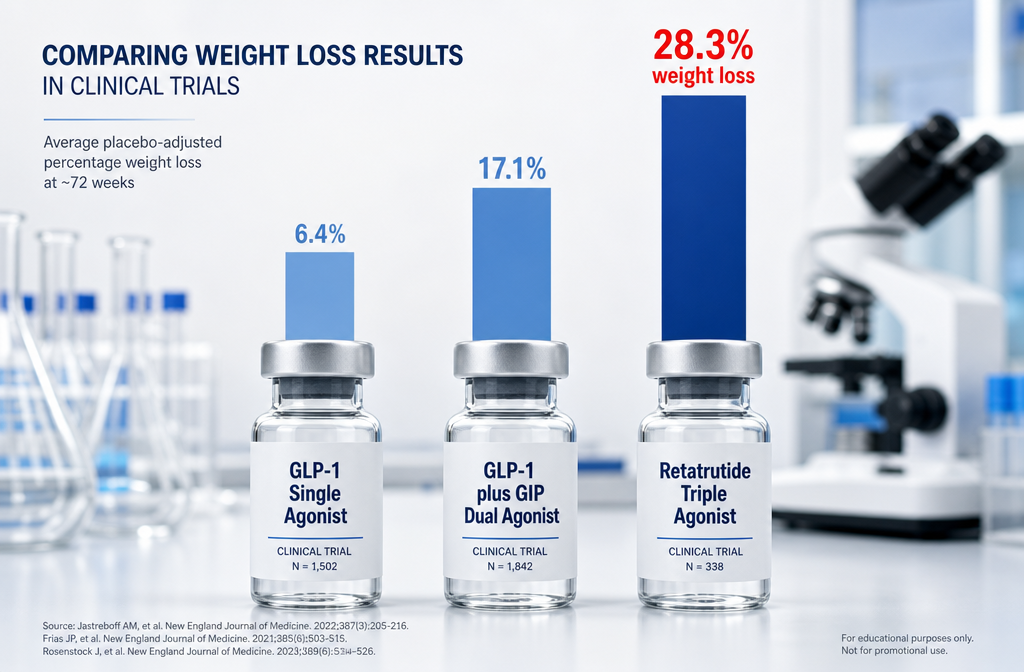
Mechanistically, semaglutide targets only GLP-1R. Tirzepatide adds GIPR. Retatrutide adds the glucagon receptor on top of both. That third receptor drives a meaningful increase in resting energy expenditure — the body burns more calories even at rest — which neither of the earlier drugs can replicate.

Clinically, the TRIUMPH-1 Phase 3 trial reported an average weight loss of 28.3% (approximately 70.3 pounds) over 80 weeks at the 12 mg weekly dose. By comparison, semaglutide typically produces roughly 15% weight loss, and tirzepatide reaches approximately 20-22%. Retatrutide also demonstrated an A1C reduction of up to 2.0% over 40 weeks in participants with type 2 diabetes, suggesting strong glycemic benefit beyond weight loss alone.

"Retatrutide's glucagon receptor component is the differentiating factor — it converts what would otherwise be a pure appetite-suppression strategy into a genuine energy-expenditure intervention."

Side effects remain consistent with the incretin drug class: nausea, diarrhea, constipation, and vomiting, all dose-dependent and generally manageable. Those interested in how metabolic peptides interact with energy systems may also find value in reviewing mitochondrial longevity research and AOD9604 metabolic research for broader context.

For researchers sourcing compounds for study, reviewing lab-tested peptide standards and certificate of analysis documentation ensures quality benchmarks are met before any research protocol begins.

As of 2026, retatrutide is not FDA-approved. Eli Lilly anticipates filing for approval in 2026-2027, with potential market availability by 2027 or 2028. Those planning research timelines can consult the GLP-3 research planning and catalog navigation guide for sourcing and protocol considerations.

How Retatrutide Differs From GLP-1 Drugs: Receptor Targets and Clinical Outcomes

Conclusion

Retatrutide represents a genuine structural advance over existing GLP-1 therapies. Its triple-agonist biology — engaging GLP-1R, GIPR, and the glucagon receptor simultaneously — produces weight loss outcomes that approach bariatric surgery benchmarks and glycemic improvements that matter for type 2 diabetes management. The informal "GLP-3" label is a useful shorthand, but researchers should understand it as a generational marker, not a hormone designation.

Actionable next steps for researchers in 2026:

  • Review the TRIUMPH-1 Phase 3 trial data in detail to understand dose-response relationships.
  • Compare retatrutide's receptor profile against tirzepatide using the GLP-1 peptide generational research overview.
  • Verify compound purity standards before initiating any research protocol by consulting available COA documentation.
  • Monitor FDA filing timelines, currently projected for 2026-2027, to align research planning accordingly.
https://www.puretestedpeptides.com/wp-content/uploads/2026/06/What-Is-GLP-3-Retatrutide-Triple-Agonist-Biology-Receptor-Targets-and-Why-It-Is-Different-From-GLP-1.png 672 1024 https://www.puretestedpeptides.com/wp-content/uploads/2026/01/buy-peptides-online.jpg 2026-06-09 13:05:142026-06-09 13:05:14What Is GLP-3 Retatrutide? Triple-Agonist Biology, Receptor Targets, and Why It Is Different From GLP-1
×

Helpful Links

  • My account
  • Cart
  • Checkout
  • Refund and Returns Policy
  • Privacy Policy
  • SMS Privacy Policy
  • Login
  • My Account
  • Logout

USA Made Lab Tested Peptides

All products are sold for research, laboratory, or analytical purposes only, and are not for human consumption


Pure Tested Peptides is a chemical supplier. Pure Tested Peptides is not a compounding / chemical compounding facility as defined under 503A of the Federal Food, Drug, and Cosmetic act. Pure Tested Peptides is not an outsourcing facility as defined under 503B of the Federal Food, Drug, and Cosmetic act.

The statements made within this website have not been evaluated by the US Food and Drug Administration. The products we offer are not intended to diagnose, treat, cure or prevent any disease.

Human/Animal Consumption Prohibited. Laboratory/In-Vitro Experimental Use Only

Scroll to top Scroll to top Scroll to top