

{"cover":"Professional landscape format (1536×1024) hero image with bold text overlay: 'Retatrutide Phase III Results 2026' in extra large 72pt white bold sans-serif font with dark semi-transparent overlay box, centered upper-third composition. Background shows a clean pharmaceutical research laboratory with glowing molecular structure models, clinical trial data charts on screens, and soft blue lighting. Color palette: deep navy blue, crisp white, and electric teal accents. Magazine cover aesthetic, high contrast, editorial quality, science-forward visual style.","content":["Landscape format (1536×1024) scientific infographic illustration showing a triple hormone receptor diagram with GLP-1, GIP, and glucagon receptor nodes connected by glowing pathways, overlaid on a clean white clinical background. Include subtle weight loss percentage data callouts (28.3% at 80 weeks, 30.3% at 104 weeks) as floating annotation labels in teal and navy. Modern flat-design aesthetic with molecular iconography, research-lab feel, no people, data-visualization focus.","Landscape format (1536×1024) editorial-style split comparison image: left side shows a detailed bar chart comparing retatrutide weight loss outcomes versus bariatric surgery benchmarks (25-35% range), right side shows smaller secondary charts for HbA1c reduction, AHI sleep apnea improvement, and WOMAC knee pain score reduction. Clean white background with navy and teal color scheme, bold percentage labels, professional medical data visualization aesthetic, no people, clinical research context.","Landscape format (1536×1024) overhead flat-lay research desk scene showing a printed Phase III clinical trial document labeled TRIUMPH-1, a glass vial with peptide label, a researcher notebook with handwritten protocol notes, and a laptop displaying a peptide sourcing checklist. Soft natural lighting from upper left, muted neutral tones with teal accent highlights, research-use-only stamp visible on document corner, clean and professional editorial composition."]
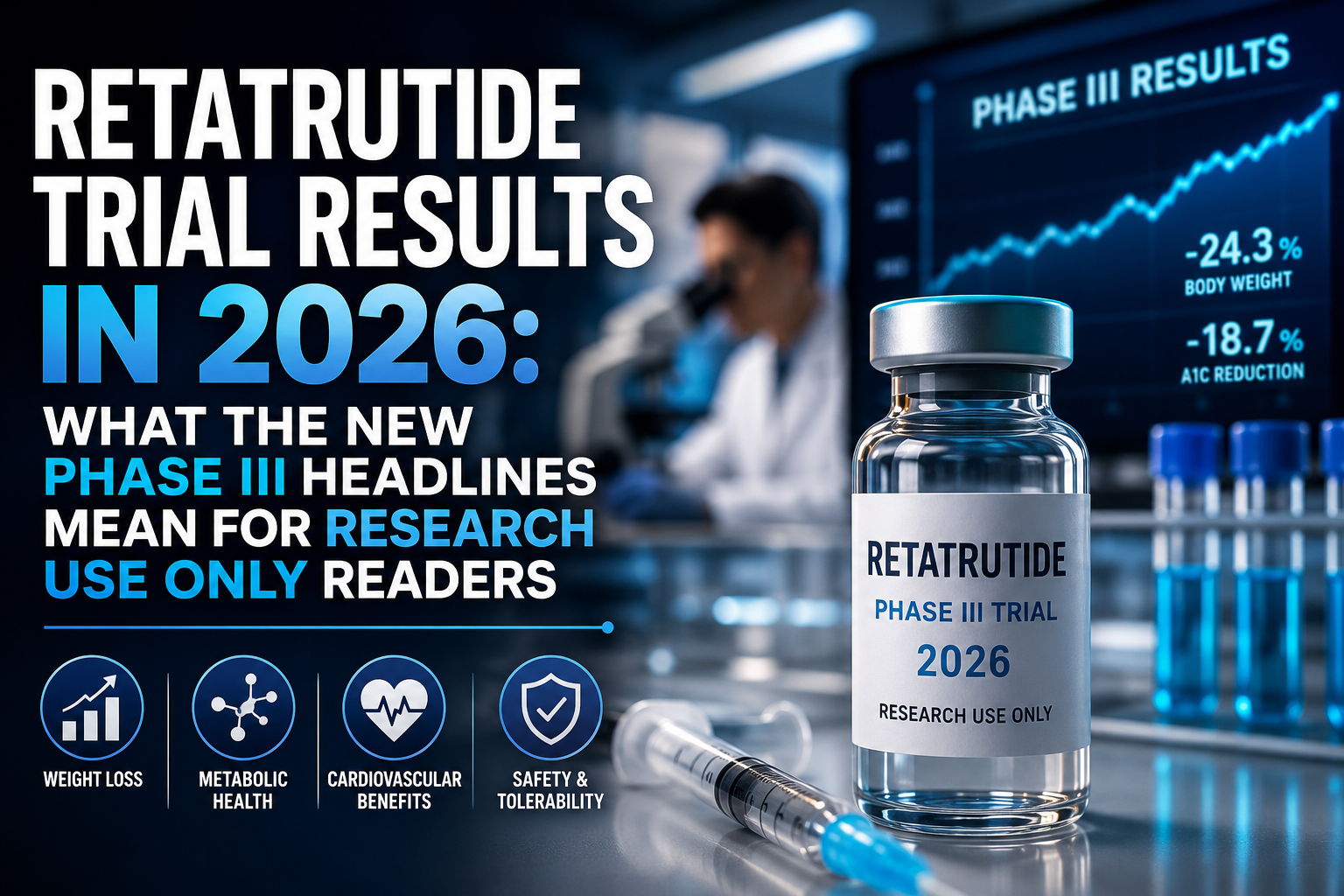
A weight-loss drug that matches bariatric surgery outcomes without an operating room — that is the headline now circulating across the research community. The Retatrutide Trial Results in 2026 have moved from Phase II speculation into confirmed Phase III data, and the numbers are forcing researchers to rethink what pharmacological intervention can realistically achieve. For research-use-only readers tracking this compound, understanding what changed, what was confirmed, and what still remains open is essential before drawing any conclusions.
Key Takeaways
- Retatrutide is a triple agonist targeting GLP-1, GIP, and glucagon receptors simultaneously.
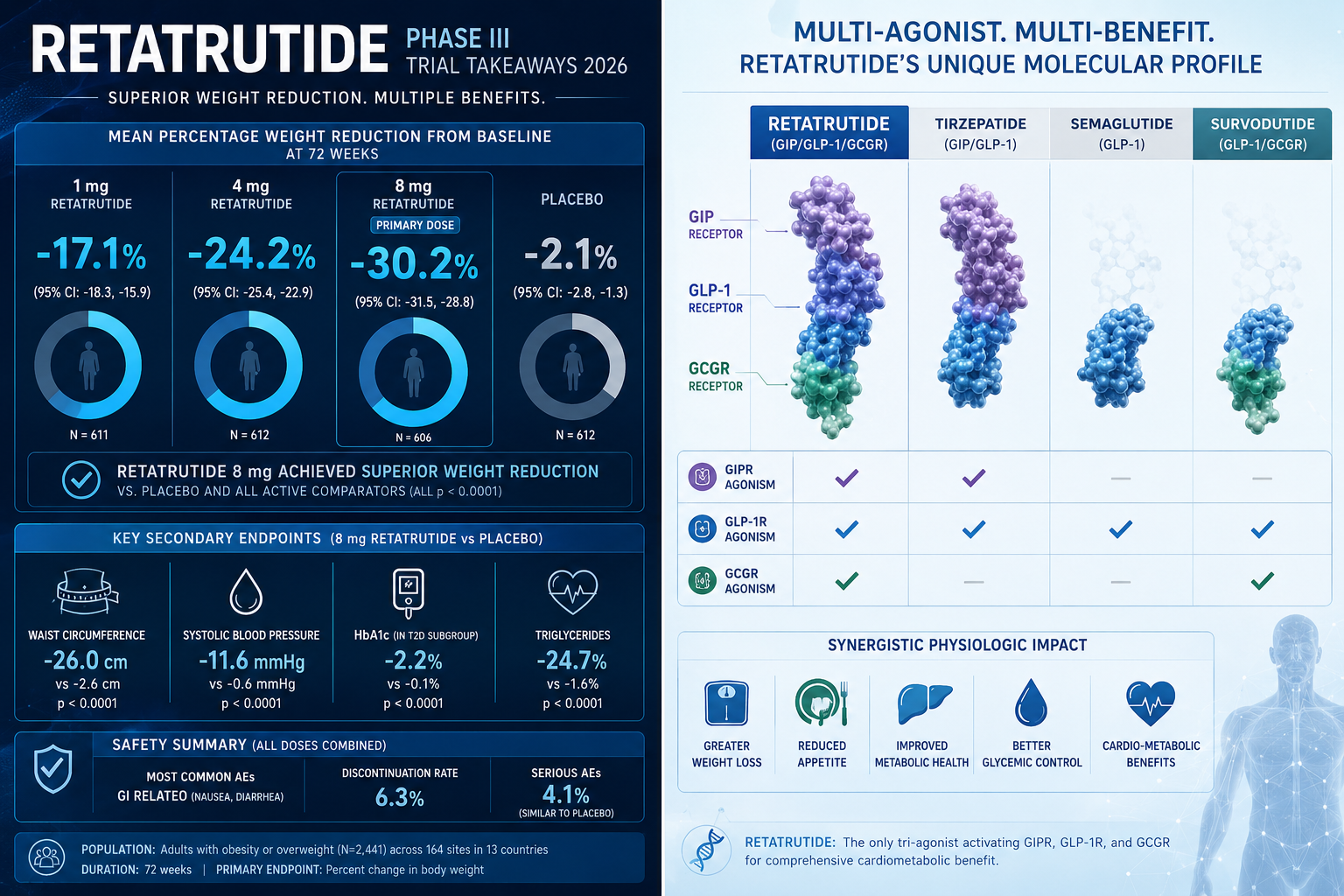
- TRIUMPH-1 Phase III data showed an average weight loss of 28.3% at 80 weeks and 30.3% at 104 weeks on the 12 mg dose.
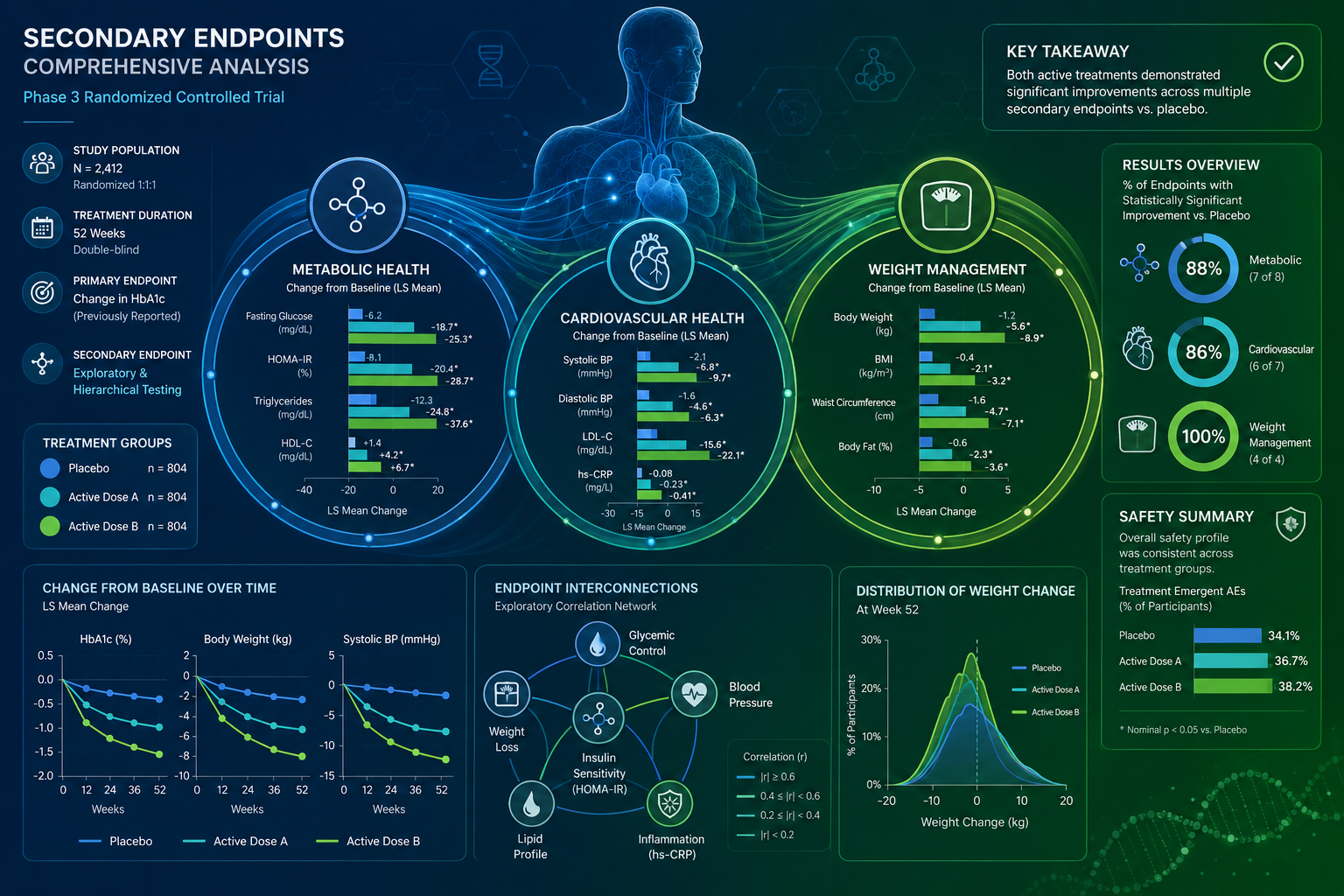
- Beyond weight, the trial documented improvements in cardiovascular markers, sleep apnea severity, knee osteoarthritis pain, and glycemic control.
- Weight loss outcomes are now comparable to bariatric surgery benchmarks of 25-35%.
- Regulatory review is anticipated, but research-use-only readers should track sourcing standards and documentation carefully.
What the Phase III TRIUMPH-1 Data Actually Confirmed
The TRIUMPH-1 trial delivered the clearest picture yet of retatrutide's weight-reduction potential. Participants receiving the 12 mg weekly dose lost an average of 28.3% of body weight — roughly 70.3 lbs — over 80 weeks. A pre-specified extension pushed that figure to 30.3%, or approximately 85.0 lbs, at 104 weeks.
Perhaps more striking than the raw weight numbers are the BMI reclassifications. Among participants on the 12 mg dose:
- 65.3% dropped below a BMI of 30, exiting the obesity category entirely
- 33.3% reached a BMI under 25, classified as normal weight
These are not incremental improvements. They represent a categorical shift in health status for a majority of participants.
Cardiovascular markers also improved. Researchers documented reductions in waist circumference, non-HDL cholesterol, triglycerides, systolic blood pressure, and high-sensitivity C-reactive protein (hsCRP) — a cluster of risk factors that typically resist lifestyle intervention alone.
"The weight loss achieved with retatrutide is now comparable to outcomes typically associated with bariatric surgery, which generally results in 25% to 35% weight loss depending on the procedure."
For readers sourcing GLP-1 class peptides for research documentation, these Phase III benchmarks provide a meaningful reference point for experimental design.
Beyond Weight: Secondary Endpoints That Changed the Conversation
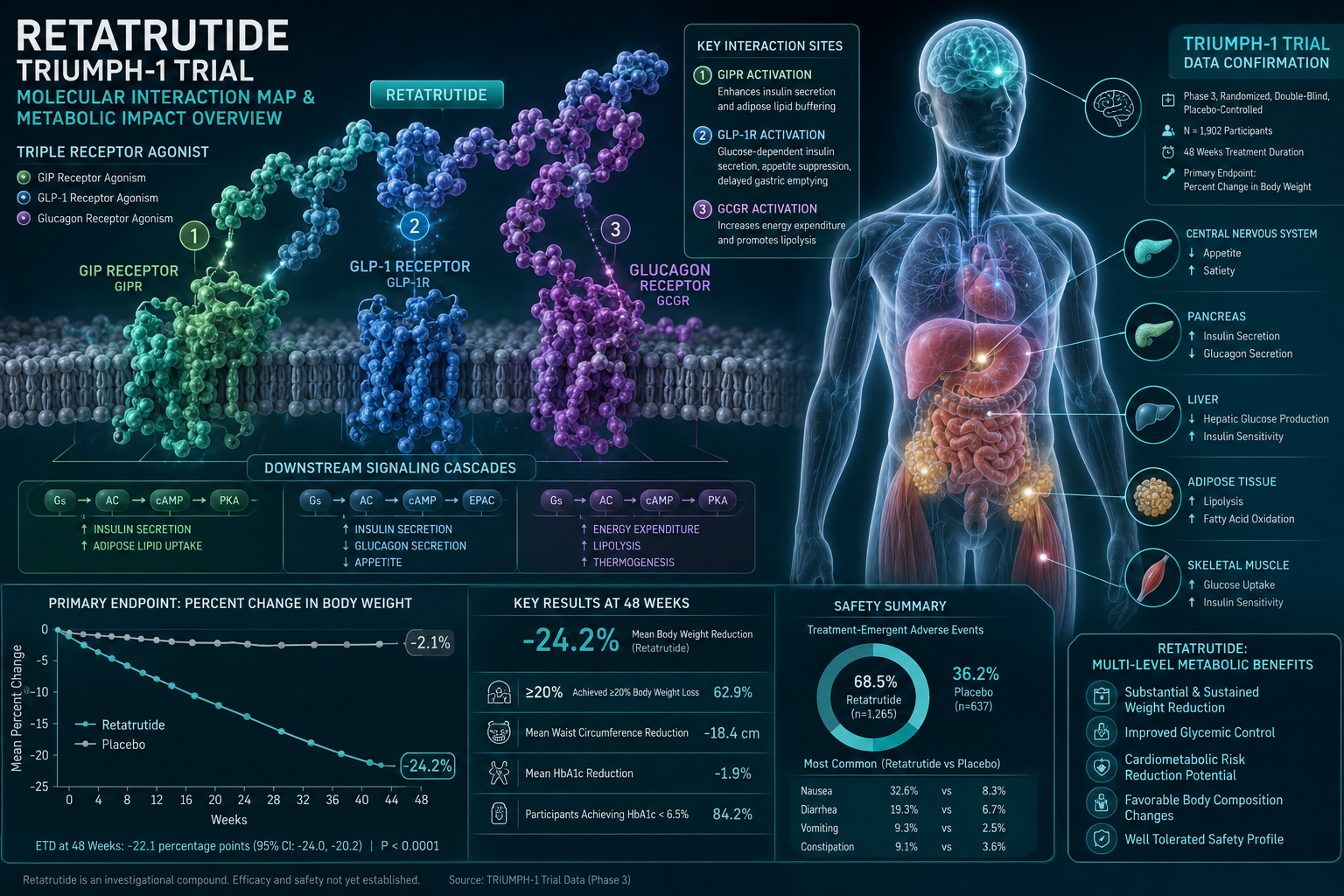
The Retatrutide Trial Results in 2026 extended well beyond body weight, and the secondary endpoints are where the research narrative became genuinely broader.
Obstructive Sleep Apnea (OSA): A nested study within TRIUMPH-1 found that retatrutide reduced the apnea-hypopnea index (AHI) by up to 36.1 events per hour — a 60.6% reduction from a baseline of 58.6 events per hour in participants with moderate-to-severe OSA.
Knee Osteoarthritis Pain: A separate nested study measured WOMAC pain subscale scores. Retatrutide reduced scores by up to 4.3 points (73.1%) from a baseline of 6.0. This signals a potential indirect benefit through mechanical offloading, though researchers note that direct anti-inflammatory mechanisms cannot be ruled out.
Type 2 Diabetes (TRANSCEND-T2D-1): The dedicated diabetes trial demonstrated significant HbA1c reductions in individuals whose glycemic control was inadequate with diet and exercise alone.
| Endpoint | Baseline | Reduction |
|---|---|---|
| Body weight (12 mg, 80 wk) | — | 28.3% |
| AHI (sleep apnea events/hr) | 58.6 | 60.6% |
| WOMAC pain score | 6.0 | 73.1% |
For researchers already familiar with metabolic peptides like AOD-9604 and its fat metabolism research context, or those reviewing GLP-1 retatrutide product documentation, these secondary findings add important context to experimental protocols.
What Still Remains Uncertain for Research Use Only Readers
Understanding the Retatrutide Trial Results in 2026 also means acknowledging what Phase III has not yet resolved.
Long-term safety beyond two years remains under evaluation. The 104-week extension is encouraging, but researchers tracking compounds like retatrutide 10 mg for research sourcing should note that post-marketing surveillance data does not yet exist.
Lean mass preservation is still being quantified. Weight loss at this magnitude raises questions about the ratio of fat to muscle lost — a variable that matters significantly in research models focused on body composition.
Regulatory timeline remains open. Eli Lilly has signaled intent to seek FDA approval, but approval timelines are not confirmed. Research-use-only readers operate in a distinct context from clinical use, and sourcing standards must reflect that distinction.
For those building broader peptide research frameworks, resources like the BPC-157 core peptides documentation guide and CJC-1295 with DAC research findings offer useful models for structuring documentation and traceability protocols across compound classes.
Researchers interested in metabolic and aging-related peptide categories can also explore the aging support peptide category for broader context on where retatrutide fits within current research landscapes.
Conclusion
The Phase III data released in 2026 confirms that retatrutide is not a modest improvement over existing GLP-1 therapies — it is a structurally different intervention with outcomes that rival surgical benchmarks. For research-use-only readers, the actionable steps are clear:
- Update experimental frameworks to reflect the 104-week efficacy data, not just the earlier Phase II findings.
- Expand secondary endpoint tracking to include cardiovascular markers, sleep metrics, and pain indices where relevant.
- Maintain rigorous sourcing and documentation standards, particularly as regulatory review approaches and compound availability evolves.
- Monitor lean mass data as it emerges from ongoing analyses.
The headline numbers are real. The research questions they generate are just beginning.
Leave a Reply
Want to join the discussion?Feel free to contribute!